

Bentley Mills on What Craft and Design Carry Forward
A line carved, a curve drawn by hand, a silhouette repeated—each an imprint of making that evolves from mark to motif, from idea to form over time. This process of translation underpins Bentley Mills’ approach to design—an act of continuity where craft, culture, and material innovation intersect. The idea takes shape in the Lost Language™ Collection, which began with a simple observation: design never starts from scratch.
From architecture to textiles and even everyday objects, forms and marks carry forward across generations. Lost Language was built on an understanding that these symbols are part of a shared cultural memory, and that today’s designers reinterpret them for the world we live in now. Each pattern draws from those enduring archetypes, reframed for the present moment and rendered through Bentley Mills’ manufacturing and material innovation.
Inside the Making
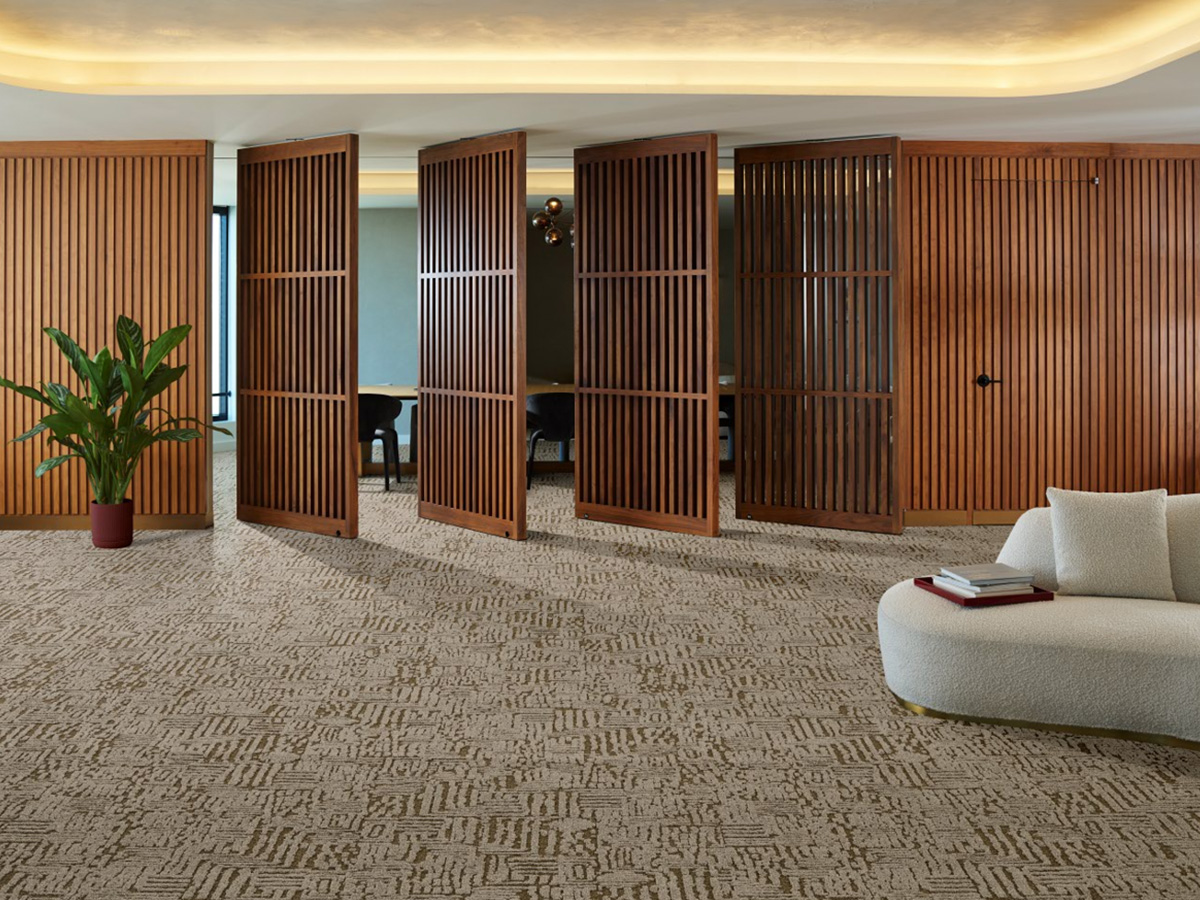
In Lost Language, the idea of translation takes physical form. The collection is made with 100% regenerated, solution-dyed nylon, developed through a new yarn process from Bentley Mills’ yarn bank that achieves a velvety, tip-sheared, and carved construction. The technique recalls early Bentley classics such as Kings Road while marking a step forward in precision and material innovation. Prioritizing not only the prevailing preference for a monolithic look but also environmental impact, the collection offers two styles in broadloom only—an approach that carries a lower carbon footprint than conventional tile formats.
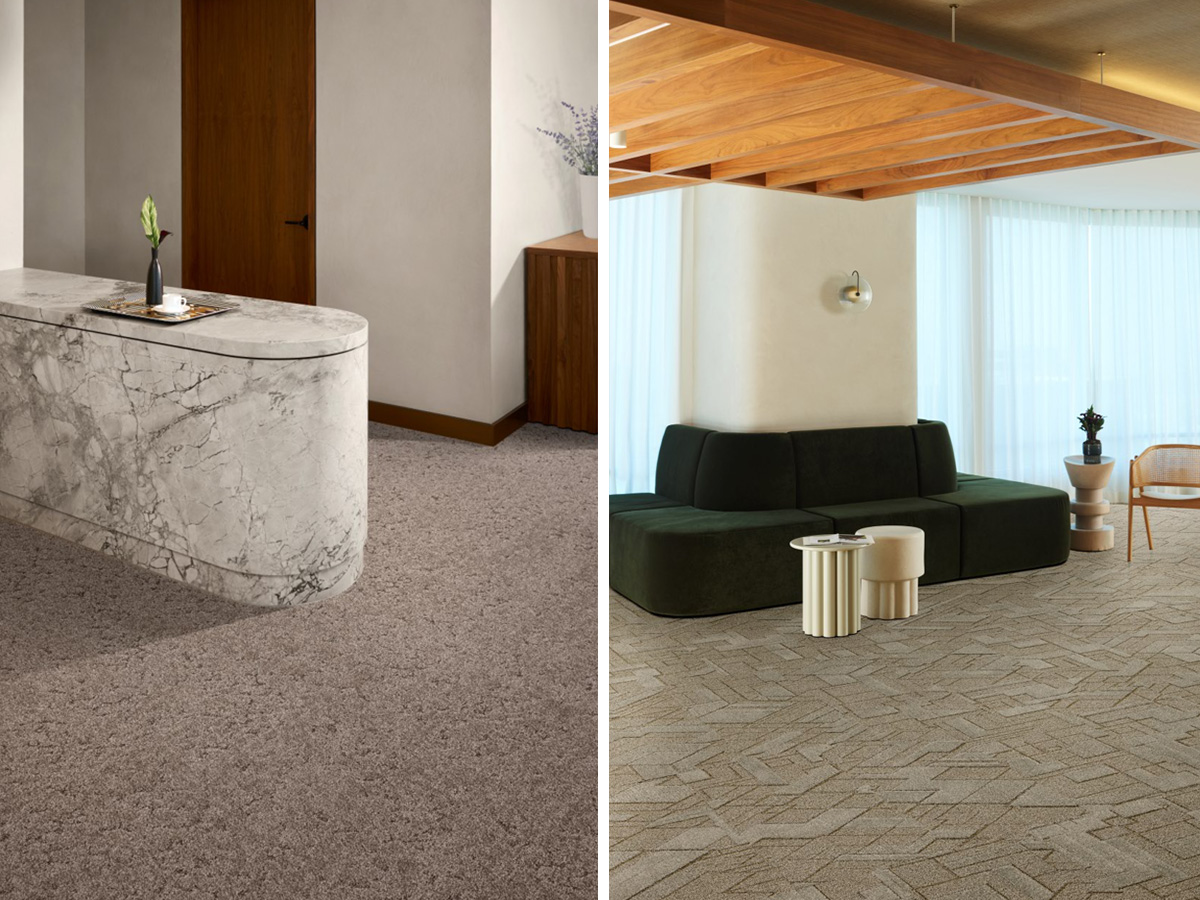
The collection includes four styles in total, each exploring a different rhythm of pattern and texture. Love Triangle™ brings structured, sun-washed geometry; Clear the Air™ offers a cloudy hush where movement feels almost meditative; Rare Form™ introduces softened shapes drawn by instinct rather than ruler; and To the Point™ refines the herringbone with a tailored precision. Together, they reveal how history, material, and instinct can converge to create something distinctly of the present.
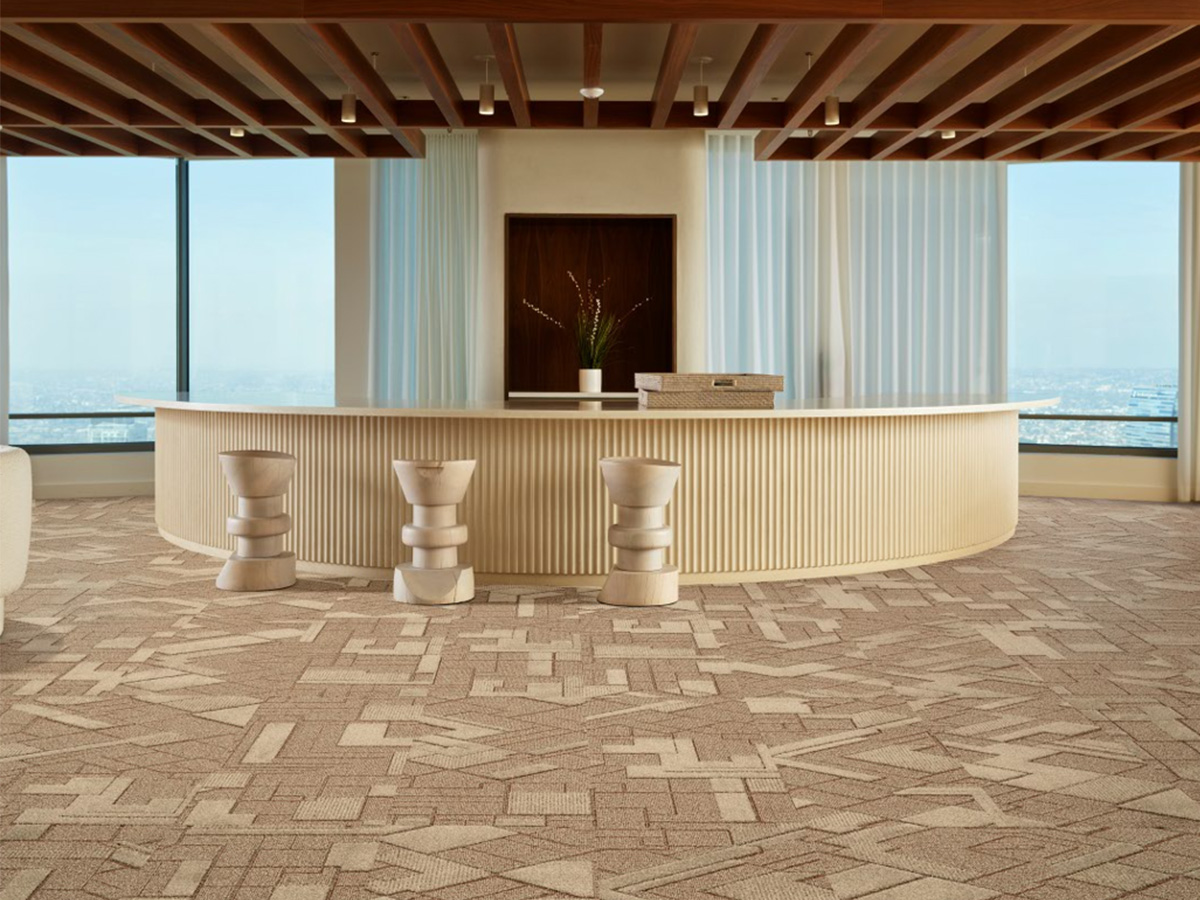
Each pattern reflects overlapping influences from art, fashion, and design history. References to early-20th-century ornamentation surface alongside echoes of Indigenous motifs from the American Southwest—forms that reveal how ideas move and evolve across time. Designers select and adapt them, reshaping familiar forms into something uniquely their own.
Interpreting Culture
This ongoing reinterpretation of history reflects a larger ethos at Bentley Mills, where design extends beyond material innovation into how culture is interpreted and expressed. The company often collaborates with creatives whose work studies how design reflects the changing world. Among them is designer and SCAD professor Gretchen Wagner, whose research in trend forecasting examines the emotional and aesthetic forces shaping the near future.

Her collaboration with Bentley Mills continues this philosophy of design as cultural interpretation. Wagner’s 2026/27 narratives—PIVOT, LORE, LAPSE, and FORGE—translate social and aesthetic movements into conceptual frameworks for designers: PIVOT explores rebellion and redirection; LORE examines authenticity and craft; LAPSE considers illusion, memory, and the surreal; and FORGE looks to mythology and transformation as pathways to renewal.
Together, these narratives surface the larger forces at play—questions of resistance, heritage, illusion, mythology—that echo in the world around us. Bentley Mills reads these cultural signals through material, positioning the brand as both curator and translator of what comes next.
Language That Endures
At Bentley Mills, the process of making has become a conversation—an evolving exchange shaped by many hands and points of view. Rather than working from a single point of inspiration, design development is approached as a studio environment, one shaped by designers, marketers, even outside collaborators and cultural voices alike. The result is a way of working defined less by direction and more by exchange.
The ambition behind Lost Language—and Bentley Mills’ broader approach to design—encourages designers to see themselves as translators. Today’s makers inherit both remarkable traditions and complex challenges, tasked with reinterpreting history, connecting ideas across time, and shaping meaning with care and responsibility. Lost Language ultimately serves as a reminder that imperfection can be beautiful, meaning can be layered, and design is most powerful when spaces feel alive with history and possibility.