
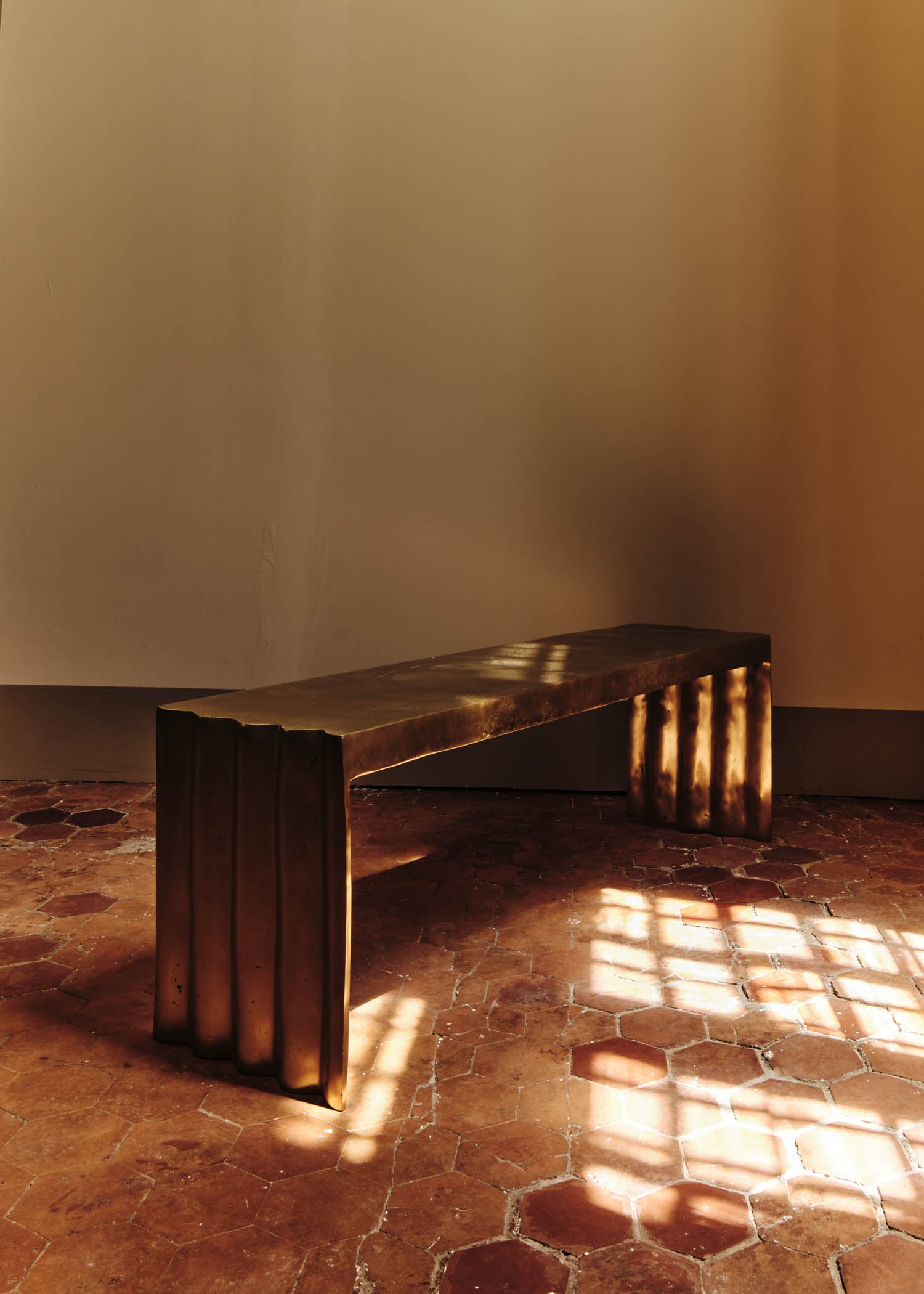
10 Questions With… Ambre Jarno Of Maison Intègre
When Ambre Jarno first arrived in Burkina Faso at age 24, she couldn’t have imagined that her fascination with the country’s artisans would later redefine her creative path. What began as a two-year mission became a life-changing journey that led to the founding of Maison Intègre, a design studio and bronze foundry in Ouagadougou, the capital city, dedicated to preserving traditional craftsmanship while reimagining it for the contemporary world.
Before her move, Jarno had built a career in France in media, working for a French television network that took her across West and Central Africa. Those years, she recalls, were formative with every step teaching her how to adapt and collaborate. Maison Intègre emerged from that understanding: a belief that design can be both socially grounded and globally resonant. Working closely with Burkinabé artisans, Jarno built a creative ecosystem where ancient casting traditions meet modern design. Collaborations with designers such as Noé Duchaufour-Lawrance and Brendan Ravenhill have resulted in objects that are deeply rooted in West African forms.
Today, Maison Intègre stands as one of Africa’s most inspiring design studios where material honesty, social responsibility, and cultural preservation coexist. With recent showcases of her work, including Design Miami, she continues to build a bridge between craftsmanship and contemporary design, one bronze form at a time.
Interior Design connected with the designer to speak about her practice and design philosophy.

Ambre Jarno Bridges Craftsmanship & Contemporary Design
Interior Design: What first brought you to Burkina Faso?
Ambre Jarno: I moved to Burkina Faso when I was 24, originally on a two-year mission. During that time, I met artisans and craftsmen who introduced me to an incredible world of traditional craftsmanship. I discovered weaving, woodwork, and most memorably, bronze casting, an ancient technique deeply rooted in Ouagadougou. The artistry and precision behind the bronze work fascinated me.
After two years, I returned to France but continued to travel between France and West and Central Africa for work. Eventually, I decided to stop everything and move back to Ouagadougou to start a project focused on craftsmanship and new design applications. That’s how Maison Intègre began. I started by working with a few artisans in family courtyards, creating small objects and slowly inviting designers to collaborate on contemporary pieces inspired by West African culture.
I also spent several years learning the bronze casting process myself, and after about five years, I established my own foundry and workshop. The goal was to bring together all the different skills: modeling, molding, casting, finishing, and welding, under one roof. Today, we have a small but amazing team. Even when orders are slow, we keep training each other to improve our craft.
ID: What was your previous career before starting Maison Intègre?
AJ: Before, I worked for a French T.V. channel. It was a great experience; I traveled all over Africa meeting interesting people and learning a lot about different cultures. I worked in television for almost five years, and I believe every step of my journey connected somehow. Working in West and Central Africa taught me how to adapt, communicate, and collaborate in different cultural contexts. Those experiences definitely helped shape how I run my project today.
ID: Describe your background and education?
AJ: I grew up in Paris. I attended a classical French high school, studied a bit of law, and then switched to communications. Later, I went to New York for a bachelor’s degree in fine arts before returning to Paris, where I completed a master’s in media management at ESCP Business School. My childhood wasn’t particularly artistic. My parents weren’t artists, though they were art lovers, so we visited museums often. My aunt is an artist, and my mother had many artist friends—so I grew up surrounded by art to some extent—but it wasn’t a deeply creative household.
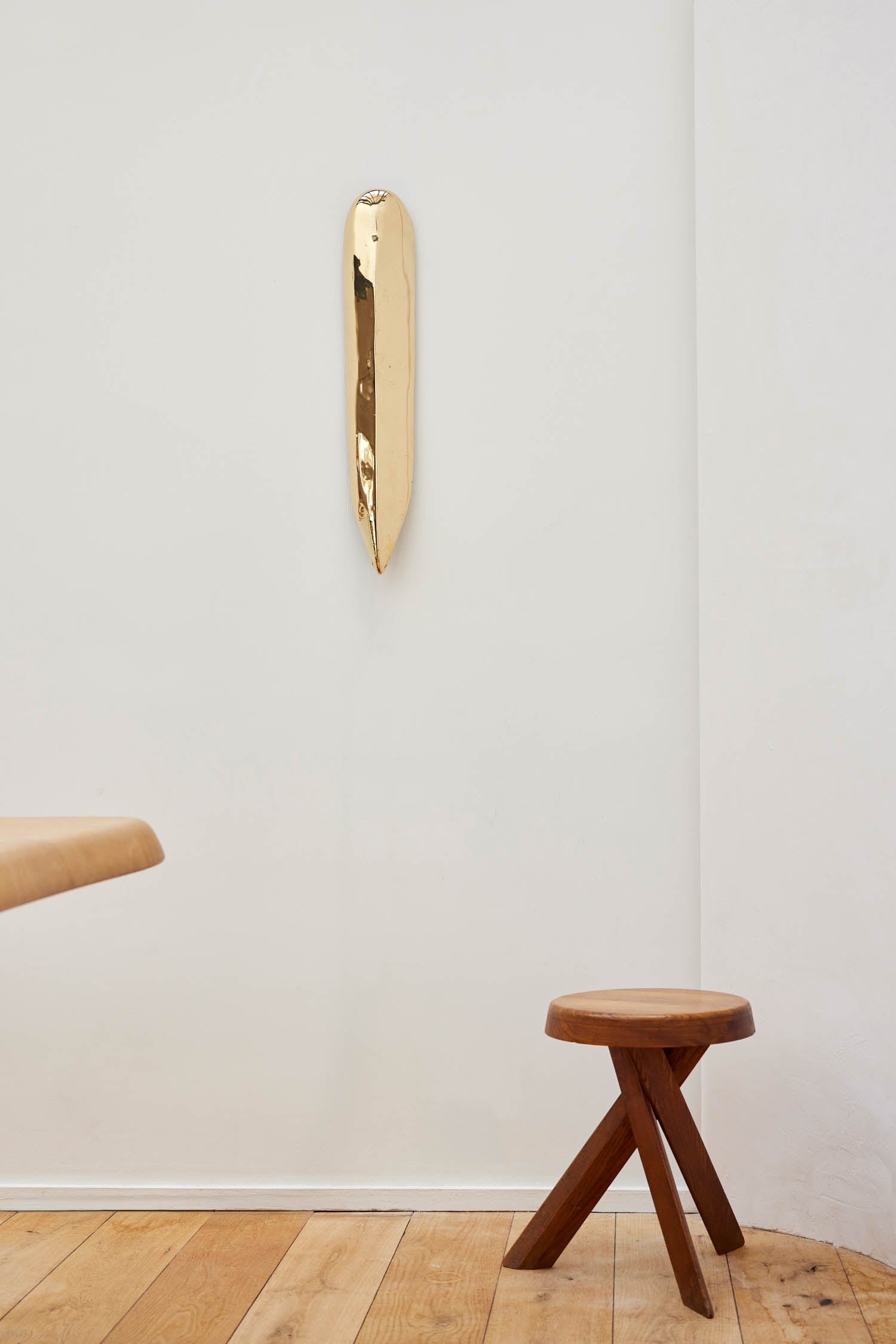

ID: How did you transition from discovering the artisans to building your own foundry?
AJ: When I first started, I worked directly in the courtyards of craftsmen. We created small objects, then gradually larger ones. But bronze casting is complex: it involves modeling, mold-making, casting, welding, and finishing. At that time, we had to transport the pieces across the city just to find someone who could weld them. It was exhausting. So, I decided to build a single space where all the artisans could work together—where every stage, from molding to finishing, happened under one roof. That’s how the workshop was born. Now, we have a wonderful team that collaborates and even trains one another during quieter periods.
ID: You mentioned you also run a social initiative. Can you tell us about that?
AJ: Three years ago I started an association to support our artisan community. Our proximity and constant on-the-ground presence mean we act with a clear understanding of local issues and challenges. Our goal is to build a virtuous ecosystem that sustains the entire community over time. Burkina Faso is facing an unprecedented security, economic, and health crisis; arts and crafts have slipped from priority and risk disappearing, leaving dozens of families without resources or prospects. We currently fund the school fees of about 100 children whose parents work with us. The idea is to extend Maison Intègre’s impact beyond design to education, healthcare, and social welfare. It’s important for me that our growth also uplifts the people and families who make it possible.
ID: How would you describe Maison Intègre’s design philosophy?
AJ: When I first began working with artisans, most of them were producing traditional, touristic statues. There wasn’t much innovation in terms of functional design, no lighting, no furniture. I wanted to reinterpret these incredible techniques and materials in new ways.
For our initial collaborations, we worked with designers who drew inspiration from traditional objects. For example, French designer Pia Chevalier created candleholders inspired by ancient Lobi slingshots and flutes used for hunting. Another designer, Noé Duchaufour-Lawrance, developed pieces inspired by the traditional “Tiebele” architecture at the Ghana-Burkina border and the carved Lobi ladders used to reach rooftops. These ladders became sculptural lights in our collection, connecting everyday function with symbolism.
Later, we worked with Marion Mailaender, a French designer who was fascinated by corrugated iron, a material used across Africa for homes and shops. Together, we created a collection that transformed this humble, everyday material into something elegant and functional. It reflects our philosophy: to celebrate what is local and familiar, but elevate it with care and creativity.


ID: Beyond lighting and furniture, are you exploring other creative directions?
AJ: I’ve started creating bronze sculptures in my workshop. It’s a personal project that I haven’t fully developed yet because of time, but I hope to expand on it soon. I also want to explore textiles.
Recently, we began working with a community of weavers, and we showcased this project at PAD Paris earlier this year. We’re experimenting with recycled materials and trying to merge metalwork and textiles into new forms. The idea is to show that craft industries can drive both social and economic development while preserving ancestral know-how. We plan to present a full collection of textile-based works in spring 2026.
ID: What are some of the challenges you face running a design studio in Burkina Faso?
AJ: There are many challenges. Creating high-end design pieces requires precision and consistency, but we also want to respect the artisanal process. It’s a delicate balance between maintaining traditional methods and meeting international standards.
Each bronze piece we make requires a new mold, so every object is essentially a fresh experiment. It’s a long, complex process. Sometimes measurements need to be refined multiple times, or finishing needs to be redone. But the results are worth it.
I’ve also invited bronze casters from France to work with our local artisans in Ouagadougou. This exchange helps us find solutions to technical challenges, improve safety conditions, and make heavy, labor-intensive work less physically demanding. The collaboration between French and Burkinabé craftsmen has been beautiful to watch.
ID: Maison Intègre’s presence has grown internationally. What’s next for you?
AJ: We presented new and reworked pieces at Design Miami in December, 2025, through our U.S. gallery partners. Some works are new; others are existing designs with new textures and finishes.
Beyond that, I want Maison Intègre to continue proving that Africa can host sustainable, high-quality design production. We need more long-term projects like this on the continent, not just one-off collaborations or politically driven initiatives. It takes time, training, and real commitment to build an ecosystem that supports artisans with fair wages, contracts, and healthcare.
ID: What do you ultimately want Maison Intègre to represent?
AJ: I want it to be a platform that shows Africa’s creative potential through real, sustainable projects—ones that take time, build communities, and create jobs. Maison Intègre is about proving that design can be both beautiful and deeply human.


read more
DesignWire
10 Questions With… Sculptor Aminata Mboup
Aminata Mboup discusses her practice, inspirations, fluidity between disciplines, as well as her unique approach to materials.
DesignWire
10 Highlights From Amman Design Week
Amman Design Week 2026 gathers a host of regional designers and architects under the theme ‘Accumulations.’