
10 Questions With… Multidisciplinary Artist Xavier Veilhan
Xavier Veilhan believes his generation should be more engaged with the physical and organic aspects of art. He says this not because he is an artist who’s spent the better part of six decades creating and reshaping new forms, but because he believes in the ever-evolving nature of art. He’s also quick to remind us that while he’s not an architect or a designer, he does have a deep appreciation for both and has been influenced by the works of architects and designers like Achille Castiglioni and Konstantin Grcic.
Born in 1963 in Lyon, France, Xavier’s artistic journey began in the ’80s. Built upon the practice of bridging classical form and cutting‑edge technology, he has since produced an acclaimed body of sculptures, installations, paintings, performances, films, and photographs that invite viewers to become active participants in evolving spatial narratives.
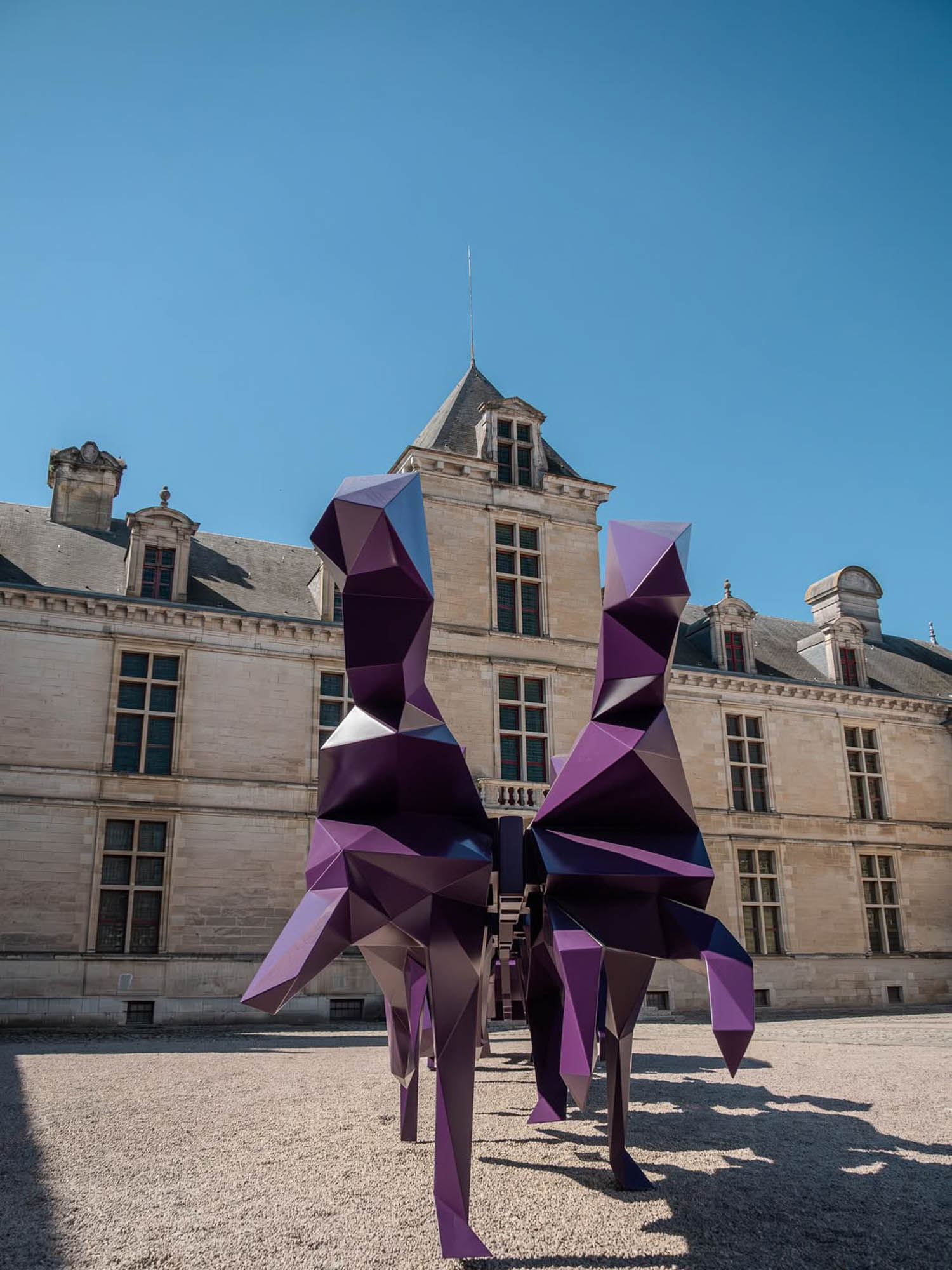
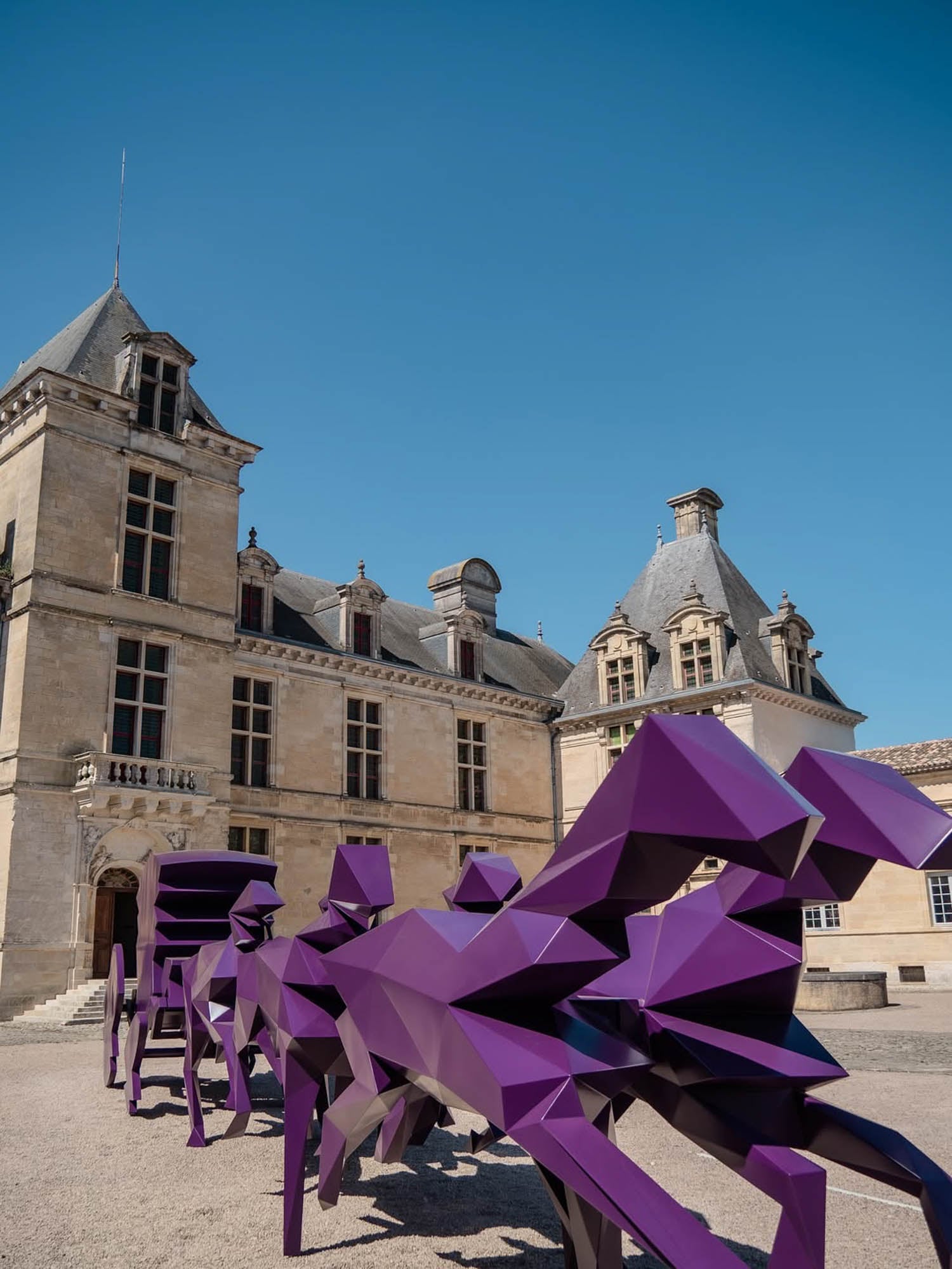
With his work, Veilhan has garnered international attention, including the 2009 Veilhan Versailles, a site‑specific intervention at the Palace of Versailles, and Architectones, a series of large‑scale works integrated into modernist landmarks around the globe. He also represented France at the 2017 Venice Biennale with Studio Venezia, where he transformed the national pavilion into an immersive recording studio that hosted more than 200 musicians across seven months.
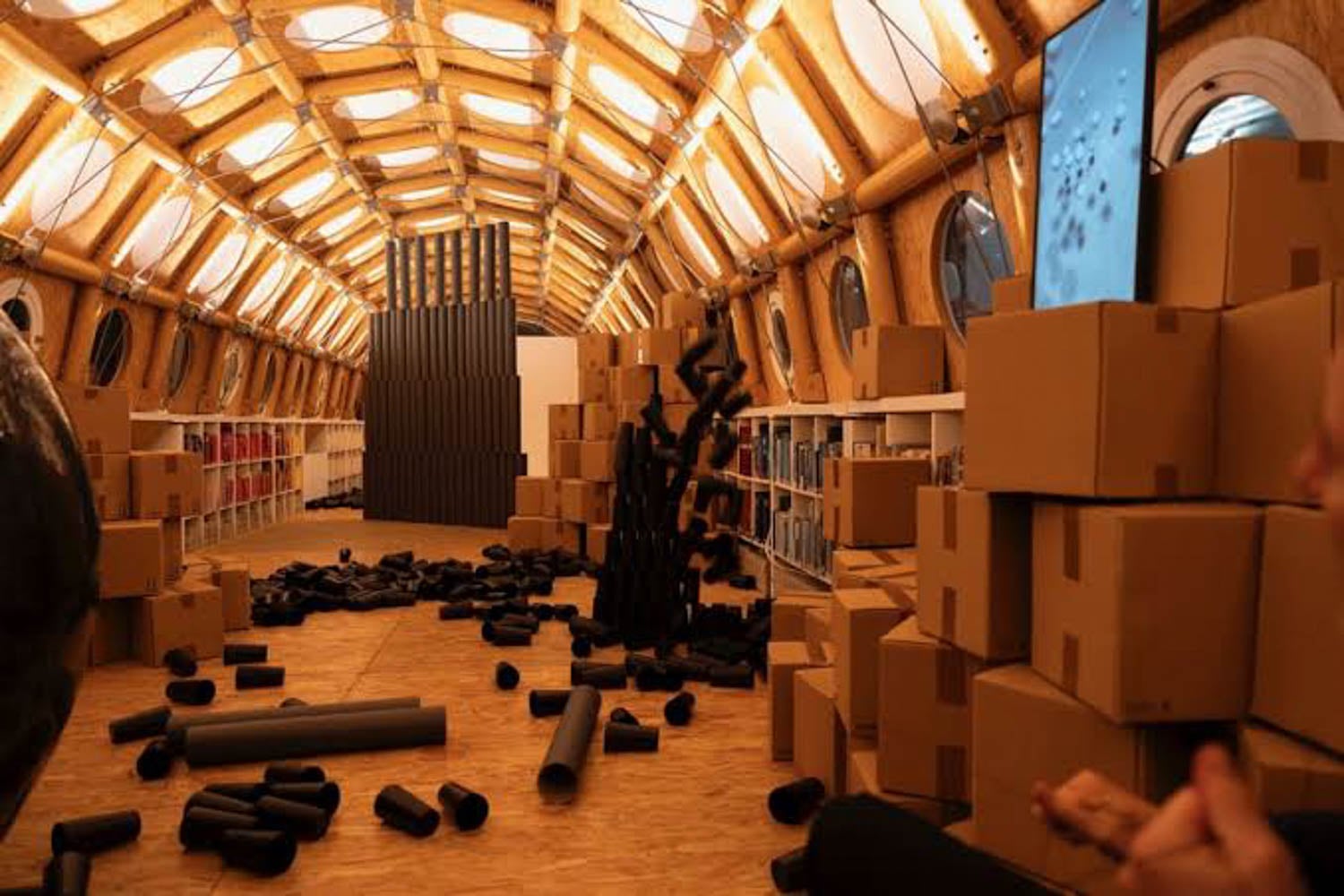
Most recently, in the spring of 2025, he showcased an exhibit at the Centre Pompidou-Metz titled carton plein, which featured paper cups that could be stacked by visitors into towers and filmed as they dramatically collapsed. These short films became part of Veilhan’s ongoing project called Film Catastrophe, which explores the beauty of impermanence and things falling apart.
Interior Design spoke with the artist to discuss his career, which spans nearly four-decades, artistic versatility, and what he thinks about his generation’s perspective on art.
How Xavier Veilhan Bridges Classical Forms With Cutting‑Edge Technology
Interior Design: Describe your background and artistic origins.
Xavier Veilhan: I grew up in a bourgeois family—my five sisters, my parents, our dog, and all of my sisters’ friends. I was always surrounded by people, with constant activity, frequent visitors, and unexpected guests. I believe this environment has influenced my artistic vision, inspiring me to create situations where people gather around a central object.
ID: Did you ever think of being an artist when you were young?
XV: I don’t clearly remember what I wanted at the time, but I do recall seeing a couple of art shows that had a significant impact on me. One of them was in Normandy, where I grew up. One weekend, we visited a castle with an old, out-of-service pigeon loft, where they had displayed images by Victor Vasarely. Vasarely was a Hungarian artist who moved to France and developed a distinctive style known for its dizzying optical effects. As a child, I was fascinated by his work because it was so striking and felt so advanced compared to what could be achieved before the digital era. At the time, I couldn’t even imagine a technique that could create such pieces. This experience sparked a deep technical curiosity in me, leading me further into art, while my sisters gravitated more toward music.
ID: You’ve had an incredible career since the ’80s. Can you tell us how it came about?
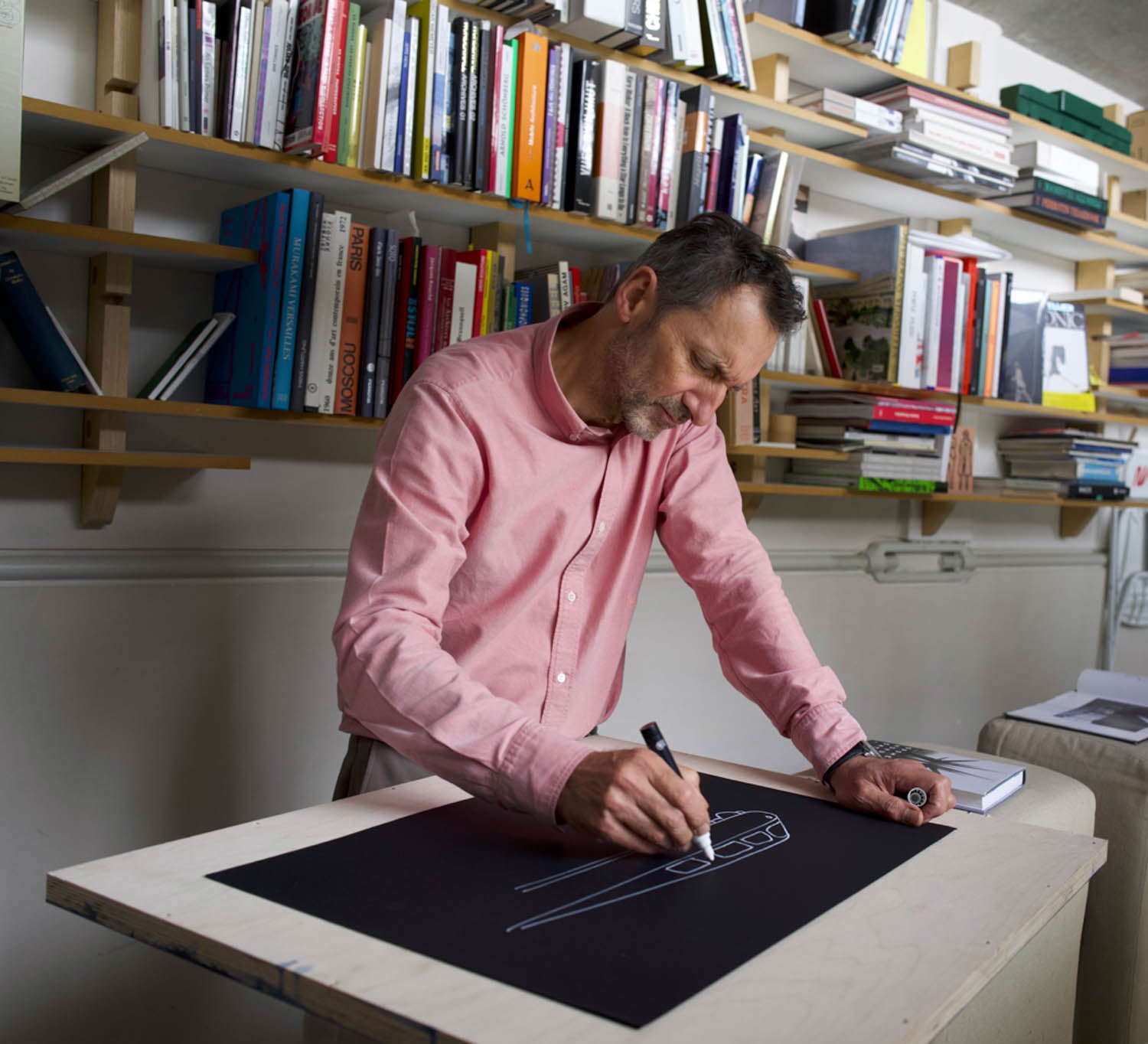
XV: I was 19 at a party in Paris when a guy asked me what I was doing in school. I told him, “I’m an artist.” I was shocked, like, where did that come from? Because I was not an artist; I was really an amateur at the time. I wasn’t even a student in a Beaux-Arts school before that. But then I realized that if I said so, I had to do so. I started to behave like an artist: going to see shows, trying to be curious about emerging techniques, etc.
ID: How did you get into photography?
XV: I’ve always been interested in new techniques. When I first started with photography, autofocus cameras had just been introduced. Before that, using a traditional camera required manual adjustments, but suddenly, you could just press a button, and it was instant. Of course, you didn’t see the result immediately—unless you were using a Polaroid—but you could adjust the image afterward instead of during the shoot. That fascinated me, so I bought a camera and started experimenting with photography.
ID: What is the inspiration behind your recent exhibition carton plein?
XV: We live in a digital age. I believe my generation should become more engaged with the physical and organic aspects of art and move away from the overwhelming virtual nature of things. There’s a tendency to get lost in layers of virtuality, but I want to emphasize the importance of real, tangible experiences. I aim to establish a physical connection—not in the sense of intimacy or purely physical interaction, but rather a shared, concrete experience. For example, if you’re in a subway station, you’re surrounded by strangers. You may not know them, but you’re all part of the same moment. If there’s a loud noise, everyone instinctively reacts. That kind of collective awareness interests me, and I want to create artistic situations that foster these shared experiences.
ID: What conversation are you hoping to evoke with carton plein?
XV: I think it’s a positive thing when people discuss the art pieces in front of them—when they share an experience. But that’s not the only way art functions. One of the unique qualities of visual art is its ability to bypass language entirely. What interests me most is how we perceive and understand the world around us—through physical textures, memories, and sensations. In art, for example, when you look at a painting, what’s depicted on the canvas is important, but what’s left out—the space beyond the painting’s frame—can be just as intriguing. These are the kinds of reflections I aim to provoke with carton plein.
ID: How does structure and design play into your work?
XV: Well, I’m not an architect or a designer—I’m an artist. But I do have a deep appreciation for design. I’ve been influenced by many figures in design across different generations—people like Achille Castiglioni, Konstantin Grcic, and others.
I owe a lot to Christine Diegoni, who runs a gallery specializing in 1950s and 1960s design. At the time, I couldn’t afford anything from her, but we stayed in touch. Eventually, she proposed an exchange—some of my artworks for pieces from her gallery. Through that, I acquired some incredible pieces. Over time, this appreciation for design became integrated into my daily life. Technology comes and goes—my iPad might stop working, my car might break down—but my chairs and my dining table are these well-designed objects that last. Living with high-quality, thoughtfully made objects improves daily life in a way that I find meaningful.
ID: What philosophy has guided your artistic practice over the years?
XV: Money. It’s almost not a joke. The biggest constraints in making art aren’t skill or imagination; they’re time and money. That’s something I constantly have to navigate. If you look at art history, the greatest artists weren’t just talented—they also understood how to work within the economic, social, and cultural realities of their time. Time and money are pressures, yes, but they’re also part of the process. Though, of course, some days, you just feel tired.
XV: Do you have any works you are planning to expand on?
XV: None in particular. I don’t see my work as a straight line from A to B. Instead, it zigzags. I often find myself returning to the same questions, the same ideas. That doesn’t necessarily mean I’m creating an “extension” of a previous project, but rather that all my work is interconnected. Some forms in my work recur again and again because they lend themselves well to being moved, manipulated, and experimented with. The goal is always to gain a deeper understanding of what’s happening around me.
ID: Can you tell us what you’re currently working on?
XV: Right now, I’m confronting my own carbon footprint. I work with people in Korea, New York, and other places far from my studio in Paris. This has made me question how I can travel to these locations without relying on planes.
Last year, we tested an idea for an exhibition in Stockholm in February and transported my works by sea. It was freezing, and it took six days to get there, but the experience of bringing the pieces with us on a sailboat was incredible.
This year, we’re planning something even bigger with the Explore Fund, founded by sailing champion Roland Jourdain. We’re hoping to take a 55-foot racing catamaran from Concarneau, France, to São Paulo, Brazil. It’s a costly and time-intensive effort, but I’m excited to see where this project leads.
read more
DesignWire
10 Questions With… Sculptor Aminata Mboup
Aminata Mboup discusses her practice, inspirations, fluidity between disciplines, as well as her unique approach to materials.
DesignWire
10 Highlights From Amman Design Week
Amman Design Week 2026 gathers a host of regional designers and architects under the theme ‘Accumulations.’