
10 Questions With… María Magdalena Campos-Pons
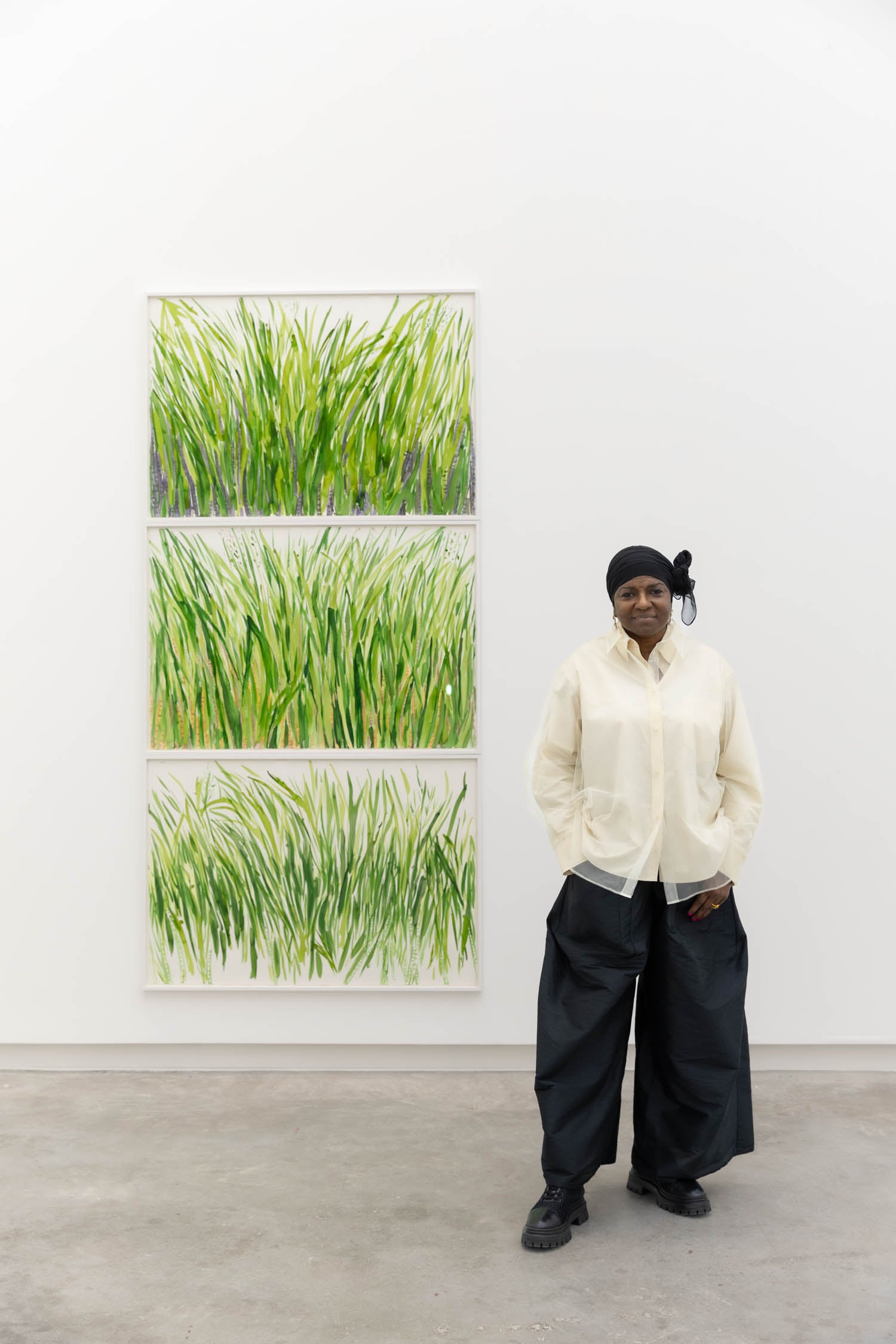
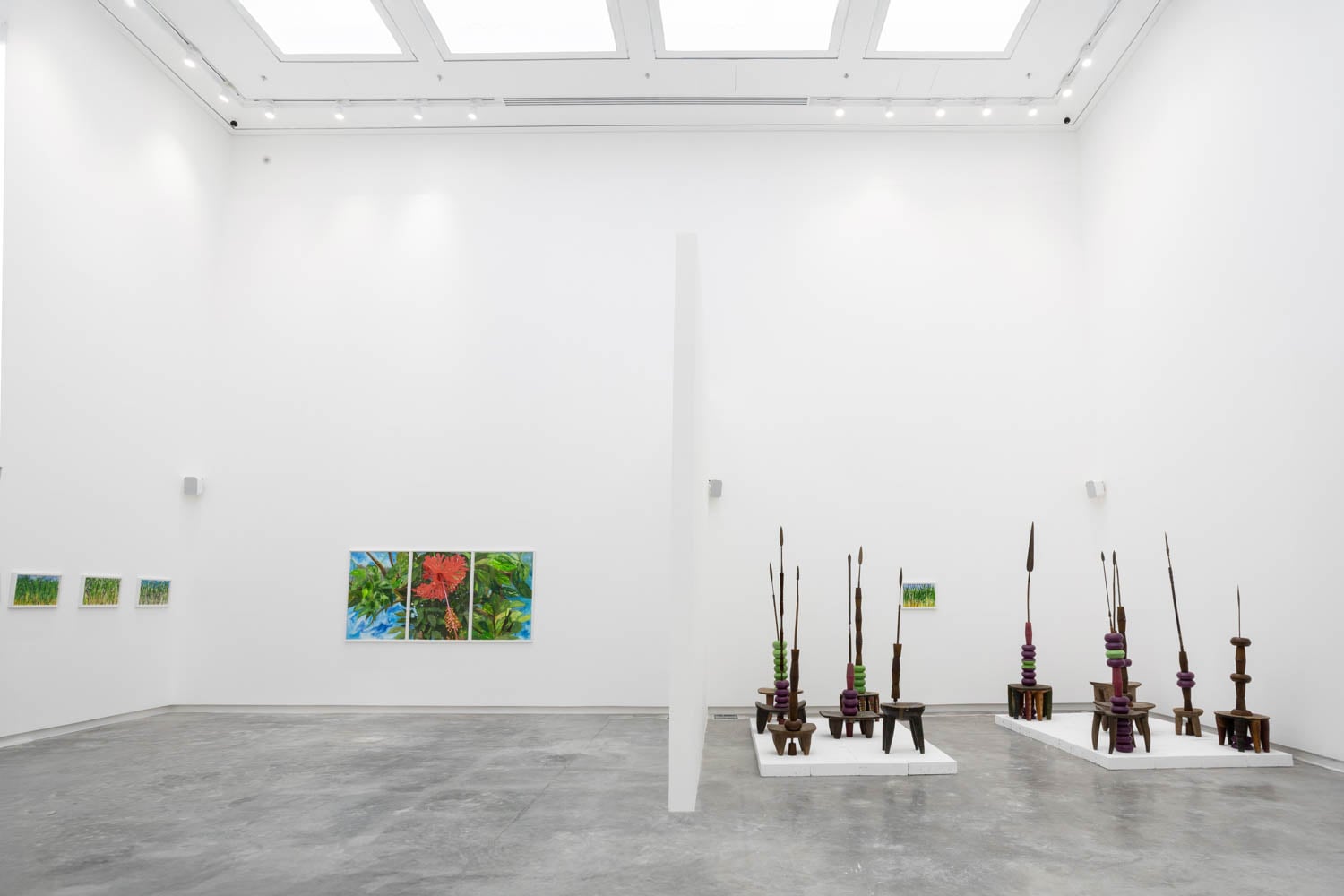
Anything is possible in multidisciplinary artist María Magdalena Campos-Pons’s world—including a field in a sugarcane plantation, a utopia of happy farmers, and a fresh new perspective her viewers can find solace in. These are all elements that existed in her first solo exhibition in the Middle East, titled I Am Soil. My Tears Are Water at Efie Gallery’s new space in Alserkal Avenue, Dubai. The exhibition, which ran this spring, was curated by Faridah Folawiyo.
A Cuban-American artist renowned for her profound explorations of identity, memory, and spirituality, Campos-Pons’s practice has stretched across four decades, spanning various mediums, including photography, painting, sculpture, video, and performance art. She often draws upon personal and collective histories, addressing themes such as the Transatlantic slave trade, diasporic identity, and Afro-Cuban spirituality, particularly Santería. Her art is evocative, a vessel for storytelling, connecting ancestral narratives with contemporary experiences in intrinsic details.
Dubai marks Campos-Pons’s debut exhibition in the Middle East. Of the experience in the new, yet familiar land, she says: “Migration breaks you and remakes you. It fractures your language, your geography, your sense of self. But it also gives you new rhythms. My work has always been about building emotional architecture and spaces that hold the complexity of diaspora, the ache of distance, and the beauty of resilience. Dubai, like Matanzas, Havana, like Nashville, exists in my art not as fixed coordinates but as emotional geographies—places of layered meaning. With each movement, I gather, I mourn, I transform.”
Interior Design sat with the multidisciplinary artist to chat about four decades of artistic practice, migration, identity, her oeuvre, and her latest exhibition.
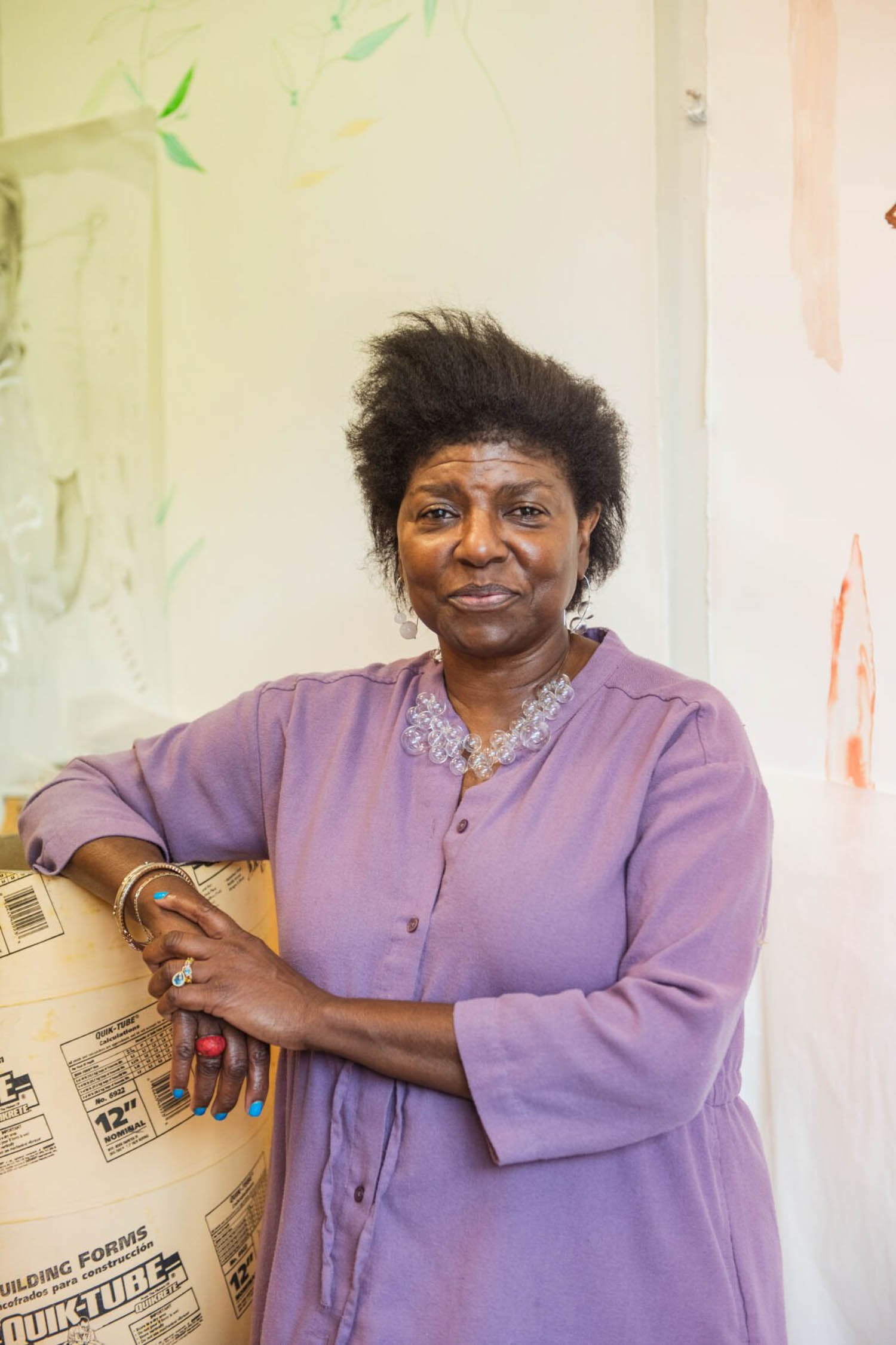
María Magdalena Campos-Pons’s Work Is Rooted in Tradition
Interior Design: Describe your journey as an artist.
María Magdalena Campos-Pons: As a child, I learned that materials hold stories and can witness events. From the beginning of my career, I have been deeply interested in the expansion of materials and in exploring how different materialities can serve as a means of expression. Through my family and school, I was exposed to the idea that materials themselves carry expressive presence—and this awareness has stayed with me. My recent work continues this search: for memory, for healing, for a poetics of connection across land, language, and lineage.
ID: Can you tell us about your background, growing up, migrating, and how that influenced your art?
MC: I was born in Matanzas, Cuba, with Nigerian and Chinese ancestry via my family that came from Africa and Asia to labor in the sugar fields. I also come from a very structured academic background, having studied at the Escuela Provincial de Arte EPA in Matanzas and Escuela Nacional de Arte ENA in Havana and the Instituto Superior de Arte in Havana and Mass College of Art and Design in Boston, which has influenced my approach to art. It’s no surprise that my work engages deeply with history—both art history and the broader human experience.
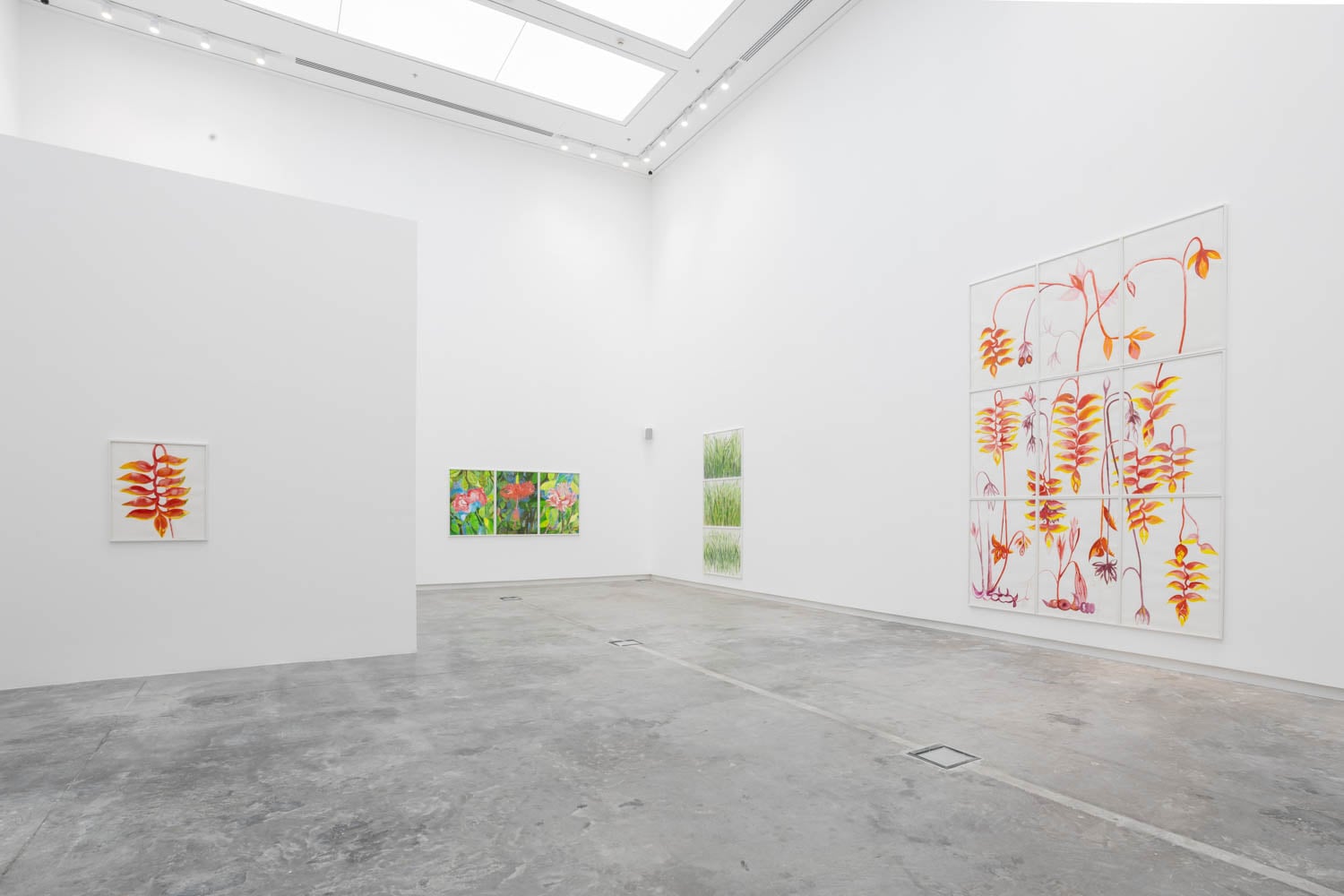
Every material I use carries profound meaning, rooted in the histories and traditions I’ve encountered since childhood. Living in the U.S., first in Boston and now in Nashville, I carry my homeland with me and the dislocation of migration sharpens memory and it makes it sacred. It’s why my work is full of symbols: sugar, flowers, glass. These are bridges between places, between past and present. In this exhibition, plants like hibiscus, Heliconia, and sugarcane become more than flora—they are insurgents, storytellers, bearers of cultural memory and survival.
ID: Your work often bridges geographies and histories. How did reimagining Sugar/Bittersweet in the Middle East shift or deepen your understanding of these interconnected histories?
MC: Geography is more than just a location; it’s a concept, a feeling, a framework through which we form relationships. Geography is our bodies in itinerancy and stillness. This is how I view it—this is my philosophy. Reimagining Sugar/Bittersweet in the Middle East was a return and a departure at once. Sugarcane has touched nearly every continent through systems of violence, trade, and resistance. To stand in Dubai and think about sugar is to feel how beauty and brutality are often entangled. The work becomes a meditation on time and tide, on how histories echo across oceans.
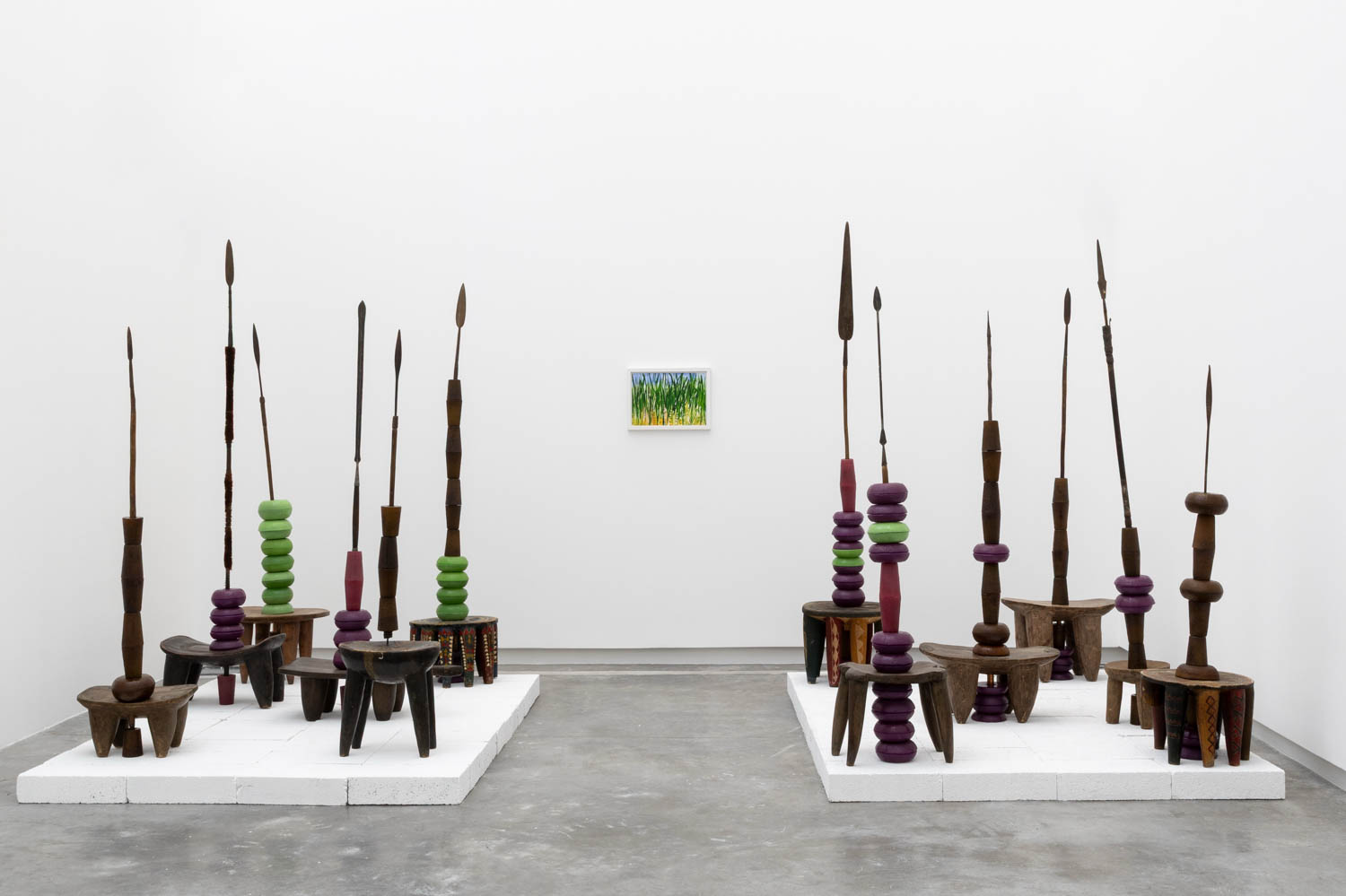
ID: The use of antique African spears and West African stools in your new installation evokes both violence and resilience. How do you see these objects speaking to the legacies of labor and movement across continents?
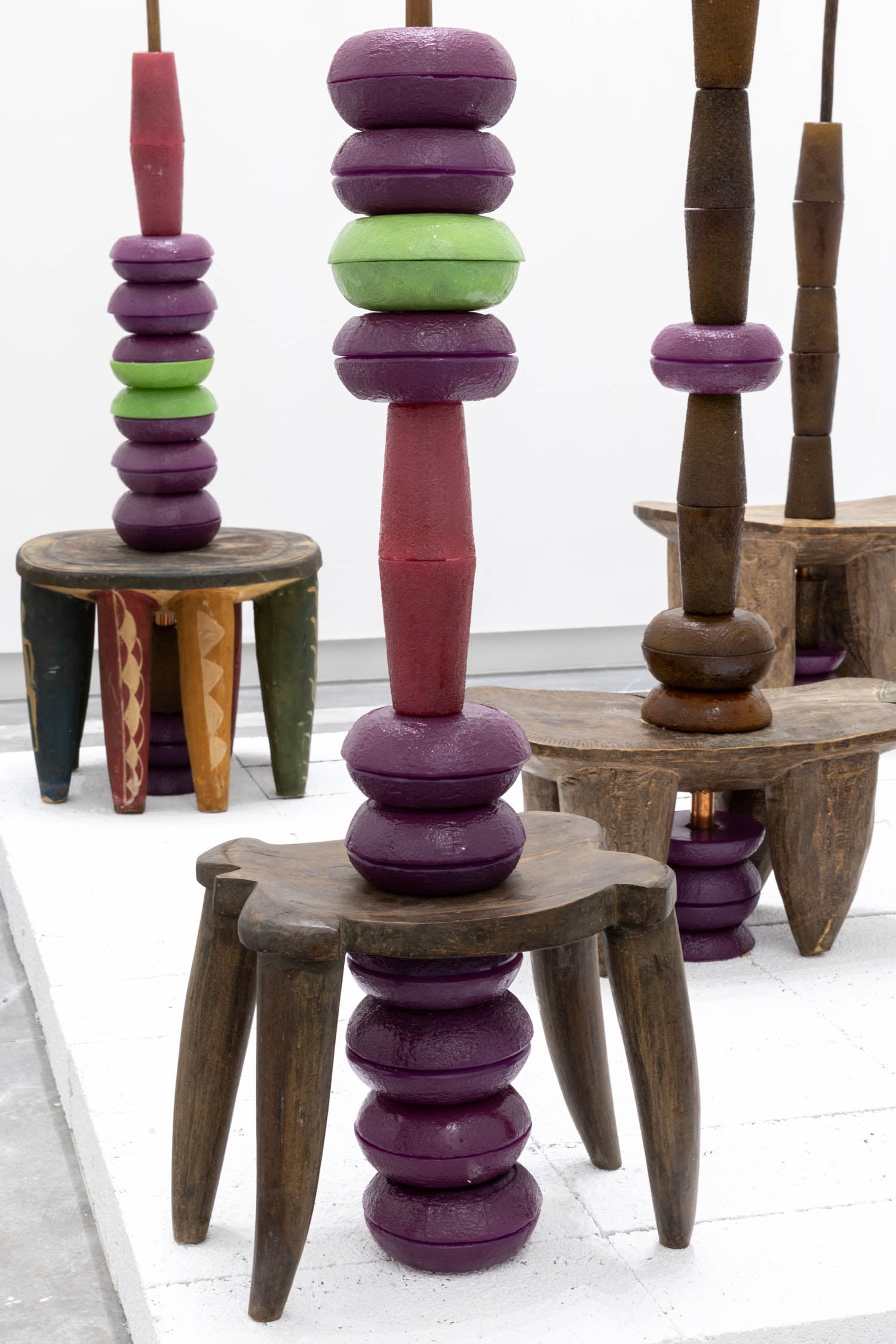
MC: The spears, reaching toward the sky, mimic the upright stalks of sugarcane. They are elegant and dangerous. They speak of defense and pride, but also of struggle. These are not simply tools or weapons; they are also markers of presence, of resistance. The West African stools carry the shape of rest, of gathering, of pause, yet in this context, they also suggest endurance. These objects embody diasporic journeys and how cultures were carried. The installation is both a shrine and a wound; it acknowledges the pain of history and honors the spirit that survived it. Ancestor guards of roads and destinations.
ID: Over the years, your work has spanned photography, performance, painting, sculpture, video, and installation. Why was it important for you to incorporate these media?
MC: From the start of my career, I’ve been interested in the expressive possibilities of materials. Every medium I use—be it glass, metal, sugar, wood, pigment, and bodies—carries meaning rooted in my upbringing, my family, and the traditions I grew up around. But I also work intuitively, with deep care and respect. Materials have presence—they speak. I treat each one as a partner in dialogue, and that relationship becomes part of the narrative. In I Am Soil. My Tears Are Water, this manifests as a tactile, spatial experience—one that you don’t just see, but feel. During the opening ceremony, we invited visitors to drink hibiscus libations and taste sugar cookies, and in a previous performance, I invited the attendees to try raw sugar cane and juice (guarapo). I have deconstructed the Cuban Mojito drink.
ID: You often speak about ancestral memory and healing in your work. How does this new exhibition extend or evolve those themes in light of your engagement with Middle Eastern audiences?
MC: I was raised with spirituality in very simple and specific forms—through healing and ritualistic practices. This included lighting candles, placing flowers in certain positions, choosing colors with intention, and engaging in conversations that invoked the spiritual realm. Dialogue, speaking, and communicating through channels of spirituality—talking to ancestors, invoking blessings—all of this was always done in the name of goodness and beauty. This allows for an opportunity to redefine, for myself and others, what spirituality truly is. What is the materiality of spirituality? What is the materiality of memory? In this exhibition, I invited audiences regardless of background to experience the materiality of memory. There’s something deeply shared in the act of remembrance and the desire for repair. In my visits to the region, I found a great sense of connection. I find similarities in music, architecture, and some sort of continuous line.

ID: The sound map you created with Kamaal Malak adds another layer to the experience. What role does sound and music play in accessing deeper forms of memory and connection in your practice?
MC: We’re shaping the exhibition like a journey through space and sound. Kamaal and I worked together to develop a soundscape that reflects layering: memory, geography, ritual, the botanical. His work brings a resonant undercurrent to the entire experience.
ID: How do you feel about the first piece you ever made versus your most recent work?
MC: The first piece I ever made was full of questions. The most recent one is also full of questions, but they are different now. What has changed is not the urgency, but the depth of listening. I now allow more silence, more space. I am less interested in the perfection of form and more committed to the clarity of intention. I still create from a place of longing, but now that longing is laced with a kind of calm. The journey has taught me that art doesn’t answer but witnesses.

ID: At this point in your life and career, what feels more urgent to you: preserving the past or imagining new futures?
MC: The past is always with us. We carry it in our bodies, in our rituals, and in our languages. But memory without vision can become heavy. I am interested in memories that liberate those dreams. What feels urgent to me is to offer healing and to create spaces where we remember in order to imagine otherwise. To preserve with purpose, and to dream with courage. The future needs roots, but it also needs wings.
ID: There’s a palpable presence of women’s narratives and maternal energies in your paintings and installations. How conscious are you of weaving feminist or matriarchal storytelling into your visual language?
MC: I was raised by women who healed with their hands, who told stories with their eyes, and who knew how to transform the ordinary into the sacred. These women are the foundation of my visual language. I don’t think of it as “feminist” in a theoretical sense but as matrilineal, as deeply embodied knowledge. My installations often become altars, homes, sanctuaries—spaces where women’s voices, silenced for centuries, are restored and exalted. It’s not just about telling women’s stories. It’s about recognizing their centrality in all stories. I am the gatherer, and I keep the circle open.
read more
DesignWire
10 Questions With… Sculptor Aminata Mboup
Aminata Mboup discusses her practice, inspirations, fluidity between disciplines, as well as her unique approach to materials.
DesignWire
10 Highlights From Amman Design Week
Amman Design Week 2026 gathers a host of regional designers and architects under the theme ‘Accumulations.’