

10 Questions With… Nina Bassoli
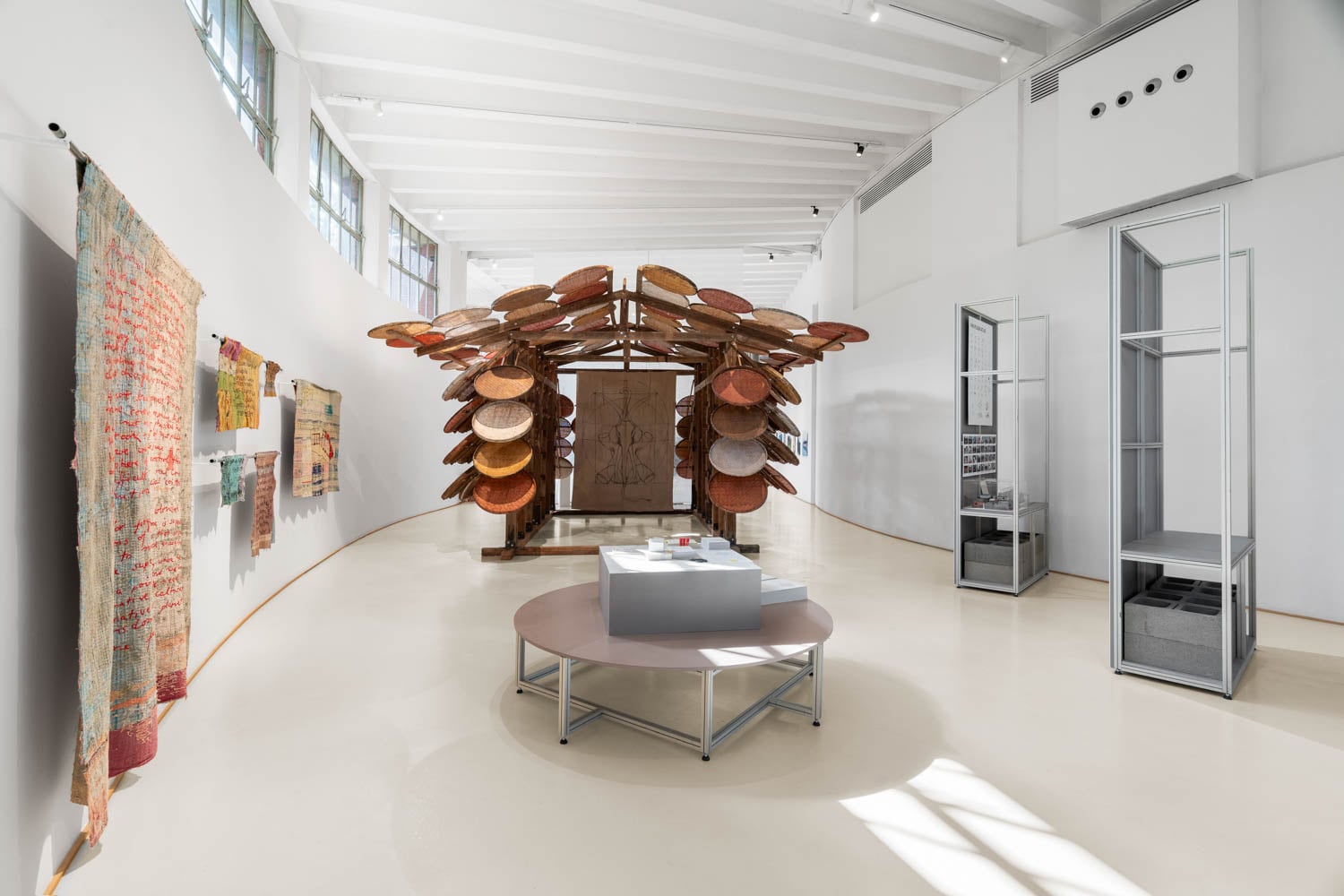
This year, Inequalities, the 24th Triennale Milano International Exhibition that ended November 9, challenged much of the architectural and design establishment—including Theaster Gates, the Norman Foster Foundation, and Beatriz Colomina—to rethink structural imbalances of power. For her show within the larger exhibition Cities, curator Nina Bassoli focused this wide remit into a clear-eyed, wide-ranging look at urban environments.
The show is part of Bassoli’s larger project of deploying research-based scholarship to formant artistic and architectural progress. The provocative show arrived at a moment in which, in the United States and throughout much of Europe, the very idea of noting inequality (even, often, using the word) can spark backlash; it also arrived at a bittersweet moment for Bassoli, who will leave the Triennale next year to pursue other curatorial and research endeavors.
She recently talked with Interior Design, in a conversation that has been edited for clarity and length below, to talk about her formative years, exhibiting architecture in exhibition spaces, and what comes next for her.
How Nina Bassoli Offers A Fresh Urban Lens At This Exhibition
ID: When was the first time you really noticed the built environment?

Nina Bassoli: My parents were in advertising, and our house was very much a great shape of shiny colors, like a playground world. So I’ve always felt the power of inhabiting the world in a creative way, that inhabiting a space could give function to it. I was born in Milan, and lived by the city center, and so something I really felt in my life is that the world is made of nature, but also of relationships between people that are developed through rules and dialogue and sharing, in a peaceful but fruitful way of confrontation.
ID: How did that upbringing move you into training and working as an architect?
NB: I have a background in classical studies, in literature and Latin and ancient Greek, which is common in Italy. To me it was very important to get in touch with the very strong relationship between ideas and the real problems of practical, everyday life. That was the thing that moved me to study architecture as a tool for reading the world.
ID: And when did you move into the professional field?
NB: First, I worked in architecture offices, but in the field of competitions, exhibitions, and publications—in the storytelling, the meaning of the project more than the technical details. From there, I moved into editorial, working in magazines, and then the curatorial field. All are related in finding relationships between things and their narration. But also, part of my career is activism. I designed a public space in Milan with a bottom-up process, with the community. As a volunteer after the 2009 earthquake in L’Aquila I spent three months in an emergency camp trying to create space for gathering, a temporary structure for the community there. As an architect, I could create a relationship space.
ID: How do the roles of activist, curator, and architect intersect for you? By which I mean, how do you negotiate your desire to be an activist and also work within institutions and get the work done?
NB: It’s very important to create the cultural conditions for things to happen. I read my work as a sort of preparatory field for new ideas, rather than communicating something that already exists. I also teach at the Polytechnic University of Milan, and that is an important aspect in my life. But this is quite different. It’s not teaching in terms of educating. It’s more about preparing questions, discussions, making a field more open for developing your thoughts. It’s important to show best practices and also to open up comparisons and controversies, some contradictions and doubt. Preparing terrain means making questions and putting discomfort in a very clear narrative. I think it’s very important to show that, from the point of an institution. You are changing something in the relationship of power.
ID: In America, we’re moving from a point where we were expecting institutions to ask questions into an expectations that they should dictate narratives and prop up power structures. Are you seeing that in Italy as well?
NB: In the last decades, institutions in, let’s say, the Western countries were doing a quite important reversal of power, a putting in of doubt. There was a turn in the meaning of culture and power. This is changing quite fast in the U.S. and Europe. I can’t say I’m seeing it happen here, because we are doing an exhibition that is quite radical in terms of saying big statements around redistribution of power. We are still in a moment where institutions can say something loud that puts in doubt structural power. But the atmosphere is quite suggesting an opposite way of seeing things, and it’s possible that Italy will change fast.
ID: Which makes Inequalities not only timely, but challenging. What’s the origin story of the exhibition?
NB: The Triennial is an event taking place for over a century, and every one has a big theme that crosses disciplines between architecture, design, craft, arts, urban planning, sociology, and philosophy—using these disciplines as tools of analysis and answering problems. That’s a tradition we keep alive. The last two editions were related to nature: 2019’s Broken Nature, created by Paola Antonelli; and 2022’s Unknown Unknowns, which was about the strange moment we all shared in the planet during the coronavirus pandemic. Now, we decided to go back to something very urgent and close to the everyday life of people.
Inequalities, programmatically, is quite a strong statement. We thought about the relationship between humans and nature, but also how people share their lives together, in cities, and how this can be developed in more equal way. Through the tools, you can read difficult situations and things that can be reshaped. You can see inequalities as things that can be rebalanced. The show is a tool for this project.


ID: You really center cities in this exhibition as a way into the issues—why?
NB: From the beginning, including very different parts of the world were important. The kind of cities included are also tiny islands with less than 300 people living there. Cities are also deserts. There are hierarchies about development of places, so that you have places that are richer and places that are under development, the so-called Third World. I try to avoid that concept. I prefer to see places and projects and let emerge an alternative path to this linear developing of things. So I asked designers directly to tell me about places where the specificity of the city is very important. To tell a story with a solution, a practice, something ongoing. We have the possibility to learn about feminism from Mexico City, or the relationship with other species from an island in China. I selected designers and practitioners who were already researching and tried to put that discussion just a little step forward.
ID: How do you design an exhibition that makes all that legible to visitors?
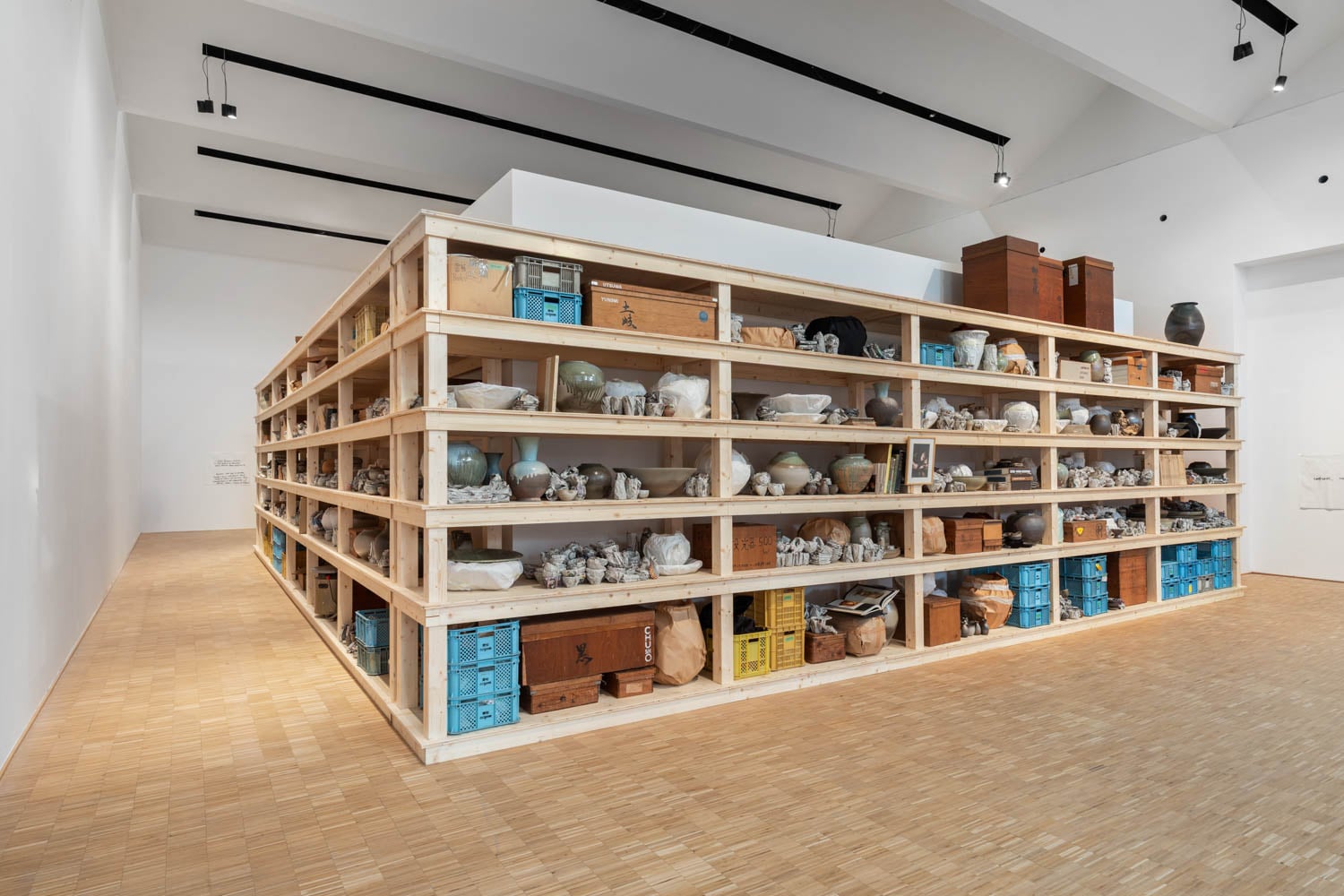
NB: That is always difficult. Abnormal, the installation’s designers and scenographers, are a collective and helped a lot. I wanted to have an open geography, with environments that have coherence and rhythm. The first part is related to media and the idea of narrating situations that occur in parts of the world through their communities. Another part is made of installations of objects. And then the last part has tables where architects design different cities. You feel this atmosphere of the building site, which is something you feel in a city. When exhibiting architecture, you have to exhibit surrogates that let you think about the real situation in the real world outside the museum.


ID: There’s also a book, which really expands the exhibition into other realms. How did you conceive that?
NB: The book gathers the voices of the protagonists of the exhibition in a collection of thoughts and images that will remain as the statement of the 24th International Exhibition in Milan. And there’s another book, for which we commissioned six photographers to shoot the show in six points of view, and commissioned essays that cross all the exhibitions to try to find transversal paths. Usually you build an exhibition, you make the catalog, and those are parallel. In this case, we did a catalog and exhibition, and now are building another catalog to push forward the questions raised by the exhibition.
ID: And after that, what’s next for you?
NB: I’m working on the Milano architecture week, also on the themes of inequalities. For next year, I’m working on an exhibition of Andrea Branzi, who was an amazing architect and designer but also a philosopher on the idea of the city and the world of objects. He’s a really contemporary figure to explore relationships of power in cities. So every further project can be an opportunity to develop the project you just finished. I would really like to push forward the relationship between research, which has long-lasting timeframes, with the temporary time of exhibitions and events. I hope this tries to keep the aim and soul of the activist in my work, developing structured projects of research and display.
read more
DesignWire
10 Questions With… Sculptor Aminata Mboup
Aminata Mboup discusses her practice, inspirations, fluidity between disciplines, as well as her unique approach to materials.
DesignWire
10 Highlights From Amman Design Week
Amman Design Week 2026 gathers a host of regional designers and architects under the theme ‘Accumulations.’