
10 Questions With… Terumi Saito
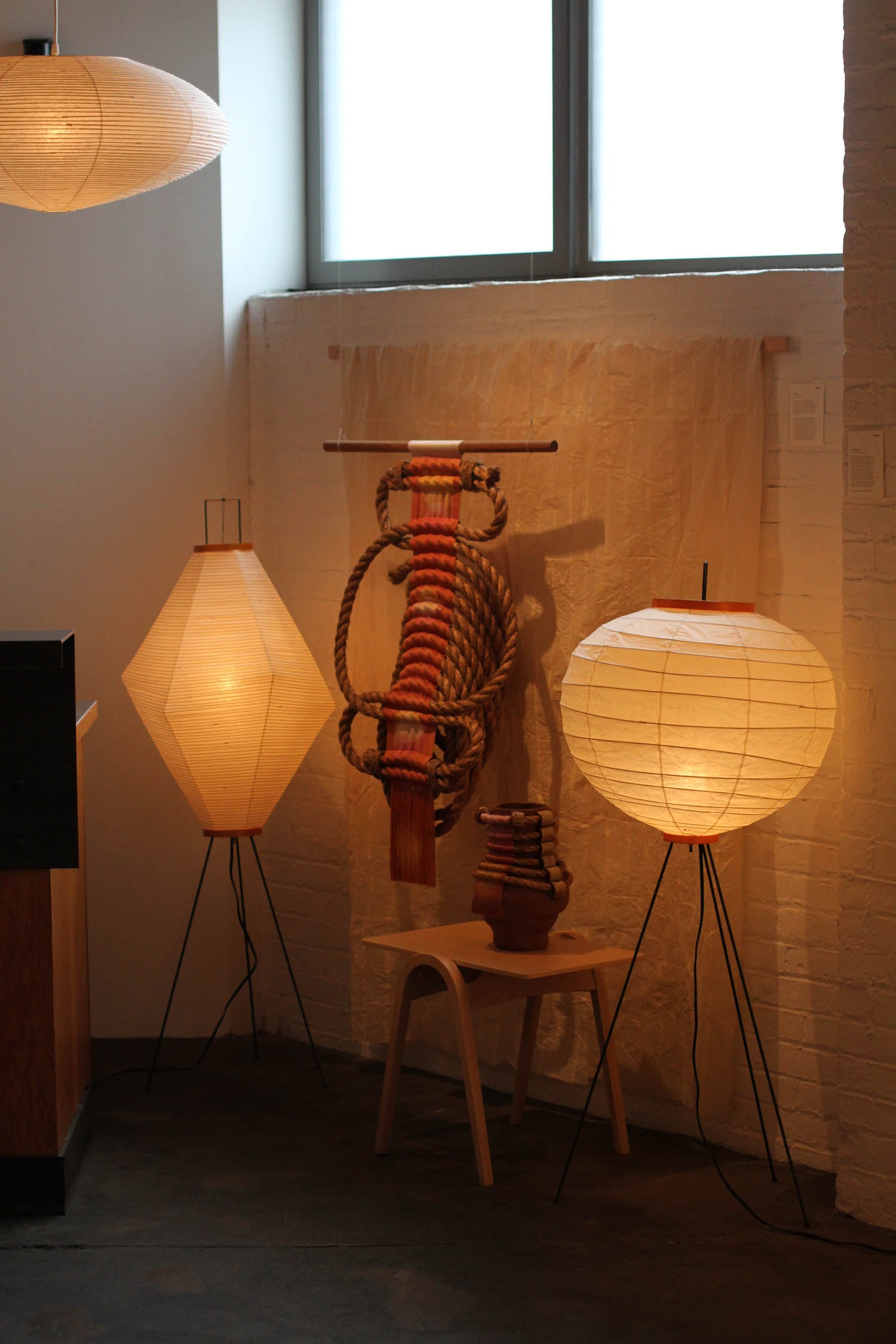
Designer and sculptor Terumi Saito has called New York home since 2016, but she hails from Shizuoka, Japan, where she earned a BFA in graphic design before turning toward fiber arts and sculpture. Today the award-winning designer—who has participated in residencies and exhibited her work around the world, from the Houston Center for Contemporary Craft to a solo show at New York’s Forecast Gallery in 2024—weaves together textiles and ceramics in highly sculptural pieces that feel at once ancient and contemporary.
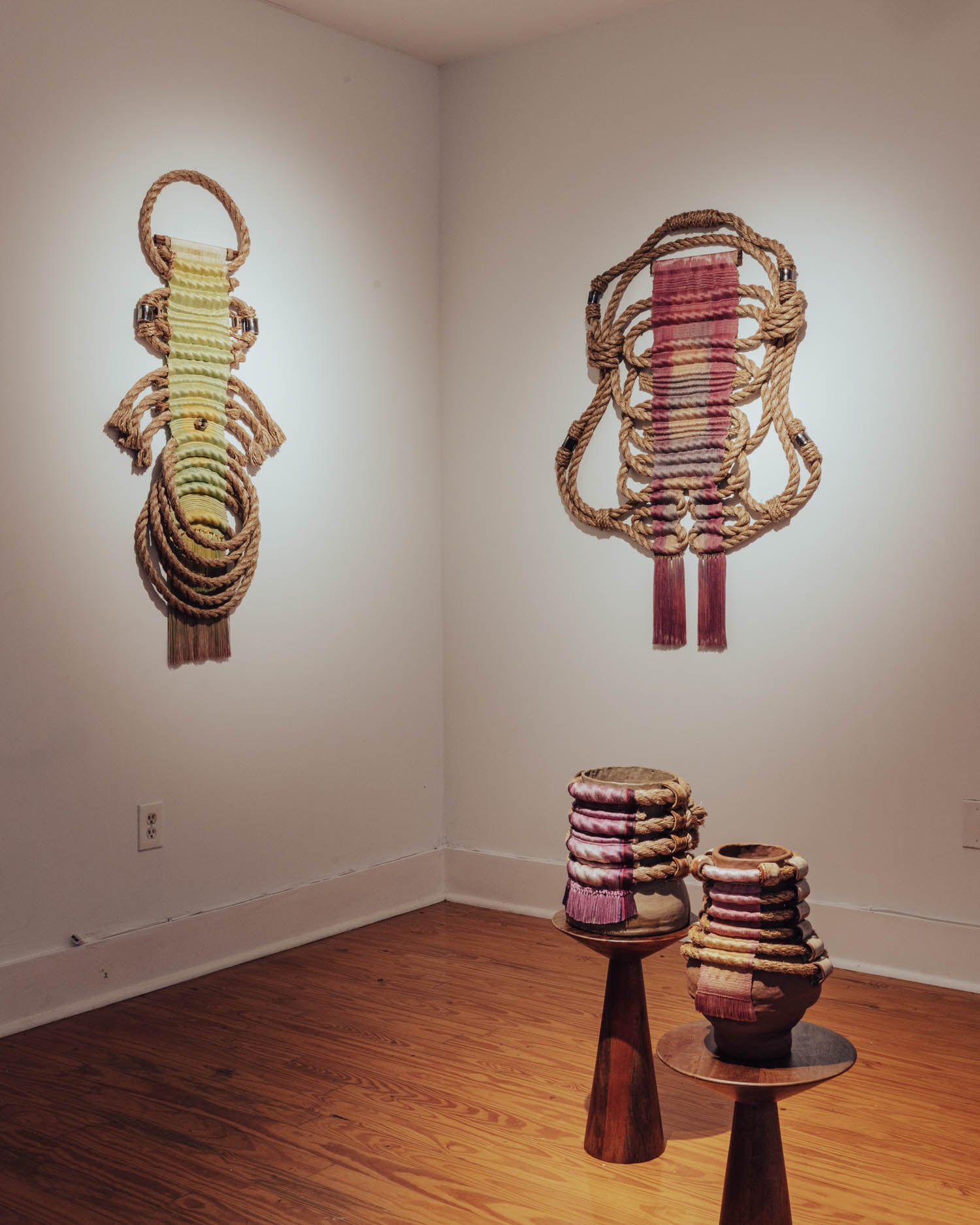
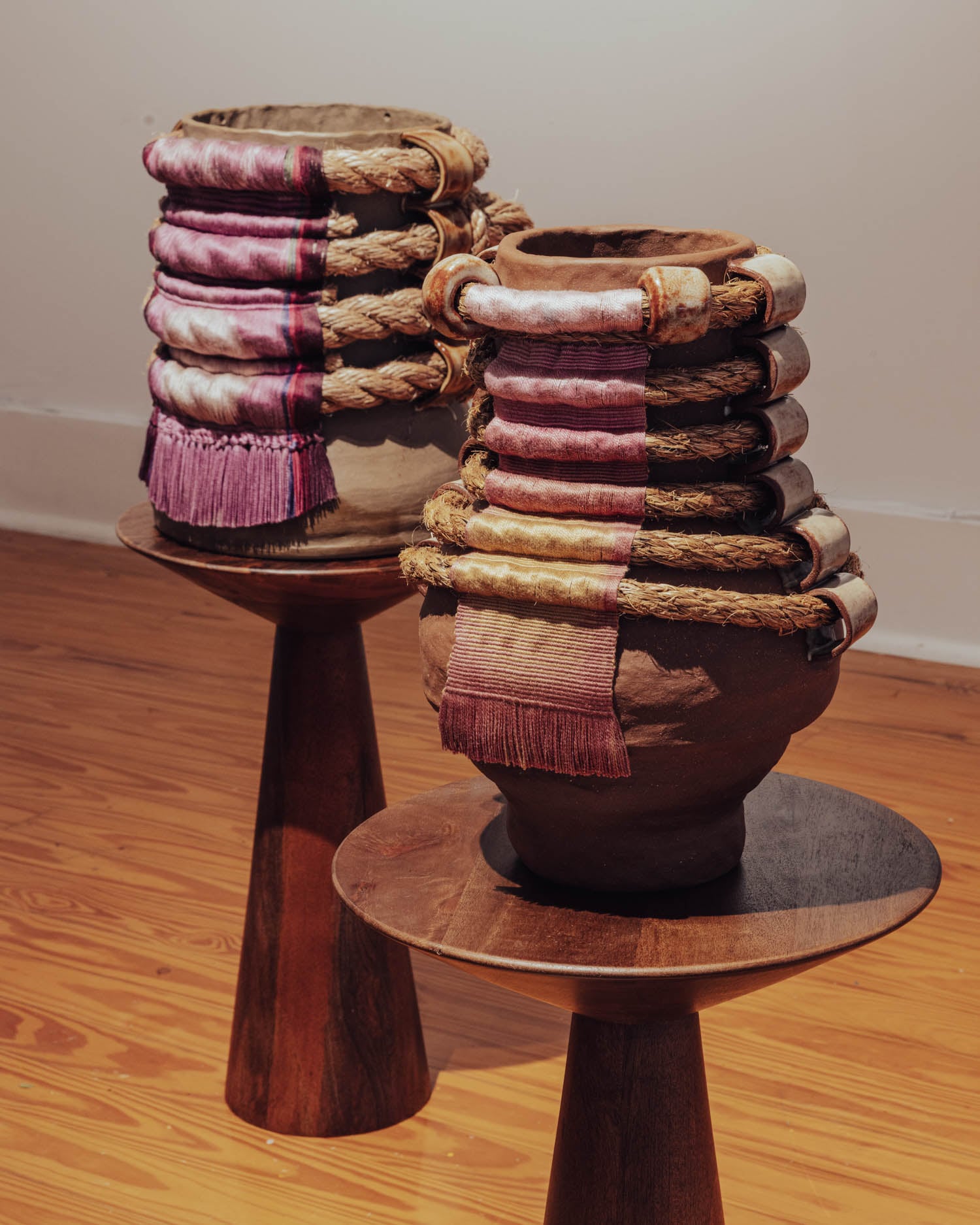
A pull toward materiality and more physical work led Saito to pursue an MFA in textiles at Parsons School of Design and, ultimately, the traditional, highly physical art of backstrap weaving, which she specializes in and reinterprets through a contemporary lens. “I was drawn to it because of this intimate connection between body, time, and material,” she says. Blending hand-dyed silk with hand-built ceramics, Saito’s work beautifully blends her plethora of experiences, influences, and interests.
After encountering Saito’s work at the third U.S. edition of Alcova at Design Miami 2025, Interior Design spoke with her about her New York origin story, how she came to one of the oldest weaving techniques in the world, and much more. This all on the cusp of her leaving for Peru to participate in the Arquetopia international artist residency‘s traditional Andean backstrap weaving program, where she studied with a master weaving teacher at the same residency in 2019.
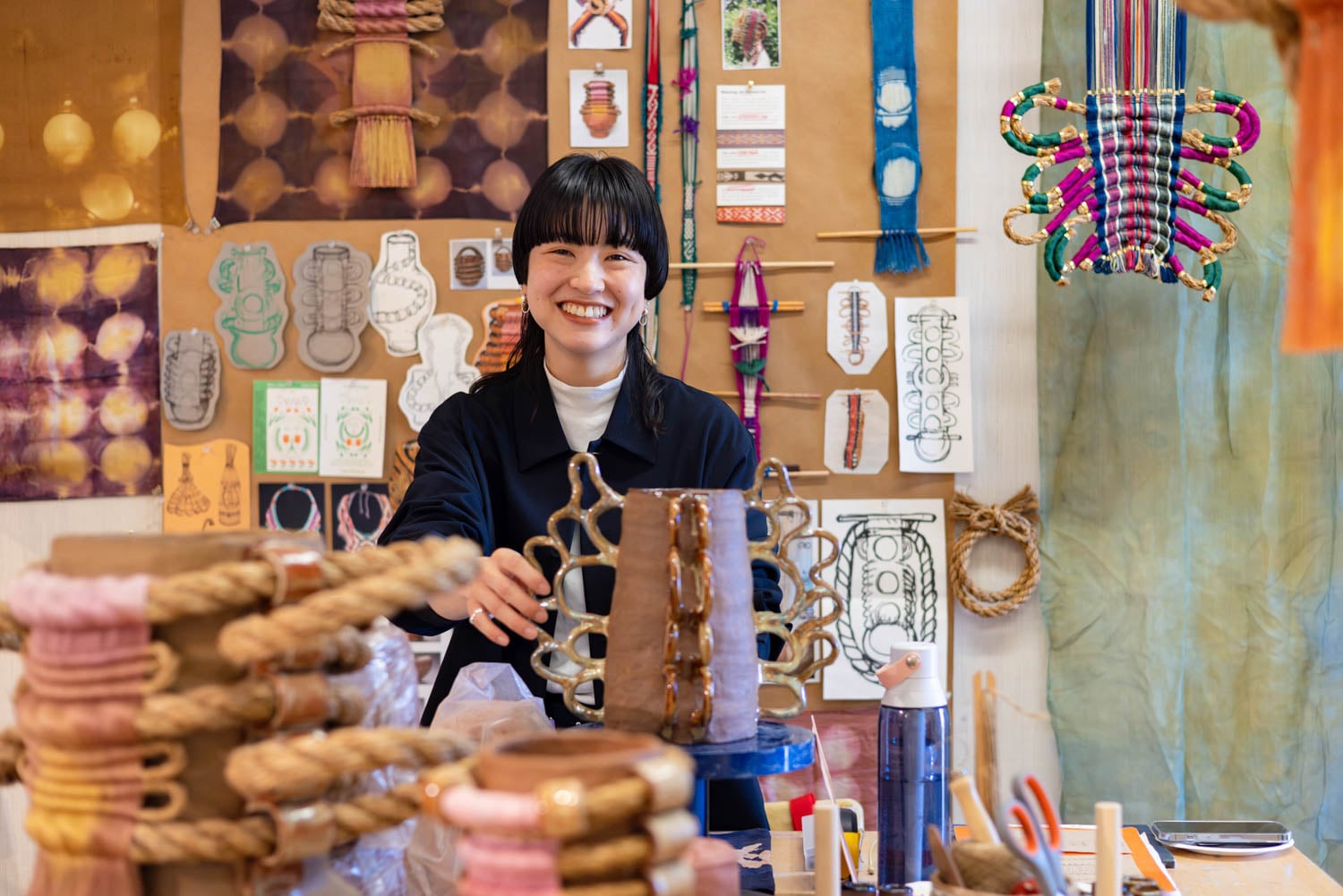
Terumi Saito Weaves Past and Present Through Backstrap
Interior Design: What is your origin story as a designer? When did you first become interested in design?
Terumi Saito: When I studied graphic design in Japan, I became deeply interested in visual structure and storytelling. I started paying attention to the way things were composed—how colors, materials, and spaces worked together. That foundation eventually led me toward materials and physical form, which felt like a more direct and emotional way to communicate.
ID: You are from Japan, but are now based in New York. Tell us how you got there?
TS: I studied graphic design at Tama Art University in Japan, and in 2017, I was accepted to a graduate program in the United States to continue pursuing my studies in graphic design. I was very excited by the opportunity and the people I met during the interview process; however, due to an issue with my TOEFL English test score, I was unable to begin the program. While preparing to reapply the following year, I began to feel a stronger desire to work more physically and materially.
That curiosity led me to discover fiber art—a field I had not encountered growing up in Japan. Being in New York at that time, I had moved there in 2016 and attended a short course portfolio program, which further exposed me to artists and exhibitions working across disciplines such as fiber, sculpture, performance, which fundamentally shifted my understanding of what art and design could be. This ultimately led me to pursue an MFA in Textiles at Parsons School of Design. After graduating, I obtained an O-1 visa and have since been living and working in New York as an artist and graphic designer.
ID: You specialize in backstrap weaving. What is it, what attracted you to it, and how did you learn it?
TS: Backstrap weaving is one of the oldest weaving techniques in the world with a rich heritage across Asia and Central and South America. The technique was widely practiced in many parts of the world in the past, but it is an endangered technique in modern days. Japan’s history of Backstrap weaving dates to the Yayoi period (ca. 300 BCE– ca.300 CE), but in modern days, there are very few traditions still incorporating this weaving technique. The loom is attached to the weaver’s body, so the tension of the loom is controlled by the movement and posture of the body itself. I was drawn to it because of this intimate connection between body, time, and material. The act of weaving becomes almost meditative you feel every thread.
In the past, I learned this technique through residencies and studying with master weaving teachers in places like Guatemala and Peru, where it is still practiced as a living tradition. Because resources were limited, much of my learning also came through independent research and hands-on practice. I went through many trial and error in the past in order to understand the mechanics of the loom, from warping the yarn to achieving proper tension, so that it could operate smoothly. This process eventually allowed me to become more ambitious with form, pushing my backstrap weaving toward sculptural work.
ID: How does your background in graphic design inform your work today?
TS: Graphic design taught me how to think about structure, rhythm, and composition—how to build meaning through visual systems. That thinking still informs how I compose woven surfaces and sculptural forms. Even though I now work more with fiber and clay instead of pixels and paper, I still approach a piece as a kind of visual language: considering balance, contrast, repetition, and narrative.
ID: What was a big turning point in your career?
TS: In 2021, I began working at Ippodo Gallery in New York [first as a gallery associate, eventually working my way up to gallery manager, as well as providing graphic design services, which I still do], where I deepened my understanding of Japanese ceramics and contemporary craft. While working full-time, I trained at studios including Greenwich House Pottery and Brooklyn Clay, and attended a course at Anderson Ranch Art Center. Although I had a long-standing vision to combine fiber and clay, access to ceramic facilities in New York was both competitive and financially challenging.
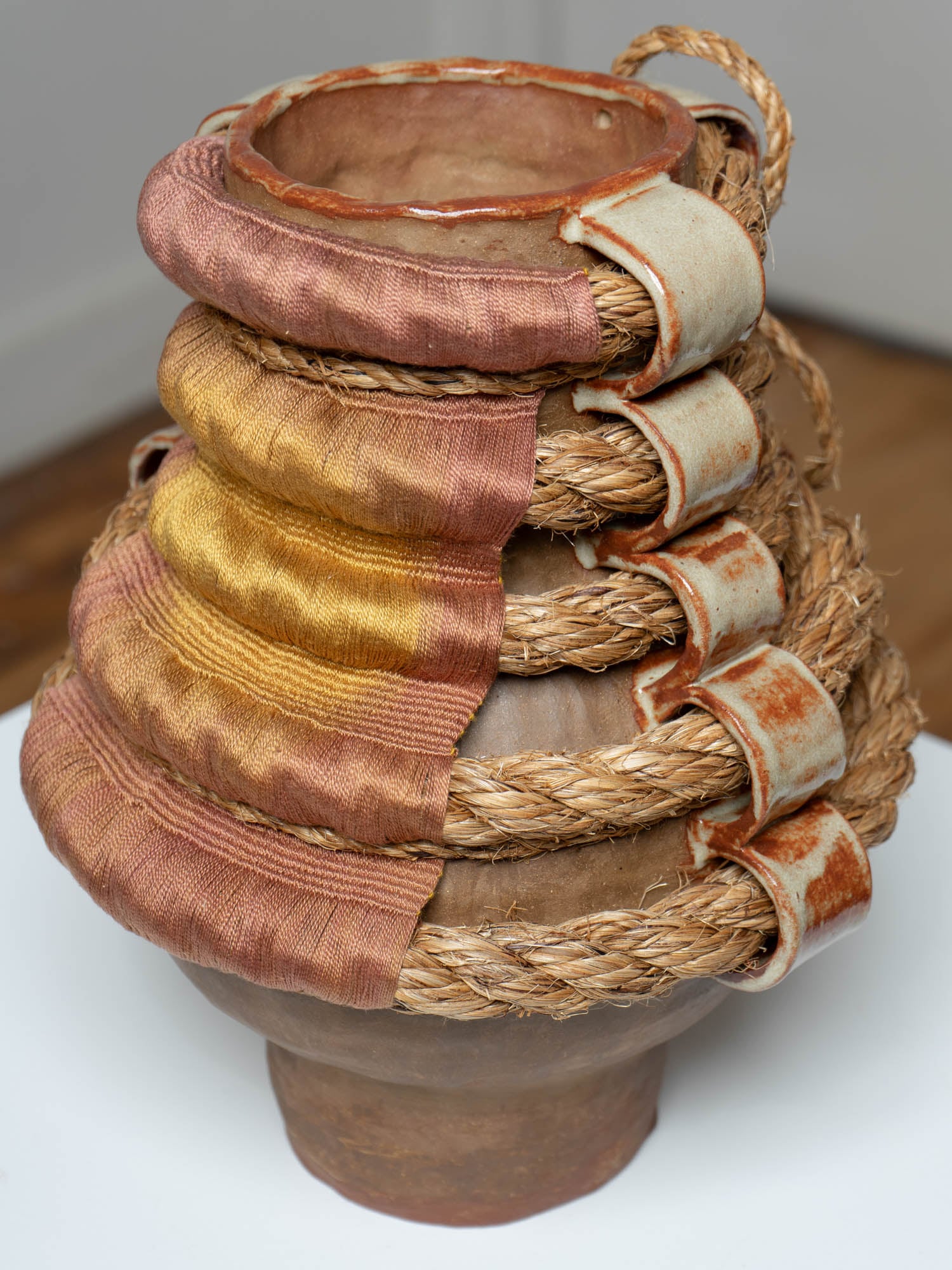
In 2023, a residency at the Houston Center for Contemporary Craft provided dedicated time, studio space, and kiln access to develop this body of work. I continued this research through a residency at Vermont Studio Center in 2024, which culminated in my solo exhibition “Earthen: Interweaving Fiber and Clay” at Forecast Gallery in New York. From 2024 to 2025, I was an artist-in-residence at the Museum of Arts and Design in New York, where I further expanded this ongoing research and practice.
ID: Tell us about your process. How do ideas arrive, and what happens next?
TS: Ideas often begin with materials—a fiber, a color, or a texture that stays in my mind. From there, I start sketching and making small samples. I work very intuitively at first, letting the materials lead. Then I move into a more structured phase, deciding scale, form, and how the textile will interact with ceramic elements or space. Rather than overthinking in my head, ideas unexpectedly spark and emerge as I’m physically engaged—whether I’m weaving or building the clay structure, allowing the piece to develop its significance over time.
ID: How long does it typically take to complete a piece?
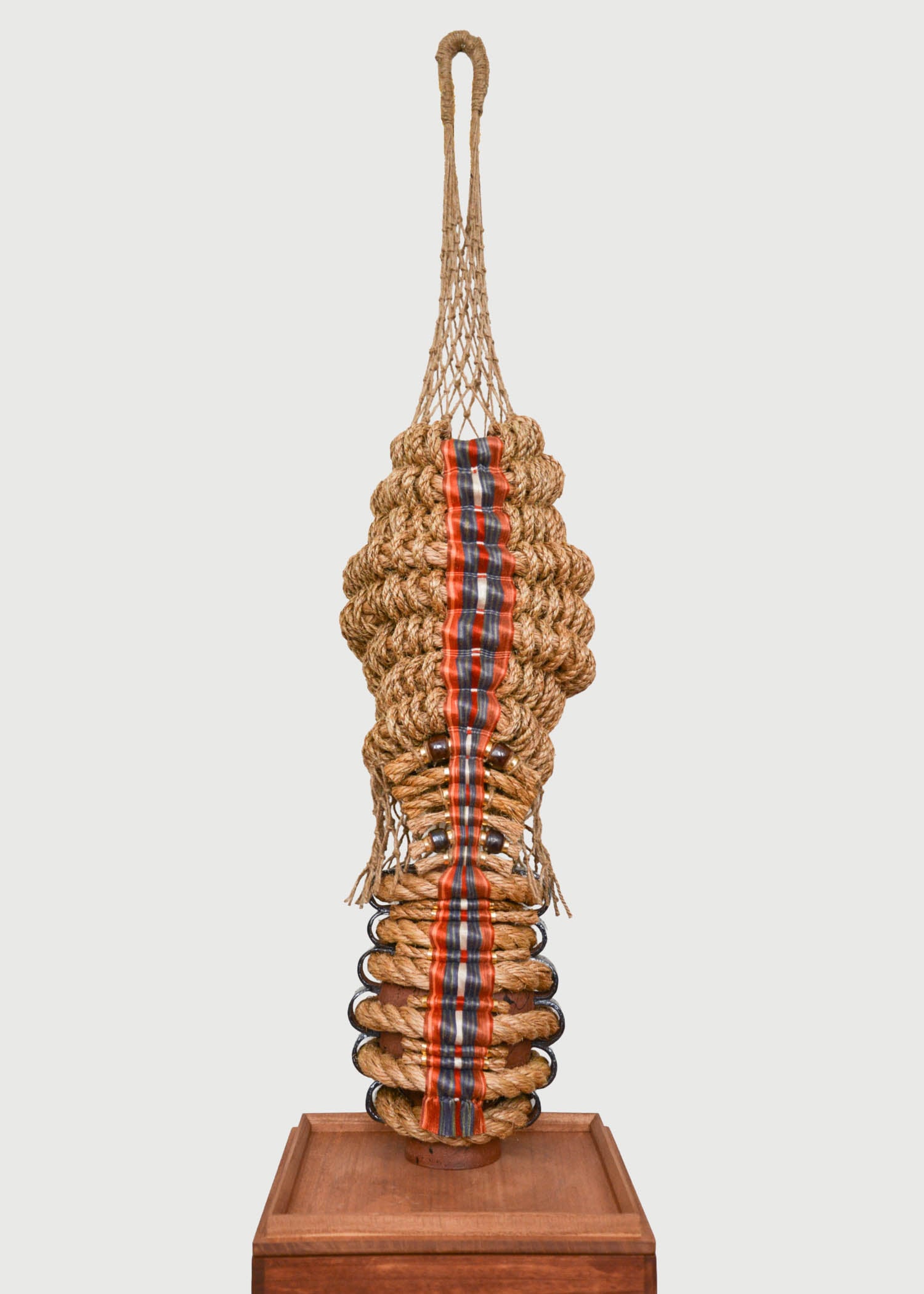
TS: It depends on the scale, but most works take several weeks to a few months. The weaving alone can take many days, and when combined with hand-built ceramics and natural dyeing, every stage becomes layers of processes including drying, resting, and adjustment. I think of time as part of the material.
ID: How have your residencies in Peru, Guatemala, and Japan informed your work?
TS: These experiences allowed me to learn directly from people who continue and keep the traditions alive and see how deeply textiles are embedded in their daily life, history, and identity. I was truly grateful and honored that they have generously shared with me their legacy and knowledge. They have not only taught me the techniques, but also weaving as a living language that is evolving while honoring its roots.
ID: Where do you look for inspiration?
TS: I find a lot of inspiration in traditional crafts such as textiles, ceramics, bamboo, rice straw craft, architecture, and everyday objects. I’m especially drawn to things that carry traces of human touch. These details often feel more powerful than anything polished or perfect.

ID: What’s next—what are you working on now?
TS: I’m currently developing new sculptural works that further integrate fiber and clay, exploring how woven structures can shape and support ceramic forms. I’m also continuing research into traditional techniques, as part of an ongoing project that looks at how ancient techniques can speak to contemporary world, space and design. In February 2026, I am returning to the Arquetopia international artist residency’s traditional Andean backstrap weaving program in Peru, where I studied with a master weaving teacher at the same residency in 2019.
read more
DesignWire
Designers And Manufacturers On The Move: September 2026 Edition
Interior Design‘s latest On the Move includes must-know industry promotions and hires, like Perkins&Will’s strategic move to expand its design capabilities.
DesignWire
10 Questions With… Artist and Designer Conie Vallese
From sculpture and ceramics to glass, textiles, and furniture, Conie Vallese embraces a multidisciplinary practice shaped by curiosity and creativity.