
10 Questions With… Ulysses de Santi and Lucas Simões
The 20th-century movement, which came to be known as Brazilian Modernism, was greatly defined by the designs of Joaquim Tenreiro. In the 1940s, Tenreiro built factories in Rio de Janeiro and São Paulo to transform indigenous hardwoods, wicker, and cane into iconic furniture for architects.
Today, Ulysses de Santi has made a name for himself by sourcing pieces from Tenreiro and his contemporaries for institutions such as the Los Angeles County Museum of Art (LACMA) and collaborating on exhibitions with the likes of Mendes Wood Gallery and Frieze.
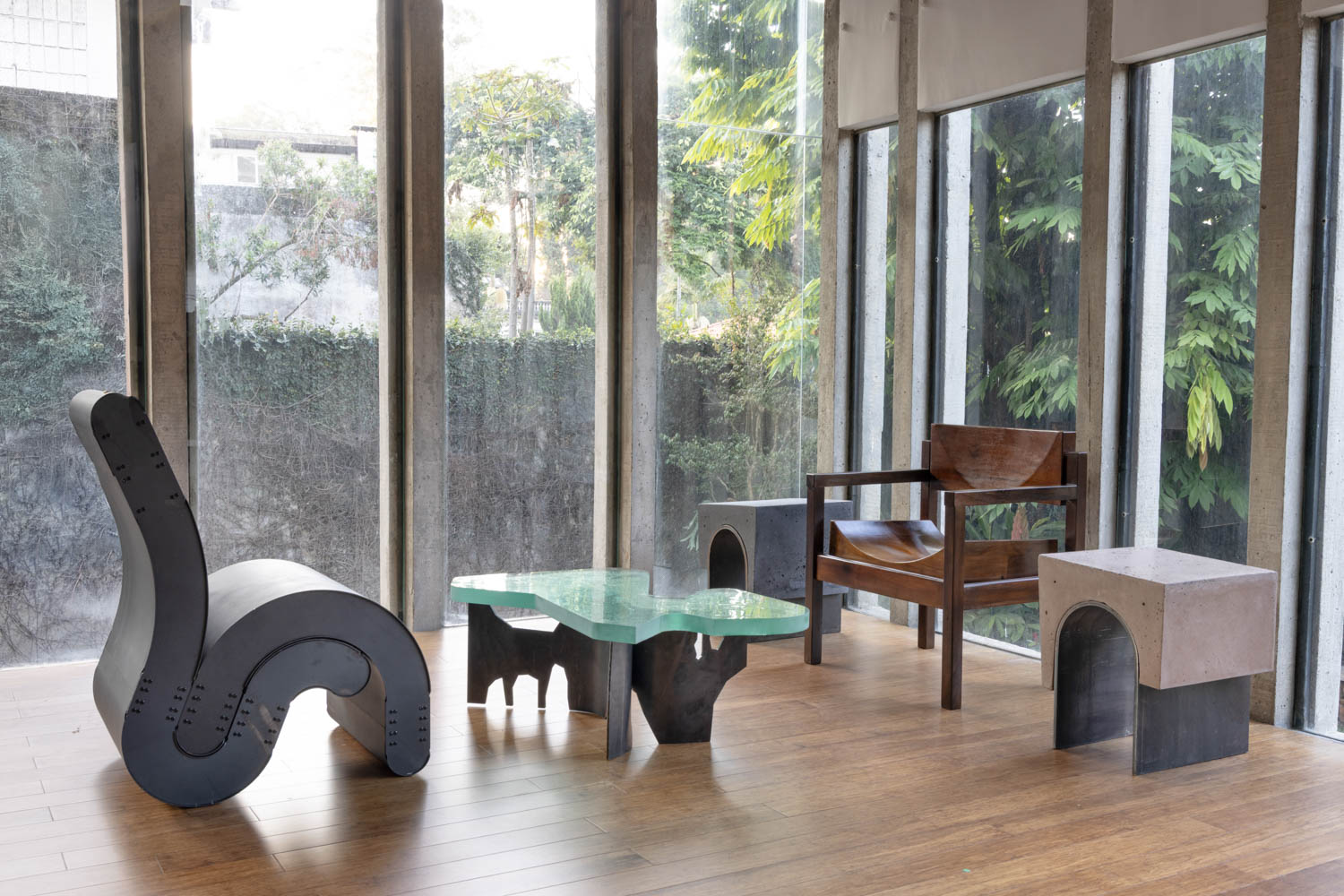
On Sept. 5, de Santi debuts his latest exhibition, Lightness & Tension, at Christie’s in Los Angeles. But this time, he’s looking toward the future, pairing work by Tenreiro with that of São Paulo’s Lucas Simões, who has recently expanded his fine art practice into a debut furniture collection.
Interior Design recently spoke with both de Santi and Simões about the origins of their collaboration, Tenreiro’s legacy, and what Americans might misunderstand about Brazilian Modernism.
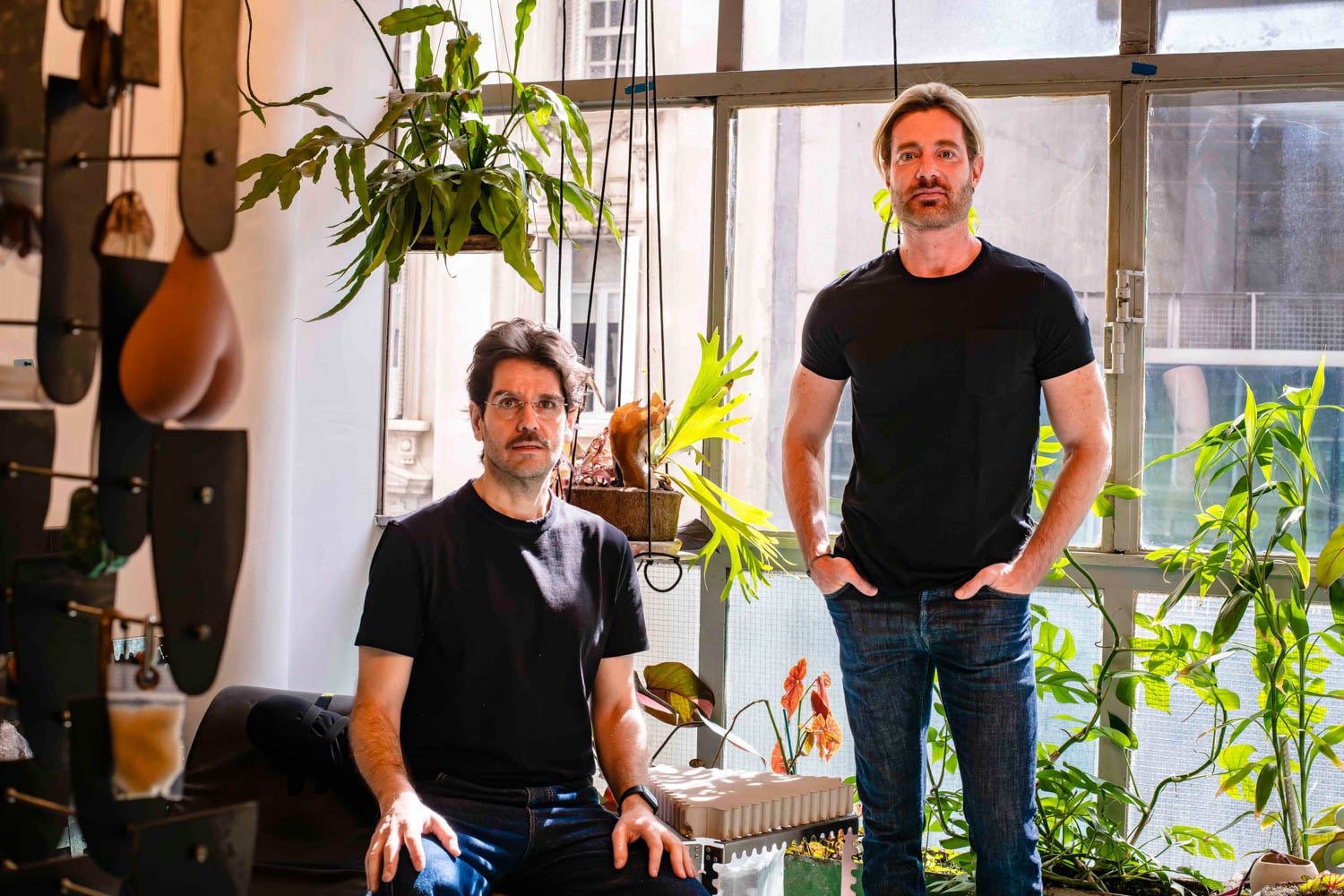
Ulysses de Santi and Lucas Simões Turn Brazilian Modernism Into Art
Interior Design: Ulysses, how did you first become interested in collecting and curating design?
Ulysses de Santi: My interest started intuitively—long before I had the language to describe it. I was always drawn to the presence certain objects held in a space. The first piece that really marked me was a Jorge Zalszupin tea cart. Its curves, materials, and technical ingenuity felt completely original: elegant but functional, expressive but refined. That piece opened the door to a much larger story about Brazilian modernism, and I’ve been collecting, researching, and preserving that history ever since.
ID: Lucas, you have a thriving art practice. Why have you moved into functional design?
Lucas Simões: My work in art, which involves creating spatial installations and sculptures, is shaped by my background in architecture. Over time, I started designing furniture and tools for my own use in the studio, employing the same materials and techniques I use in my sculptural practice. This process naturally led me to explore functional design as an extension of my artistic work, one that engages directly with the human body and domestic space. What interests me most is the challenge of integrating form, function, and meaning—of creating objects that are not only visually compelling but also serve a practical purpose in everyday life.
ID: How did you two meet?
LS: Ulysses and I have known each other for a long time. Although we have been aware of each other’s work, the idea of collaborating only emerged recently when Ulysses visited my studio and suggested organizing a show.
ID: Ulysses, what prompted the idea of a collaboration?
UDS: I’ve spent over a decade focused on historical work—building a collection, sourcing rare pieces, and developing a rigorous authentication process. But at some point, the conversation needs to move forward. I felt it was time to open that dialogue, to see how the legacy of modernism could inform new creation, and how contemporary work could reframe the past.
Aside from being friends and a longtime admirer of his work, I’ve been collecting Lucas’s pieces for over 20 years. He’s not trying to replicate what’s already been done. His work comes directly from his art practice, not from a desire to design furniture in the traditional sense. There’s no nostalgia, no pastiche, just a conceptual rigor and formal precision that feels deeply contemporary. And yet, his pieces hold the same kind of presence I look for in historical work. They demand attention, not because they reference the past, but because they stand entirely on their own.
ID: You’ve decided to pair the work with that of Joaquim Tenreiro. What drove that decision?
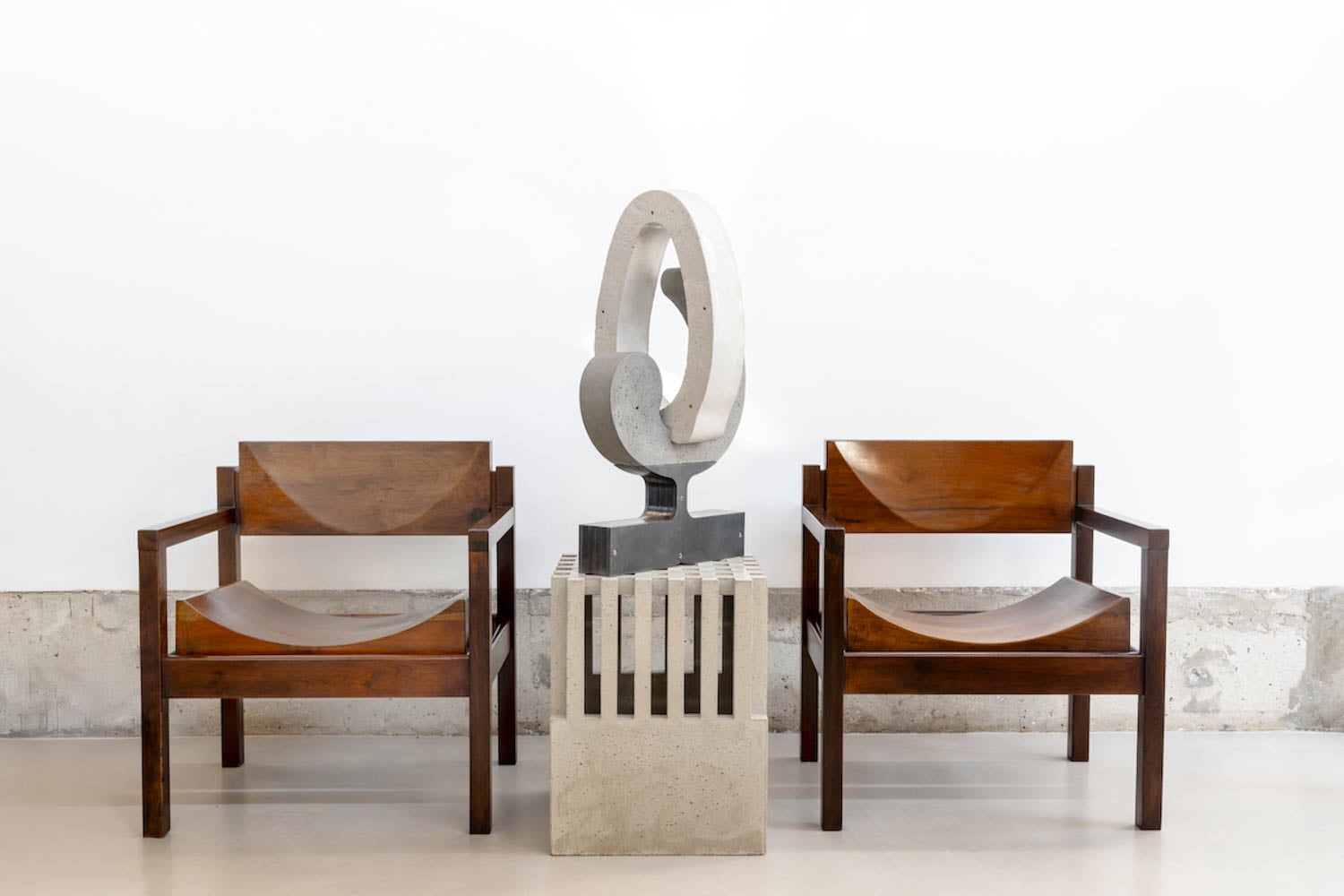
UDS: At first glance, Tenreiro and Lucas come from entirely different worlds: different times, different mediums, different intentions. And yet, placing them in dialogue makes their shared concerns more visible. Both are deeply engaged with structure, tension, and material honesty. Tenreiro elevated woodworking into something architectural—refined, modern, and resolutely Brazilian. Lucas works with industrial materials like concrete, glass, and steel, but he treats them with a similar sensitivity and restraint. The pieces don’t mirror each other, and that’s the point. This isn’t a historical homage. It’s a friction. The pairing reveals a lineage of Brazilian thinking that values form, craft, and clarity, even when expressed in radically different ways.
ID: Lucas, what was your relationship to Tenreiro’s work before this?
LS: Tenreiro pursued a dual career as both an artist and a designer. His involvement with modern furniture design began with a commission to create pieces for a house designed by Oscar Niemeyer, but his most sustained practice was in sculpture. He often approached furniture design through the lens of sculpture, developing innovative techniques that blurred the line between the two disciplines. At times, his sculptures functioned as prototypes for furniture, or vice versa, which gave his minimalist design a unique conceptual depth.
ID: Do you resonate with this?
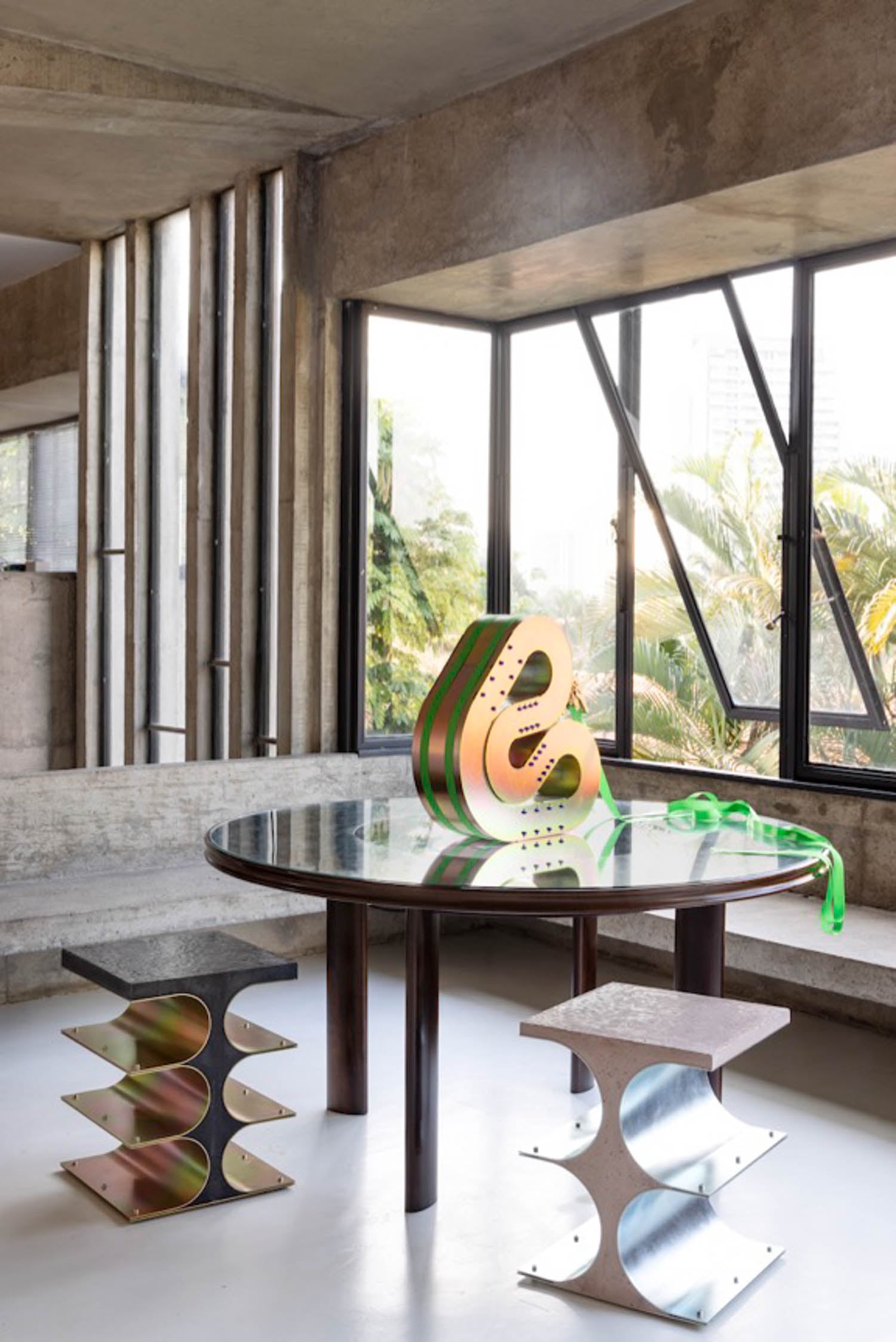
LS: I see a certain parallel with my own trajectory, though our paths are rooted in very different times and contexts. Each of us engages in a dialogue between sculpture and function, shaped by personal and historical circumstances. Seeing my work alongside his didn’t feel intimidating but rather deepened my appreciation for the sculptural thinking embedded in his furniture. I now look at some of his pieces and can more clearly perceive the artistic intentionality behind their form.
ID: What’s the inspiration for the exhibition design?
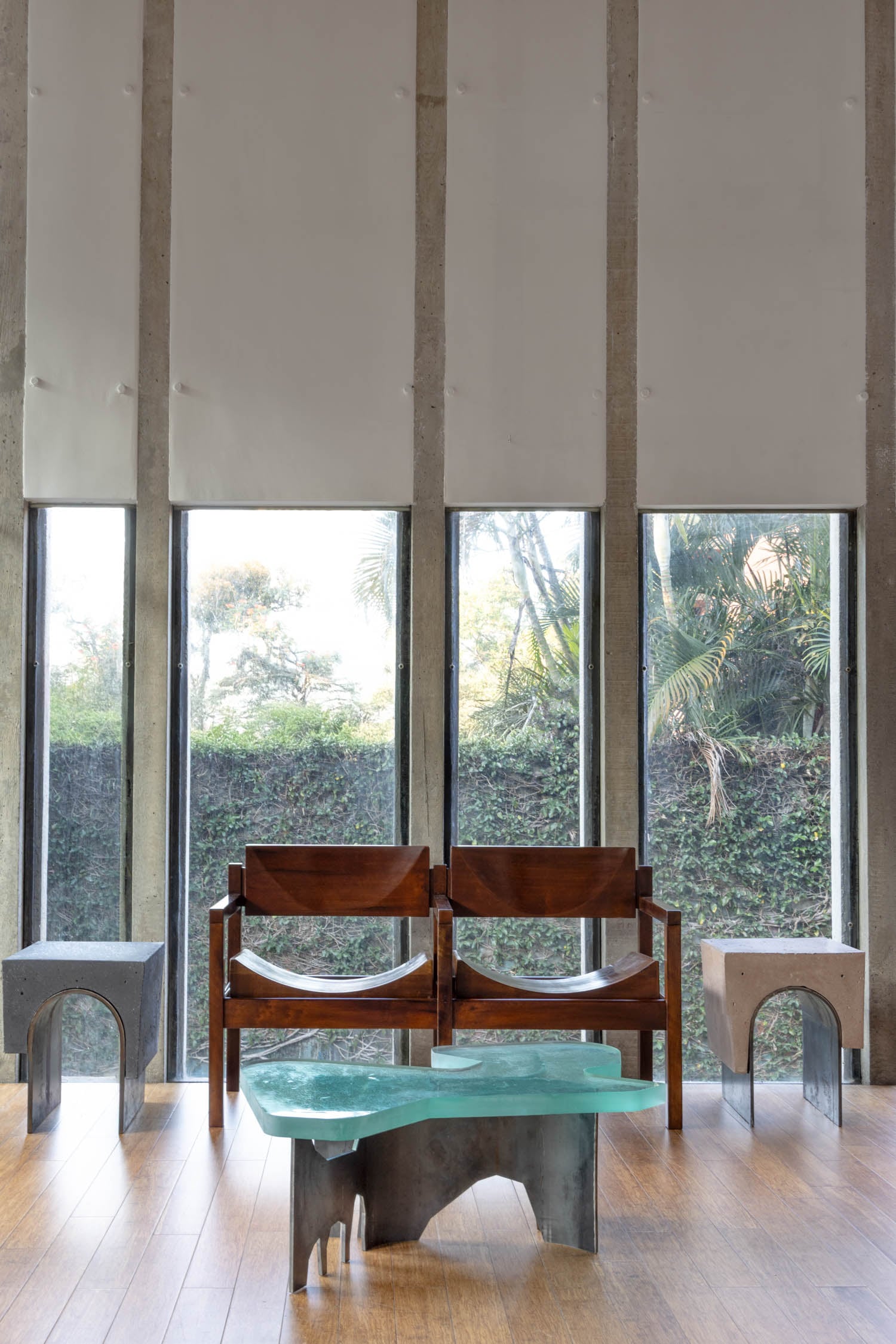
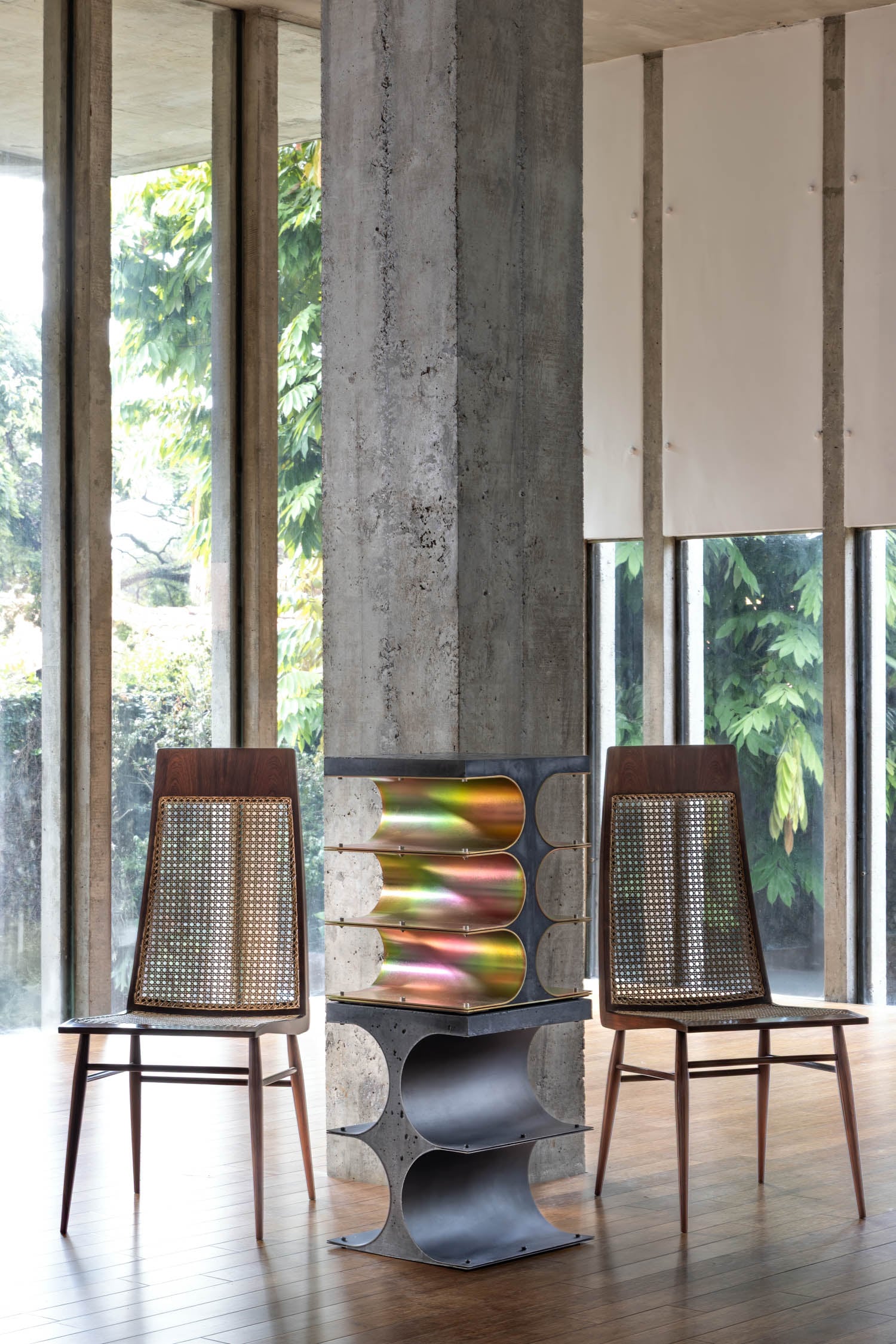
UDS: The spatial concept was developed in close collaboration. What Lucas proposed was both sculptural and deeply rooted in his artistic vocabulary. He created an expography based on walking grids, platforms that seem to float above the floor, subtly elevated by small mounds of sand. Beneath them runs a concrete walkway that guides the visitor’s path. It’s a minimal intervention but incredibly charged. The materials—sand, concrete, metal grids—are all central to Lucas’s practice, and together they form a landscape that quietly anchors the pieces without overwhelming them. The idea was never to impose a narrative, but to create a structure where the dialogue between the works could unfold naturally.
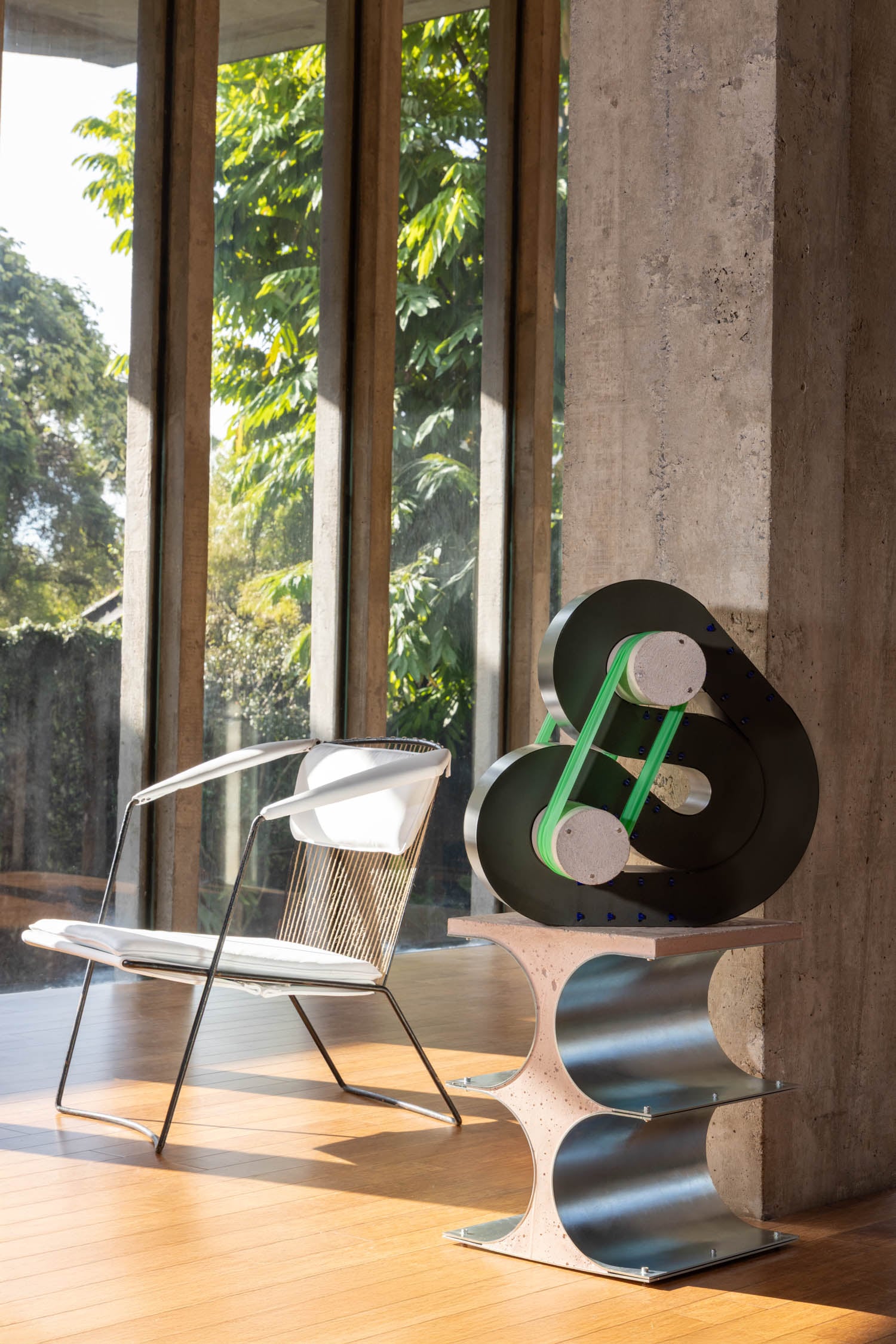
LS: Several of the works in the exhibition stem directly from my recent sculptural series Dormentes (Sleepers), including the chaise longue and the lounge chair. Beyond their formal continuity, what I find most compelling in this show is the emphasis on exposing the sculptural process itself. I intentionally incorporate elements of the mold into the final pieces—not as residue, but as integral components that reveal how the objects are made. For me, this transparency adds another layer of meaning to the work. It invites the viewer not only to engage with the finished form but also to reflect on the labor, construction, and transformation behind it.
ID: The show is primarily geared toward American audiences. What do you think we should know about Brazilian Modernism before viewing it?
UDS: There’s often a tendency to see Brazilian modernism as derivative of European or American movements—just a tropical echo of Bauhaus or midcentury. But in reality, it was its own radical proposition. It merged modernist principles with indigenous techniques, colonial histories, and brutal geographic realities. It wasn’t about following an aesthetic trend. It was about inventing something local and lasting. I think American audiences will be surprised by how rigorous, experimental, and uniquely Brazilian it actually is.
LS: While Brazilian modernism is certainly part of my visual memory—especially through the widespread presence of its furniture designs—I don’t see my practice as being rooted in that tradition. I recognize and respect the historical importance of those works as markers of a specific cultural and political moment in Brazil. But what I’m interested in now is exploring contemporary approaches: rethinking materials, forms, and relationships between function and sculpture in ways that speak to today.
ID: What’s next for you both?
UDS: This exhibition marks the beginning of a new chapter. I’m continuing to expand my interior design practice, creating spaces where historical and contemporary pieces can coexist with intention. I’m also deepening my curatorial work, with more collaborations on the horizon—as long as they’re rooted in authorship and meaning. At the same time, I’m focused on protecting and promoting the legacy of Brazilian modernism outside of my curatorial practice as well, including taking on a leadership role with the Brazilian Modern Design Guild (formerly Associação Mobiliário e Design Moderno Brasileiro), which has several exciting initiatives coming up.
LS: First, I’m interested in seeing how people respond to these pieces—how they experience them physically and emotionally. That feedback feels important, especially since this is my first time presenting functional objects in this way. After that, I’d like to explore how functionality can be integrated into larger spatial installations—bringing these ideas back into an artistic context, but with a new set of tools and references. It’s an ongoing dialogue between sculpture and use, and I’m curious to see where it leads.
read more

DesignWire
Designers And Manufacturers On The Move: September 2026 Edition
Interior Design‘s latest On the Move includes must-know industry promotions and hires, like Perkins&Will’s strategic move to expand its design capabilities.
DesignWire
10 Questions With… Artist and Designer Conie Vallese
From sculpture and ceramics to glass, textiles, and furniture, Conie Vallese embraces a multidisciplinary practice shaped by curiosity and creativity.