
Step Inside This Intricate Web Of Craft And Culture In Paris
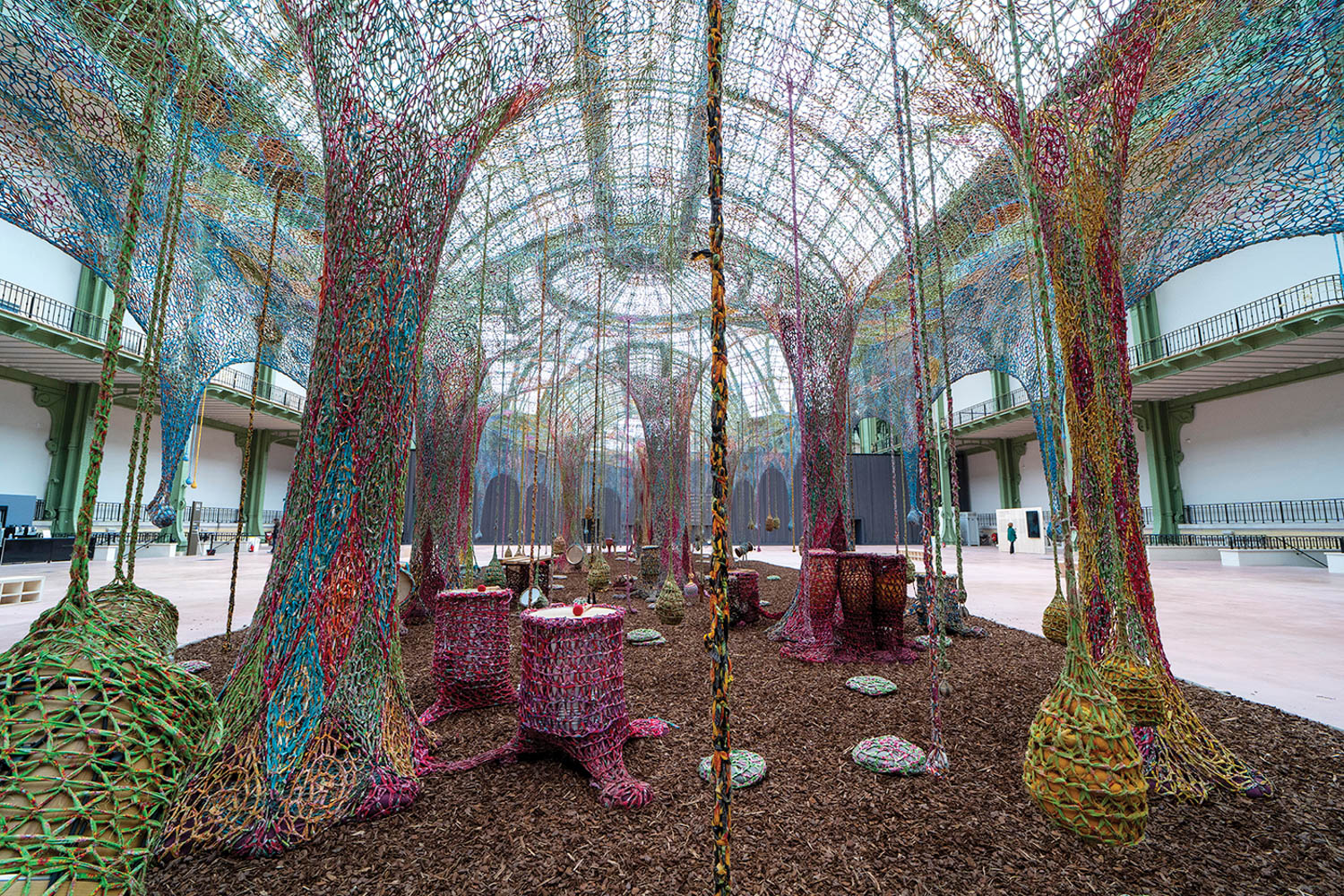
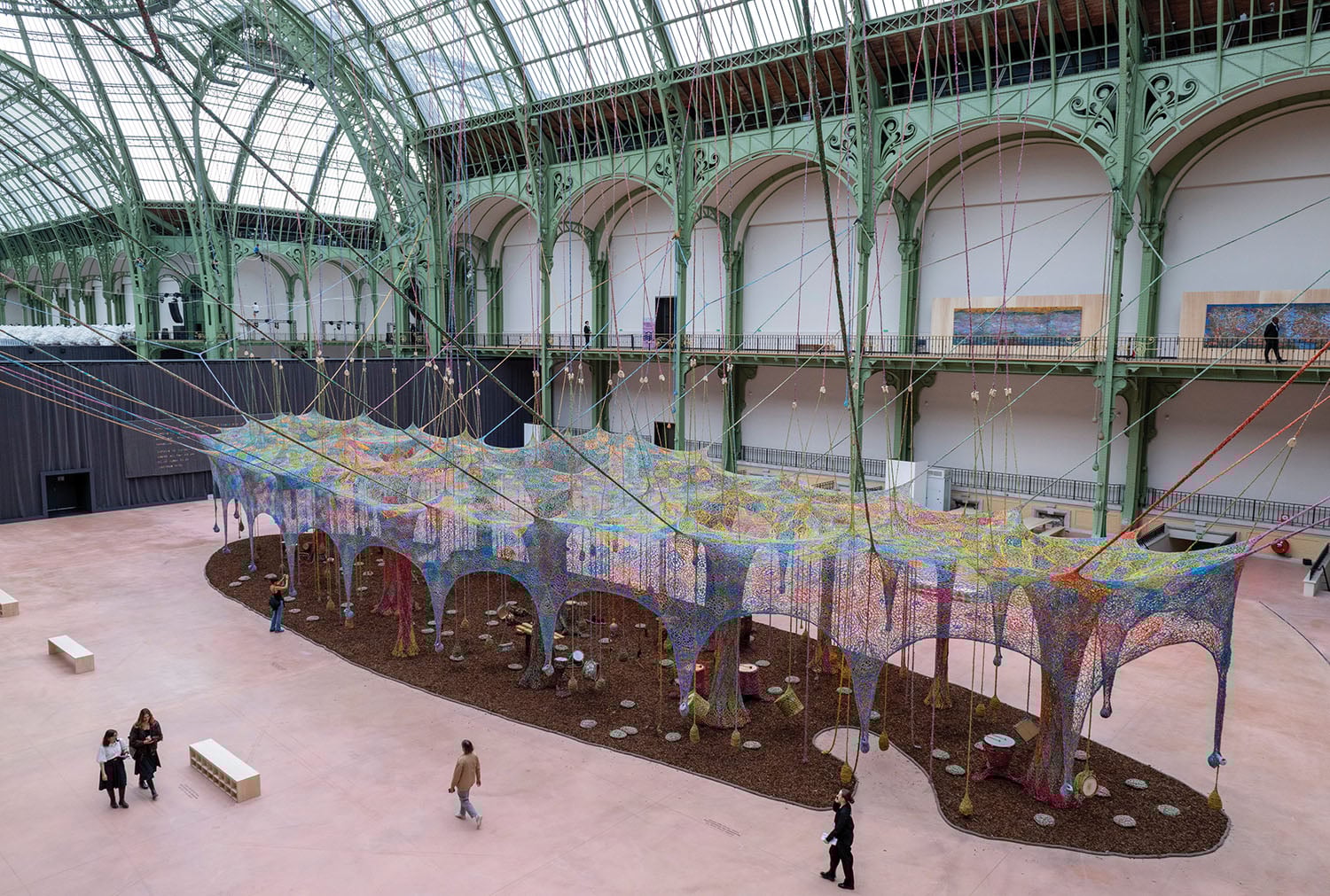
Brazil and France, scent and sound, drums and bark—all were in harmony in a monumental netting sculpture by Ernesto Neto at the Grand Palais in Paris.
Ernesto Neto Weaves A Crochet Of International Influences
- Sixty One Instruments
- 18,800 Linear Feet of Cotton Chintz
- 34 Crocheters and On-Site Installers Directed by Ernesto Neto
- 200 Feet Long
A digital concept drawing shows Brazilian artist Ernesto Neto’s Nosso Barco Tambor Terra (Our Boat Drum Earth), a suspended crochet sculpture evoking accord that was displayed at the Grand Palais in Paris last summer.

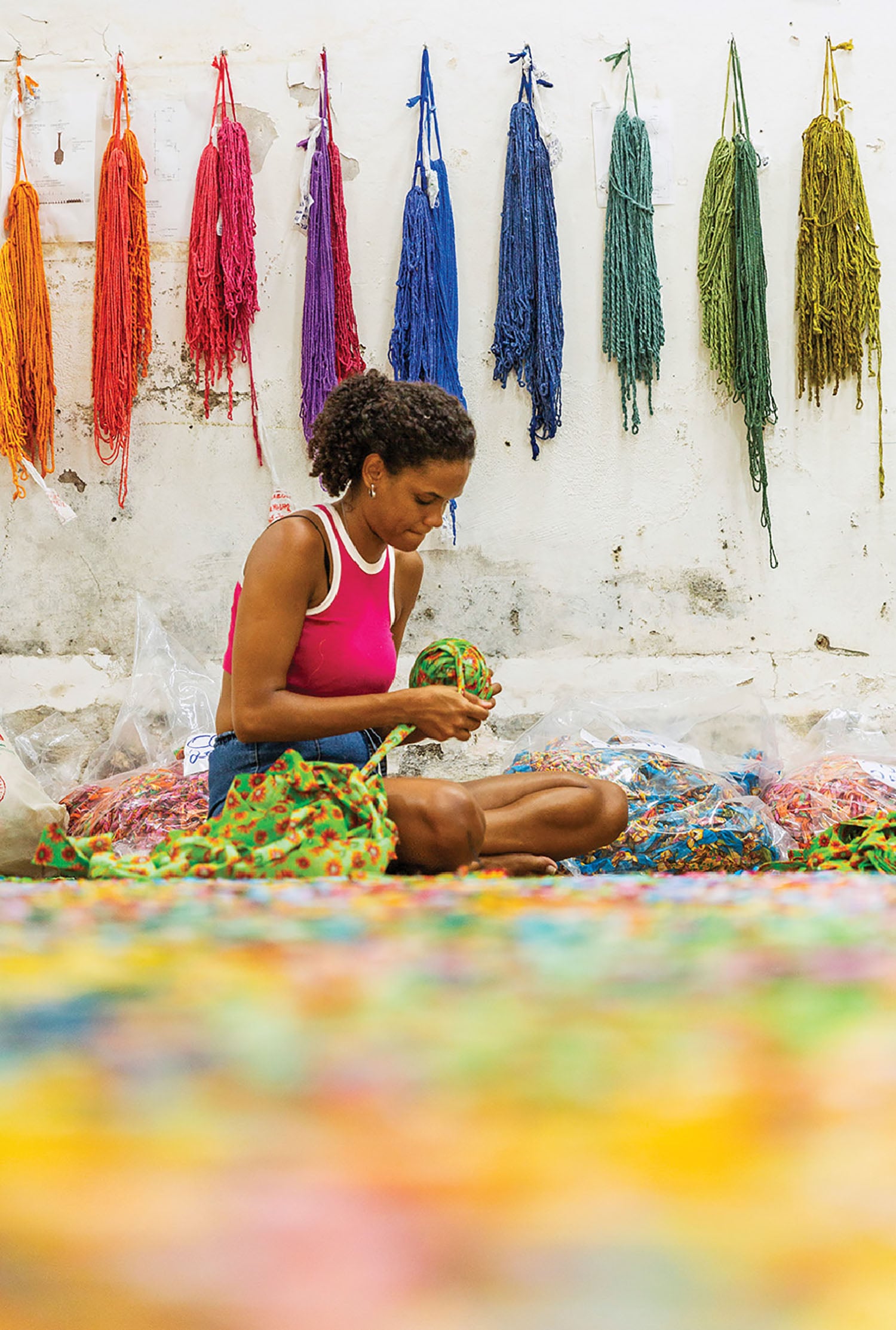
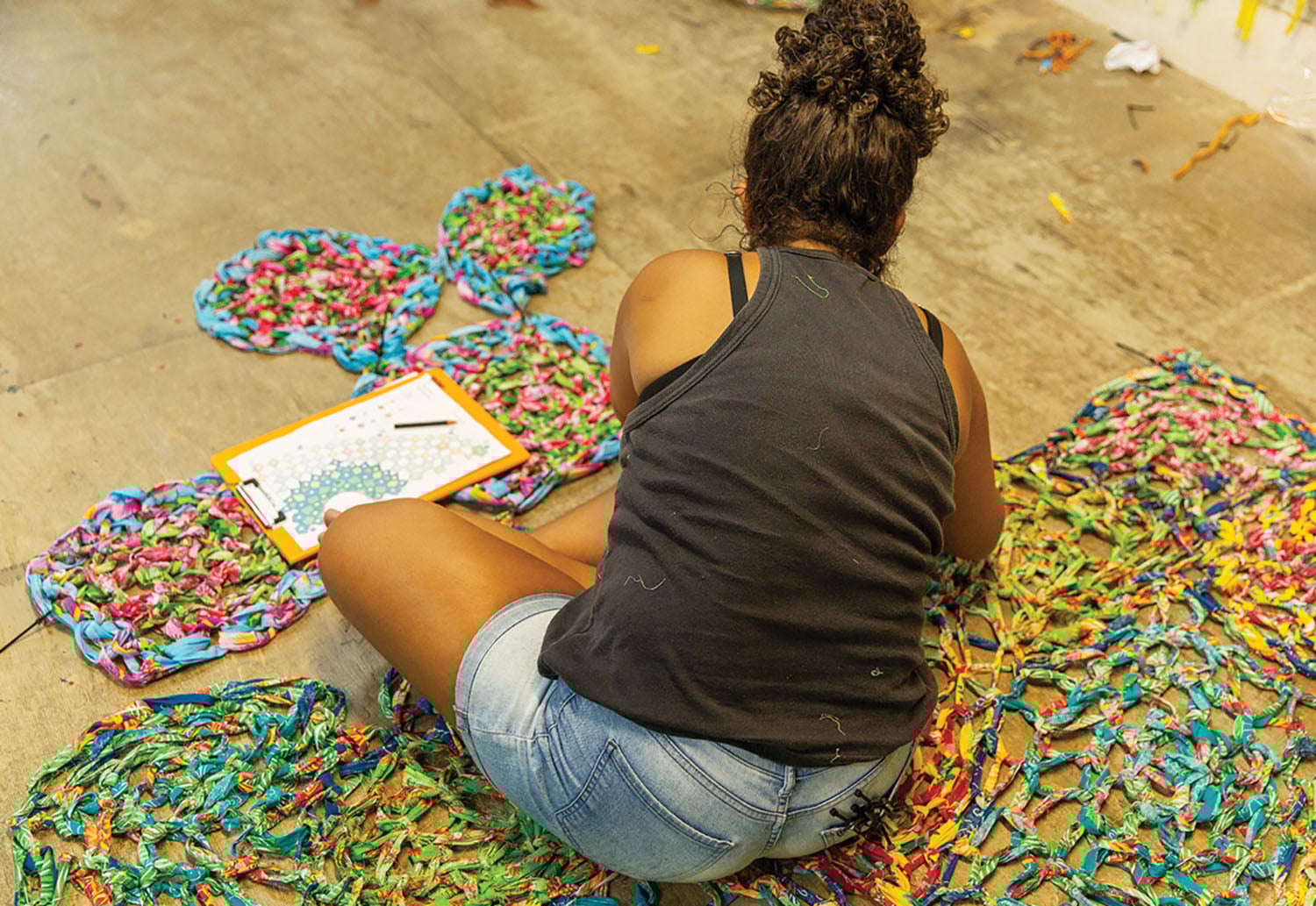
In Neto’s Rio de Janeiro studio, an assistant cut brightly colored cotton chintz into long, thin strips.
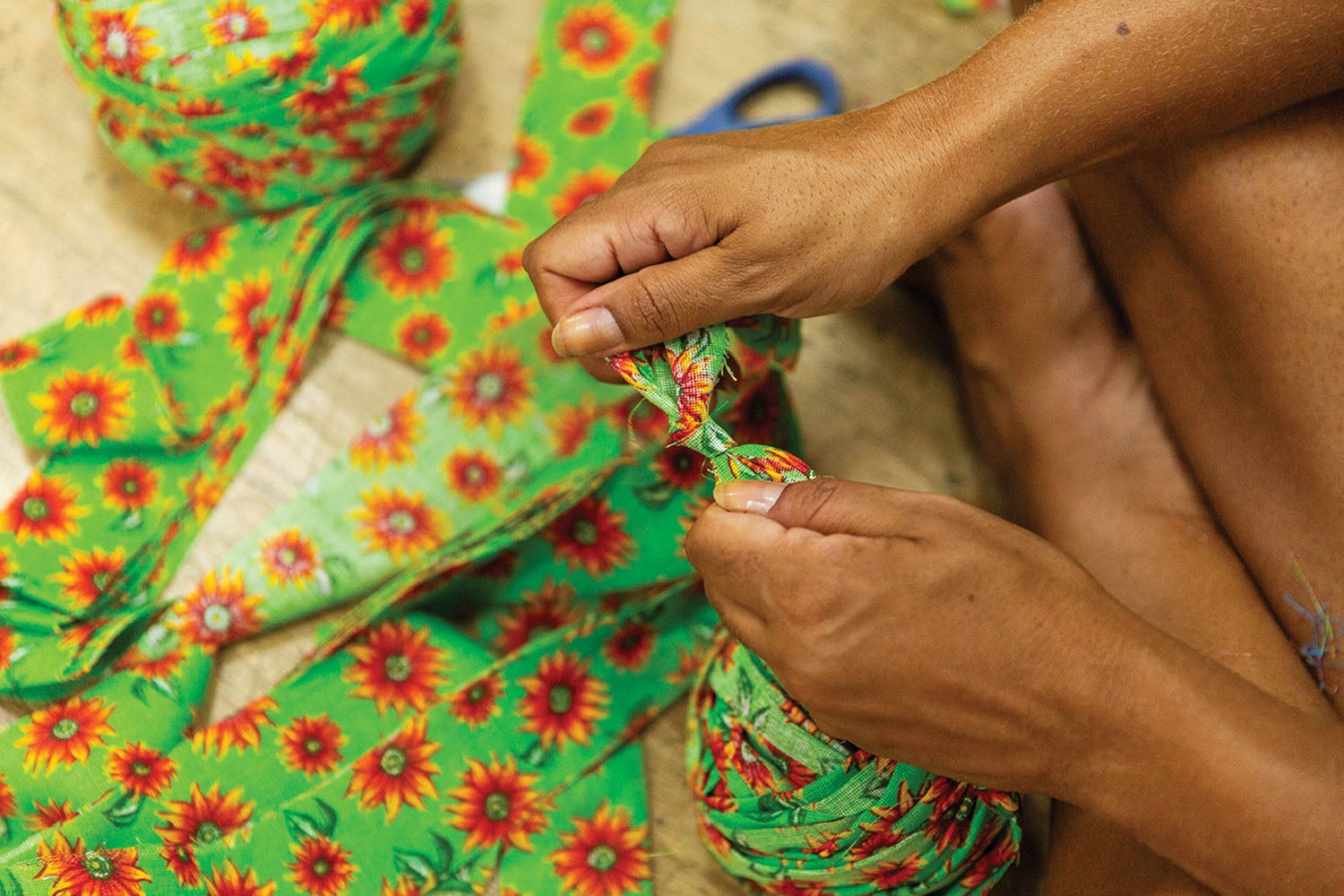
The strips were formed into balls of multicolor “yarn.”
The team hand-crocheted the yarn using their fingers instead of needles, a process Neto developed and calls atelienave, into one of his signature large-scale netting structures.
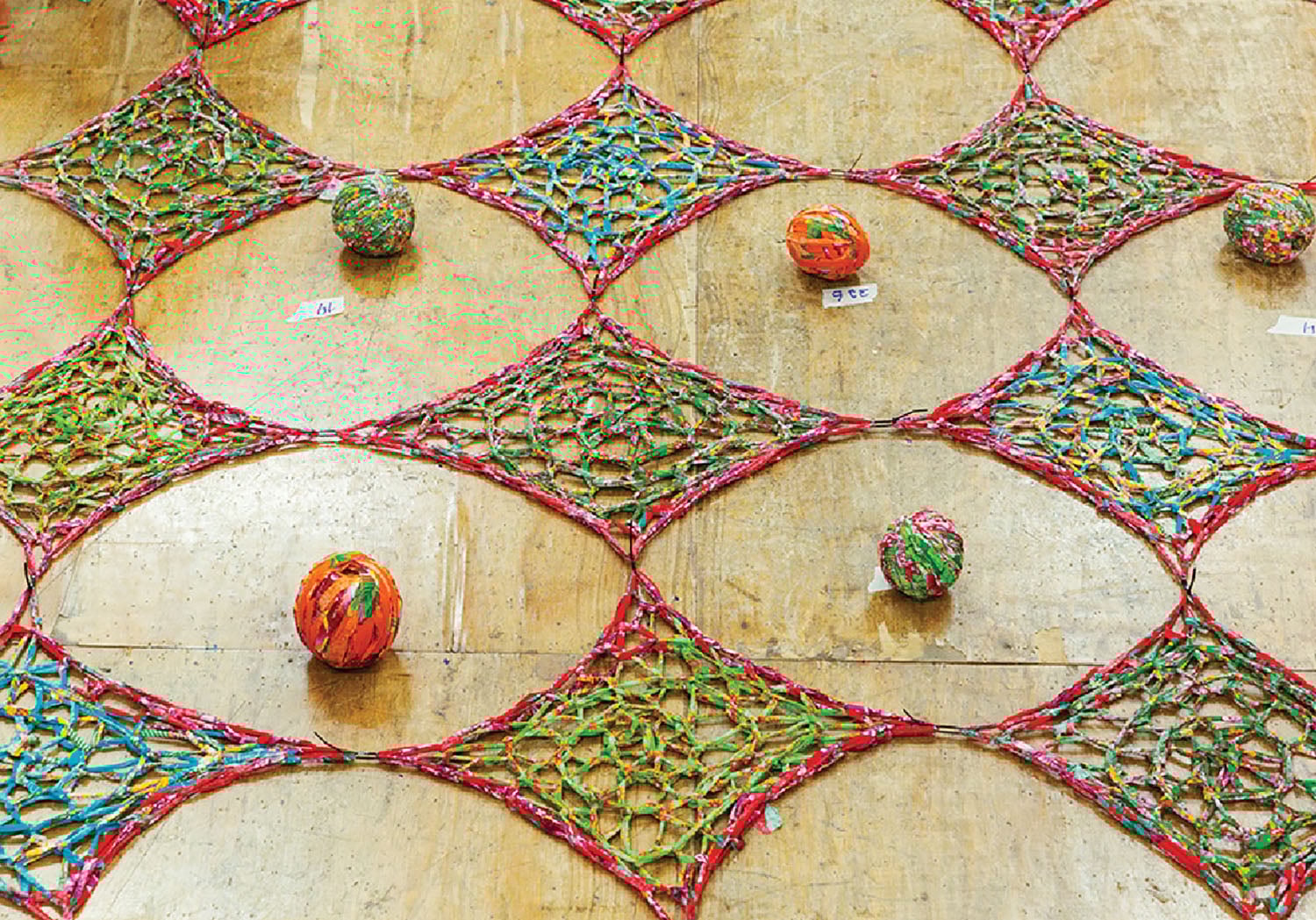
To illustrate the installation’s intention to unite cultural differences under one banner, instruments and spices from around the world were incorporated into the resulting canopy.
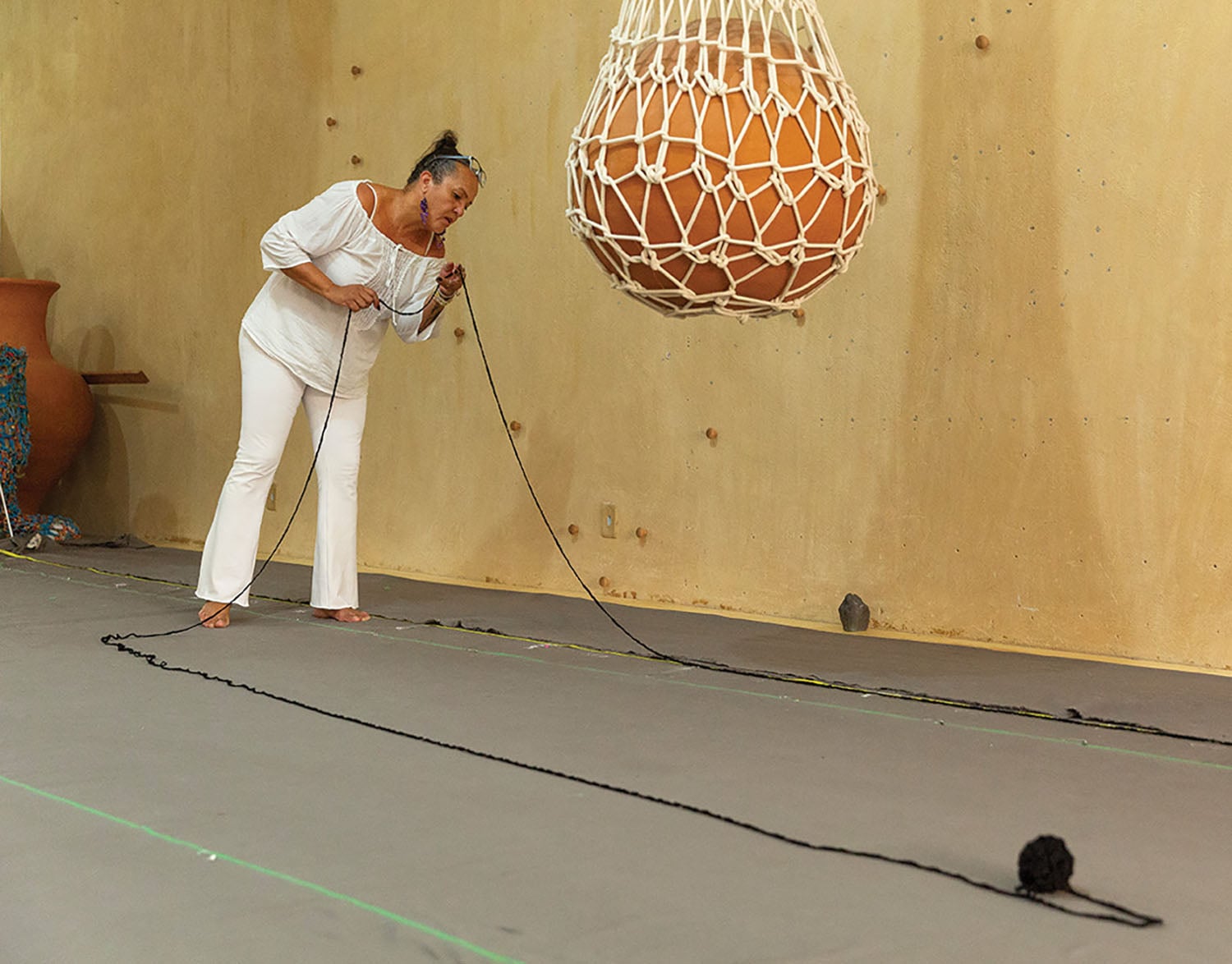
For a textural floor covering to accompany the canopy, another assistant outlined and cut cotton, dyed it with black tea, and later covered it with loose bark.
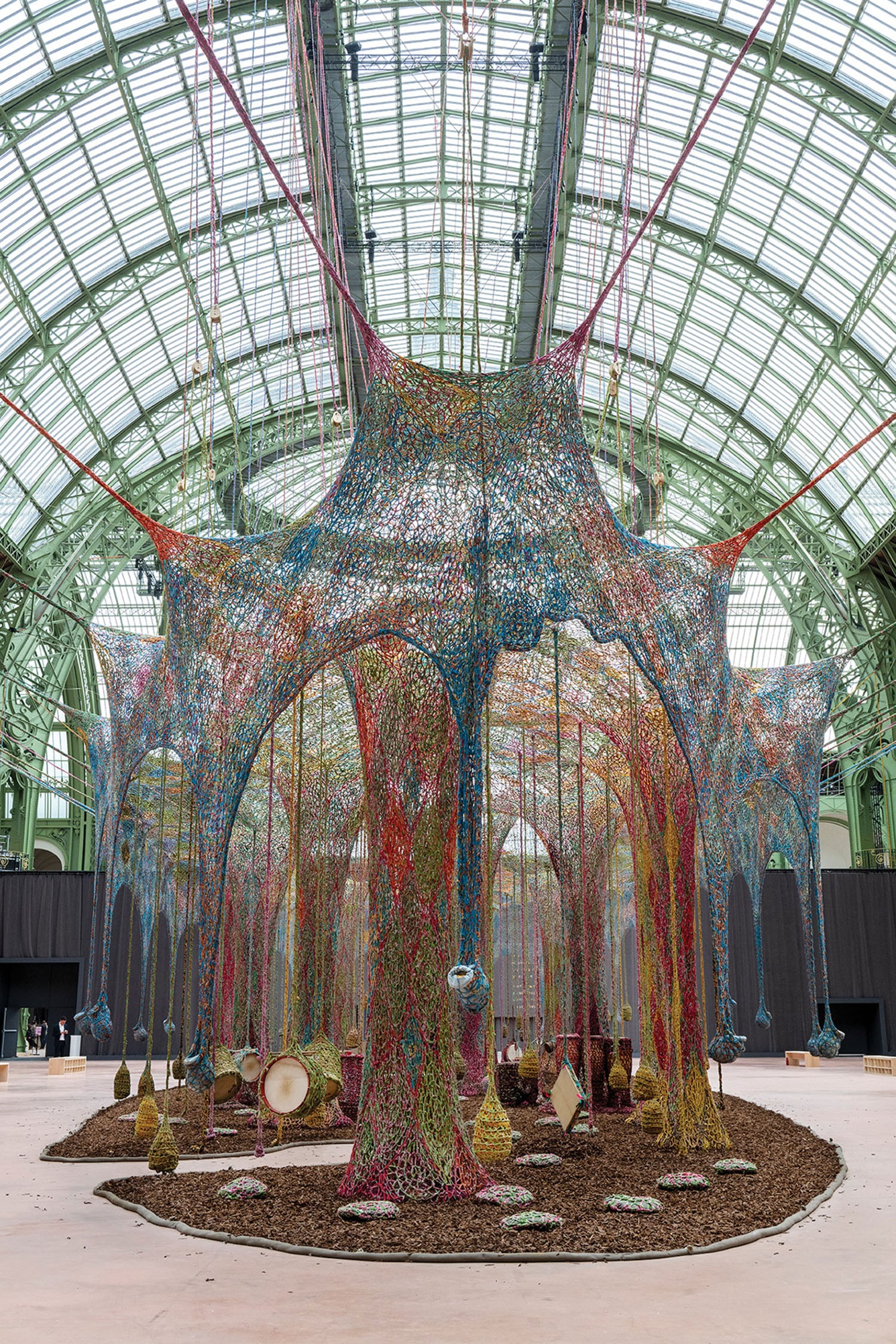
Neto’s Nosso Barco Tambor Terra (Our Boat Drum Earth) was tethered to the iron framework capping the nave of the Grand Palais by crochet ropes that could be adjusted with wooden pulleys.
Inspired by the universal language of music and Neto’s love of percussion, drums from countries such as Brazil, Japan, Senegal, and Qatar were strewn on the ground and hung inside crocheted pouches and could be played by visitors.
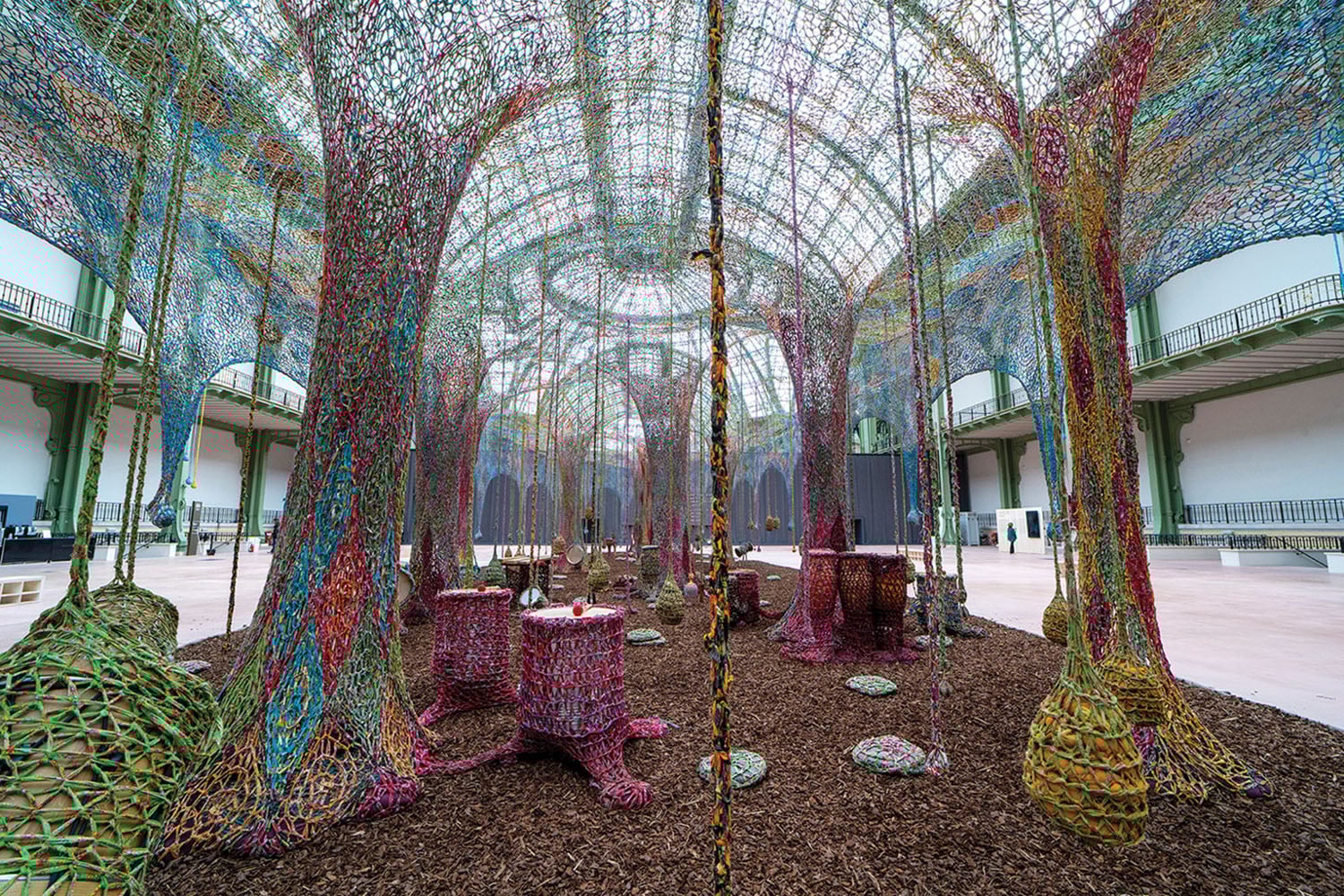
Fragrant spices, grains, soil, and herbs were placed in cotton mesh bags and hung from the canopy as counterweights and sand-filled bags set in the base of the canopy “trunks” served as anchors.
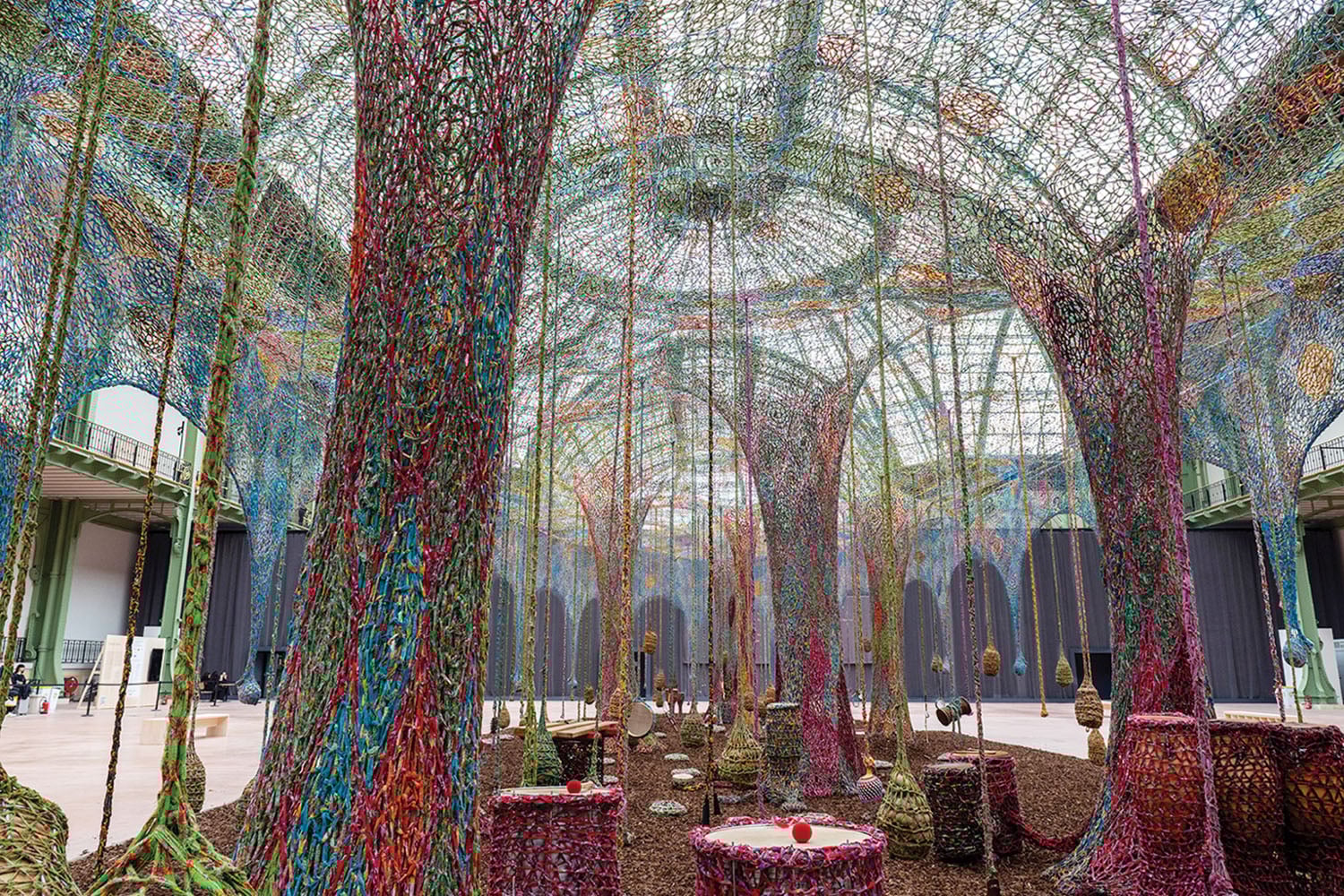
Exhibited from June 5 through July 25, the 114-foot-tall installation was part of the reopening celebration of the 1900 Grand Palais, which underwent a four-year restoration by Chatillon Architectes that included work on its glass roof, the largest in Europe.
read more

DesignWire
Designers And Manufacturers On The Move: September 2026 Edition
Interior Design‘s latest On the Move includes must-know industry promotions and hires, like Perkins&Will’s strategic move to expand its design capabilities.
DesignWire
10 Questions With… Artist and Designer Conie Vallese
From sculpture and ceramics to glass, textiles, and furniture, Conie Vallese embraces a multidisciplinary practice shaped by curiosity and creativity.