
10 Highlights From Concéntrico 2026
Although internationally renowned for its wine, Spain’s La Rioja region also enjoys a long-standing relationship with contemporary architecture. The region is home to several avant-garde wineries designed by celebrated architects including Calatrava, Gehry, and Hadid.
Concéntrico, by contrast, is firmly rooted in the public realm. The annual architecture and installation festival invites both established and emerging international studios to transform and activate the streets, squares, vacant lots, and even vineyards of Logroño, La Rioja’s capital. Now in its 12th year, Concéntrico has earned its place as one of the world’s most compelling small-scale architecture festivals, particularly for its focus on rethinking and sustainably reusing public space.
Despite sizzling temperatures, participation remained high. Residents and visitors alike experienced familiar and previously overlooked spaces reframed through mostly low-cost materials, thoughtful narratives, and clearly defined ambitions.
Architecture Installations Rooted In The Public Realm
Architecture for Ritual, Central & Maxime Delvaus
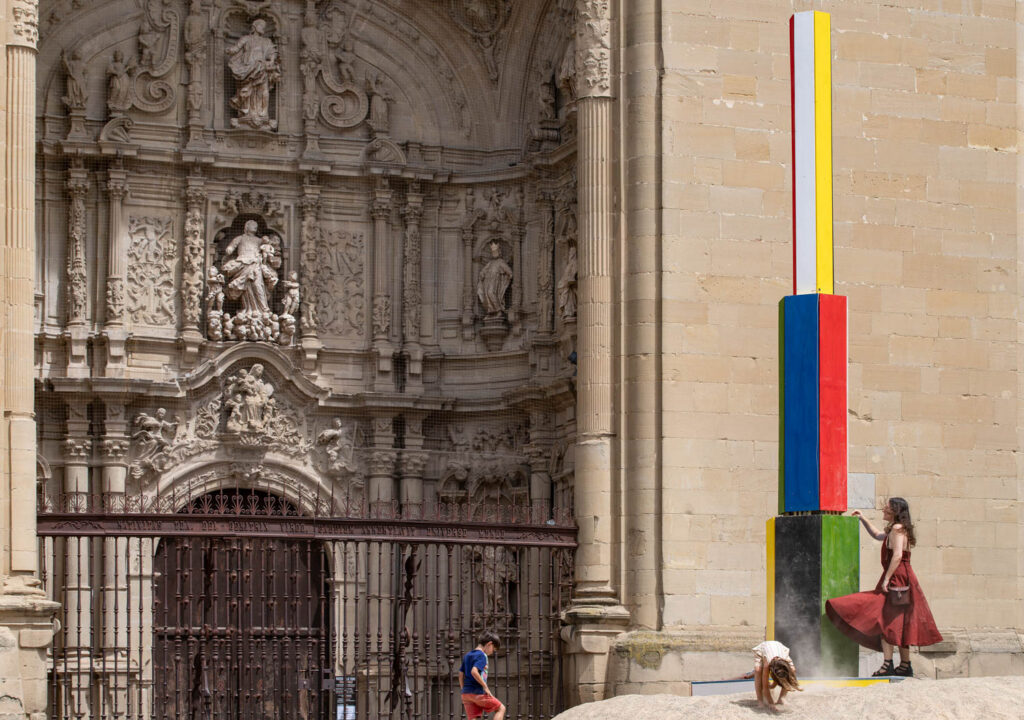
Set on a main square in front of the Baroque entrance of Logroño’s Santa María de la Redonda Cathedral, the Brussels-based studio and photographer Maxime Delvaus created an installation that referenced both the city’s topography and the act of worship. Visitors were invited to place written wishes and desires inside the crevices of a wooden spire, while children found their own enjoyment playing in the surrounding sand.
Terroir, Boltshauser & Garbizu Collar
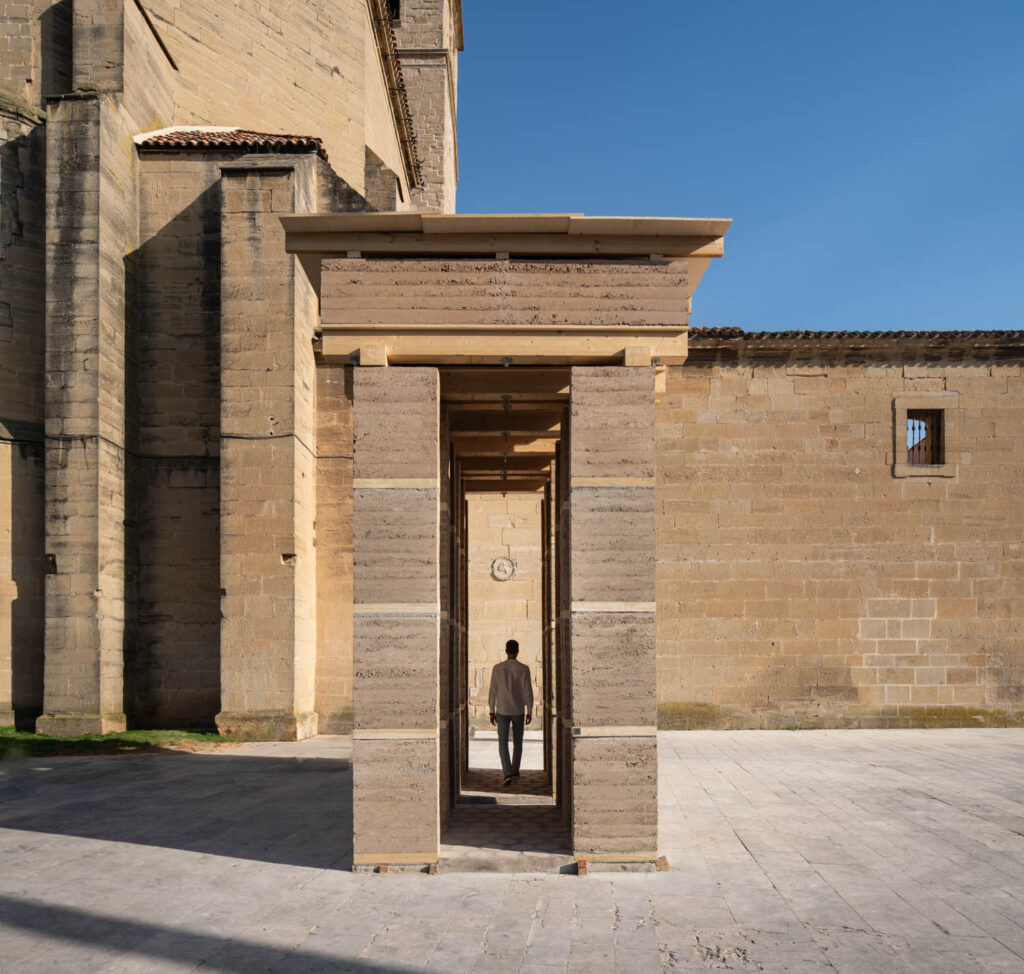
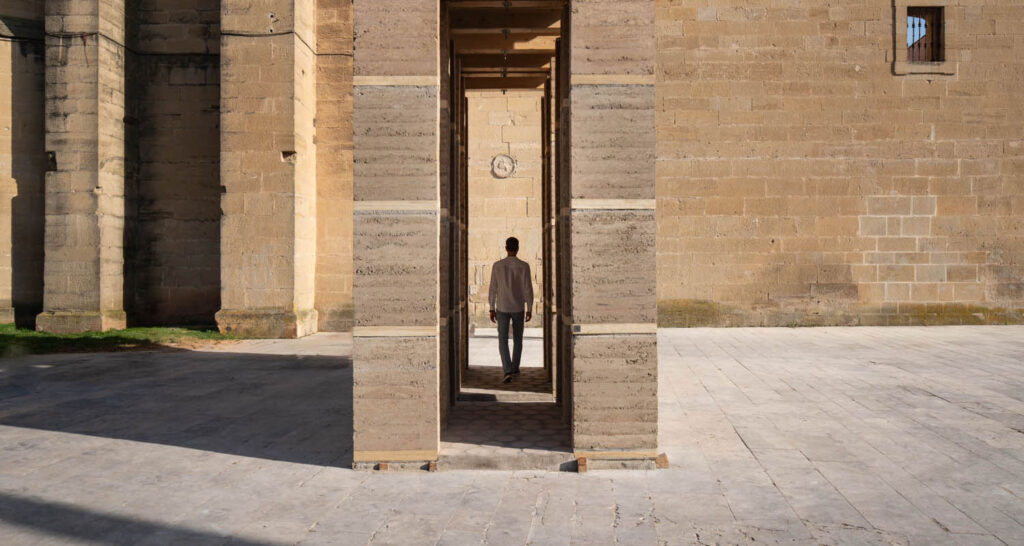
Roger Boltshauser, an expert in earth construction, proposed the use of rammed earth and end-of-life wine barrels as an extendable, zero-emission building system for wineries, tasting rooms, and restaurants. Alongside climatic comfort, rammed earth, Boltshauser argues, can provide a sensory experience aligned with the terroir of a fine wine.
Circo, Smiljan Radić Clarke
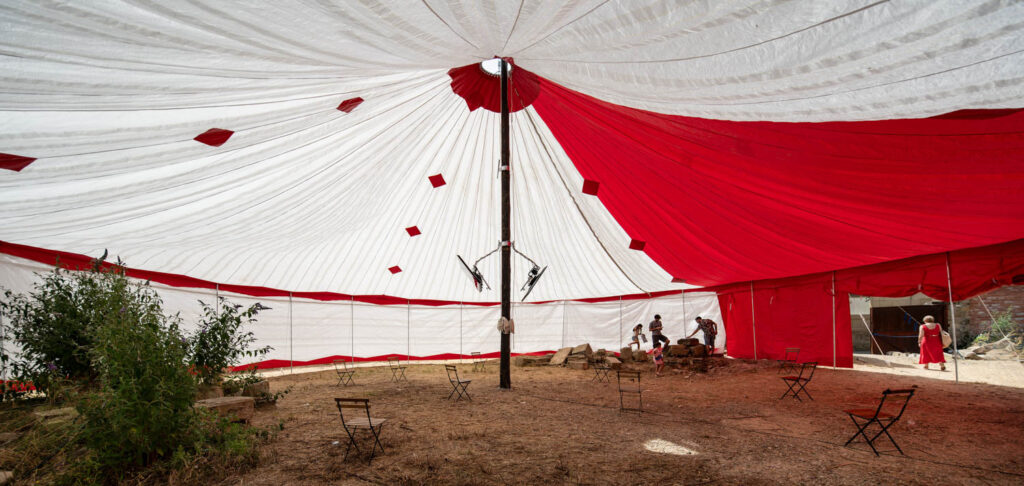
The Pritzker Prize-winning Chilean architect harked back to his childhood and the tradition of the traveling circus, a popular form of entertainment during the country’s dictatorship. Positioned along the edge of the old city walls, a giant tent transformed a rocky, neglected plot into a structure that felt joyful, melancholic, and primitive all at once. Inside, a small screen showing vintage circus footage entertained visitors.
La Escalera de la Cigüeña (Stairway for a Stork), Future Firm
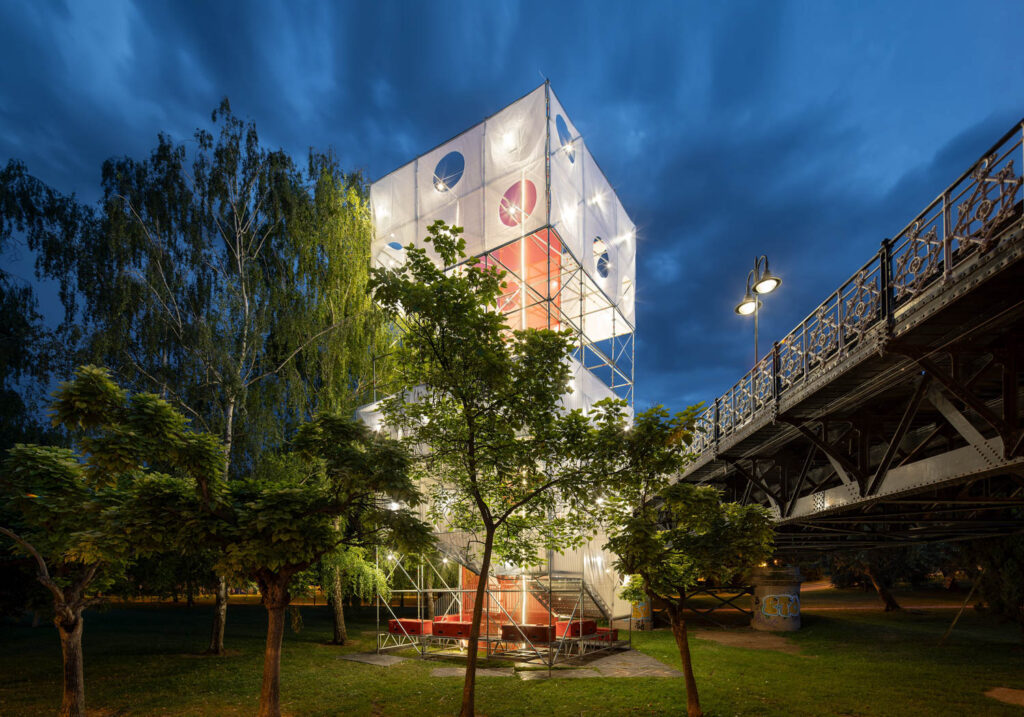
Maximizing the connection between the banks of the River Ebro and the iconic Puente de Hierro (Iron Bridge) lay at the heart of the Chicago-based firm‘s proposal. A stacked, scaffold-like staircase enclosed in transparent material bridged the two, offering expansive views and an original transition between Logroño’s natural and built environments.
Frontones Danzantes (Dancing Fronton Walls), 2050+
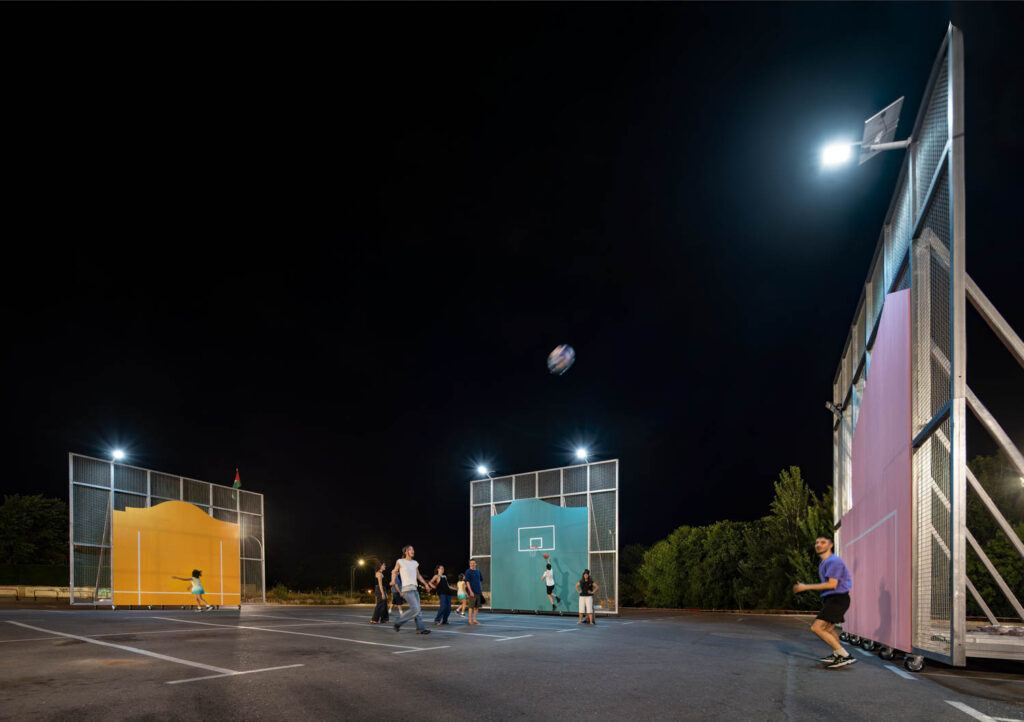
A quirky and iconic feature throughout northern Spain, a frontón is a fixed one- or two-sided court used to play Basque pelota. Installed in the middle of a parking lot that remained car-free for the duration of the festival, the Milan-based practice, whose work spans exhibitions, scenography, and heritage interventions, proposed an ephemeral, movable court that could be reconfigured for different games and activities.
Los Sábados (The Saturdays), TŁO
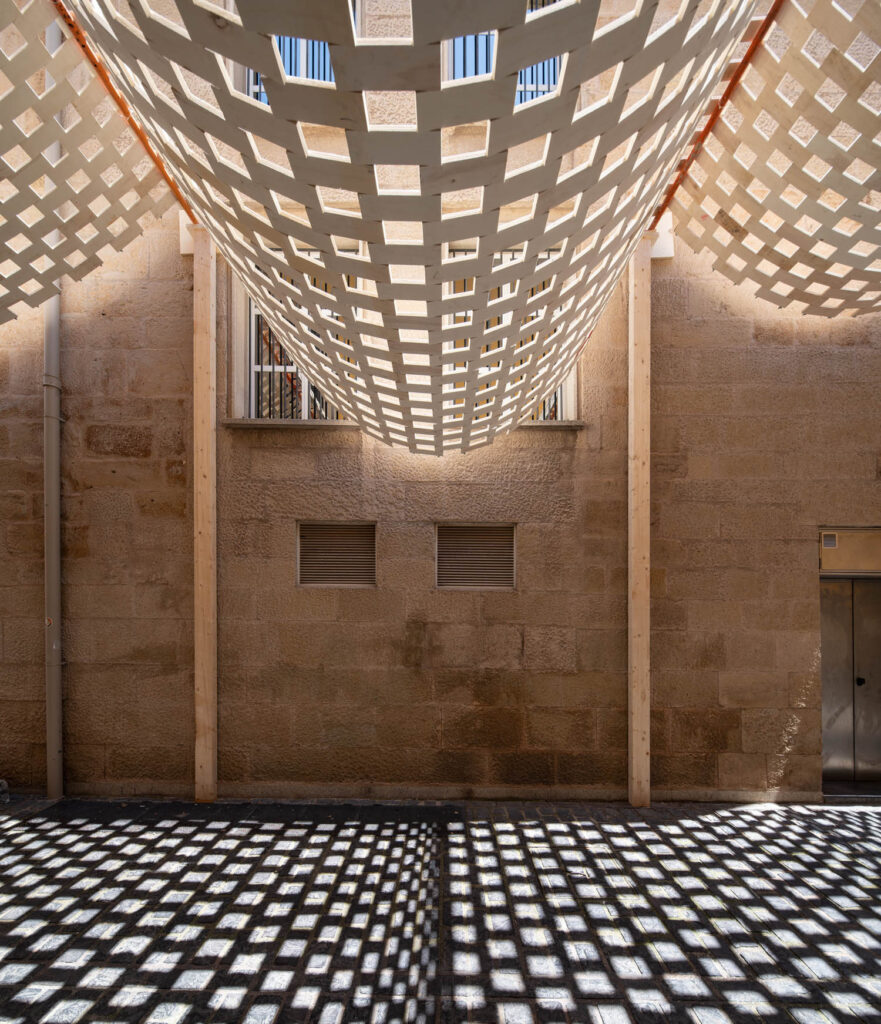
Sunday may be the principal day of worship in Poland, but by Saturday evening many people have traditionally traveled long distances to gather beneath a soboty; a sheltered porch at the base of a rural church. The Polish studio’s perforated canopy, installed along a narrow alleyway, was made from reclaimed wooden slats cut and woven onto steel ‘threads,’ filtering the lingering sunlight and providing respite from the searing heat.
Cathedral for One, AAU ANASTAS
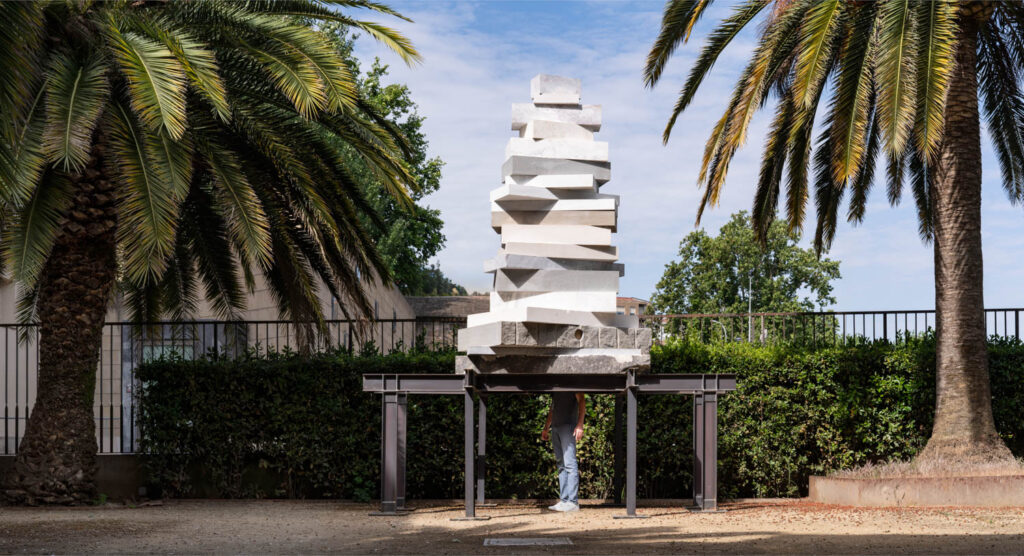
This proposal from Palestine was conceived for a single visitor. Made entirely from discarded stone, the sculptural volume transforms when viewed from within, appearing as a spiraling tunnel leading skyward. This duality extends to the material itself, as stone in Palestine, and elsewhere, can be both monumental and domestic, public and intimate.
The Library Garden, Sahra Hersi
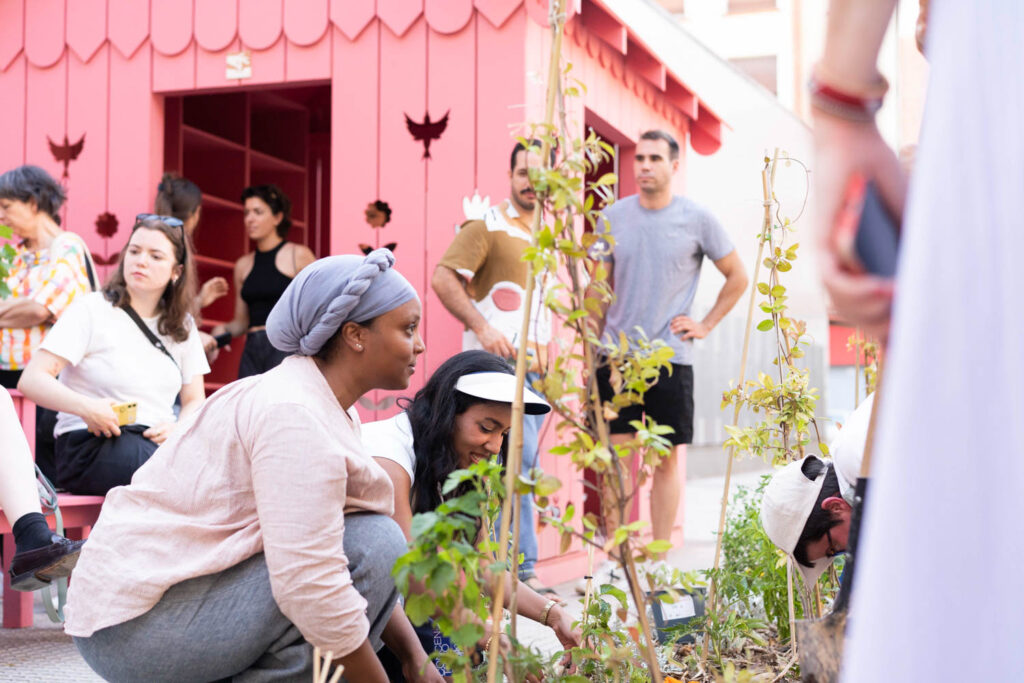
Exploring shared spaces that support everyday life is central to the practice of London-based artist and designer Sahra Hersi. Away from Logroño’s city center and adjacent to a children’s playground, she installed a whimsical, pink-shaded garden shed where people could sit, talk, and exchange plant seeds, which could then be planted in a small garden bed created as part of the project.
Summer Shapes Memories, Ofreia
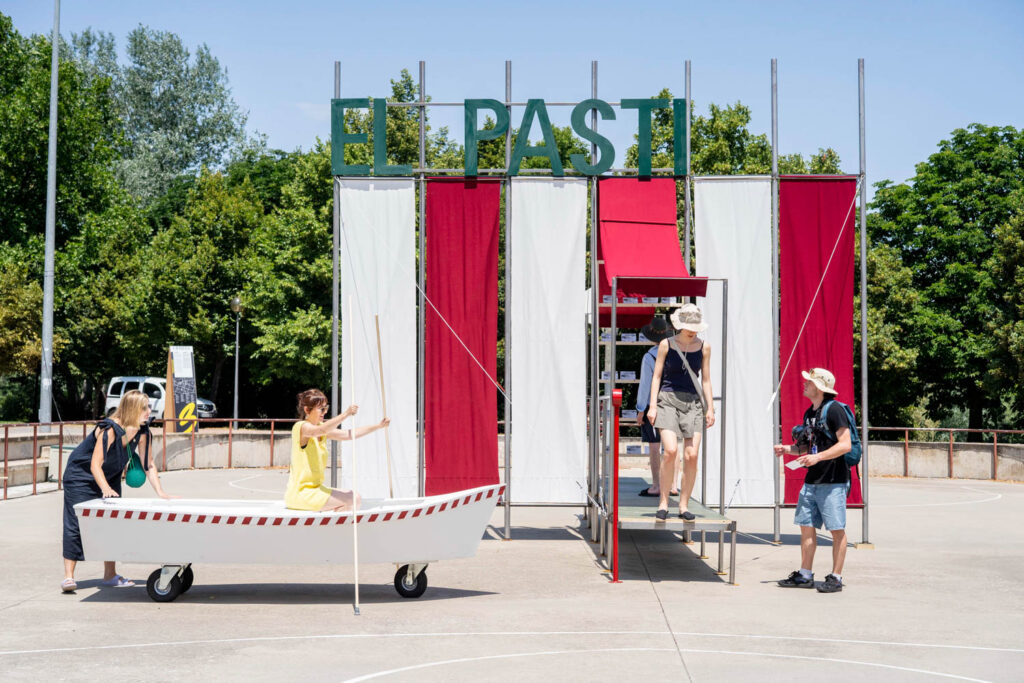
Memory is selective, and summer provides fertile ground for its construction. This playful installation by Swiss studio Ofreia drew on idealized summers by the water, complete with nautical stripes and bathing tents, for a project situated on a basketball court along the banks of the Ebro. Surrounded by a fence that emitted a cooling mist, the installation evoked fragmented recollections, which appeared on postcards housed within the central pavilion.
La Serrana de San Bernabé, Matilde Cassani
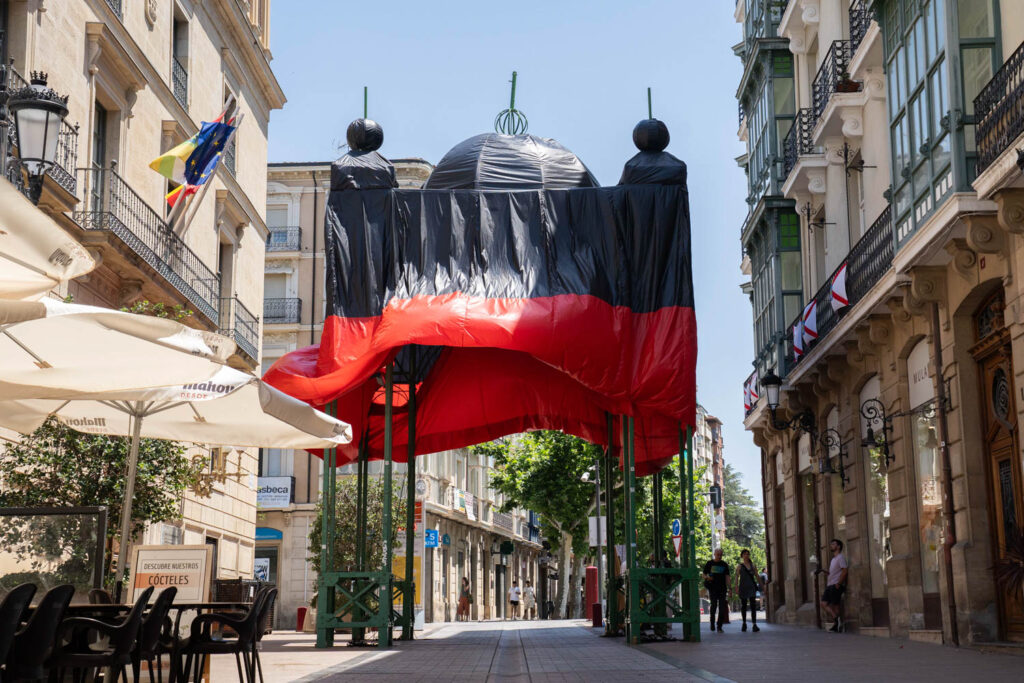
The Italian architect and designer‘s interest in rituals and festivities is evident in her reinterpretation of the Arch of San Bernabé, an ephemeral structure erected on Logroño’s main pedestrian shopping street during local celebrations. Inspired by the colors and volumes of a traditional skirt from La Rioja’s regional costume, often worn by men performing a traditional swirling dance, the covering she created for the arch conveyed the joy, celebration, and drama that characterize Spanish festivities.
read more

DesignWire
Designers And Manufacturers On The Move: September 2026 Edition
Interior Design‘s latest On the Move includes must-know industry promotions and hires, like Perkins&Will’s strategic move to expand its design capabilities.

DesignWire
10 Questions With… Artist and Designer Conie Vallese
From sculpture and ceramics to glass, textiles, and furniture, Conie Vallese embraces a multidisciplinary practice shaped by curiosity and creativity.