
Why Hospitality Principles Make For More Holistic Spaces
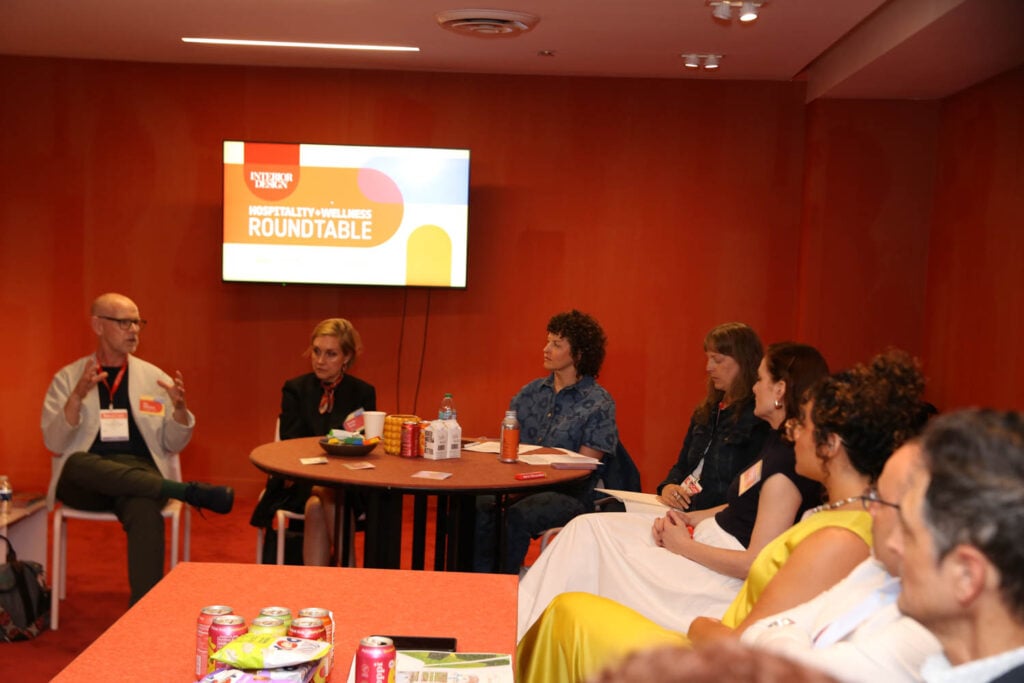
Designing for wellness is, to put it simply, designing for people, industry leaders said during Interior Design’s Hospitality and Wellness roundtable hosted by Helene Oberman, Interior Design managing director, and Jen Renzi, the magazine’s executive editor at NeoCon. People, though, are complex.
Rather than take a generational approach, a designer for a major wellness brand said she focuses on brand personas. “Our oldest member is almost 80, and our youngest is in their early 20s, and we bridge all of that,” she said. “We didn’t address age; we just addressed people.” Participants agreed that design is often rooted in lifestyle factors rather than age. “We’re not thinking about multi-generational; we’re thinking about multi-dimensional,” shared another.
But when it comes to healthcare environments, the multi-dimensional elements found in hospitality settings are often lacking. “Luxury and hospitality have addressed our whole well-being so much better than healthcare has,” one participant noted, adding that healthcare addresses the physical, while emotional and sensory needs are often secondary to the clinical function of a space.
Another designer shared that efforts to create more human-centered healthcare spaces also spark conversations around how the design budget is being spent, leading to pushback. “For healthcare clients, we have to defend why the art is here and show it’s not just nice-to-have but critical to wellness,” she continued. “Arming clients with smarter, more holistic ways to be your co-defendants is one of the biggest challenges and opportunities.” That’s where the importance of research comes in, especially when it shows the cost of inaction. In response, one attendee shared that a spa-like dental clinic she worked on—replete with an event space and a teeth-whitening “bar” designed to encourage socializing—is booked and thriving.
Beyond Trends, Toward Science
“We need to look at what is not trendy, but has validity,” offered one attendee, stressing the importance of science-backed data. Science also shows that what works for one person may not work for another, which means flexibility and options are key. “Every design decision affects someone on a neurological and hormonal level, and that same decision affects another person differently,” said another participant.
In hospitality, for example, the once popular “more is more” design approach resulted in overstimulating environments. As research emerges on how humans respond to their surroundings, designs are shifting. The group agreed that this science-based approach should apply to all spaces, including health and wellness. And one attendee has hope that this is changing: “I think designers are far more savvy right now than they have been.”
Stepping in that direction, one designer shared that his firm created a system to help designers address spatial (fundamental needs), experiential (sensory engagement), and relational (community inclusion) elements in each project. “We developed a charter relative to holistic wellness,” he said. “We make sure it’s digestible; we distill it down to smaller bites so the words and concepts are familiar.” This enables designers to better apply—and communicate—the research to their clients.
Biophilic Design And Neuro-Aesthetics
While biophilic design remains a buzzword linked to health and wellness, the group cautioned that its application is inconsistent—planters in a room are not the sole solution. “Biophilic design is broadly misunderstood,” said an expert on the topic, sharing that the word “biophilia,” translated from Greek, means “love of life.” “How can we design so people can flourish in whatever it is that they’re doing?” she continued, stressing the importance of bringing this idea to often stark civic environments and schools.
“Biophilia is great, but I think neuro-aesthetics is taking this to the next level,” added another, noting the need to be sensitive to how people respond on a cellular level. Part of that is being mindful of community—and inviting that community into new hubs—and local customs: Rather than creating a forestlike environment in an urban locale, reference the area’s cultural cache, one attendee suggested.
“We’re so busy adding, and we spend so little time editing,” said another. “What I believe is a big gap in our industry is the thinking before design… the stopping and listening and creating what a place should be.” But understanding how to evoke a feeling requires a level of articulation around communicating that, which is a challenge.
“Asking someone how they feel can be one of the most triggering things,” said one attendee. “How do you do that and then start to get answers?” One solution? Work with psychologists to help designers break through that barrier. “The art of asking people the right questions in a way that extracts deeply rooted instincts you can work with is so key,” said another. “Most designers don’t know how to do that.”
Ultimately, the group agreed that meeting people where they are is critical at every stage of the design process. “If you know what your developer cares about most, start there,” one participant offered. “If you hit them with something new, it’s going to shut off their brain.”
A very special thank you to our Hospitality and Wellness event partners, C.F. Stinson, Garden on the Wall, KI, and Unika Vaev.
Editor’s note: See our latest news and coverage from NeoCon 2026.
read more
DesignWire
10 Questions With… Clarisse Merlet
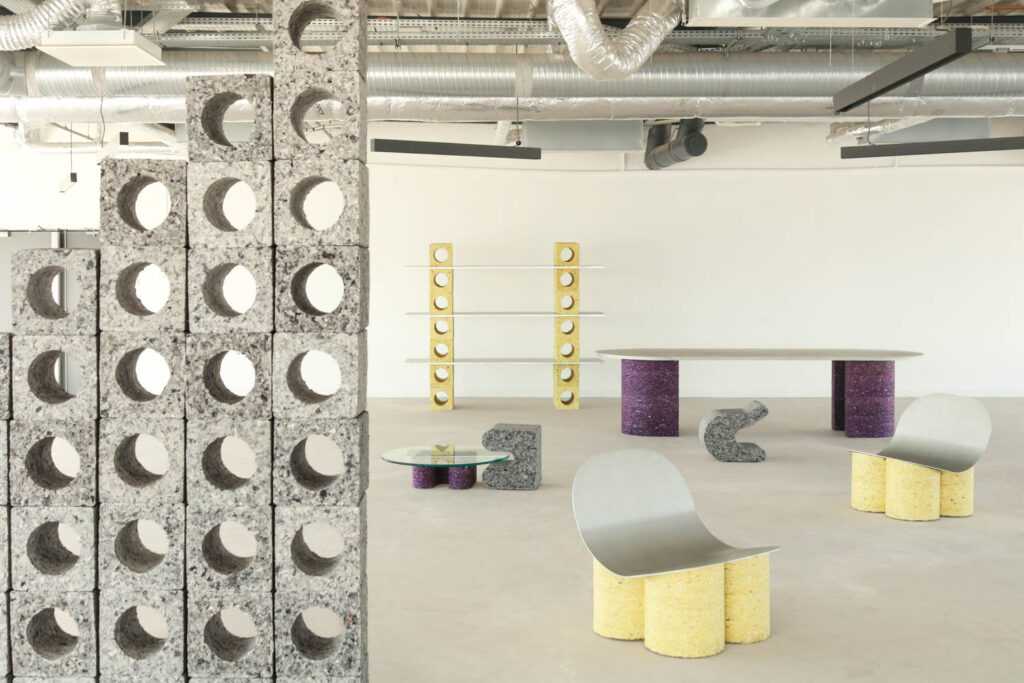
Clarisse Merlet, founder of Paris-based FabBRICK, is transforming discarded textiles into colorful architectural materials, pushing the medium with bold forms.
DesignWire
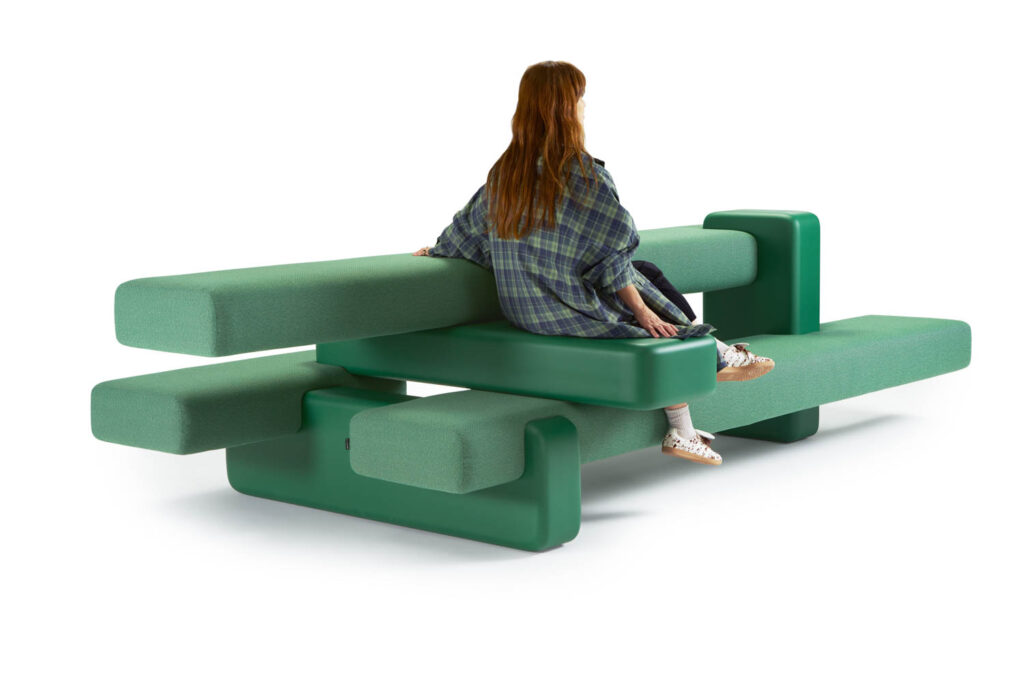
11 Top Picks From Feria Hábitat València 2026
Highlights from Feria Hábitat València, which featured over 1,200 exhibiting brands spread across 110,000 square meters of exhibition space.