
A Biomorphic Pavilion Takes Root In Charlotte, North Carolina
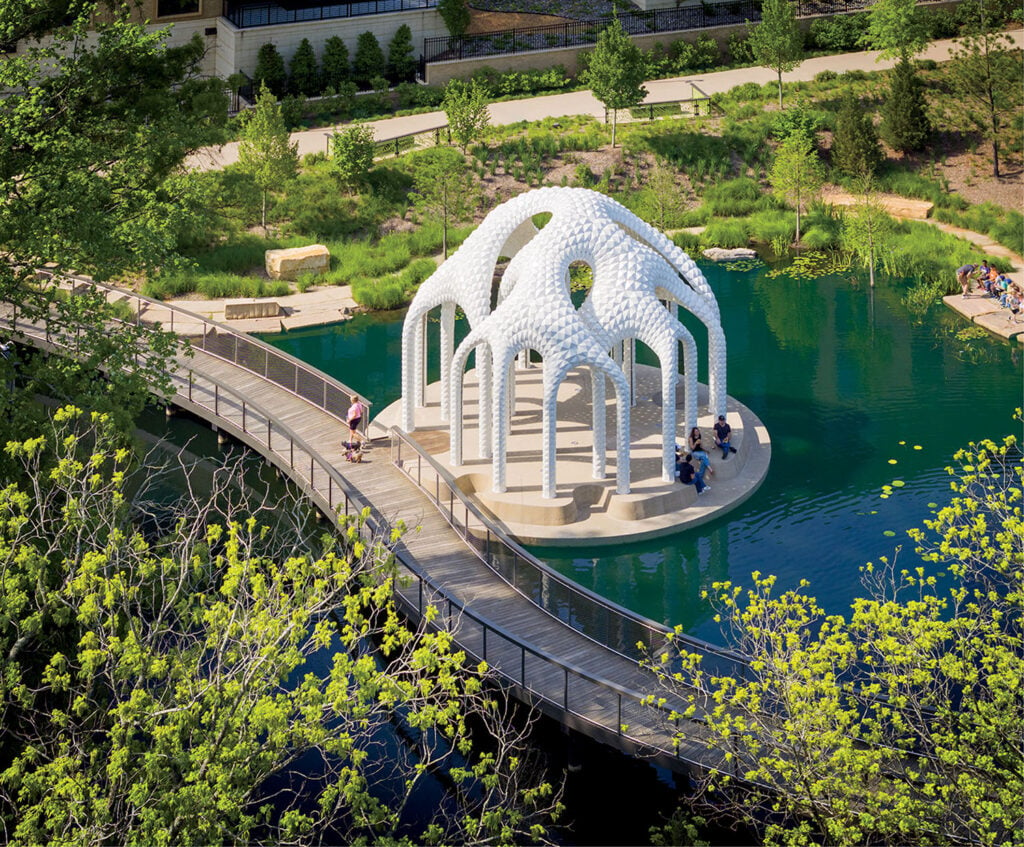
Marc Fornes is a prominent name working in and blurring the lines between art and architecture, nature and technology, the functional and the fantastical. The dozens of projects his studio, TheVeryMany, has completed over the last 20 years range in scale from a Paris apartment’s Corian stair balustrade, robotically fabricated to resemble a lotus pod, to a 300-foot-wide parking-garage mural in Charlotte, North Carolina, composed of 6,000 metal components. Fornes and team have returned to the Tar Heel State with L’île Folie, a large-scale pavilion in Downtown Cary Park. They earned the commission by winning the design competition, which called for a public art sculpture on the lawn, and also proposing to resite it. “That’s something we do,” the Brooklyn-based, French architect says, “take a risk so the end result will have more impact.” Impact indeed. The tentacled 26-foot-tall aluminum form appears like sea anemone-jellyfish mash-up rising from an island, or île in French, that Fornes built in the park’s lake. As for the folie in the title, “When something’s new, it can lack soul,” Fornes adds, referring to the 2-year-old, 7-acre park. “So we looked into traditional components of historical parks.” A folly may be traditional, but L’île Folie’s parametric design, digital fabrication, and overall otherworldliness are très moderne.
Marc Fornes/TheVeryMany’s latest permanent project in North Carolina is L’île Folie, an 850-square-foot pavilion in Downtown Cary Park used for weddings, performances, or reflection. 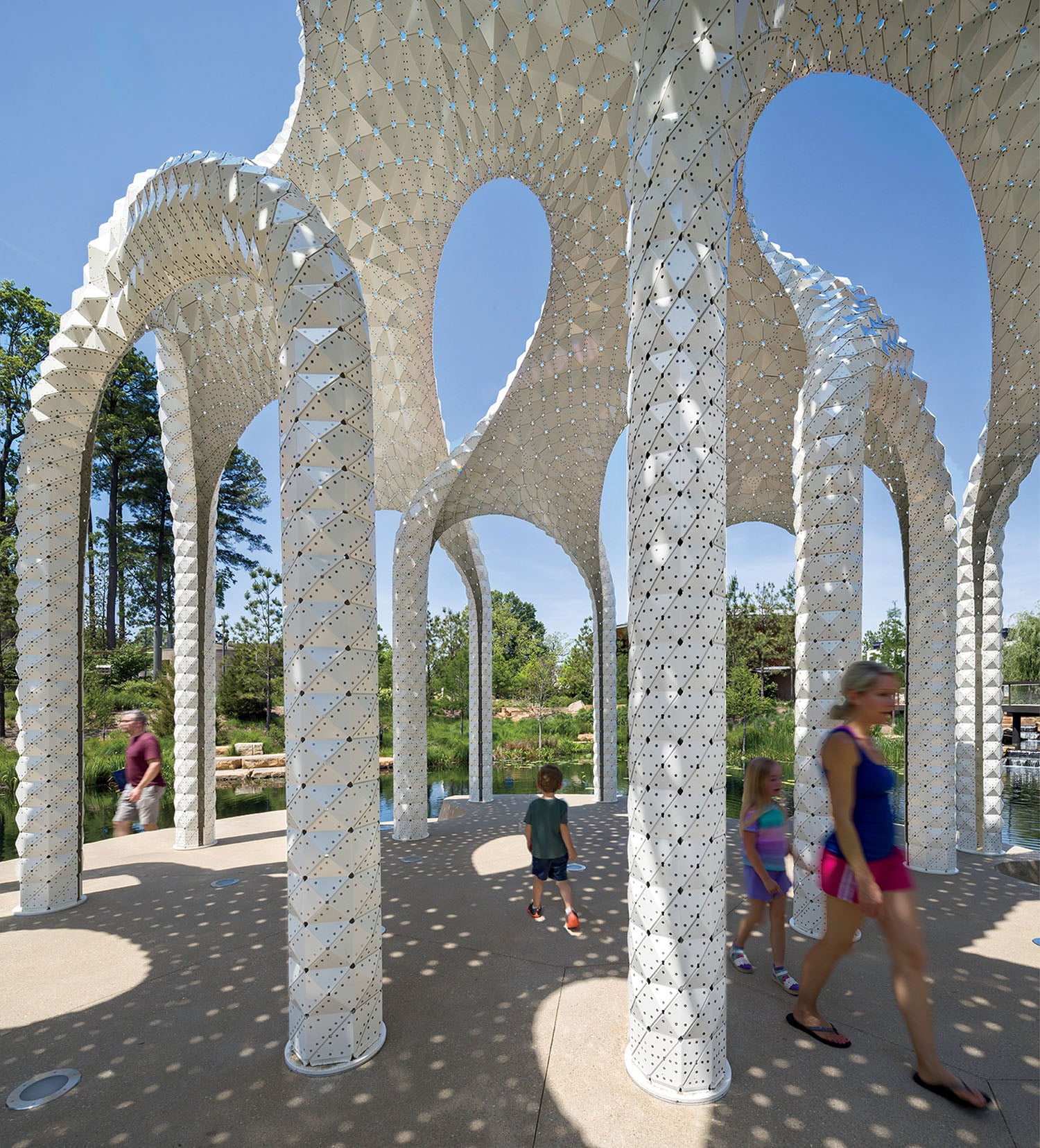
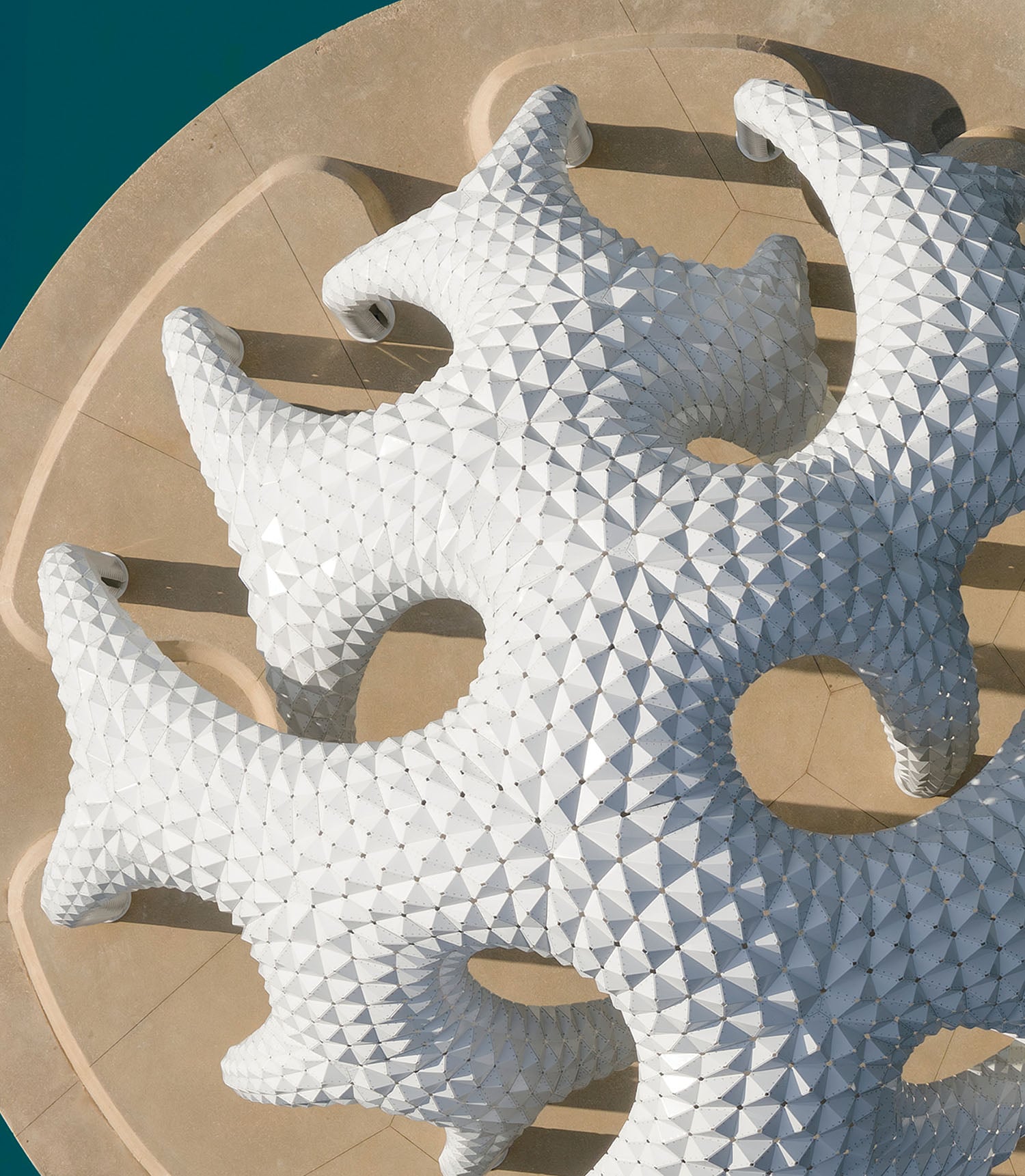
The structure’s powder-coated panels of ultra-thin folded aluminum, digitally fabricated and precisely riveted into place, with no underlying frame. 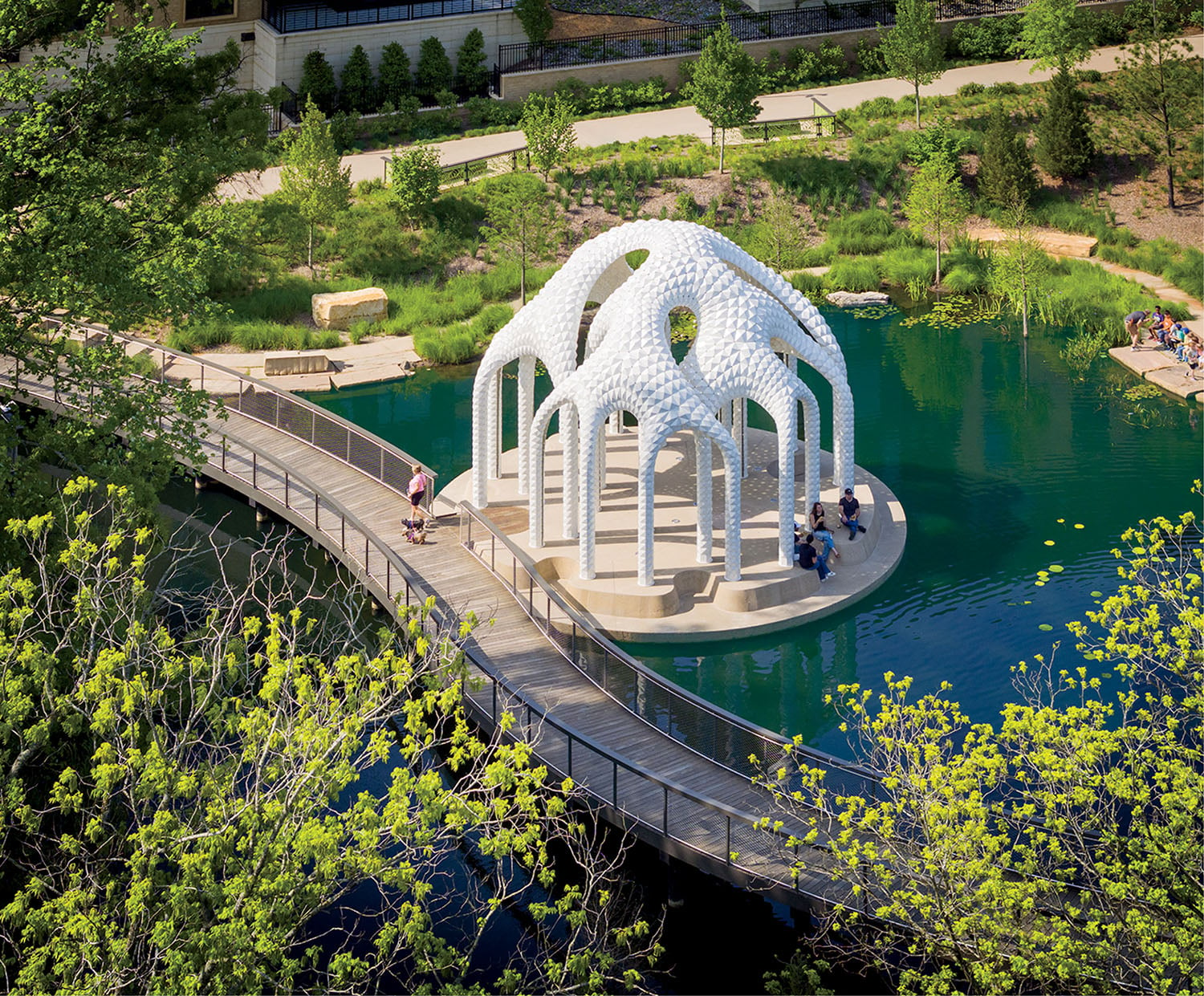
The “studded” surface resulting from the folds, a specific effect pioneered by the firm to animate the surface based on sun orientation and incidence angle, supported by a 40-foot-diameter concrete island, which is embedded with LED uplights. 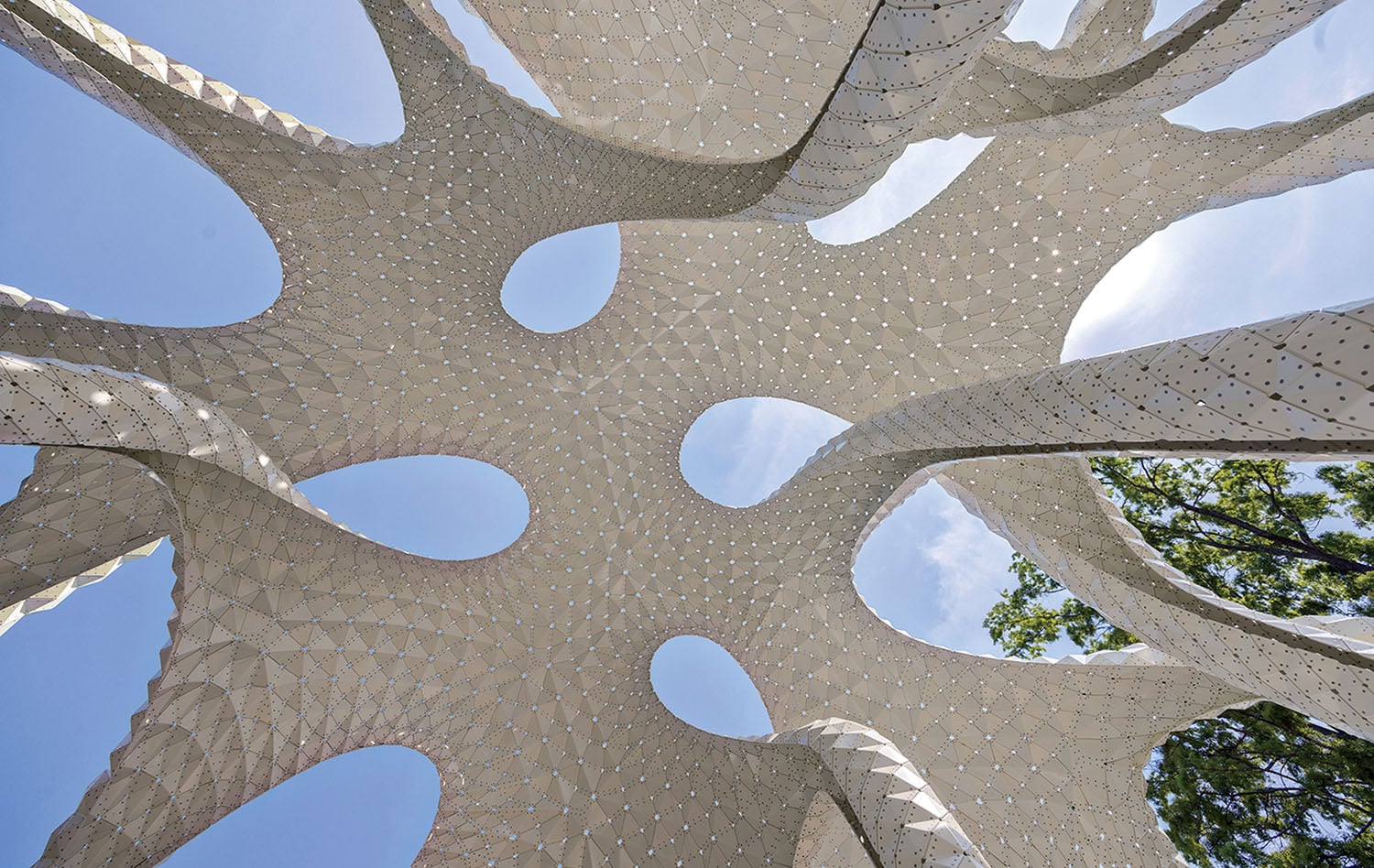
Laser-cut perforations creating daytime shadow play.
read more

DesignWire
Designers And Manufacturers On The Move: September 2026 Edition
Interior Design‘s latest On the Move includes must-know industry promotions and hires, like Perkins&Will’s strategic move to expand its design capabilities.
DesignWire
10 Questions With… Artist and Designer Conie Vallese
From sculpture and ceramics to glass, textiles, and furniture, Conie Vallese embraces a multidisciplinary practice shaped by curiosity and creativity.