
Thread Count: How Sheila Hicks Continues To Redefine Fiber Art
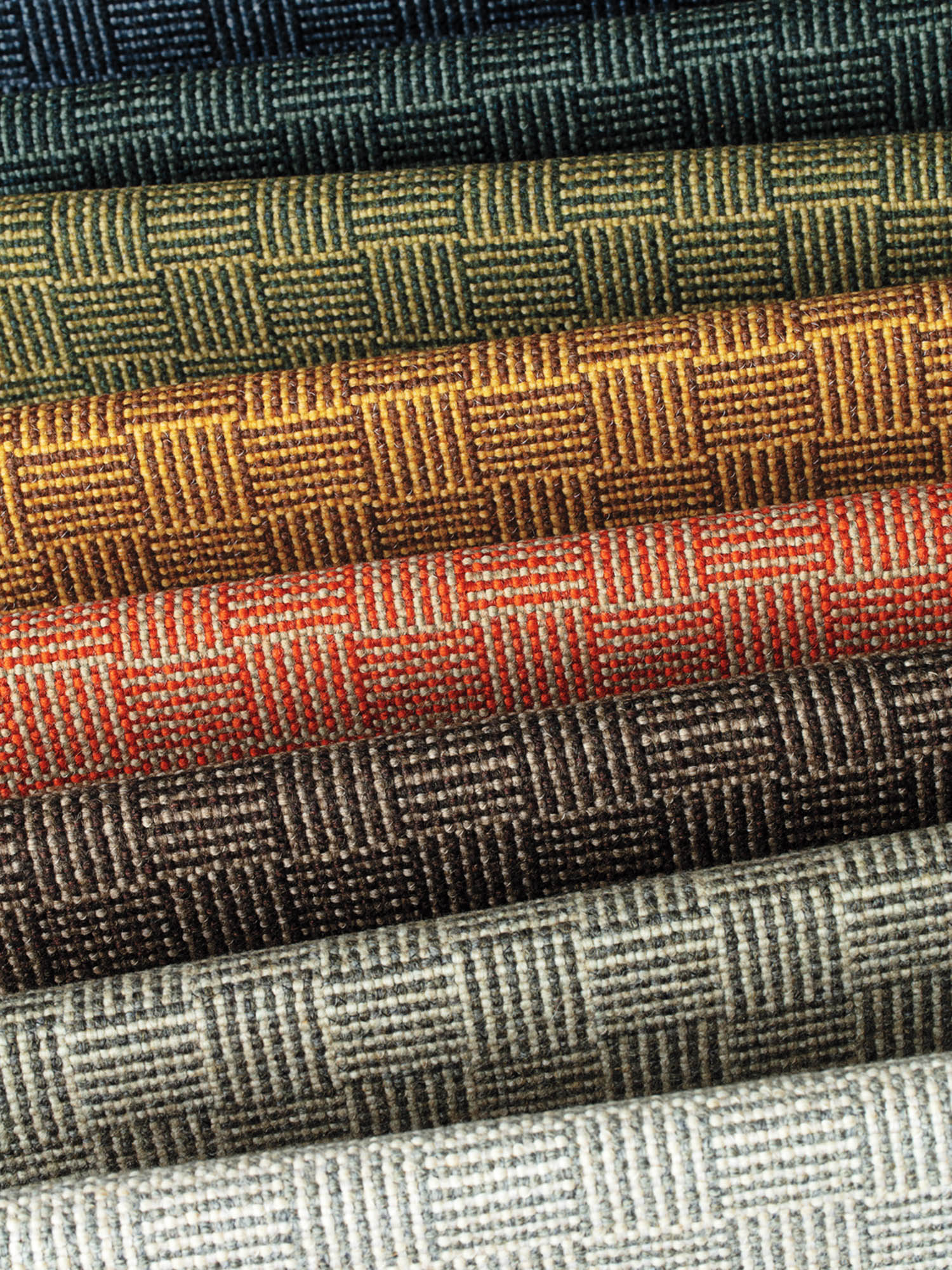
In Norse mythology, the Norns—three ancient sisters—spin the thread of fate and weave it into a fabric, the world’s unfolding story. At 91, there’s something Nornlike about Sheila Hicks, who has spent a lifetime turning fiber into an astonishing array of artworks, textiles, and compositions that resists categorization—just as the world’s plenitude constantly escapes neat classification. There’s a poetic sense of return in one of Hicks’s most recent endeavors: the reissue of Inca, a textile collection she created for Knoll in the mid-1960’s, now reborn with a new name, Altiplano, and nine fresh colors—neither of which was she, as a young designer working on her first commercial assignment, able to determine at the time.
Back then, the Nebraska-born Hicks was living in Mexico—she would move permanently to France in 1964—experimenting with ancient Andean weaving techniques. Her interest in the subject was nurtured at Yale University, where she studied painting with Josef Albers, who instilled in her the disciplines of color, structure, and material inquiry that still underpin her practice. But it was her art history professor, George Kubler, the eminent pre-Columbian scholar who validated her turn toward textiles, providing the intellectual frameworks to think about them seriously and encouraging her to pursue a Fulbright Fellowship in South America, where she encountered Peruvian weavers still employing the pre-Inca techniques she had studied.
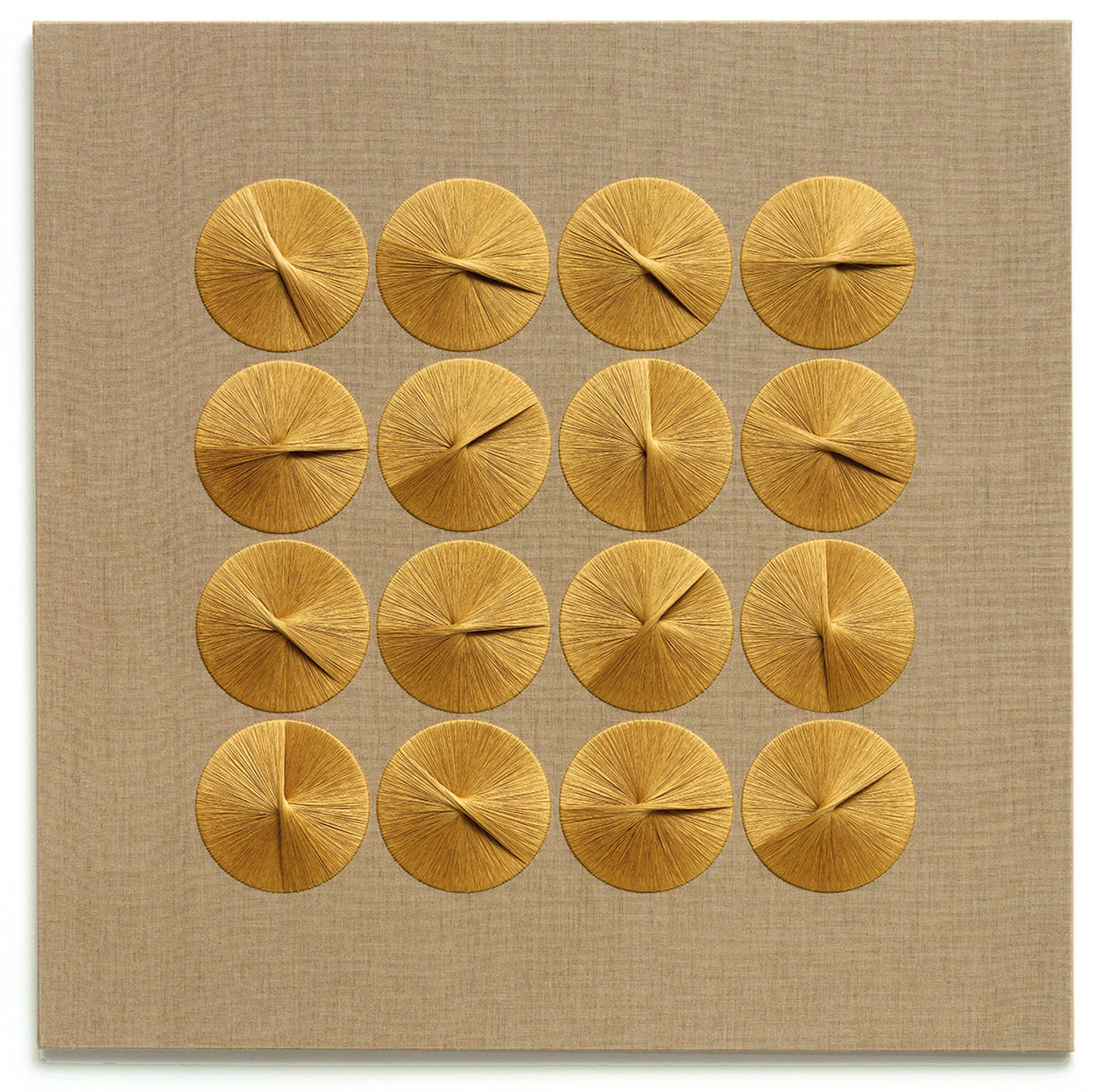
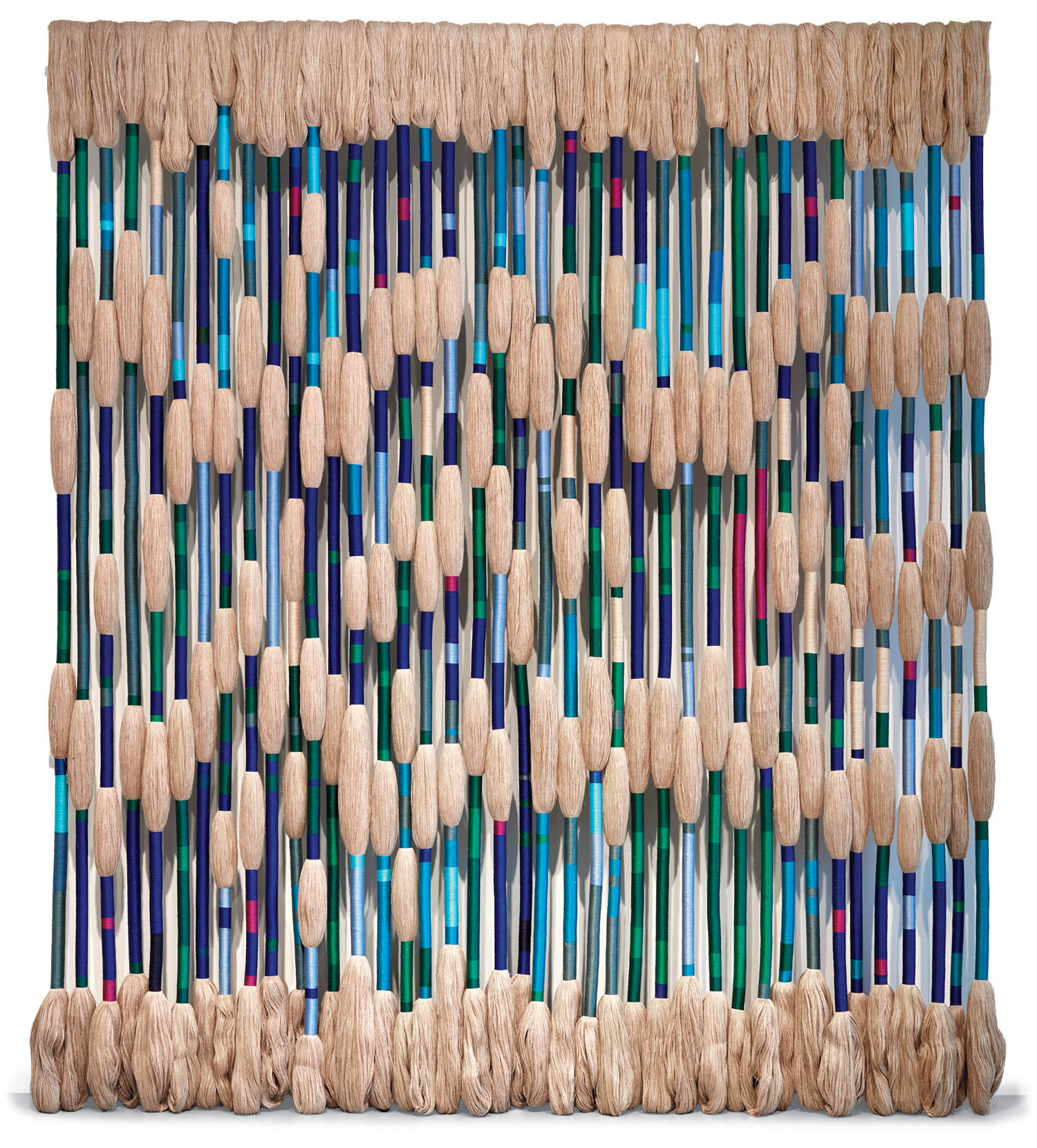
From those beginnings, Hicks has developed an oeuvre of fiber-based works of extraordinary scope, ranging from her intimate Minimes—small woven studies she has produced steadily since the ’50’s—to monumental site-specific commissions for institutions such as the Ford Foundation in New York and Banque Rothschild in Paris. She has collaborated with architects, created radiant, disklike sculptures she calls Comets, and fashioned elongated, stafflike Bâtons, each tightly wrapped in vivid threads. Her practice is both scholarly and nomadic, drawing on textile traditions observed around the globe while continually reinventing the medium in contemporary terms. Alongside her artworks, she has also produced distinguished commercial textile design—not least the Knoll collection. We spoke to Hicks about that reissue, as well as her current and upcoming museum exhibitions.

Sheila Hicks Draws On Textile Traditions Around The Globe
Interior Design: The Altiplano collection for Knoll Textiles derives from a pre-Columbian geometric pattern that’s still made by Andean weavers today. When did you first encounter it?
Sheila Hicks: The first time I saw it being produced was in South America in the late ’50’s. But the first time I laid eyes on the pattern was in a book in the Yale library—The Textiles of Ancient Peru and Their Techniques, by Raoul d’Harcourt, published in 1934, the year I was born—recommended by my art history professor, George Kubler. It has schematic drawings that show how to set up the warp to produce the pattern, which is not a complex structure—in fact, it’s so utterly simple and subtle, it’s hardly believable. Before the Jacquard loom existed, Andeans were putting threads together to make some very complicated pliable fabrics. This one is the kingdom of simplicity—I dare anyone to do better.
ID: How did you adapt it for modern textile production?
SH: It never occurred to me to reproduce the pattern commercially. I got samples while in Chile and had a suit made, which I wore in New York, knocking on doors to show my work—small weavings I was making in Mexico, not meant for functional textiles. A curator at MoMA gave me the address of someone she said I should meet, and sent me off saying, “Go dressed as you are.” I did, and that’s how I met Florence Knoll. When I took my work out of my backpack to show her, it was just like opening a sample book. From that basis we began making the first textile for production, which was a new experience for me—I mean, I didn’t know how to design for production, but they did.


ID: What was your relationship with Florence Knoll like?
SH: It was productive and positive, with some humor. She knew her own mind and when she gave orders, everybody jumped! She called Robert Cornell, the president of the company, into her office and said, “Don’t let this young lady out the door until she agrees to work with us.” He did what she said—so it was pretty simple!
ID: Apart from offering a different palette, you’ve also changed the name of the collection to Altiplano. Why’s that?
SH: Inca was a good name, because everybody remembers it. But before the Incas took over in their systematic way—getting all the tribes to follow the same rules, line up and do things the ‘correct’ way—individual Andean weavers were producing interesting, experimental kinds of textiles. The new name gives credit to those earlier, independent artisans spread throughout the Altiplano—in the mountains of Peru and elsewhere. I like how, alphabetically, the name goes right to the head of the parade, too!
ID: A solo show, “New Work: Sheila Hicks,” opened at SFMOMA in September. Tell us about it.
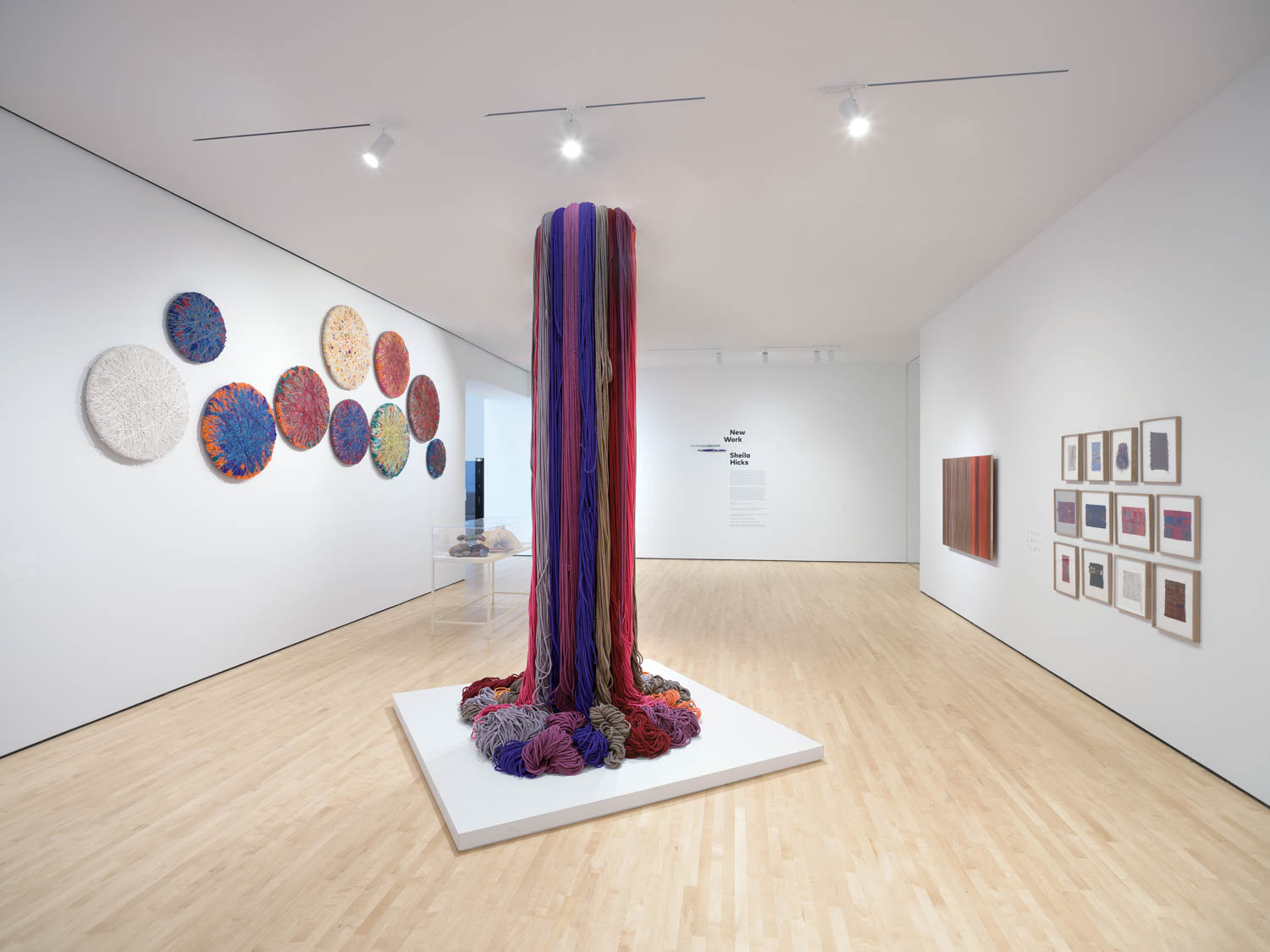
SH: It runs for a year in the new work gallery and the sculpture garden on the roof. There are six or so major pieces including Toward Unknown Horizons, which is like a phare or lighthouse, at the center of the space. Then there’s a wall with about 12 Minimes—small woven works—and another with 10 Comets, which are disks wrapped or bundled in threads.
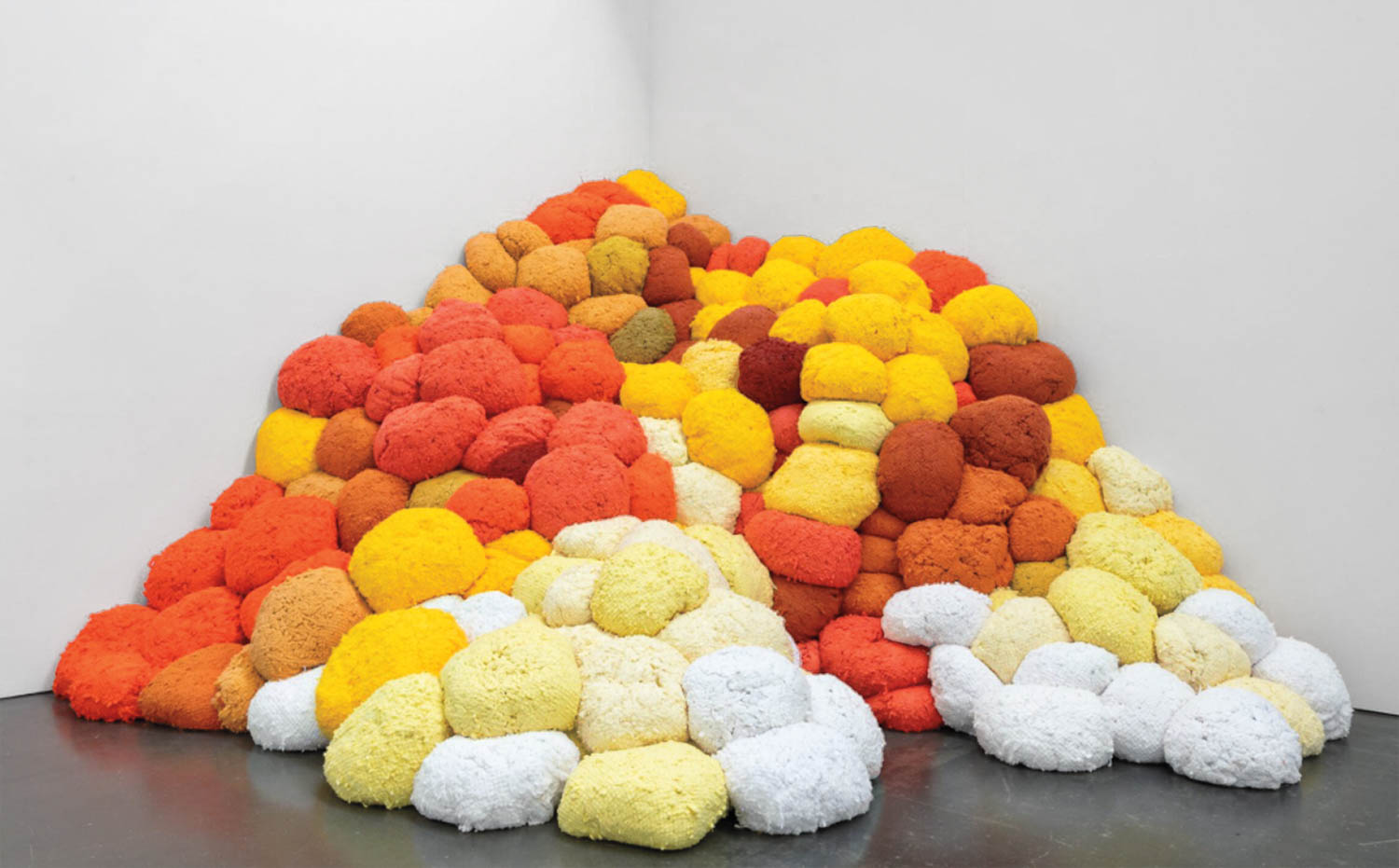
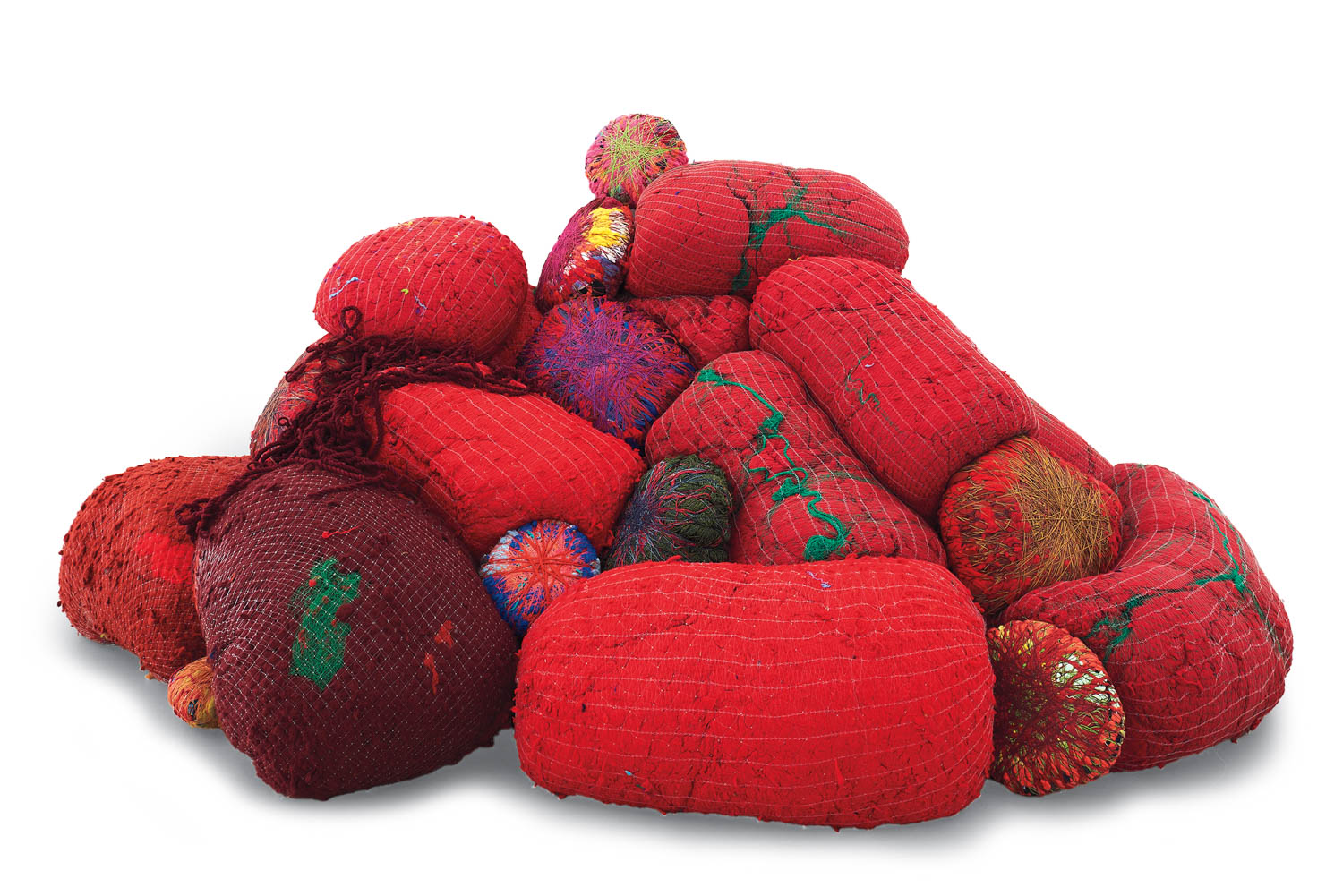
ID: One work, Rampart, is like a large pile of soft boulders. An even larger pile—Saffron Sentinel—was a knockout at the Pinakothek der Moderne’s summer exhibition in Munich.
SH: It was held in the Herrenchiemsee Palace, which is the Versailles of Germany. Saffron Sentinel is a massive mountain made of pure pigmented fiber. Pigment from Turkey is transferred into the fiber in Germany and then sent to North Carolina for weaving by Sunbrella. We get it in the intermediary state.
ID: Another exhibit, “The Traveling Thread,” just opened at the Musée du quai Branly–Jacques Chirac, Paris’s museum of non-European arts and cultures. Running through March 8, 2026, it’s cocurated by you and your lifelong friend, art historian and textile scholar Monique Lévi-Strauss.
SH: Yes, she wrote the catalog. This is a minor miracle—on her next birthday she’ll be 100, and she’s still very much alive!
Explore Sheila Hicks’ Poetic Textile Endeavors



read more

DesignWire
Designers And Manufacturers On The Move: September 2026 Edition
Interior Design‘s latest On the Move includes must-know industry promotions and hires, like Perkins&Will’s strategic move to expand its design capabilities.
DesignWire
10 Questions With… Artist and Designer Conie Vallese
From sculpture and ceramics to glass, textiles, and furniture, Conie Vallese embraces a multidisciplinary practice shaped by curiosity and creativity.