
Soft Power: Carpets As Agents Of Resistance
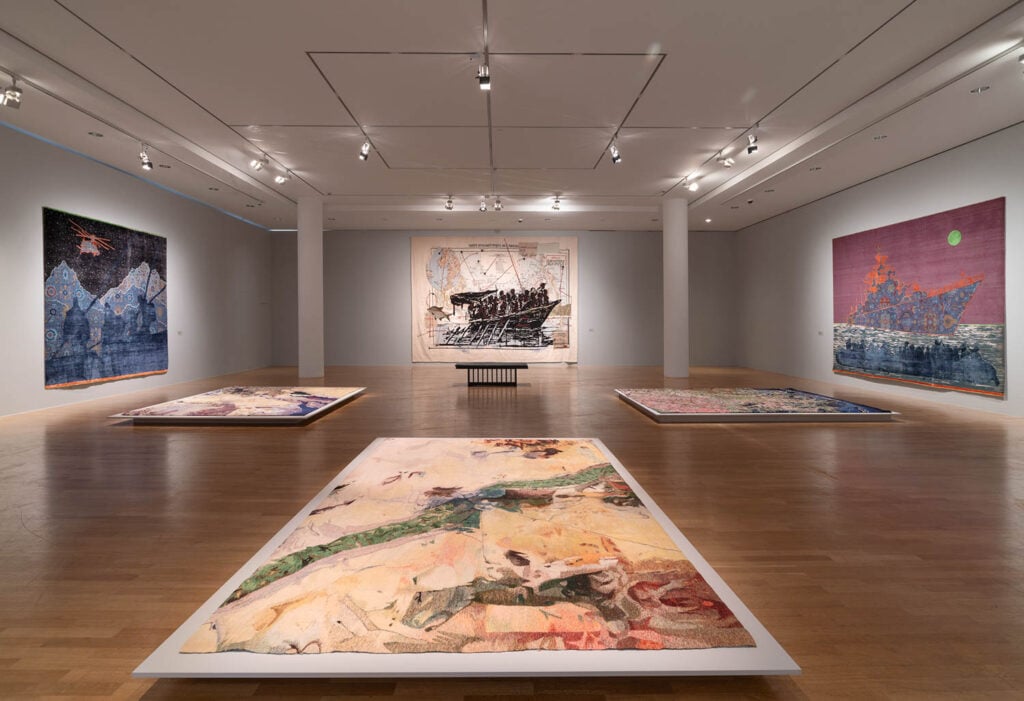
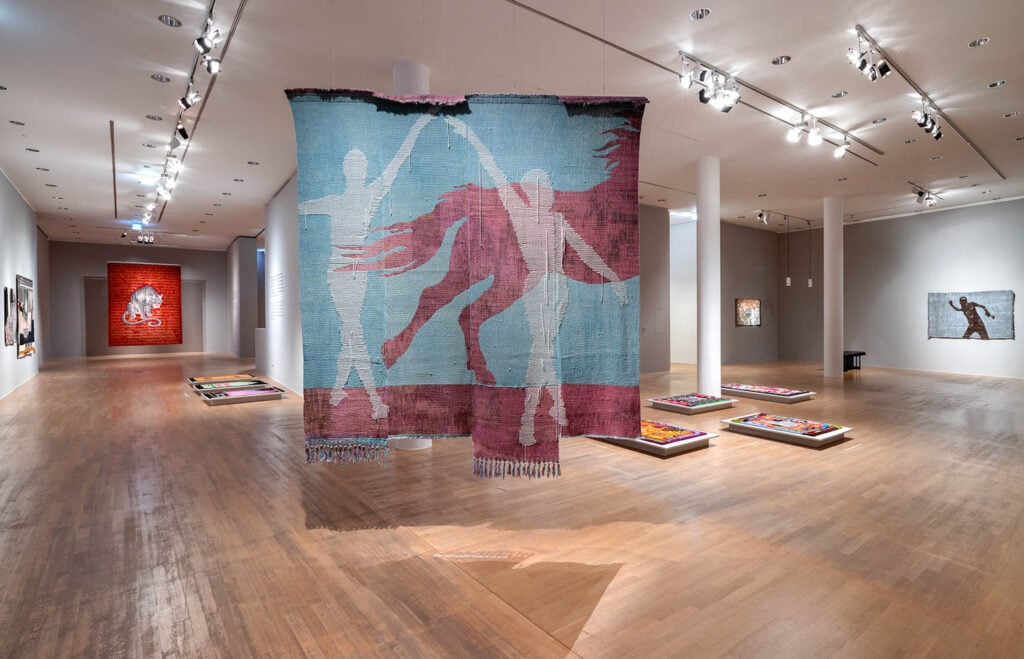
At Frankfurt’s Museum Angewandte Kunst, an exhibition titled “Wolle. Seide. Widerstand,” which translates to “Wool. Silk. Resistance,” upends the notion of the rug as a decorative object, recasting it as a vehicle for protest, politics, and spatial expression. On view through June 14, 2026, the exhibition brings together 37 works by artists from Azerbaijan, Germany, South Africa, Mexico, Nepal, Pakistan, the Netherlands, Argentina, and the United States, positioning the carpet as a contemporary form shaped by material experimentation, civil urgency, and architectural presence. Weaving, knotting, and tufting become tools for addressing migration, surveillance, environmental collapse, trauma, and resilience, transforming textiles into charged cultural surfaces.
Curated by Katharina Weiler, the show asks how dissent can be embedded in fabric and what it means for the rug to embody an aesthetic of resistance. Across the galleries, these works move beyond the conventions of Western carpet history to operate as sculptural objects, political images, and immersive environments. The result is a compelling argument for textile as a carrier of memory, ideology, and form.
Global Artists Showcase The Power Of Woven Narratives
Faig Ahmed, Doubts?2020 (2020)
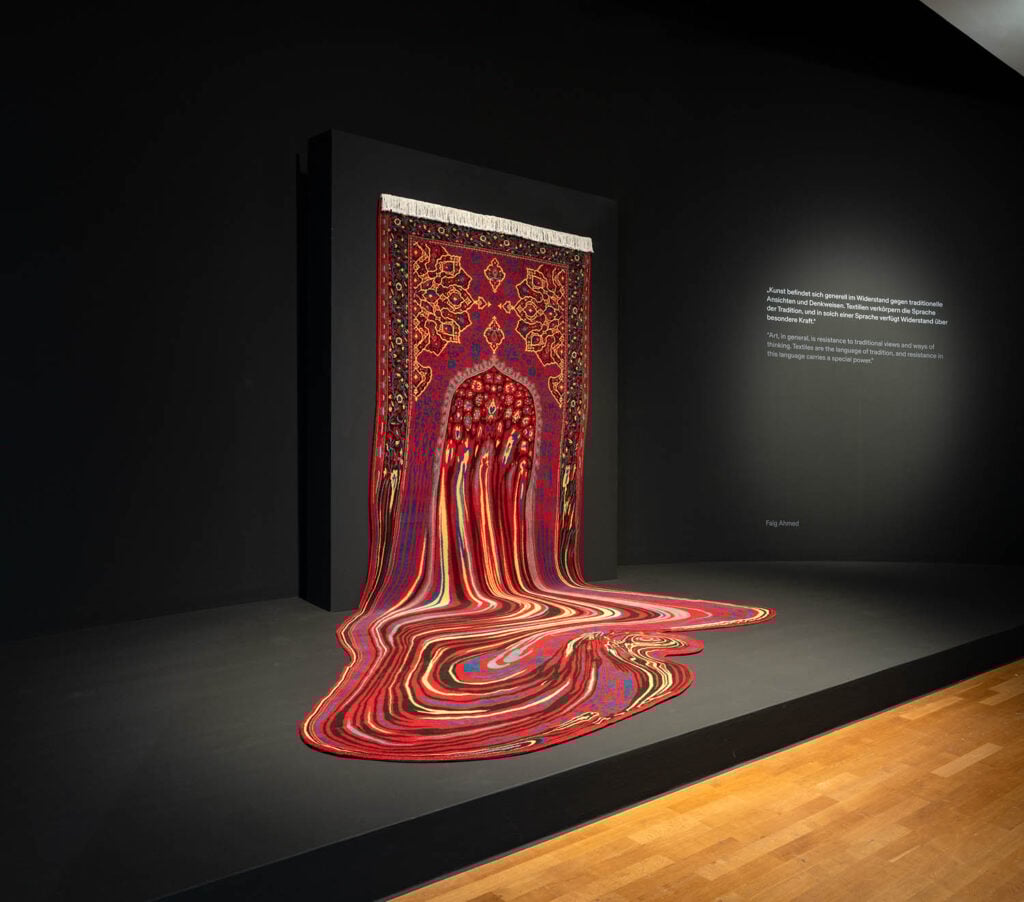
Faig Ahmed transforms the traditional carpet into a destabilized sculptural object, dissolving its classical pattern into a molten cascade that spills onto the floor. In doing so, he turns a familiar decorative surface into a meditation on rupture, moving between order and disorder, tradition, and reinvention.
Jan Kath, On High Seas (2022)
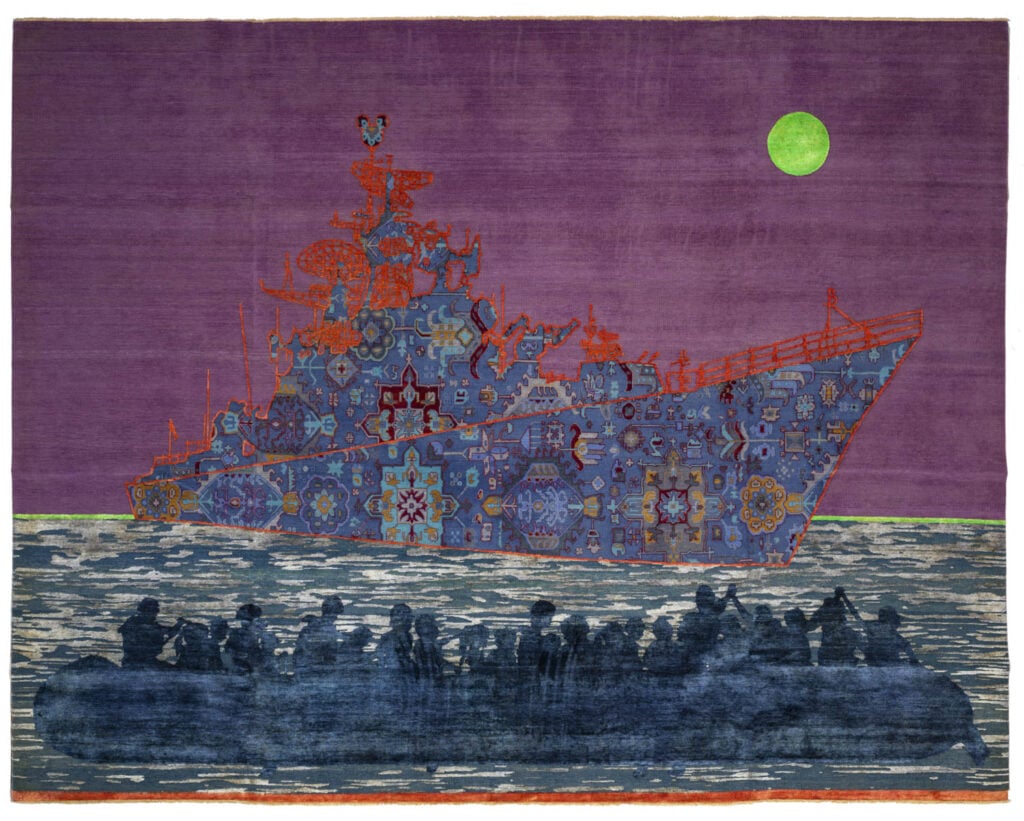
Jan Kath overlays the ornamental language of the Persian carpet with the imagery of refugee crossings, using a richly patterned surface to stage a pointed reflection on migration, conflict, and the false promise of paradise. The work reframes the carpet as a political image in which decoration becomes a vehicle for critique.
Noelle Mason, Ground Control (El Paso/Ciudad Juarez) (2014)
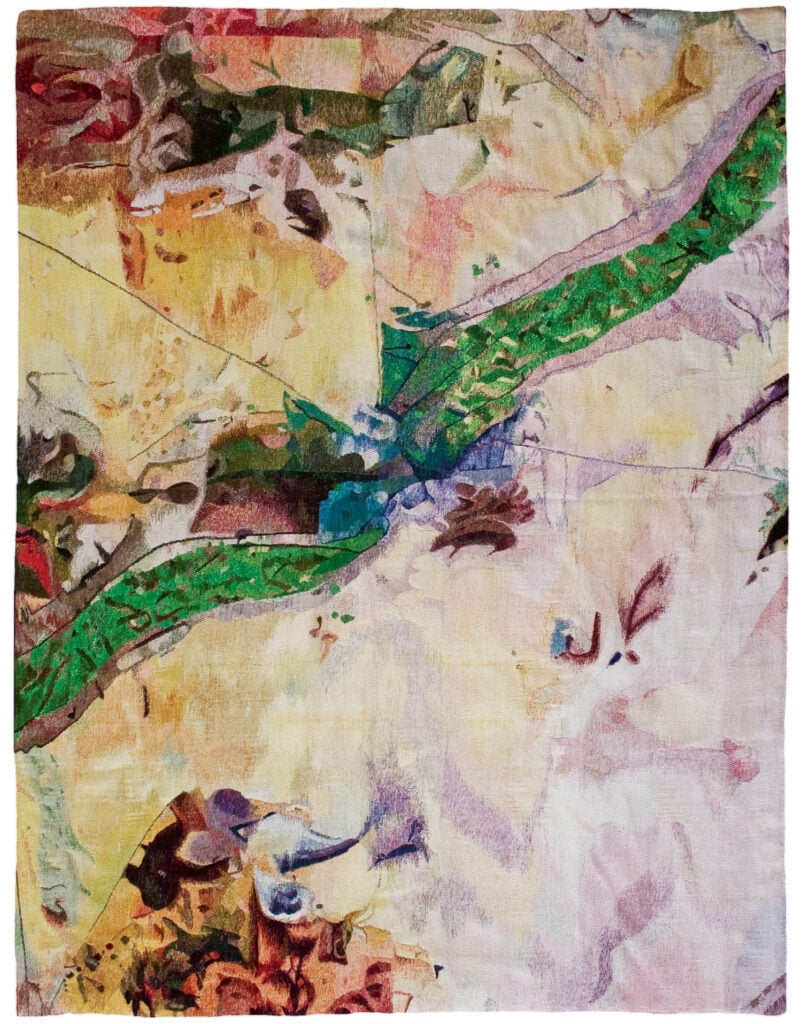
Drawn from NASA satellite imagery of the U.S. Mexico border, Noelle Mason’s woven tapestry translates a digital surveillance image into a tactile, handwoven surface. By turning contested territory into textile, she collapses the distance between abstraction and lived reality, recasting the carpet as both map and political ground.
William Kentridge, Carte Hypsométrique de l’Empire Russe (2022)
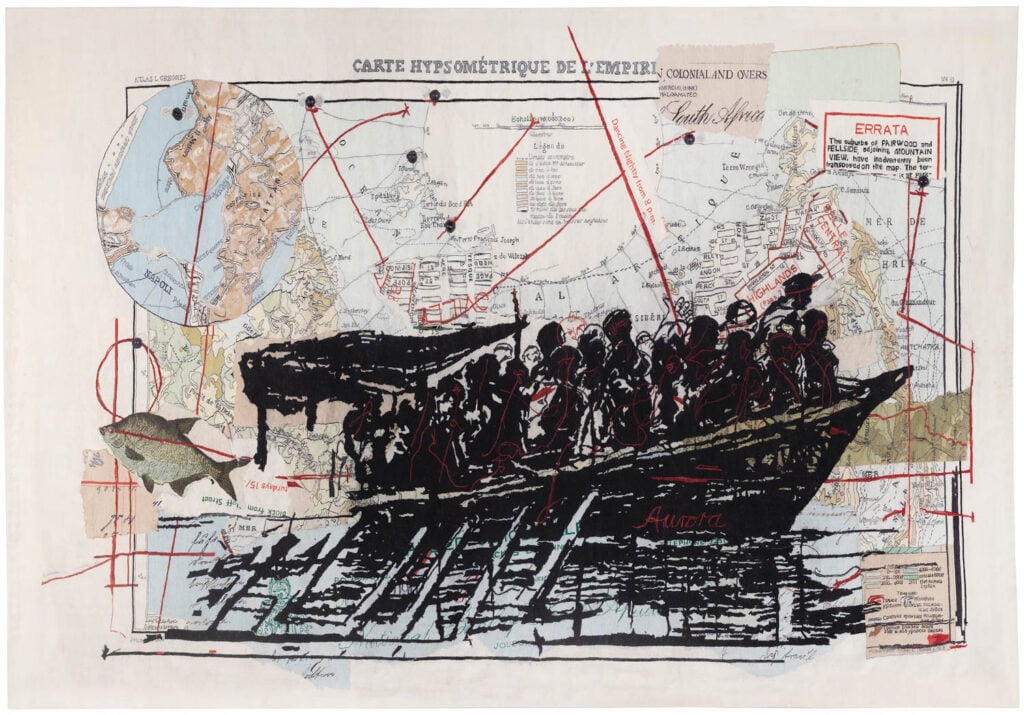
William Kentridge’s monumental tapestry layers migration, empire, and rescue into a densely woven image centered on an overcrowded boat at sea. Moving between collage, cartography, and textile, the work positions tapestry as a medium capable of holding both historical violence and collective resilience.
Baseera Khan, I AM A BODY (2018)
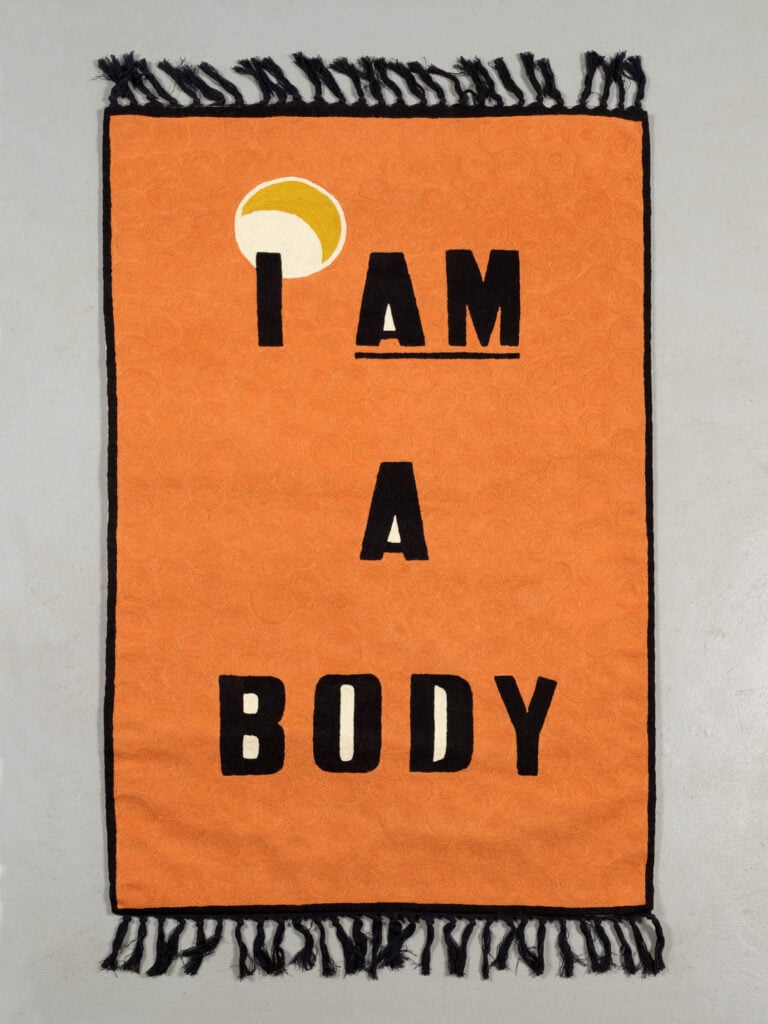
In I AM A BODY, Baseera Khan turns the prayer rug into a site of protest, pairing devotional form with the visual language of civil rights placards. The work asserts the body as both political and spiritual ground, linking dignity, self-determination, and resistance.
Erin M. Riley, Affair, The (2022)
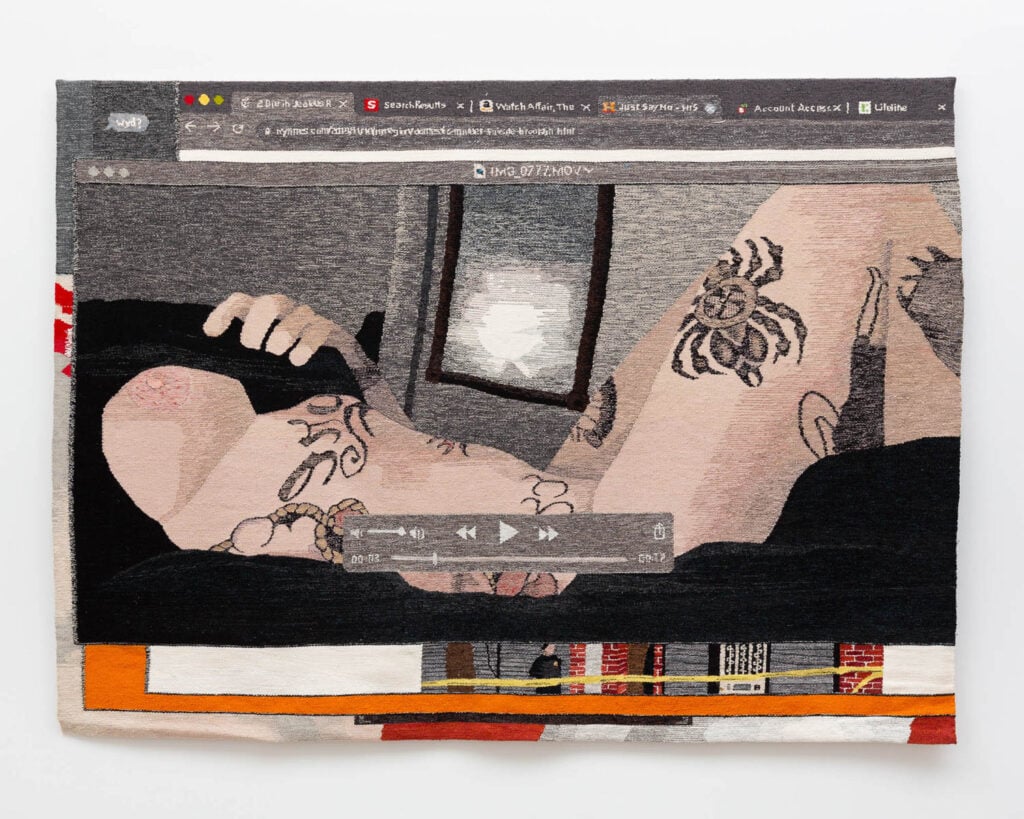
Erin M. Riley translates the visual language of screens, webcams, and browser tabs into handwoven form, collapsing digital intimacy and textile labor into a psychologically charged self-portrait. The work examines vulnerability, voyeurism, and self-possession, using weaving as a means of reclaiming agency.
Tsherin Sherpa, The Lone Ranger (Coral) (2022)
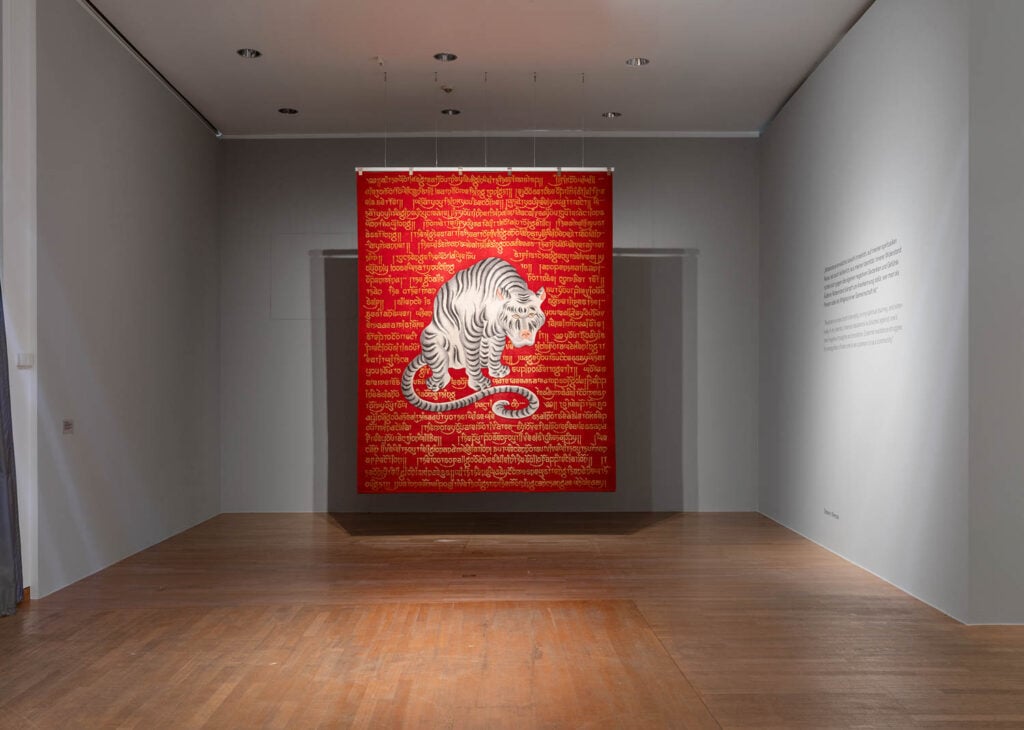
Drawing on the tradition of Tibetan tiger rugs, Tsherin Sherpa fuses spiritual iconography with contemporary graphic language to create a work centered on meditation, resilience, and inner transformation. Its richly layered surface proposes contemplation and empathy as forms of resistance in themselves.
Otobong Nkanga, Unearthed – Twilight (2021)
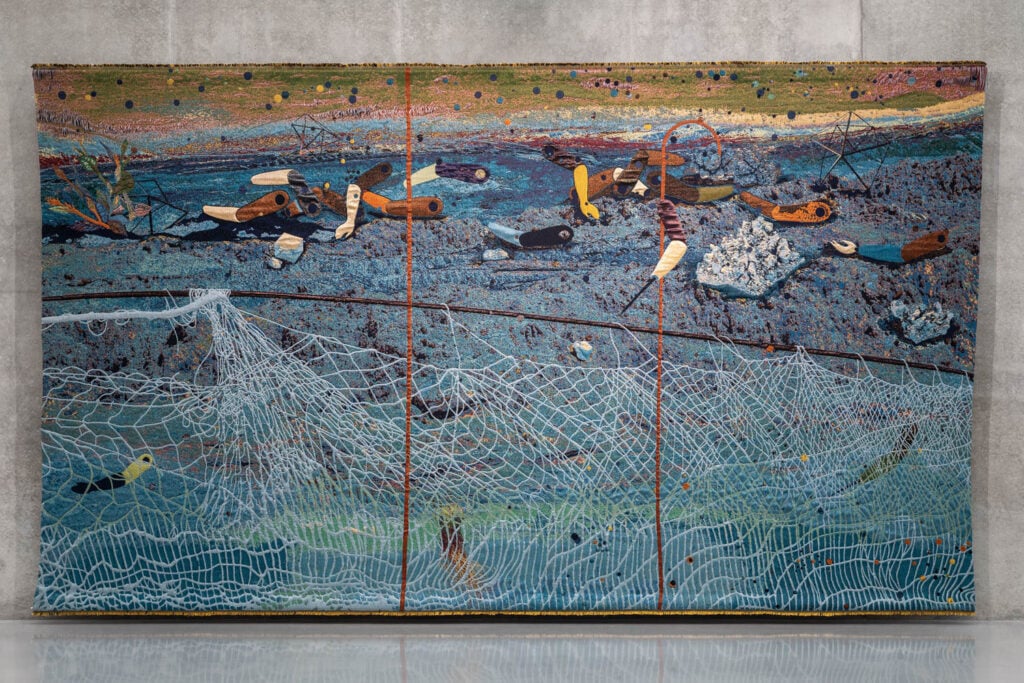
Otobong Nkanga’s densely woven seascape traces the entanglement of environmental extraction, colonial violence, and ecological collapse. Combining synthetic and natural fibers, the work turns textile into a material argument for interdependence, insisting on care and accountability as urgent forms of resistance
read more

DesignWire
Designers And Manufacturers On The Move: September 2026 Edition
Interior Design‘s latest On the Move includes must-know industry promotions and hires, like Perkins&Will’s strategic move to expand its design capabilities.
DesignWire
10 Questions With… Artist and Designer Conie Vallese
From sculpture and ceramics to glass, textiles, and furniture, Conie Vallese embraces a multidisciplinary practice shaped by curiosity and creativity.