
We Design Beirut’s ‘Edition Two’ Dives Into Lebanon’s Creative Legacy
Back again for Edition Two, We Design Beirut returns to transform the Lebanese capital into an enchanting and exciting exhibition of Levantine creativity. Multiple architectural wonders across the city and beyond—each with their own unique legacy—become spectacular stages for designers of all kinds, from the emerging and the artisanal to the established and the inspiring.
“Craft is our heritage, our pride, and the essence of our skill,” WDB creative director Samer Alameen told Interior Design. “After 50 years of war, our artisans were deeply affected by a lack of resources, opportunities and space to grow. Yet, in the face of adversity, the spirit of craftsmanship endured.”
“In order to survive in today’s world, with mass production and industrial giants as competition, craft must evolve,” he continued. “It must embrace new techniques, new thinking, and modern tools, while preserving the soul of tradition. We’re not just preserving craft; we’re putting it forward. We are making sure it has its rightful place in the future. That’s why we celebrate and empower our artisans.”
Through fostering vital partnerships and building bridges between communities and creative ecosystems across the MENA region, We Design Beirut has become the definitive international platform for Lebanese creative expression at home. Featuring eight exhibitions across five key locations—from ancient Roman Baths, the derelict Burj El Murr and the reclaimed industrial Abroyan Factory, to the palatial Villa Audi and the soon-to-be restored Immeuble de l’Union—here are just some of the highlights on display for ‘Edition Two’ of We Design Beirut.
12 Highlights from We Design Beirut’s ‘Edition Two’
‘In Assembly—Patterns at Play’ by Nada Debs
Photography by Bernard Khalil. 
Photography by Bernard Khalil. 
Photography by Bernard Khalil.
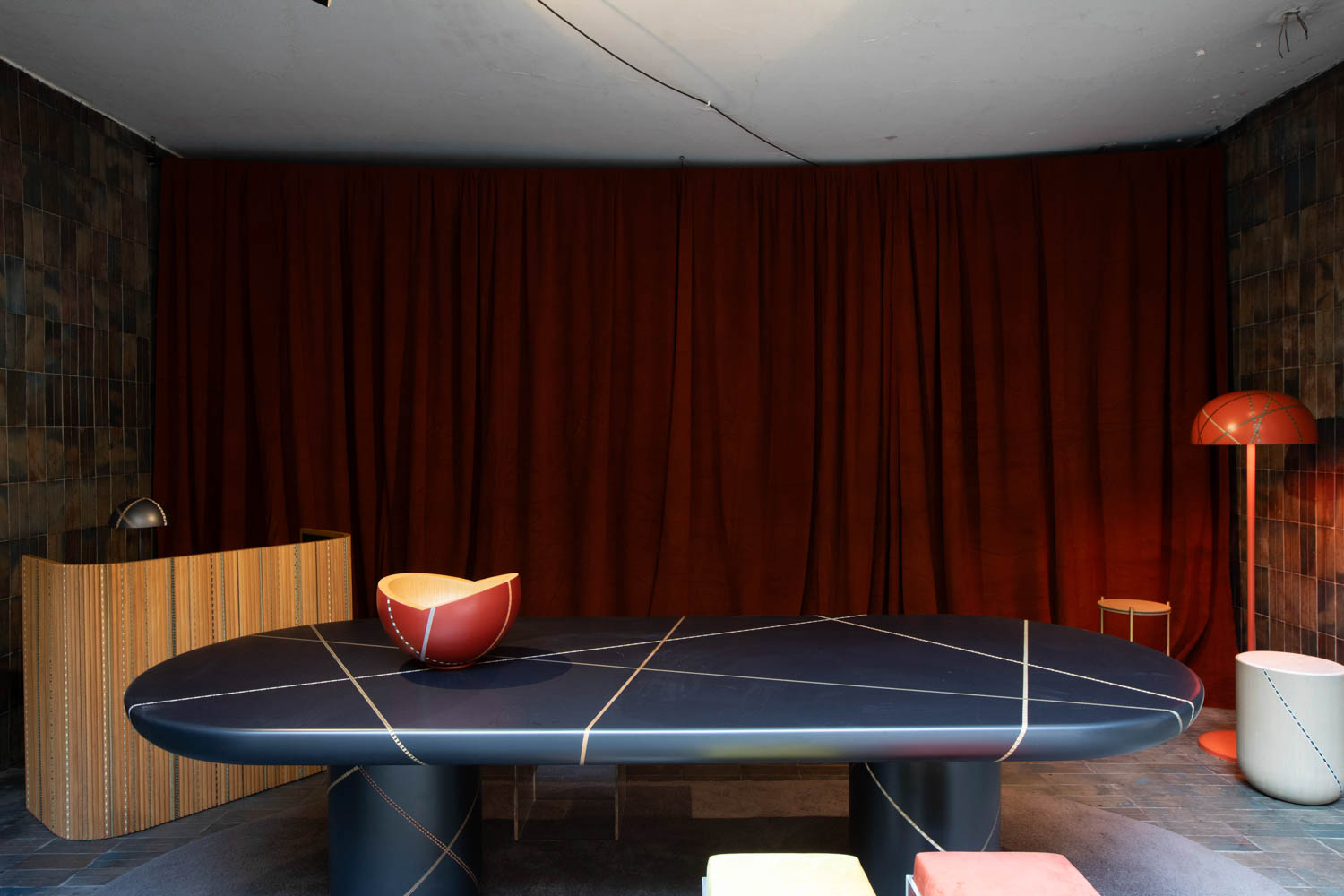
Created by multidisciplinary designer Nada Debs, ‘In Assembly – Patterns at Play’ transforms traditional Lebanese wood marquetry—often seen on backgammon boards—into an immersive, contemporary experience. The skill of master craftsman Nabil Haswani—one of Lebanon’s last marquetry makers—is revealed through live demonstrations and a display of his earlier collaborations with Studio Nada Debs, while a modular space, furnished with simple wooden geometric blocks, invites visitors to freely move seating and play games with friends. This notion of play is then extended further through an accompanying generative algorithm that allows visitors to design their own one-of-a-kind game, merging physical craft with digital creation, and a large-scale collaborative installation that will take shape as more visitors add material to it over the course of We Design Beirut.
‘Nine Reflections’ by Tarek Shamma

Egyptian architect Tarek Shamma’s ‘Nine Reflections’ takes the form of a stone pavilion, conceived as a fragment of a vanished sanctuary. Inspired by ancient geometries, the structure features a central dome surrounded by the curved traces of eight absent chambers, suggesting both loss and renewal. A single oculus opens the dome to the sky, casting light onto a shallow basin, while mirrored planes invite visitors to complete the geometry within themselves. Rough and honed stone surfaces—supported by a hidden steel frame—bear witness to the passage of time. This space of stone, light and silence awakens introspection, reflecting resilience in both architecture and the human spirit.
‘Silent Dialogue’ by Marine Bustros
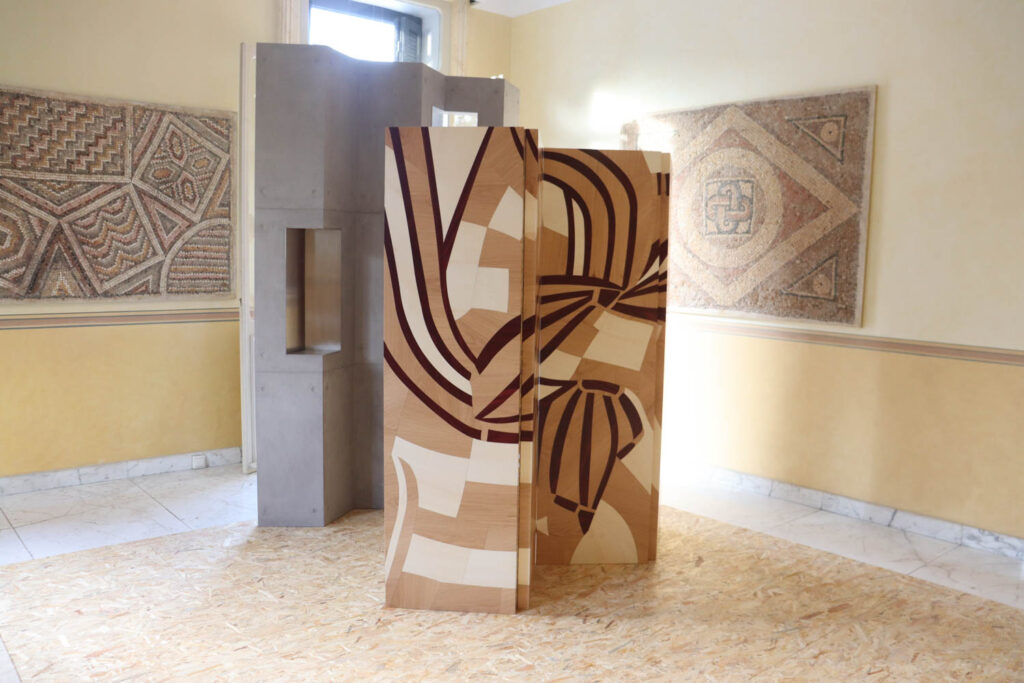
From interior designer Marine Bustros, ‘Silent Dialogue’ embodies the tension between memory and change; loss and resurfacing. The installation comprises a flexible paravent and a solid wall, locked in dialogue, echoing the manner in which life in Beirut exists upon a fragile threshold. The paravent stands as a mediator, suggesting movement and holding space for what comes from the past while, facing it, the fixed wall remains still, its surface punctuated with niches that archive fragments of the city. This duality reflects the city’s soul; at once in constant motion, yet firmly rooted in history.
‘Wickerscape’ by Mariagroup & Rattan Hun
Photography by Bernard Khalil. 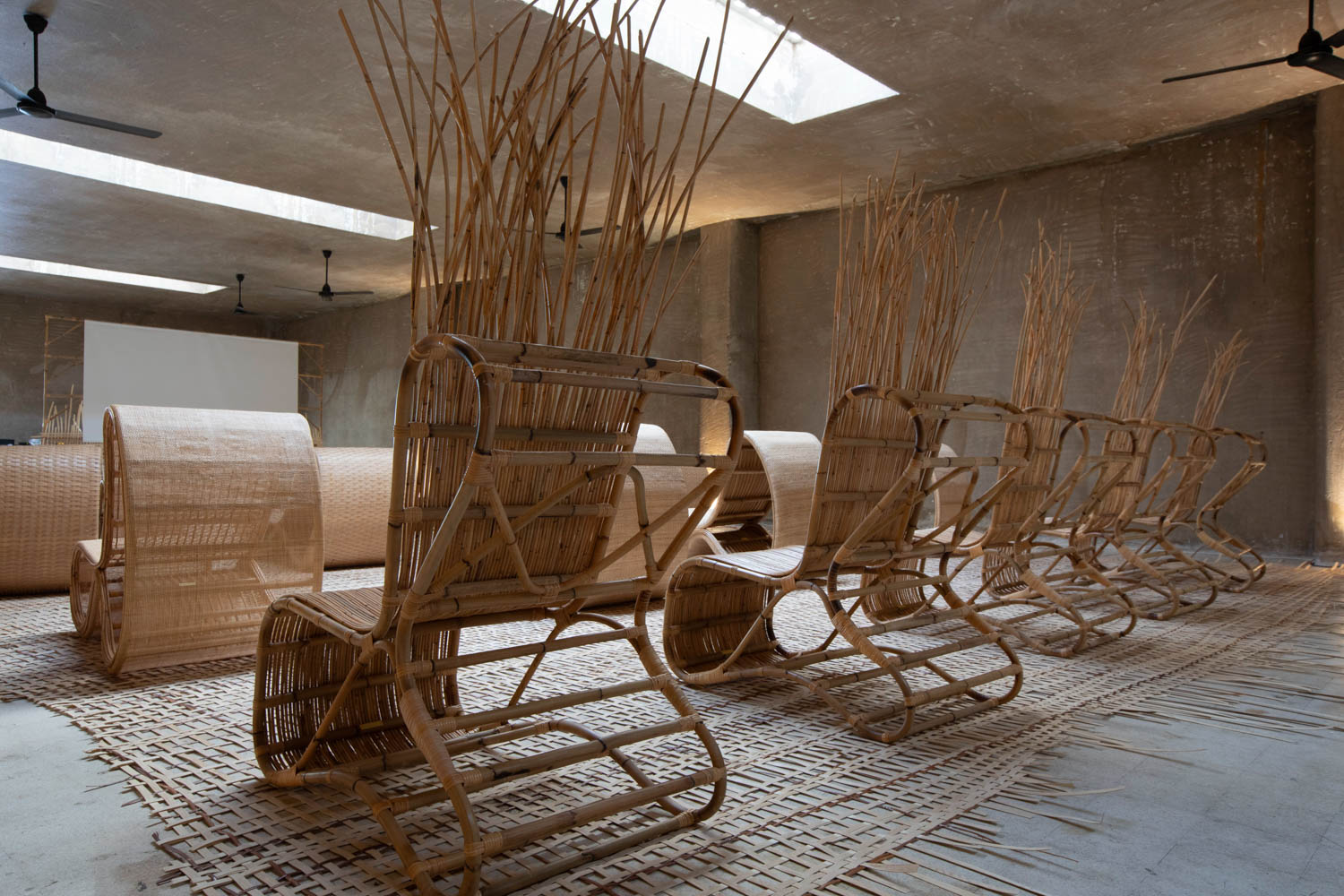
Photography by Bernard Khalil.
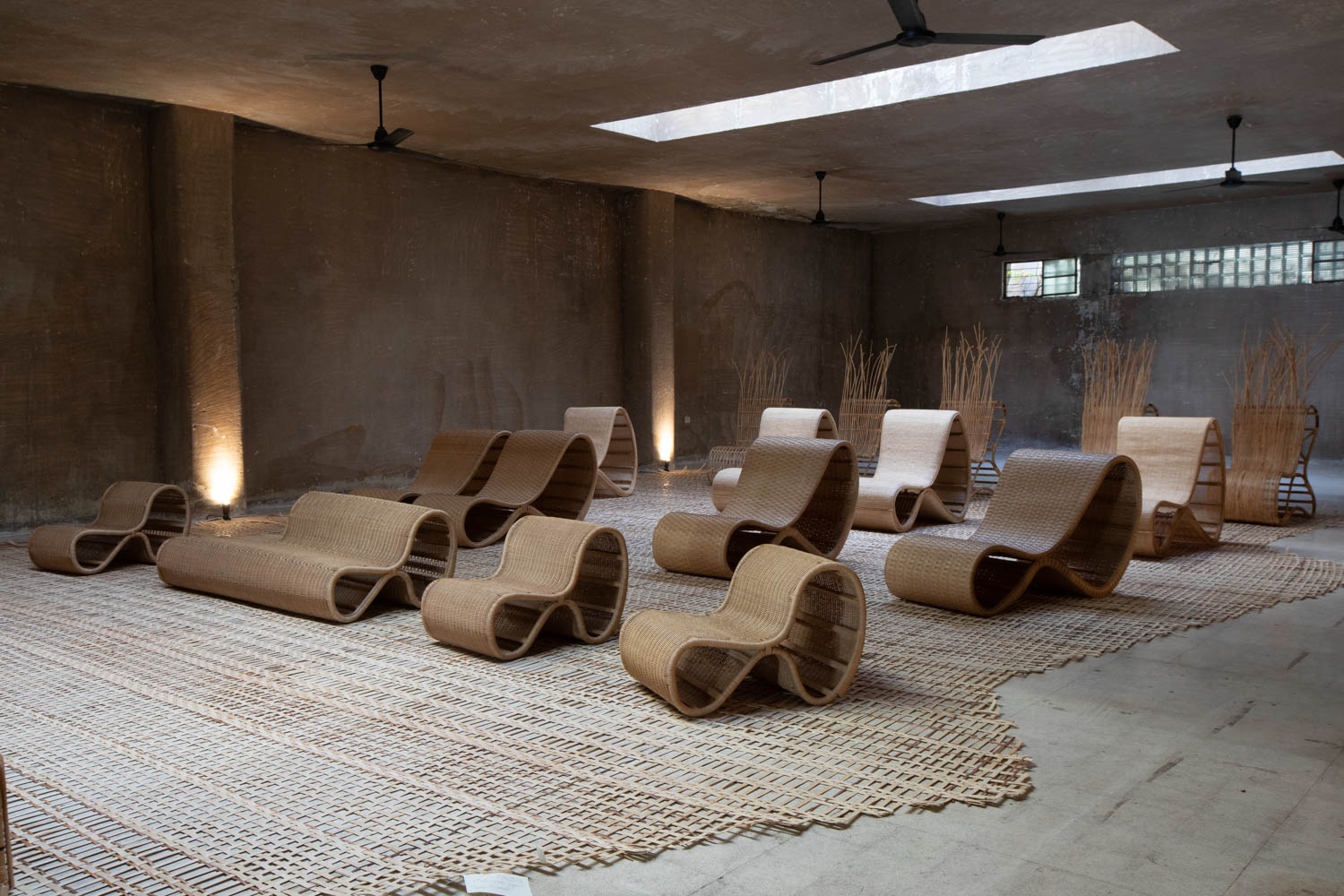
Delving into an exploration of rattan craftsmanship, Mariagroup have collaborated with Rattan Hun for to produce ‘Wickerscape’. Conceived as a spatial narrative, this intervention invites the public to engage with uses for rattan that push the boundaries of traditional craft. The work unfolds as a makeshift theatre with different types of rattan seating arranged around it, with a large bamboo and rattan screen suitable for screening films. Even the floor rug is crafted from woven wicker. The crafted objects are not only functional seats, but also integral components of the scenography. As visitors take their place within the space, they become active participants, completing the installation through their presence and interaction.
‘Whispers of Stone and Water’ by Samer Bou Rjeily
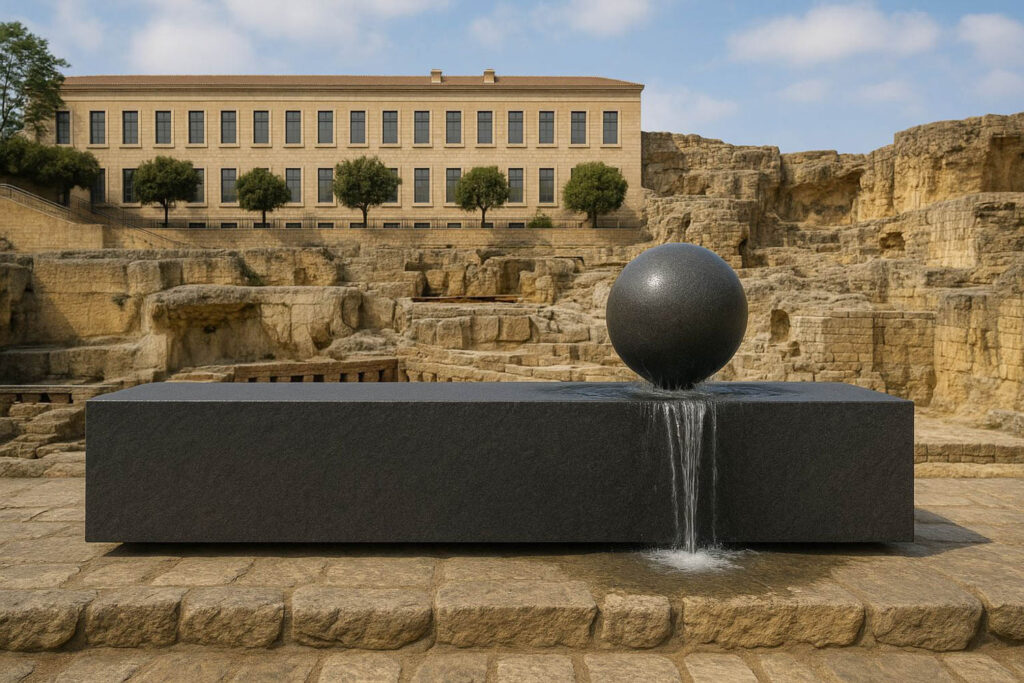
Made by architect and designer Samer Bou Rjeily, ‘Whispers of Stone and Water’ takes the form of a basalt monolith anchoring a polished stone sphere from which water rises and falls in an eternal cycle; an intervention that mimics the history of the Roman Baths it sits within. This elemental object draws from the ancient hydraulics beneath it and the weight of time etched into the ruins, the subtle asymmetry of the sphere resting on the block serving as a subtle gesture that reflects the site’s fragmented harmony.
‘Jawharunā’ by Vanina
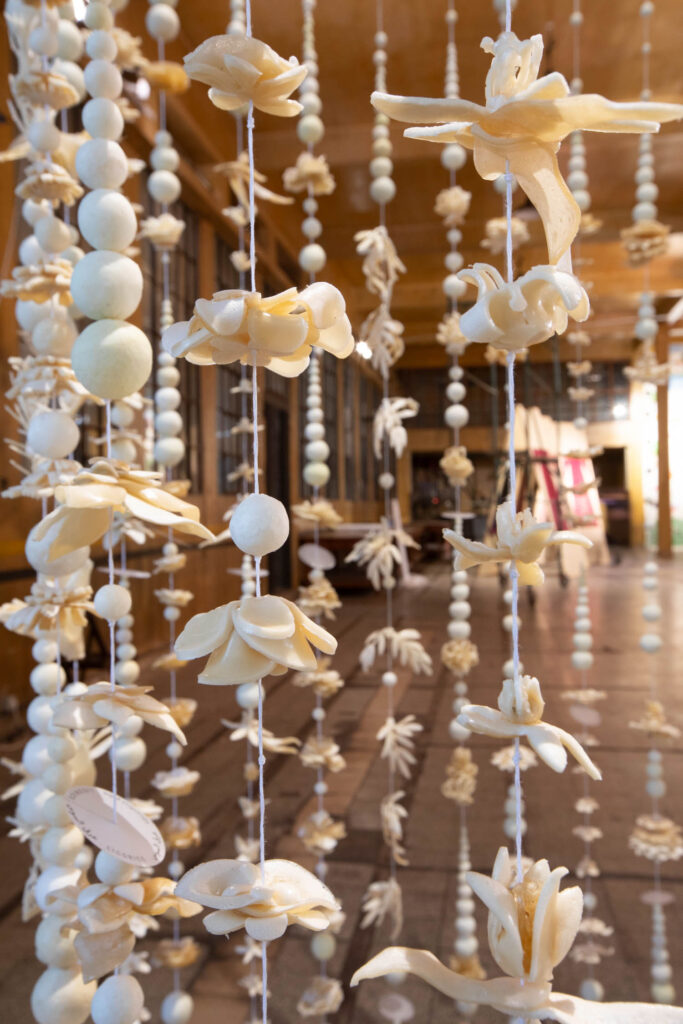
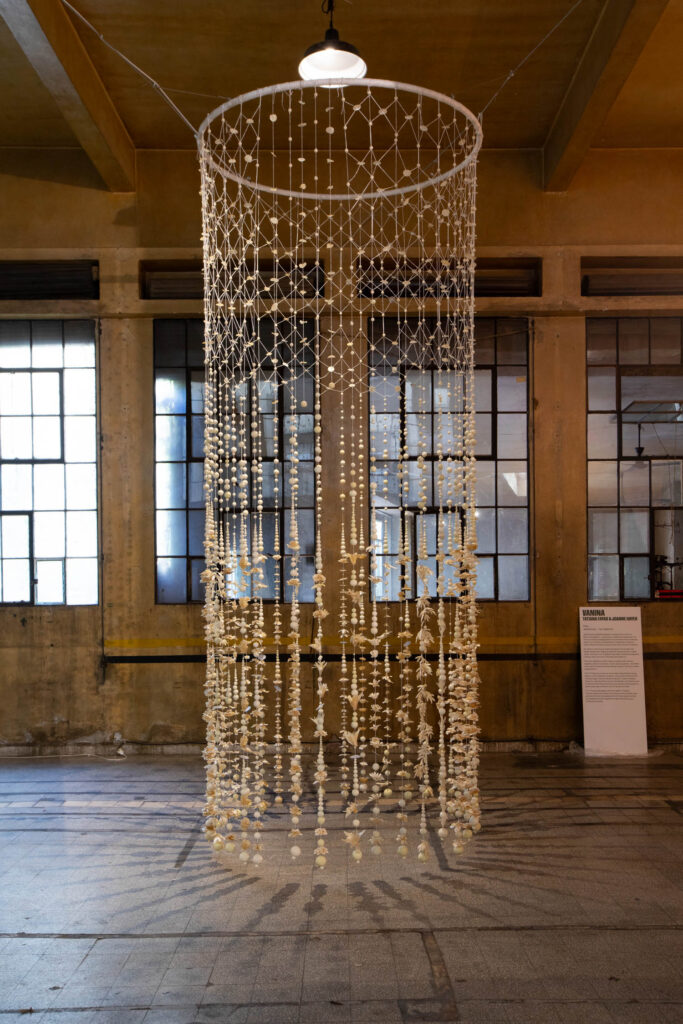
‘Jawharunā’ is a spatial installation created by Lebanese fashion house Vanina, inspired by the ephemeral yet instantly recognisable scents of Beirut and Lebanon. Featuring completely biodegradable, handcrafted ornamental pennants made from organic materials drawn from the land, visitors move through the installation, brushing against the threads and causing the embedded beads to release their fragrances. Scents of jasmine, zaatar, cedar and olive fill the air, creating a shared, aromatic atmosphere that evokes the intermingling of memory, offering them as a reflection of the land’s continuing gifts.
Lina Shamma—‘Eunoia’
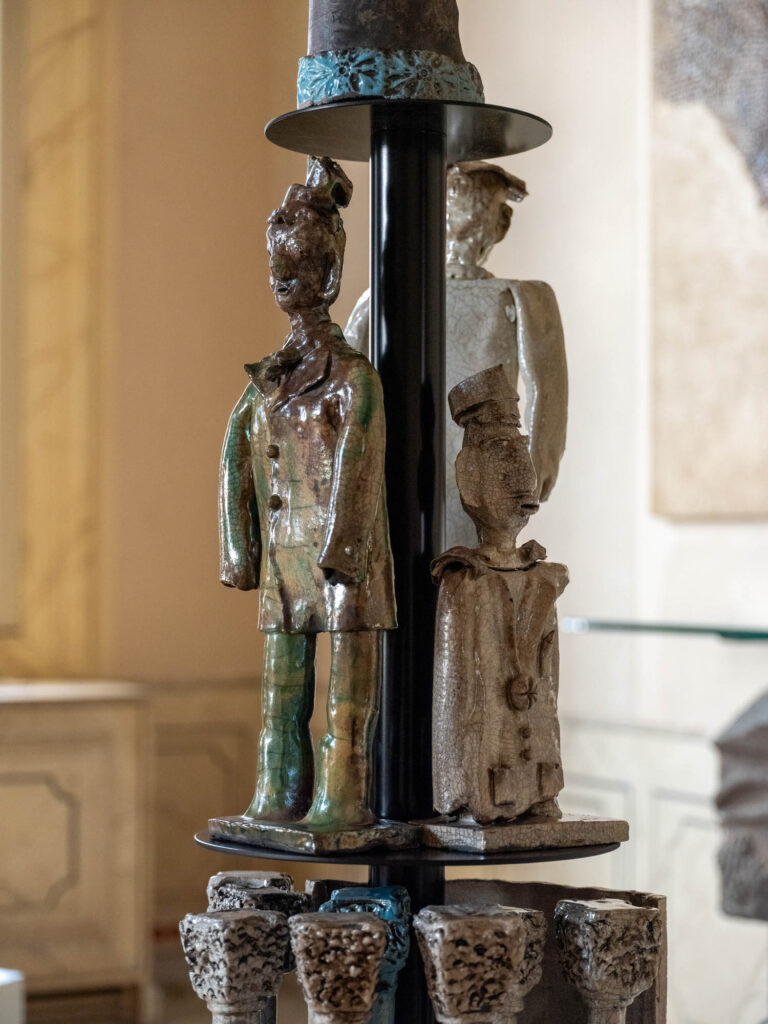
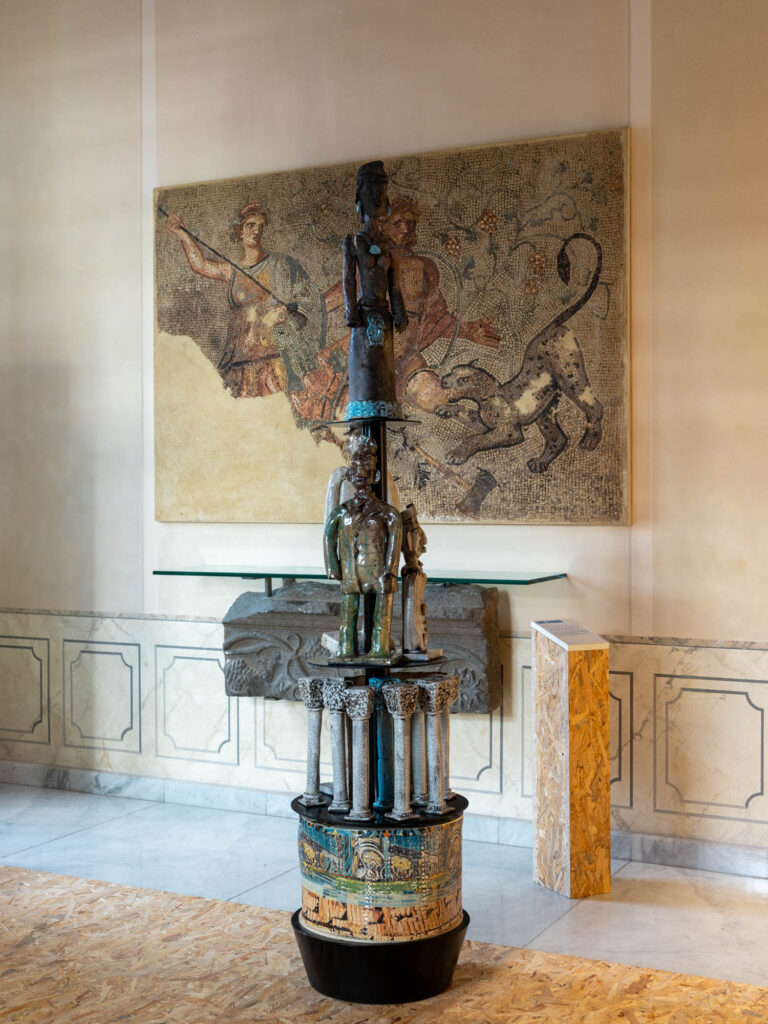
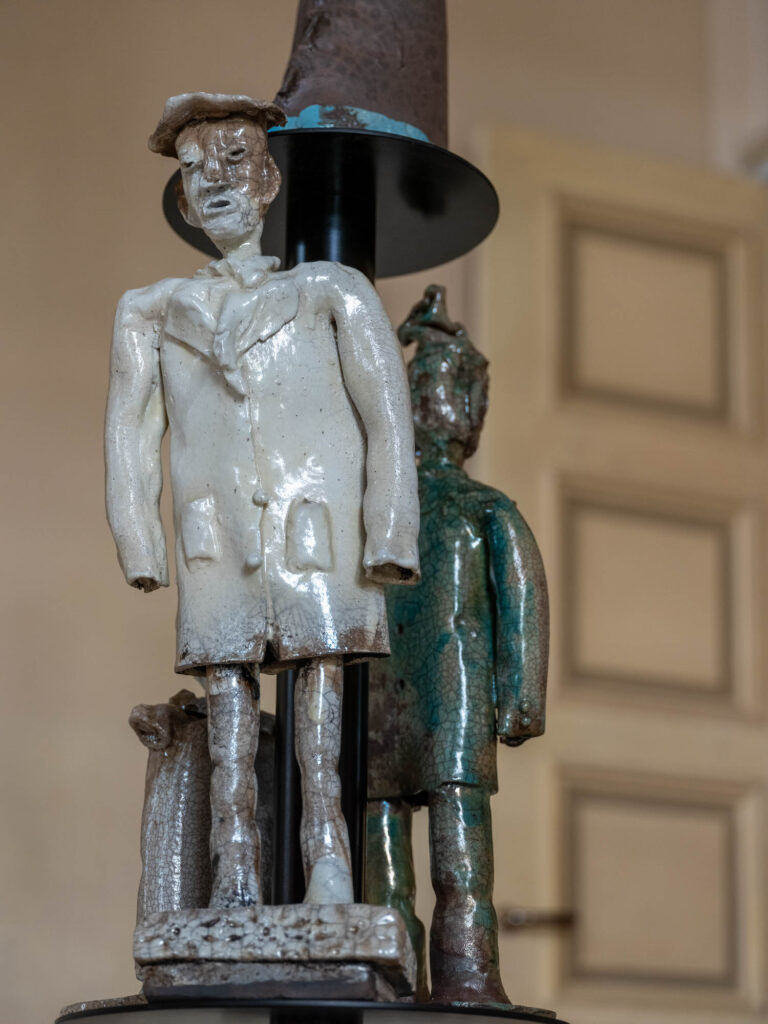
‘Eunoia’ by ceramicist Lina Shamma is a work that pays tribute to Beirut not as geography, but as a symbol of the multi-layered paradoxes that the city embodies; wounded but unyielding; tender yet defiant. Tiered platforms bear different pottery forms—from landmarks rendered in colorful mosaic, to Romanesque columns and humanoid figures—that each hold a fragment of the city’s discontinuous identity. The feminine figure atop the installation serves as a focal point for these various pieces, unifying these multiple aspects beneath an embodiment of Beirut as a complete whole.
‘Stillness in Motion’ by Elie Riachi
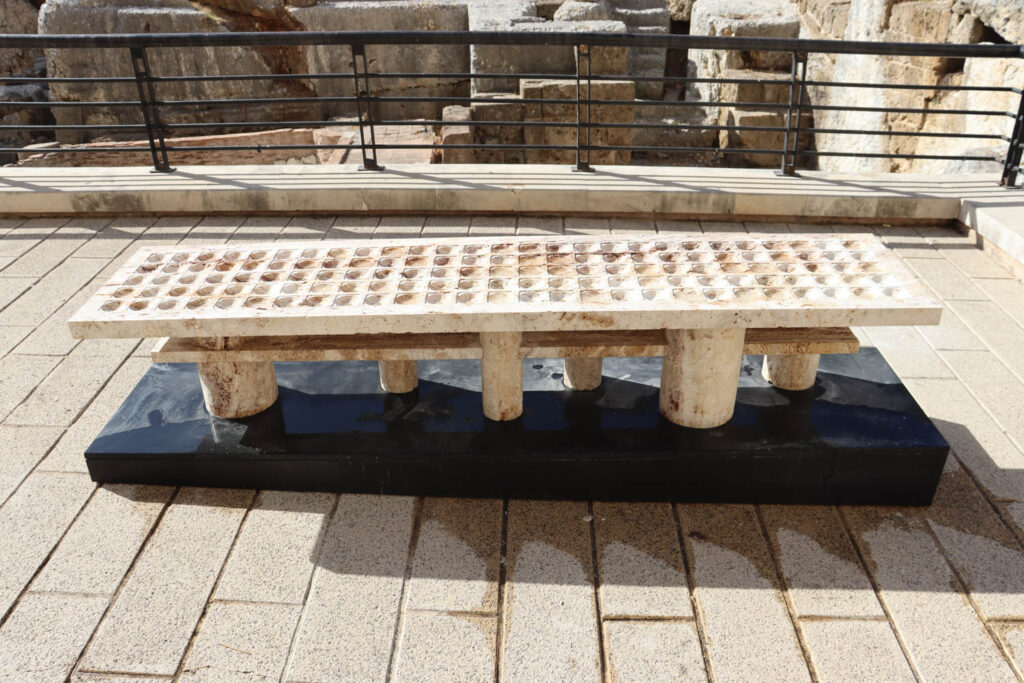
‘Stillness in Motion’ by architect and multidisciplinary designer Elie Riachi is an emotional illustration of the romanticism of Beirut’s Roman Baths. Inspired by their architectural composition and enduring structure, this installation reflects the location’s ability to withstand both time and humanity, exploring the balance between solidity and sensitivity. It is an homage to both the physical presence and the essence of the baths. The use of chocolate travertine embodies earthiness, and a deep connection to the surrounding habitat. Left untreated, the material invites a natural aging process, gradually blending with its environment, much like the ruins themselves.
‘Refracted Heritage, Of Fire and Sand’ by Tessa Sakhi

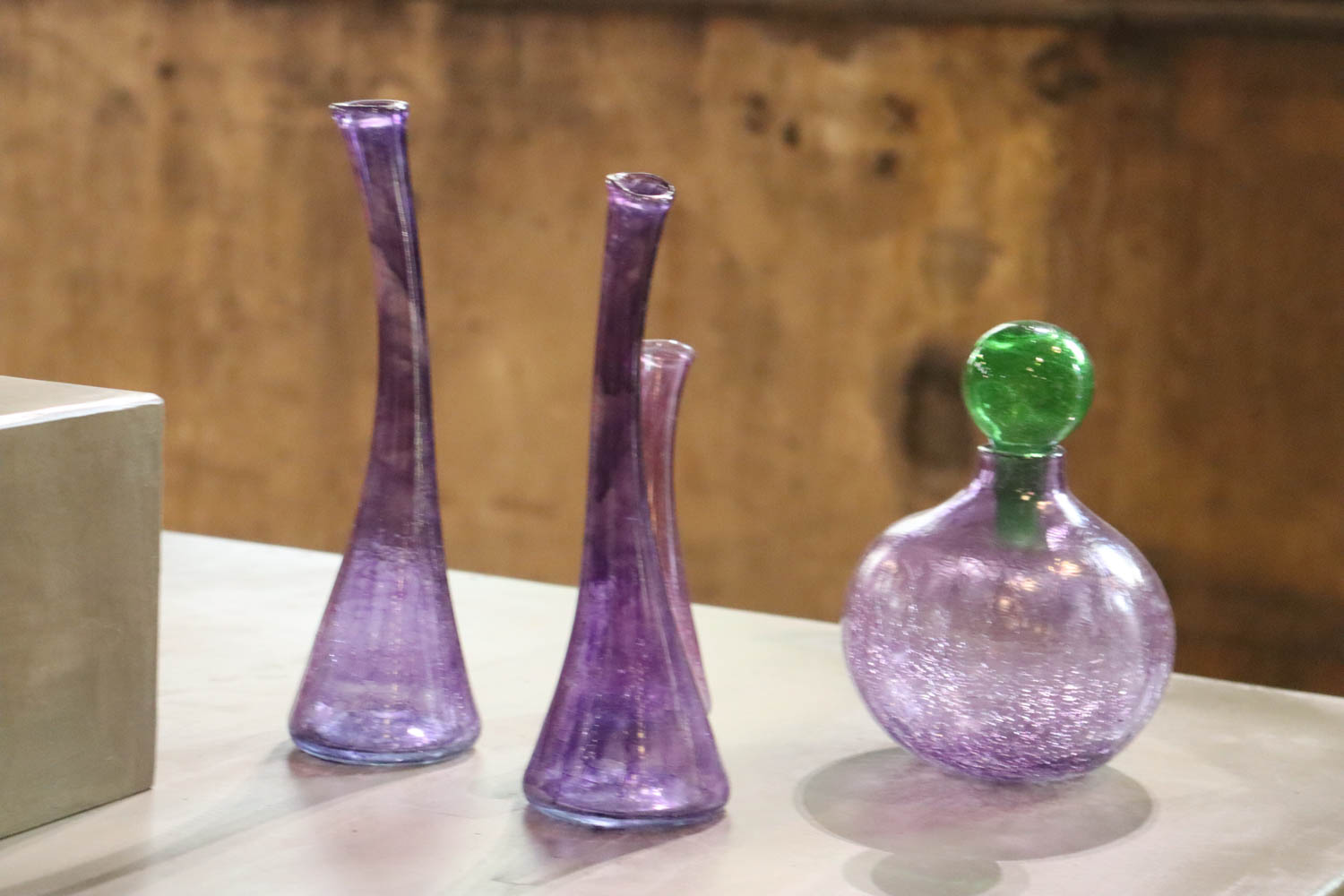
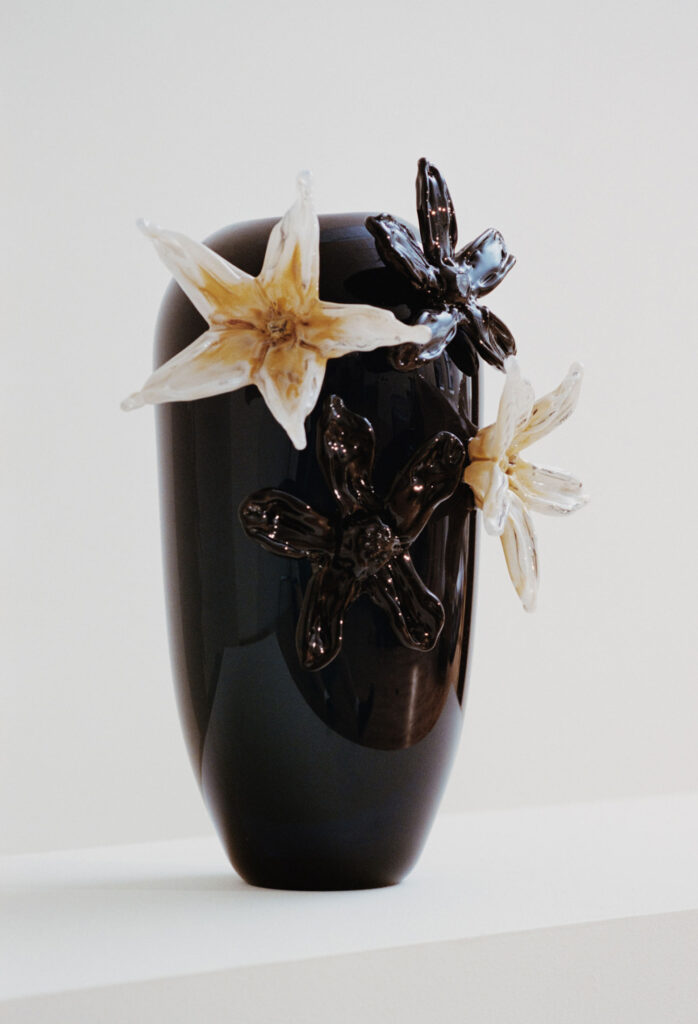
‘Refracted Heritage, Of Fire and Air’ is a cultural initiative curated by Tessa Sakhi. Set within the historic Abroyan Factory, this exhibition showcases Lebanese artisanship in motion, attempting to revive Lebanon’s traditional craft of glassblowing as a cultural art form through the support of local artisans, centering on awareness, education and collective experience. Live demonstrations by Lebanon’s last remaining glassblowers—using temporary, primitive furnaces built on-site from brick and clay—combine with educational workshops, culminating in a collaborative glass installation that takes shape as they perform. By illuminating the process, rather than the final outcome, the work seeks to nurture the appreciation of the labour, skill and material fragility that define glass artistry, as well as cultivate public curiosity that will hopefully lead to preservation, sustainability and growth.
‘Weladā’ by Myriam Sadek
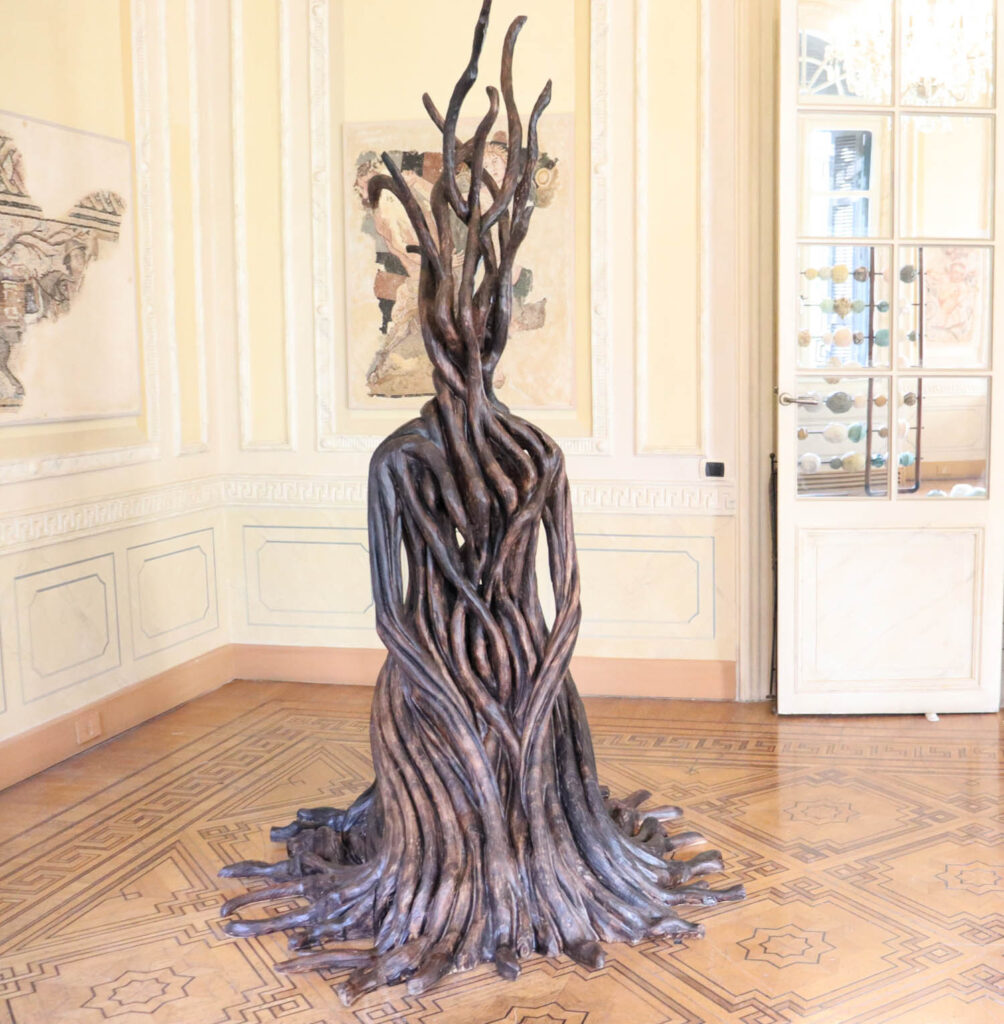
Taking the form of an illuminated female figure emerging from a mass of vegetation, interior architect Myriam Sadek’s ‘Weladā’ sits as ramified into the earth, rooted into the ground as if she has always belonged there. Her body rises with fluid grace, moving like a memory shaped by time and the enduring resistance of nature; resilient, yet also vulnerable. Pulled by something greater, she reaches upwards, seeking a quiet kind of hope, suspended between potential and realisation, leaning into the unknown where absence creates room for transformation.
‘Infinity’ by Dori Hitti
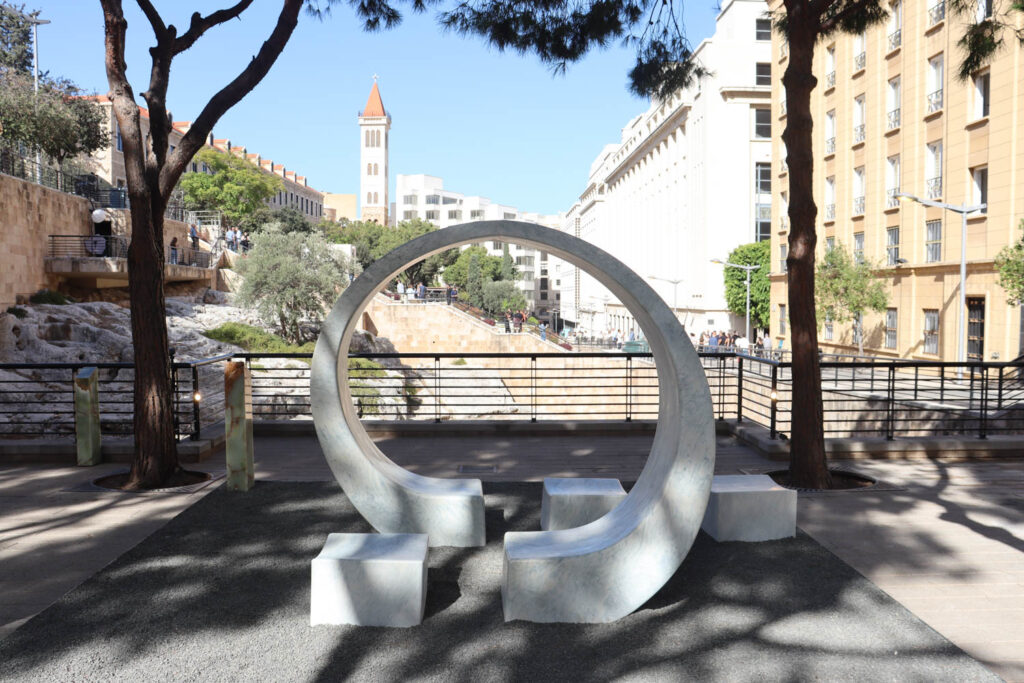
Carved from solid marble softened into a flowing arc, architect Dori Hitti’s ‘Infinity’ piece draws inspiration from the vaulted forms of Beirut’s Roman Baths. Rising from a Roman arch base, this object transforms ancient architectural memory into a contemporary bench. The weight of the stone becomes a grounding foundation for rest or encounters with others, while the sweeping curve echoes the movement of water, encouraging visitors to sit together, pause and reflect. Equally parts sculpture and social space, the piece embodies multiple dualities; past and present; solitude and community; permanence and flow.
‘Evocative Reminder’ by Tara Jane Tabet
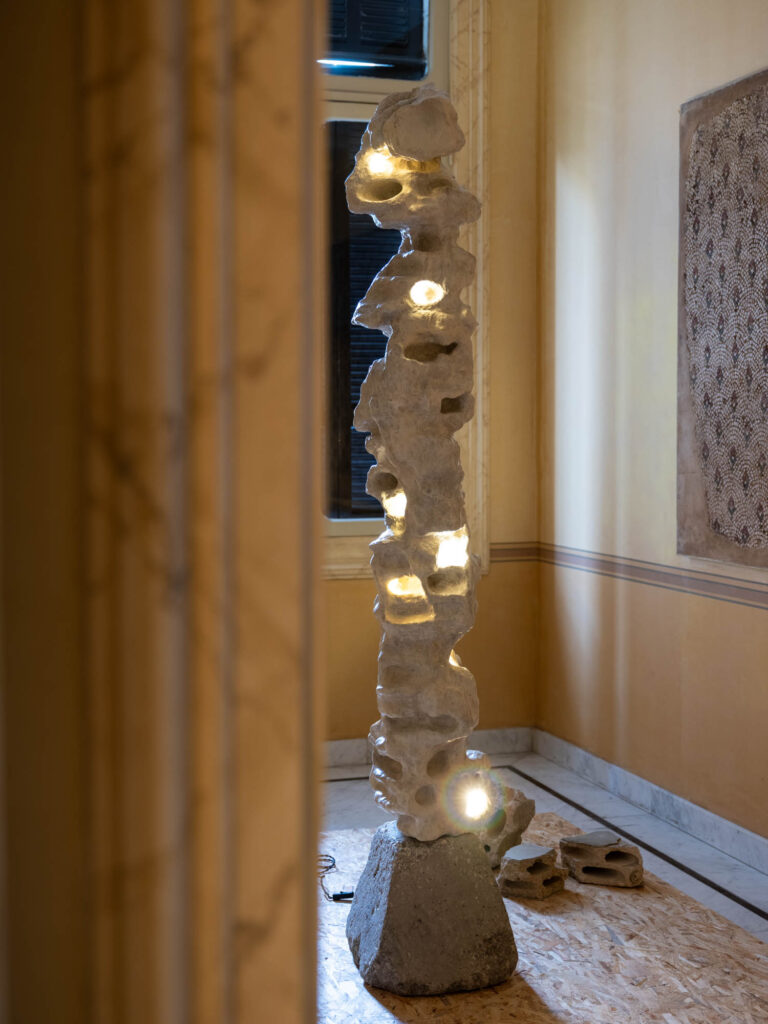

Made from up-cycled cement bricks and other building materials by product designer Tara Jane Tabet, ‘Evocative Reminder’ addresses the stigma that hangs over much of Beirut’s architecture, scarred as it is by conflict, neglect and tragedy; an ever-present reminder of a city that has fallen many times, only to rise again and again. The disproportionate, fragile superposition of the cement bricks represents the delicate balance of Lebanese society. These are then softened and enriched with wax textures and natural pigments, and re-sculpted with clay, in a visual metaphor exemplifying the power of hope and the aspiration towards beauty made possible through creativity.
read more
DesignWire
Designers And Manufacturers On The Move: September 2026 Edition
Interior Design‘s latest On the Move includes must-know industry promotions and hires, like Perkins&Will’s strategic move to expand its design capabilities.
DesignWire
10 Questions With… Artist and Designer Conie Vallese
From sculpture and ceramics to glass, textiles, and furniture, Conie Vallese embraces a multidisciplinary practice shaped by curiosity and creativity.