
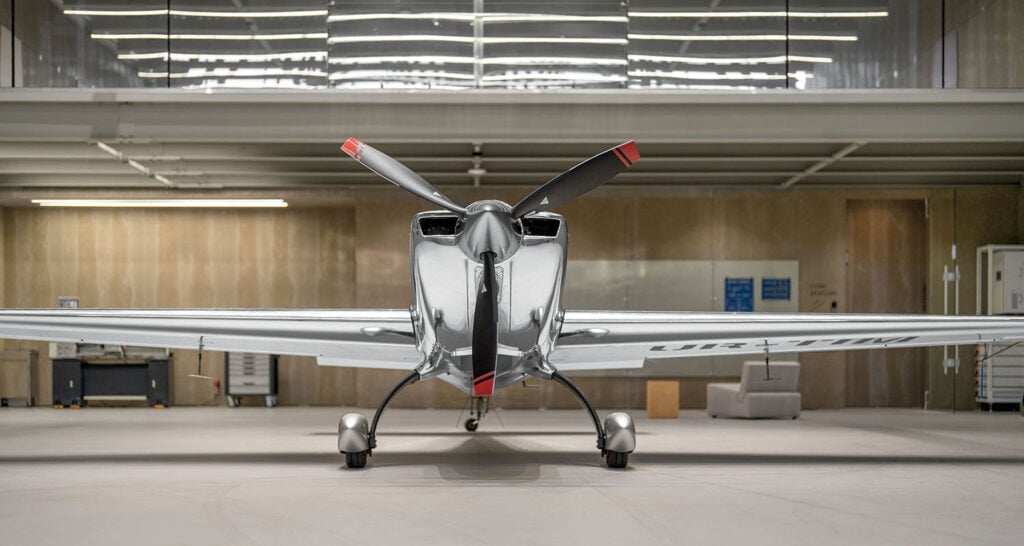
Soaring Concepts: A Stunt-Plane Hangar For Aerotim In Ukraine
Aerotim is a collective of aerobatic pilots, skydivers, and motocross racers in Ukraine. Led by Timur Fatkullin, the team participates in airshows and international competitions and produces videos of its stunts. Aerotim has remained active despite the country’s ongoing war with Russia, even though one of its athletes was killed in the fighting and a bomb destroyed the team’s hangar. Given this context, it might be surprising that Aerotim would invest in a new hangar for its sport planes. But Fatkullin is a champion risk-taker.
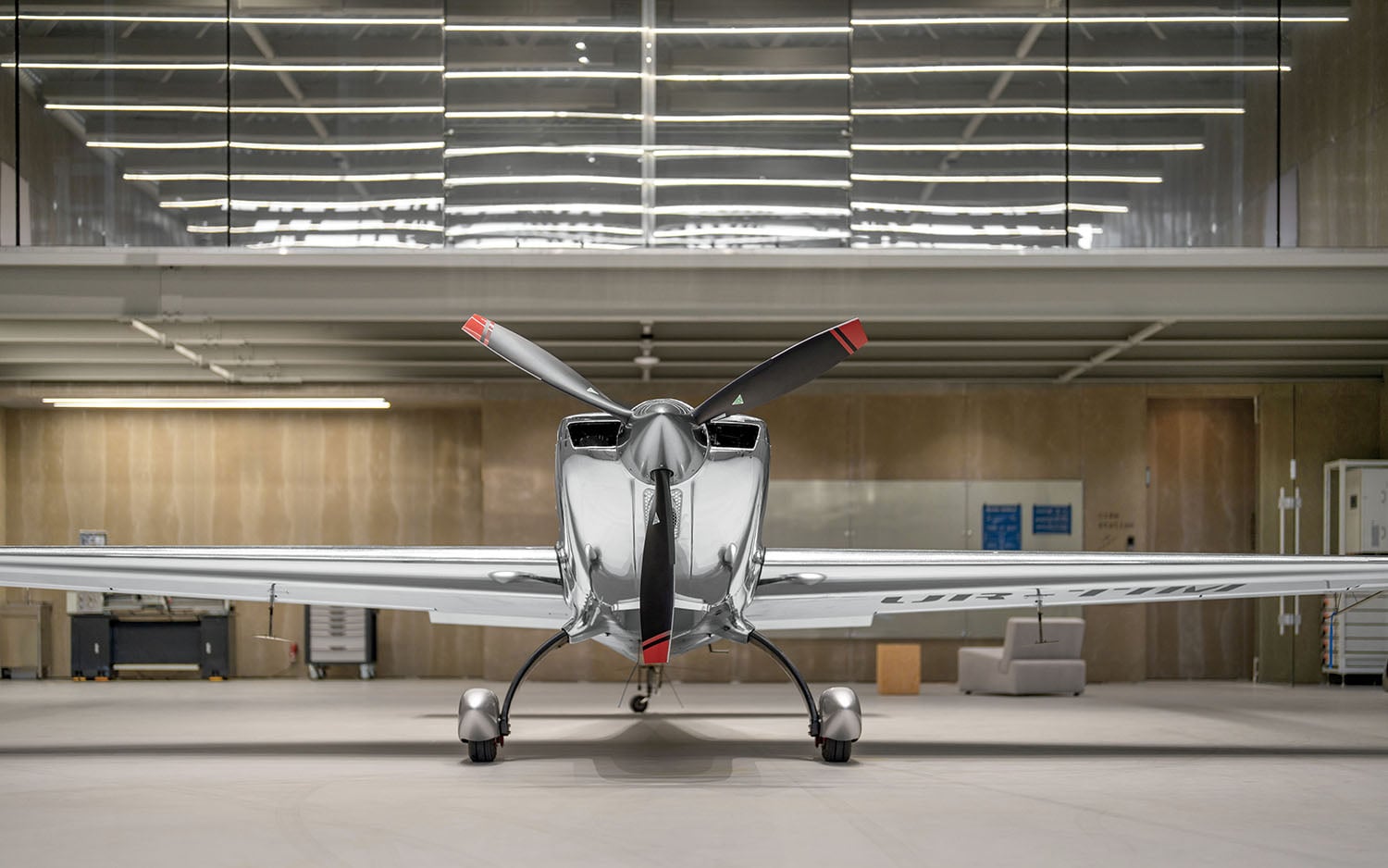
For Aerotim, This Stunt-Plane Hangar Design Takes Risks
Dan Vakhrameyev and Kateryna Vakhrameyeva are friends with Fatkullin and the married cofounders of Kyiv-based +Kouple, he a designer and the studio’s creative director, she the CEO. Over the years, Fatkullin has taken them up on a dizzying flight, and they’ve offered him informal design advice. When Fatkullin asked +Kouple to create a new hangar for Aerotim, the couple questioned his logic. “But he said, ‘This is how we live in Ukraine now: You don’t postpone anything, because this could be your last day,” recalls Kateryna Vakhrameyeva. “It was important that they have a place for themselves,” adds Dan Vakhrameyev, who led the project. Aerotim continues to train and compete, and its athletes needed somewhere to park and repair their planes, film videos, and rest (the pilots also volunteer in an air-combat unit that shoots down enemy drones).
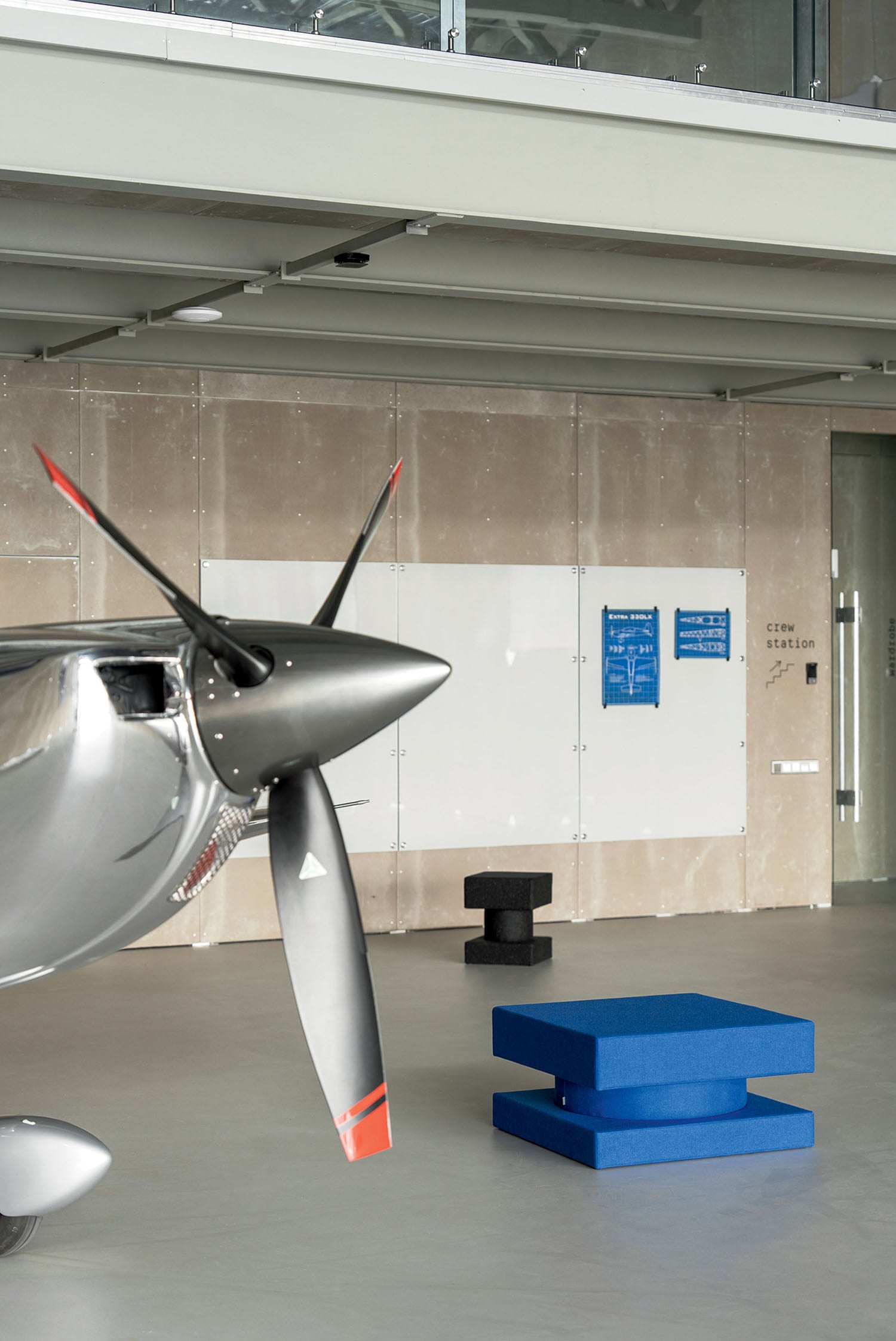
+Kouple’s Taitō ottomans animate the hangar’s polymer-floored main hall, where glass whiteboards are mounted on the walls. 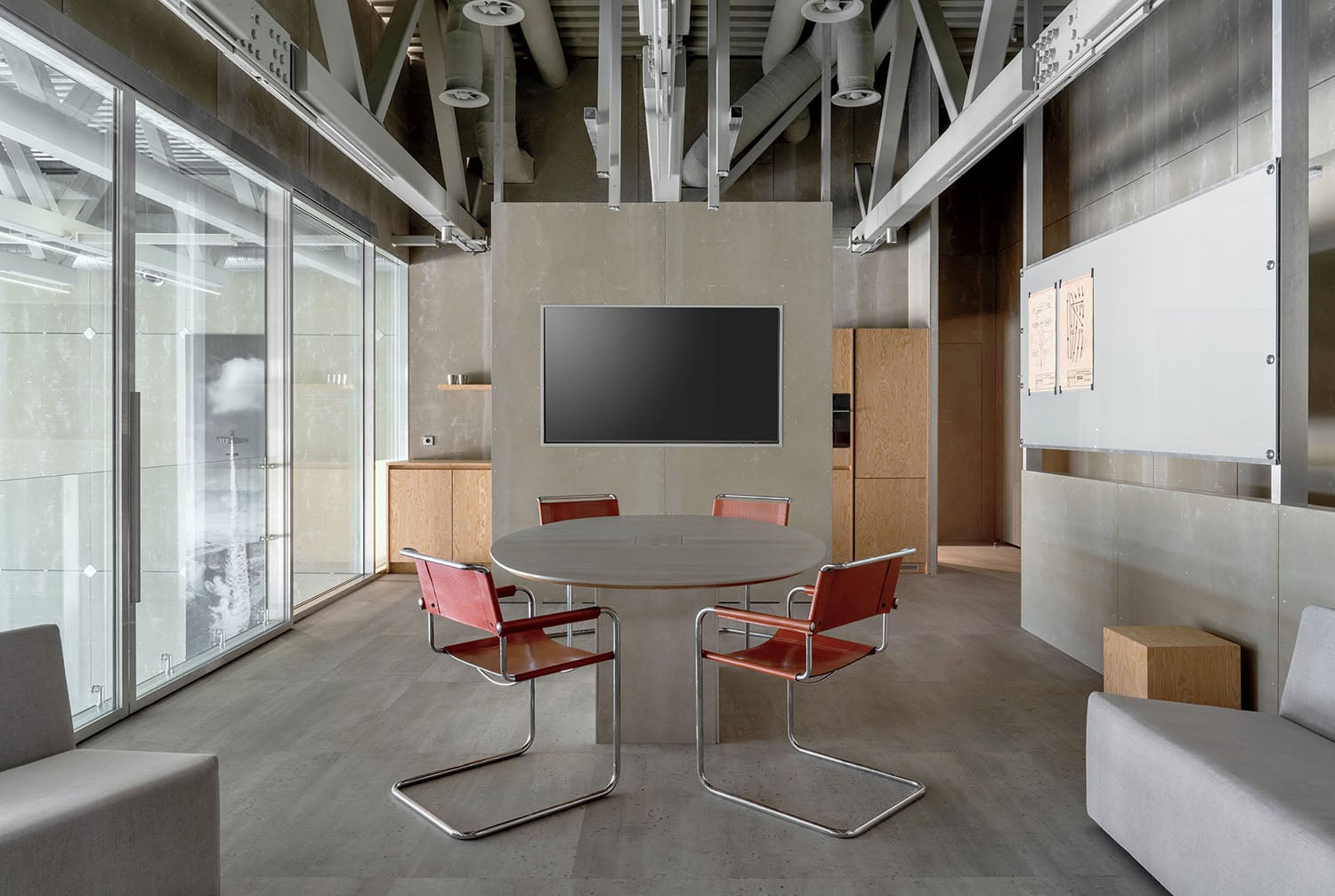
The hangar’s added second floor houses the crew station, which includes a lounge with vintage chairs around a custom table topped in cement-bonded particleboard, a sturdy and readily available material used throughout the project, and aluminum-frame windows overlooking the main hall where planes are parked and repaired. 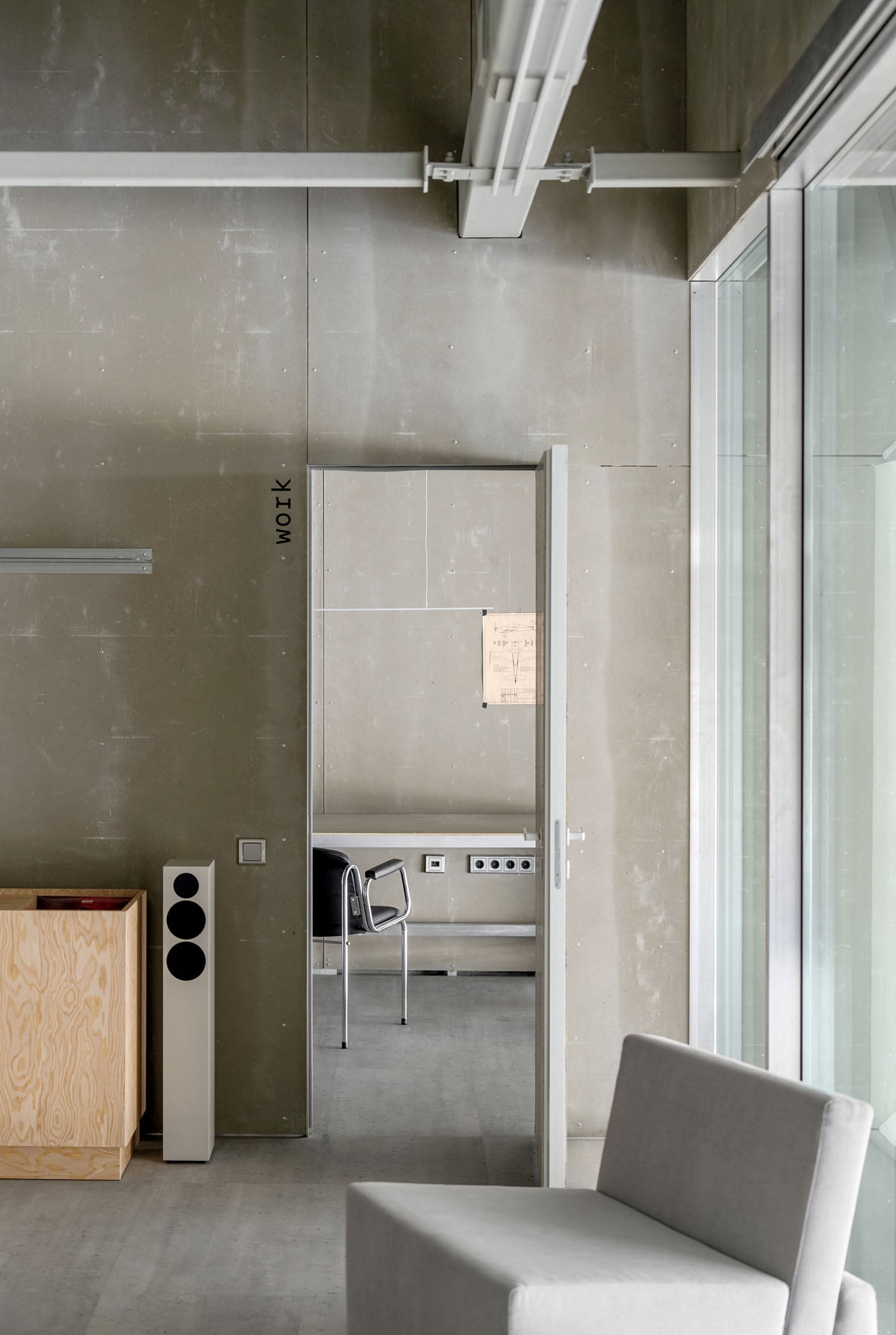
A Node sofa by the Ukrainian brand ProPro furnishes the lounge, its door leading to an office. 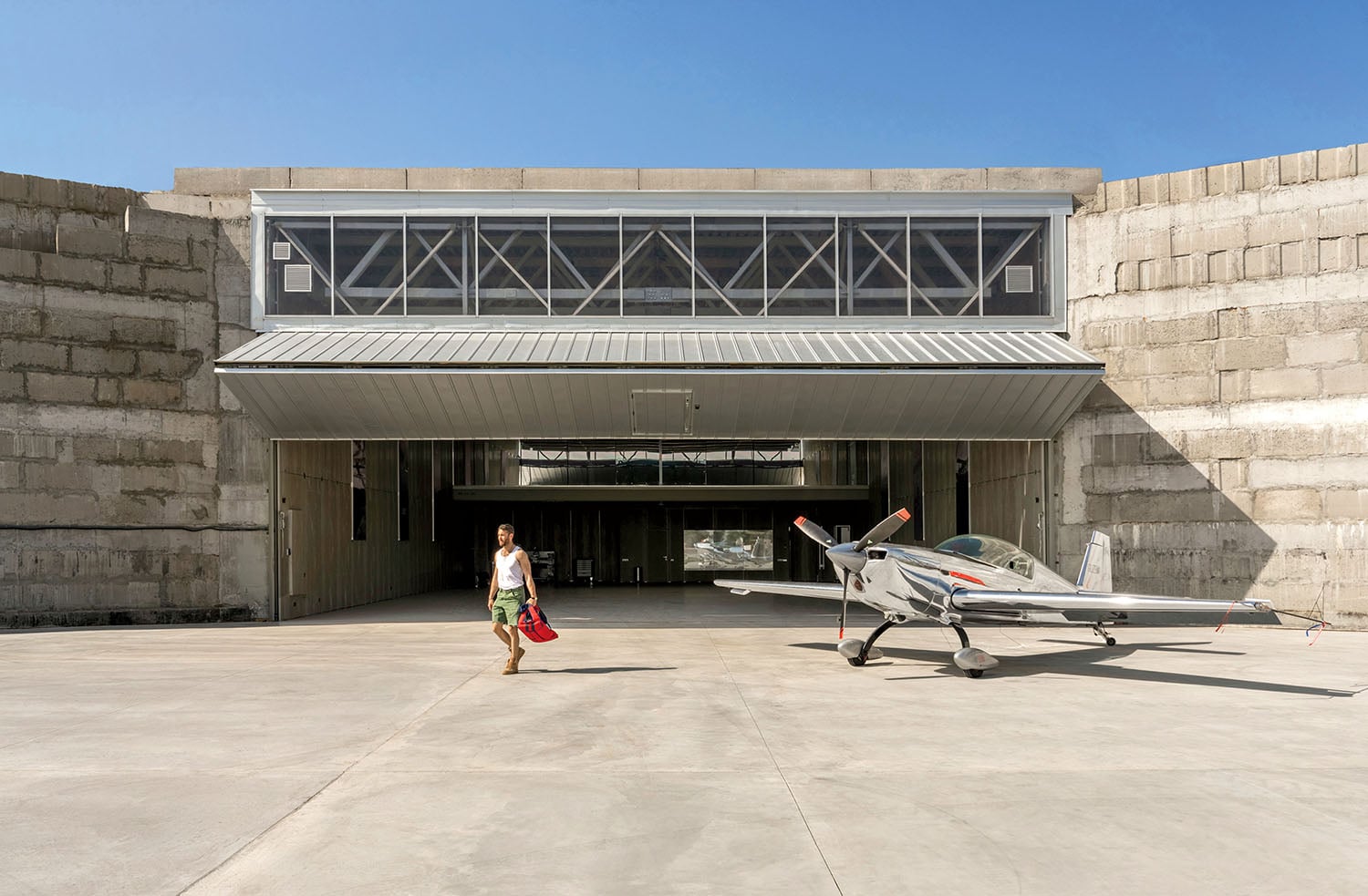
A vertically lifting gate forms the entrance to the concrete structure, which was built in 2025, while polycarbonate windows bring in natural light.
Founded in 2014, +Kouple specializes in lighting and product design, but it also takes on select interiors commissions. The hangar was its first since the full-scale invasion, which has created extraordinary hurdles for construction, not least because there are fewer men available to work. Power outages, bombed warehouses, and transportation issues scramble the supply chain, forcing designers to be nimble. Vakhrameyev conceived a raw aesthetic that aligned with the cool, masculine vibe of the team and could be achieved with a limited palette of affordable materials.
The resulting 4,300-square-foot hangar occupies a concrete structure built last year, its location classified for security reasons. When Vakhrameyev first visited, it was an empty one-story shell with corrugated metal roofing and exposed steel trusses spanning the 52-foot-wide interior. Fatkullin had just two requests for the space: It should accommodate six Aerotim members and up to six two-seater sport aircrafts, which have wingspans and lengths of approximately 25 feet. Otherwise, he gave +Kouple free reign, fully trusting his friends’ taste. Vakhrameyev suggested adding a kind of clubhouse with areas to cook, sleep, and hang out; Fatkullin agreed, so the scope grew to creating spaces where team members could live for a few days.
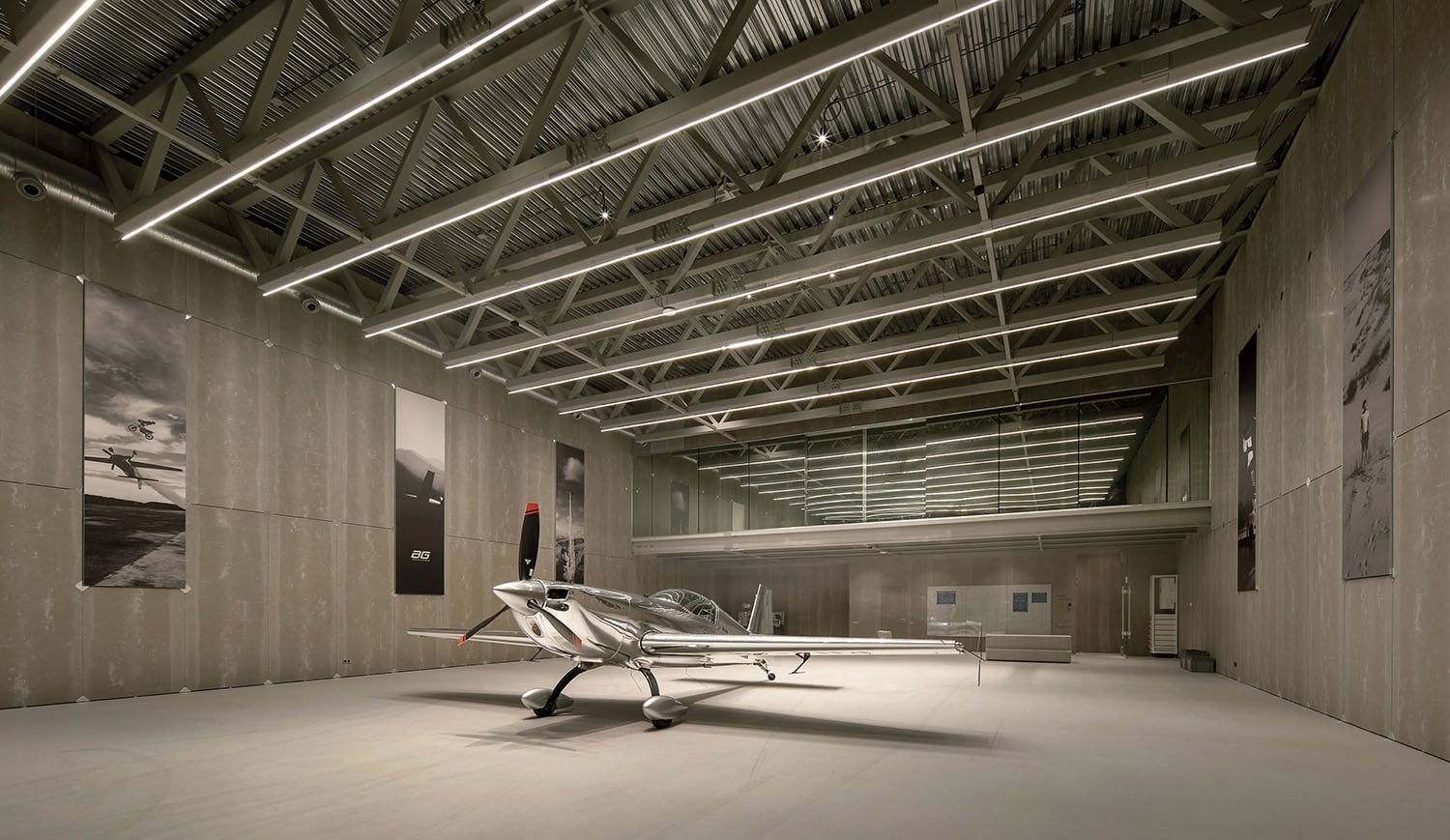
LED strips affixed to existing steel trusses illuminate the 31-foot-high hangar, where banners depicting aviation culture and Aerotim’s flights add a narrative layer. 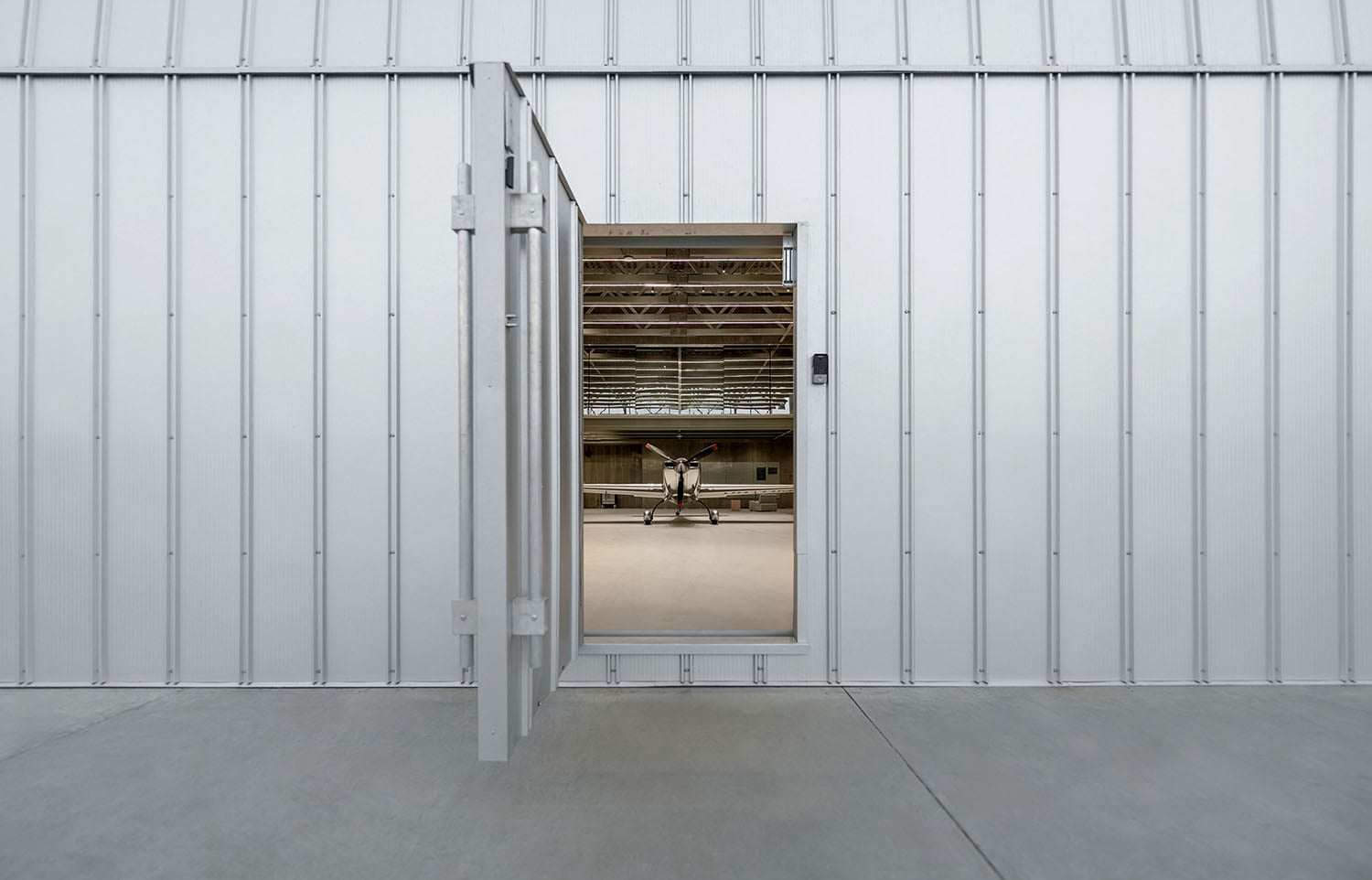
Raw zinc sheets cover the front gate. 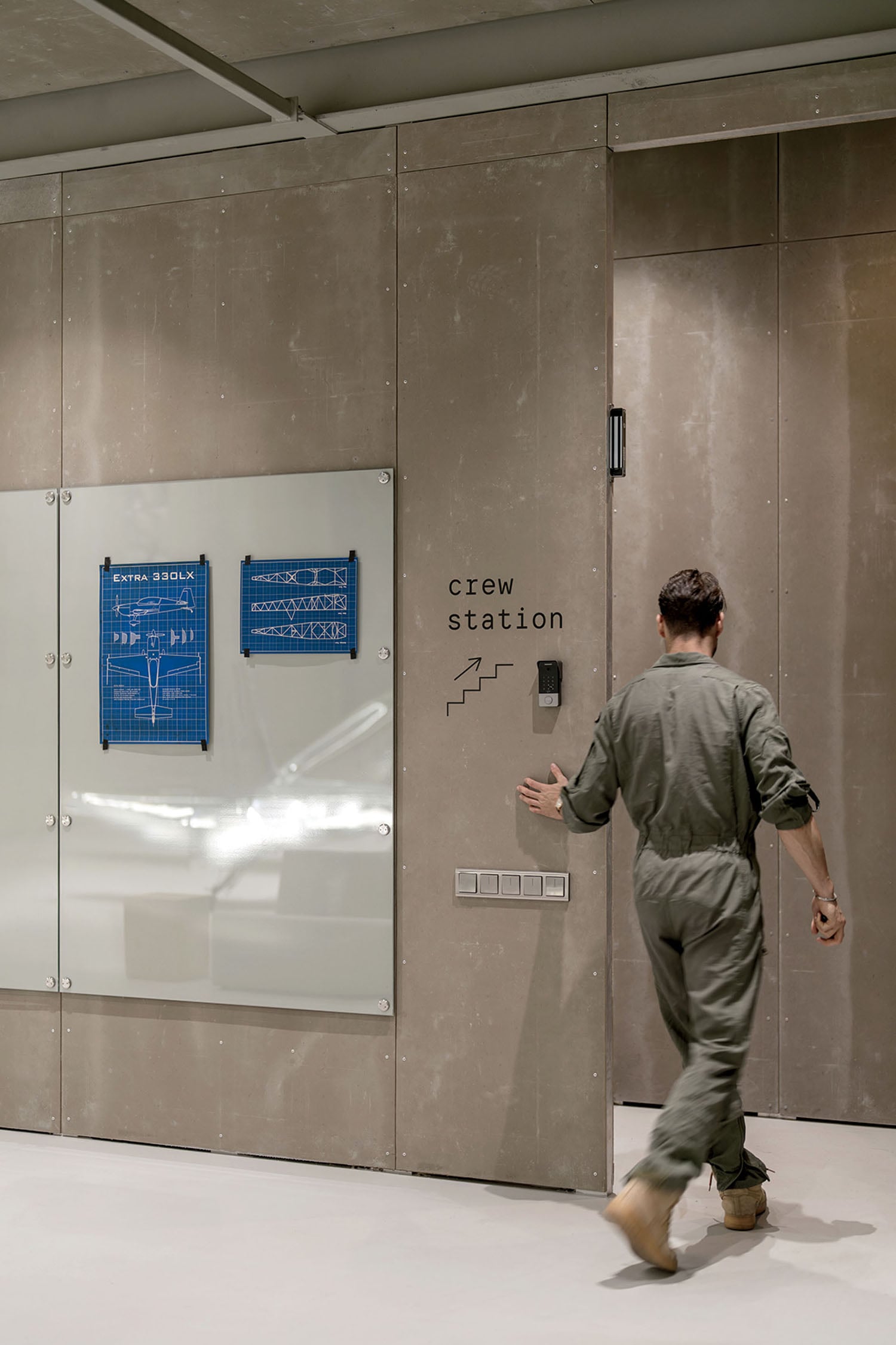
CBPB, mounted to aluminum frames with visible joints like those used on aircraft, compose interior walls. 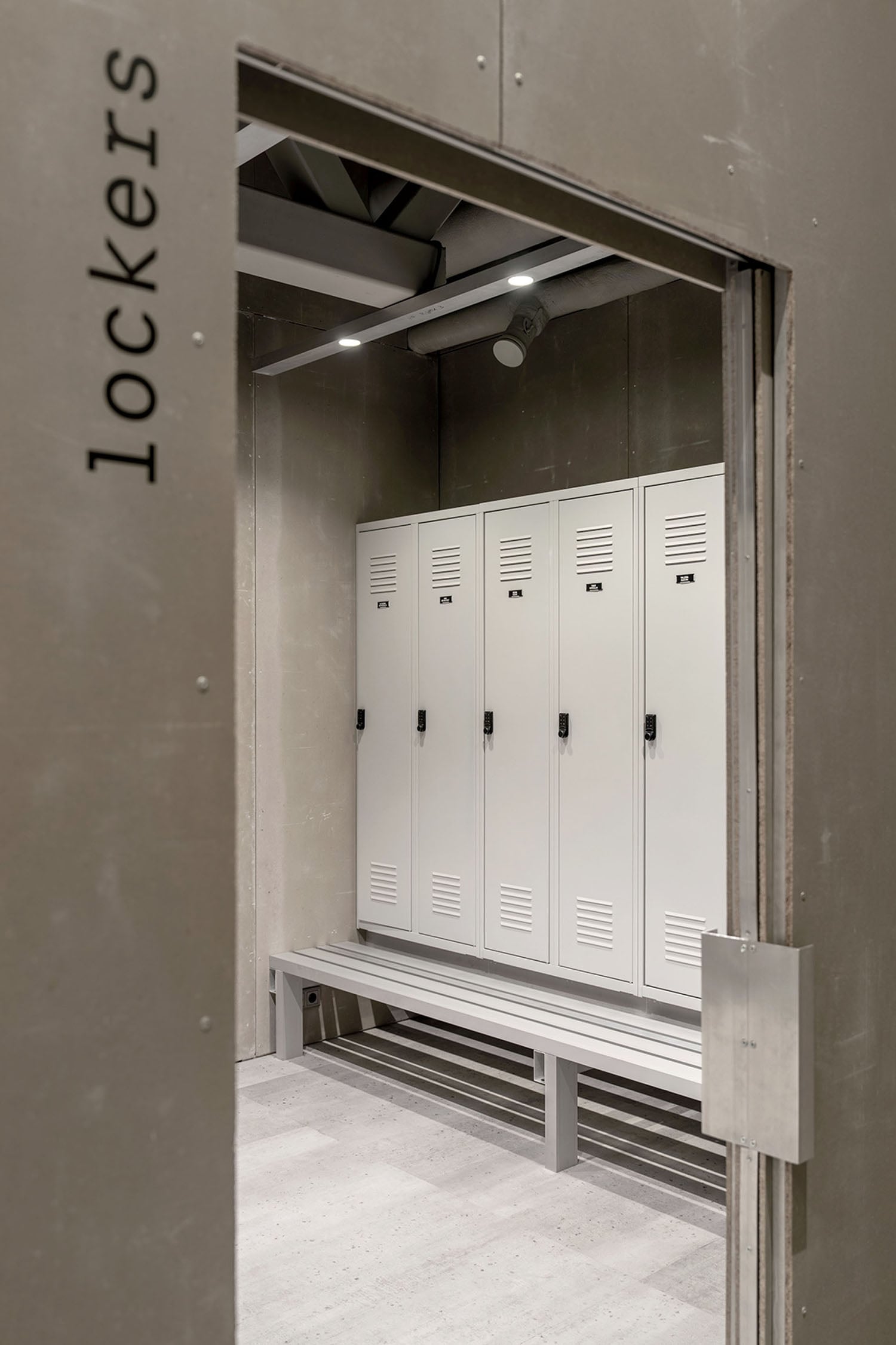
Offcuts from the aluminum wall framing form the benches in the vinyl-floored locker room.
+Kouple Rises To Technical Challenges
Vakhrameyev created a second floor to house this crew station. He had to do so without support columns, which would impede the movement of the planes, and make it no more than 20 feet deep. “Technically, it was pretty challenging,” he admits. +Kouple installed steel beams that span the width of the hangar and support the second floor—but with a little bounce built in, moving 1 or 2 centimeters if there are people walking around heavily.
Interior walls therefore could not be fixed, or the vibration would make them crack. +Kouple used cement-bonded particleboards with slight gaps between them that would absorb the movement. The boards are readily available and easy to swap out by unscrewing them from their aluminum frames. “In Ukraine, you always think about what’s easy to replace in case it gets damaged, and what’s not a fire hazard. Solid or expensive structures don’t work,” Vakhrameyev explains. The crew station’s only flourish is a full-length glass wall overlooking the main hall, with sliding windows in the center.
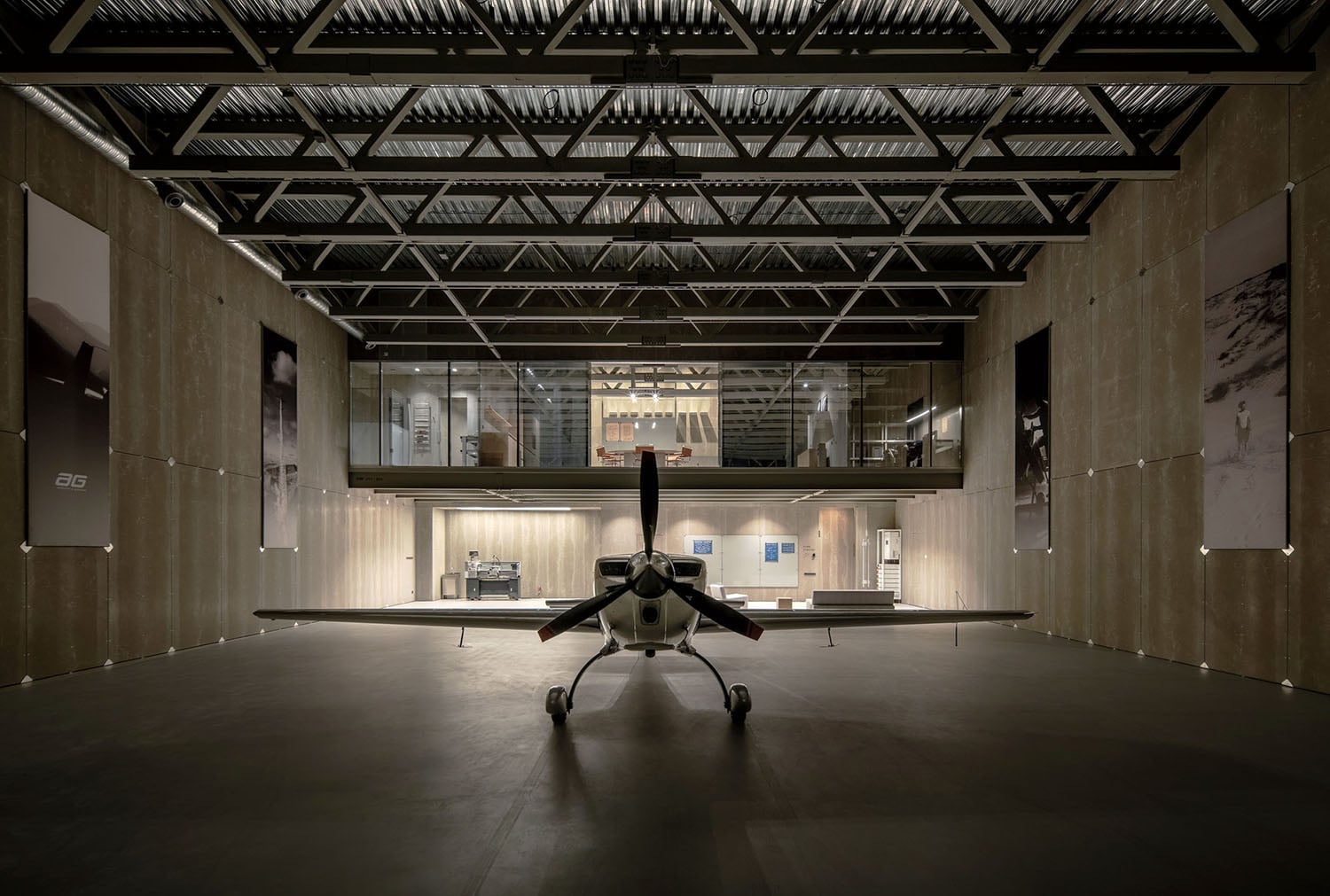
Sliding glass windows at the center of the crew station create a balcony overlooking the main hall. 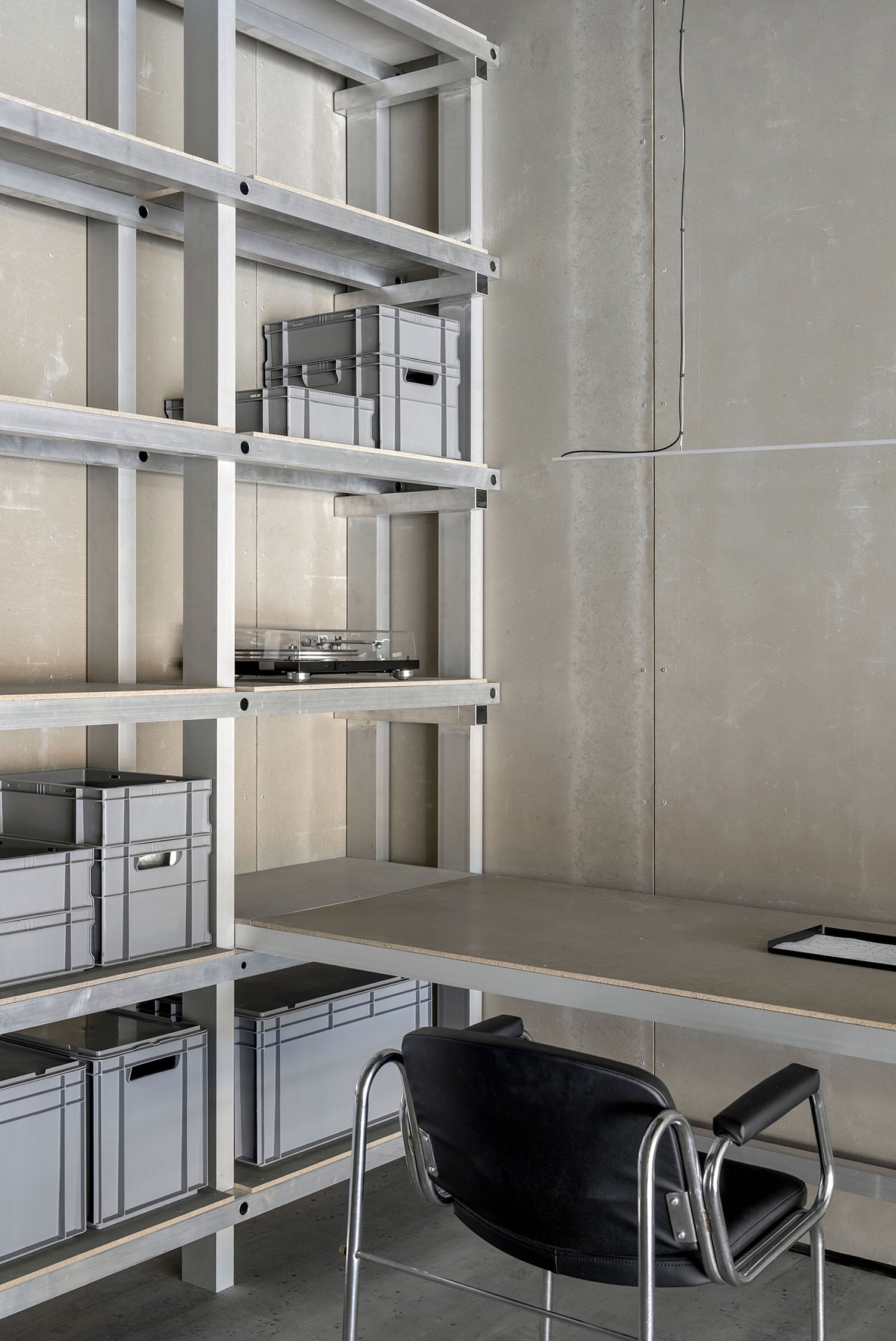
In the crew station office, a vintage chair found at a flea market sits at a custom CBPB-top desk, its aluminum shelving built on-site. 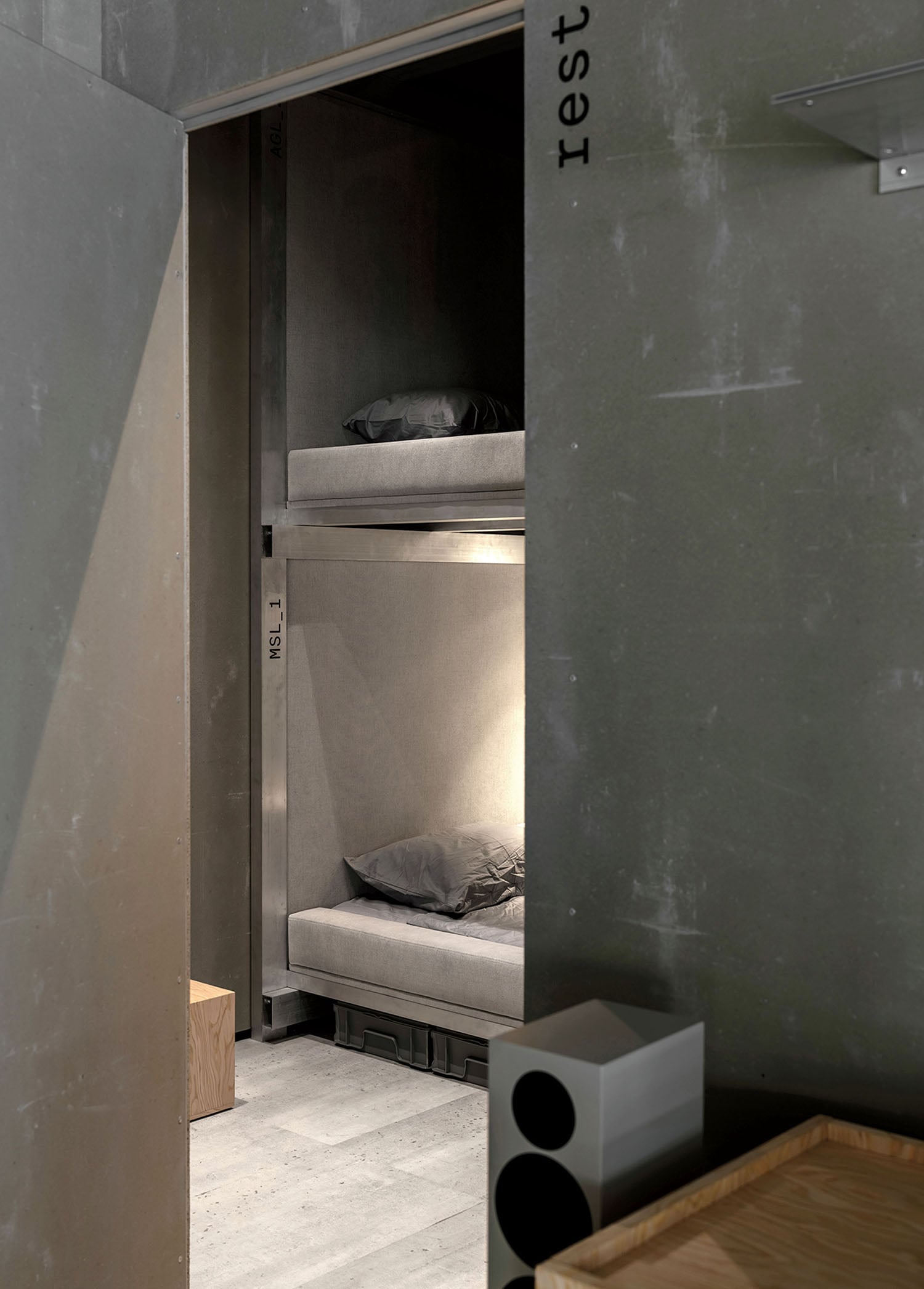
Next to the office, bunk-bed sleeping quarters have sound-dampening fabric-covered panels and integrated lighting. 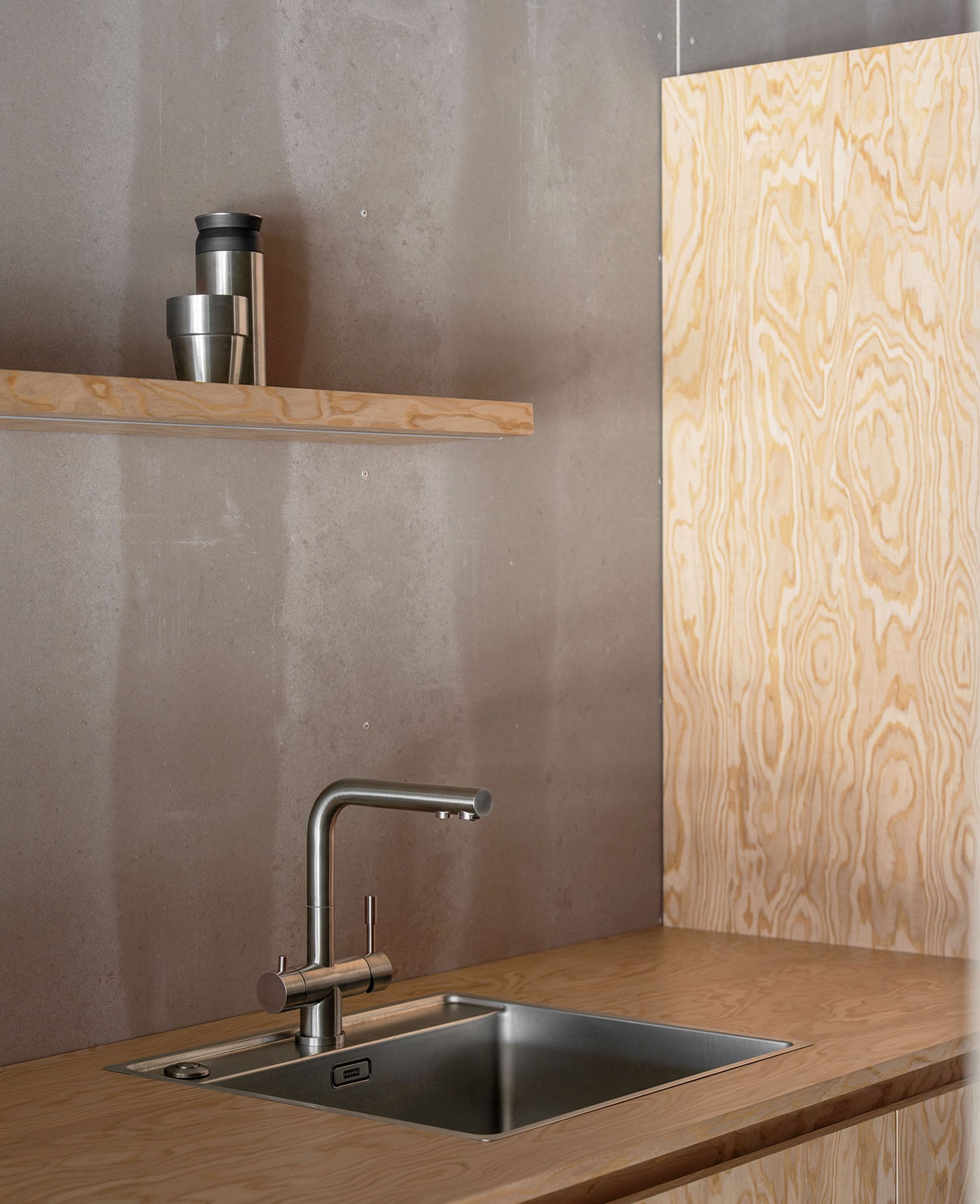
Plywood veneers the crew station’s custom kitchen cabinetry. 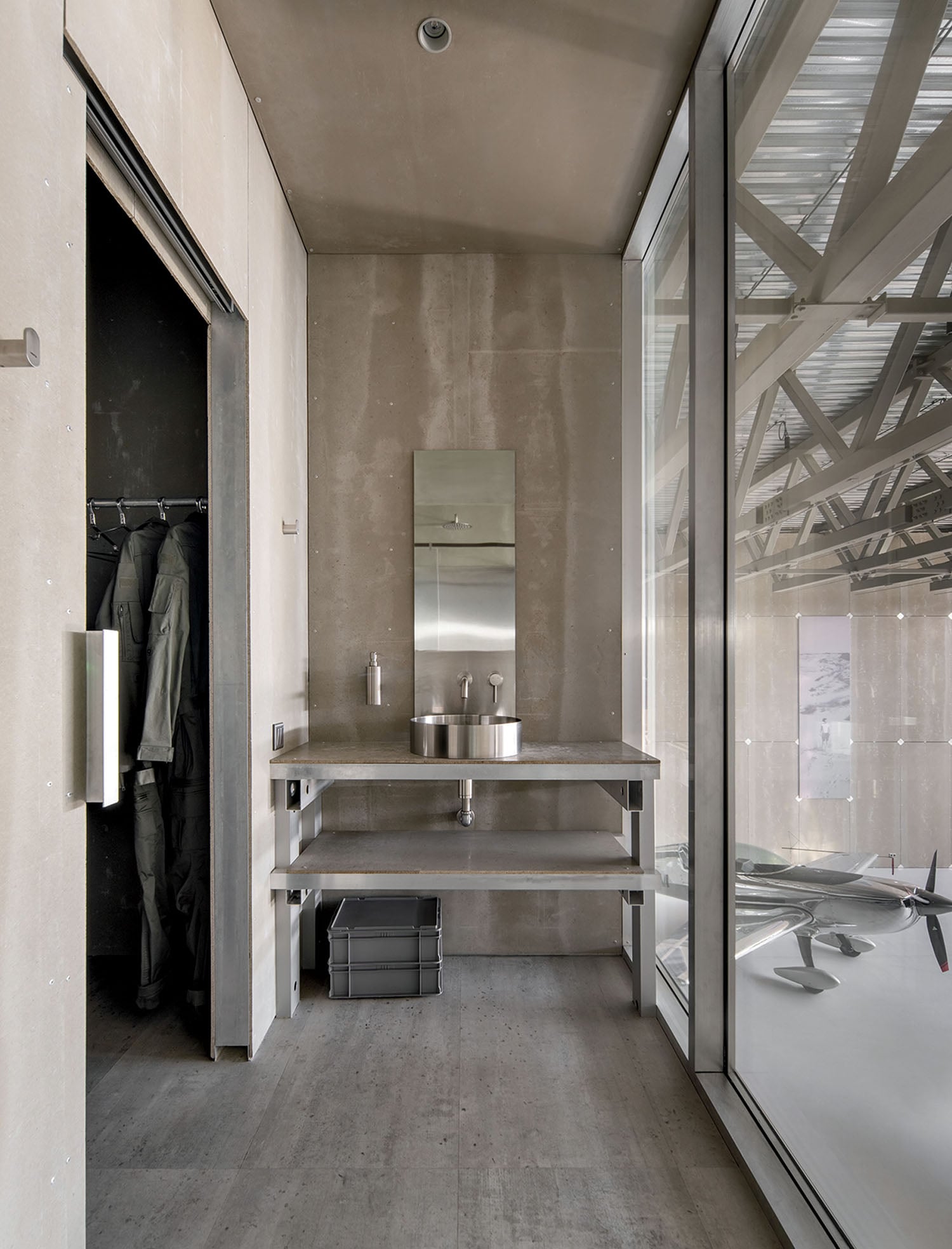
The shower area’s vanity mirror is made of polished stainless steel.
Team members access the hangar through a door in a vertically lifting gate covered in zinc sheets. The interior gets light from clerestory windows above the entrance and LED strips on the steel trusses overhead. Stairs in the back lead to the crew station, comprised of a lounge, kitchen, office, sleeping quarters, and locker room. In the latter, the shower is on the window wall, its glass frosted halfway, giving athletes a view of their planes while bathing.
Custom Furnishings And A Joyful Opening
Most of the furnishings were custom-made on-site, often using leftover materials. Tabletops are more of the CBPB, and bunk beds, benches, and shelving are aluminum. Spotlighting throughout consists of stainless-steel tubes mounted to ceiling beams using zip ties. The few pops of color come from +Kouple’s blocky Taito¯ ottomans, production pieces introduced last year, while veneered plywood cabinetry warms the kitchen.
It wasn’t easy working during a war, but it made Vakhrameyev decisive; the project was finished in six months. Aerotim’s members wore suits and bow ties to the opening, a playful and defiant gesture, rather like the hangar itself. In Ukraine, Fatkullin says, planes are now fighters, so it can be easy to forget their inherent beauty. The hangar represents his attempt to preserve the sheer joy of flight.
PRODUCT SOURCES FROM FRONT
PROPRO FURNITURE: CHAIRS, SOFAS (LOUNGE). +KOUPLE: OTTOMANS (MAIN HALL). TONE FACTORY: SPEAKER (LOUNGE).
read more
Projects
This Mexico City Lounge Centers The Act Of Listening
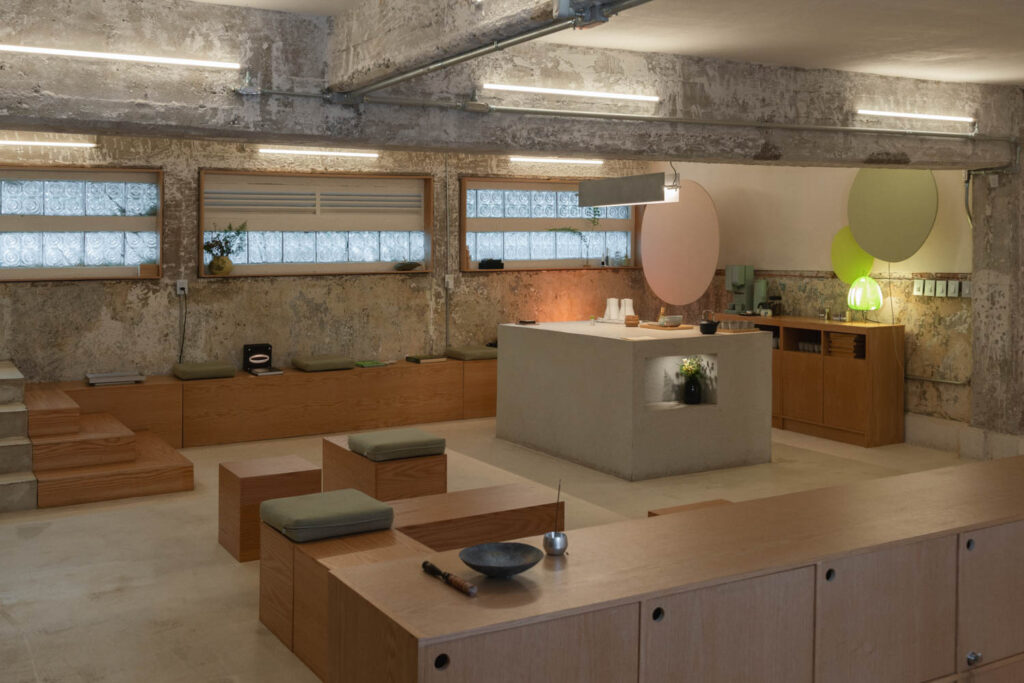
Sona, located in Mexico City and designed by Épico Estudio and Panorama, invites visitors into a sonic immersion.
Projects
A Milan Storage Unit Transforms Into A Meditative Home
Giovanni Muzio’s arching 1930s La Triennale di Milano inspires an artful 570-square-foot Milanese apartment designed for travelers exploring the city.