
Art History: Chu-Gooding Aids L.A. Louver’s Transition
Although change is the new constant, the pivoting of a longstanding institution is always a surprise. That would be the L.A. Louver. The beachfront Venice gallery, founded in 1975 by ex-pat Brits Peter and Elizabeth Goulds and designed by Frederick Fisher & Partners, grew to be a local community hub and cornerstone of the Los Angeles contemporary art scene its sphere of influence extending internationally given the status of affiliated artists: David Hockey, Alison Saar, Tony Belant, Richard Deacon, Mark di Suvero, and Gajin Fujita to name a few. After a half century, in which the gallery mounted more than 660 exhibitions and shown work by more than 430 artists, the site shuttered to the public last autumn. Its owners opted for a new model focusing on consulting, a digital operation, and the occasional show.
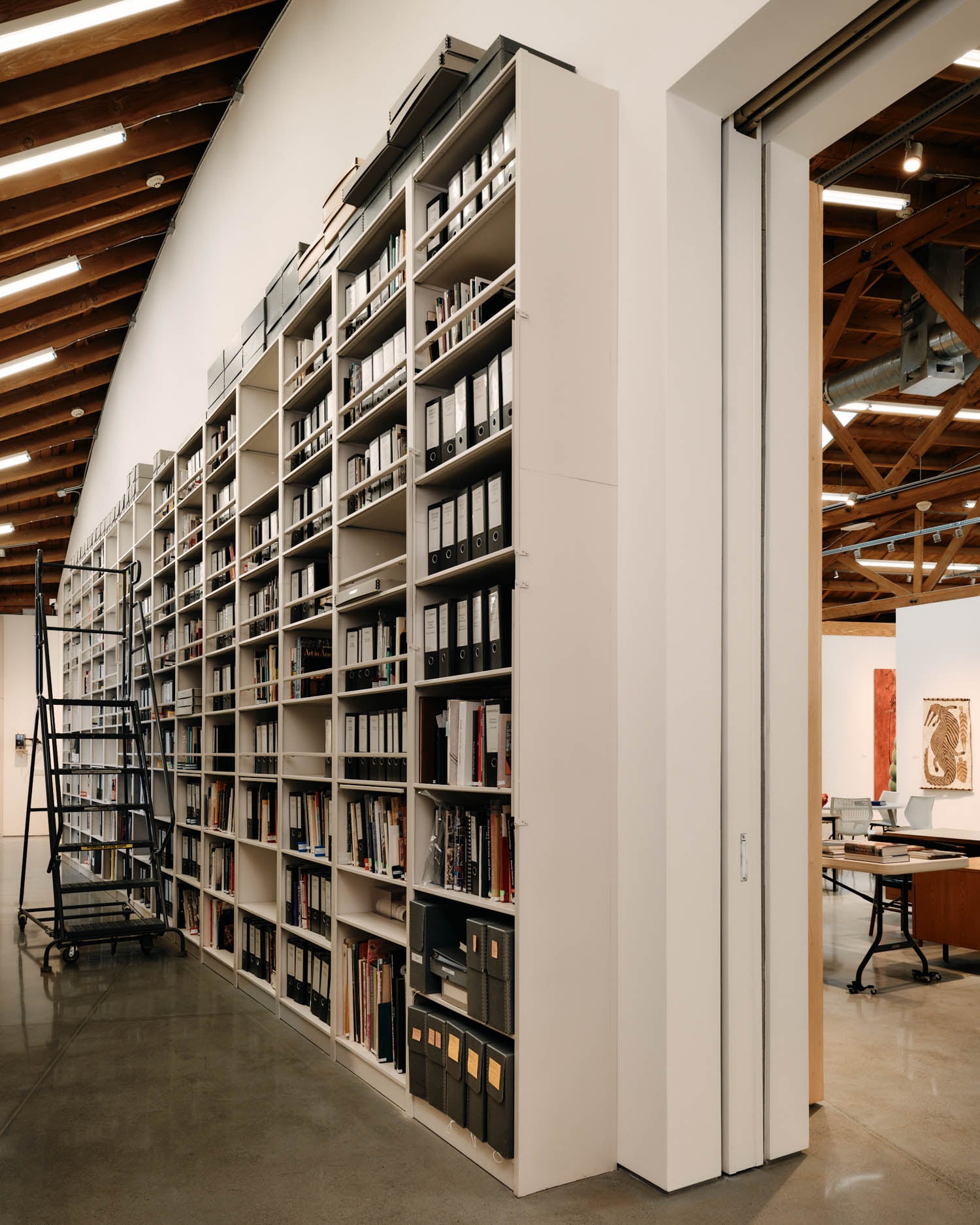
As for its vast archive and library? L.A. Louver is gifting it to the Huntington, a museum, library, and botanical garden in San Marino, about a 35-minute drive away. That’s just part of the story. Preceding the decision, the gallery needed more warehouse space and opted to transform a vacant 13,730-square-foot, bowstring truss building in L.A.’s mid-city to a multi-phased, hybrid facility. Enter Chu-Gooding, helmed by married architects Annie Chu and Rick Gooding. “We got the call based on the Autry Resource Center,” says Chu of their comprehensive storage, display, and conservation project for the Burbank museum. “We’re the museum closet experts,” she laughs.
Chu-Gooding Restores The L.A. Louver Collections Facility
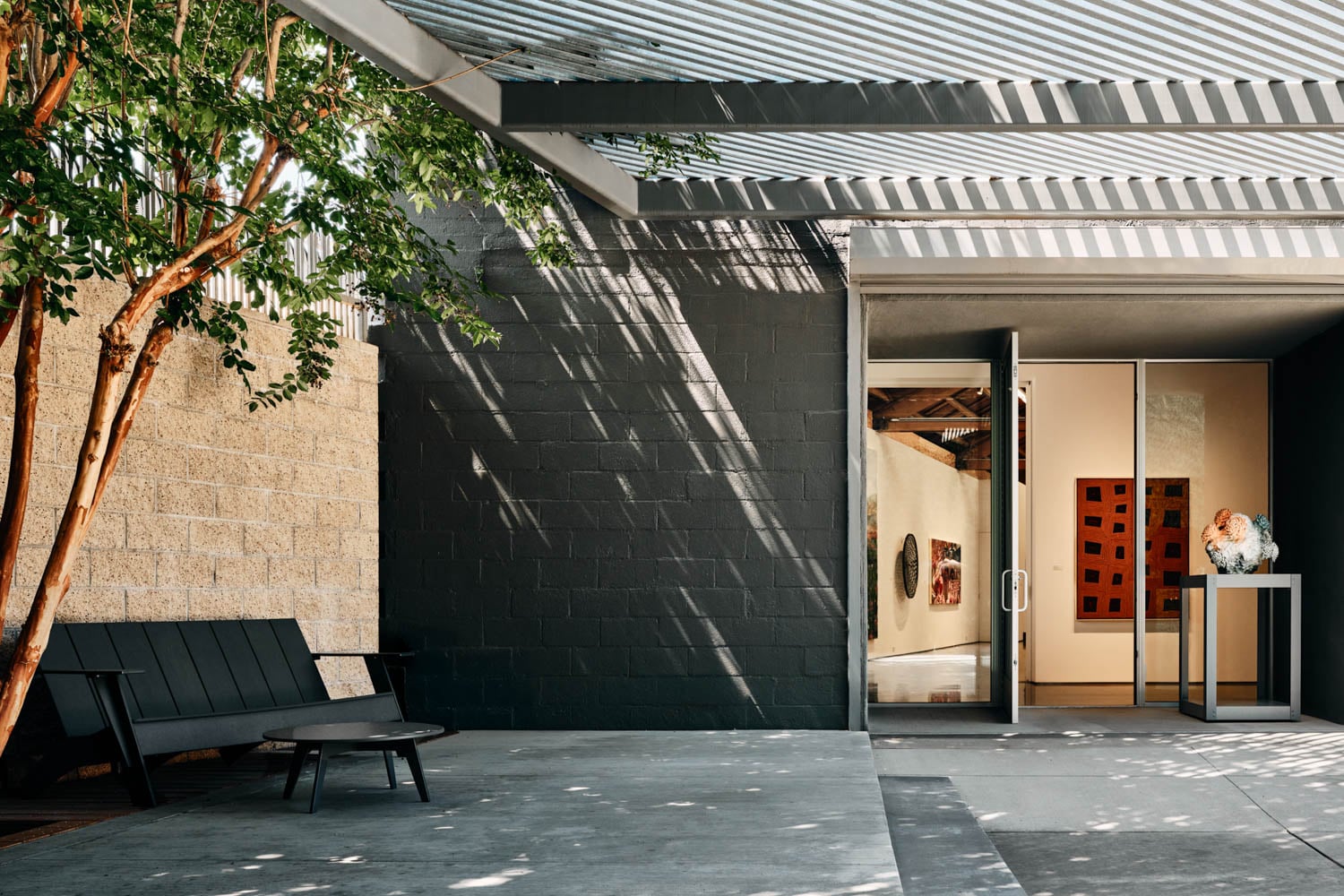
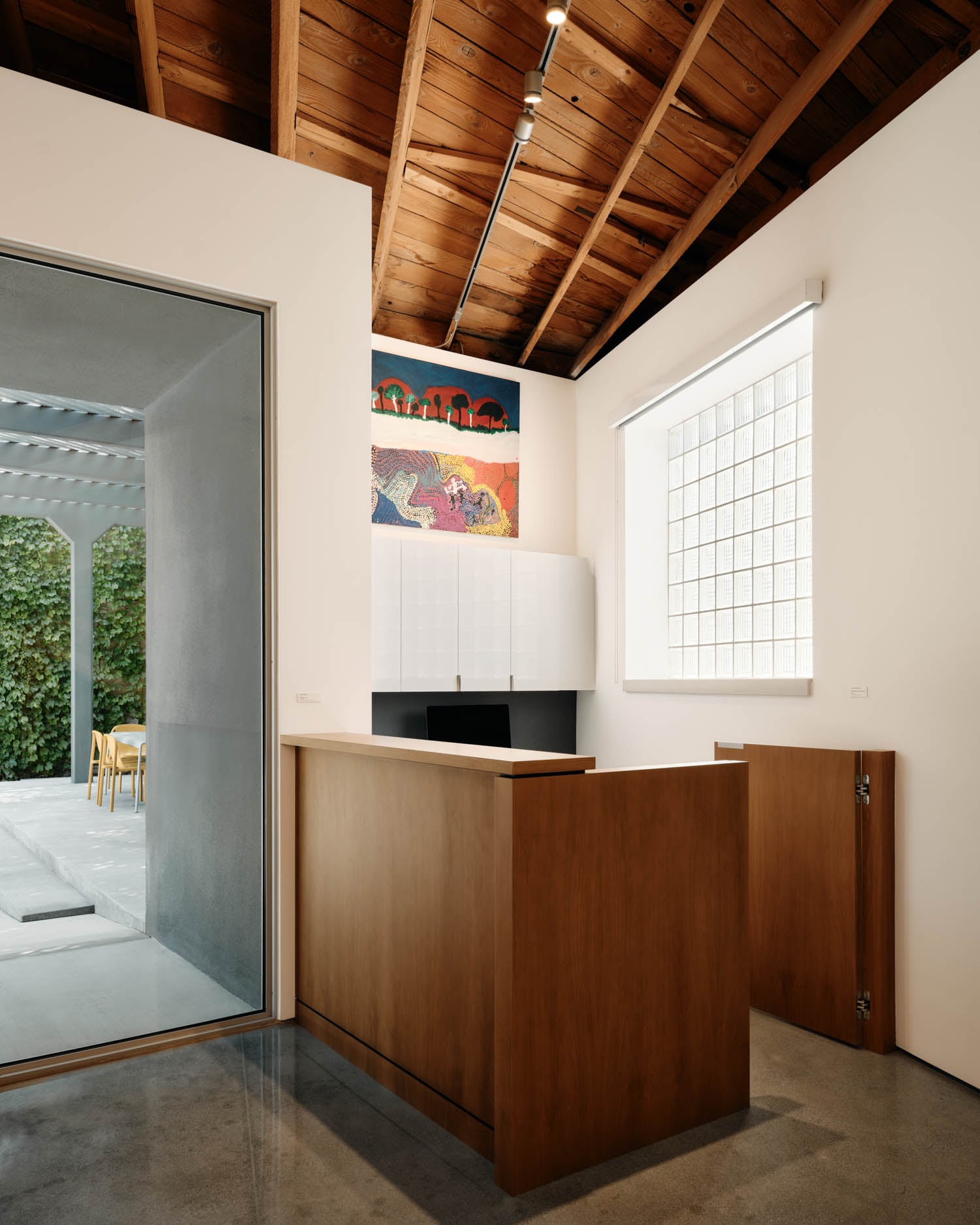
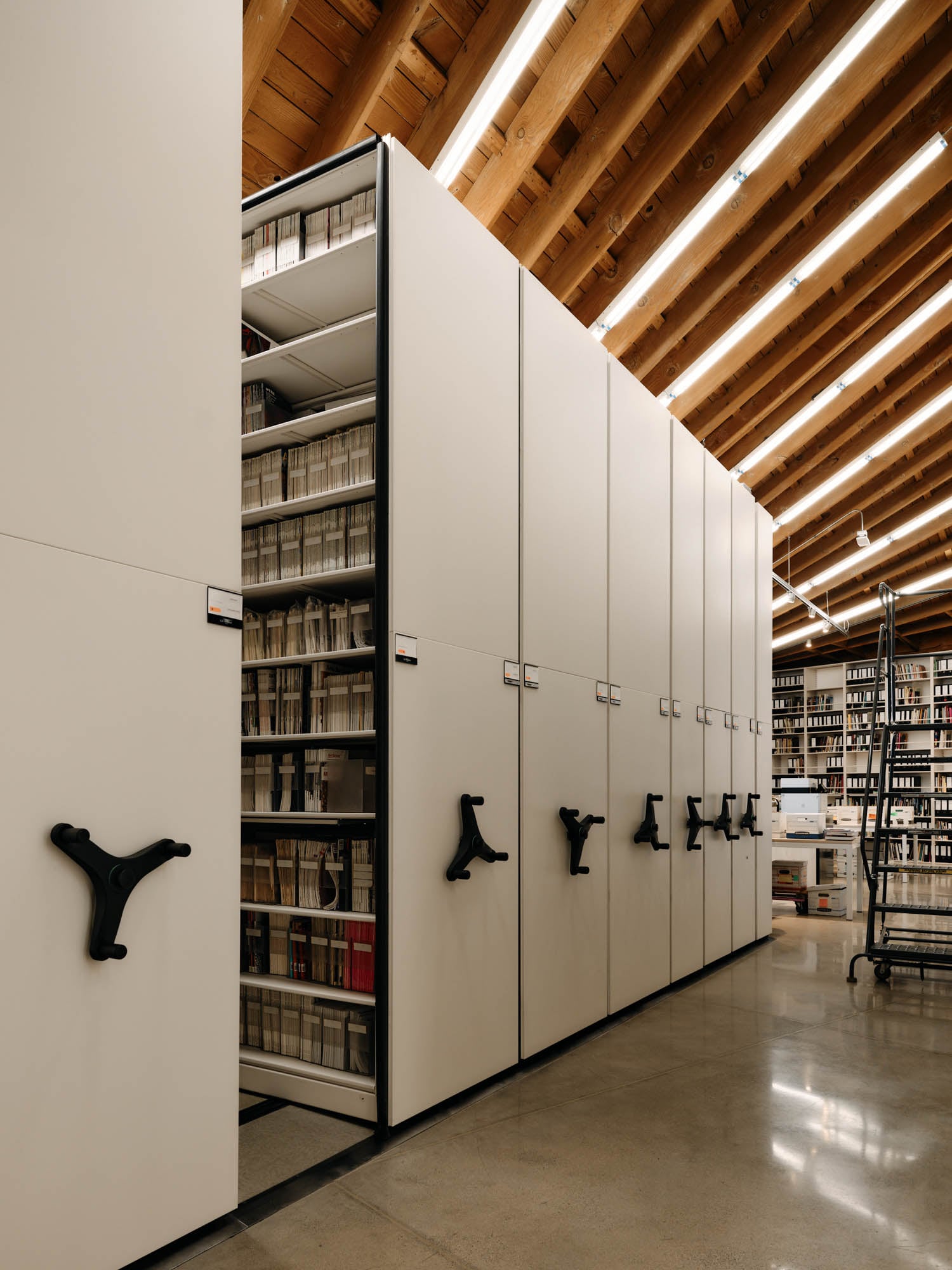
For the L.A. Louver warehouse, the architects first effected some exterior alterations. They closed up most windows and filled in others with glass block. “The building is intended to be visually anonymous from the street,” notes Gooding. “There is no signage.” Its only signal is a street-fronting entry off a newly created patio shaded by a custom steel trellis that simultaneously masks the adjacent metro running overhead. Inside, they refurbished the concrete floor to dead level, built a 12-foot-high drywall surround within the 15-foot-high volume, and initially focused strictly on storage systems. Cardboard cases for paintings; crates for large works or assemblages; pallets for large irregular works; boxes and tubes for multiples; flat files for drawings. Aisles had to be wide enough for a forklift given the size of some sculpture. “Collection storage was a 3D puzzle, not just in plan,” Gooding comments. “Knowing that you can use the ‘air space’ between the large trusses as storage was not something they had initially considered.”
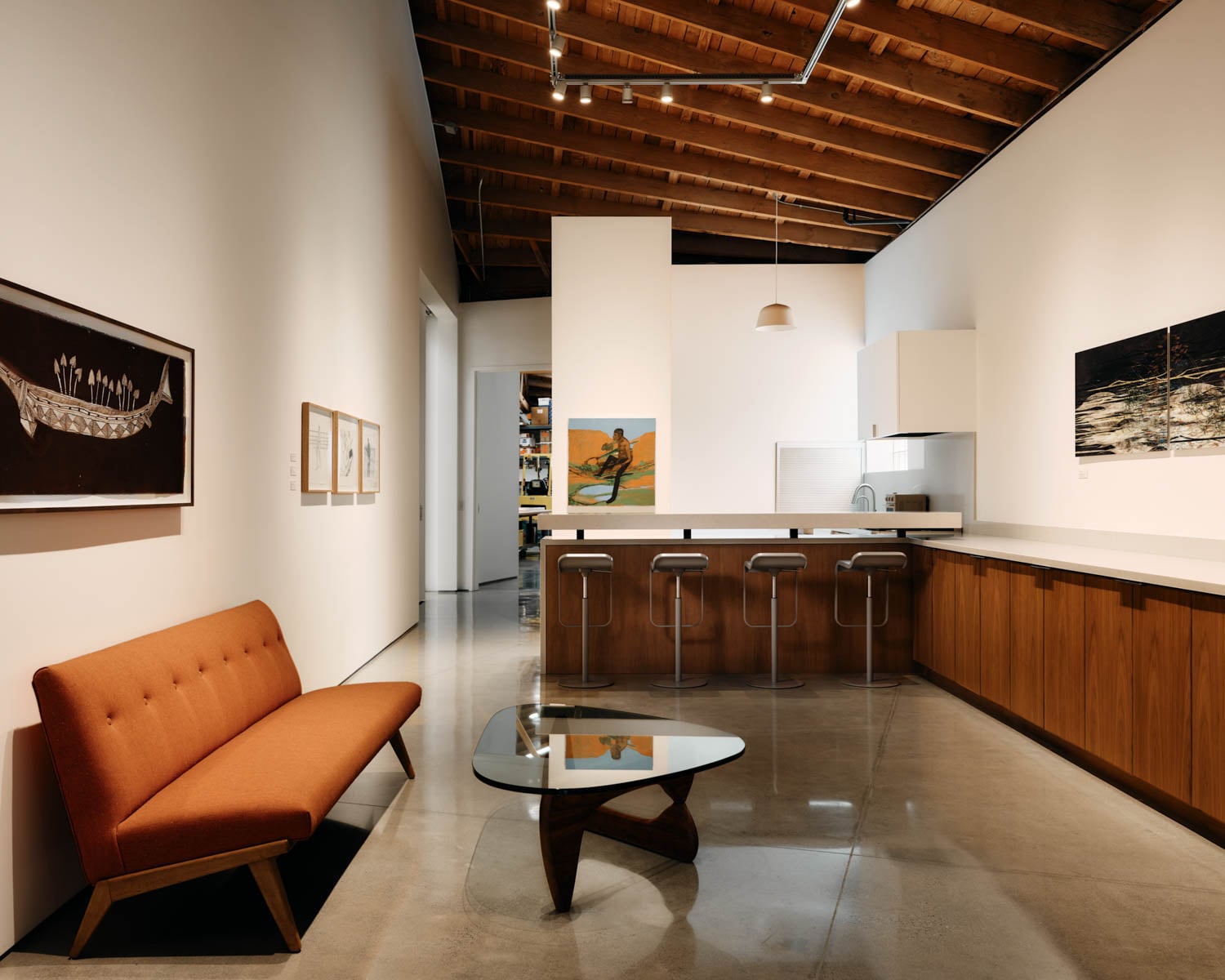
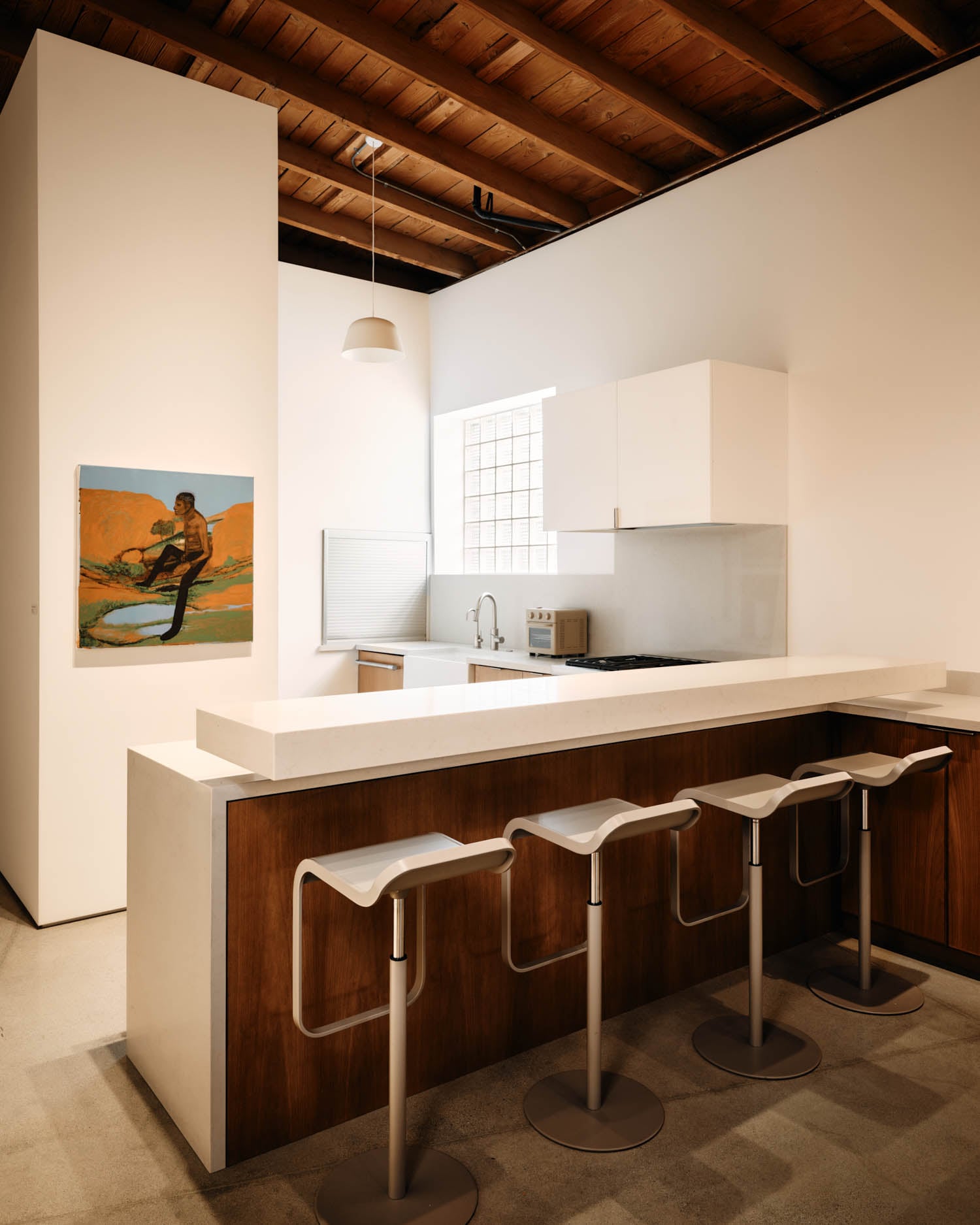
Nor had the Goulds initially considered the range of possibilities open to the art world’s changing landscape. Over the years, more than a decade in fact, Chu, Gooding, and the clients expanded the scope of operations, hypothesizing varying scenarios and designing prospective solutions for each case. Thus, the L.A. Louver Archive & Collections Facility, as it came to be called, was a continuous work in progress. Ultimately, it ended up with spaces dedicated to: a gallery, collection storage, library archive, loading and crating. Work stations entered the picture as folks from the Venice gallery transitioned to a new workplace. A kitchen cum lobby zone addressed entertaining-event needs and client welcome. The patio was another nod to hospitality. “We’re looking at how many functions are necessary for a gallery or museum,” Chu cites the chief takeaway. Add workplace into the mix, and we realize that “hospitality and conviviality are necessary and all are joined at the hip.” In other words, embrace the fluidity and evolving nature characteristic of all design genres today.
Inside The L.A. Louver Archive & Collections Facility

read more
Projects
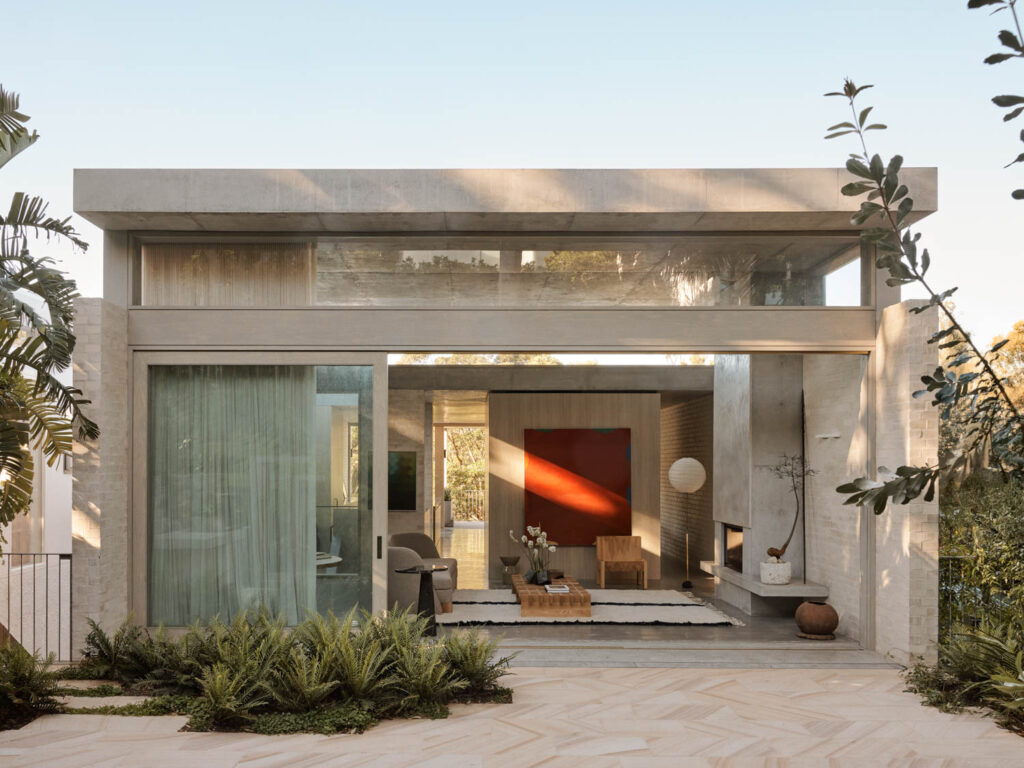
A Coastal Home In Australia Built Into The Canopy
Madeleine Blanchfield Architects distils architecture to its essentials in a Bronte home where raw concrete, brick and timber form a richly tactile backdrop to family life and artistic practice.
Projects
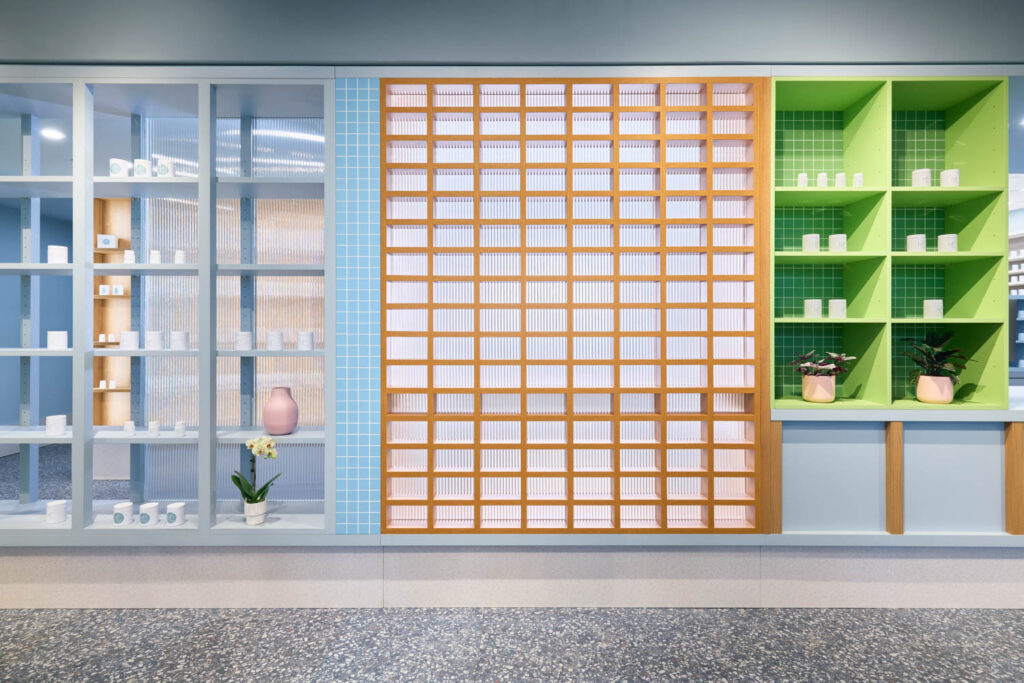
Inside A Colorful Health Choice Pharmacy In Coney Island
Sergio Mannino Studio reimagines a Coney Island pharmacy as a flexible, design-forward wellness hub.