

Loacker’s Austria Flagship Draws On Its Signature Wafer Design
Loacker is a third-generation family business that began in 1925 as a modest pastry shop in Bolzano, amid Italy’s Tyrolean Alps. Over the decades, the confectionery brand has become famous worldwide for its signature wafers—thin, crispy, and flavored with cream, especially hazelnut. As the centennial approached, company executives sought a newfound identity for the Loacker flagship in Heinfels, Austria, one that reflects its expanding global reach and is fresh, contemporary, and as textured and layered as the biscuits. To realize this vision, they turned to Harvard GSD–trained architects Sandy Attia and Matteo Scagnol, the husband-and-wife founders of Italian firm MoDusArchitects, and the result is Loacker Galaxy, an 8,500-square-foot, two-level wafer-inspired wonderland housing a shop, café, and lab.
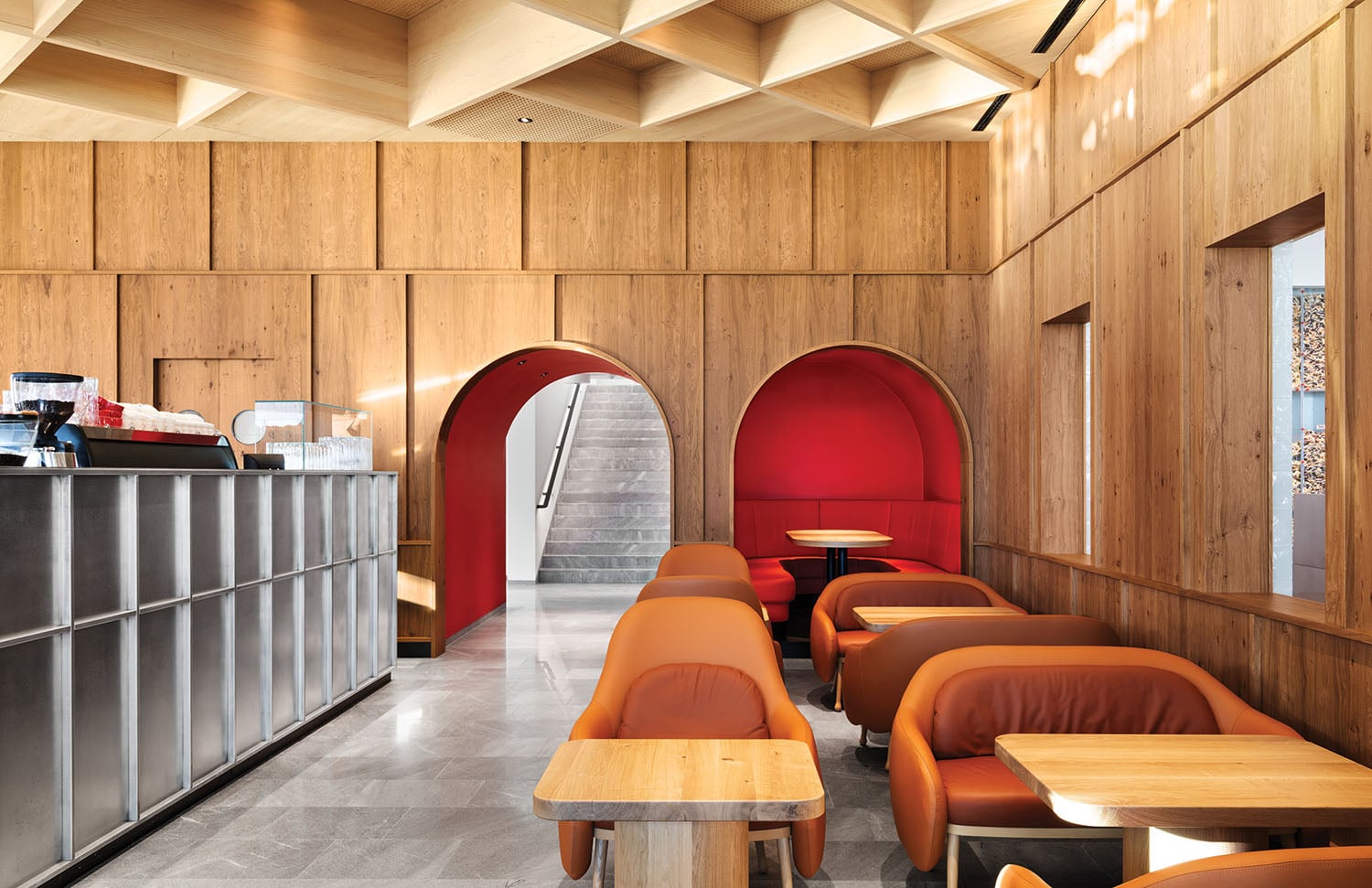
The concept deftly balances heritage and innovation through a curated material palette. Warm fir and oak nod to the company’s Alpine roots, sleek stainless-steel elements evoke precision manufacturing and a forward-thinking ethos, and tile and laminate are in the same vivid crimson as the Loacker logo. “There were three driving ideas behind the project,” Attia recalls. “We wanted to work with stainless steel, explore the grid and repetition, and give the product an architectural form.”
Savor The Sweetness Of Loacker’s Austria Flagship
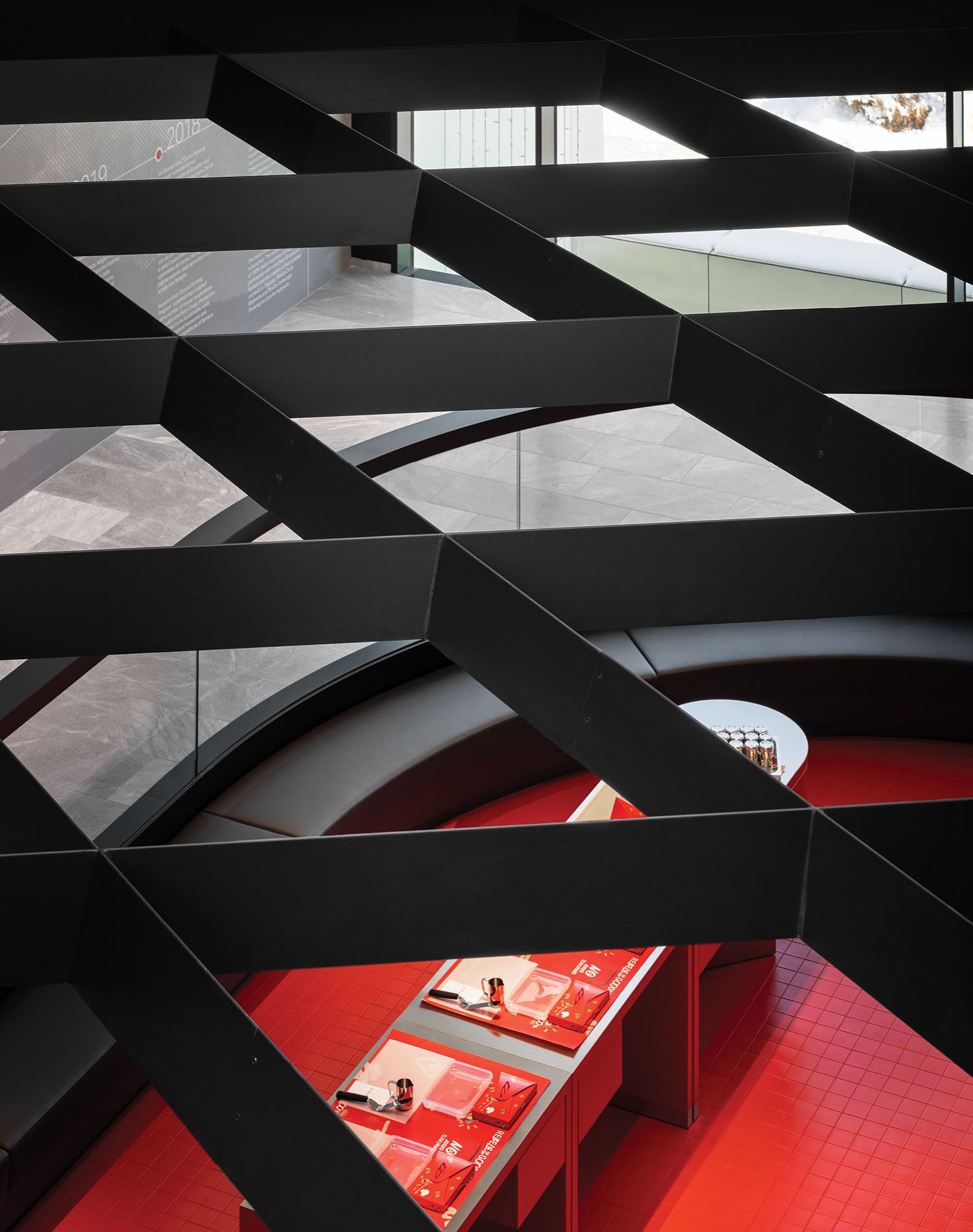
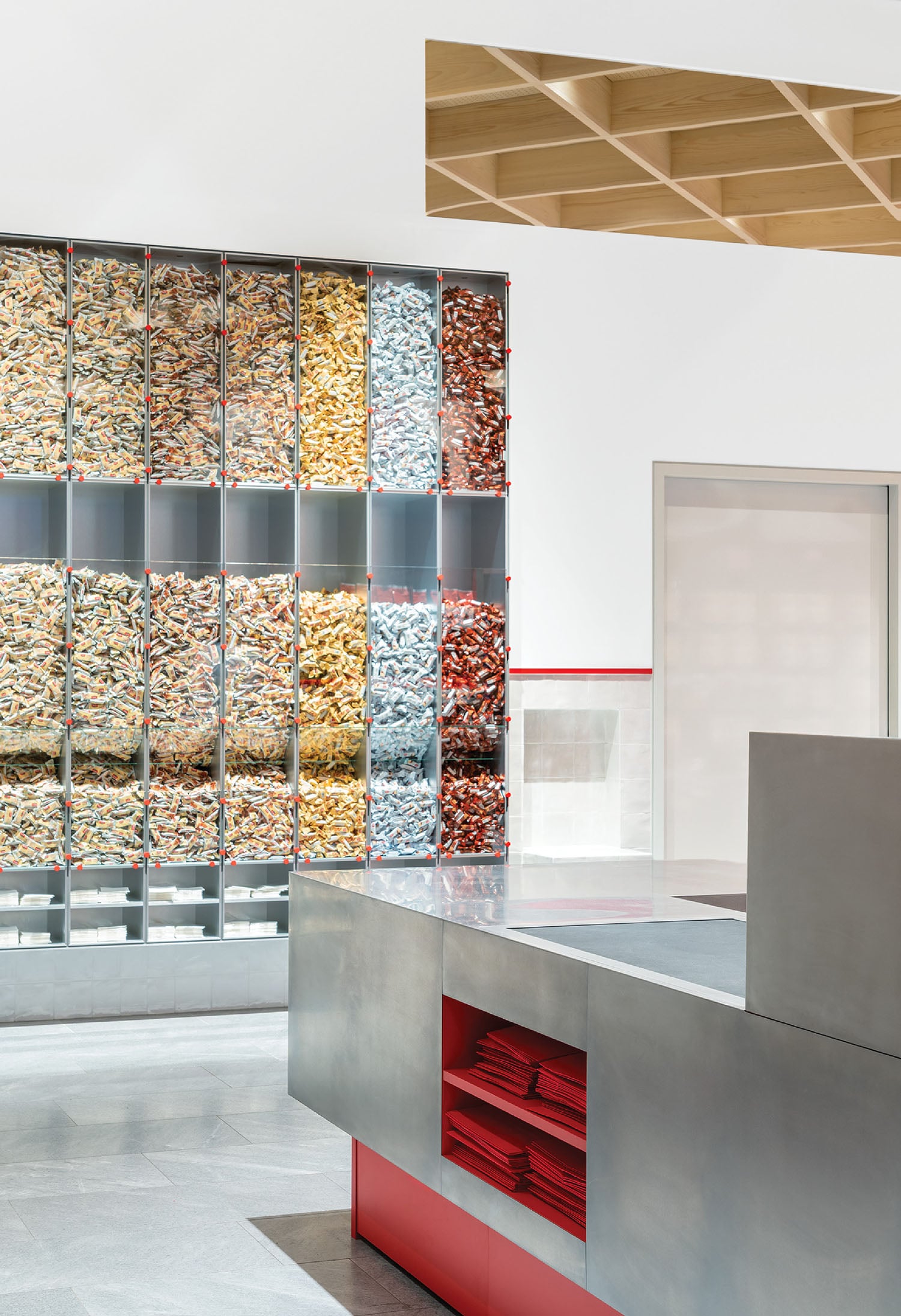
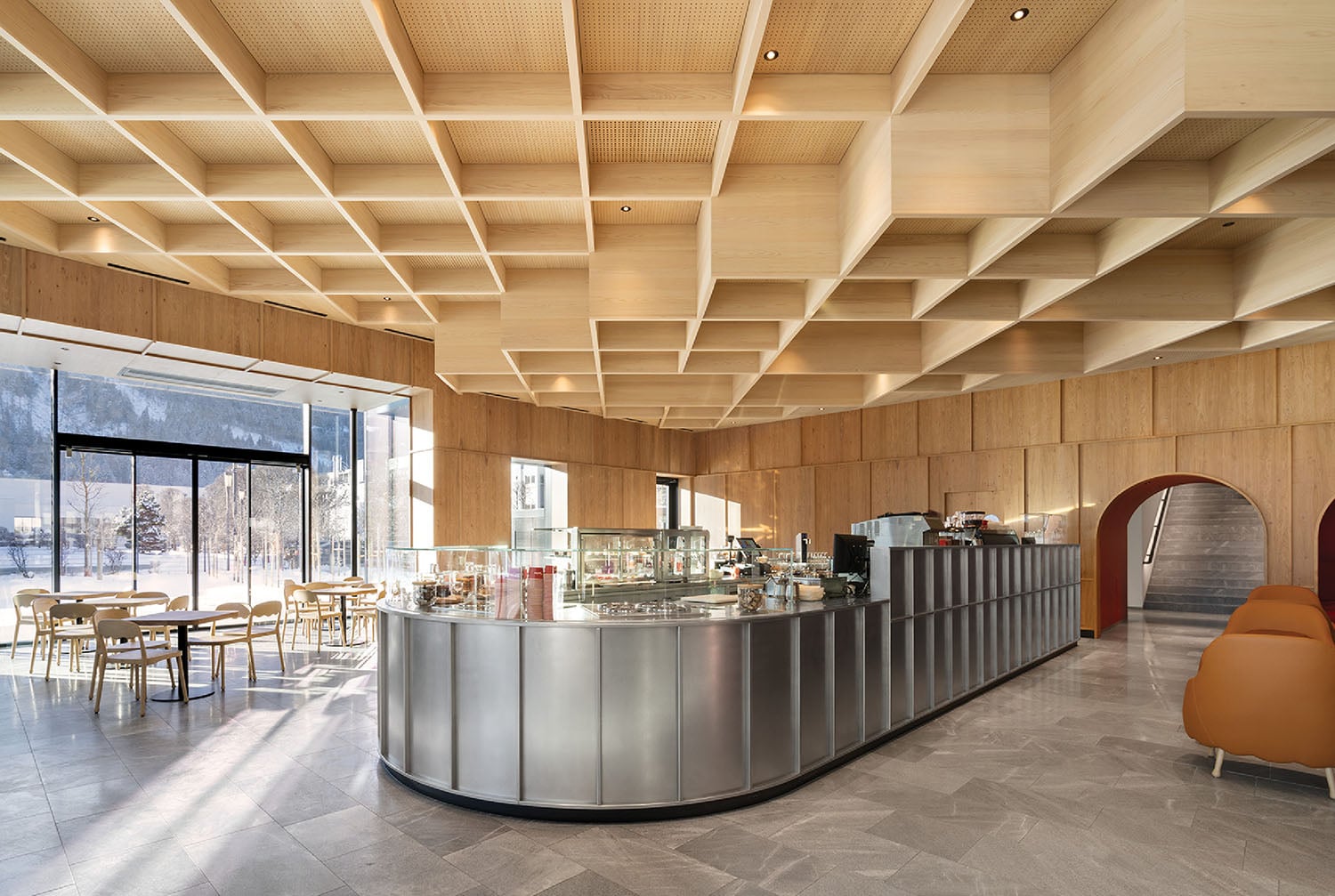
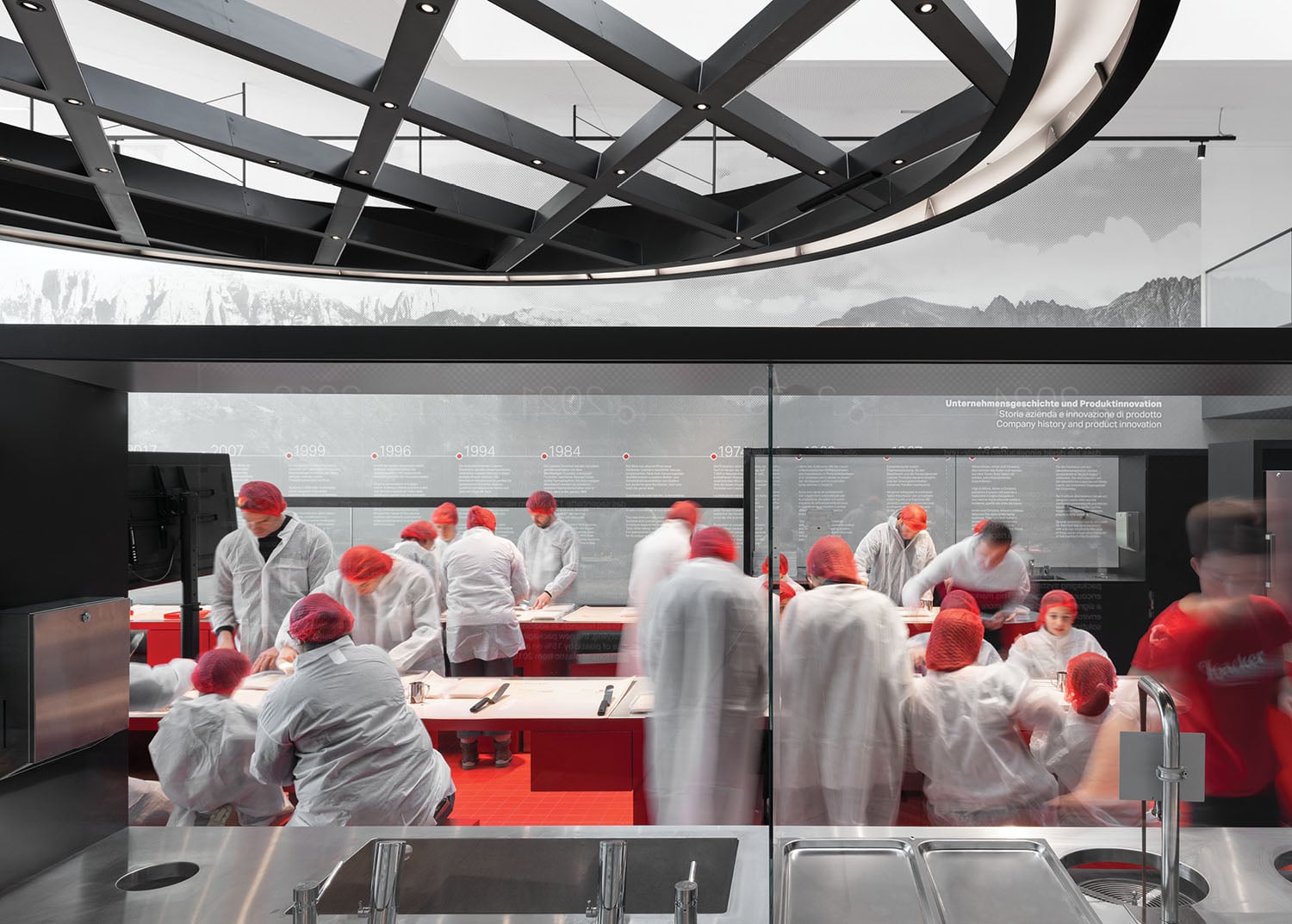
To unify the once-fragmented entry, café, and shop, the architects introduced a coffered fir ceiling that weaves visual continuity throughout while offering a tactile homage to Loacker’s creations. The geometry carries through seamlessly: A wafer-shape steel counter anchors the café below, and an enormous circular light fixture energizes the upstairs lab, where visitors can make their own wafer or observe from a mezzanine above.
Realizing the vision, however, required persuading a board rooted in traditional outlet-style retail. “Before, visitors saw the space before the product,” Scagnol says of the original layout. “We thought: You should feel surrounded by the product.” Central to that shift is a bold reinterpretation of display strategy. Nearly a dozen 12-foot-tall totems—three-dimensional grids mounted on pivoting columns elevated off the floor—replace conventional shelving, helping to make shopping more brand immersive.
MoDusArchitects Gives Loacker Galaxy A Candy-Coated Feeling

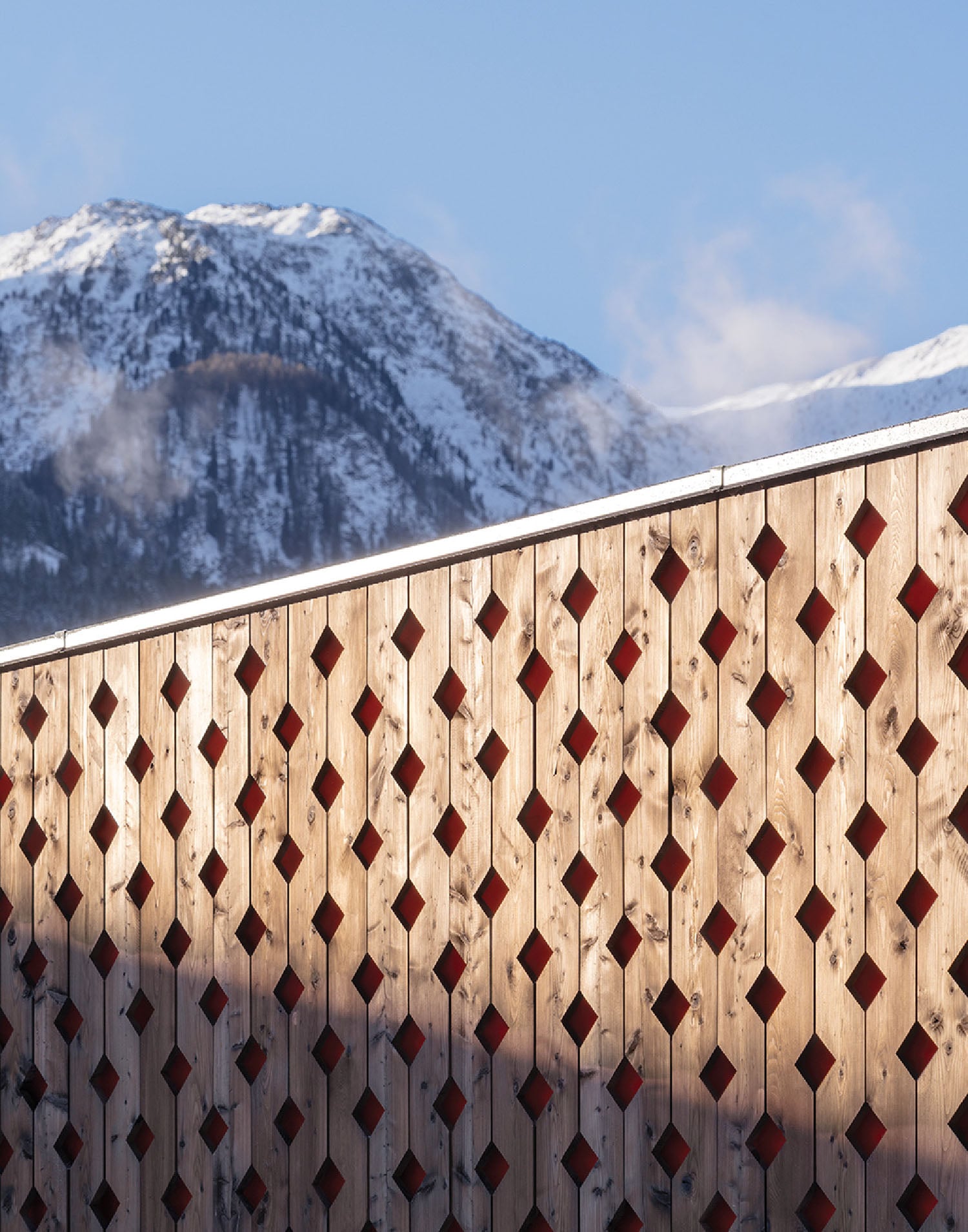
That sensibility continues in the furnishings. Custom, thick oak–topped café tables convey permanence; chocolate-toned leather chairs introduce soft curves. “Just the right candy-esque feel,” Attia notes, referring to the chair’s wavy trim and possibly the licorice-red booth in the café’s arched niche. The experience flows outdoors, where MoDus, the firm name derived from modus agendi, Latin for a manner of doing things, built a larch pavilion that is joined by a hazelnut garden and a playground. Talk about sweet success: Crowds reach 3,500 people daily.
Heritage + Innovation Are Balanced In This Loacker Locale


FROM FRONT BARTH INNENAUSBAU: CUSTOM LIGHT FIXTURE (LAB). GAMMA3: ADHESIVE GRAPHICS. BILLIANI: CHAIRS (CAFÉ). HOLZBAU LUSSER: FACADE (PAVILION).
THROUGHOUT GRUPPO BARDELLI: FLOOR TILE. NIEDERBACHER: CATERING EQUIPMENT. STUDIO AMORT: LIGHTING CONSULTANT. HOLZNER & BERTAGNOLLI ENGINEERING: STRUCTURAL ENGINEER. THERMOSTUDIO: MEP. BARTH; WIESER TISCHLEREI: MILLWORK, METALWORK. BAUUNTERNEHMUNG DI WALTER FREY: GENERAL CONTRACTOR.
read more
Projects
A Victorian Worker’s Cottage In New Light
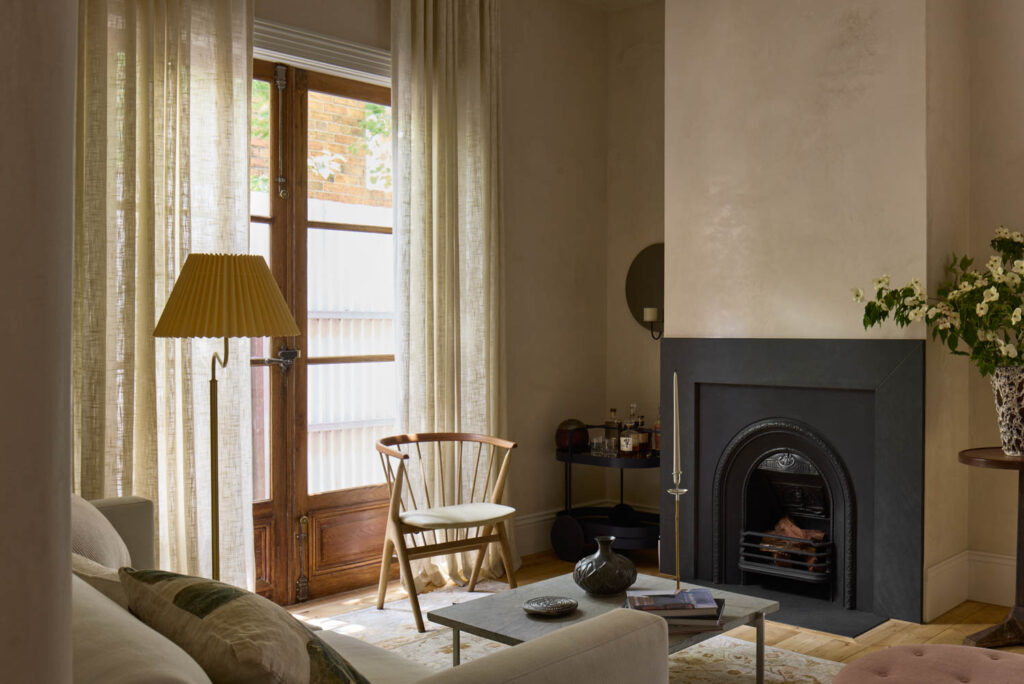
Anna-Carin has carefully uncovered the character of a century-old Victorian Cottage, layering timeless materials, collected pieces and quiet interventions.
Projects
Inside Elizabeth Unique Venice: A Historic Palazzo Reimagined By Cristina Celestino
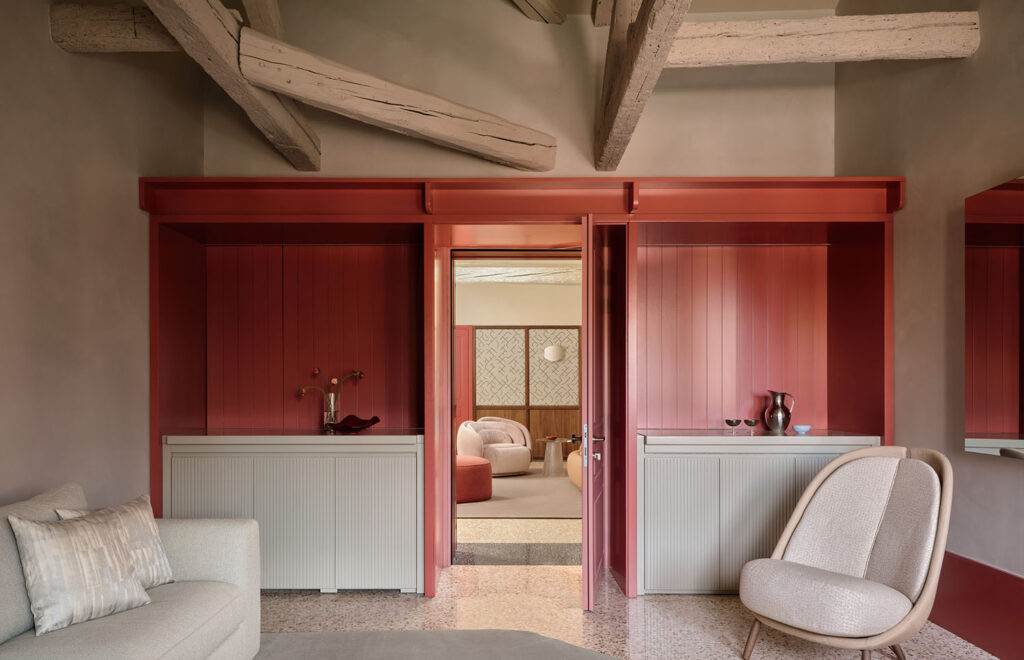
To convert a 17th-century palazzo into the Elizabeth Unique Venice boutique hotel in Italy, Cristina Celestino channels the authentic character of La Serenissima.