
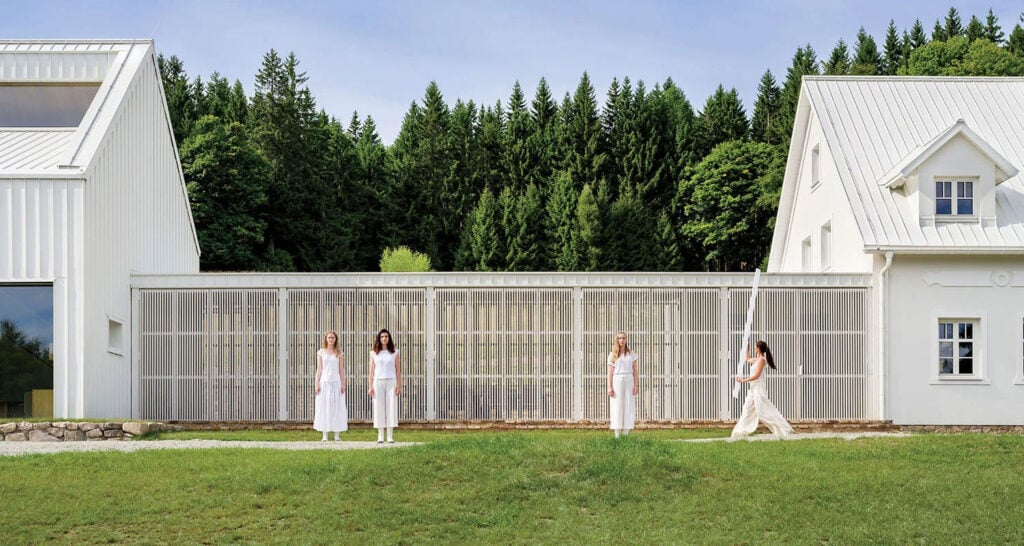
A Homestead Turned Vacation Compound In The Czech Republic
On an isolated 6-acre plot in the Ore Mountains of the Czech Republic, a once-abandoned homestead dating to the early 1900’s was recently brought back to life as a glowing, 4,500-square-foot vacation compound. Located in Vysoká Jedle along the country’s northwestern border, the region was for a time predominately German-speaking. When that population was forced to leave following WWII, villages cleared out and houses were abandoned, including this one. The property was eventually reinhabited and subject to a series of modifications over the decades—albeit without much intention—including the addition of outbuildings so it could function as a sort of recreational hamlet. Although it operated as a ski lodge and, more recently, as a base for summer camps, “When our client bought the property, it was impossible to use for any purpose,” explains Jakub Filip Novák, cofounder with Daniela Baráčková of Prague-based No Architects. “We saw the project as a resurrection—specifically of this house, but also in a historical sense, when the German community evacuated, leaving behind a ghost landscape.”
The firm rehabilitated the compound, razing the ad hoc outbuildings and converting the original two-story structure into a 3,000-square-foot guesthouse encompassing three self-contained apartments plus shared common space. The team also added a second edifice, an 1,100-square-foot contemporary dwelling that serves as a caretaker’s house and owner’s quarters. The two gabled volumes are connected via a breezeway with folding walls made of vertical spruce slats, spaced apart to admit passage of light and air. The buildings merge into one through their crisp all-white facades, the historic house faced in stucco plaster and the new-build in a prefabricated aluminum system that vibrates against the backdrop of the green landscape and ever-changing skies. “We eschewed melancholic nostalgia and superficial mountain romanticism,” Novák says of the resulting forward-looking scheme.
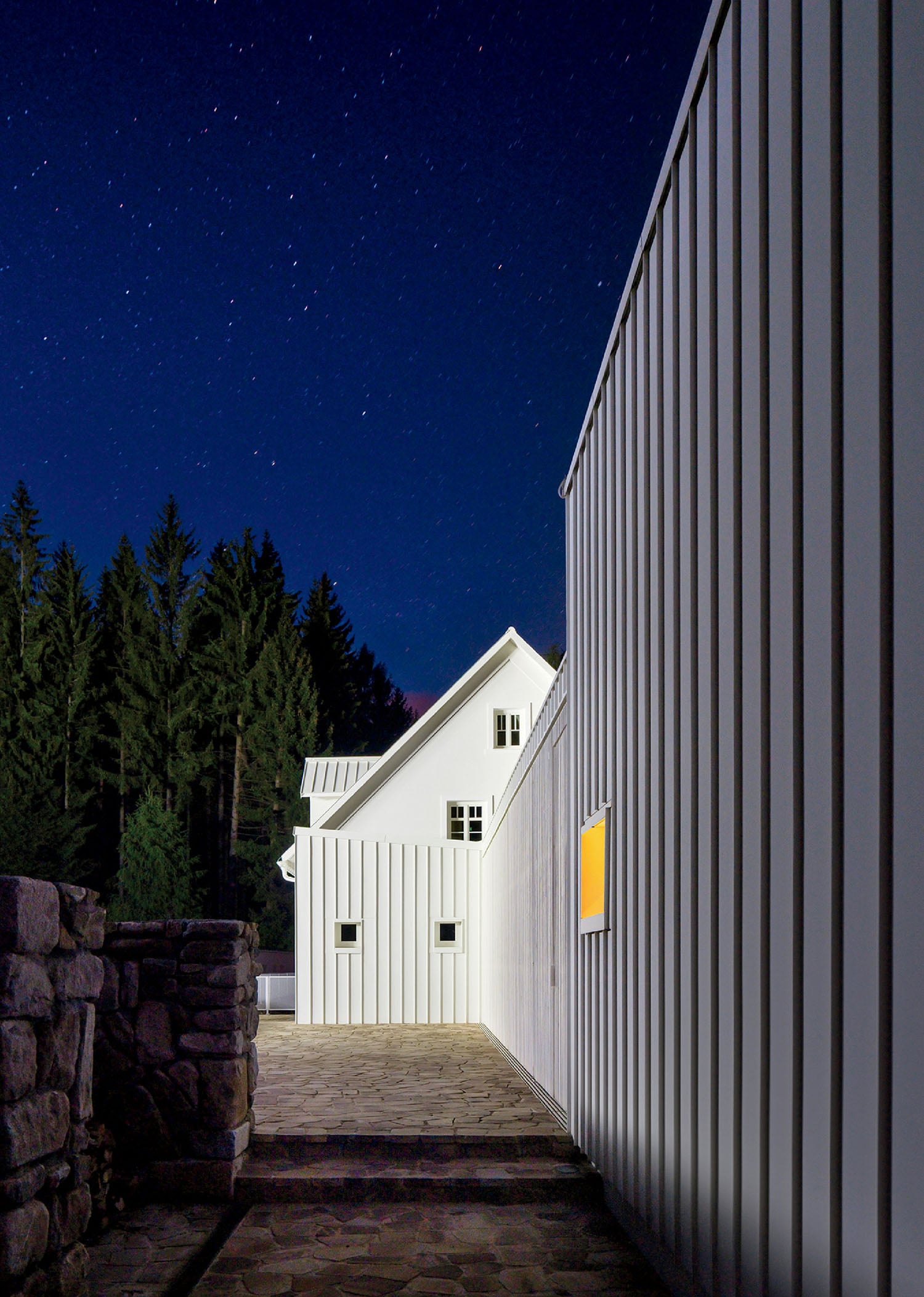
Prefabricated aluminum siding distinguishes a new-build expansion and an addition from the renovated early 20th–century stucco-plastered residence. 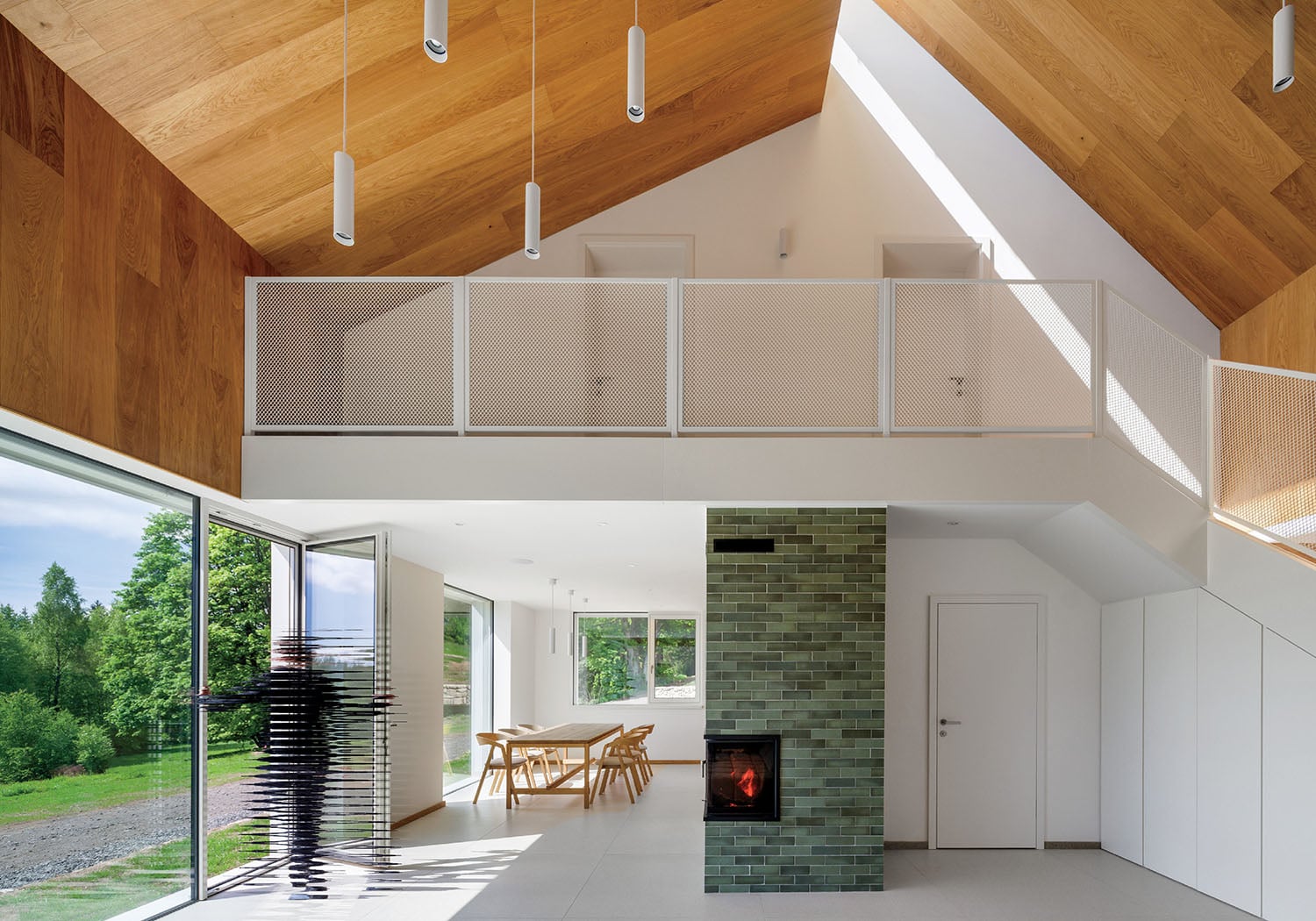
Inside the 1,100-square-foot addition, aka the caretaker’s house, ceramic tile forms the heated floor and surrounds the wood-burning fireplace while the ceiling is sheathed in oak. 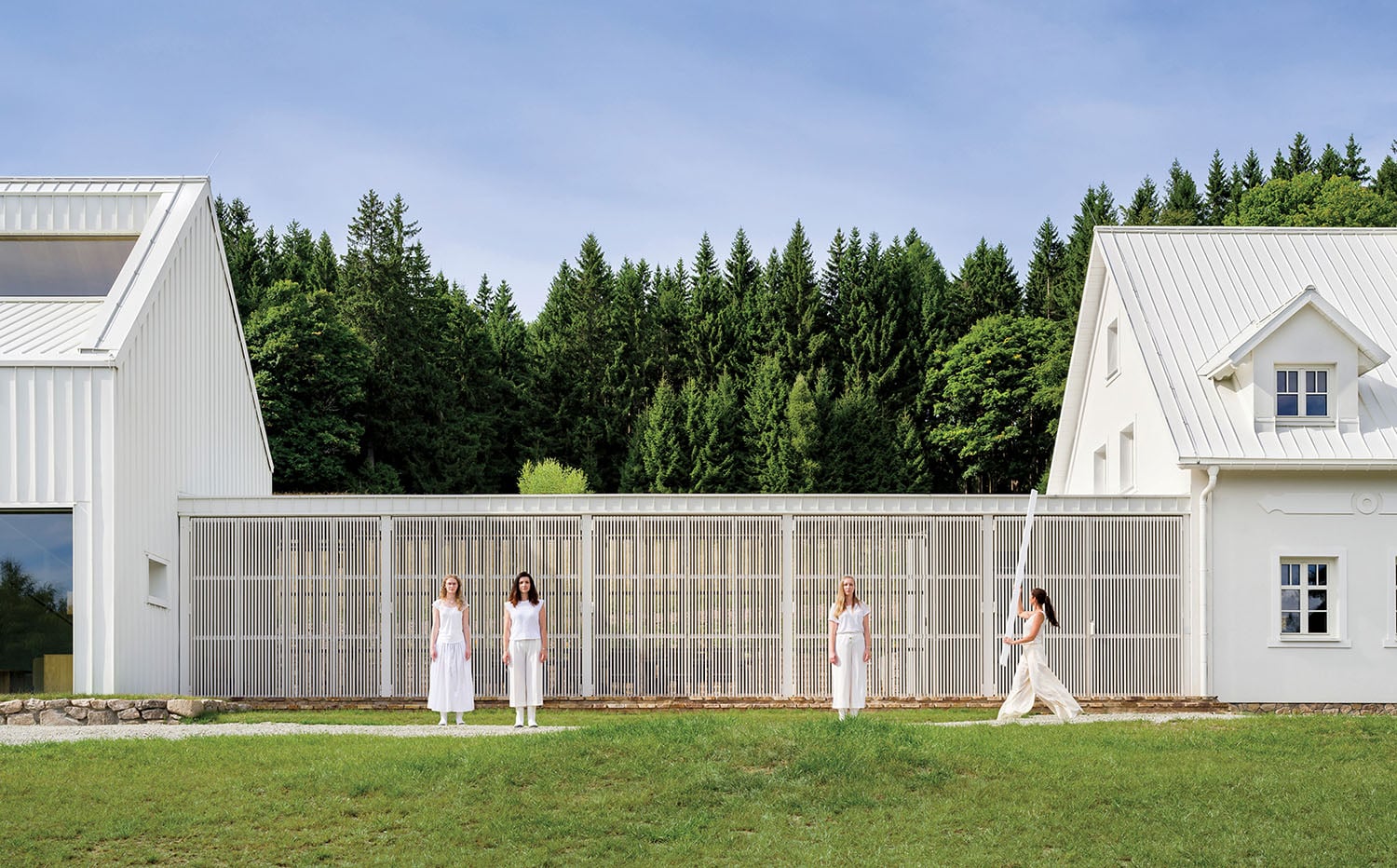
A breezeway enclosed in spruce-slat folding doors connects the two volumes. 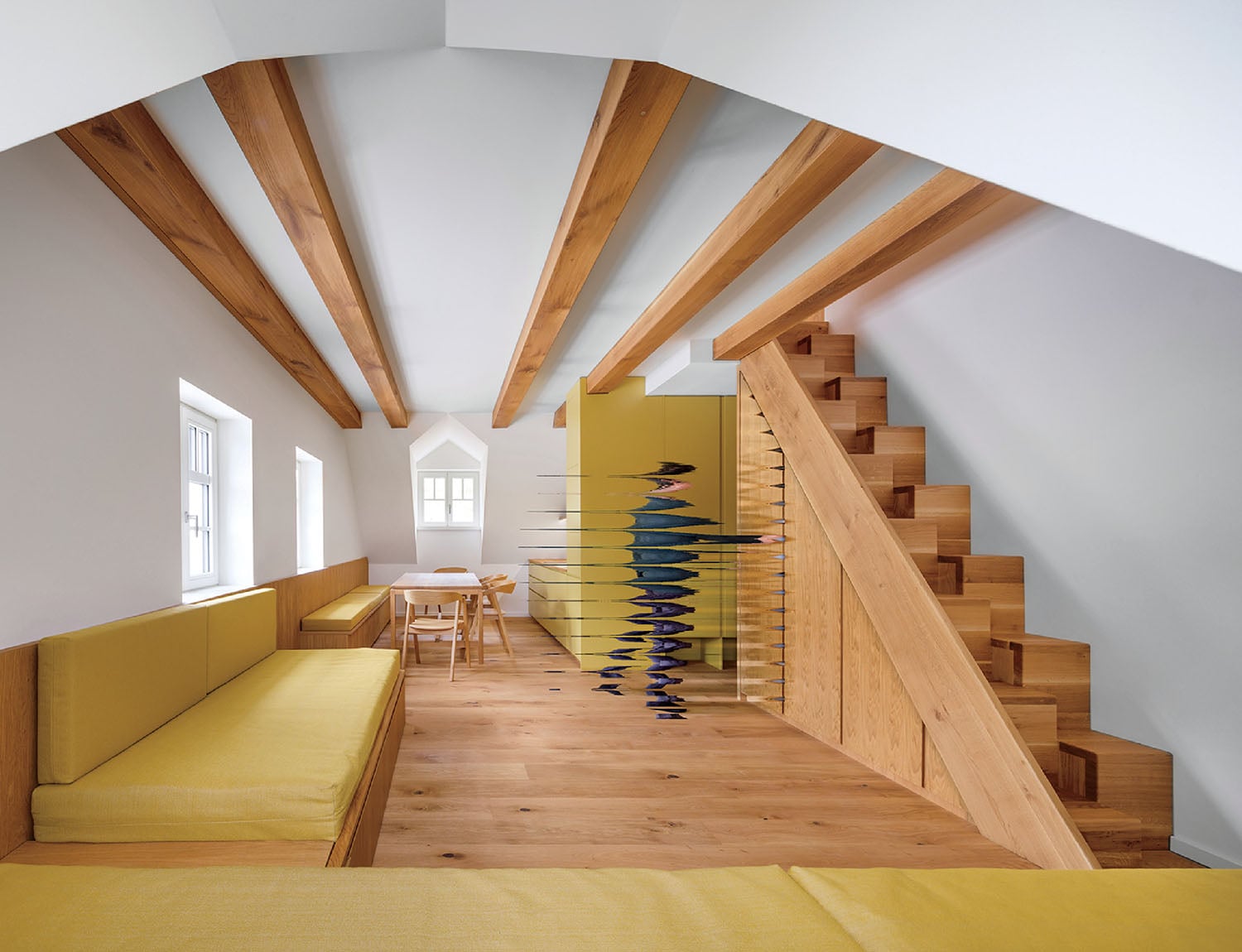
A second-floor apartment, one of three in the guesthouse, boasts built-in banquettes fabricated of lacquered MDF. 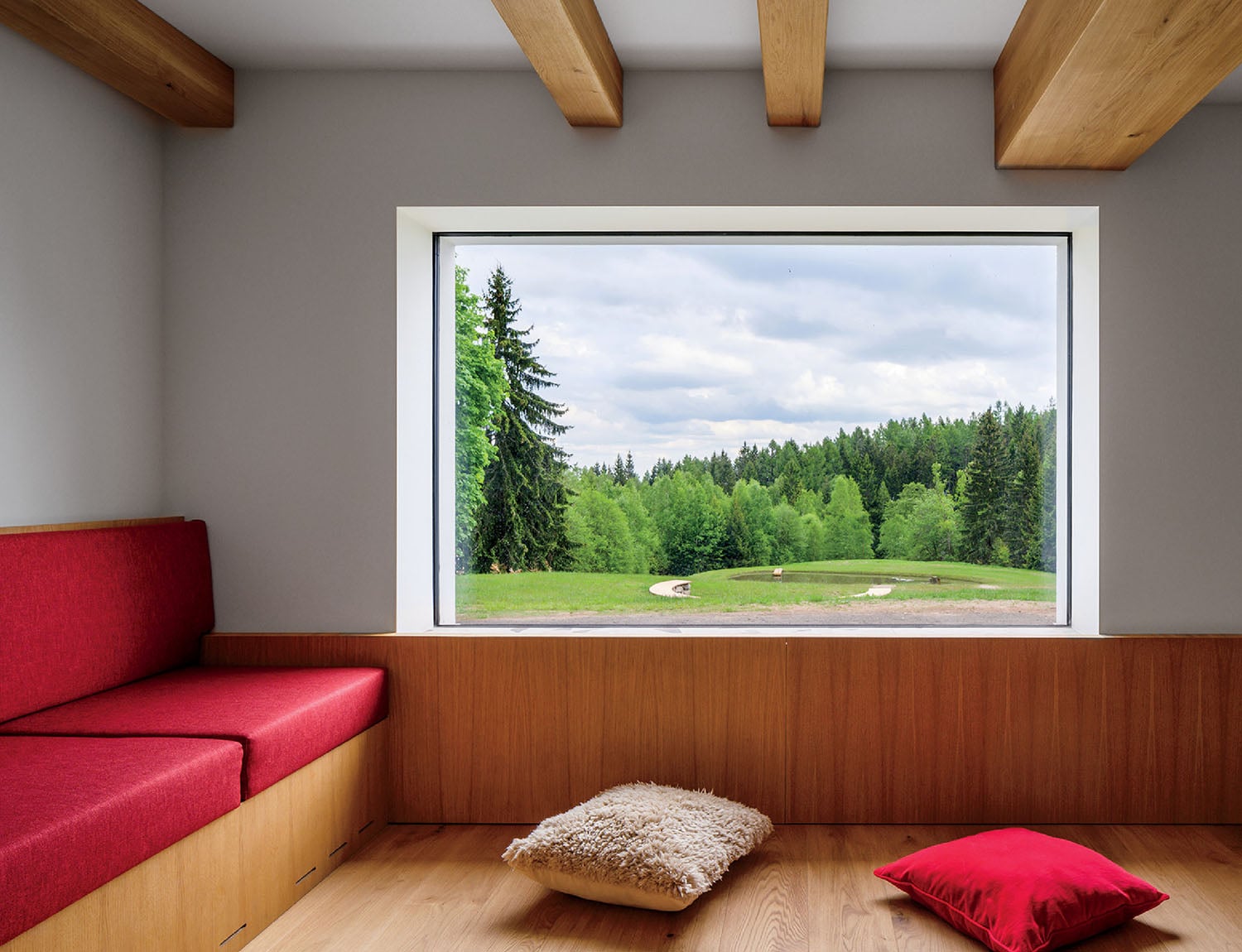
A seating nook in the guesthouse’s ground-floor common room surveys the property through a newly installed iron-frame picture window. 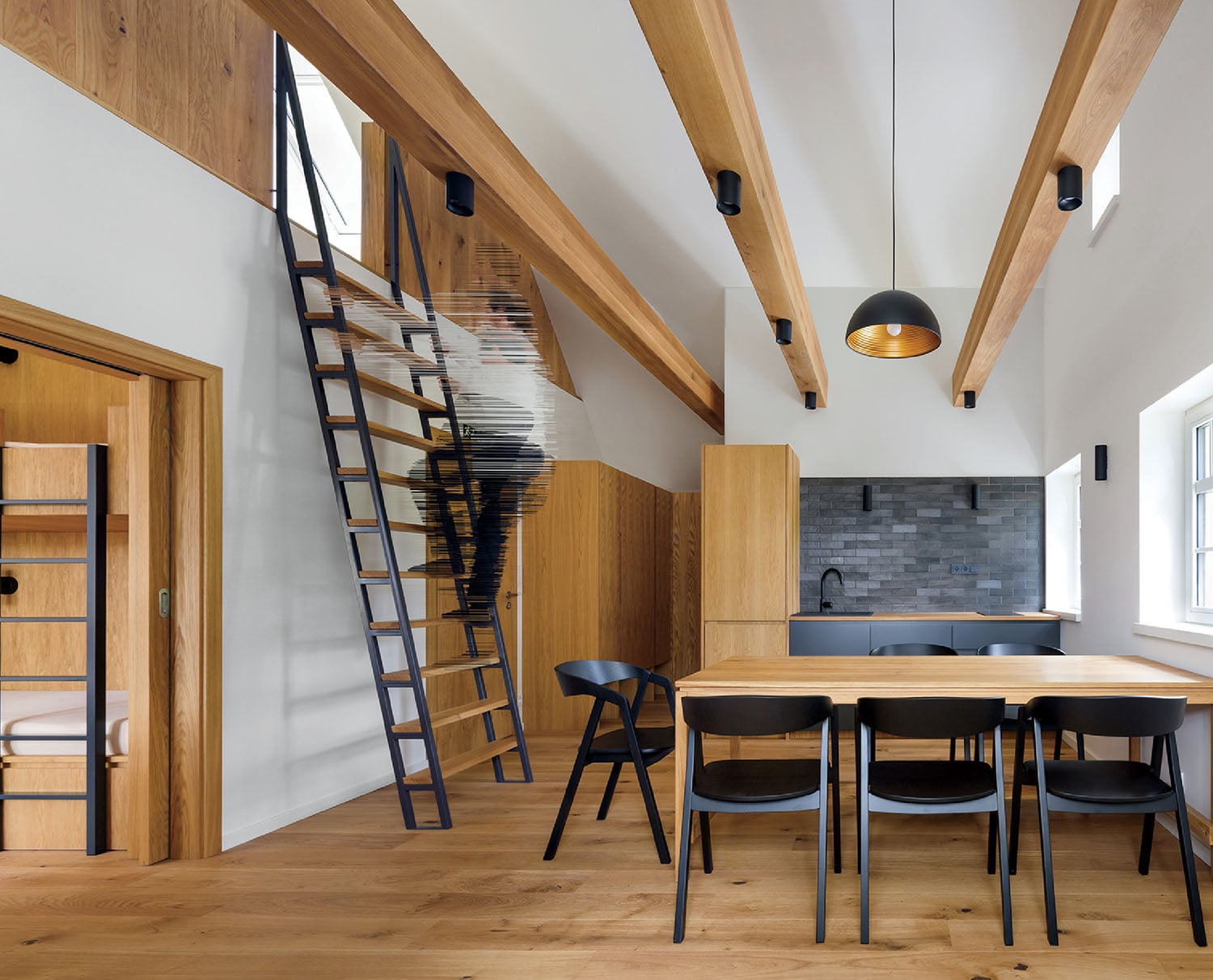
A custom, powder-coated steel ladder leads to a sleeping loft in another apartment. 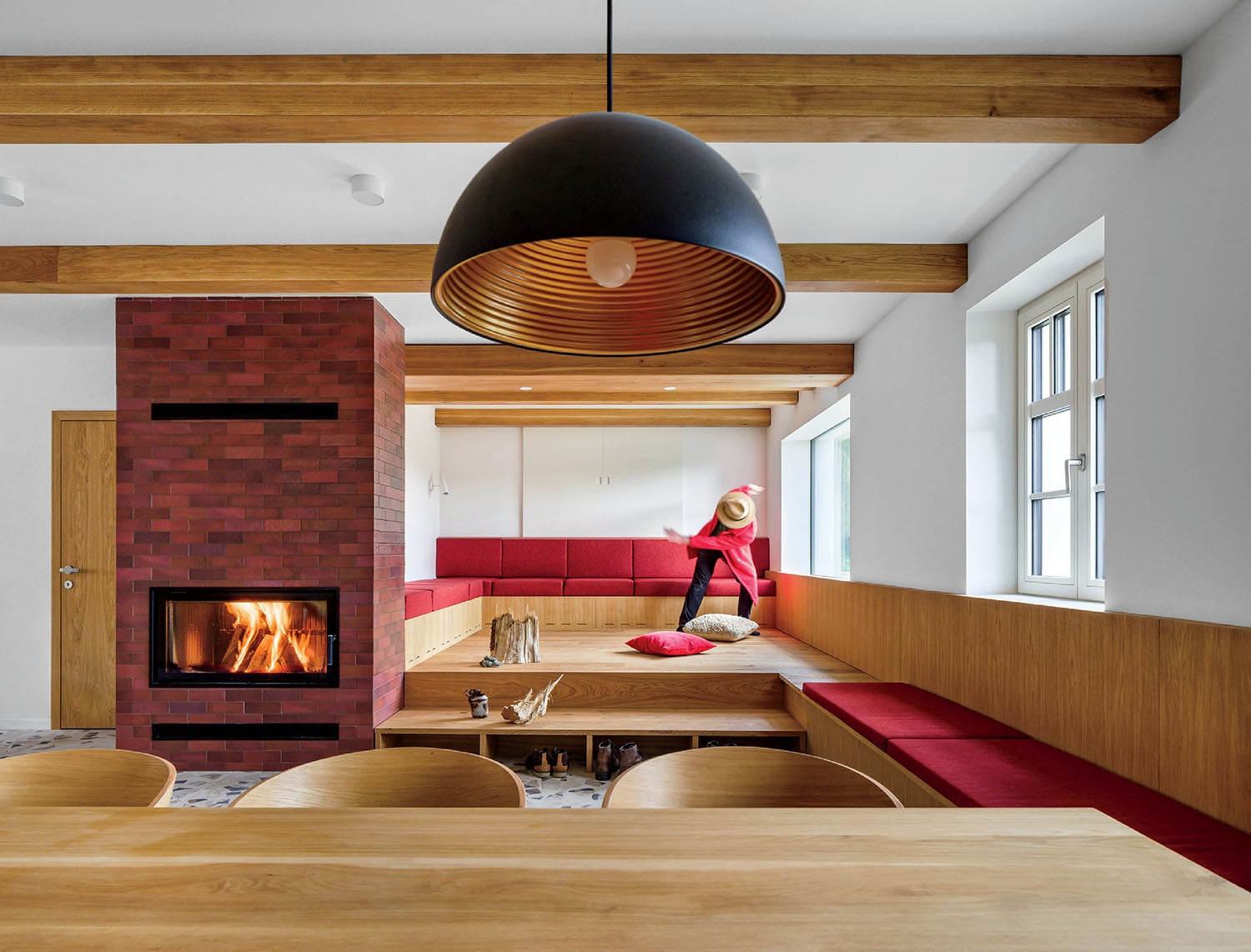
A ceramic-tile hearth and terrazzolike porcelain flooring animate the guesthouse common room. 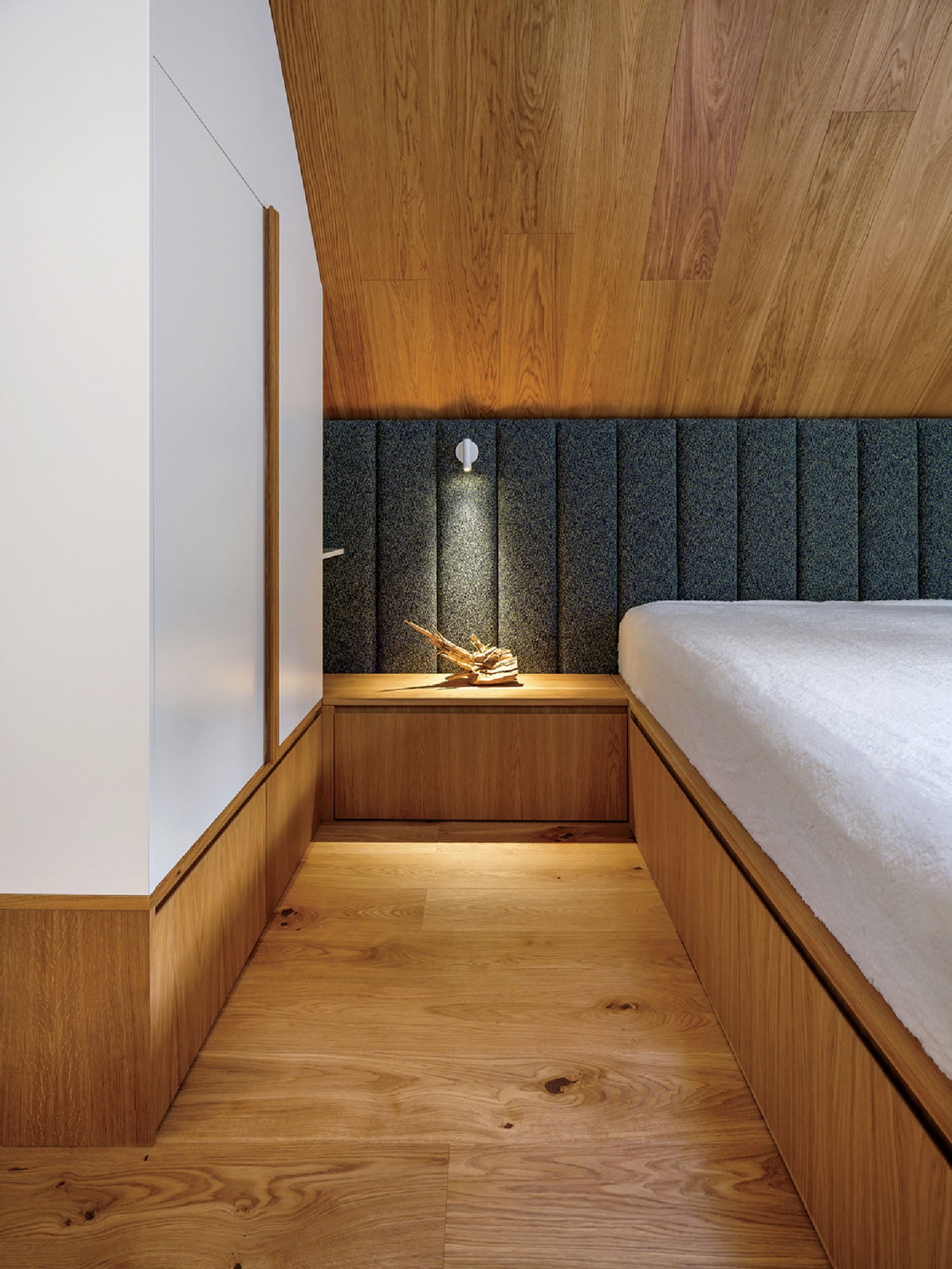
A second-floor bedroom in the caretaker’s cottage (also the owner’s quarters) has a headboard upholstered in polyester-cotton performance bouclé. 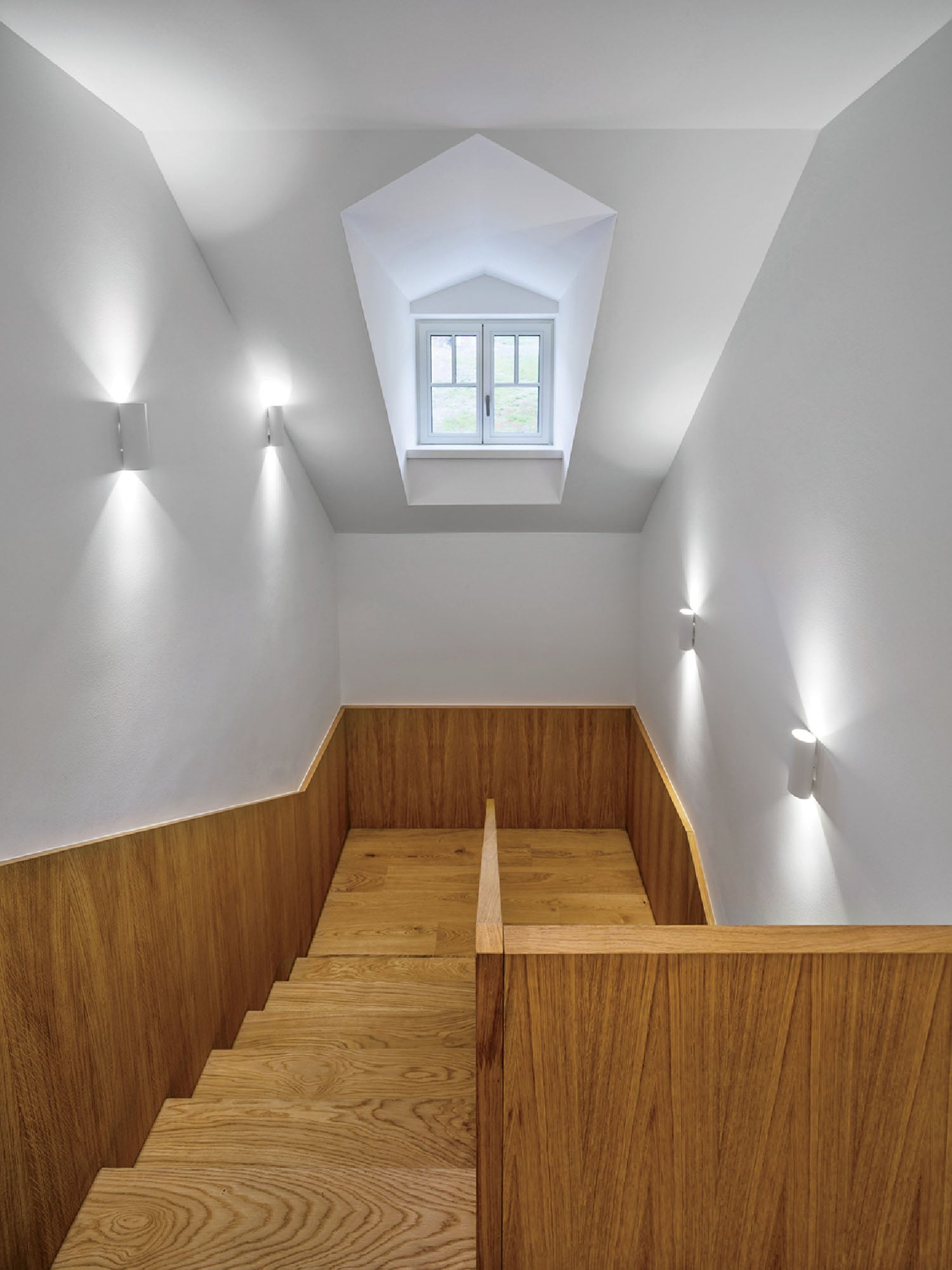
The guesthouse staircase is crafted of oak. 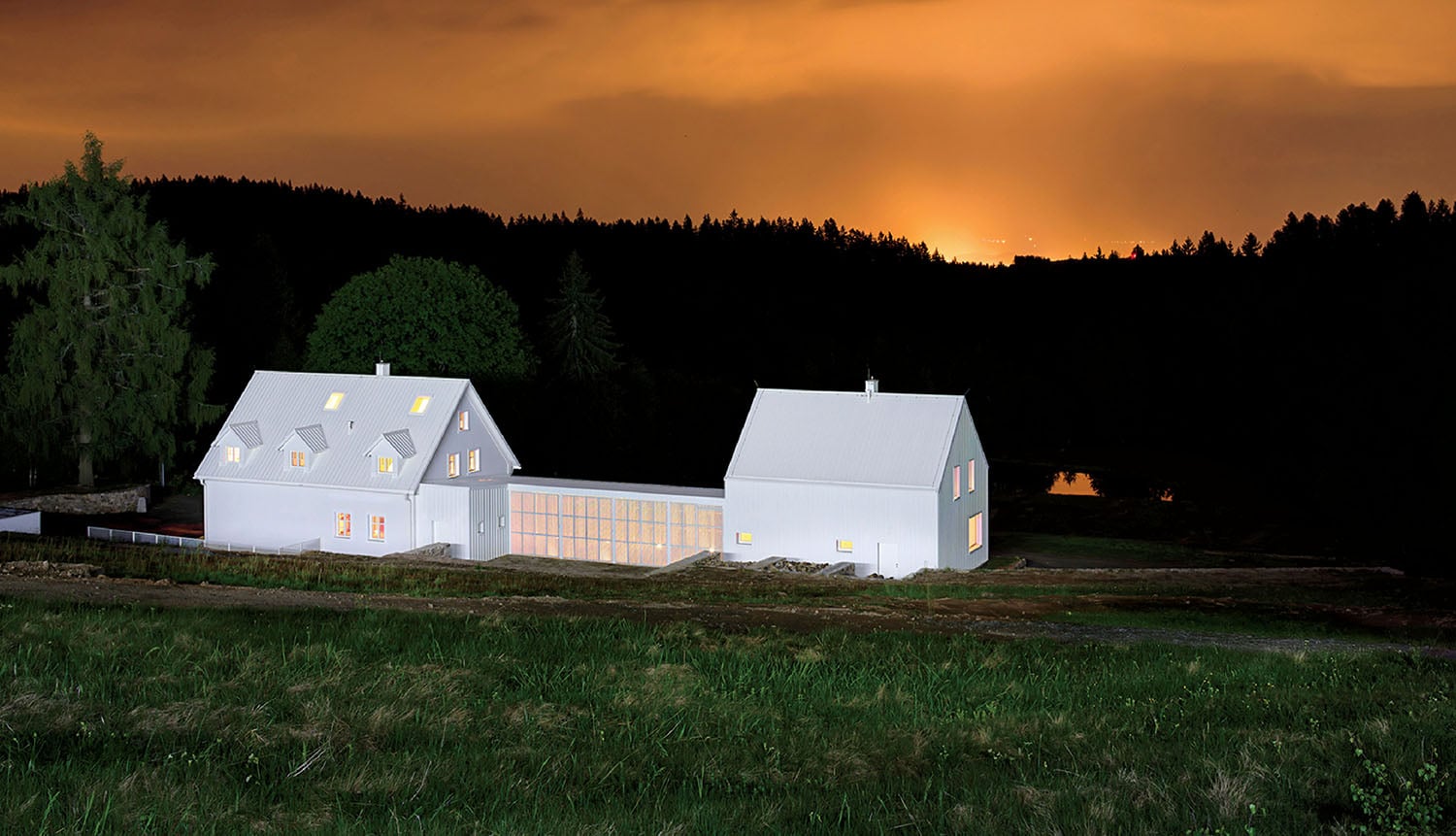
The profile of the addition, at right, was designed to echo that of the original structure, both capped with thin-strip aluminum roofs.
Inside, the palette is more subdued, with warm oak cladding the floors, ceilings, and built-ins. Color appears in kitchen cabinetry, ceramic-tile backsplashes and wood-burning fireplace surrounds, and the performance fabrics used to upholster seating cushions and headboards. The goal was to instate comfort and durability, especially given heavy-duty use by visitors, including young children. “We didn’t want the interior to make anyone feel uneasy, thinking I might break this or scratch that,” Novák adds. “People should enjoy the place and not have the design get in the way of that.” No longer neglected, the bright white mountain house and its bucolic surroundings—now a hybrid between private home and hospitality venue—are once again full of life, as architect and client intended.
FROM FRONT
EQUIPE CERÁMICAS: FIREPLACE TILE (LIVING AREA, COMMON ROOM), BACKSPLASH TILE (KITCHEN). LOXONE: PENDANT FIXTURES (LIVING AREA, KITCHEN). TANA-TEX: UPHOLSTERY FABRIC (COMMON ROOM). FIORANESE: FLOOR TILE. KIRKBY DESIGN: HEADBOARD FABRIC (BEDROOM).
THROUGHOUT
PREFA: FACADE SYSTEM. JANOŠÍK OKNA-DVERˇE: WINDOWS. DAMA NET: JOINERY.
read more
Projects
Inside A Colorful Health Choice Pharmacy In Coney Island
Sergio Mannino Studio reimagines a Coney Island pharmacy as a flexible, design-forward wellness hub.
Projects
A Victorian Worker’s Cottage In New Light
Anna-Carin has carefully uncovered the character of a century-old Victorian Cottage, layering timeless materials, collected pieces and quiet interventions.