
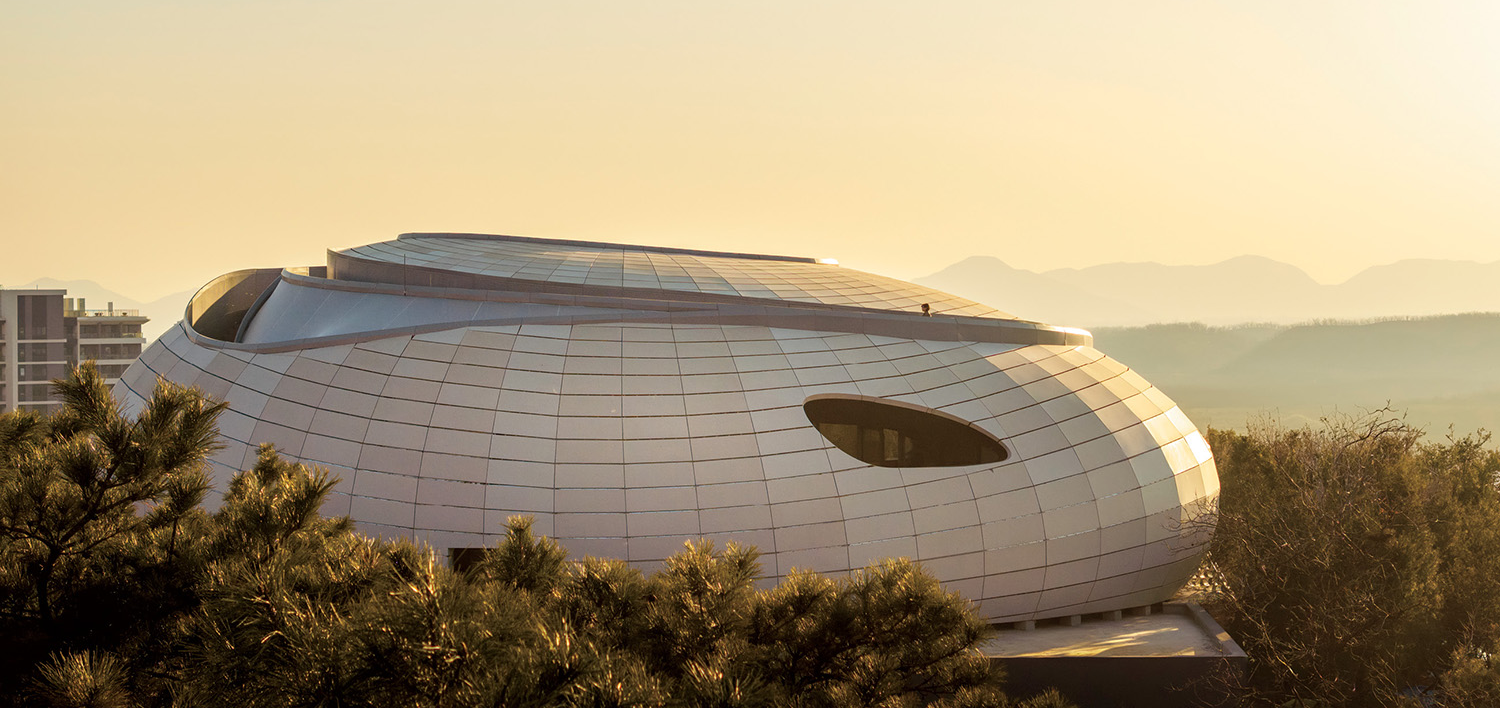
Wutopia Lab Designs A Pebblelike Spa Building In China
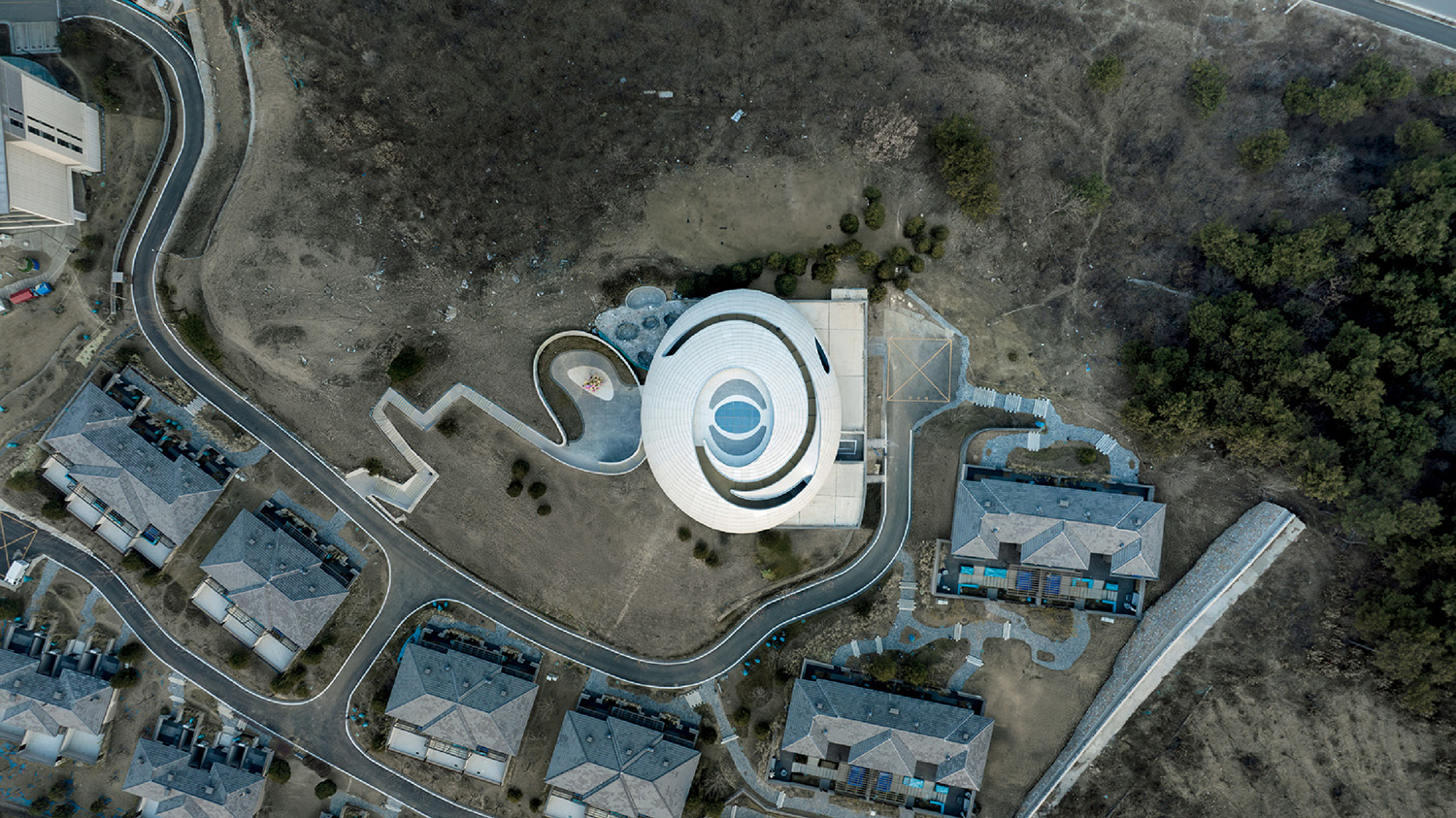
Traditional Chinese landscape concepts have informed many of the country’s most recognizable contemporary buildings: from office towers to opera houses. Tied to philosophical and spiritual ideas of harmonious relationships in nature, known collectively as shan shui, these recurring motifs each symbolize various characteristics. In Zunhua, Hebei province, Shanghai-based architecture firm Wutopia Lab has interpreted the concept of the “flying rock” for the spa building found at the Rock–Cloud Center, a mountainside hotel with views of the Great Wall of China. Wutopia cofounder Ting Yu and his team conceived the site to embody the qualities of transcendence, detachment, and individuality, and appear to defy gravity by cantilevering it from the sloped site.
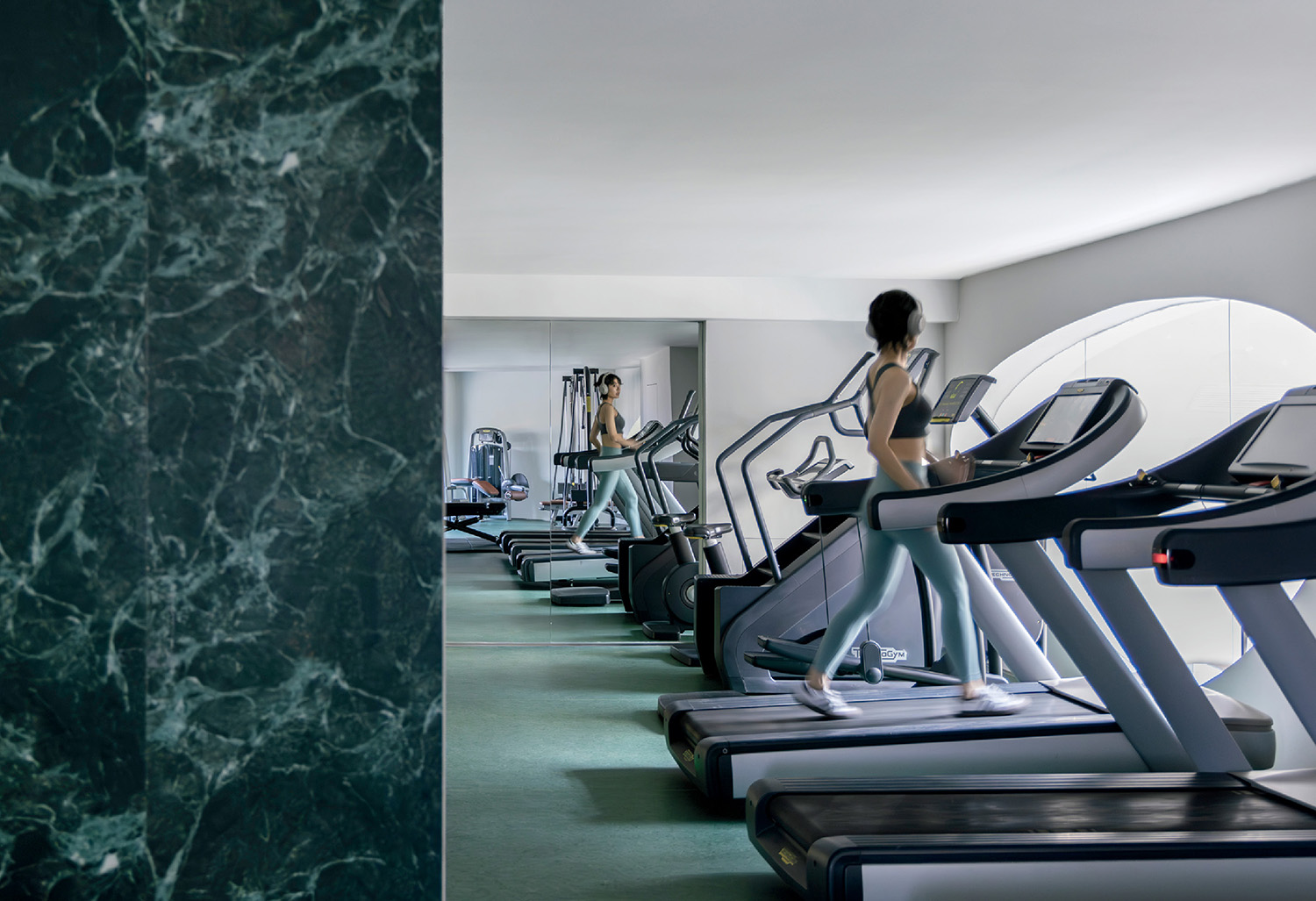
The pebblelike form is positioned 65 feet above the hotel’s entrance and villa accommodations, and contains a swimming pool, gym, and facilities for enjoying the adjacent outdoor hot springs. While the concrete portion of the nearly 14,000-square-foot building that contains mechanical services is partially buried into the hillside, the steel-framed upper section is clad in aluminum panels to create the visually lighter, rounded roof. “We spent a long time adjusting the form of the rock into a relatively regular pebble,” Yu recalls.

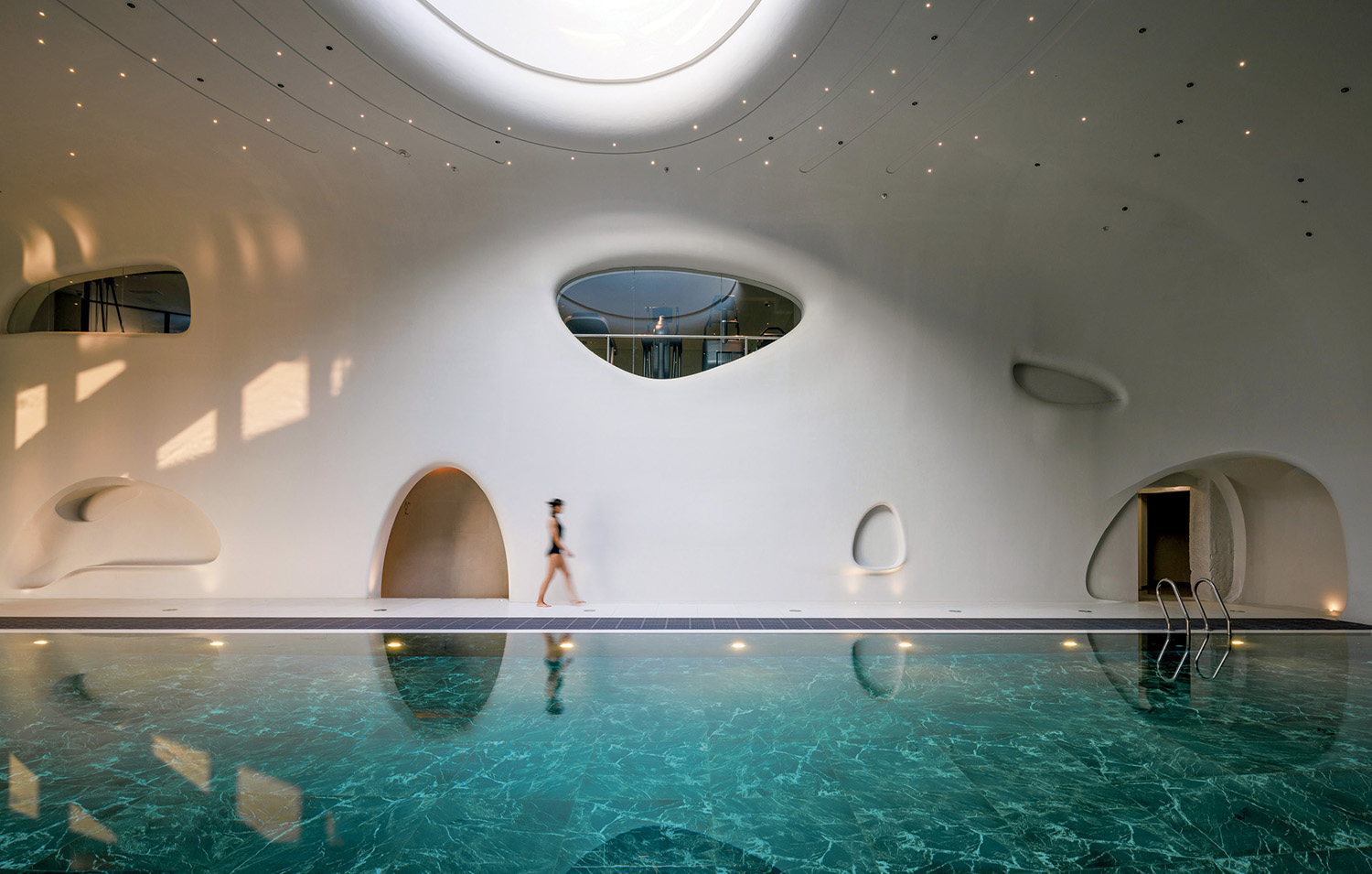
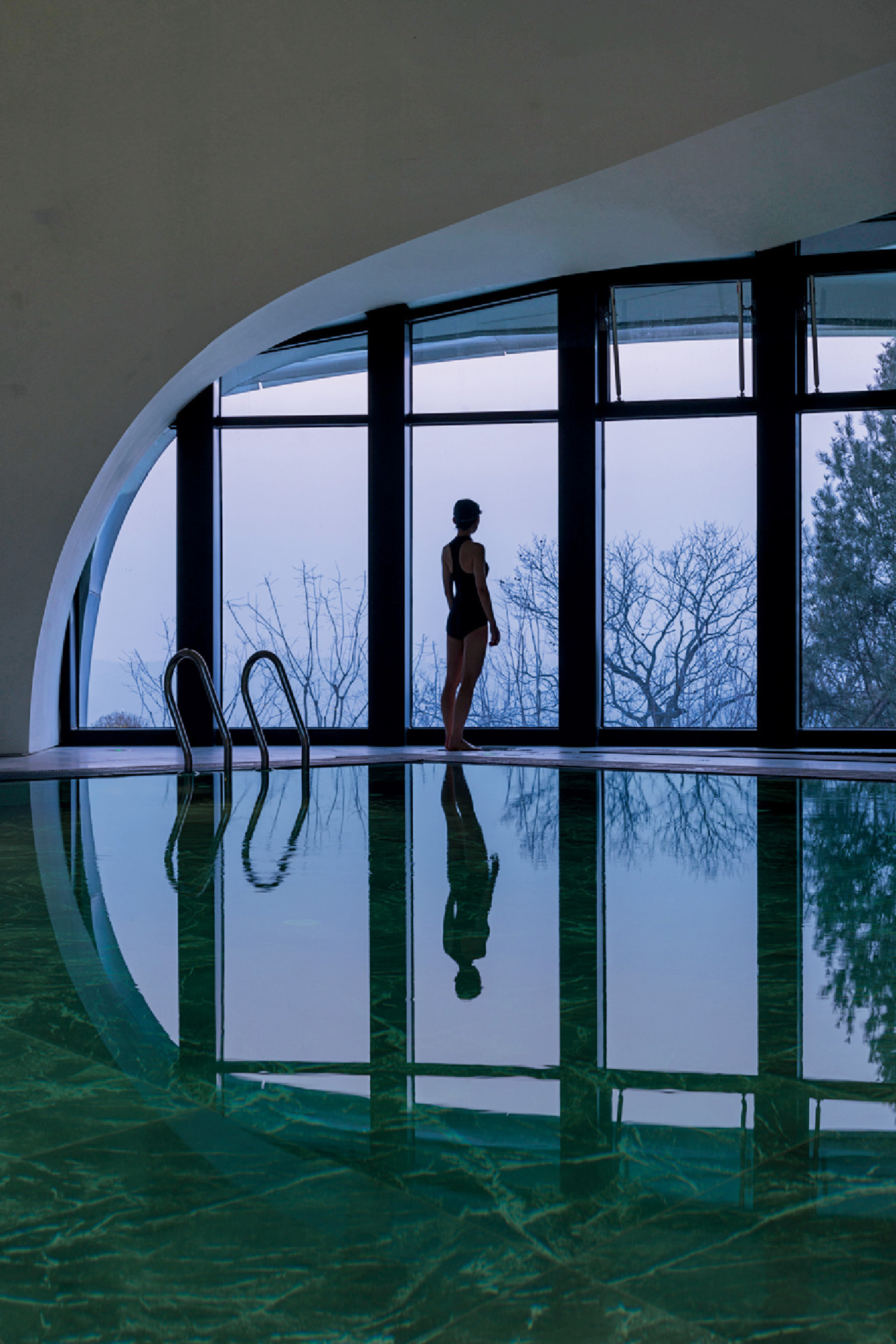
At the structure’s center, a 30-foot ceiling soars over the swimming pool and forms a cavernous hall—in every sense. Smoothed openings and niches in the continuous off-white stucco surfaces evoke rock eroded by the elements, while “light from the skylight spills onto the water’s surface,” Yu adds. “It’s like swimming in a refined cave.” Amorphous north-facing apertures around the glass curtain wall are oriented toward the city below and the ancient wall beyond. Guests can also traverse a spiraling ramp that penetrates and emerges from the boulder-like shell as it leads up to the roof.
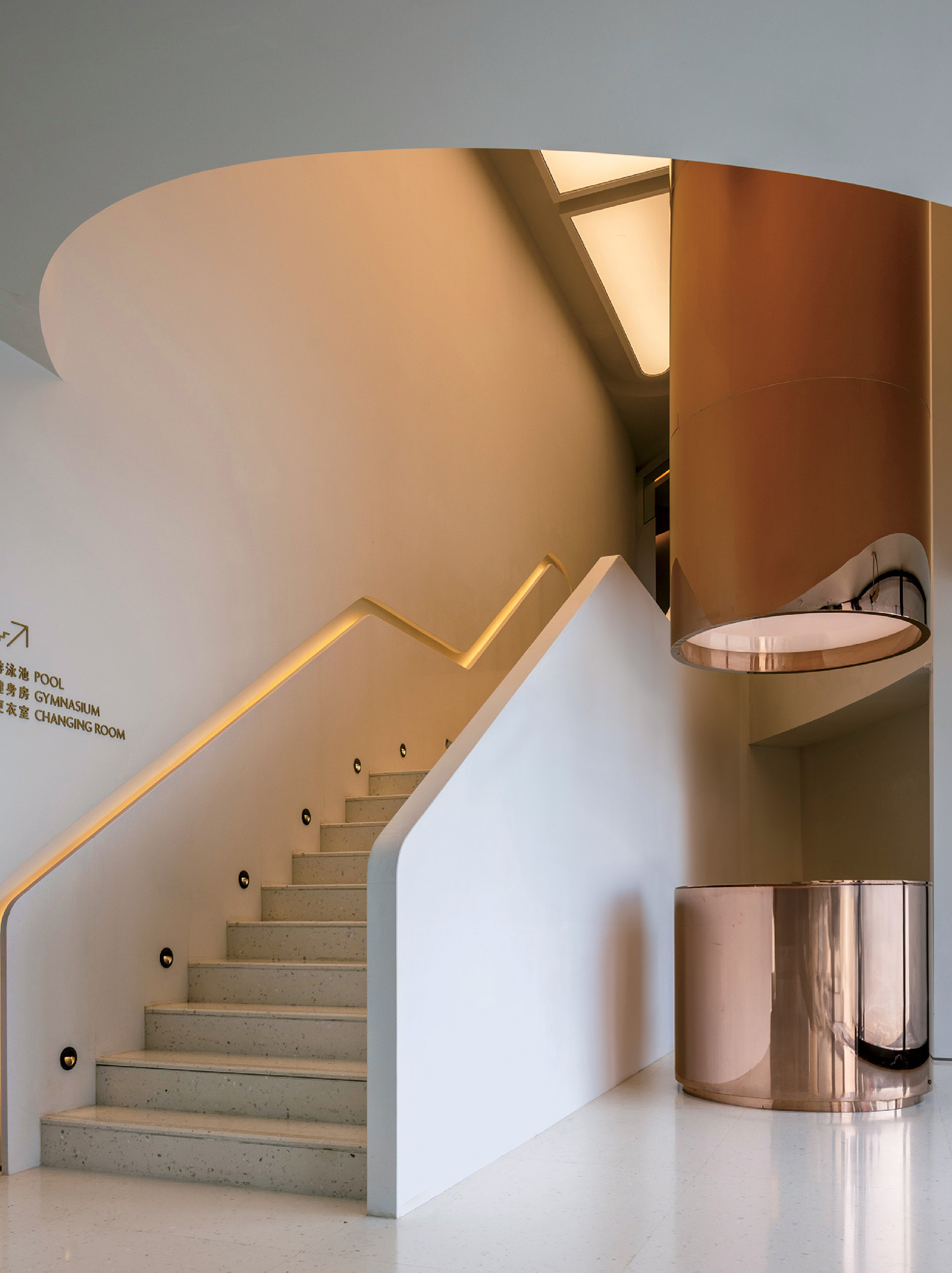
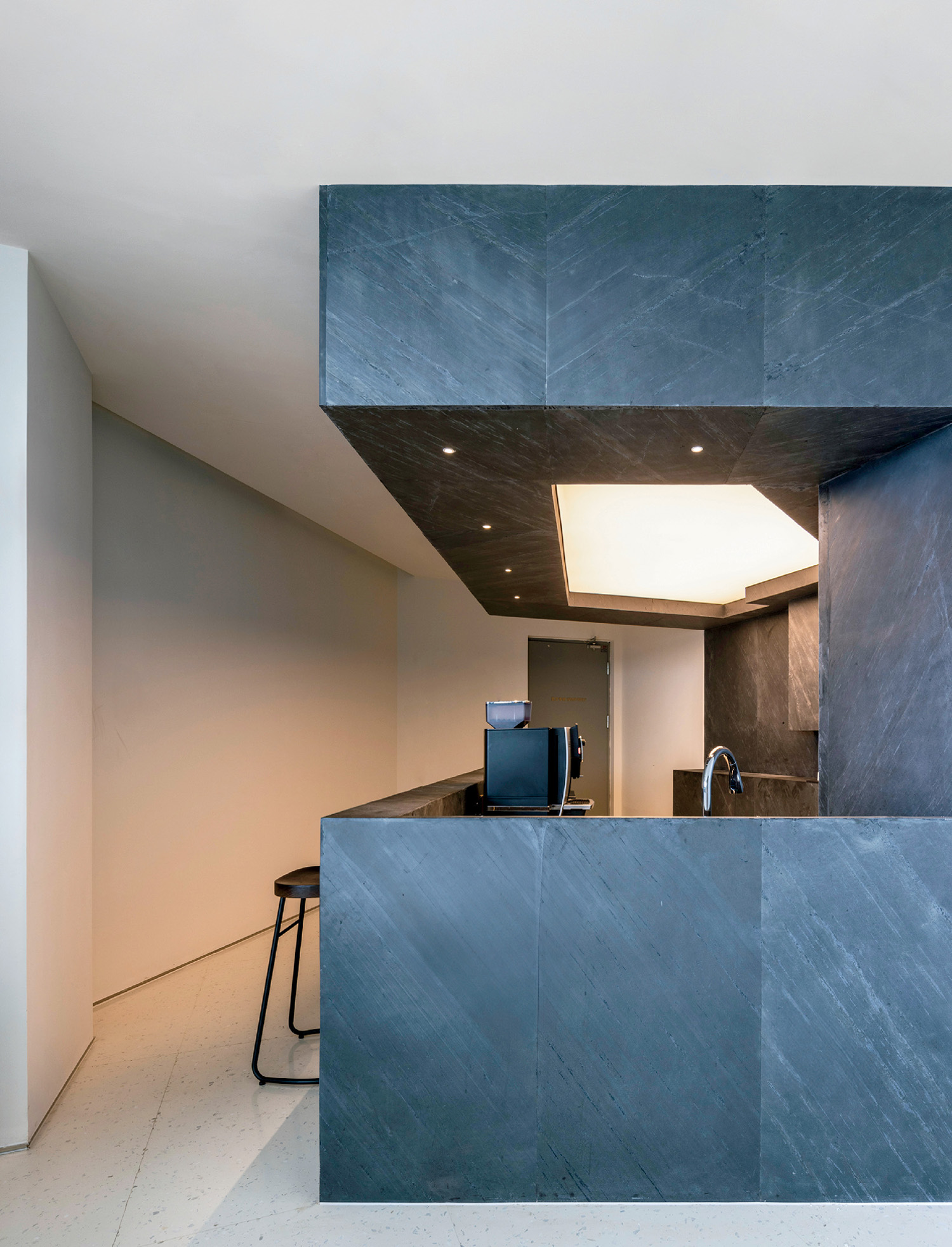
Natural materials such as dark stone veneer in the pantry, copper in the lobby, and green marble in the pool and gym further connect the project to the landscape. All the qualities that the “flying rock” represents manifest in a serene and unique amenity space that sets the hotel apart from those “that often lack character,” Yu observes. “This seeks to break that monotony.” And with it, China gains another contemporary architectural gem that’s rooted in tradition yet a stone’s throw into the future.
A Contemporary Architectural Gem Rooted In Chinese Tradition


PRODUCT SOURCES THROUGHOUT
CHLOE ZHANG; WEI SHIYU: LIGHTING CONSULTANTS. ECOLAND: LANDSCAPE DESIGN. CHINA STATE CONSTRUCTION URBAN DEVELOPMENT CO.: GENERAL CONTRACTOR.
read more
Projects
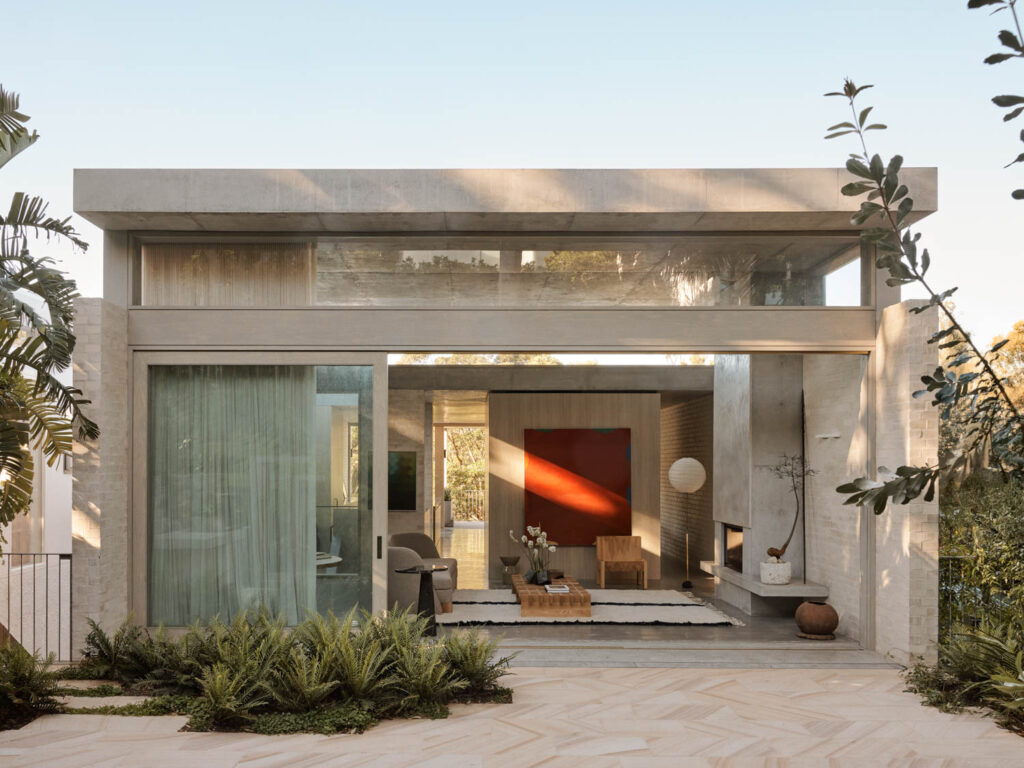
A Coastal Home In Australia Built Into The Canopy
Madeleine Blanchfield Architects distils architecture to its essentials in a Bronte home where raw concrete, brick and timber form a richly tactile backdrop to family life and artistic practice.
Projects
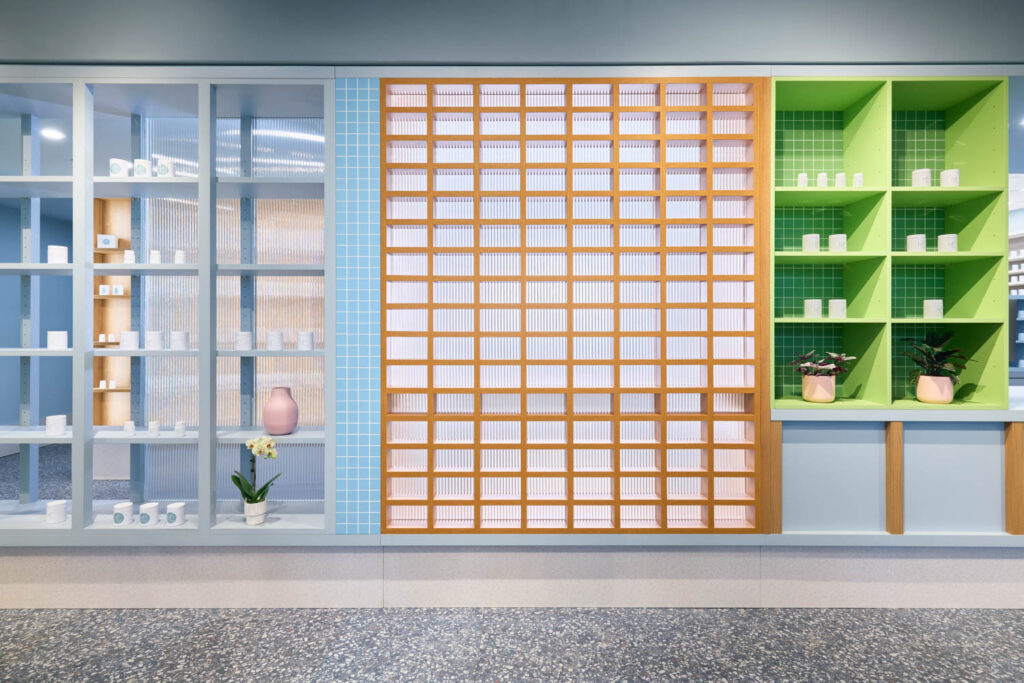
Inside A Colorful Health Choice Pharmacy In Coney Island
Sergio Mannino Studio reimagines a Coney Island pharmacy as a flexible, design-forward wellness hub.