
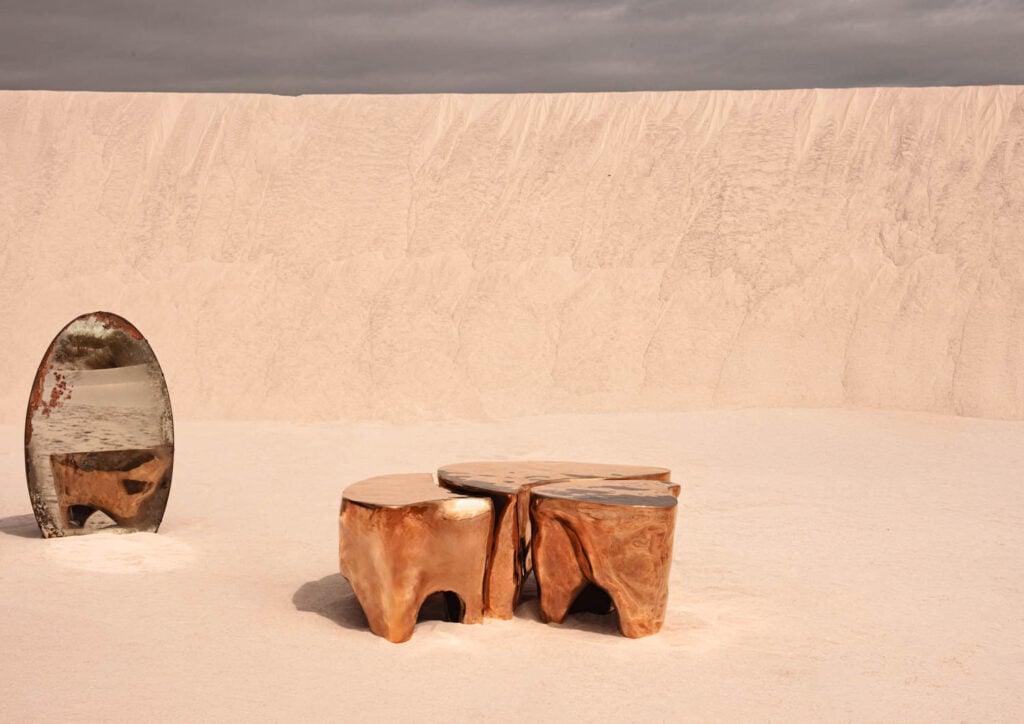
10 Questions With… Artist And Designer Jan Ernst
Blurring the lines between art and design, Jan Ernst creates both sculptural and functional pieces—from ceramics and objects to furniture and lighting fixtures—that are inspired by nature and reflect craftsmanship. Drawing on years of architectural training in Barcelona, an art residency in France, and his life in South Africa, Ernst is driven by the desire to produce something tactile and expressive, emotional and timeless, rooted in the region yet embracing global influences.
This May, his work will be on view at RMB Latitudes Art Fair in Johannesburg, South Africa. Read on to see how Ernst approaches his craft, what to expect at the art fair, and work he plans to focus on during his upcoming residency.
Jan Ernst Shares Insights Into His Creative Process
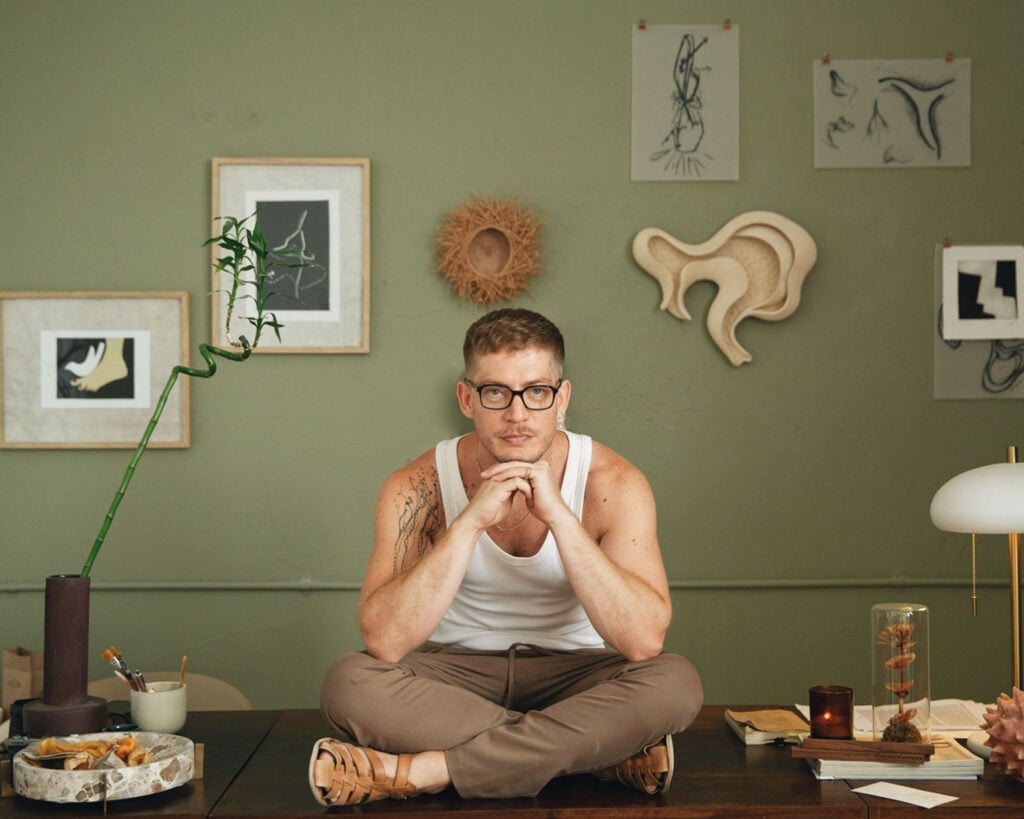
Interior Design: How does your background inform the way you create today?
Jan Ernst: I come from an agricultural family and my early life was shaped by time spent outdoors—immersed in nature, observing the seasons, the cycles of life, and the quiet intelligence of the natural world. That upbringing instilled in me a deep sensitivity to organic form and the rhythms of growth and decay—something that continues to shape my work today.
As a child, my family moved frequently, which gave me a unique appreciation for the diverse landscapes of South Africa, from coastal stretches to arid plains and fertile valleys. That constant exposure to shifting environments shaped my visual language and sparked my fascination with form, texture, and the way objects relate to space. I later studied architecture, completing my master’s degree in Barcelona, where I was deeply influenced by Gaudí’s fluid, nature-inspired approach to structure and ornamentation. My time there expanded my understanding of how art, architecture, and environment can merge into something poetic and sculptural.
After several years working in luxury residential architecture, I began to feel the pull toward something more tactile and expressive. That led me to ceramics and sculpture—mediums that allow me to work more intuitively, and to reconnect with the raw, hands-on creativity I experienced as a child. Today, my practice is an ongoing exploration of that intersection between architecture, nature, and emotional form.
ID: Would you describe yourself as an artist, a designer, or both?
JE: I see myself as both—an artist and a designer—and I’m not interested in drawing a firm line between the two. My work moves fluidly between disciplines: it is concept-driven and sculptural, but also often functional and rooted in material exploration. I think there’s something powerful in that tension—between form and function, intuition and precision.
My artistic process is about expression, storytelling, and translating natural phenomena into tactile, emotional forms. At the same time, my training in architecture and design gives me a deep respect for structure, usability, and how objects exist in space. The work often emerges from that conversation between the poetic and the practical.
Ultimately, I think of myself as a form-maker, using whatever language—be it art, design, or architecture—to explore ideas and evoke feeling. Whether a piece is collectible design, a sculptural object, or a functional light, it begins with the same intention: to create something meaningful and enduring.
ID: What is your creative process?
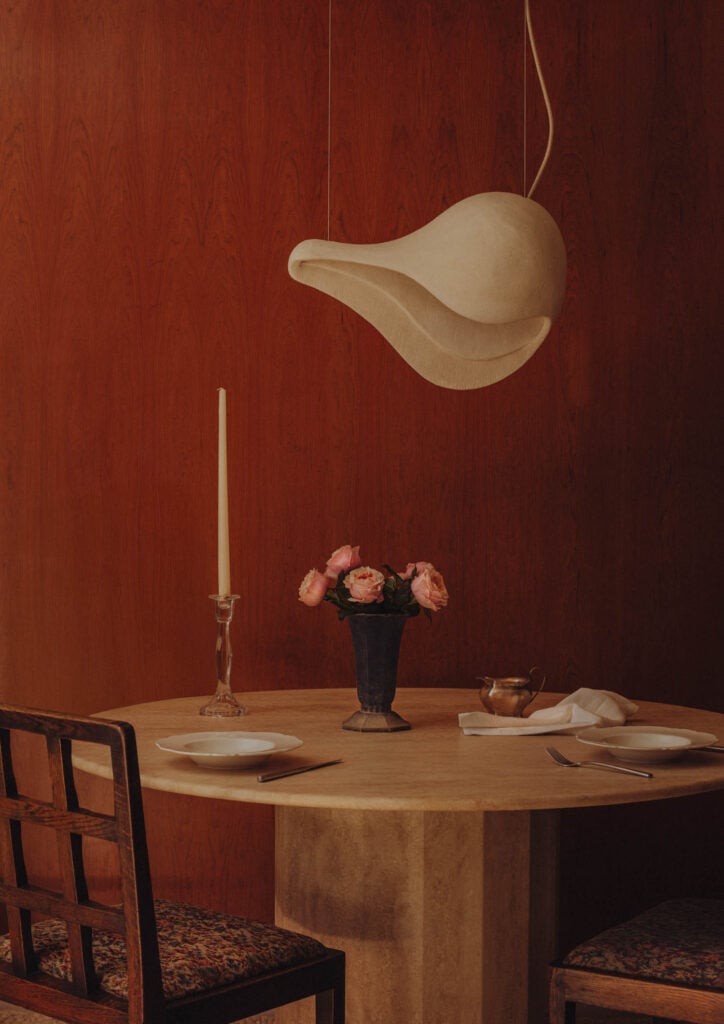
JE: My process always begins with observation and intuition—a feeling, a texture, or a form that captures my attention. Often it’s something from the natural world: a seed pod, a coastline, a weathered rock. I start by sketching loosely, sometimes even sculpting small maquettes in clay or plaster to explore an idea in three dimensions. I see the process as a kind of alchemy—a slow transformation of raw material into something with emotional and spatial presence. It’s never rushed. Each piece takes time, evolves through layers, and is deeply rooted in both craftsmanship and curiosity.
At its heart, my process is a dialogue between the conceptual and the tactile—between drawing, sculpting, and making. I value that in-between space where intuition meets intention, and something entirely new begins to take shape.
ID: Do you create unique pieces or series?
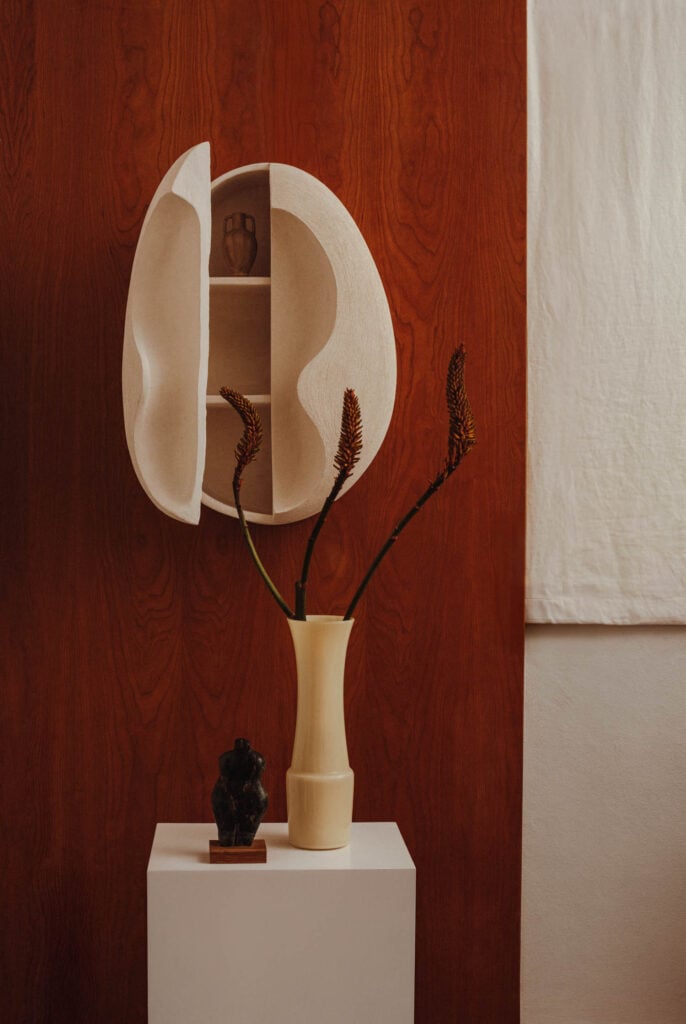
JE: Initially, my studio focused on creating limited edition works, and we continue to offer a selection of catalogue items. These pieces remain a core part of the studio’s offering, but as the years have passed, our focus has shifted more towards commissioned works. Today, we primarily create bespoke pieces, tailored to the specific needs and visions of our clients to fit perfectly into their spaces.
ID: What type of color and material palette characterizes your work?
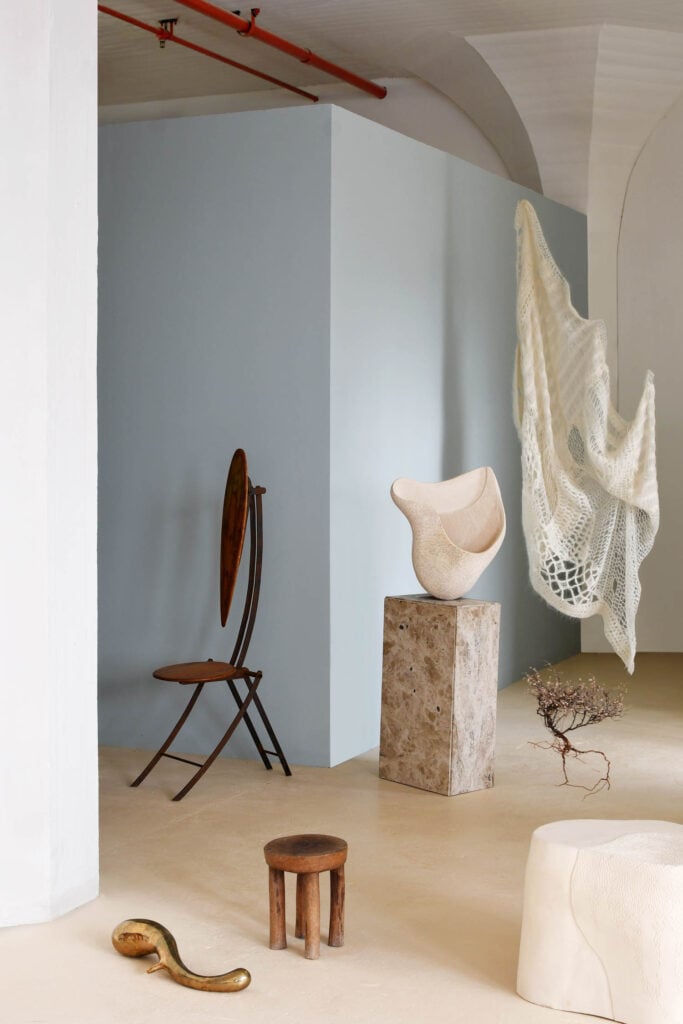
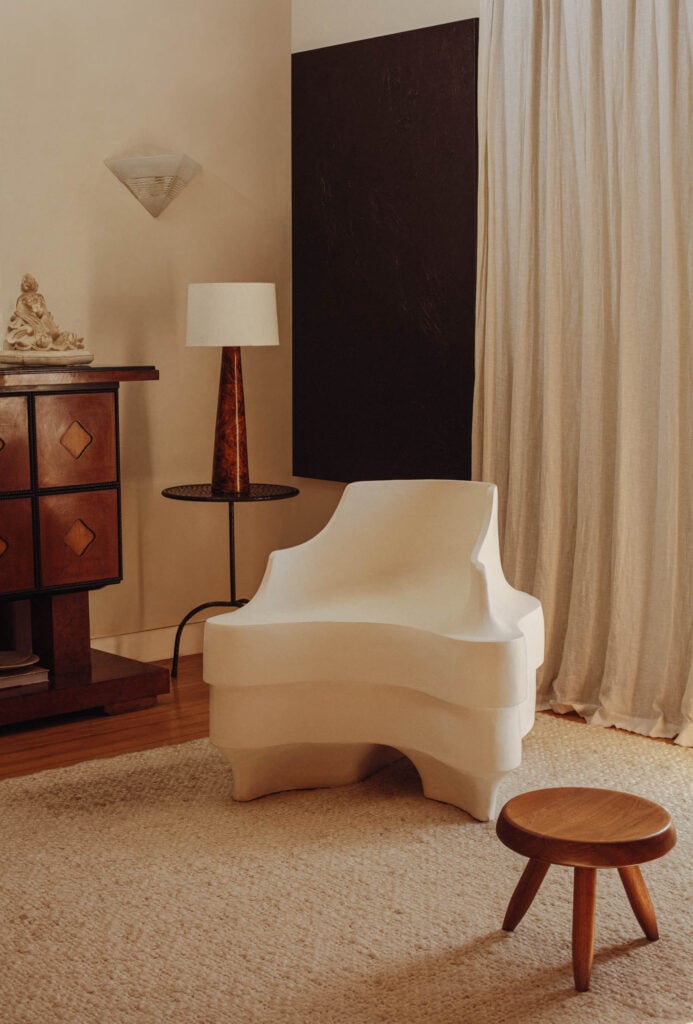
JE: The colors I use in my work are intentionally earthy, muted, and natural, often inspired by the palettes found in nature. I prefer neutral tones like soft whites, deep charcoals, earthy terracottas, and muted metallics, as they allow the materials to take center stage. A significant part of my work also involves the use of natural pigments and oxides, such as red iron oxide and black manganese oxide.
Ceramics has always been at the heart of my practice—its earthiness, tactility, and ability to capture both gesture and time gives it a deeply expressive quality that anchors the studio’s language. But over time, our material exploration has expanded in pursuit of new forms, scales, and atmospheres. For example, in 2023, we began incorporating bronze and plaster into our work. Then plaster was introduced as a response to the scale limitations of clay. We’ve also explored woven Imisi grass, a material deeply rooted in the Cape Town context, where it grows naturally. Looking ahead, we’re preparing to introduce glass, particularly in our lighting designs. Each material is chosen for the story it tells, the sensation it evokes, and its ability to shape a dialogue between space, object, and viewer.
ID: Can you tell us about your participation in the RMB Latitudes Art Fair in Johannesburg from May 22-24, 2026?
JE: RMB Latitudes is an important moment for my studio because it brings the conversation back to the continent—to context, to origin, to material memory. While my work is shown internationally, Johannesburg offers a different kind of resonance. The audience understands landscape, materiality, and history in a deeply embodied way, which makes it a meaningful place to present new work.
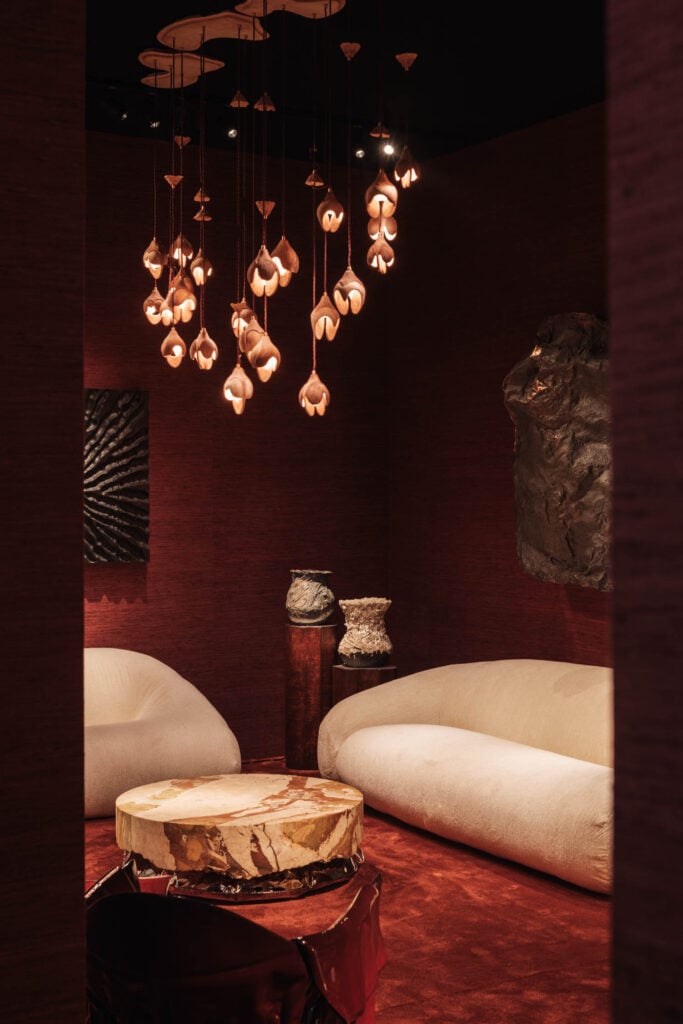
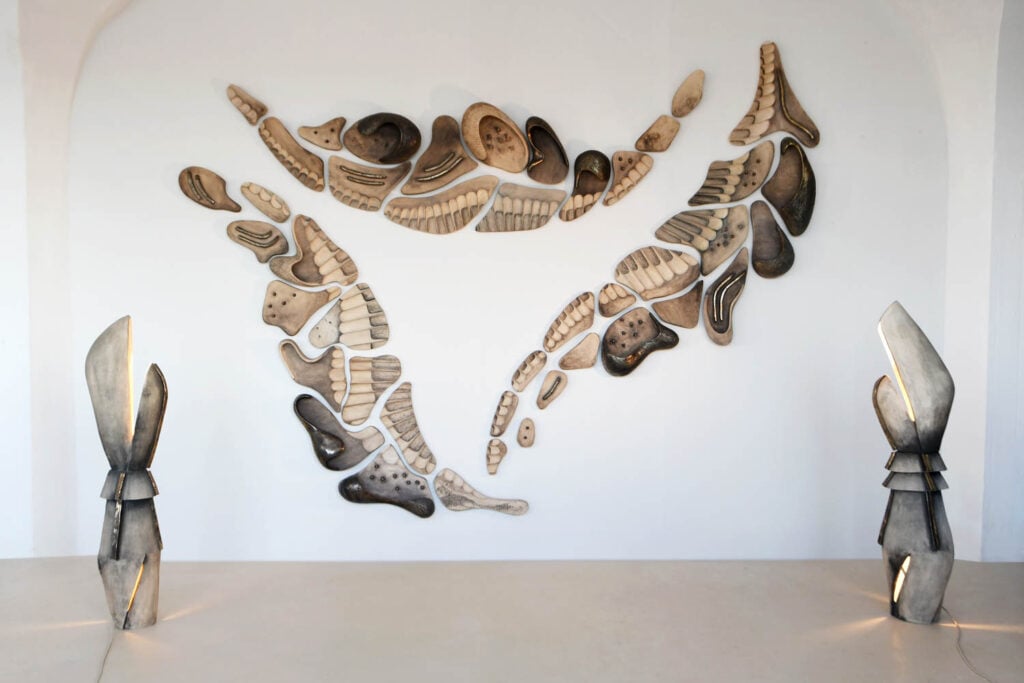
For this edition, we will be showing a selection of recent sculptural lighting pieces that continues my exploration of nature as both structure and metaphor. The presentation focuses on organic, geological and botanical forms with works that feel as though they have grown rather than been manufactured. Ceramics main focus but using light-responsive surfaces with the inclusion of fused glass.
The pieces explore the tension between weight and lightness: dense, earth-like textures paired with illumination that feels atmospheric and diffused, almost like light moving through mist or stone. As always, the works are less about decoration and more about creating emotional environments—objects that alter how a space feels, not just how it looks.
We will also be presenting new evolutions of my lighting language, where sculpture and function fully merge. These works continue my interest in how light reveals texture, shadow, and depth, completing the piece in a way material alone cannot. At Latitudes, the presentation is conceived almost as a landscape rather than a booth: a quiet, immersive environment where the pieces relate to one another like elements in nature, rhythmic, imperfect, and alive.
ID: What about your upcoming Residency ‘Learn from Those Before Us’ by Nancy Truen in the Karoo region of South Africa?
JE: The “Learn from Those Before Us” residency and retreat will take place in the second half 2026, aligning with the winter season in South Africa and summer in the northern hemisphere. This initiative is an important extension of my practice beyond objects; focusing on process, landscape, and sensory awareness as foundations for creativity.
“Learn from Those Before Us” is rooted in my relationship with the Karoo—a landscape that has deeply shaped how I think about material, time, and memory. The Karoo carries a quiet intensity. It is vast, exposed, and ancient, and you feel very small within it. That confrontation with scale, silence, and geological time strips things back to essence. My ongoing project Cavus grew from this way of thinking, an interest in voids, erosion, and interior spaces slowly shaped by natural forces.
The residency takes place at Buffelsdrift Farm, home to Nancy and Greg Truen, who are not only important collectors but have become close friends. They are deeply committed to land, culture, and meaningful creative exchange. I visited the farm last year and felt an immediate resonance. The landscape registered on a sensory level—the quality of light, the dry air, the textures of stone and soil. It felt like a place that should be shared, not just passed through.
ID: How does your work epitomizes contemporary African design?
JE: I believe my work epitomizes contemporary African design because it is deeply rooted in both heritage and innovation. Growing up in South Africa, I have always had a strong connection to the land and the diverse influences that shape the continent. My work is a reflection of the rich traditions of craftsmanship and storytelling that Africa has long been known for, but it also embraces the global contemporary design landscape. In my creations, I often combine natural materials like clay, bronze, and plaster—each of which carries its own cultural significance—while experimenting with modern techniques and innovative forms.
The contrast between earthy, organic forms and luxurious, reflective surfaces (like bronze) captures a unique duality: the humble and the opulent, the ancient and the modern. This balance is central to African design, which has always evolved while maintaining a strong connection to its origins.
ID: How has African design and art evolved over the past few years?
JE: The African art and design scene has become increasingly diverse, with artists and designers drawing inspiration from both their cultural heritage and global trends. The movement has also seen a shift toward more inclusive, collaborative, and experimental practices that challenge conventions.
One key aspect of this evolution is the growing recognition and celebration of African craftsmanship on the global stage. Traditional techniques—whether in textiles, ceramics, or sculpture—are being reinterpreted in contemporary contexts, often with a focus on sustainability and innovation. Designers are infusing their works with modern aesthetics while maintaining the integrity and symbolism of their cultural roots. In addition, African design has become more accessible and visible due to the rise of platforms and institutions that promote the work of African designers.
ID: Can you share with us some of your next projects for the rest of the year and 2027?
JE: The second half of 2026 and 2027 marks an important period of expansion in my practice, both geographically and across mediums. In April, I will undertake a solo research journey through Namibia, traveling over 1,240 miles to study desert landscapes, dunes, erosion patterns, and the relationship between scale and emptiness. This research will inform a new collection to be released in early 2027. The desert represents an extreme environment where form is shaped almost entirely by natural forces such as wind, time, and absence which resonates strongly with my ongoing interest in geological processes and spatial voids.
At the same time, I am expanding into textiles, collaborating with a local rug company to develop a capsule collection launching in October (South African spring). This project translates my sculptural language into surface and tactility, exploring how texture, pattern, and material depth can exist in a softer, more architectural plane.
Another key project will be a presentation planned during Design Miami (at the end of the year) in collaboration with DIDA—a Miami-based interior architecture studio I have worked with on several projects. This collaboration allows the work to be placed within a fully conceived spatial context, where collectible design and interior architecture inform one another. It’s an opportunity to explore how my sculptural language operates not only as individual pieces, but as part of an immersive environment.
Together, these projects reflect a shift from isolated objects toward environments, materials research, and cross-disciplinary work, continuing to root the practice in landscape while broadening how and where the work is experienced.
Editor’s note: read our earlier interview with Jan Ernst from 2023.
read more
DesignWire
Designers And Manufacturers On The Move: September 2026 Edition
Interior Design‘s latest On the Move includes must-know industry promotions and hires, like Perkins&Will’s strategic move to expand its design capabilities.
DesignWire
10 Questions With… Artist and Designer Conie Vallese
From sculpture and ceramics to glass, textiles, and furniture, Conie Vallese embraces a multidisciplinary practice shaped by curiosity and creativity.