
10 Questions With… Artist And Toolmaker Conrad Hicks
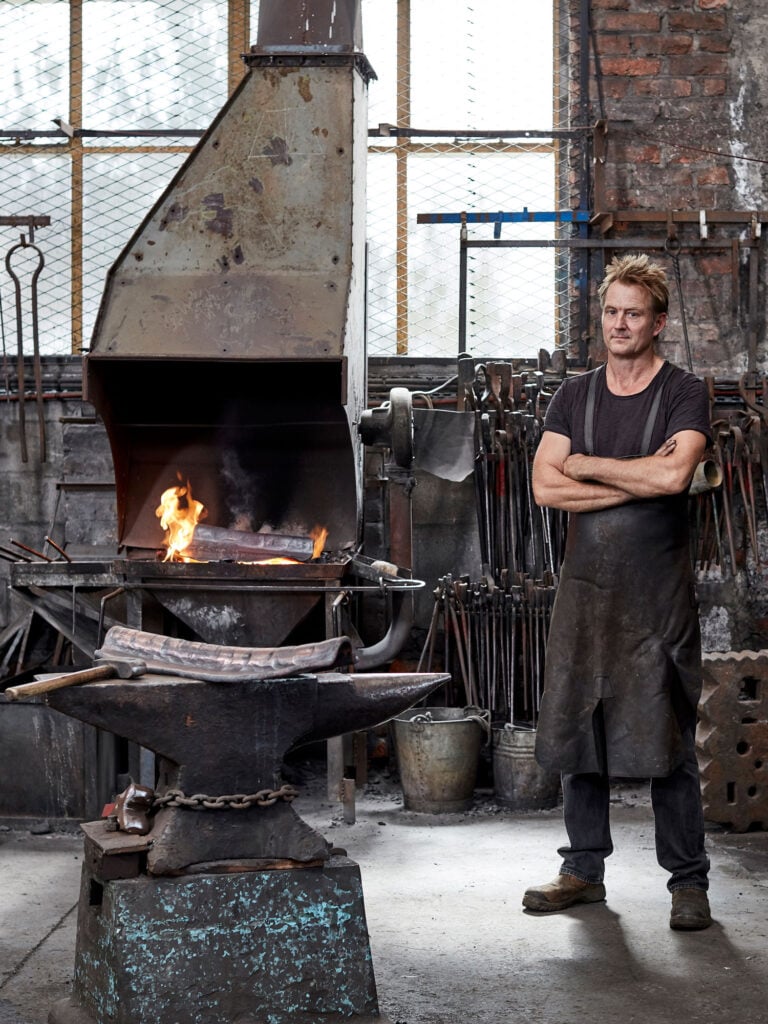
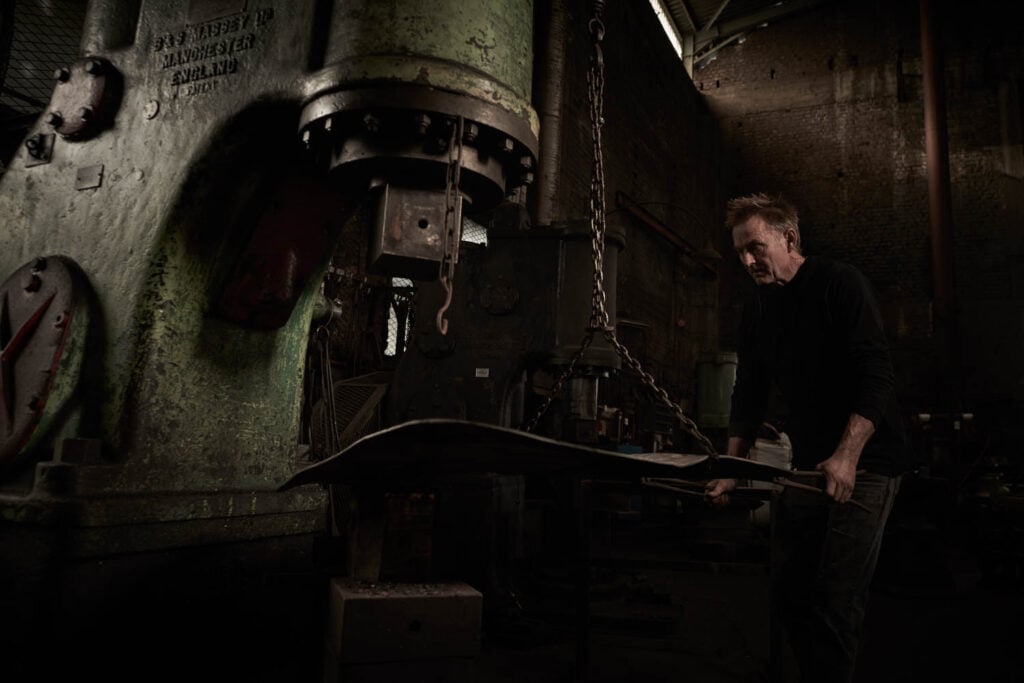
Straight from the warm winds of South Africa, artist and toolmaker Conrad Hicks translates steel, copper, bronze, and iron into beautiful art pieces. The hot soil of his birthplace is constantly present in his work through the materials and techniques he uses, processes that require high temperatures, strength, and rhythm. The magic of his craft happens at the Bijou, a creative hub where his personal studio is located, surrounded by tools, materials, and machines, Hicks surrenders to this intuitive relationship, allowing the medium to guide him as much as he guides it, creating forms that exist somewhere between function, sculpture, and storytelling.
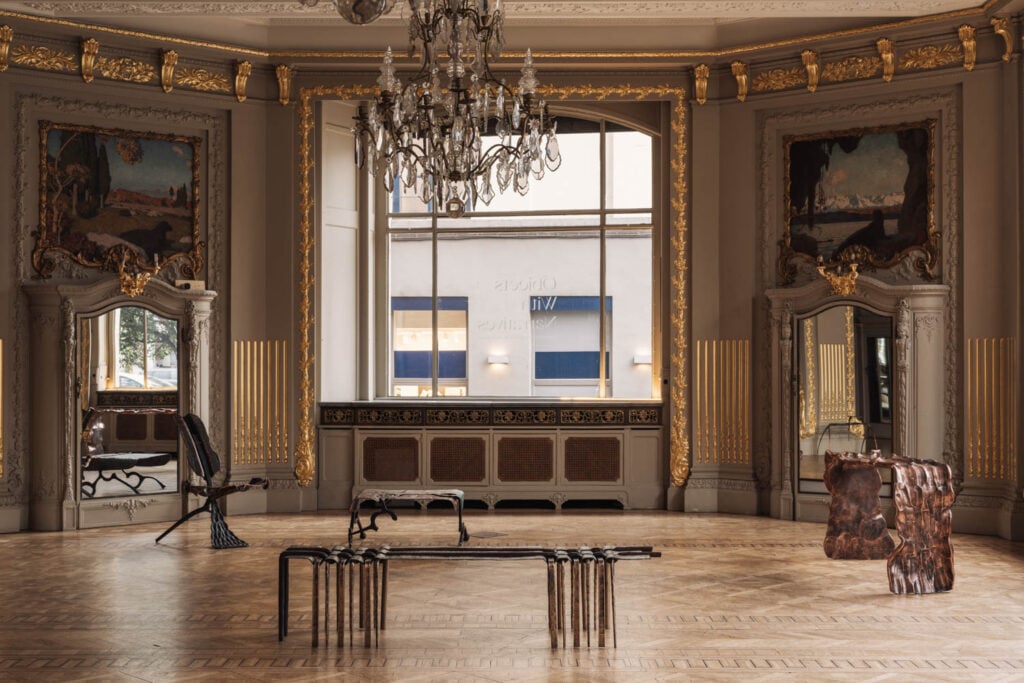
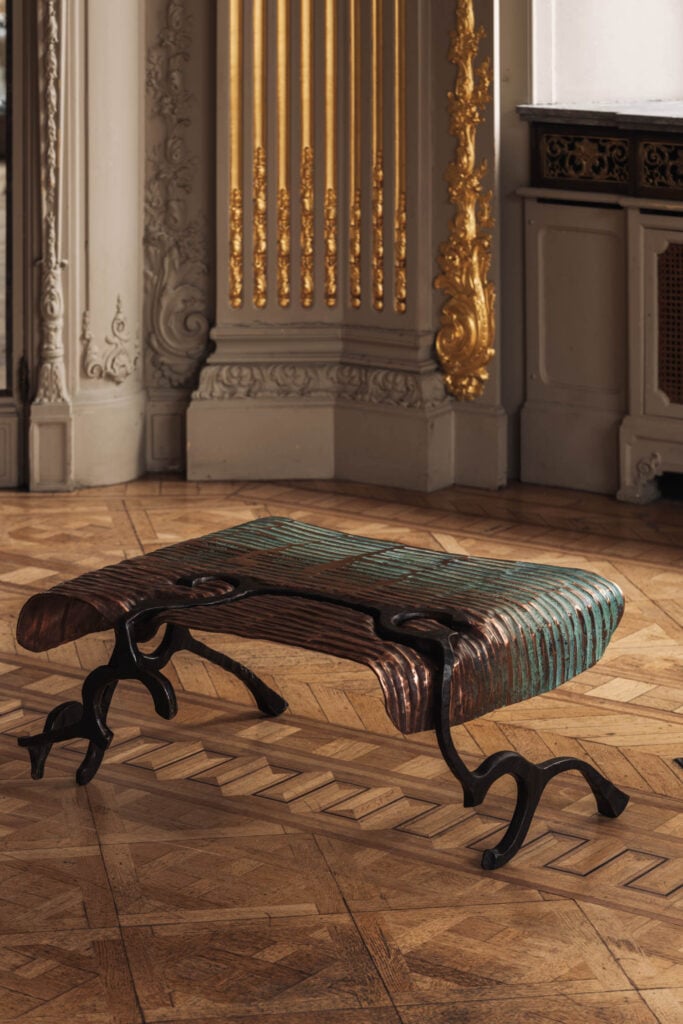
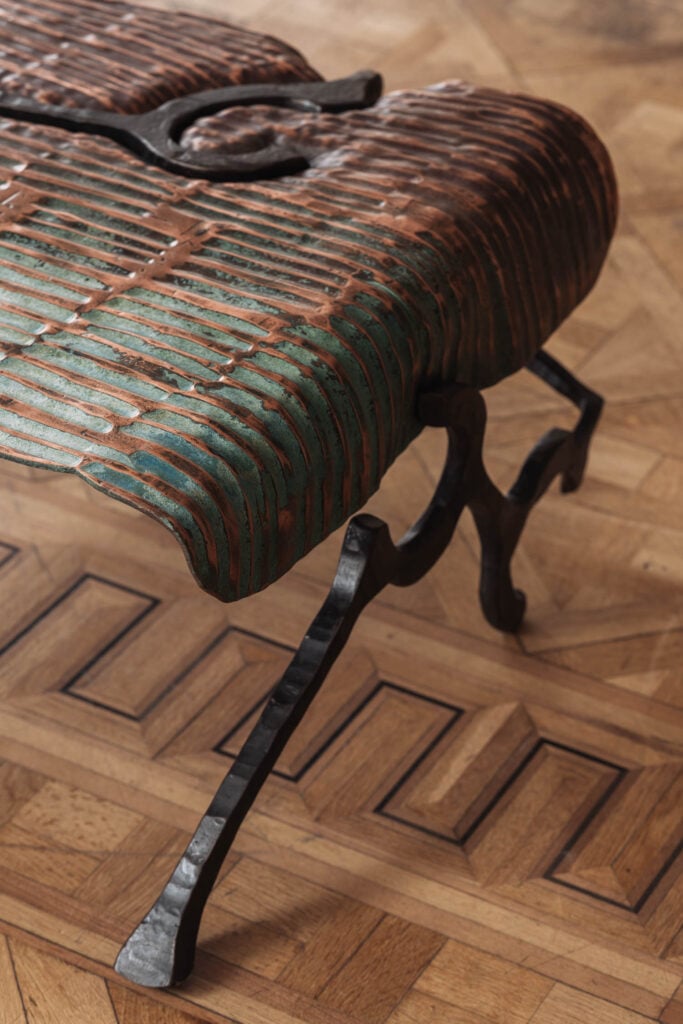
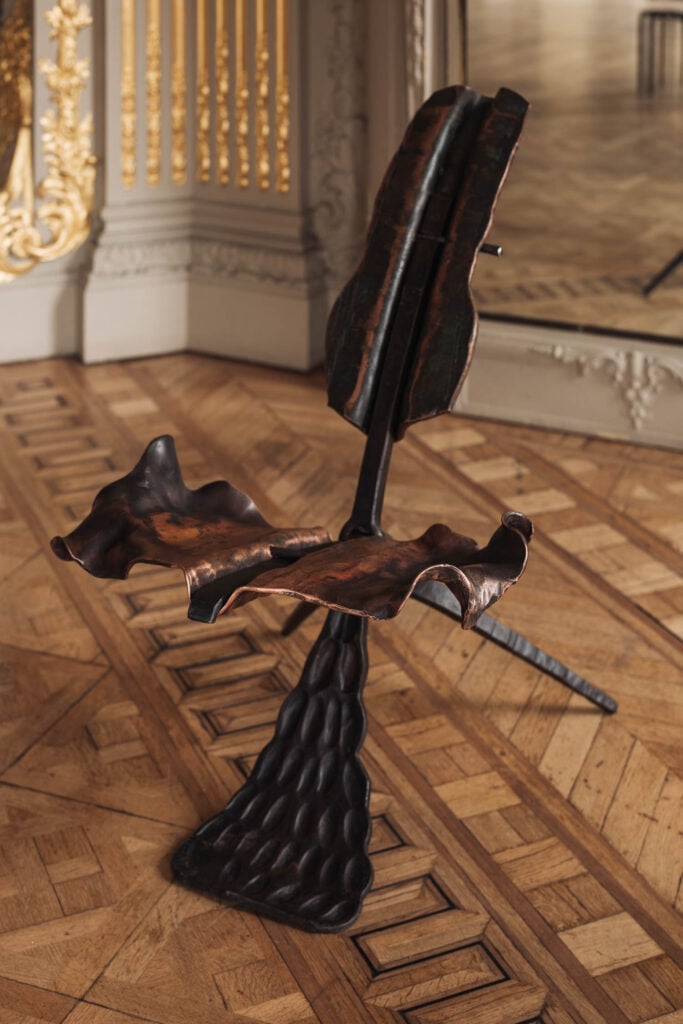
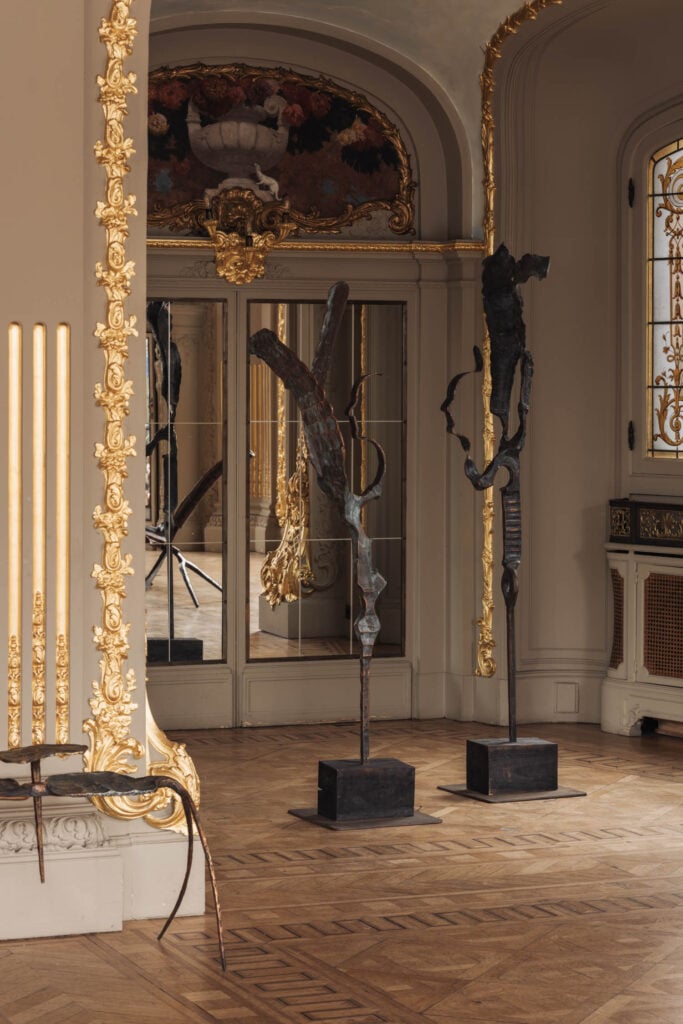
From beginning his studies at Cape Technikon in Cape Town to working in furniture restoration, what we see in his most recent work is the culmination of 30 years of experience as a blacksmith. In his most recent solo exhibition, “Implement IV,” at Objects With Narratives—a gallery located in the heart of Brussels—Hicks navigates the intersections of masculinity, associated with iron, and femininity, associated with copper, resulting in a blend of roles, expectations, and tensions that are both material and symbolic. The works inhabit a space between strength and delicacy, utility and sculpture, where each form seems to negotiate its own identity.
Here, Hicks speaks with Interior Design, explaining how his work offers a dialogue between function and beauty.
Conrad Hicks Talk Metalwork And More
Interior Design: What made you pursue blacksmithing, and what made you stay?
Conrad Hicks: I studied sculpture in art school, and my first contact with blacksmithing came through restoration work, doing ironwork while restoring furniture and buildings. It wasn’t a conscious decision to become a blacksmith; I simply enjoyed the work.
The turning point was when I bought an anvil and it became almost a presence in my life. Blacksmithing satisfies all parts of my being: it’s physical, intuitive, creative, and precise, almost like a martial art or playing a musical instrument. It felt inherently right like a calling, what in Dutch is called a “roep,” a purpose, once I realized this, I knew I could devote myself to it for life. I didn’t seriously consider doing anything else. Blacksmithing became the way I channel creativity, discipline, and expression.
ID: Looking back at your evolution from Cape Technikon to furniture restoration, tell me about some early lessons that shape your work today.
CH: Early on, I learned that mastery comes from patience and dedication, each skill has layers that become part of you, like your “handwriting” as an artist. Tools are an extension of your hand; making your own tools becomes part of the discipline, understanding materials deeply, letting them guide your hand, and shaping them to express something personal were lessons that carried into everything I do now.
There’s also a philosophical layer: studying stone tools and ancient techniques taught me that tools are a form of personal and cultural expression. That idea remains central to my approach today, teaching yourself to make all your own tools is the true qualification.
ID: When did you make the big step of creating your studio at the Bijou? Tell me the story behind it.
CH: After years of working and saving, I found this burned-out old cinema in Cape Town, which became the Bijou. It was unconventional, with dramatic ceilings, staircases, and the raw character of its history preserved. I invested in it not just as a studio, but as a space that could host other artists and evolve into a creative hub. The Bijou embodies a blend of practicality and romance, a space that challenges, inspires, and allows the work to breathe. Gradually, other artists started renting space, and it became a living ecosystem.
ID: You’ve completed commissioned work ranging from sculptural pieces (2010 FIFA World Cup Hero Walk sculptures) to architectural projects (Kirstenbosch Botanical Gardens gates and Tokara Winery). Do you think about your pieces differently when they are meant to inhabit a space rather than stand alone?
CH: Not really. For me, it’s all material that I shape to give meaning. Whether a piece stands alone or inhabits a space, it carries layers of function, metaphor, and expression. A staircase, a sculpture, or a chair, each can elevate awareness, challenge the user, or create intimacy. The intention behind the piece guides its interaction with people, but fundamentally, it’s the same process: shaping material to communicate and resonate.
ID: Walk me through a working day in your life.
CH: I start the day with gym exercises for my back, then breakfast, and then I walk to the workshop. I work from around 8:30 or 9 a.m. until 6 p.m. Nature is essential—surfing, walking in the mountains, and being near the sea help me stay grounded.
Inspiration comes from both the landscape and the material itself, working in harmony with the materials, observing their behavior, and letting them guide me is what drives creativity. The process itself is meditative: a dialogue between body, mind, and material.
ID: In a previous interview, you said that real understanding comes when the material starts to guide your hand. When did you feel that shift happened in your career?
CH: It took decades. Initially, I was learning independently, developing jointing techniques and experimenting with materials. Slowly, I reached a point where the material and the tools themselves began leading the process. Each strike, each fold of metal became a conversation and intuition overtook conscious calculation. That’s when the work became more than function, it became expression, reflection, and a medium for exploring meaning.
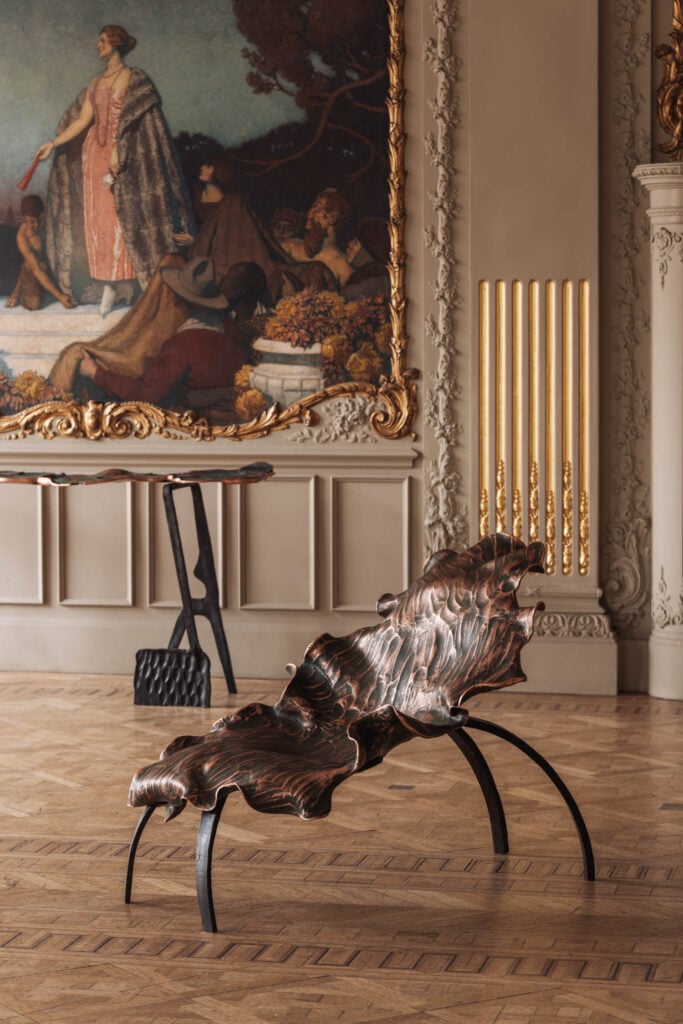
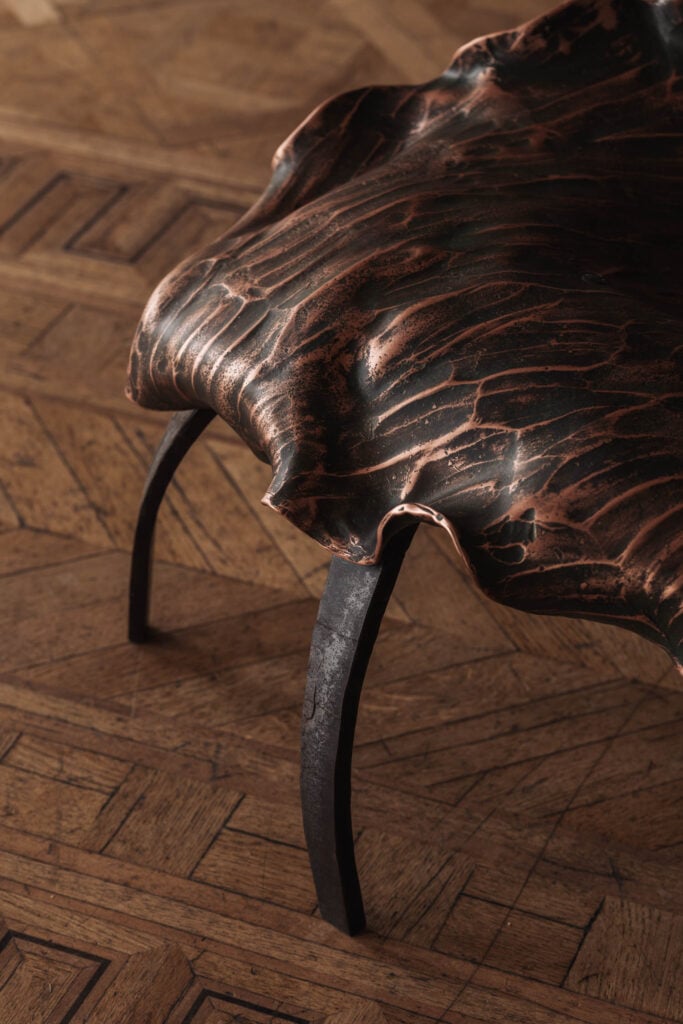
ID: Tell me about the process of creating “Implement IV,” your most recent solo show.
CH: All my shows are called Implement, in Afrikaans, “implementer” refers to farm tools. My early work related to these tools, and I kept the title as my understanding of the work evolved. It connects me to my origins while allowing the evolution of my practice to show.
This exhibition became a deeply personal investigation into iron and copper and their relationship. I realized I was processing personal experiences through the work, even seeing pieces struggle together, reflecting relationships. It’s about emotional resonance embedded in form and material. There’s an honesty to the process, a dialogue between the metal and the maker, and between the pieces themselves.
In “Implement IV,” iron and copper meet within the same object. What surprised you most while fusing these two materials?
CH: Copper can’t be forced, Steel can crack if overheated, but copper absorbs force beautifully. Its movements are liquid, and the way it responds to pressure is an expression of beauty, that quality teaches patience and respect. You can’t dominate copper; you learn to collaborate with it, the lesson isn’t just technical, it’s philosophical.
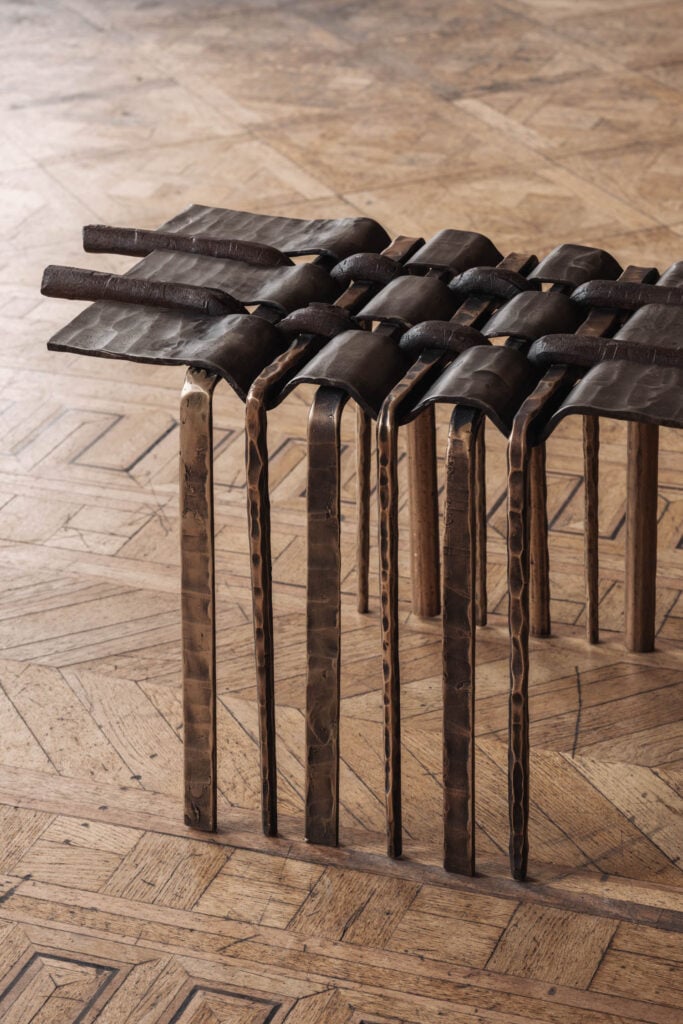
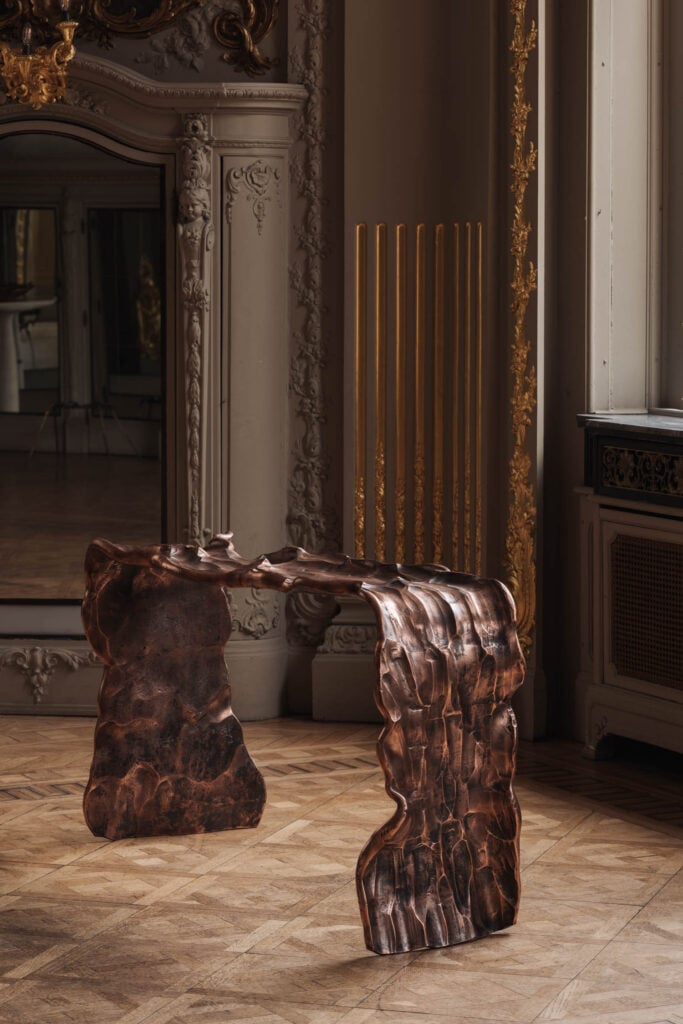
ID: How was it working with such a prestigious gallery as Objects With Narratives? Did their philosophy align with your practice immediately?
CH: Nick called me after seeing my work on Instagram, he had looked carefully and understood what I was doing. I respect their integrity, they take their connection with artists as seriously as I take my work. It’s rare to find people who see beyond surface aesthetics and grasp the underlying dialogue between maker, material, and idea.
ID: If you could describe the emotional core of “Implement IV” in one word or phrase, what would it be and why?
CH: A deep sense of arrival, a recognition of my purpose and affirmation of my journey. I trusted the process, and it worked. There’s clarity in that trust, a quiet confidence born from years of exploration, failure, and persistence. The work isn’t just seen, it’s lived, in the body, the mind, and the space around it.
read more

DesignWire
Designers And Manufacturers On The Move: September 2026 Edition
Interior Design‘s latest On the Move includes must-know industry promotions and hires, like Perkins&Will’s strategic move to expand its design capabilities.
DesignWire
10 Questions With… Artist and Designer Conie Vallese
From sculpture and ceramics to glass, textiles, and furniture, Conie Vallese embraces a multidisciplinary practice shaped by curiosity and creativity.