
10 Questions With… Artist Anne Buckwalter
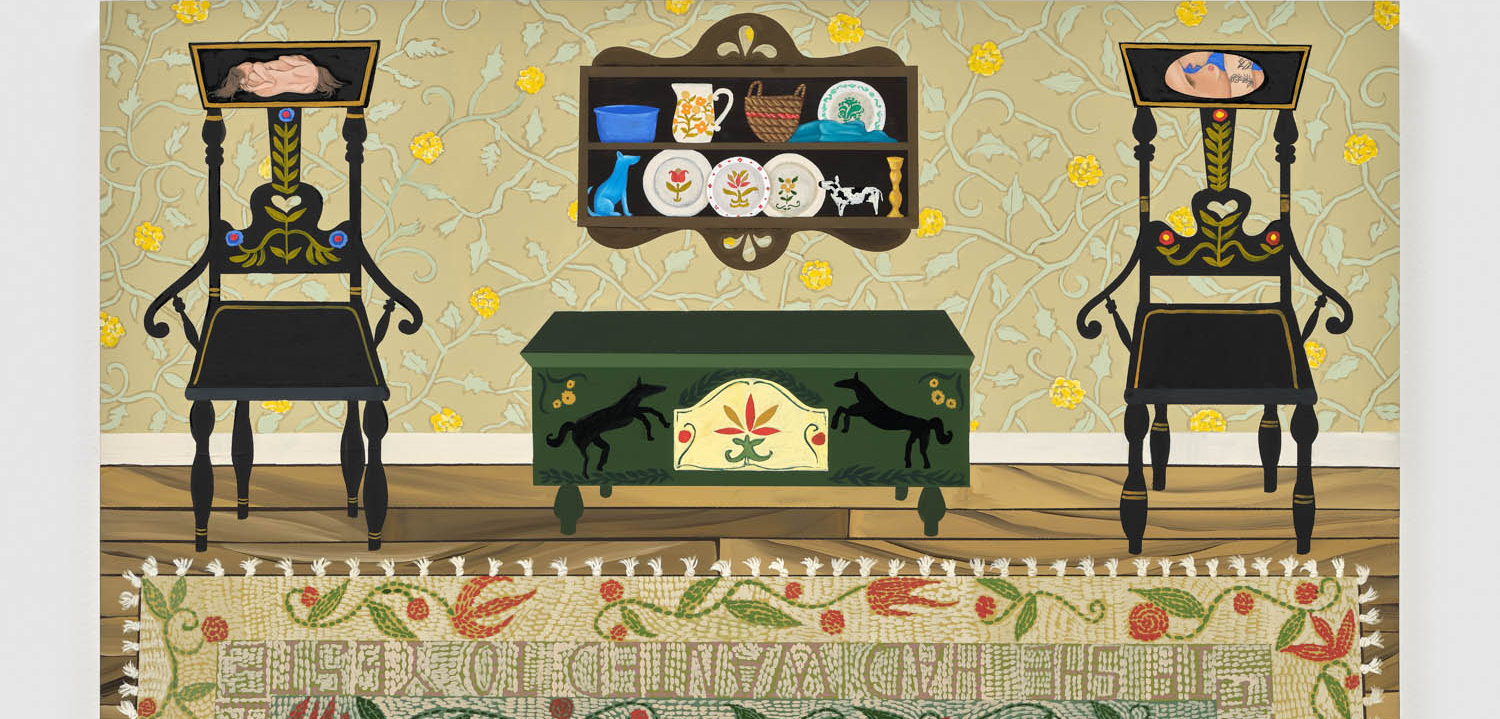
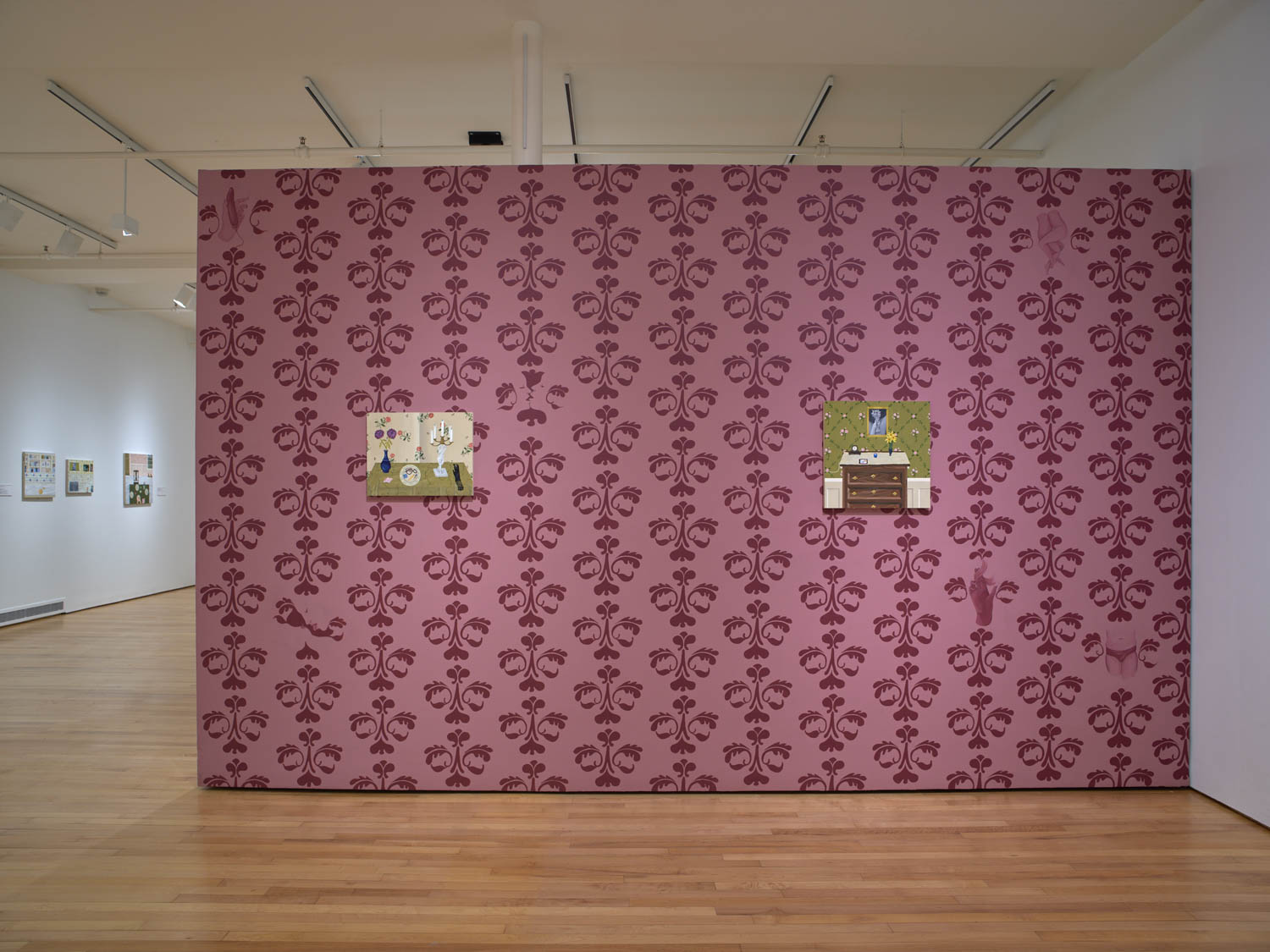
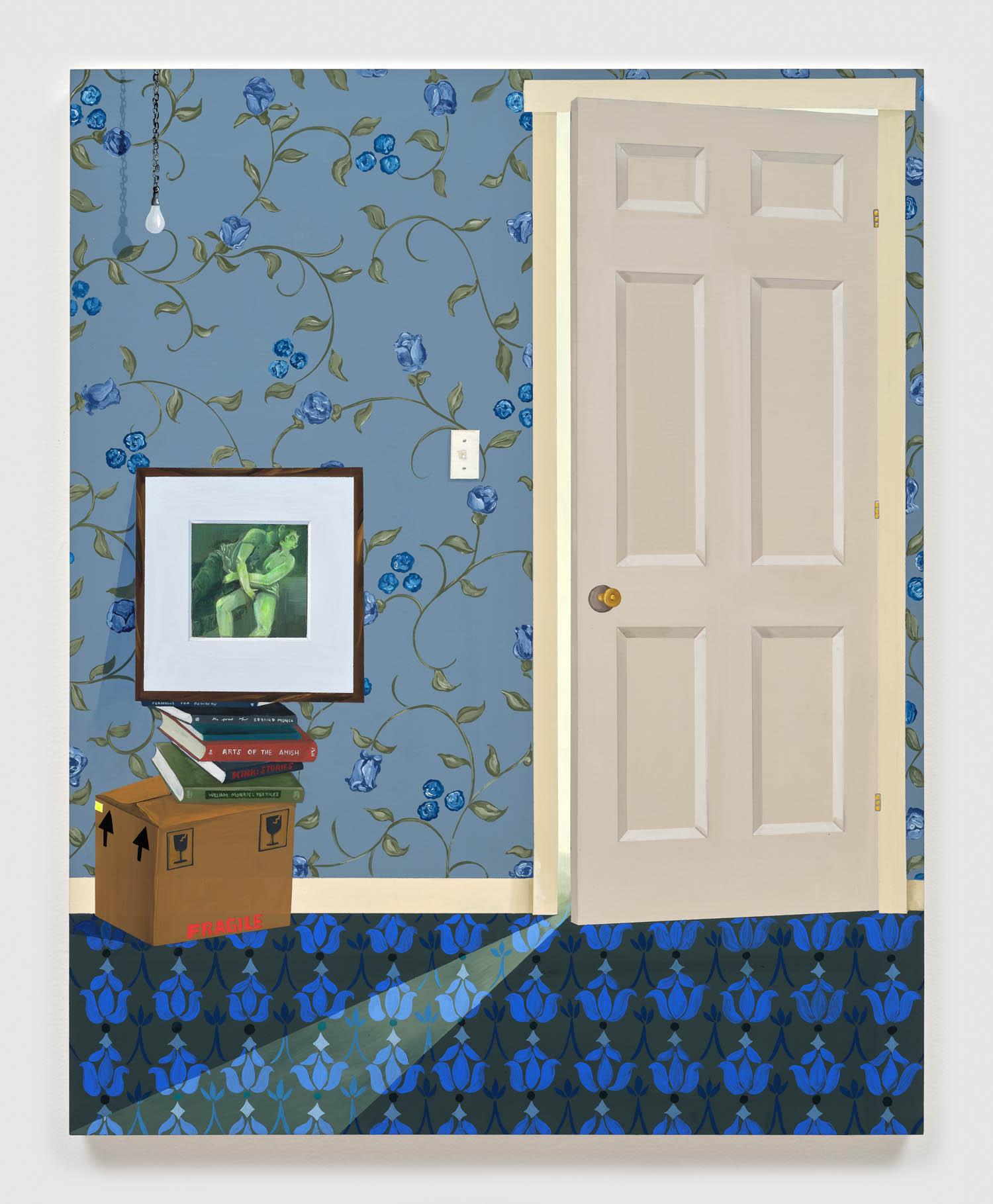
Artist Anne Buckwalter’s practice is inspired by folk art traditions, and her paintings include domestic objects such as quilts, ceramics, and farm animals. But her work is not tame; it often integrates “the erotic with the mundane.” A painting of a laundry room seems to document chores, but closer inspection reveals a pair of leather sex toys hanging with the laundry. Bedroom scenes show patterned quilts and pastel wallpaper—as well as naked bodies engaged in sexual acts. She explains the layered approach as her process making room for complexity and honoring questions about “the body, femininity, and desire.”
Since earning an MFA from Maine College of Art in 2012, Buckwalter has built a thriving career. She’s won several awards, including a Pollock-Krasner Foundation Grant, been included in residencies at the Vermont Studio Center, Mass MoCA, and elsewhere, and mounted numerous solo and group shows. She is represented by Uffner & Liu (New York), Pentimenti Gallery (Philadelphia), Micki Meng (San Francisco), and Rebecca Camacho Presents (San Francisco).
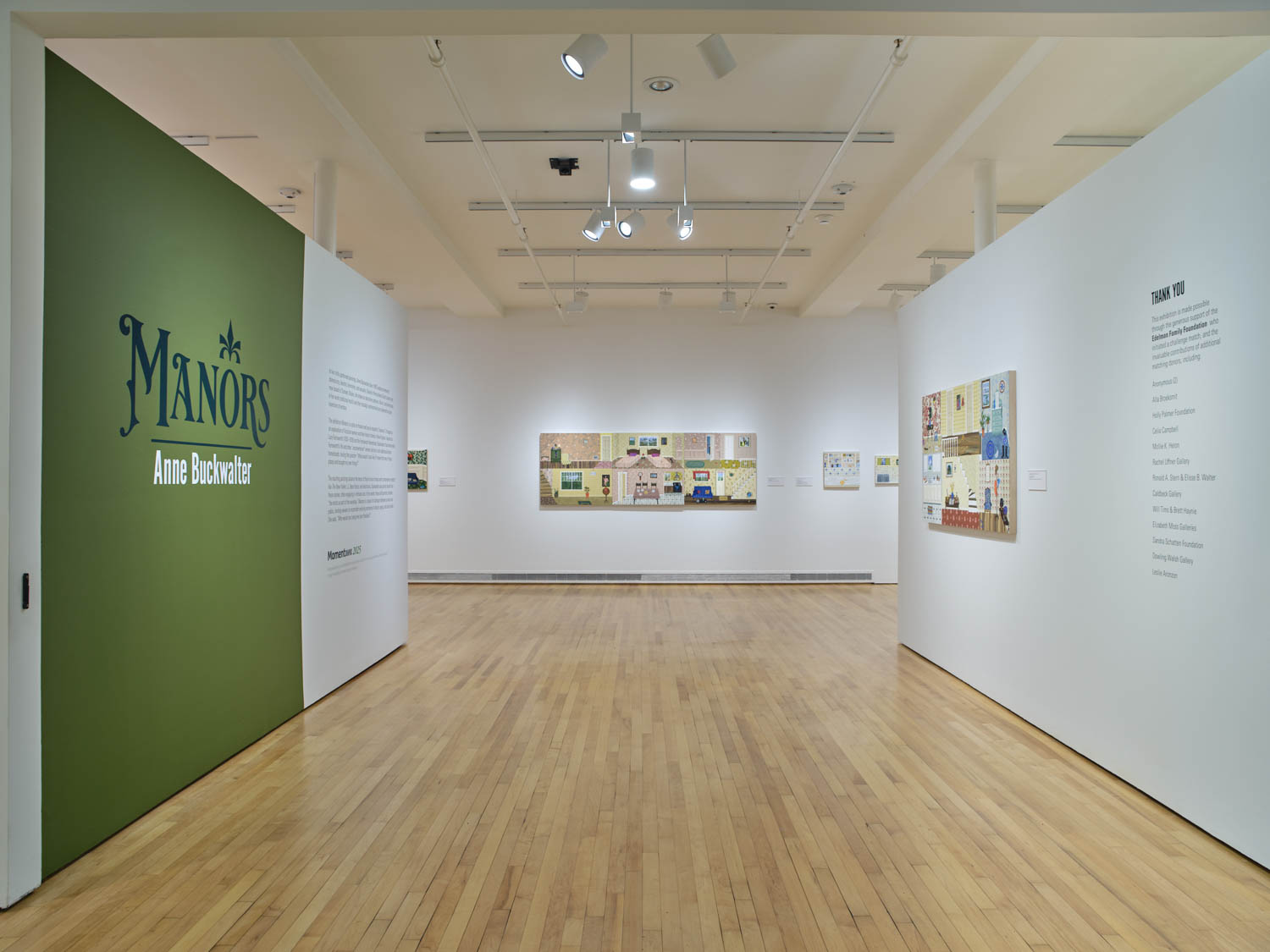
Over two dozen of the artist’s paintings are on view at Uffner & Liu in New York until November 1, 2025. Anne Buckwalter: Lover’s Knot is the artist’s third solo exhibition at the gallery, which is located at 170 Suffolk Street on the Lower East Side of Manhattan. And Buckwalter’s work was also recently on display in her home state of Maine, in a solo show at the Farnsworth Art Museum, which was on view through September 21, 2025. The exhibition, Manors | Momentum, presents new paintings and two site-specific murals. It was her first institutional solo show; she has had a dozen solo exhibitions at gallery spaces.
Interior Design spoke with the artist about these two exhibitions, her inspirations and process, and upcoming work.
How Anne Buckwalter Integrates The Erotic With The Mundane
Interior Design: Your work is inspired by interior home scenes and the folk art tradition. How did this interest begin?
Anne Buckwalter: I have always been a homebody. I love being at home and homemaking. The kind of art I was first introduced to as a child was Pennsylvania Dutch folk art, which includes a lot of domestic crafts, like painted furniture, quilts and textiles, whimsical dishes, duck decoys, drawings of farm and family life. I grew up around a lot of beautiful yet simple objects, utilitarian and beloved. I’m a rather nostalgic person and have always felt incredibly attached to the spaces I’ve lived in, so it makes a lot of sense to me that I’m drawn to painting interiors. Even when my subject matter has deviated from domestic space, I have always been interested in psychological interiority—how we allow things, especially conflicting things, to live together in our minds.
ID: Do you inhabit related interior spaces at any point in the process or include Pennsylvania Dutch objects in your personal studio space?
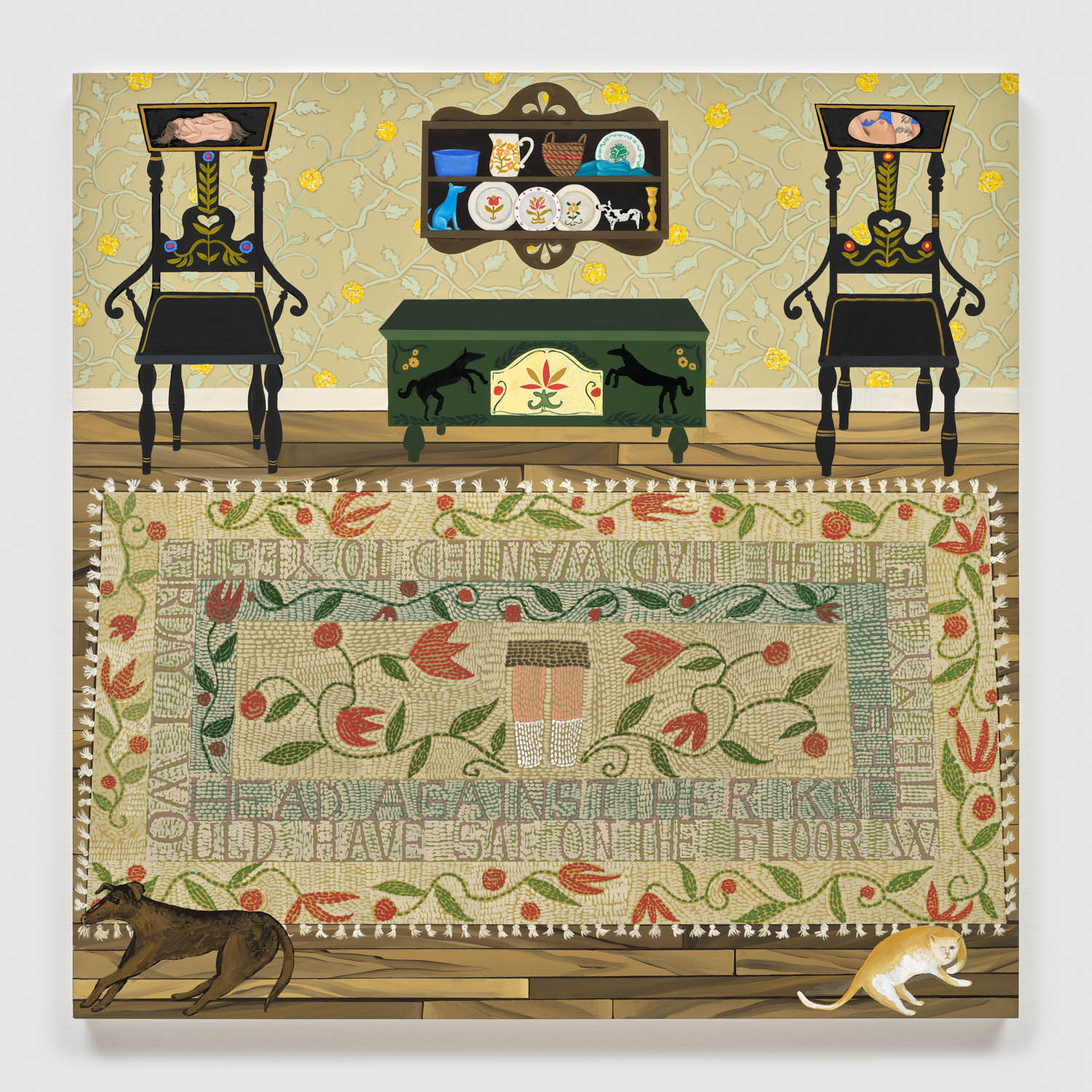
AB: The interiors in my paintings are inventions, but they are informed by my past and present. I see them as psychological spaces. My home now is quite reminiscent of the domestic spaces in my work. I have a lot of objects in my house in Maine, which is where my studio is, that are family heirlooms, as well as objects I’ve acquired because they remind me of my childhood home. So, I’d say my home has a significant Pennsylvania Dutch aesthetic. But, just like the interiors in my paintings, this sort of old-fashioned country aesthetic is threaded together with things I own that speak to my interest in human sexuality and eroticism. I have a lot of erotic art, books, and objects, and those things are playfully displayed amongst antiques and collectibles that feel like they could have come from a turn-of-the-century farmhouse. For example, I have a framed print of a photograph taken by a friend at an S&M club hanging above a couple of old porcelain chicken lamps, which were given to my partner by his grandmother. I like contradiction, and I like unexpected pairings.

ID: How do themes of human sexuality show up in your work?
AB: I am really fascinated by sexuality; I think it’s the primary frontier of human creativity and imagination. So it’s a big part of my work, though I like to include erotic elements in my paintings that are subtle or kind of hiding in plain sight. Figures are often obscured, and objects that allude to sex or the body are interspersed with commonplace, mundane ones. To me, this is about normalizing sex as part of everyday life.
Personally, I think that our social problems of oppression— classism, racism, misogyny, queer and transphobia, ageism, ableism—they are all enmeshed with one another, and they all stem from repression of the body. Sex requires us to think about the fact that we have bodies, and when we think about the fact that we have bodies, we must consider the fact that those bodies are temporary. Sexuality is really inextricably contingent with mortality, and Americans can’t seem to talk about either one. Ours is a culture so obsessed with control and allergic to failure, and we have a hard time accepting our bodies’ appetites and inevitable failures. If we could heal the cultural problem of sexual repression, I suspect a lot of other kinds of healing would follow.
ID: The solo show at Farnsworth Art Museum was in your home state of Maine. Does that feel meaningful and what work was on view?
AB: It’s incredibly meaningful. I love Maine, for the reasons that it’s easy to live here and the reasons that it’s challenging. One of the best things about Maine is its close-knit community of artists. Perhaps because living here year-round can be quite an isolating experience, the artists who live and work here do a great job of getting to know each other and cheering each other on.
I made 25 new paintings for my show at the Farnsworth, including my largest painting to date, and I worked with curator Jaime DeSimone and a team of muralists to create two site-specific murals as part of the show. The work was inspired by my visits to a number of women-owned historic homesteads in New England, originating from and including the Lucy Farnsworth homestead, which is part of the museum’s collection. There’s a lot of Victorian-era imagery and patterning in these paintings that serve as a kind of backdrop upon which erotic and queer narratives are situated.

ID: What is included in your solo show at Uffner & Liu, which opened September 5 and is up through November 1, 2025?
AB: The paintings in my upcoming show with Uffner & Liu, called Lover’s Knot (after the name of a quilt pattern), are more focused on rural life, which comes from my present-day life in Maine as well as the rural area I grew up in in Lancaster, Pennsylvania. The paintings in the Farnsworth put a lot of perceived distance between the viewer and the painting, whereas the works in Lover’s Knot are more zoomed-in; some are more like still life paintings, focused more closely on objects and material histories. There’s also a series of works on paper in this new show that are quilt studies, and they are quite geometric, so that’s a very new way of working for me.
ID: What aspects of interior design, furniture design, textile design, and/or visual culture continue to interest you in your practice, but do not show up within your work?
AB: I’m very drawn to the visual culture of Scandinavia. My partner and I took a trip to Denmark and Sweden several years ago, before the pandemic, and I was swooning the entire trip, particularly in Danish furniture shops. There’s something about the intensely structured, efficient nature of that design sensibility that I find so comforting. I think it’s because I’m a terribly orderly person—clutter deeply troubles me—and I imagine it would be difficult to lose things in a Scandinavian home. And some of my favorite painters are Swedish; I’m thinking in particular of Jockum Nordstrom and Mamma Andersson… there’s a kind of austerity coupled with a sexual frankness in their work that I just love.

ID: What’s your process like to make a single artwork?
AB: I start with a simple drawing. I have a notebook where I make little thumbnail sketches of compositions; they are very rough, just quick decisions about where I want a couch, a cupboard, a framed painting, that kind of thing. And then I will transpose the thumbnail onto a larger panel that I’ve primed with gesso and sanded, and I’ll improvise the drawing from there. Sometimes I will have in mind a focal point that serves as a kind of anchor of the painting, but a lot of the painting will be a mystery to me at the beginning, and I’ll figure it out as I go along. I always want to leave room for myself to be surprised by what happens on the panel, so the painting can tell me what to do.
ID: Your practice includes creative writing, both fiction and poetry. Can you tell us a bit about the links between that and your visual work?
AB: I see them as siblings. Writing and painting are very different processes, and they light up different parts of my brain, so I think they inform each other even when there isn’t a narrative link between the two. I find writing so much more challenging than painting, because with words, there isn’t the same kind of allowance for vagueness and ambiguity that you can get with images. Words are so specific. Or at least, I haven’t figured out how to write in this way—I’m bewildered and delighted by writers who can.
ID: What kind of spaces do you most appreciate seeing your work displayed in?
AB: I appreciate seeing my paintings anywhere outside of my studio, honestly! It’s very special to me when someone wants to have one of my paintings in their home, because home is such an intimate space, and my work is so personal. So the idea that someone could see something in a painting I made that they want to live with day to day… it feels connective. It’s like they’ve invited me over for dinner and we’ve shared some secrets.
ID: What’s next for you and/or what would be your wildest dream for that?
AB: My wildest dream was always to be a full-time artist, and it still is, even though I’m living inside that dream. Every morning when I go into my studio, I feel overwhelmed with gratitude to be there, and I know how fortunate I am. I have a solo show coming up this spring in Berlin with the gallery Haverkampf Leistenschneider, and I am also planning a project with the Allentown Art Museum later in 2026.
I’m hoping to cultivate more opportunities to work with museums and cultural institutions, and I would really like to collaborate with organizations invested in LGBTQ+ justice and sexual liberation work. I love seeing my work made accessible to an expansive audience. I think looking at art is medicine, and everyone deserves medicine.
read more
DesignWire
Designers And Manufacturers On The Move: September 2026 Edition
Interior Design‘s latest On the Move includes must-know industry promotions and hires, like Perkins&Will’s strategic move to expand its design capabilities.
DesignWire
10 Questions With… Artist and Designer Conie Vallese
From sculpture and ceramics to glass, textiles, and furniture, Conie Vallese embraces a multidisciplinary practice shaped by curiosity and creativity.