
10 Questions With… BoND’s Noam Dvir and Daniel Rauchwerger
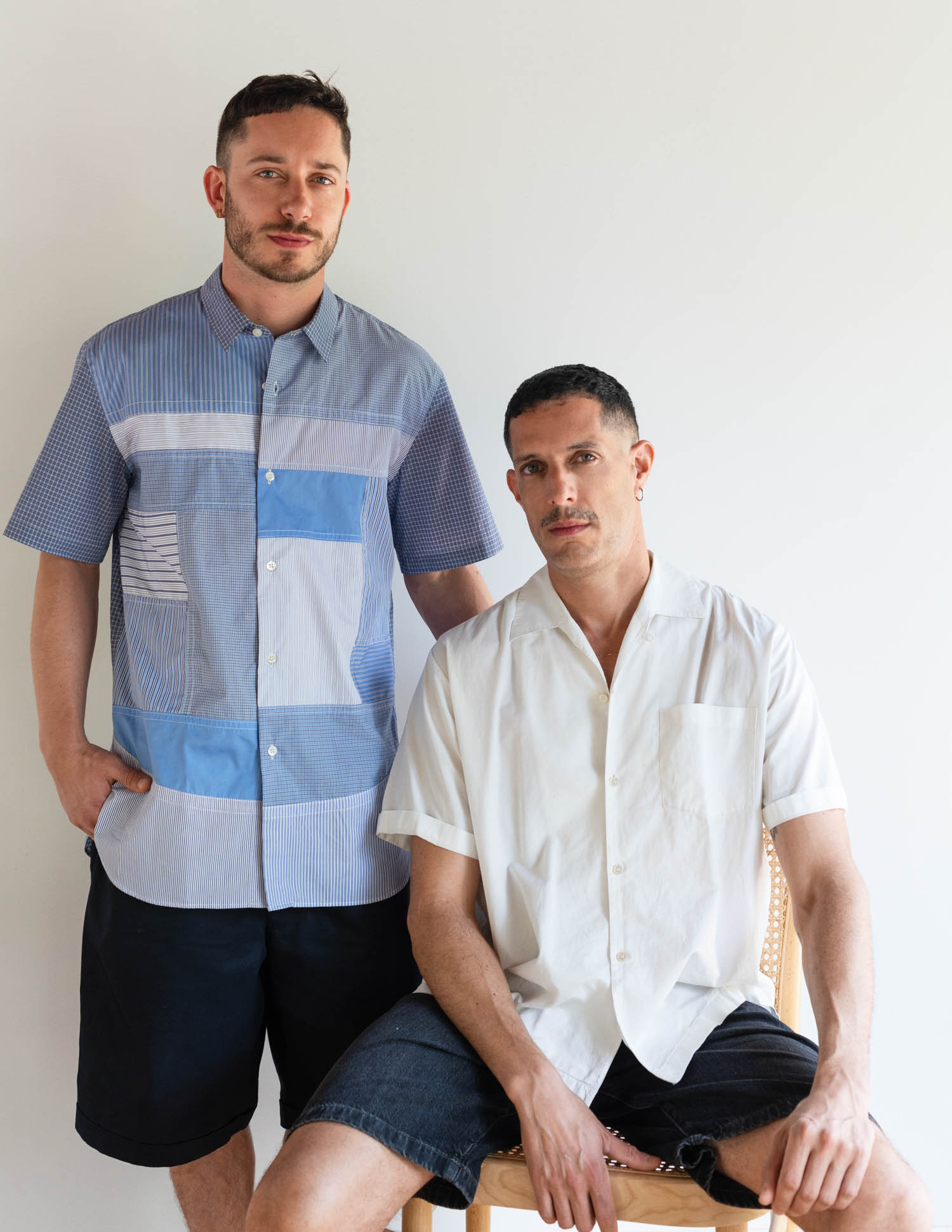
Noam Dvir and Daniel Rauchwerger met in 2010 in Venice when they were both visiting the architecture biennial. Dvir was an architecture writer at the time, and Rauchwerger was still a student in the same field. A few years later, they were lovers who enrolled at Harvard Graduate School of Design. Then husbands. Together, they formed their firm BoND (Bureau of Noam and Daniel) in New York in 2015. Since, the city—with its soaring raw lofts and vibrant queer community—has been a source of inspiration and work which embodies their moody and nuanced take on physicality and use.
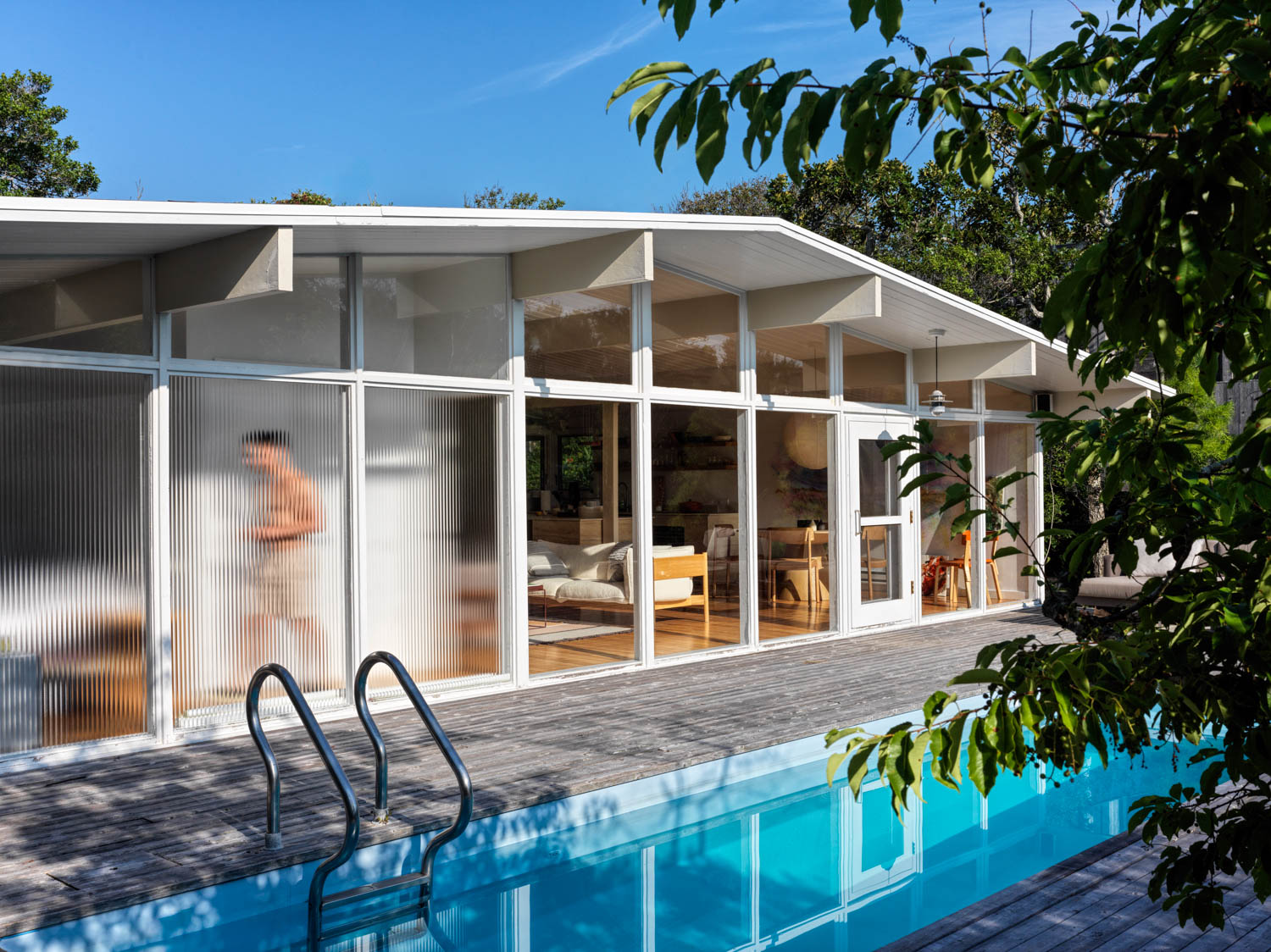
Fire Island, however, has been the duo’s major playground where they have delivered around 15 projects—some of which are brand new abodes and others, facelifts for a variety of Modernist structures, such as a 1950s Sears catalog home and a Harry Bates-designed house. Either way, escape, community, and hedonism are entangled cues in their first step into a project until the clients, and their friends, fill in a home under the summer sun.
BoND Reinvents Modernist Architecture For A New Era
Interior Design: Let’s talk about the challenges of working on Fire Island, a narrow stretch of land facing the ocean. What are environmental realities you have to deal with as well as logistical hoops?
BoND: A lot of the projects that we’ve been doing until recently have been interior-focused. Lately, we’ve started working on a couple of different ground-ups. With this comes the challenge of looking at climate change and sea level rise, as well as fitting into an architectural legacy that exists here. Let’s say this is a challenge that we started looking at in the past year and a half. The architectural legacy is also a bit of a constraint. Design constraints, however, lead to a richer design process. For us, there is something in this mix of characteristics that actually leads us to design a house that feels different.
ID: How do you balance heritage and innovation?
BoND: You have to reinvent the local. You have to rely on the legacy of modernist architecture and the relationship that it has to the landscape and social life here. But in our ground-up work, we are trying to, first of all, deal with climate, so the houses have to be raised quite a bit. In this case, what does the bottom of the house look like when you are used to seeing houses between the dunes? Now they are about 20 feet up above eye level.
Other challenges include conditioning airflow, a lot of technical things that haven’t been really addressed before just because the construction was really simple. Now, we build more sophisticated buildings that have more technologies that can support these climate changes. However, you don’t want to bring too much technology, either. These buildings become a part of the problem, rather than a part of the solution. There is of course the question of materiality. We traditionally use cedar for exterior and interior, but cedar recently got really expensive. We have actually worked on a new wood material from Texas that resembles a silvery tone of cedar. This material is easier to assemble and to apply.
ID: Could you talk the process of transforming existing Modernist homes on an island famous for its social scene?
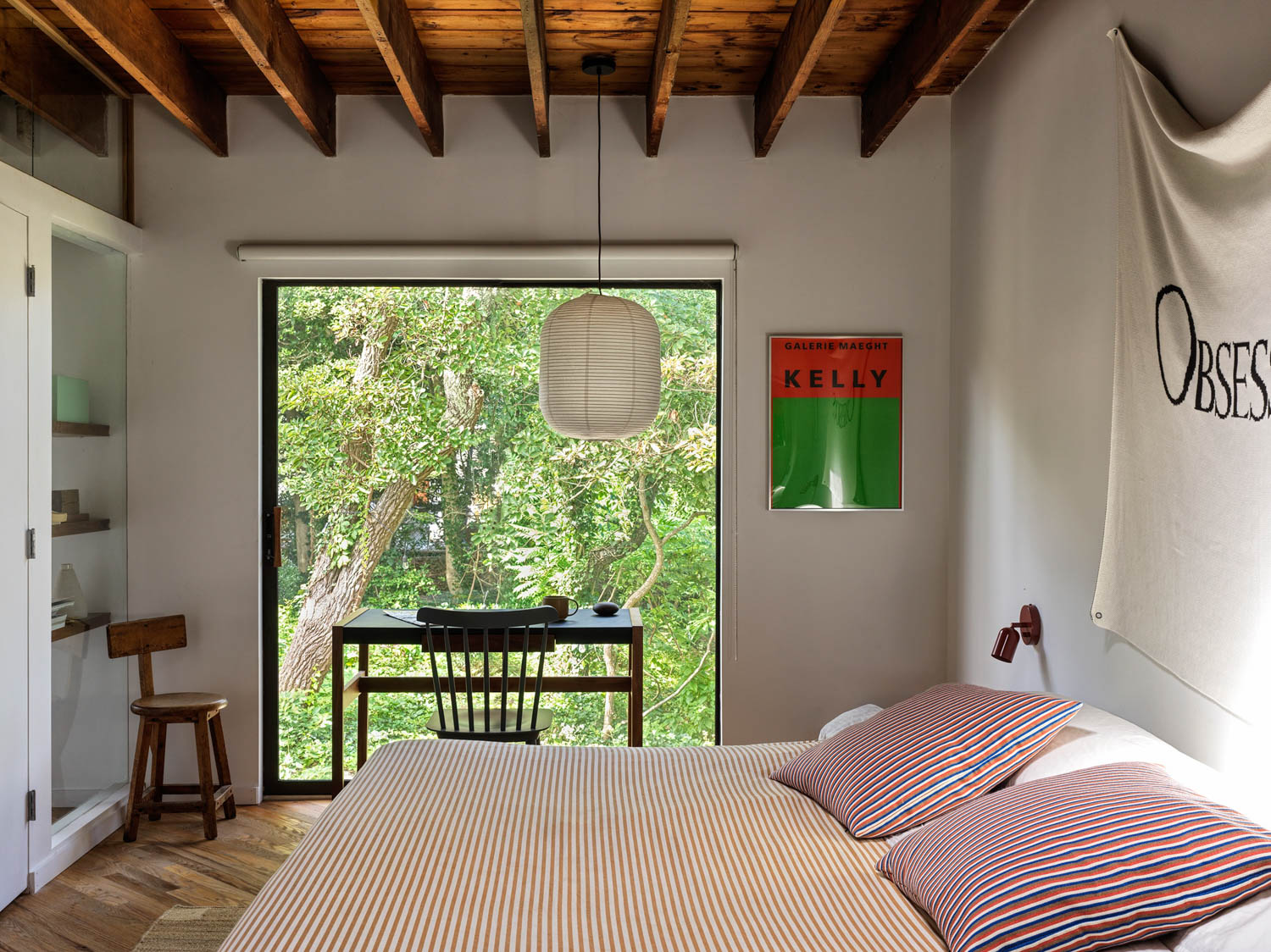
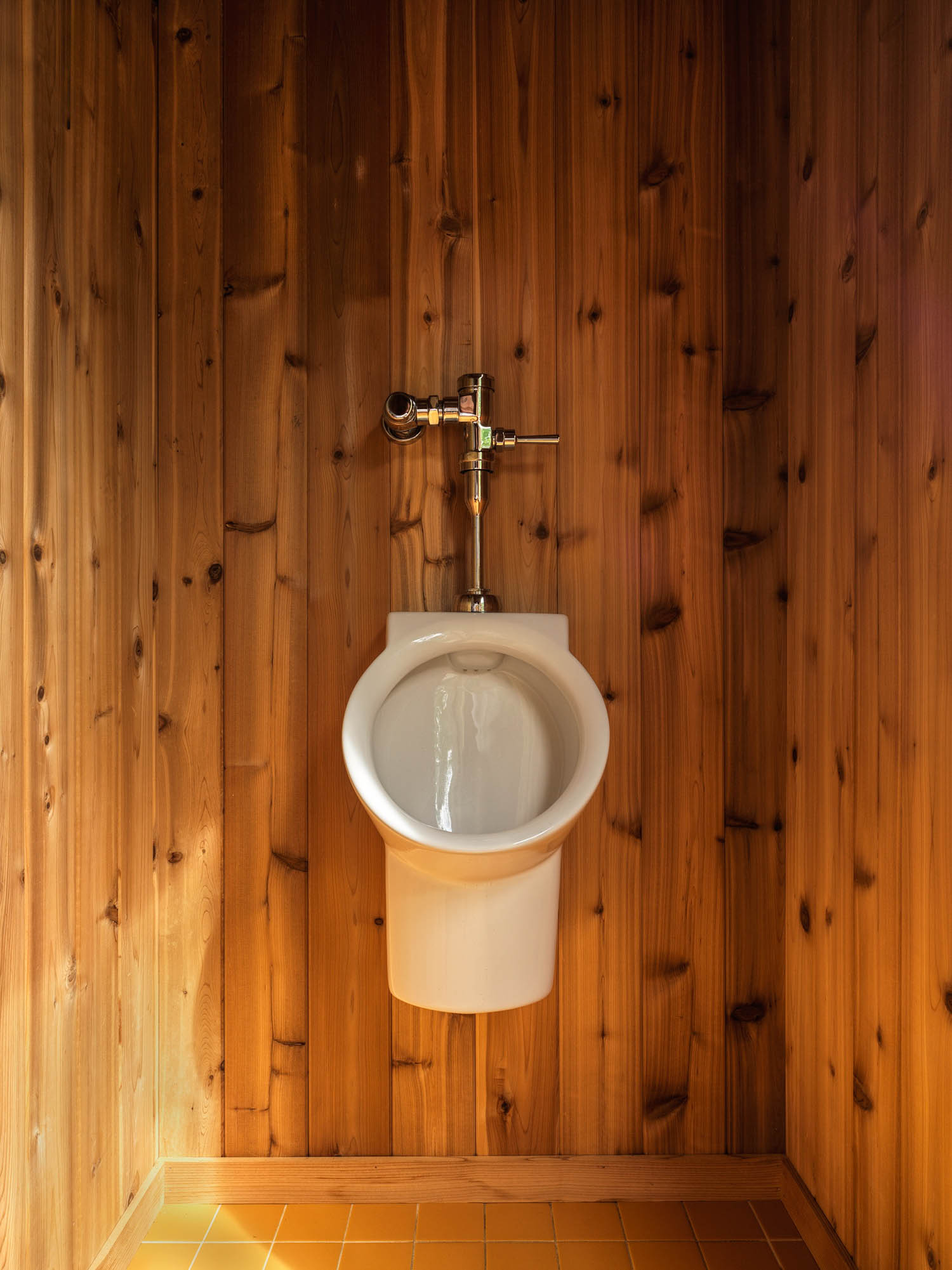
BoND: We often work with Mid-century houses that went through a million transformations. They, at some point, received new floors and new bathrooms, but never in a cohesive view. The renovation projects do not just focus on one side or one area—we think about the house as a whole. We try to unify the cedar siding or bring cedar into a place that wasn’t there. We think the bathroom is utilitarian, but also with a bit of humor and sexiness to it. We also design custom furniture for the houses to rethink or reinvent some of the different social conditions. Where do you sit before dinner? Where do you gossip? Where do you hang out on a cold rainy night?
ID: How about constructing these social situations, which require mingling or privacy depending on the situation? Pools and dinner tables, for example, are social magnets, but you also carve nooks.
BoND: We have to be pretty precise and intentional, and imagine what is going to be the social situation that you would like to orchestrate. We create the platforms for living and for socializing. A place can be extremely social during one weekend when you can easily meet 150, 200 people in different situations. We try to design homes where every place would be for spending time, for interaction, and conversation rather than being, for example, on your phone. We create an openness to be able to see between spaces and their connections. It is also about the drama and the interaction with the landscape. In front of a beautiful view, you want to make the most of it.
ID: Working with your community and network is perhaps your overall principle. Your projects feel like the results of a deeper connection with your clients rather than parachuting onto their lives. Could you talk about building connections with your clients?
BoND: Integration is about the relationships we have with clients. We usually either meet new clients out at a party or link though them visiting another house that we designed for a friend of theirs. Most of our clients are younger. During Covid, a lot of houses changed hands, and a lot of the younger people in our age group of 35- to 45-years-old acquired homes.
Obviously, these people have a little bit of extra money but at the same time, they do not necessarily have millions of dollars to spend. The discussions go very quickly to what’s really important for them and their guests. Do you prioritize cooking, for example? We pay attention to these elements because these are usually small places.
ID: What are the advantages and challenges of coming into this business from architecture journalism and finding an organic way to work together?
BoND: Both of us used to be journalists—Noam was a journalist for about 12 years—and that discipline and professional background really set the stage for how we approach projects. A lot of it has to do with creating a story or a narrative for each project, about a set style versus a new style of thinking for each one. In our projects, we want to tell a story that sometimes is a fantasy, something that really captures our community’s imagination. It all starts from words and descriptions.

ID: You do commercial projects, such as Company Gallery and le PÉRE boutique, and many homes. How do you approach a public commercial space as opposed to someone’s home?
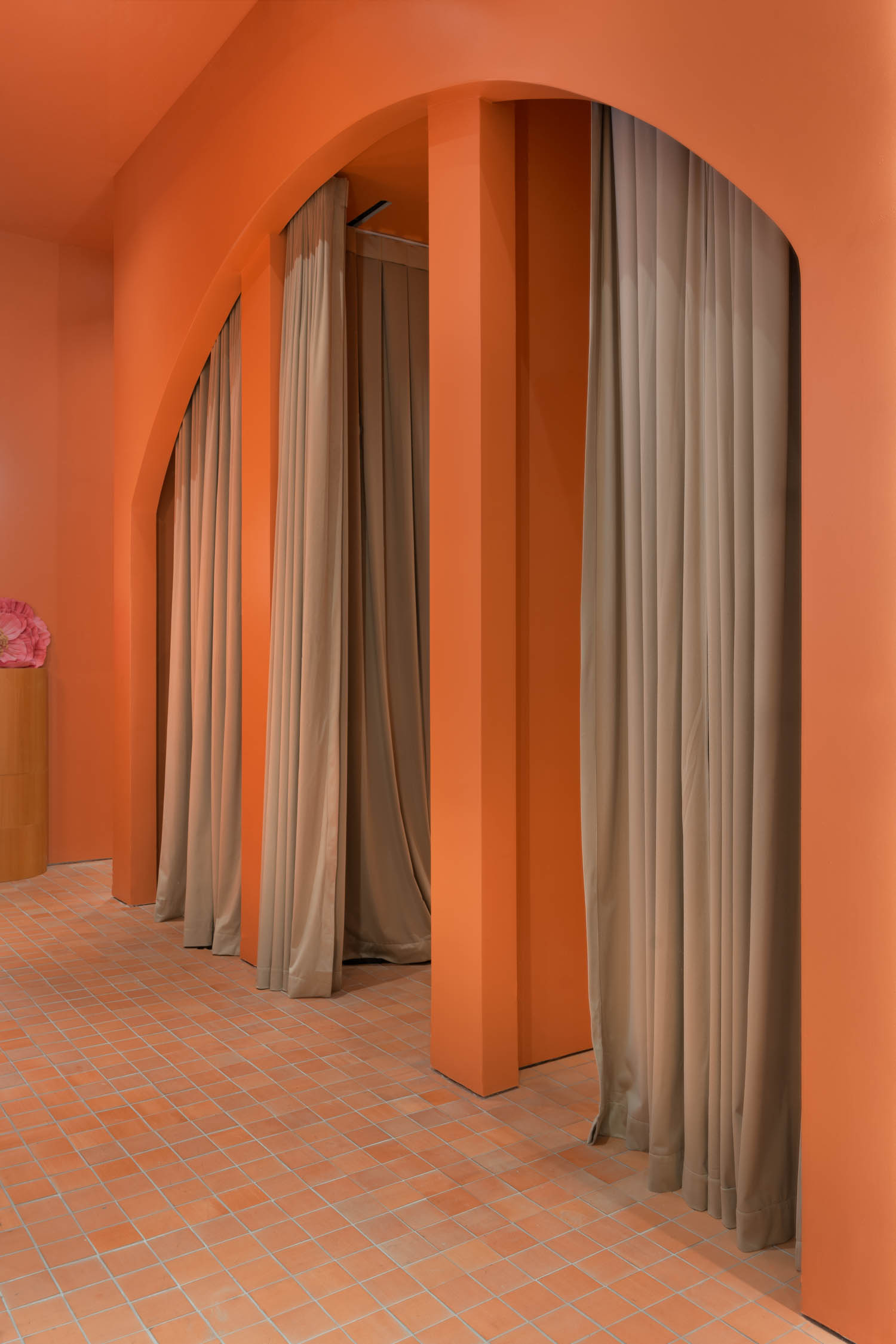
BoND: It’s really just the style of thinking—we design galleries like we design offices and offices like we design residential. It is always something unique in the program. We don’t see them so differently. Each project is usually about the timeline and the needs that are different. We try to identify something special and unique about each program. You can apply similar strategies to a 1,000-square-feet home or 20,000-square-feet store as long as the thinking is fresh.
A lot of our projects are with clients that are either artists, collectors or somehow related to art and fashion. They look for a certain simplicity in design, a clarity to make everything legible and simple to operate and live in. We recently designed a cocktail bar in Soho which is a bit typical for us. We have been working on it for the last six months and it will open for the holiday season. We have never worked on a hospitality project before, so we are excited.
ID: You tend to maintain a space’s architectural characteristics as a gesture to its past and a way to hint your client’s lifestyle. What excites you about New York City lofts with their industrial pasts?
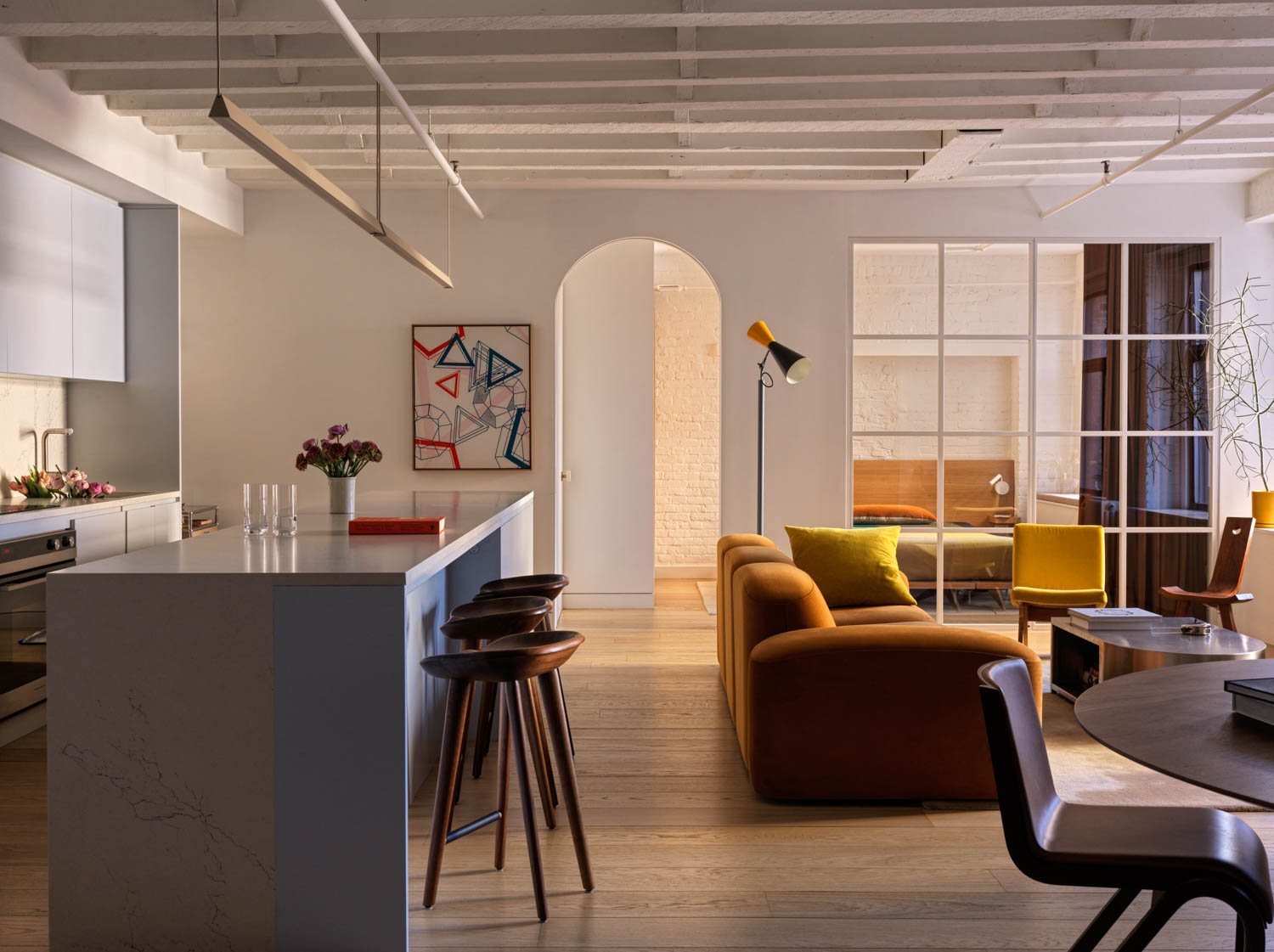
BoND: When we start a project, we have to understand the context and whether we want to fight that context or go with it. If we are working on a home, it means somebody is attracted to its existing character so much that they bought it. We need to understand what they want changed and help them expose parts that they want to integrate into the new design. We try to distill one or two good things that we all like about the space.
ID: A lot of your clients are collectors and artists. Could you talk about your relationship to art, not as a decorative accent but as a statement in your spaces?
BoND: Art reflects a cultural attitude and has the agency of beauty. You can use art politically but also esthetically, meaning you can draw the tones from a beautiful painting and make it into a color palette for a project. You can also bring contemporary photography into a historical environment and freshen it up and wake it up a little bit. Art is a huge driver in our work, also because we often choose the art for the project.
Our relationship with artists also allows us to examine some of the cultural trends and what’s really going in culture. This might be harder for architects to assess from their desks. We don’t think architecture is an art form so much, but it’s a beautiful craft. Art is a reflection of society and culture, and it’s a huge draw of inspiration and another vehicle to understand something about the moment.
We also have to think about the fact that our clients live with these works. We can’t only approach it as something too precious—it is something they live with as a reminder of a certain point in their life with memories of people and places. Art is a huge emotional part of a home.
ID: What have you learned about each other over the years through working together? Is there anything you know better about one another because you are also business partners?
BoND: We have learned over time what we are strong in and what we’re not as strong about. We also know how to come to terms with those aspects. The way we work together really complements each other. We spend a lot of time together, almost all the time together (still not enough time!). Our favorite thing is to be fully doing this, looking at the same project together and going over design questions. Each of us has a little bit different roles in the office, and we also split the phases of a project, but typically both of us have at some point an interface with a project. Noam is the managing partner, and Daniel’s a creative director. But, aside from that, everybody does everything.
ID: Let’s finish with sexiness in architecture. How do you orchestrate a lingering flirty intrigue through materials and configuration?
BoND: Sexiness is a cultural construct. What is sexy for some people may be weird for someone else. We often talk about sex in a not so abstract way, meaning that we have a large clientele who cares about the entire topology of desire. This is something that wasn’t a part of the architectural discourse for many years. It was a taboo, considered esoteric. We discuss it with a lot of clients, and one example is the placement of an outdoor shower. Do you hide it, or do you put it on display? This goes for a lot of things around views throughout the house. What can you see? What’s private? The wink is definitely something that we discuss with clients all the time. We always say that we have made a career out of making people look great in the mirror.
read more
DesignWire
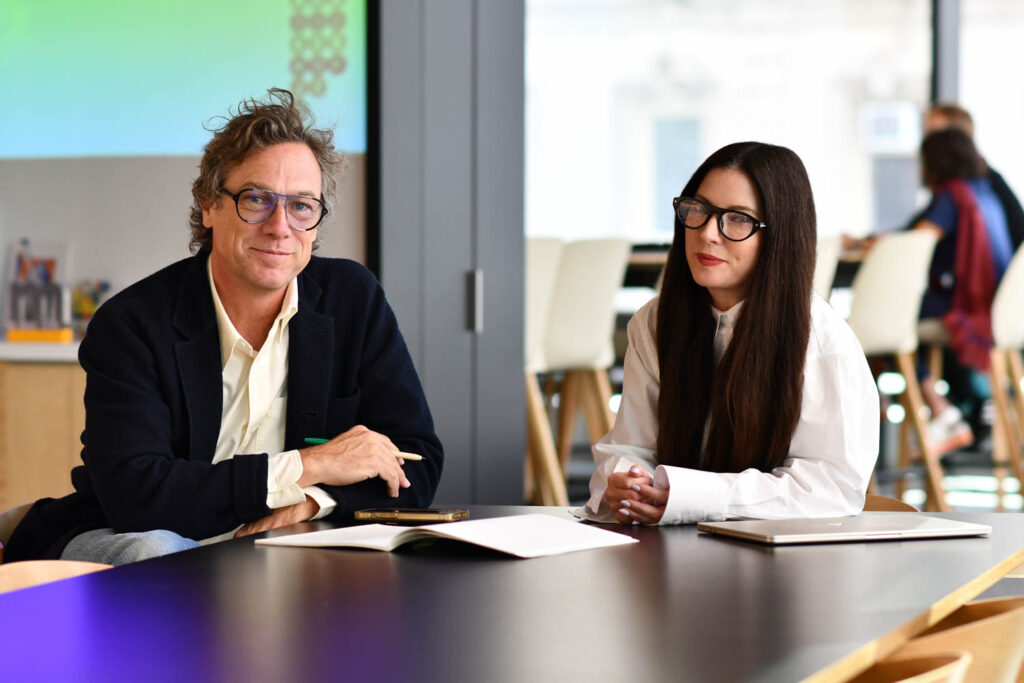
Designers And Manufacturers On The Move: September 2026 Edition
Interior Design‘s latest On the Move includes must-know industry promotions and hires, like Perkins&Will’s strategic move to expand its design capabilities.
DesignWire
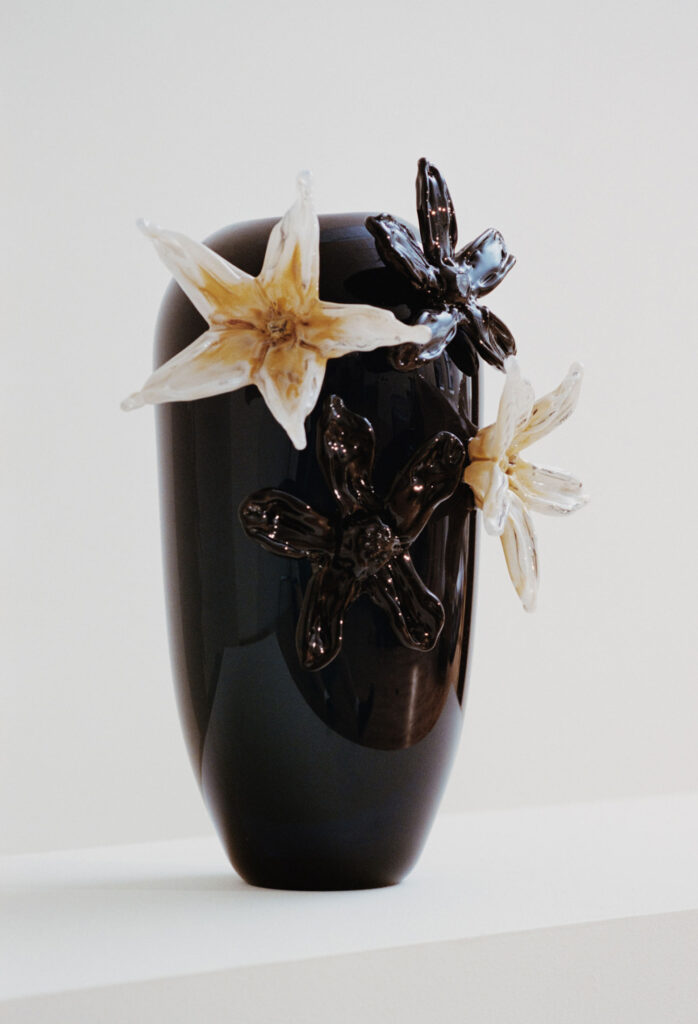
10 Questions With… Artist and Designer Conie Vallese
From sculpture and ceramics to glass, textiles, and furniture, Conie Vallese embraces a multidisciplinary practice shaped by curiosity and creativity.