
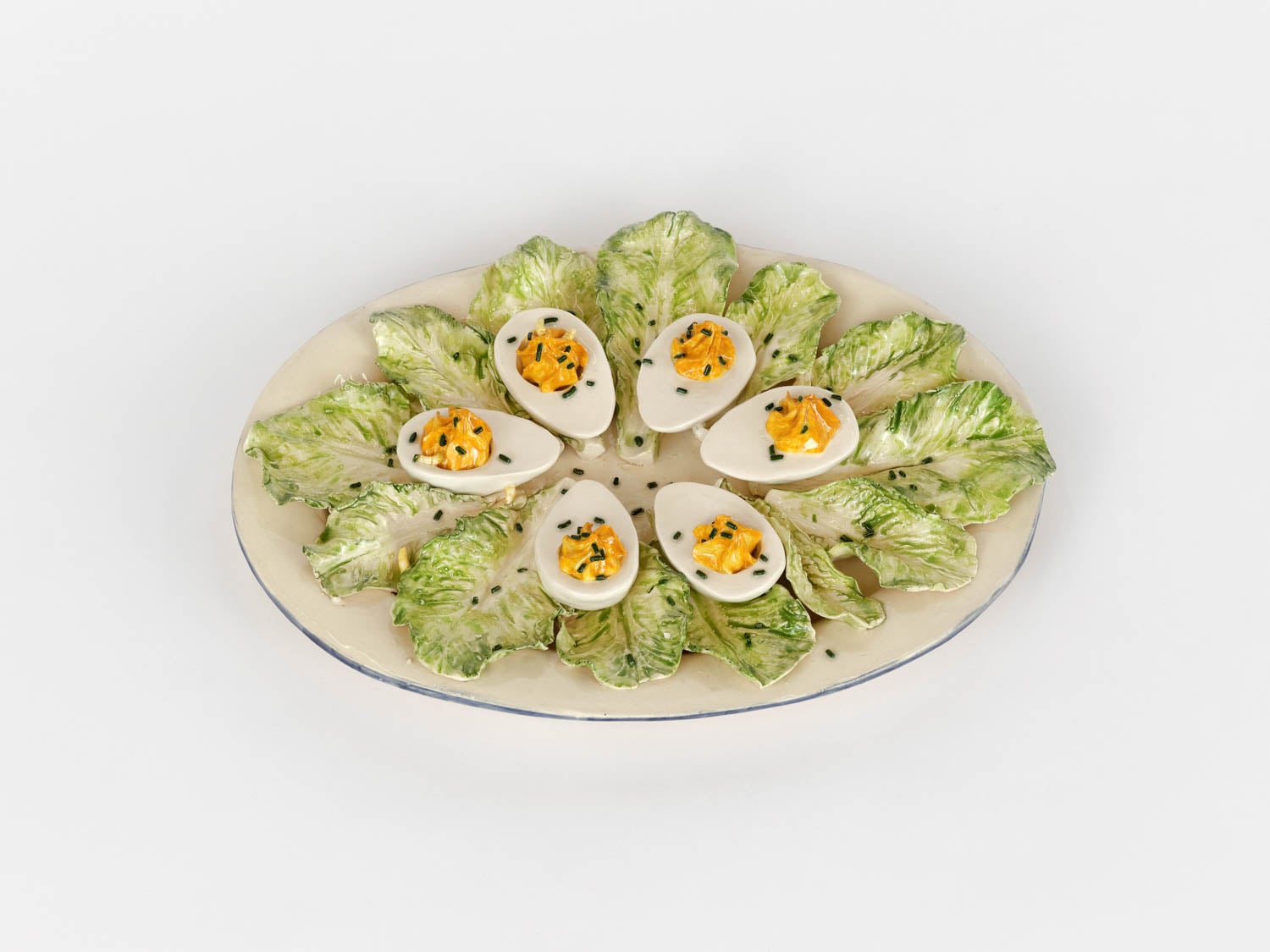
10 Questions With… British Ceramist Alma Berrow
Alma Berrow started experimenting with clay during the COVID-19 pandemic. In a very short time, she developed a thriving practice as a ceramic artist. Her success was organic but rapid, fueled by her unique sensibility alongside smart cultural references. Informed by time spent as a pastry chef and her extended family’s meals, her quirky designs often focus on tablescapes, domesticity, and food.
Berrow has now participated in dozens of group exhibitions and mounted several solo shows. “There have been moments where it’s felt like I’m running to catch up with myself, trying to realign my head and feet,” Berrow notes of the growing success. “But it’s also been one of the greatest challenges and adventures I’ve had. Ceramics allows me to move between sculpture, function, narrative, humor, and memory without hierarchy, and that openness still feels like the dream.”
Her first U.S. solo exhibition, “What Slips Beneath the Sugar,” in on view at Megan Mulrooney Gallery in Los Angeles through March 28, 2026. “For this particular show, the most immediate influences were my grandmother and her cookbooks — those were the starting points and the emotional center of the work.” Berrow explains. “From there, the references expanded outward.”
Interior Design spoke with Berrow about the current exhibition in L.A., the concepts that fuel her work, how her family has been an influence, if her practice has changed mealtime, and her hopes for the future.
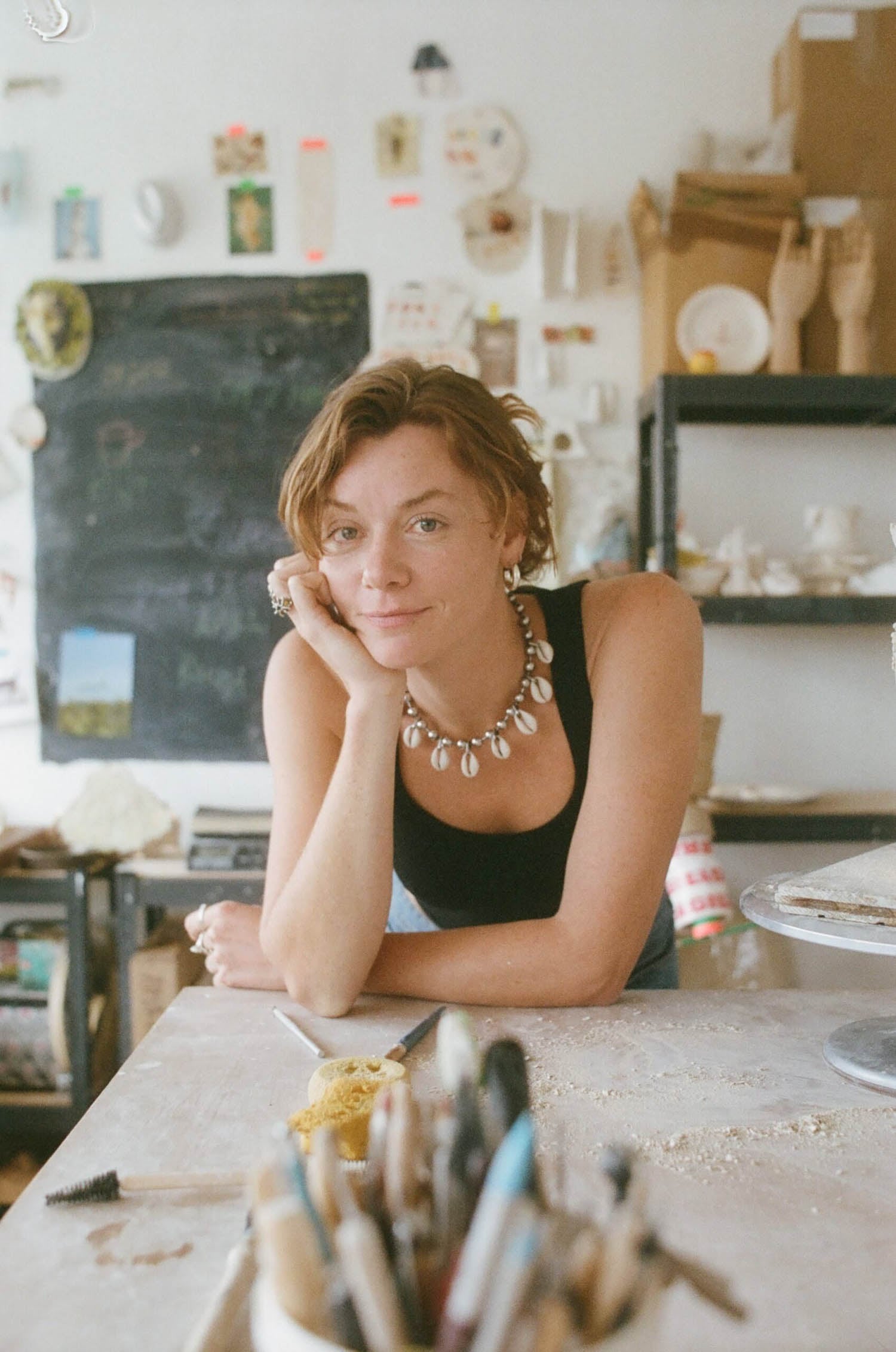
Alma Berrow Serves Up Ceramics With A Side Of Storytelling
Interior Design: Before your work with ceramics, you were a pastry chef. Can you tell us about those years?
Alma Berrow: I originally went to university to study fashion, but when I left, I wasn’t sure what I wanted to do, so I ended up working as a pastry chef for several years. It was long hours and very labor-intensive, but it was also pure play—camaraderie, feasting, and loud music in the kitchen. There’s the obvious parallel of working with food, but it was the physical confidence that carried over into ceramics: kneading dough, moving material with your hands, trusting pressure and instinct.
ID: You first picked up ceramics during the pandemic. What sparked you to try it and what has fueled its growth in your life?
AB: I started working with clay during the first lockdown after leaving my job at a members’ club in London. This felt like terrible timing at the moment, but in retrospect was very serendipitous. I moved back to Dorset to live with my family. My mum is a ceramicist and had a studio, which became a space of escape for me. Without pressure, audience, or expectation. That freedom was incredibly important. I began sharing work and selling to friends, then friends of friends, and it slowly followed from there.
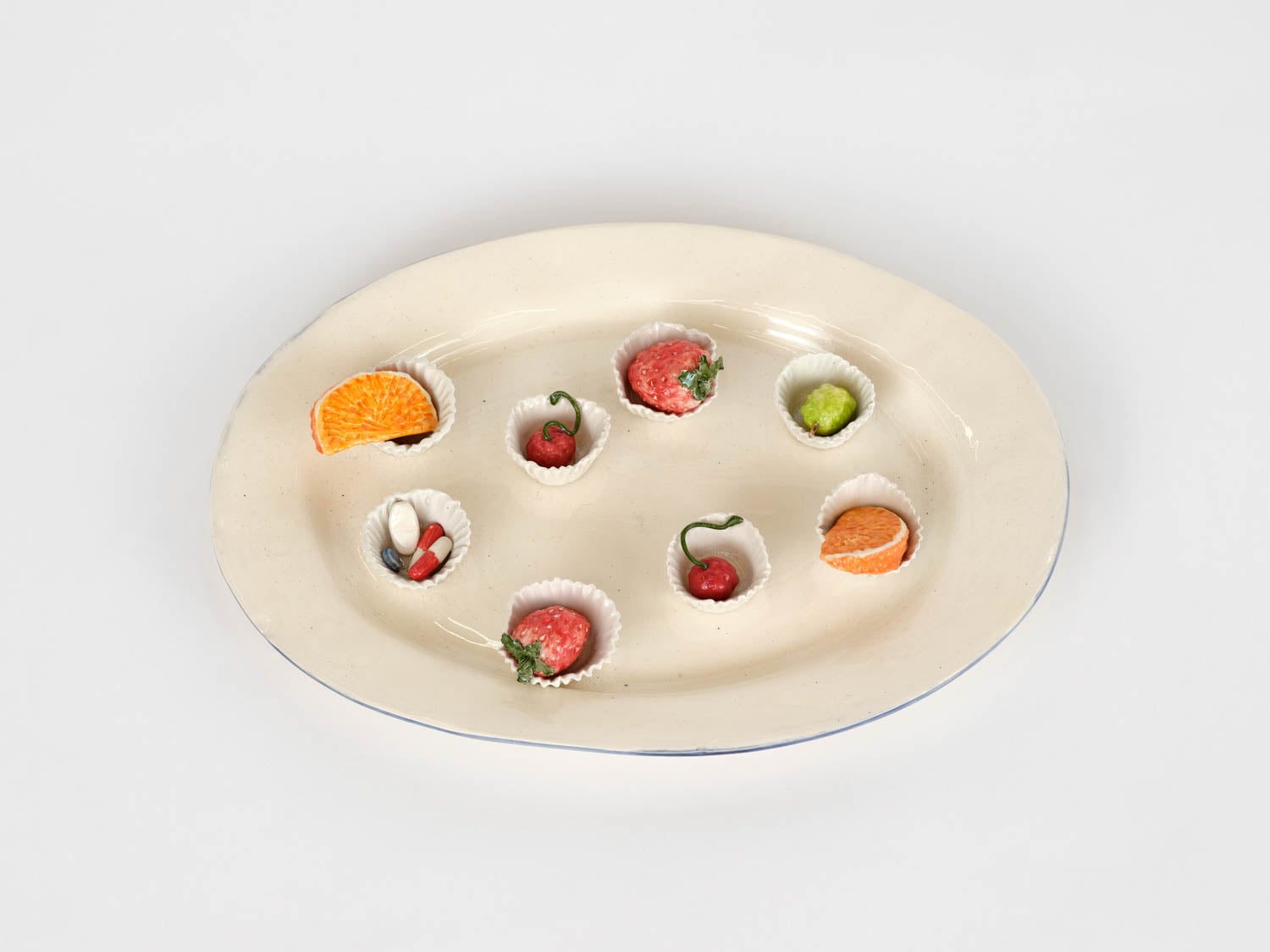
ID: How has your family influenced the ceramic work?
AB: My family has influenced my work enormously, particularly through food, routine, and domestic life. Those influences aren’t illustrative—they’re embodied in how I think about care, labor, and inheritance. Food, especially, has always been one of our main love languages. This show at the Megan Mulrooney Gallery feels more personal than anything I’ve made before. It’s not just about what’s on the table, but it’s also about the roles and love I’ve inherited from the women in my family.
ID: You’ve shown extensively in the U.K. and elsewhere. What questions fuel these exhibitions?
AB: I often ask myself how much to reveal and how much to leave open. I’m interested in creating spaces where viewers can bring their own memories and experiences, rather than being led through a fixed narrative. I think a lot about how the work can hold contradictions—tenderness and discomfort, humor and grief—without resolving it. While I’m always happy to talk through the nuances of the work and what it means to me, I’m far more interested in hearing how others respond to it. The memories it brings up, what people relate to or resist, whether it makes them feel comforted, unsettled, happy, or sad. That exchange is often just as meaningful to me, if not more so.
ID: The show at Megan Mulrooney Gallery is your first in the U.S. What type of work is included?
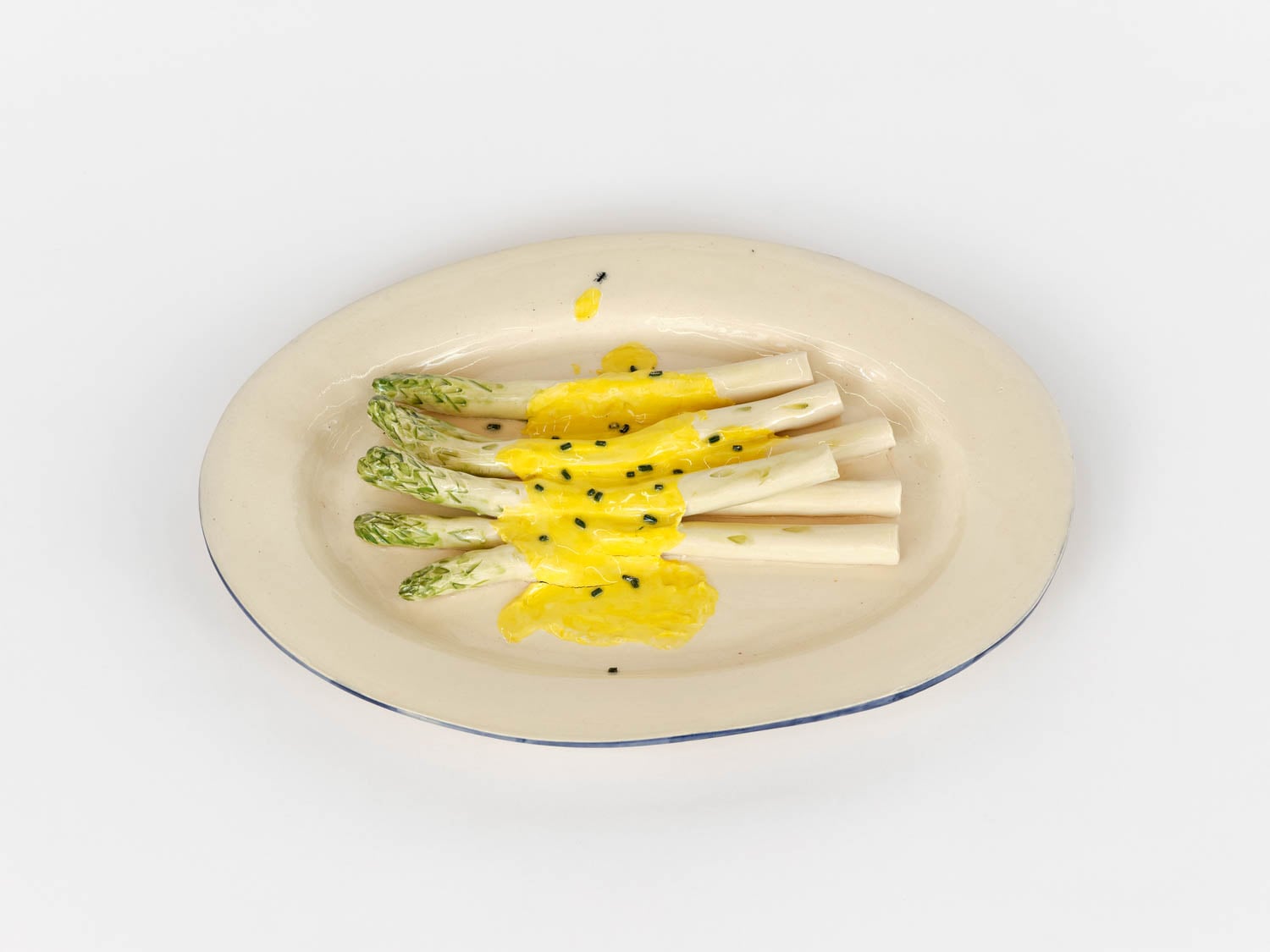
AB: The exhibition stages an uncanny, decadent 1970s dinner party centered around a dining table. The work includes ceramic objects arranged as part of a larger installation, alongside collaborative elements such as a hand-embroidered tablecloth and a metalwork chair. It’s a biographical body of work rooted in food, family, and domestic space, but it’s also playful, glossy, and slightly unsettling.
ID: What’s the meaning behind the exhibition title: “What Slips Beneath the Sugar”?
AB: The title refers to what’s hidden beneath sweetness and surface—the emotions, labor, and complexity that often sit underneath care and pleasure. Sugar becomes a metaphor for gloss: for glossing things over, indulgence, and love. But it also points to what can’t be smoothed away: rot, anger, tenderness, and contradiction. A lot of the references for this show come from domesticity, and particularly the figure of the 1970s housewife, so there’s a quiet play on cooking, preserving, jam-making, and sweetness. Underneath that sugary smile is the human part of us that can’t be preserved, jarred, or canned. Those small, unresolved things—the niggles and tensions—are what slip beneath the surface.
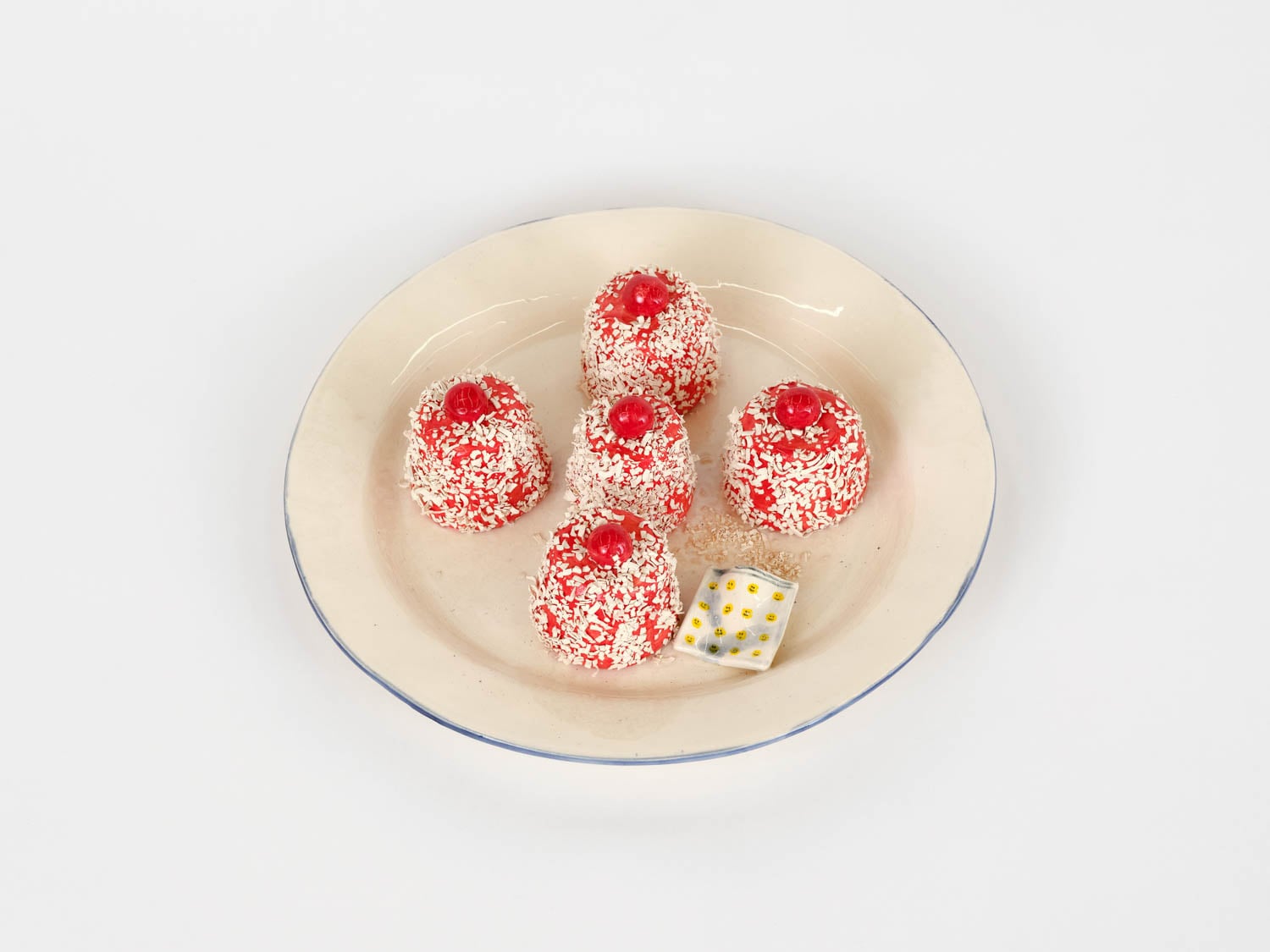
ID: How have ideas about gender and domestic life worked into your pieces over the years?
AB: They’ve always been present, but often indirectly. Domestic space is where expectations, care, and identity quietly take shape. Over time, my work has become more reflective. It’s less about making statements and more about examining my own relationship to inherited roles, particularly around womanhood, care, and responsibility.
ID: Food and tablescapes feature prominently in your work. Do you work from photographs, drawings, or recipes?
AB: It’s a mix. I work a lot from memory alongside catalogues, photographs, and sometimes from actual cooking. When I’m developing ideas, I often reference cartoons, because I’m interested in how memory works rather than strict realism. A cartoon car doesn’t really look like a car, but we recognize it immediately. That recognition fascinates me.
For this exhibition in particular, the starting point was the cookbooks my grandmother left me. Working from photographs of recipes was new for me and really joyful. Food has always been at the heart of my family, full of care and narrative, so tables have always felt like a place to come together and share stories. What better place to set a story.
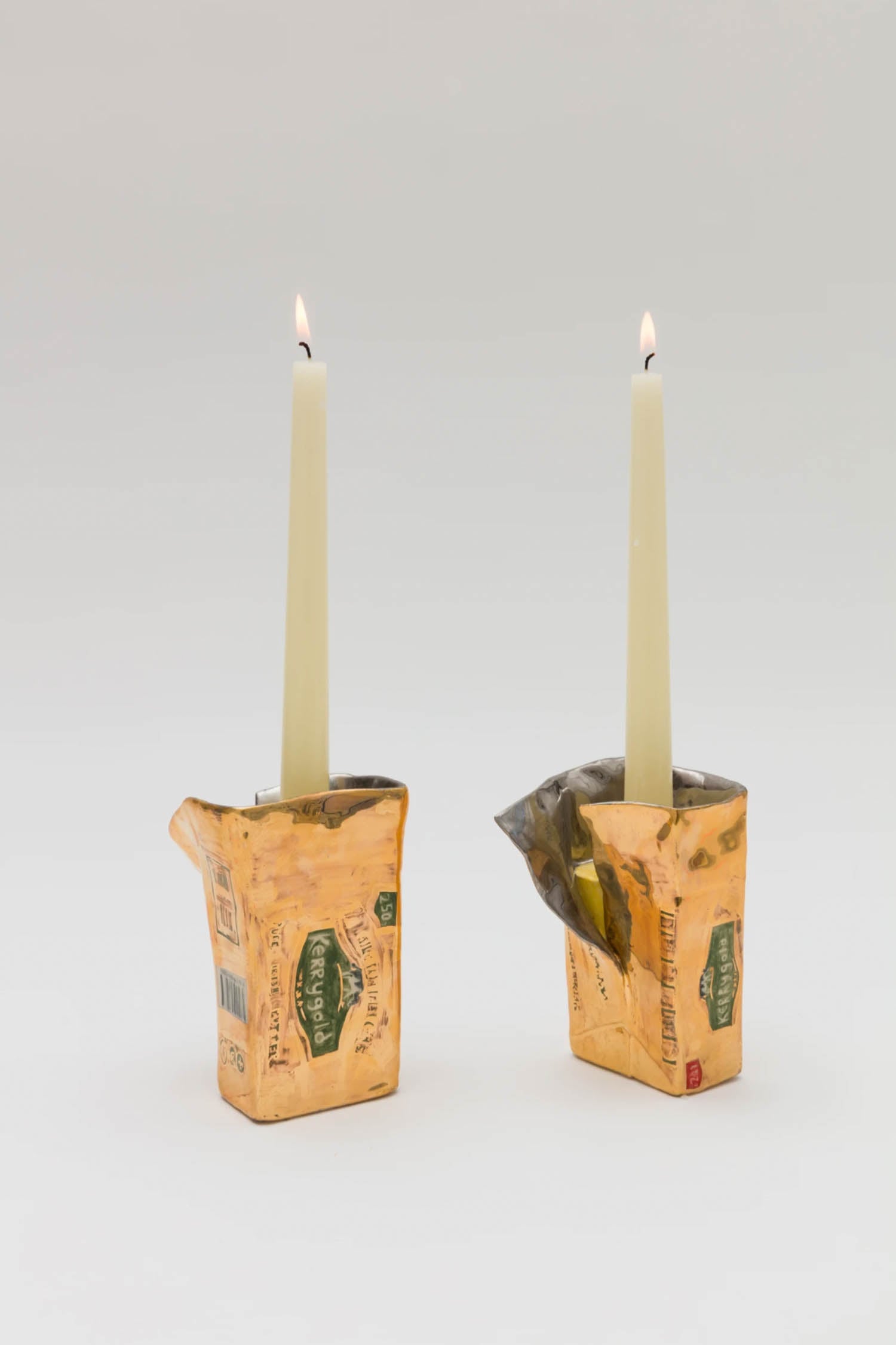
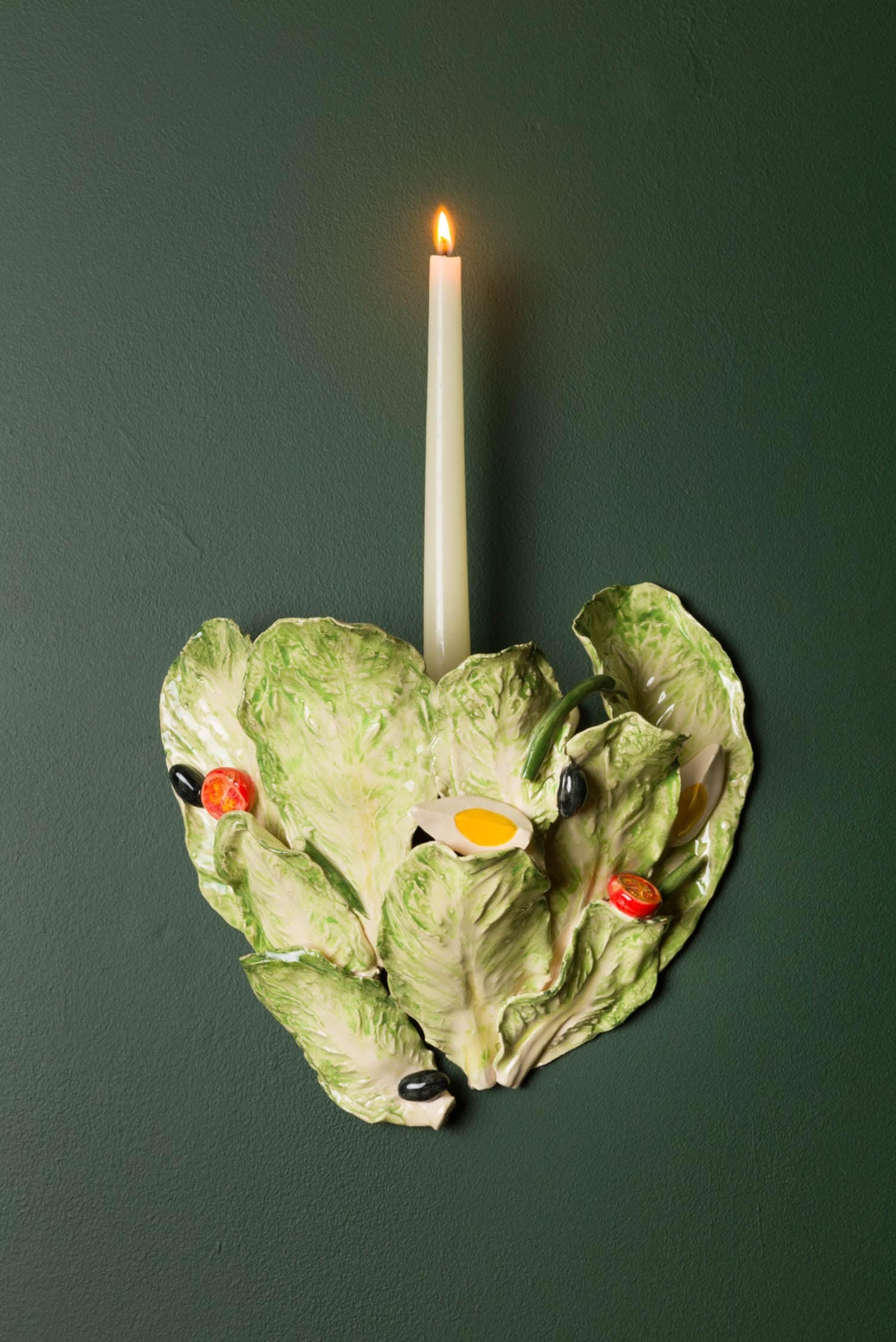
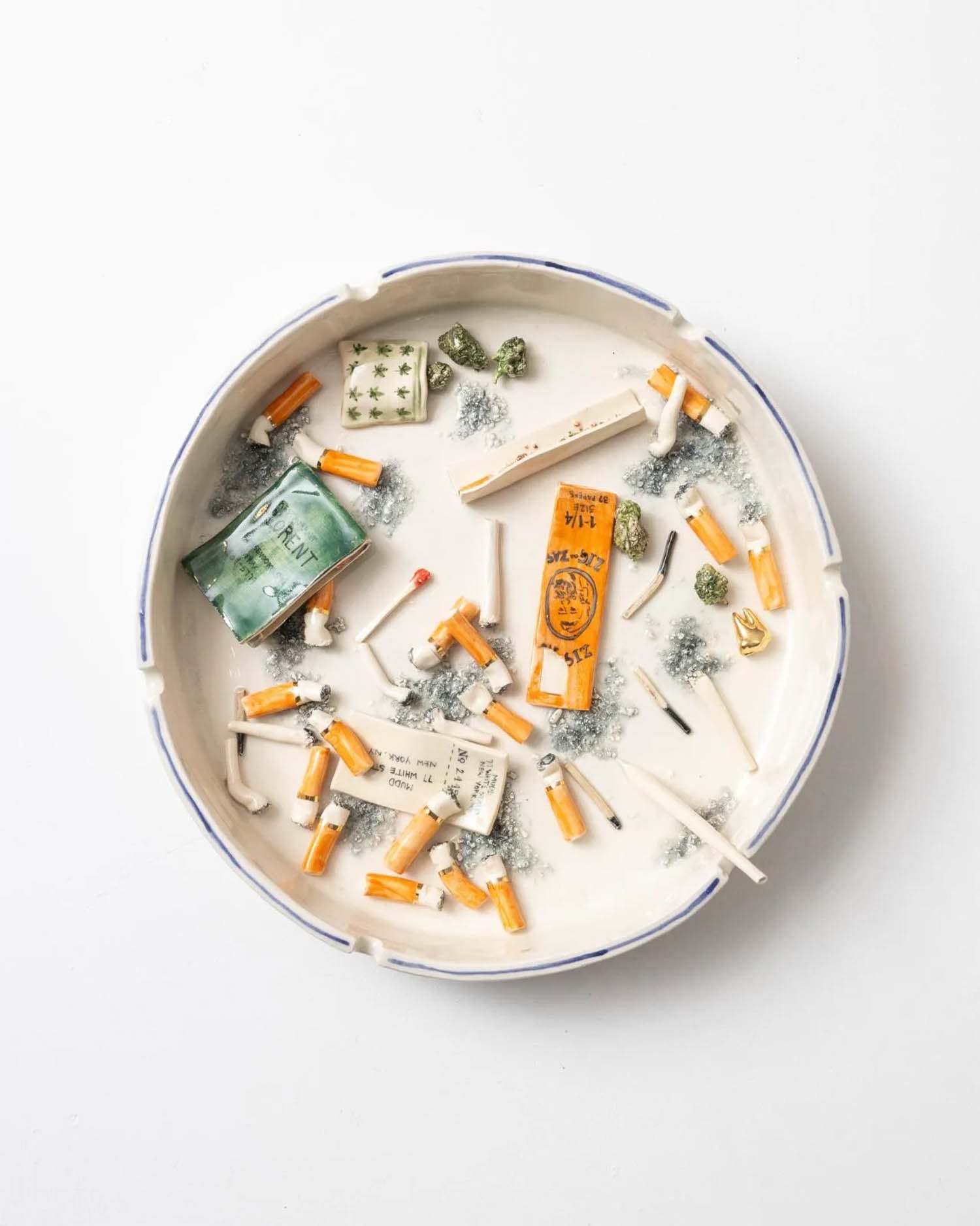
ID: Can you tell us about other practitioners who have been influential over the years?
AB: More broadly, I’m continually drawn to play and imagination. The childlike exuberance of Niki de Saint Phalle’s later work has been important, as has the romance and excess found in the writing of Barbara Cartland, and the cookbooks and wider practice of Salvador Dalí, which feel like artworks in themselves. Artists like Leonora Carrington have also been influential, particularly in the creation of soft, feminine, and mystical worlds. Mythology, especially Greek mythology, has been a long-standing influence. My previous body of work focused on ancient stories of women in the UK and Ireland, and that process of rooting myself in those narratives continues to inform how I think about storytelling and inheritance.
ID: Do you ever think about your ceramics work when you’re just eating a regular meal?
AB: Yes, the other day I asked for an extra fried egg in a restaurant, and it arrived on its own little side plate. This was pure perfection to me. I had a giggle and took a photo straight away. Those moments can be unexpectedly inspiring. But I also like to think I can sit down and simply enjoy a meal for what it is, without analyzing it too much.
ID: What dreams do you have for your practice—whether about scale, materiality, commissions, or future projects?
AB: I’d love to continue working at a larger scale and thinking more spatially—creating environments rather than just individual objects. I’m largely self-taught and currently constrained by the size of my kiln and my technical knowledge, so doing the Archie Bray Foundation residency this summer feels like a real turning point. It’s an opportunity to expand my practice and start imagining things like building the table the work sits on—rather than only the objects on top of it—getting closer to creating a whole world. Collaboration has become increasingly important to me.
For this show, I worked with Ellie Mac on the tablecloth and Barnaby Lewis on a chair, which was my first time working with metal. In previous shows, I’ve collaborated with Poppy Booth, and I’ve loved that ongoing exchange. Moving forward, I want to keep pushing into new materials—glass especially—and deepen those symbiotic, back-and-forth relationships with other makers.
read more
DesignWire
10 Questions With… Artist Alma Haser
Alma Haser shares insights into her recent exhibitions, her appreciation for analog processes, and her dislike of artificial intelligence.

DesignWire
Emirates Debuts Hospitality Suite Inspired By Its Premium Aircraft Cabins At The US Open
Emirates brings the refined feel of its onboard experience courtside at the US Open with a newly redesigned hospitality suite featuring a replica A380 bar.