
10 Questions With… Designers Tolu Rufai and Sandia Nassila
There is a unique way Tolu Rufai and Sandia Nassila think about design. They reject the monolithic idea of categorizing African design as a singular thing. Instead, they see it as a network of relationships: between forms and knowledge that interact with one another, moving across regions and generations.
The duo met through a shared network but bonded over a mutual curiosity. Rufai comes from an architectural background, while Nassila’s experience spans strategy, hospitality, and cultural programming. They became increasingly interested in the gaps they saw in how African histories were communicated, understood and translated into contemporary forms, and in the possibilities of design as a way of engaging with those histories. It is from this interest, Salù Iwadi was born.
Since then, the pair have combined their respective knowledge with their own ancestral and national dualities: Rufai, from Nigeria, and Nassila, whose heritage is Malagasy and Comorian and whose life has moved between France and Senegal. These overlapping identities have become part of the philosophy shaping both their individual practices and the visual language of Salù Iwadi.
But Salù Iwadi is not fixated on a single place or culture. The designers see themselves as capable of incorporating different cultural references, whether through histories, forms, artisanal practices, or materials. While some of their works may appear to reference an existing ideology, they are careful not to treat preservation and reinterpretation as opposing forces.
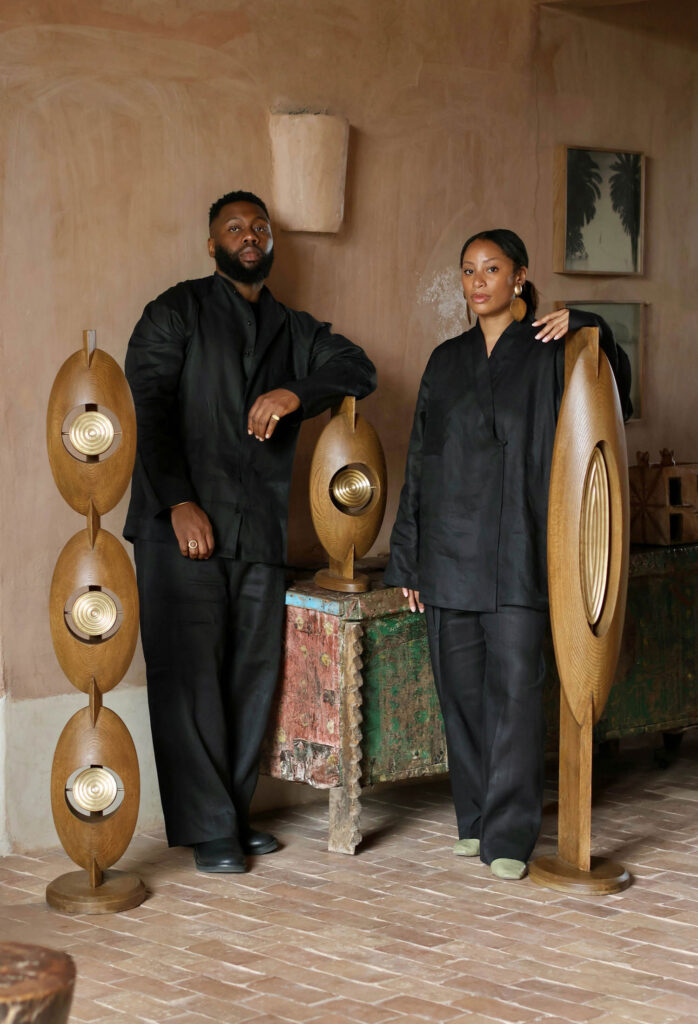
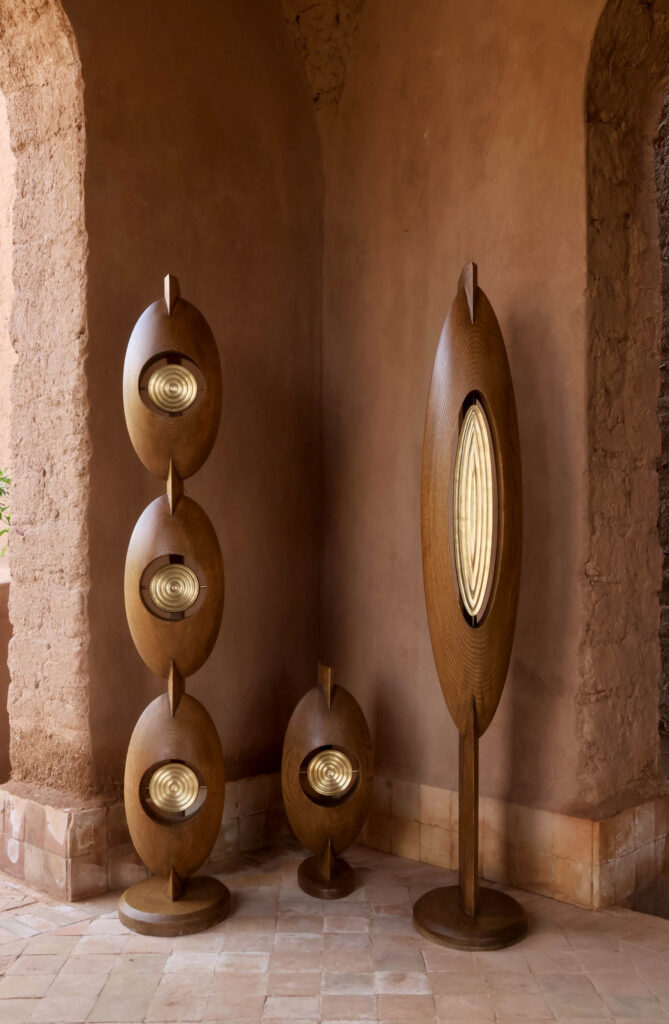
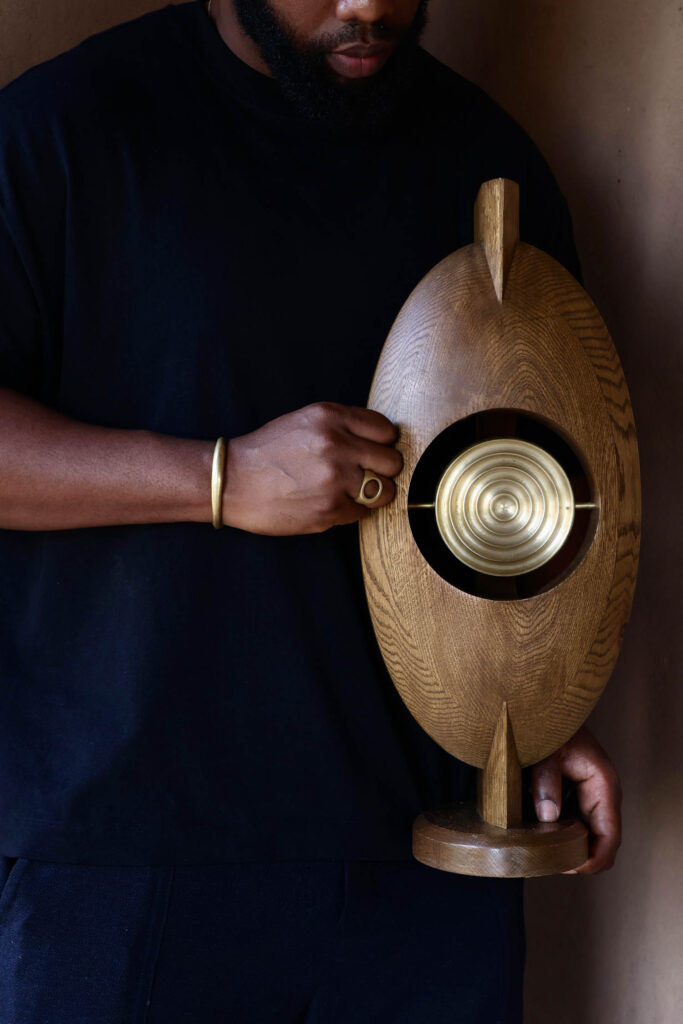
Their latest collection, Gẹ̀lẹ̀dẹ́, has been particularly acclaimed for the richness of its forms and the significance embedded within them. Comprising three lamps, the collection draws from ideas of the womb, the calabash and the orí, while opening up questions around feminine authority and ancestry. Named after the Yoruba masquerade tradition, Gẹ̀lẹ̀dẹ́ is ultimately a meditation on continuity: what is inherited, what is carried, what is nurtured, and what is passed forward.
Interior Design sat down with the duo to discuss African design, their individual backgrounds and creative processes, the inspirations that have shaped their work, the ethos behind Salù Iwadi, and their newly produced lamp collection, Gẹ̀lẹ̀dẹ́.
In Conversation With Tolu Rufai and Sandia Nassila
Interior Design: Before Salù Iwadi, who were you?
Tolu Rufai: My adolescence was shaped by Lagos before I moved to the United States as a teenager to study architecture at Howard University. I returned to Lagos in 2016, where I began practicing architecture and continued to develop an interest in the relationship between design, culture, and making.
I was always a very curious kid, and growing up in a city like Lagos, where you are constantly surrounded by movement, improvisation, construction, colour, and contradiction, develops a strong awareness of space from an early age. You are constantly negotiating between what exists, what is being built, and what future can be imagined. That way of observing has continued to inform the output of the studio today. The intricacies within the designs come from years of looking closely at the cultures, rituals, materials, gestures, and environments around me. In many ways, the output is a reflection of that observation, translating the complexity of culture into contemporary forms while allowing the architectural way of thinking to remain present in the work.
Sandia Nassila: I grew up between different cultural environments, particularly France and Senegal, with Malagasy and Comorian heritage also informing that experience. From quite early on, I was navigating several cultural references at once, different languages, ways of living, aesthetics, relationships to family, food, music and space. That sense of moving between cultures made me very aware that there is never only one way of seeing or understanding a place.
My background in hospitality and strategy also grew that interest in how people experience environments, how stories are constructed, and how culture is communicated. Later, working across different African countries made that curiosity much more intentional. I became increasingly interested in contemporary African art and design, and eventually studied contemporary African art more formally.
ID: Tolu, you studied architecture at Howard University, while Sandia comes from a background in strategy, curation and hospitality. How did those different educational and professional paths shape the way you each see design?
TR: Architecture taught me to think through systems. Structure, proportion, material, scale, context, and the relationship between an individual element and the larger environment. It also taught me discipline. You learn very quickly that an idea has to be able to exist beyond the drawing and that execution is where all the growth happens.
SN: My background taught me to think more through experience, perception, narrative, and relationships. Hospitality taught me about people and how they inhabit spaces. Strategy taught me to look at the larger ecosystem around an idea, while curation taught me how to edit and create relationships between different forms of knowledge.
ID: What were some of the creative influences around you growing up—the objects, buildings, crafts, music, people or places that shaped your visual language?
TR: Hip-Hop music is probably one of the most transformative creative influences for me growing up. What fascinated me was the idea of sampling, taking something that already existed and finding a completely new meaning or language within it. A sound, a rhythm, a voice, a fragment of something could be removed from its original context, reworked, layered, and transformed into something entirely new while still carrying the memory of where it came from.
I think that way of thinking has stayed with me. It taught me very early that originality does not necessarily mean creating from nothing. There is intelligence in looking deeply at what already exists, understanding its essence, and finding a new way to articulate it.
SN: For me, it was really the accumulation of different environments. Senegal, France, and the cultures connected to my Malagasy and Comorian heritage created a visual language that was never singular. I became interested quite early in the details that make a place feel like itself: interiors, textiles, objects, architecture, but also gestures, food, music and the way people gather.
I also entered the art world through working directly with visual artists, and that had a significant influence on the way I learned to look at things. Being around artists and their processes taught me to pay attention not only to the final work, but to the research, references and questions that sit behind it. Music has always been particularly important to me for the same reason. It demonstrates very naturally how culture travels. A rhythm can originate in one place, move somewhere else, absorb another influence and become something different while still retaining a memory of where it began. I think all of those influences come together in how I approach our practice today.
ID: How did the two of you meet?
TR: We met through a shared network, but the connection was immediate because we were both asking similar questions from different positions. The early conversations were not really about starting a studio. They were about the gaps we saw in how African histories and knowledge were being communicated, and the power design had as a medium to engage those gaps. What became clear was that our differences were productive. Architecture and strategy, Lagos and Dakar, different cultural backgrounds and different ways of thinking about objects and experiences. We were not trying to do the same thing. We were extending each other’s thoughts. The decision to build the studio came gradually. We understood that there was something important in the questions we were asking, and eventually the only logical thing was to give those questions a practice through which they could exist.
ID: When you started Salù Iwadi in 2023, what did you feel was missing from contemporary African design?
TR: We felt there was a gap between the richness of African cultural knowledge and the way that knowledge was being represented through contemporary design. There was no shortage of African inspired work, but much of it operated at the level of visual reference. We were interested in going deeper. There are incredibly sophisticated systems of knowledge embedded within craft, ritual, architecture, materials, and objects across the continent. We wanted to create a practice that could engage those systems seriously and translate them into contemporary forms without reducing them to aesthetics.
ID: The studio describes itself as sitting at the intersection of creativity and cultural exploration. What does that mean in practice when you sit down to make an object?
TR: It means that making is never the first step. We begin with a question. What are we trying to understand? Where does that knowledge live? Who carries it? What is the material relationship to it? What can an object communicate that language sometimes cannot? From there, the creative process becomes a form of translation. We are not trying to reproduce what already exists. We are trying to understand its underlying principles and ask how those principles can exist in another form and communicate clearly to a modern audience.
ID: So much of your work begins with cultural histories. When you encounter a cultural tradition that interests you, how do you begin translating that knowledge into a contemporary object?
TR: The first step is identifying the topic of interest. We research, we visit, we speak to people, we observe, and we do this loop again till we extract the essence of our findings. We try to understand the tradition within its own context before deciding what it might mean within ours.
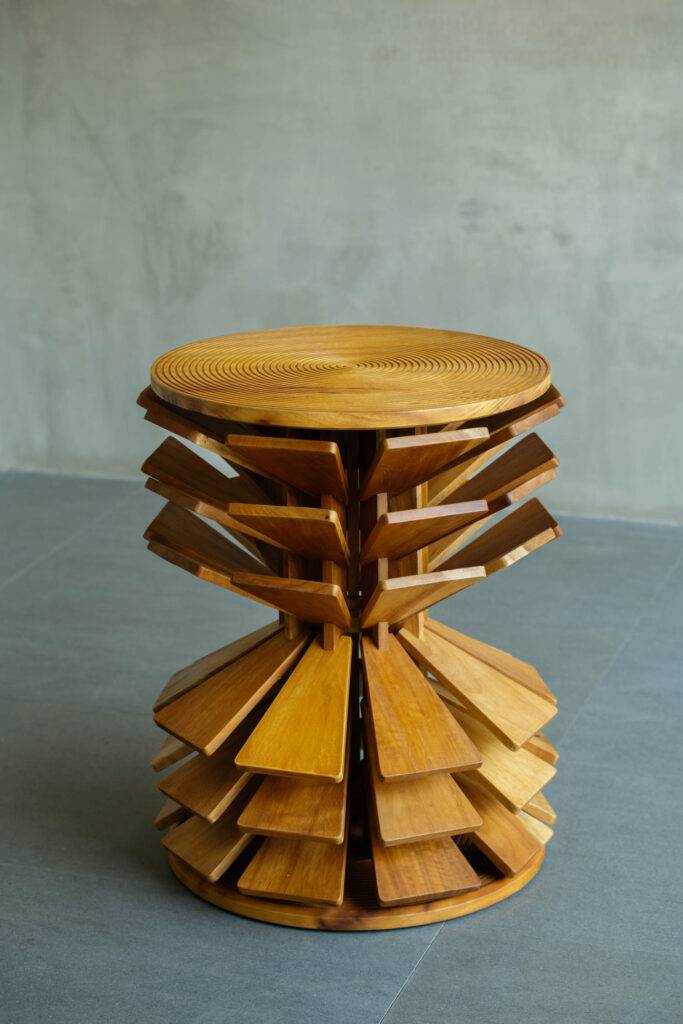
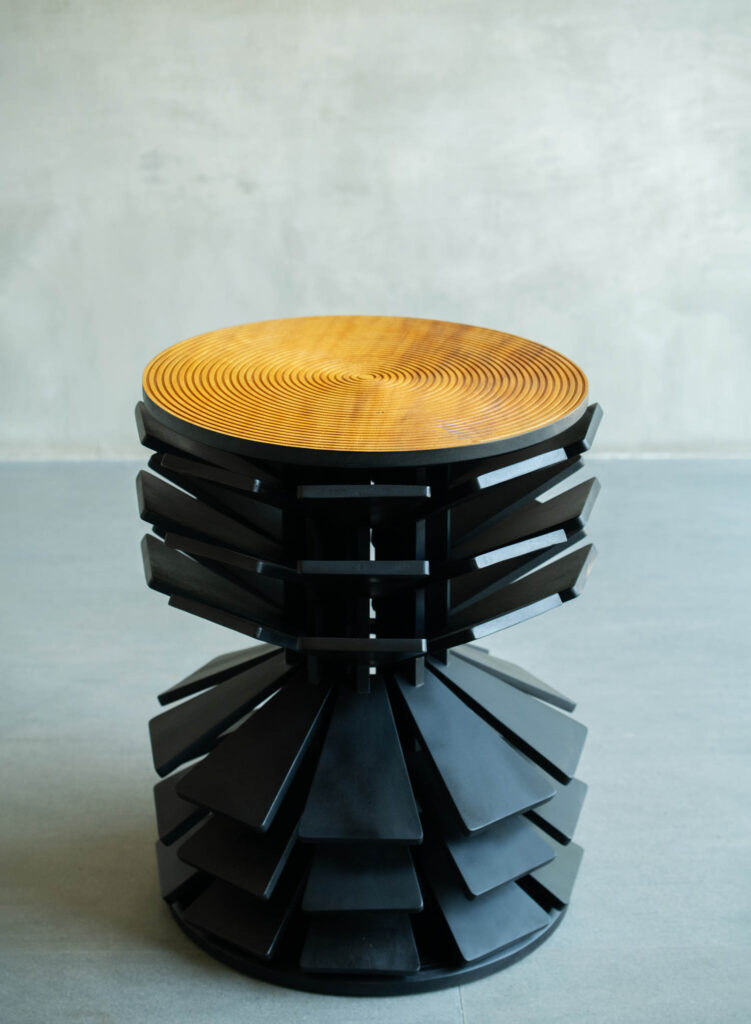
The Zangbeto Side Table is a good example. We spent a lot of 2024 in Benin studying the traditions because we did not want to make an object based on an image of Zangbeto. We wanted to understand the movement, the structure, the symbolism, and the role that Zangbeto occupies within its actual cultural context.
ID: Your work moves between different African cultures and geographies. Do you think there is a single African design language?
TR: We do not believe there is a single African design language. The continent is far too complex for that. There are thousands of histories, languages, materials, belief systems, climates, and forms of making. To reduce that into one visual language would actually contradict the richness we are interested in.
What we believe exists is a network of relationships. There are shared principles, recurring ideas, parallel forms, and systems of knowledge that move across regions and generations. Those connections are what interest us. So when we say African design, we are not describing an aesthetic. We are describing a field of knowledge. Our ambition is to uncover different voices within that field and allow them to exist in contemporary design without flattening their differences.
ID: Of the pieces you’ve made so far, is there one project that feels like a turning point for Salù Iwadi and Why?
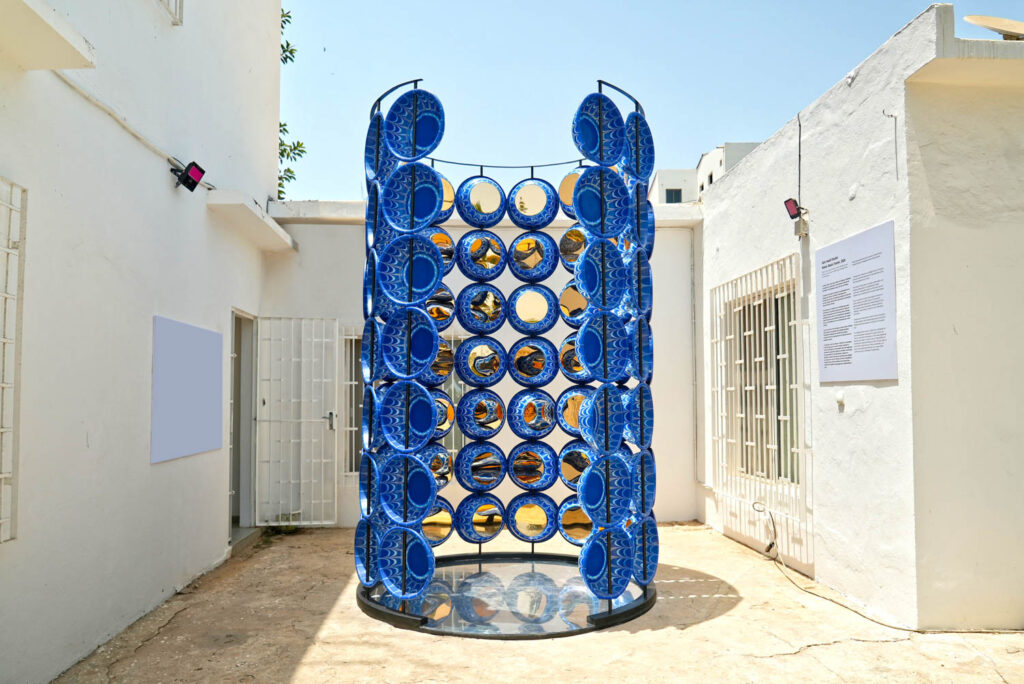
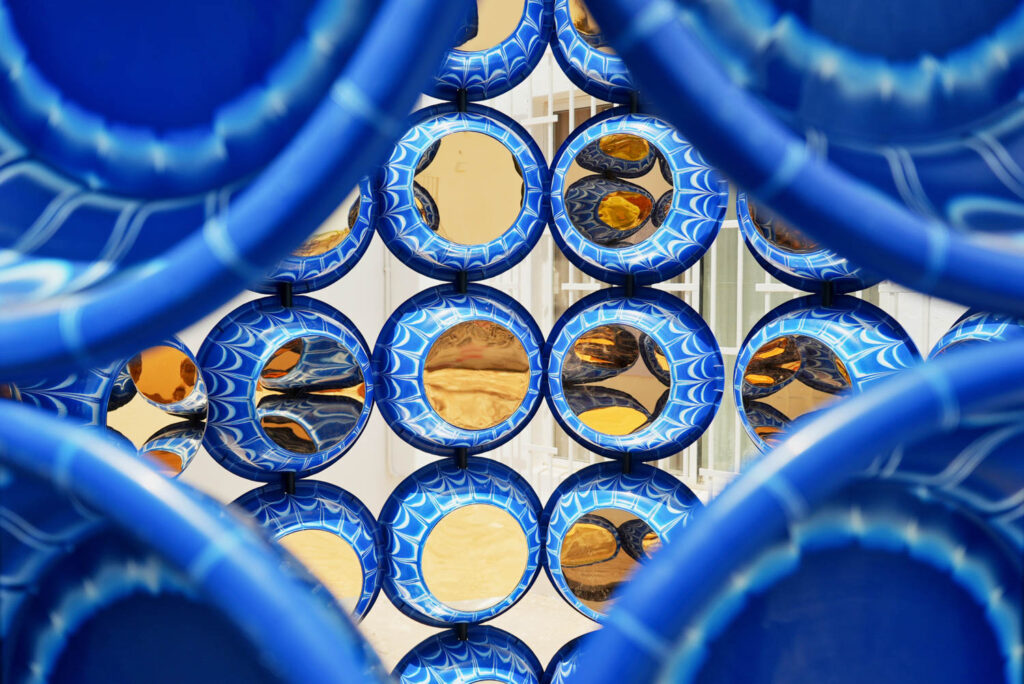
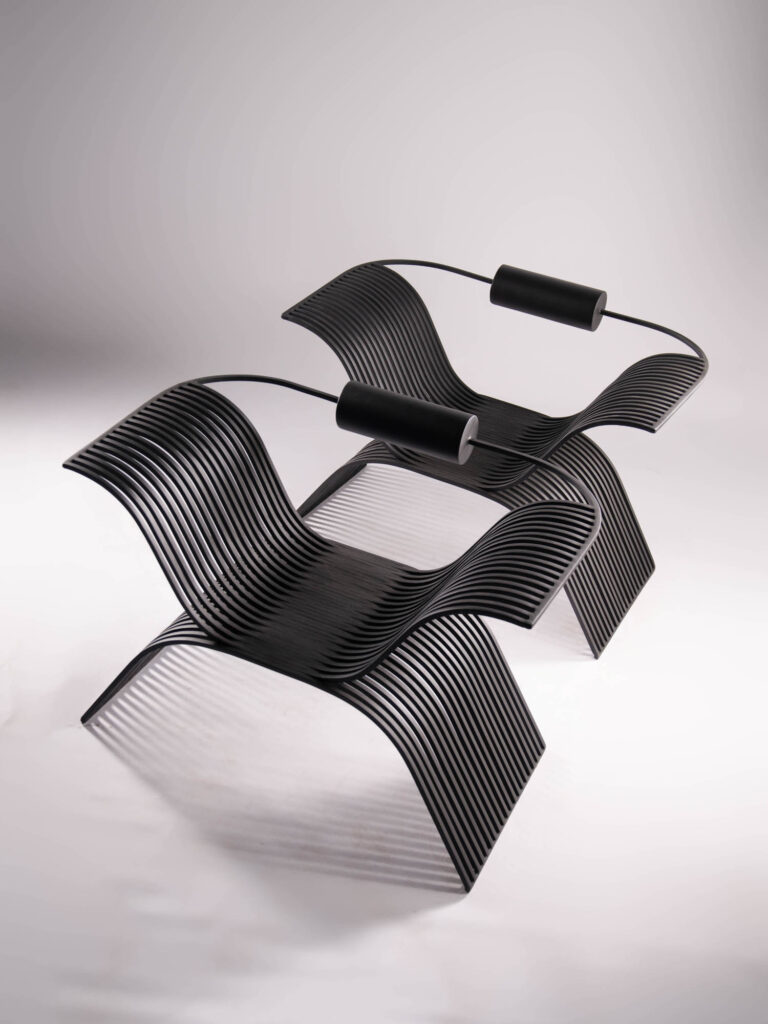
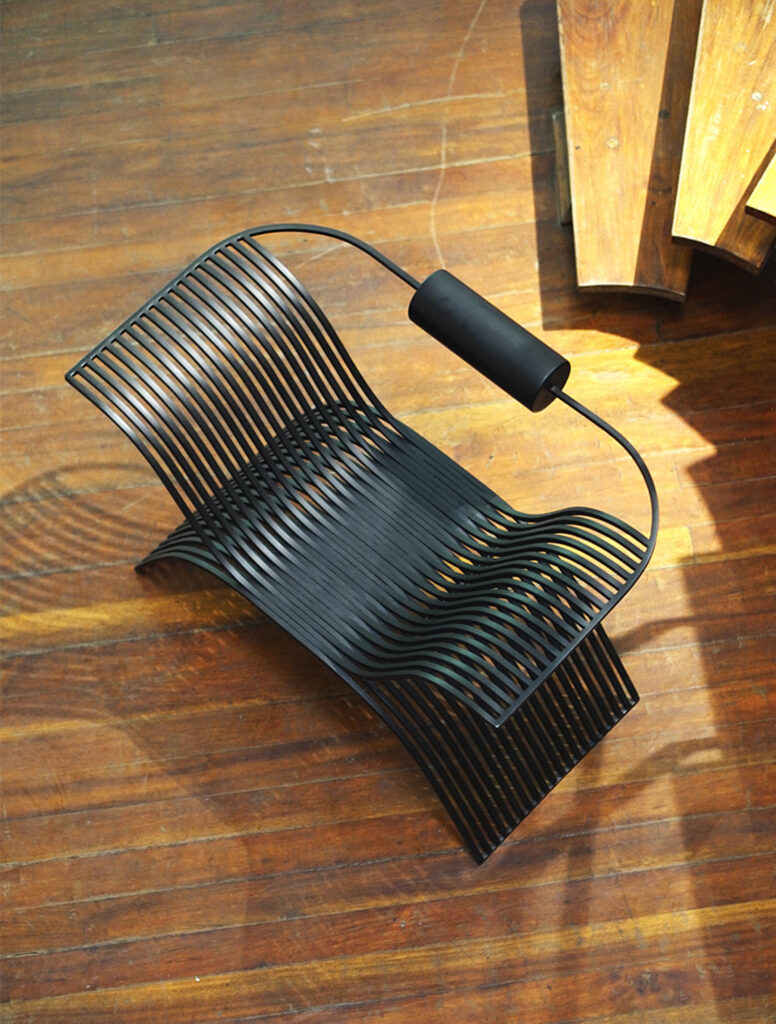
TR: We would say they have all been turning points in their own way, because each project taught us something different about who we are as a studio and how we want to approach our practice. The Pàtéwọ Chair was important because it was our first product and gave us the opportunity to begin translating cultural references into contemporary objects. Zangbeto pushed us further into material research and the relationship between form, function, and cultural symbolism. The Water Basin Totem expanded that thinking beyond the scale of the object and allowed us to explore installation, public engagement, and the environmental issues that surround us.
The Gèlèdẹ́ Lamp Collection feels like another significant point in that evolution. It allowed us to bring together many of the things we had been exploring across the earlier projects, from cultural memory and symbolism to material experimentation and craftsmanship, but with a greater level of intricacy and narrative.
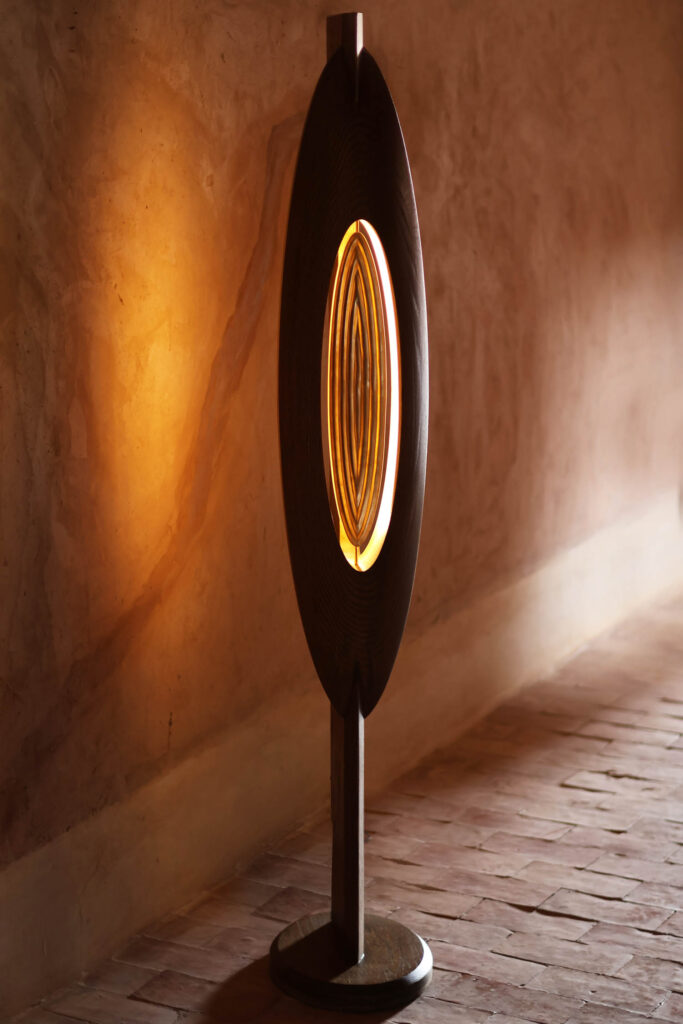
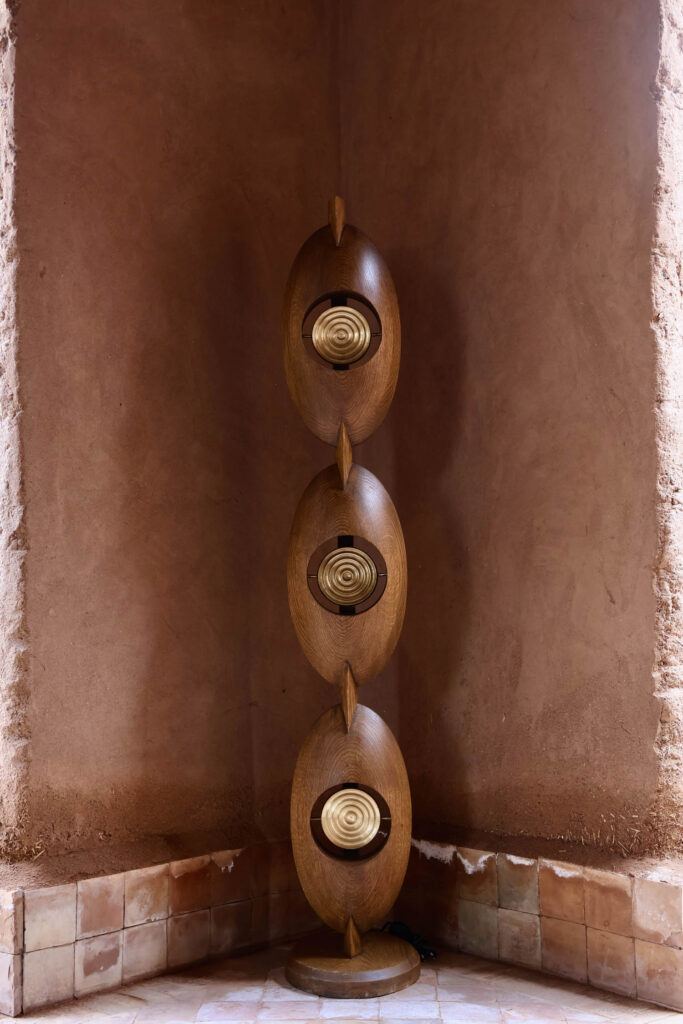
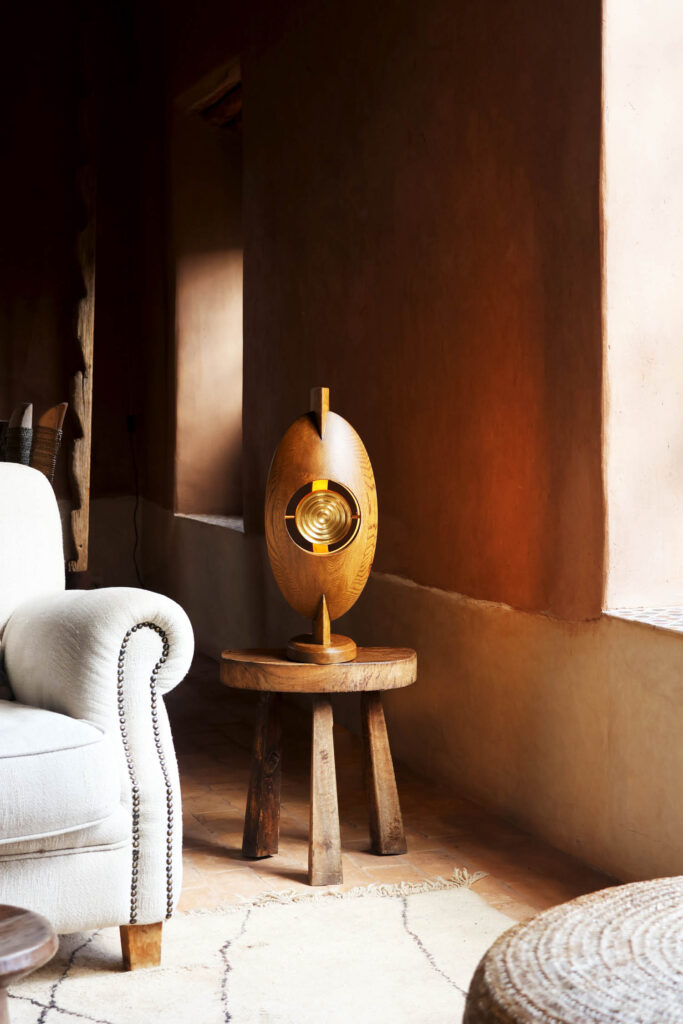
ID: Your new Gèlèdẹ́ Lamp Collection feels particularly intimate compared with some of your earlier objects. Where did the idea begin, and what drew you to Gèlèdẹ́ as the starting point?
TR: The collection began with an interest in light as something more than illumination. Light has always carried symbolic weight. It can represent knowledge, hope, presence, transition, and continuity. That led us toward the idea of light as something that is carried and nurtured rather than simply produced. Gèlèdẹ́ became a natural point of departure because of its relationship to the power of Mothers and to feminine authority, community, ancestry, and continuity. What interested us was not simply the visual language of Gèlèdẹ́, but the philosophy that surrounds it. We were particularly drawn to the idea of knowledge and life being carried from one generation to another. That created a relationship between light, ancestry, motherhood, and the continuation of knowledge. The lamp became a vessel for that idea. Compared with some of our earlier work, the collection is more intimate because it enters the domestic environment differently. It is not only something you encounter. It becomes something you interact and live with on a day to day basis.
read more
DesignWire
Parini Gives Detroit Foundation Hotel A New Chapter
To refresh the Detroit Foundation Hotel, Parini cofounders partnered with Crypton, creating a fresh aesthetic for the storied locale.
DesignWire
Beijing’s Fountain Plaza Welcomes A Futuristic Book Pavilion
LUO Studio’s Shell Book Pavilion in Beijing transforms collective reading into an experience with a biomorphic aluminum form that opens to reveal shelves of books.