
7 Global Projects That Elevate Urban Life And Public Service
From a train station in Australia to an auto showroom in Spain, these seven international projects are exemplars of service to the city.
jakub vašek
project Funeral Hall Vimperk, Czech Republic.
Photography by Filip Beránek., 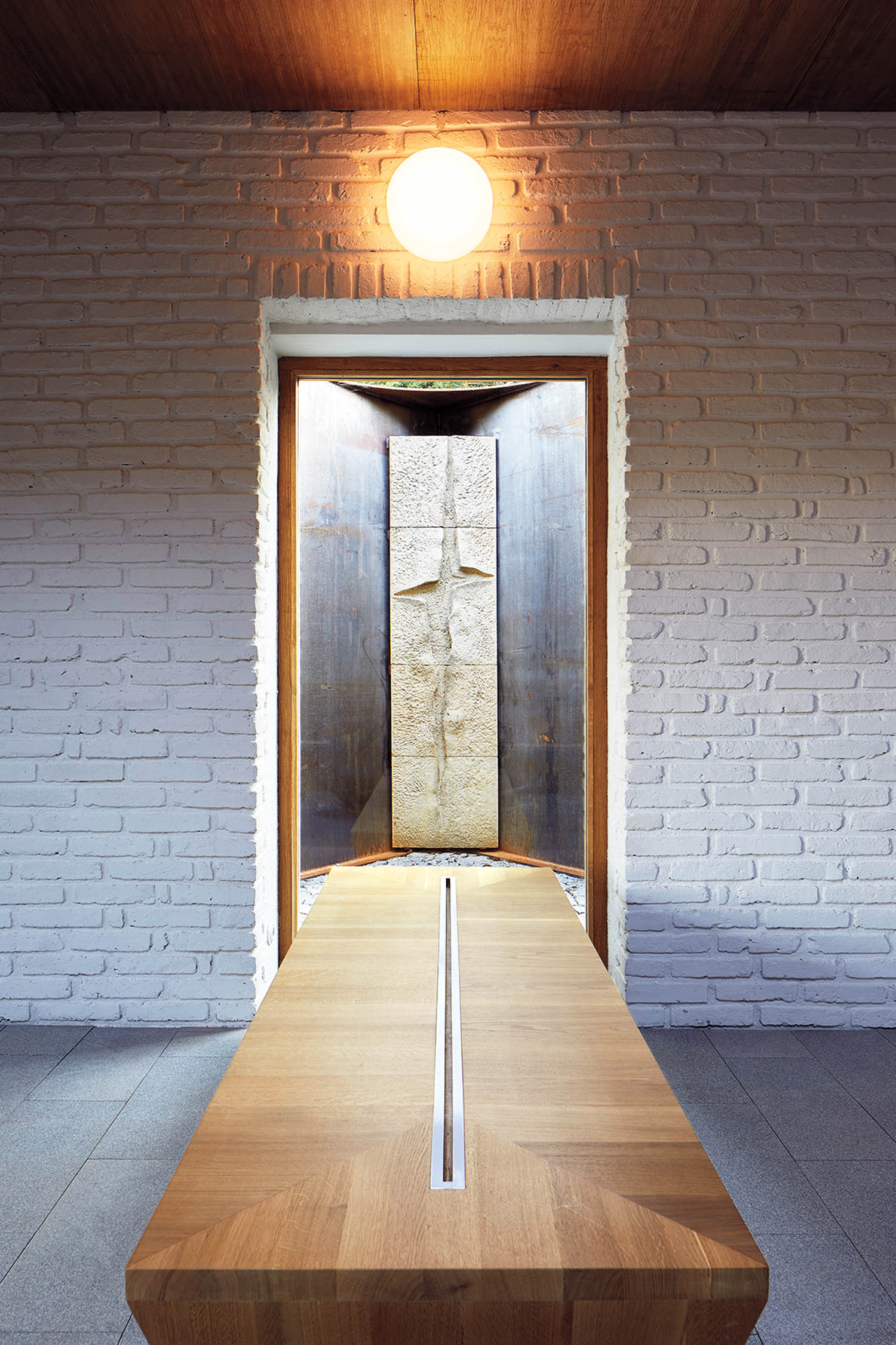
Photography by Filip Beránek., 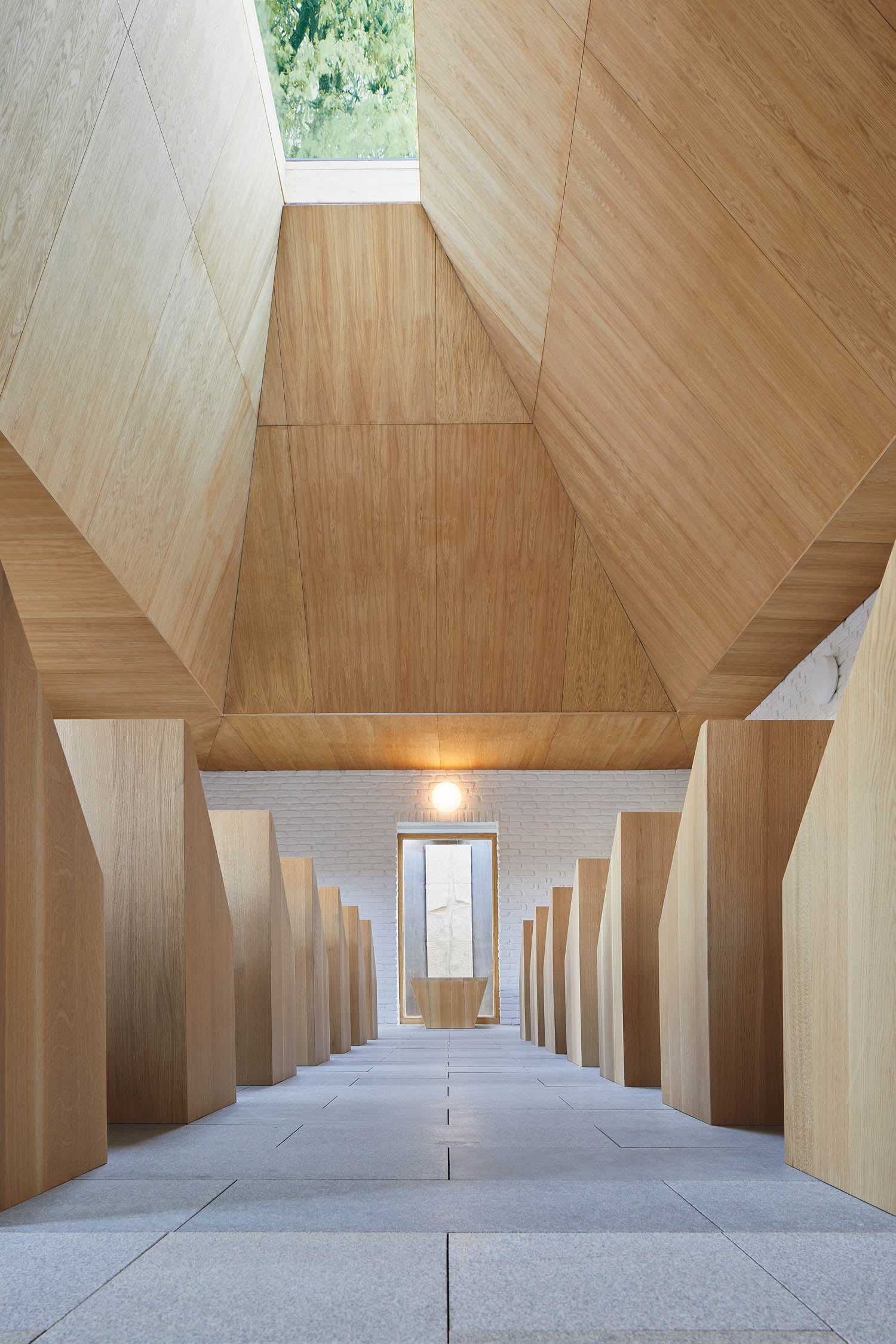
Photography by Filip Beránek., 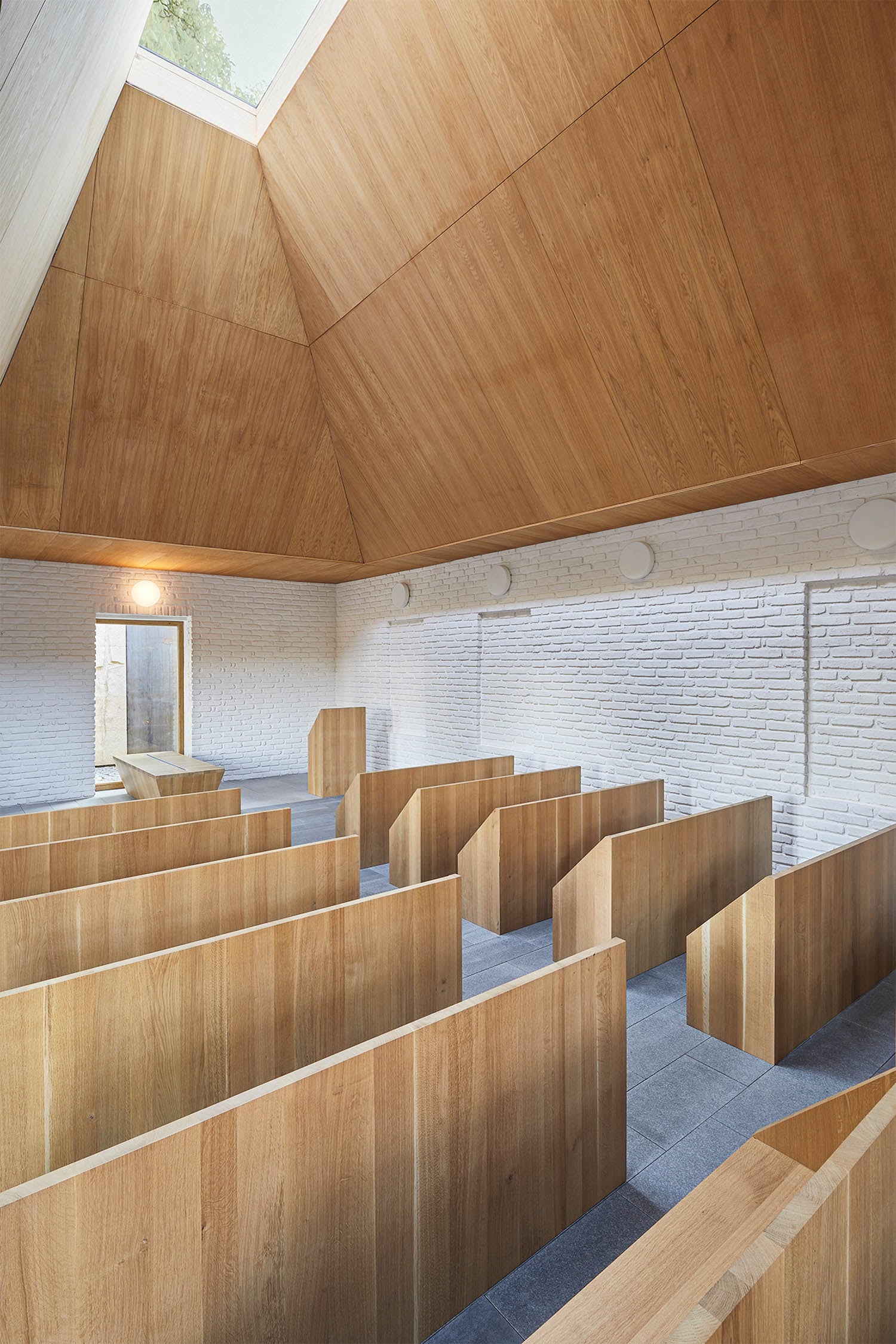
Photography by Filip Beránek.,
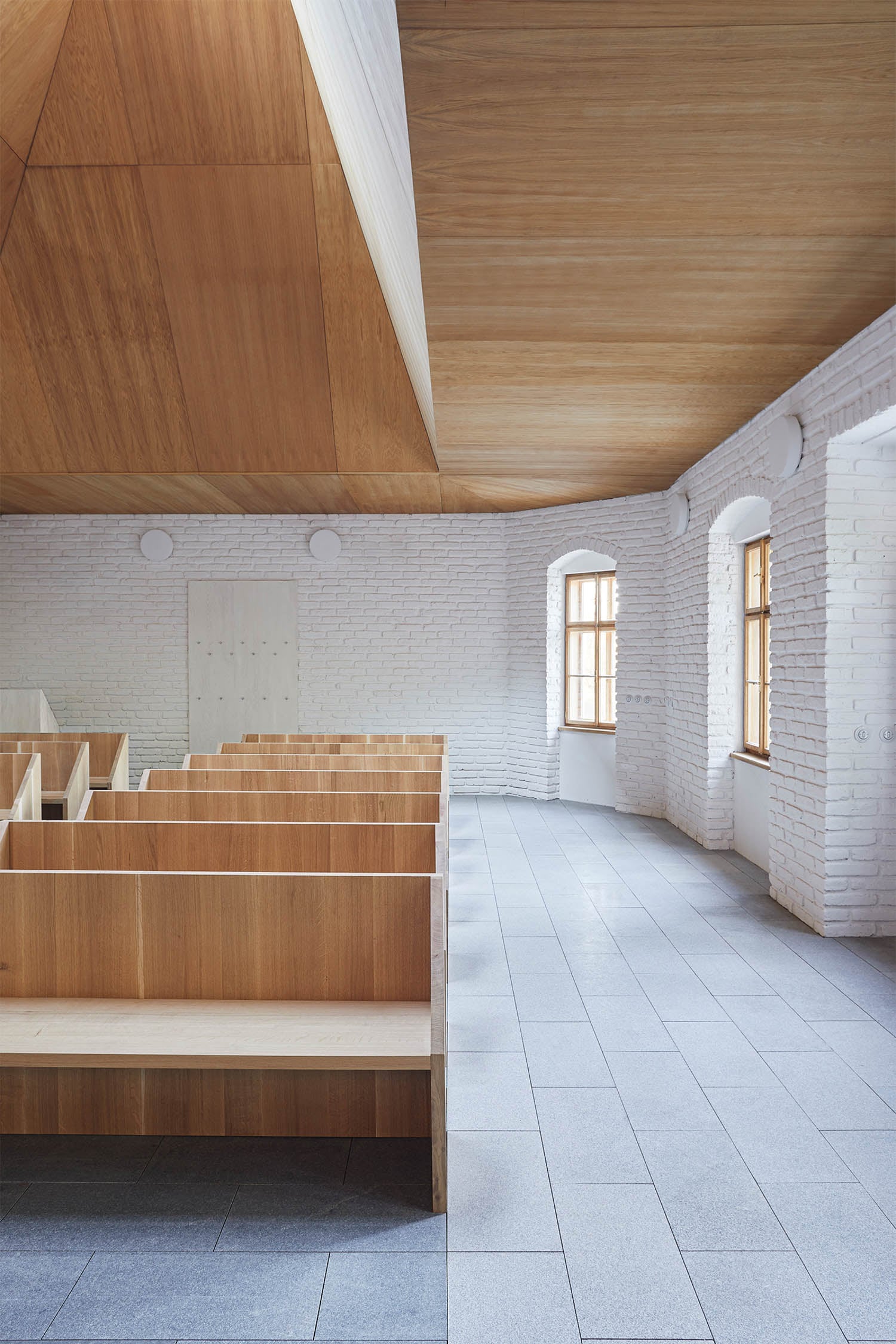
standout In an act of rebirth, a dilapidated, structurally unsafe cemetery-caretaker’s house, which had also sometimes served as a modest funeral hall, was dismantled brick by brick and selected materials salvaged for the rebuild of this 2,100-square-foot facility on the same footprint. A chapel-like space was created by eliminating internal partitions and inserting a skylight at the roof’s peak, providing a sense of infinite height. A sandstone sculpture from the former hall, flanked by raw-iron plates, terminates the axis behind the catafalque. Oak panels clad the ceiling, and the palette of reclaimed brick and stone alongside new pine, granite, and ceramic mosaic will age with quiet grace.
wutopia lab
project CXCC Summit 58 Observatory, Shanghai.
Photography by CreatAR Images. 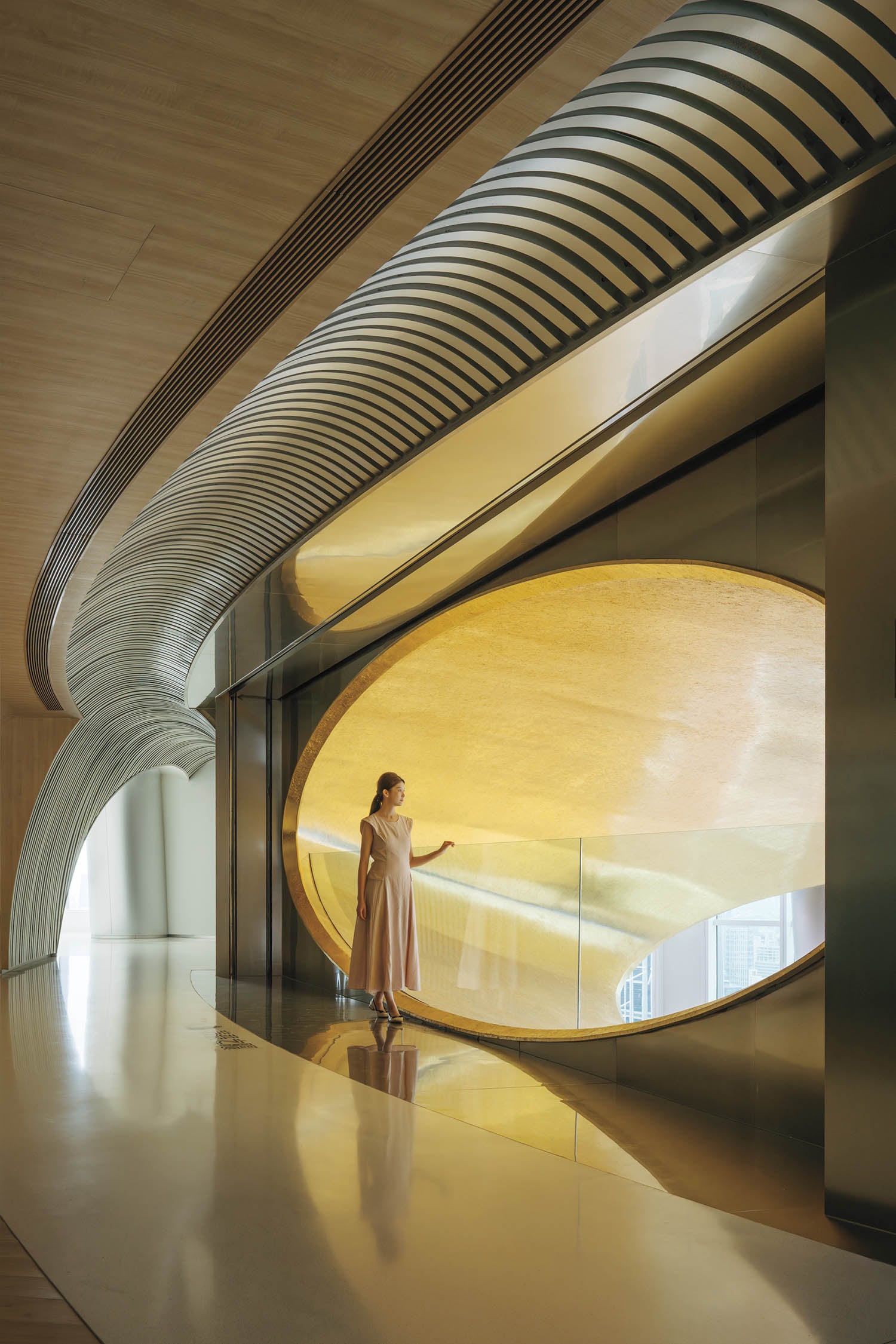
Photography by CreatAR Images. 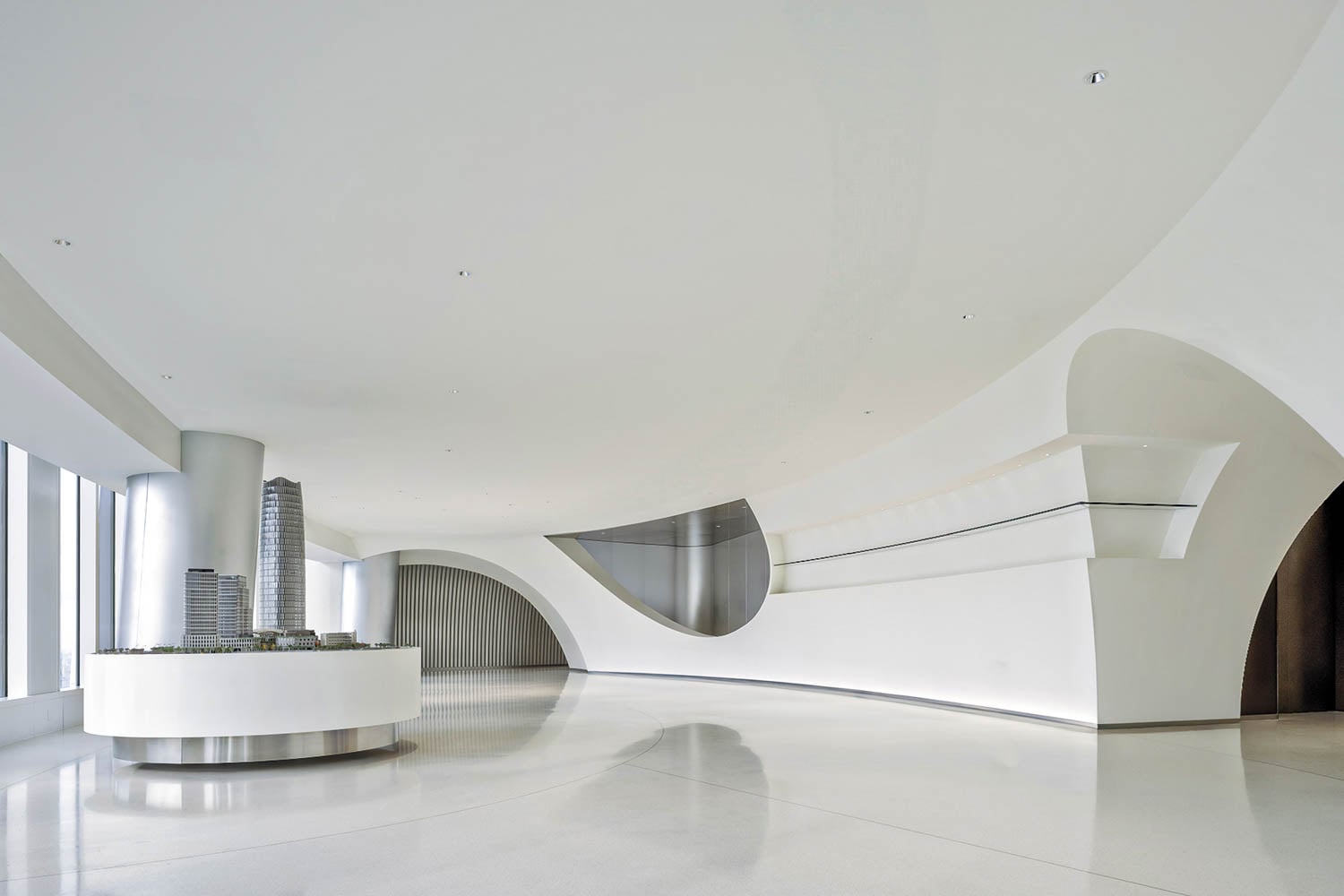
Photography by CreatAR Images. 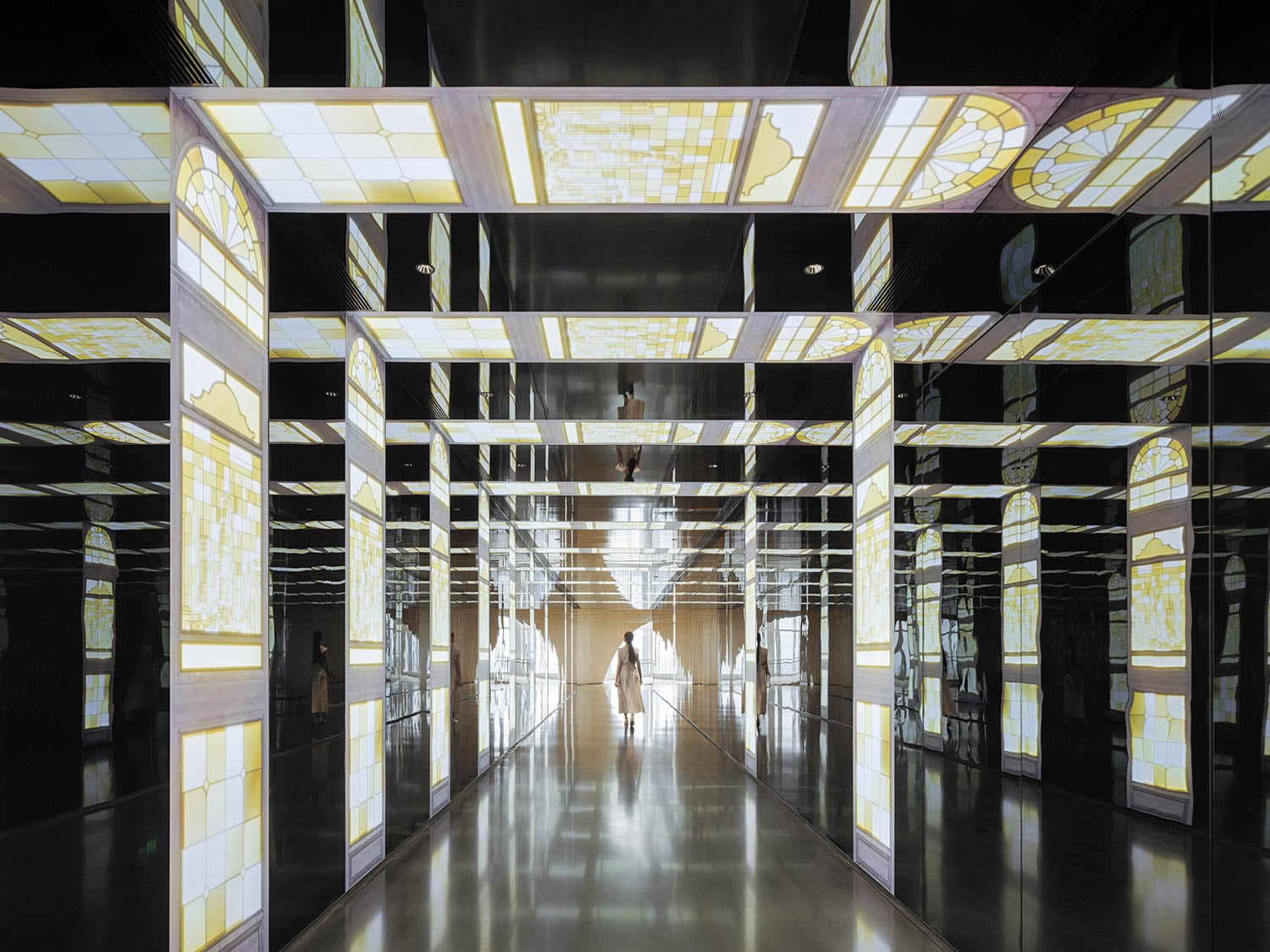
Photography by CreatAR Images. 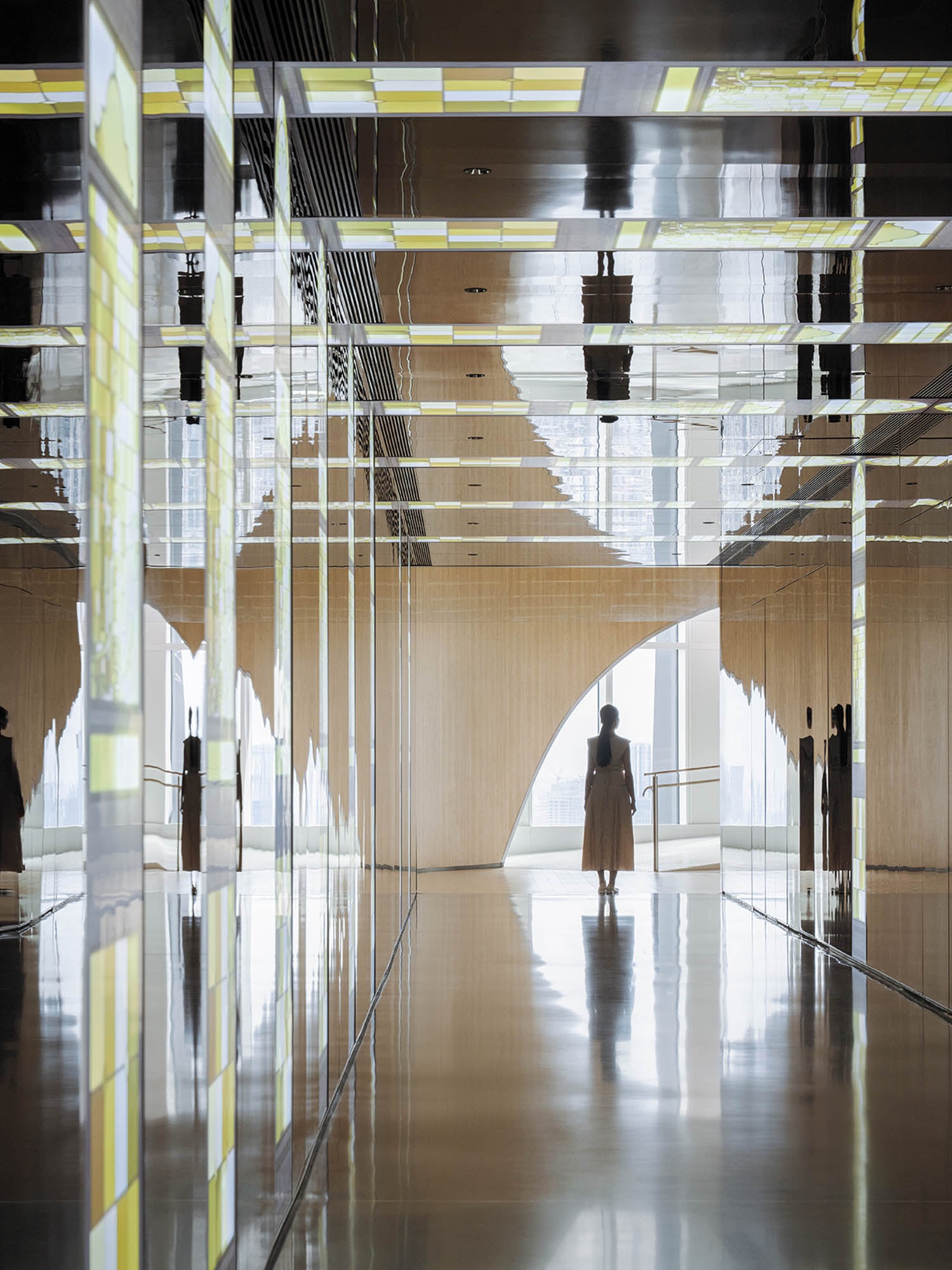
Photography by CreatAR Images. 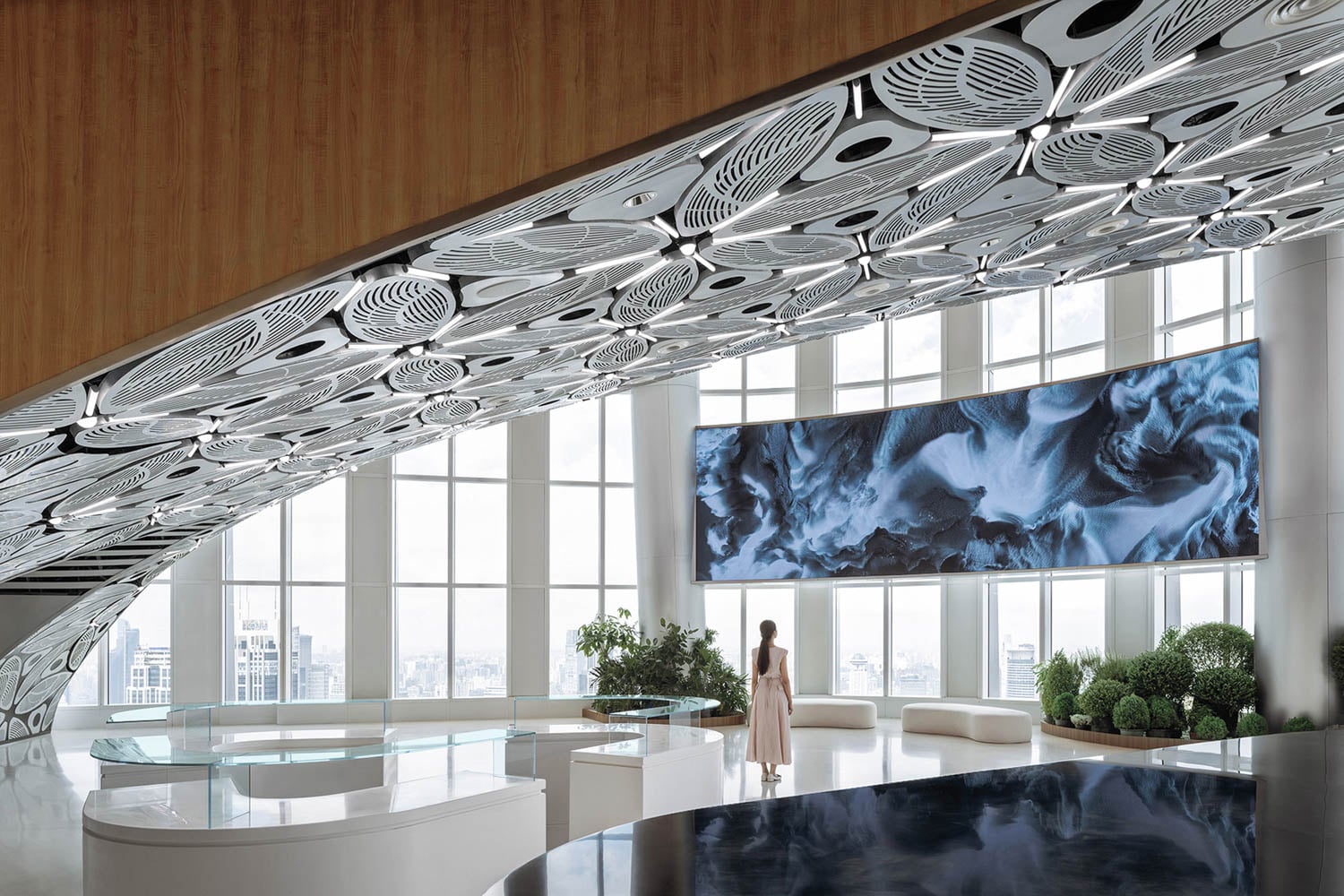
Photography by CreatAR Images.
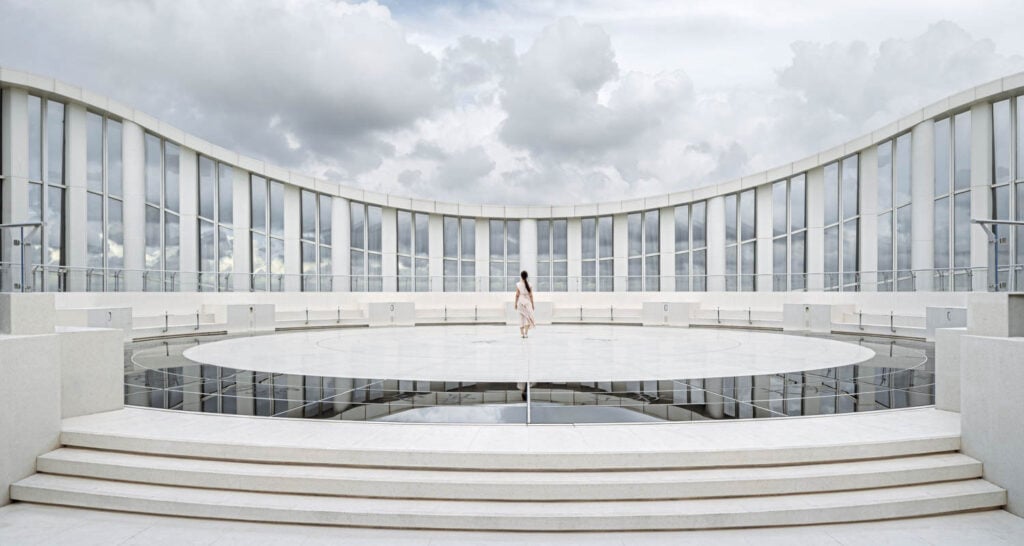
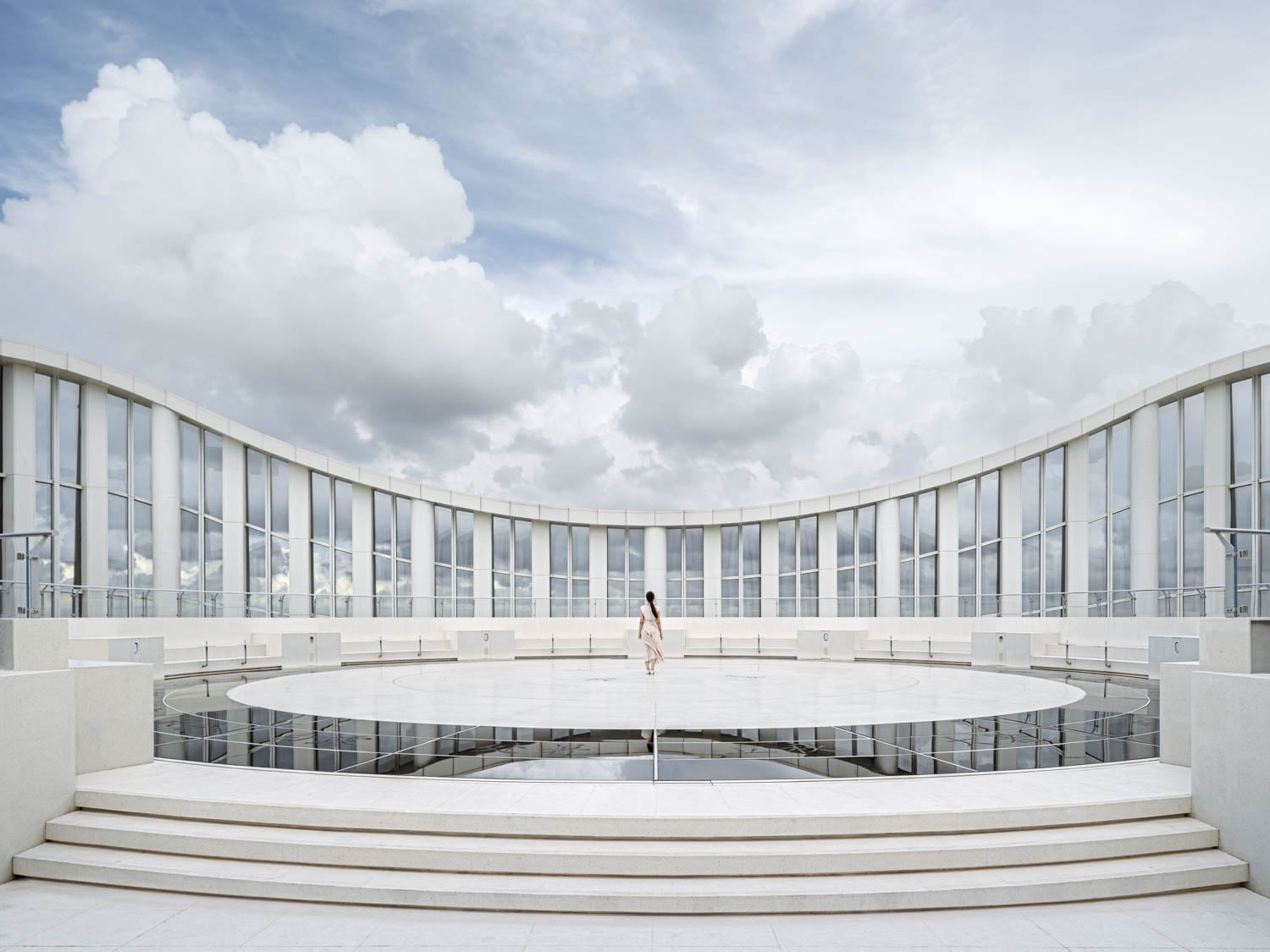
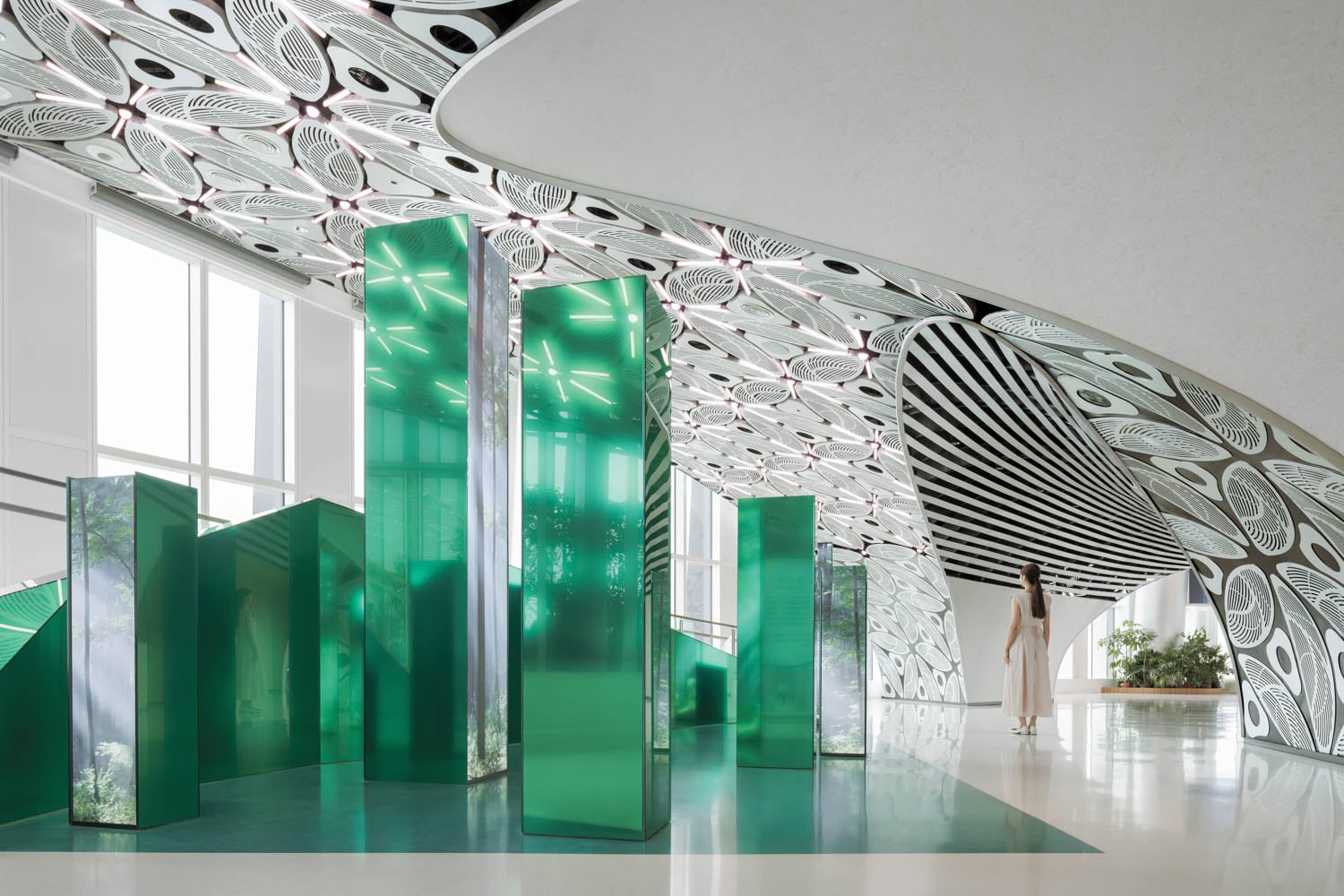
standout Crowning an 820-foot KPF-designed tower in the Xintiandi district, this 57,000-square-foot urban observatory and cultural attraction unfolds across four levels—from the 55th-floor foyer through exhibition spaces, lecture rooms, lounges, and bars to the open-air platform perched on the roof. The central concept, an abstract iceberg, is rooted in climate consciousness and China’s ambitious carbon-neutrality commitments. Continuous white arched vaults lend the interior the charged atmosphere of glacial caves, and the 1,100 snowflake-patterned perforated-aluminum panels incorporate all building services into a single cohesive ceiling. Enclosed carbon-capture gardens thread greenery through the lower levels, while the 24 traditional Chinese solar markers etched into the disk on top turn it into a vast photovoltaic sundial.
ooiio architecture
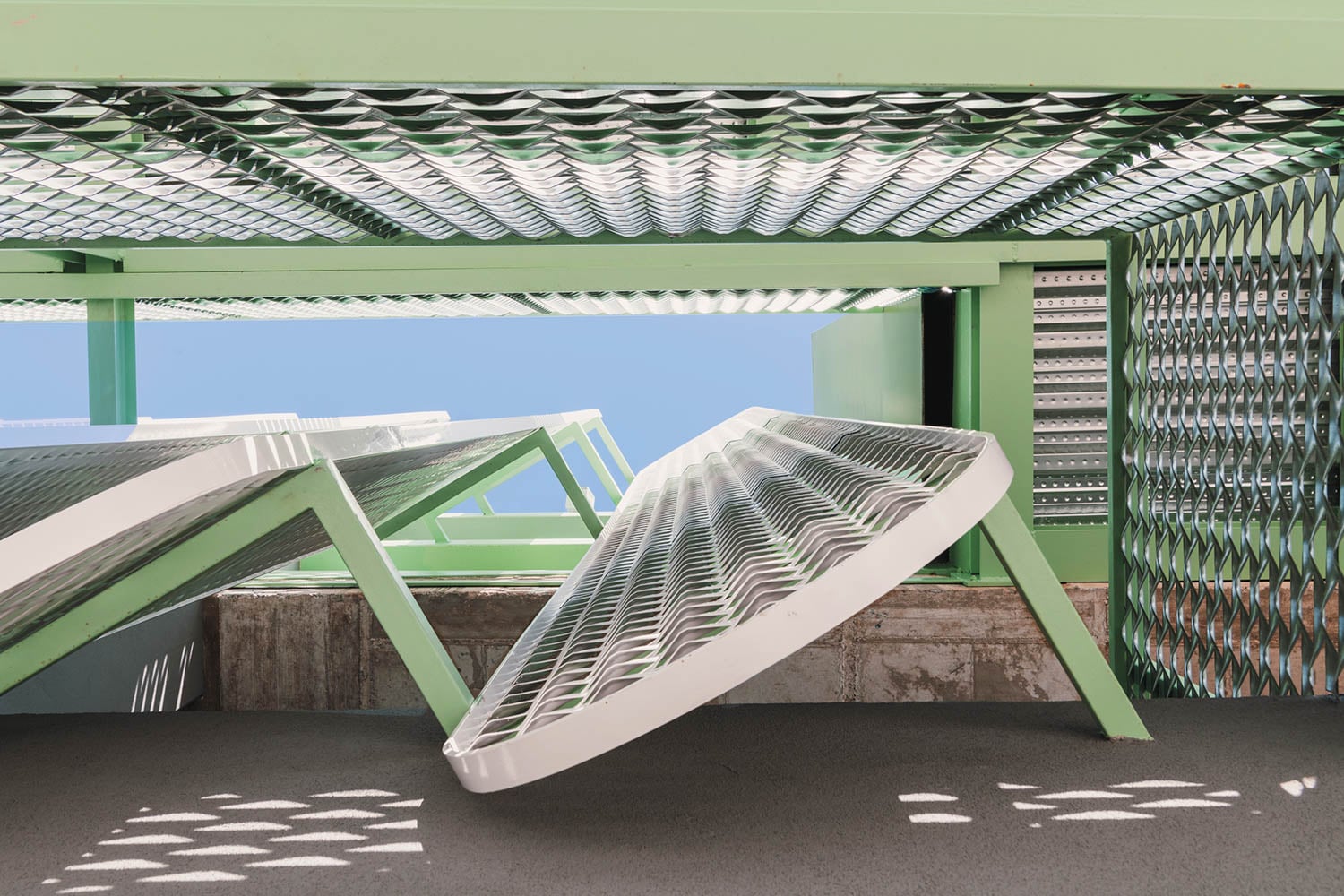
project Leganés Auto Center, Madrid.
Photography by Javier de Paz. 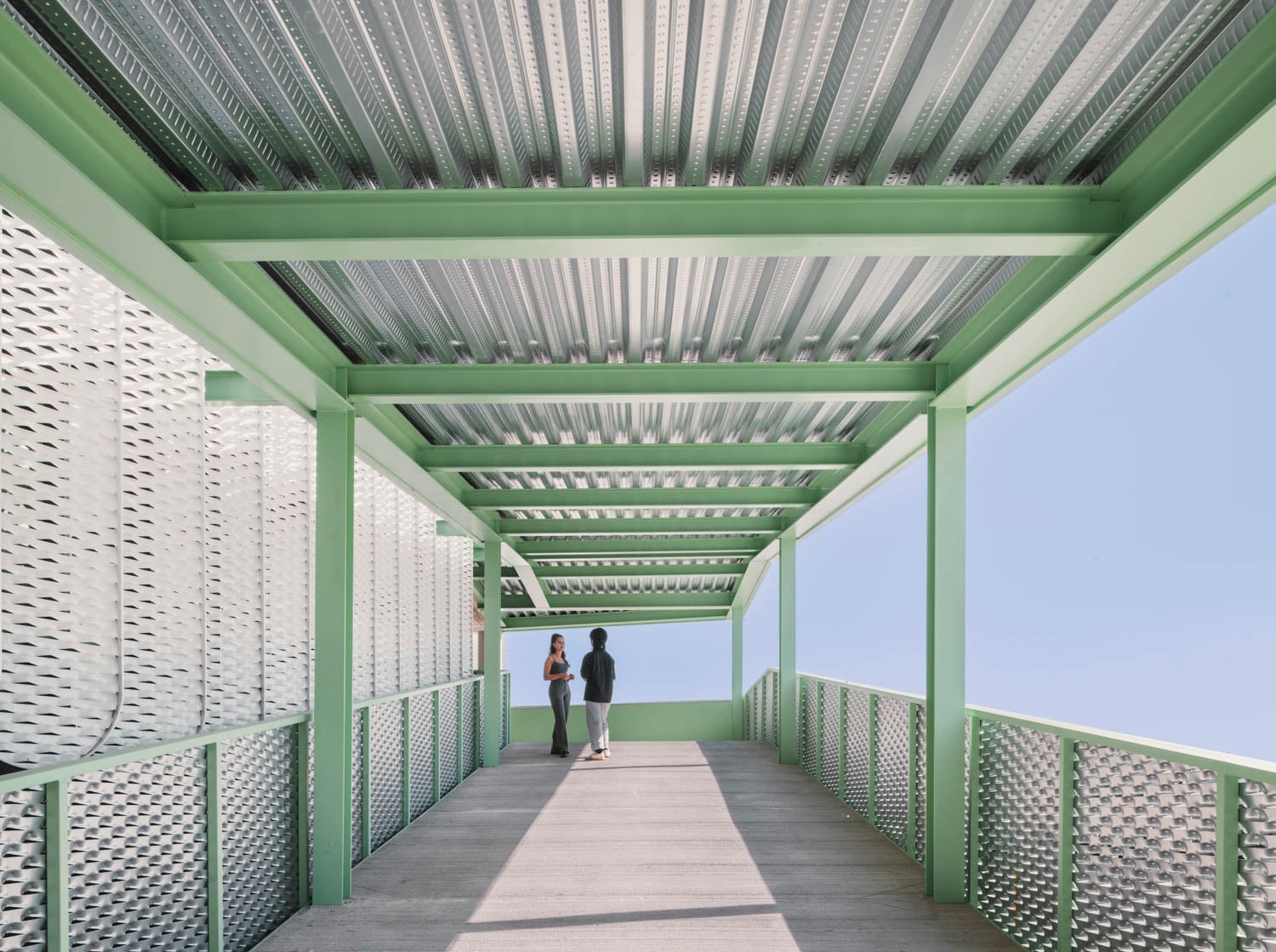
Photography by Javier de Paz. 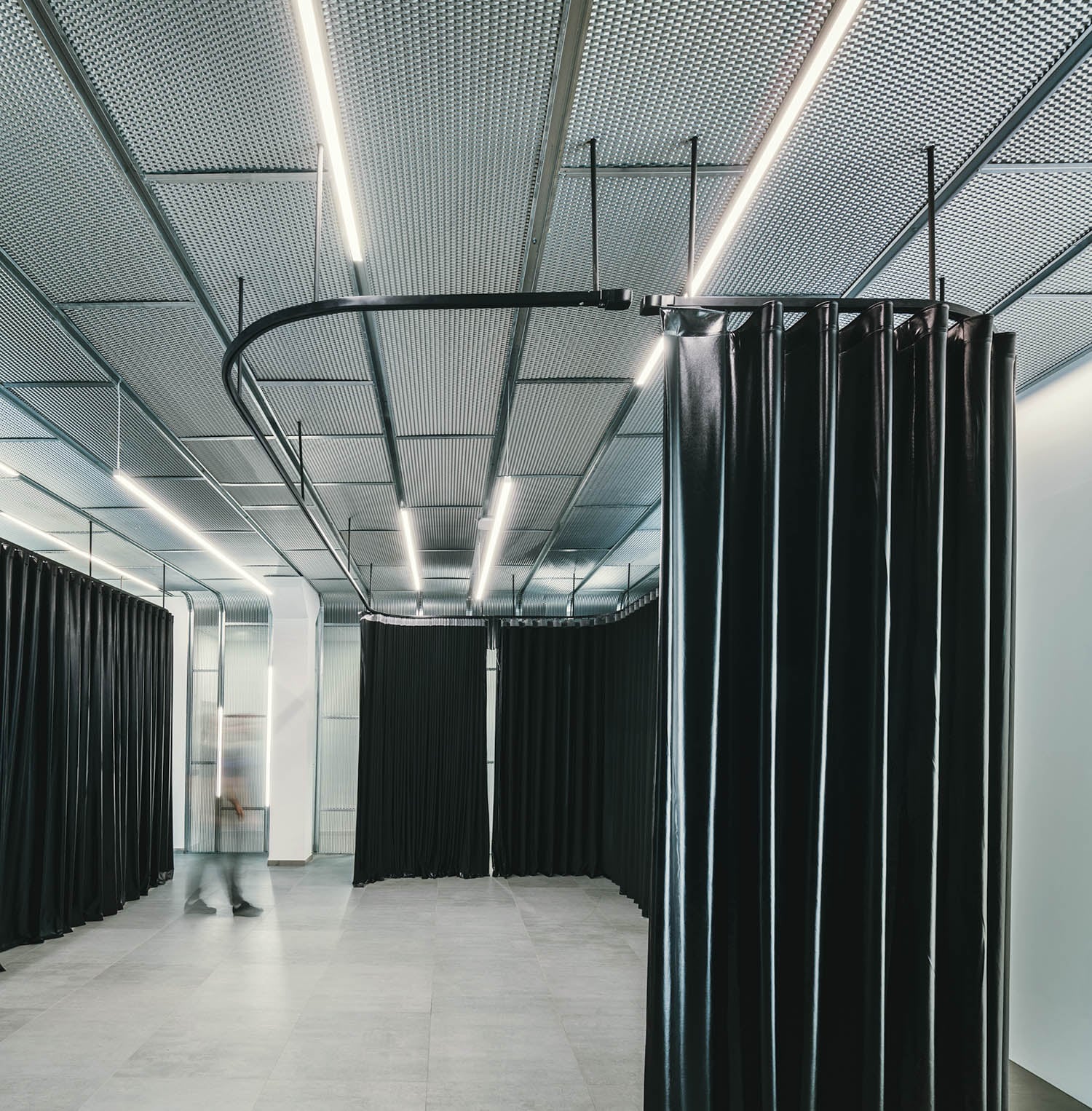
Photography by Javier de Paz. 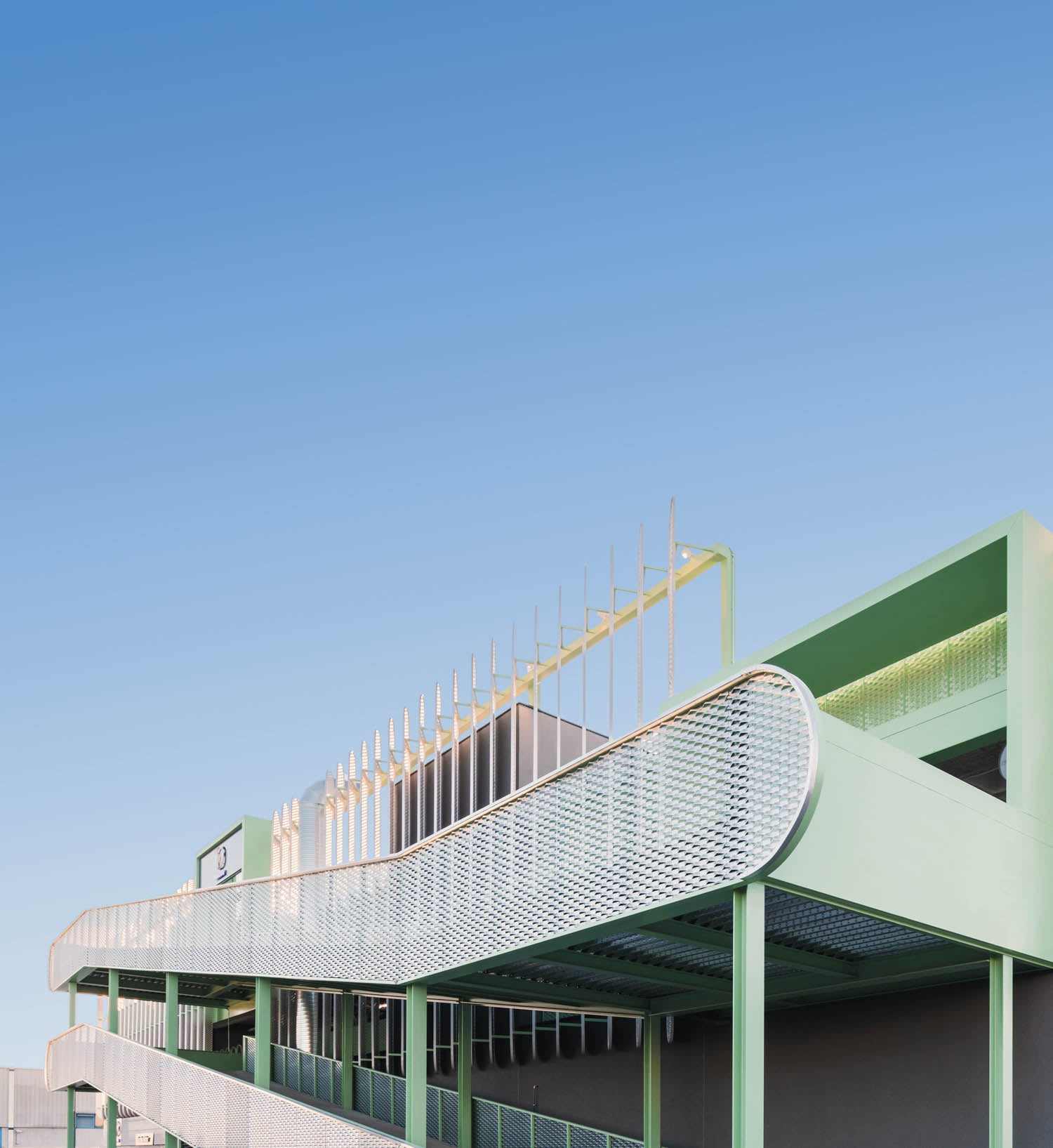
Photography by Javier de Paz. 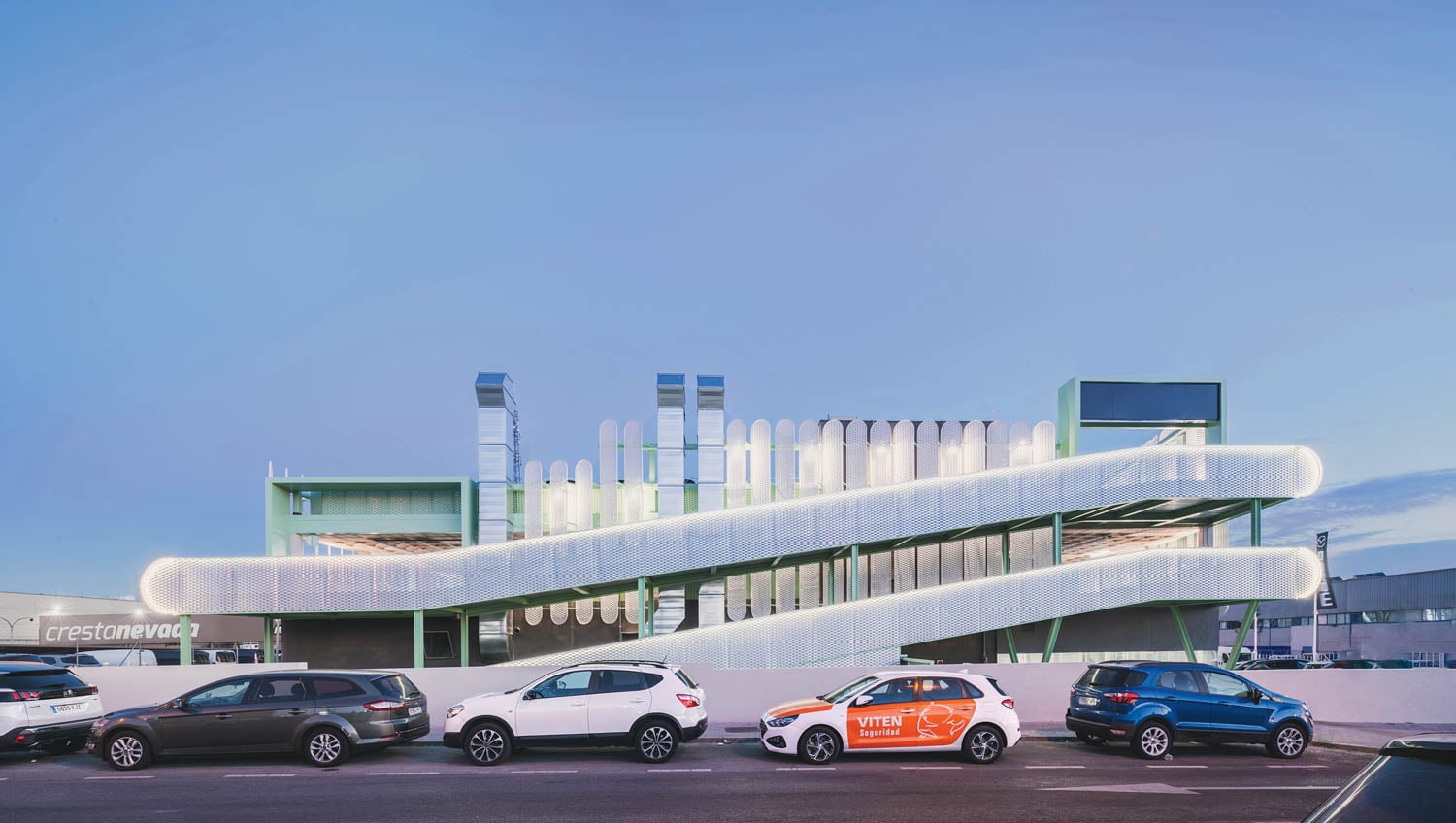
Photography by Javier de Paz.
standout The adaptive reuse of a former kitchen factory in an industrial park on the Spanish capital’s outskirts yields this 124,000-square-foot car showroom and repair shop—a rare instance of architectural ambition applied to a building type typically left to engineering firms. The existing structure was reinforced, and the original roof replaced with a vehicle-storage level shaded by photovoltaic pergolas generating enough energy to supply the center and contribute to the surrounding area. The defining gesture is the new facade: White metal slats of varying sizes on a mint-green substructure wrap the perimeter, integrating chimneys and ventilation ducts while providing passive solar control and natural cross ventilation through even the hottest Iberian summer.
dlr group
project Kalamazoo Regional Educational Service Agency Career Connect Campus, Michigan.
Photography by Michael Robinson. 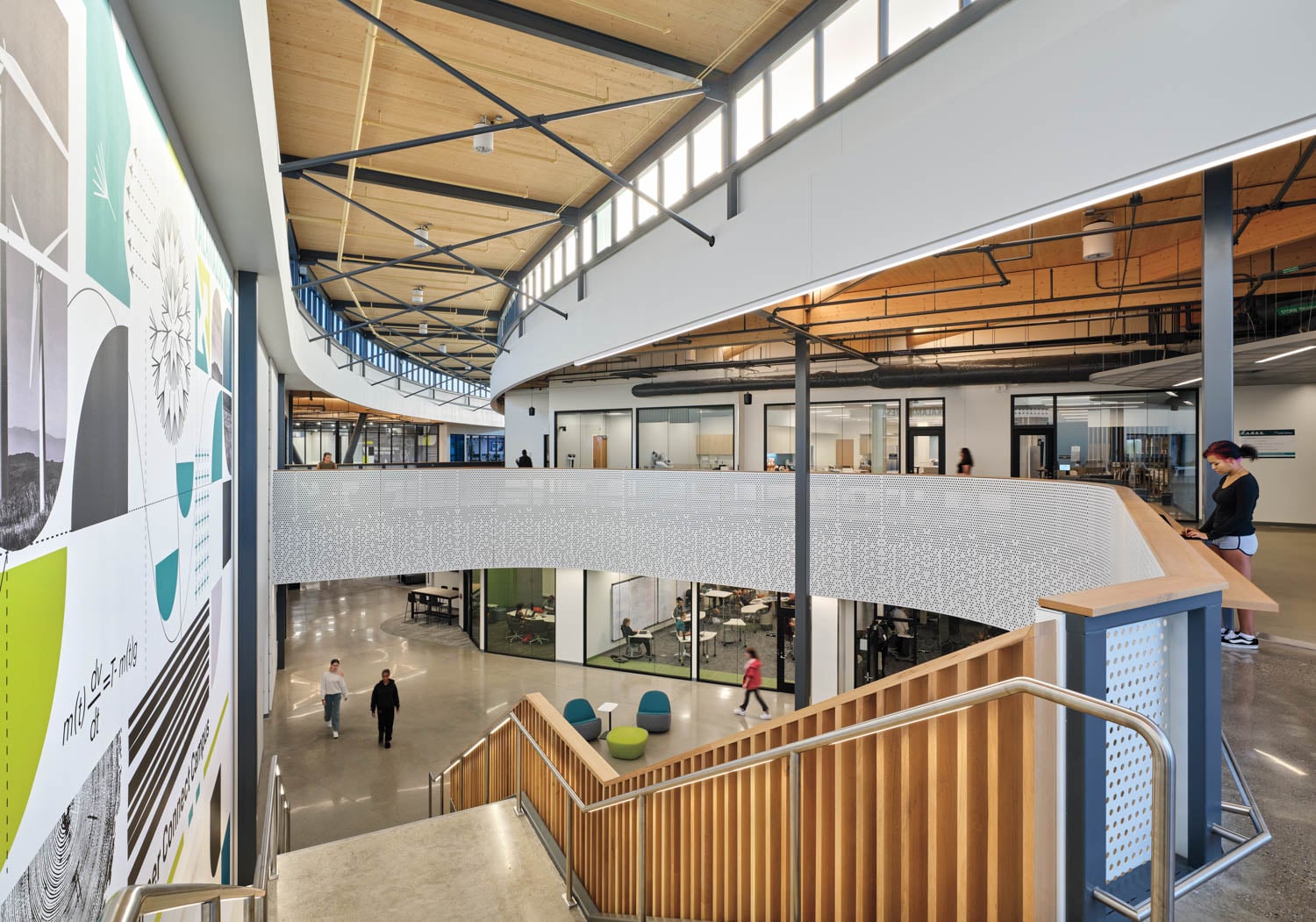
Photography by Michael Robinson. 
Photography by Michael Robinson. 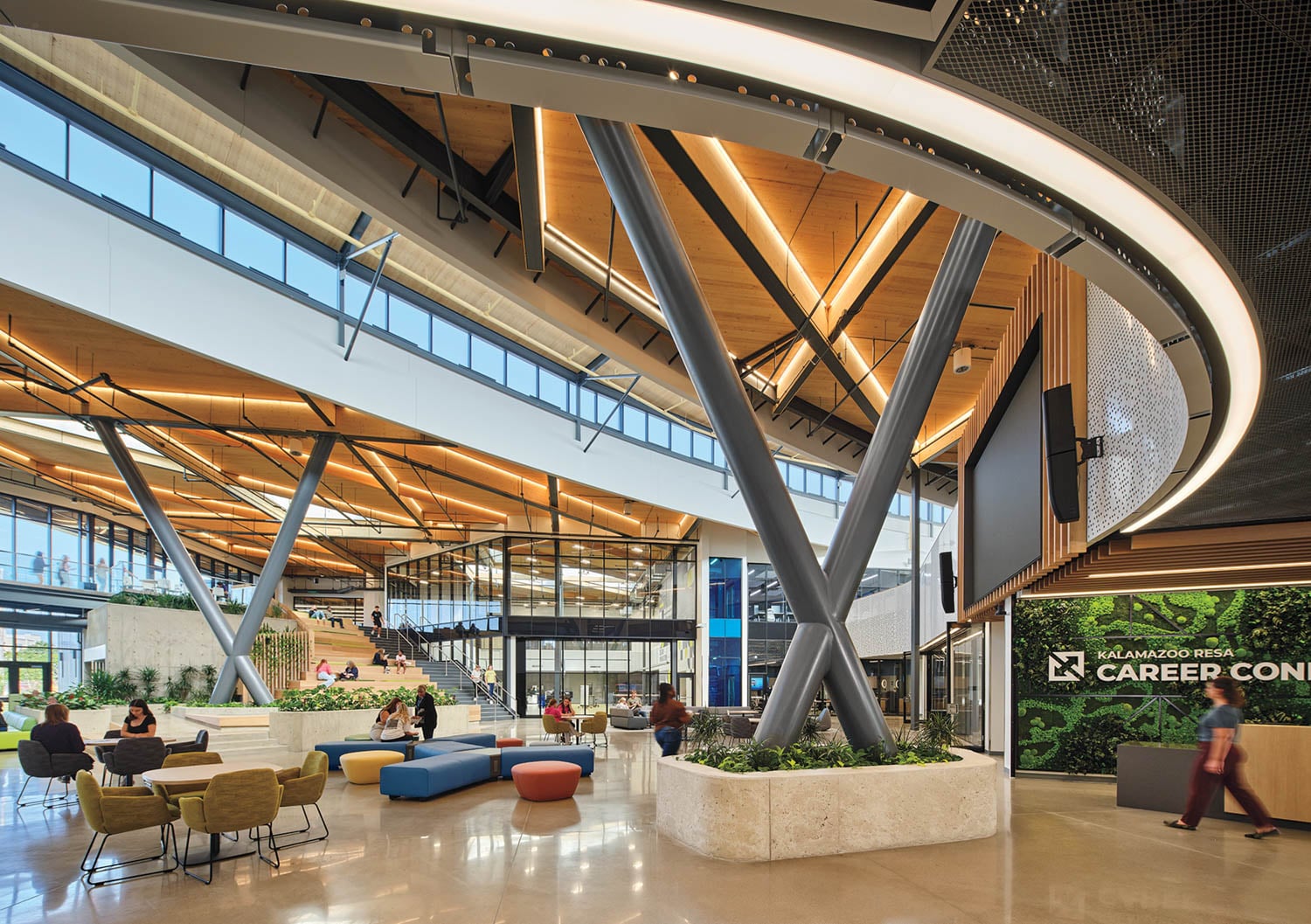
Photography by Michael Robinson. 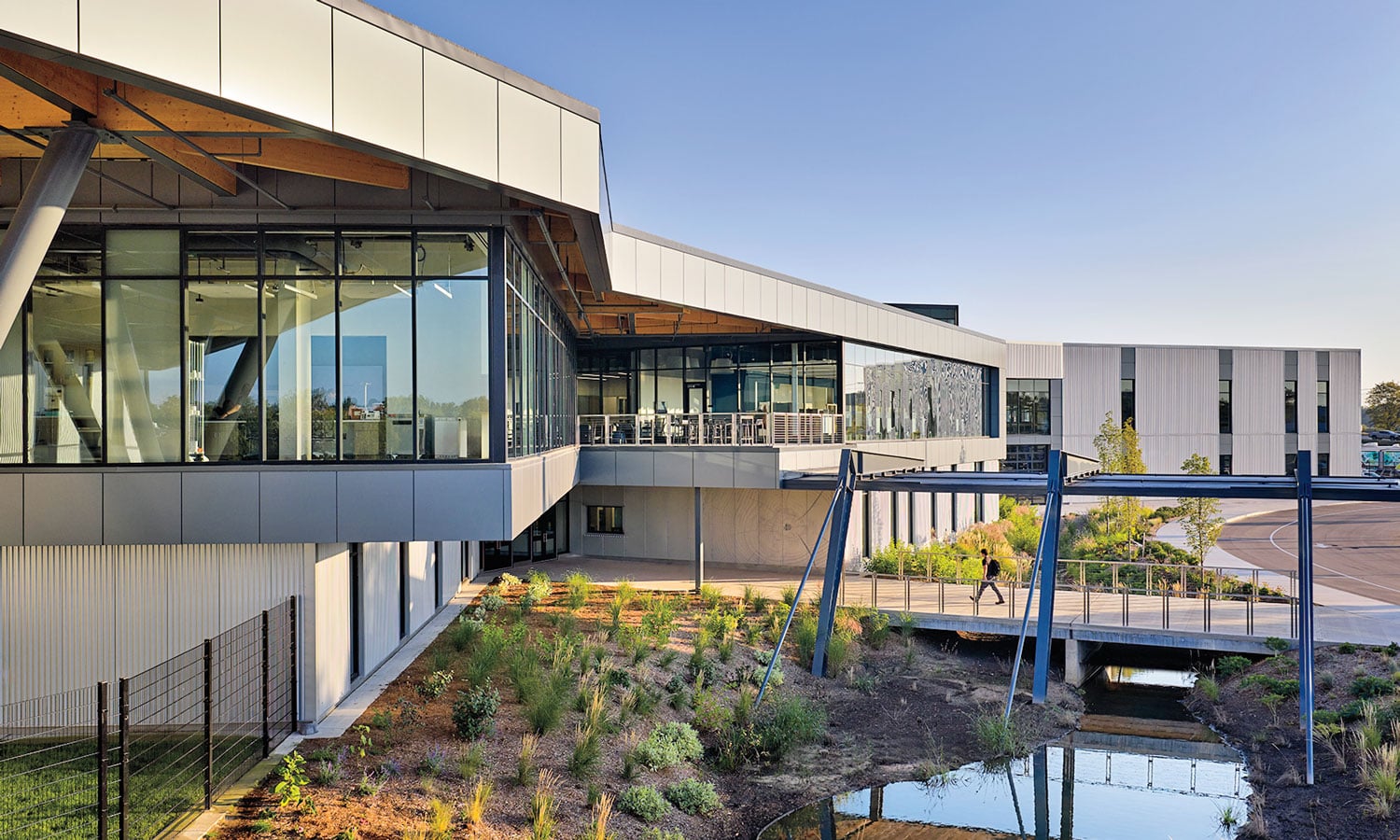
Photography by Michael Robinson. 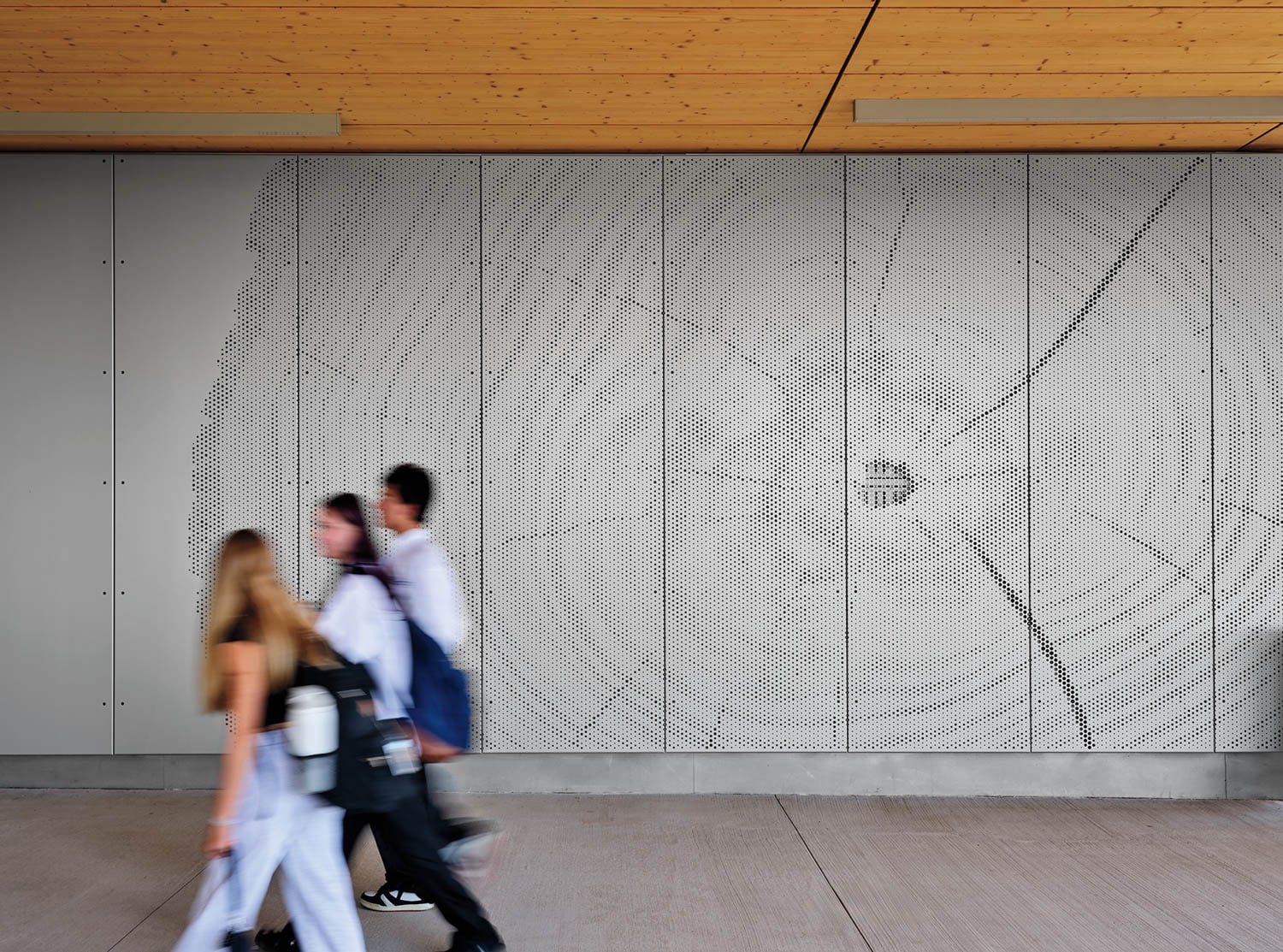
Photography by Michael Robinson.
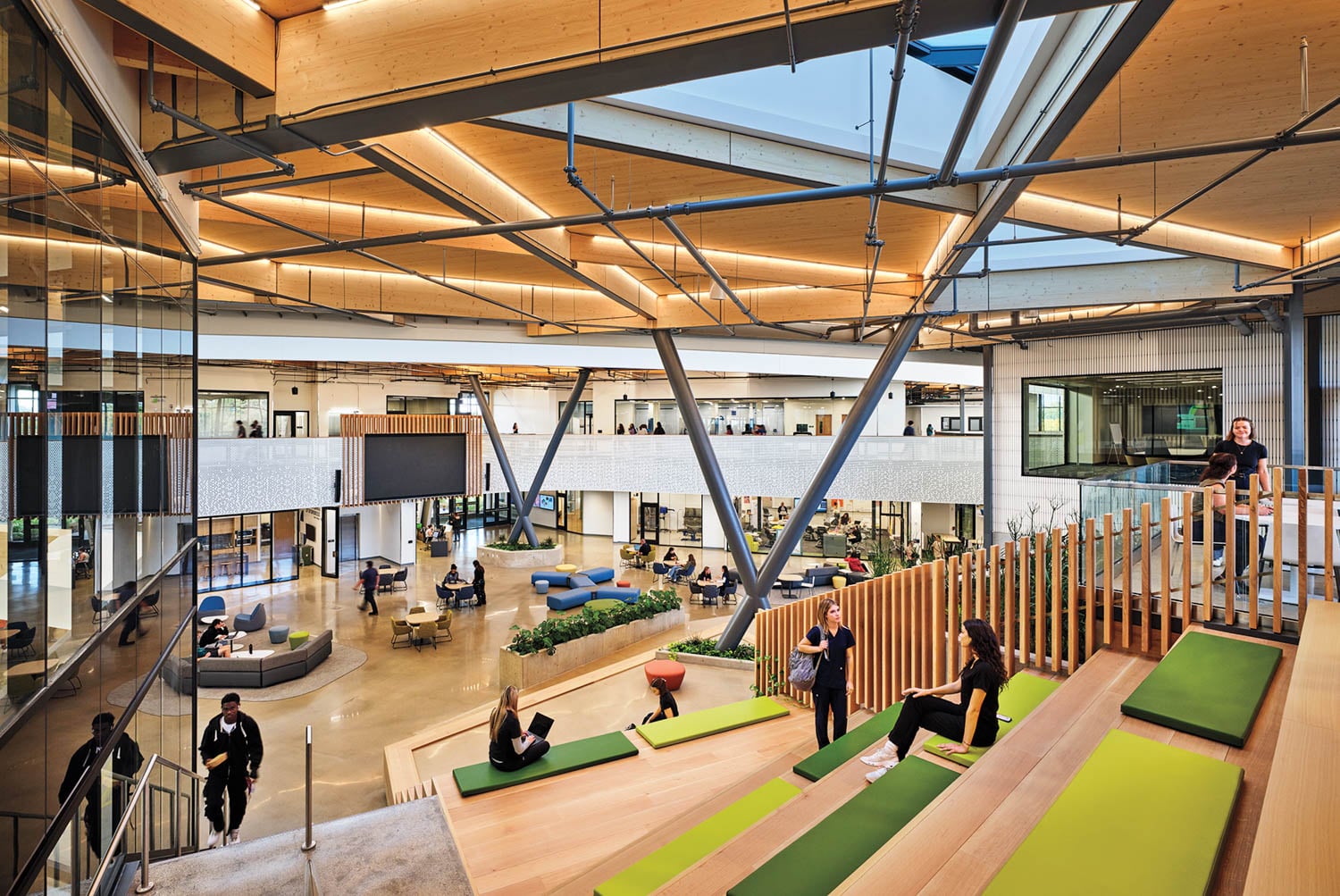
standout Conceived as a living laboratory, this 164,000-square-foot vocational training facility for high-school students and adult learners organizes its programs around a “discovery trail”—a nonlinear circulation path threading through labs and classrooms that simulate professional workplaces in fields ranging from culinary arts and automotive technology to health sciences and advanced manufacturing. A pedestrian bridge over a pond leads into a central atrium connecting all program areas, while glass-walled classrooms let students observe adjacent courses and, in effect, browse their futures. The hybrid steel-and-mass-timber structure—incorporating 115,000 square feet of CLT—is left deliberately exposed alongside HVAC and electrical systems, turning the building’s own bones into curriculum.
oma
project New Museum, New York.
Photography by Jason O’Rear. Courtesy of New Museum. 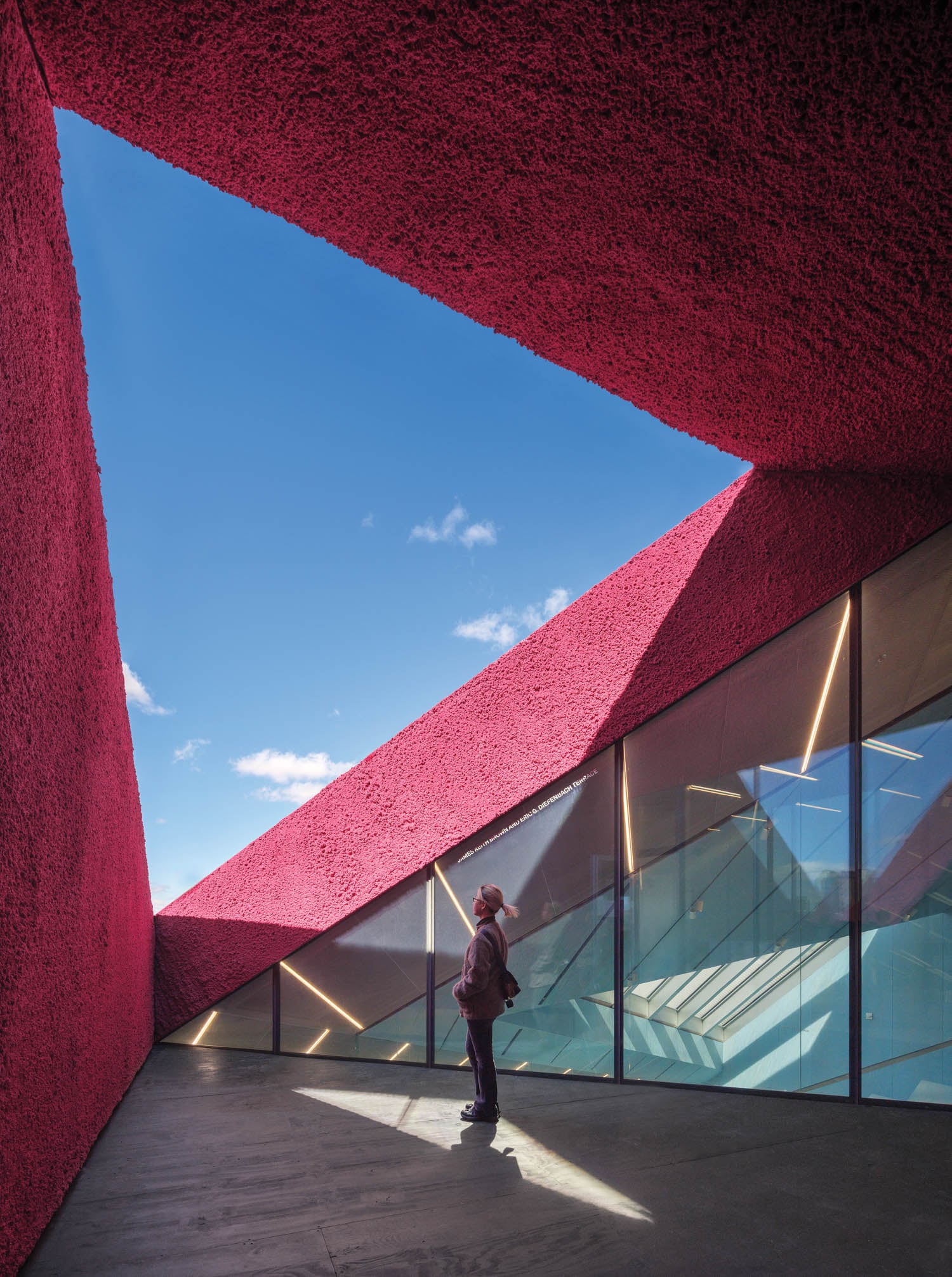
Photography by Jason O’Rear. Courtesy of New Museum 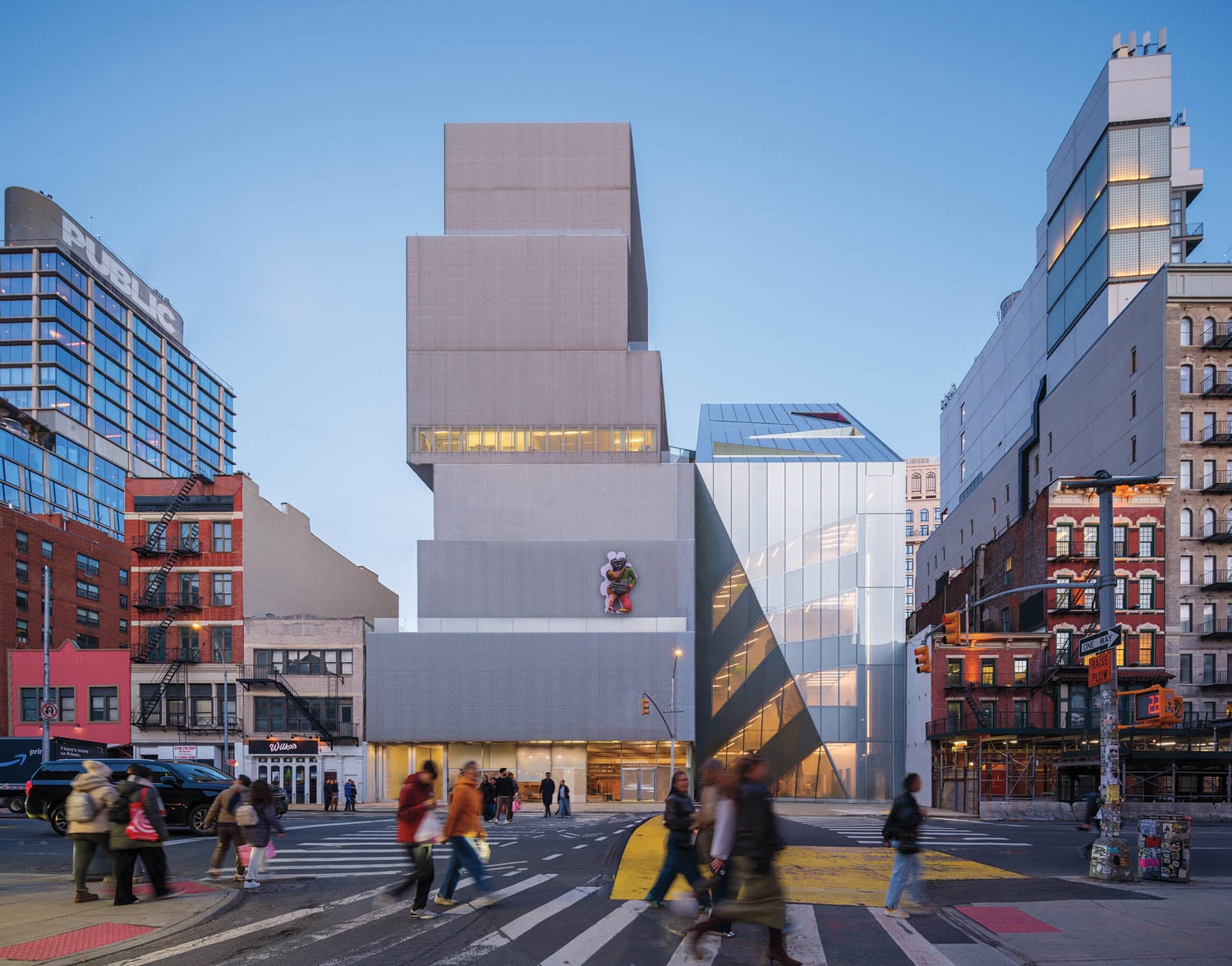
Photography by Jason O’Rear. Courtesy of New Museum. 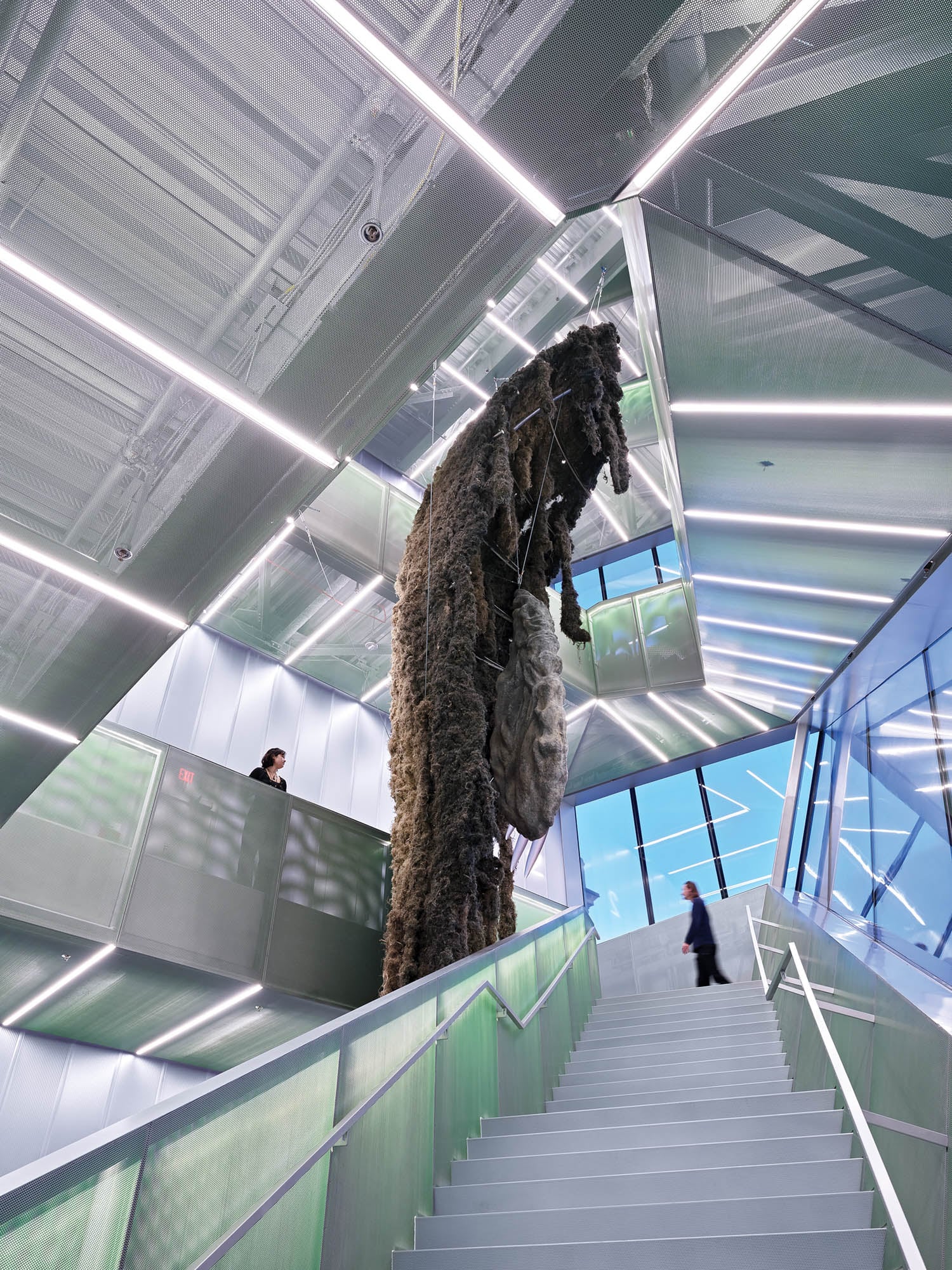
Photography by Jason Keen. Courtesy of New Museum. 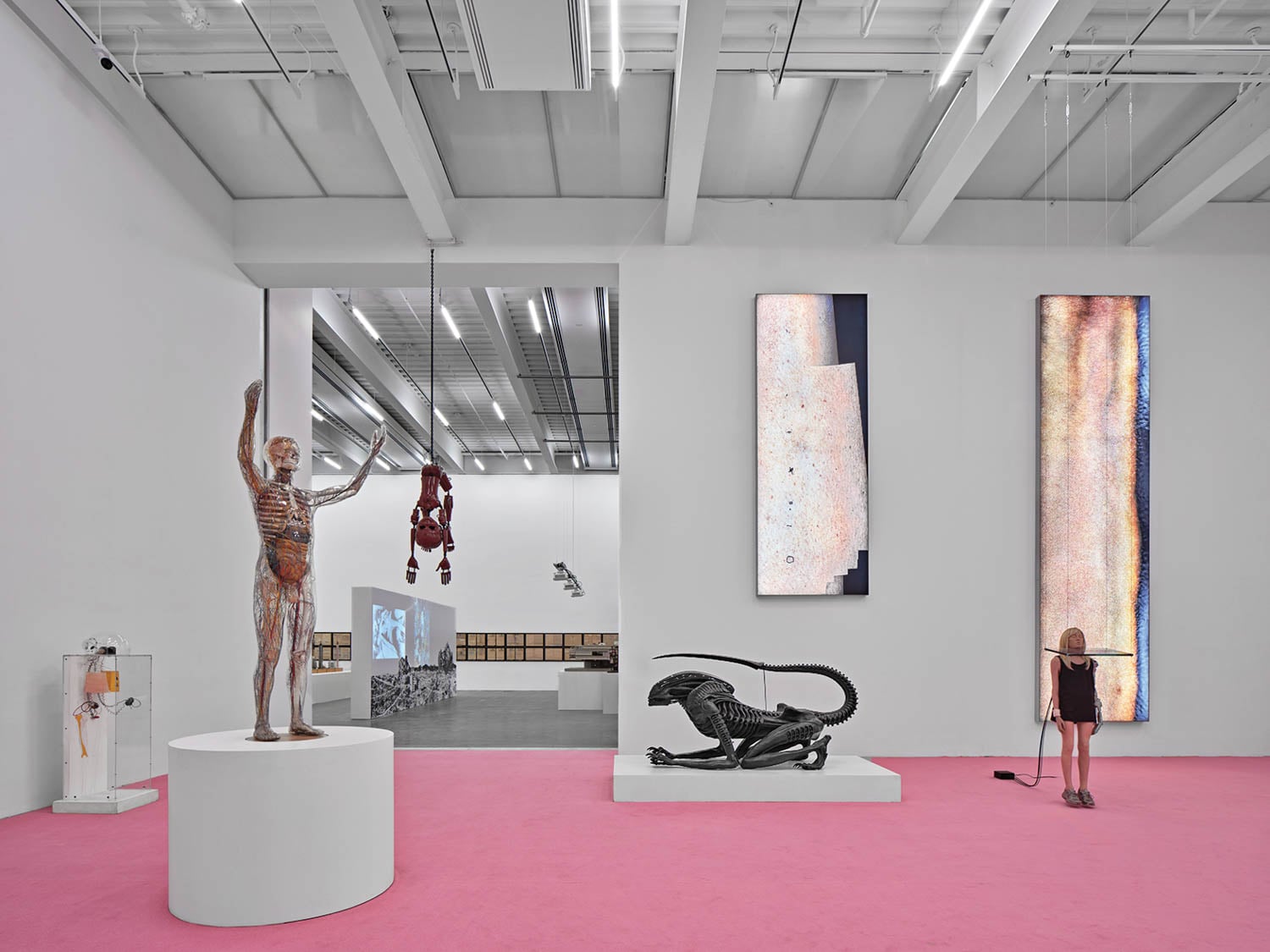
Photography by Jason Keen. Courtesy of New Museum.
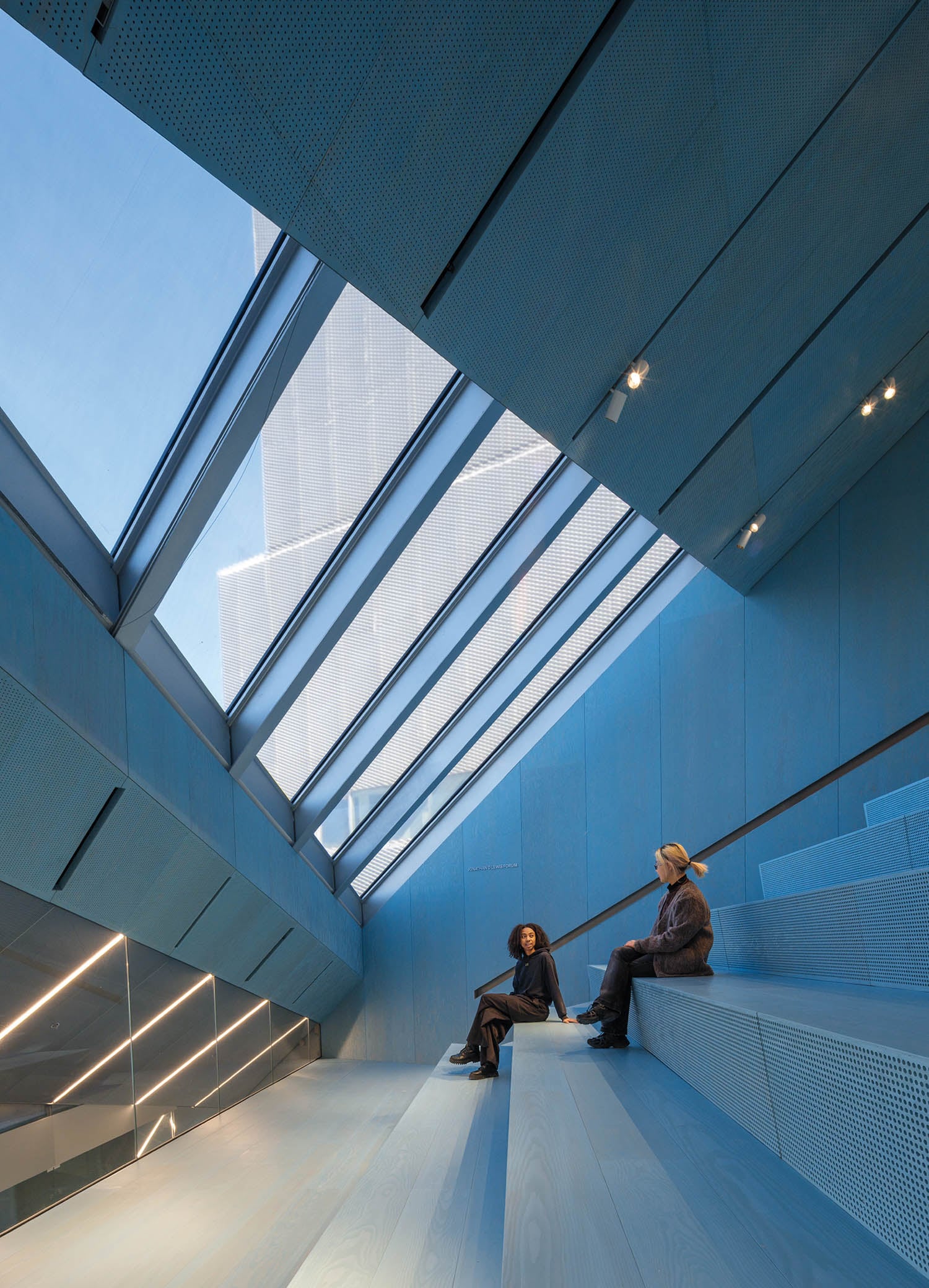
standout This 61,930-square-foot, seven-story addition to the SANAA-designed building at 235 Bowery doubles the institution’s exhibit space by connecting three floors of new galleries to their counterparts in the original structure, with ceiling heights aligned on each level for seamless horizontal flow. An atrium stair rising between the galleries and the street improves vertical circulation while offering dramatic views of the downtown neighborhood. Two setbacks define the building’s profile: An angled cut from the gallery stack to the street creates a new public plaza at the terminus of Prince Street, while a second opens the upper terraces to the sky. Clad in laminated glass with a metal mesh interlayer, the addition appears monolithic by day and transparent by night.
wood marsh
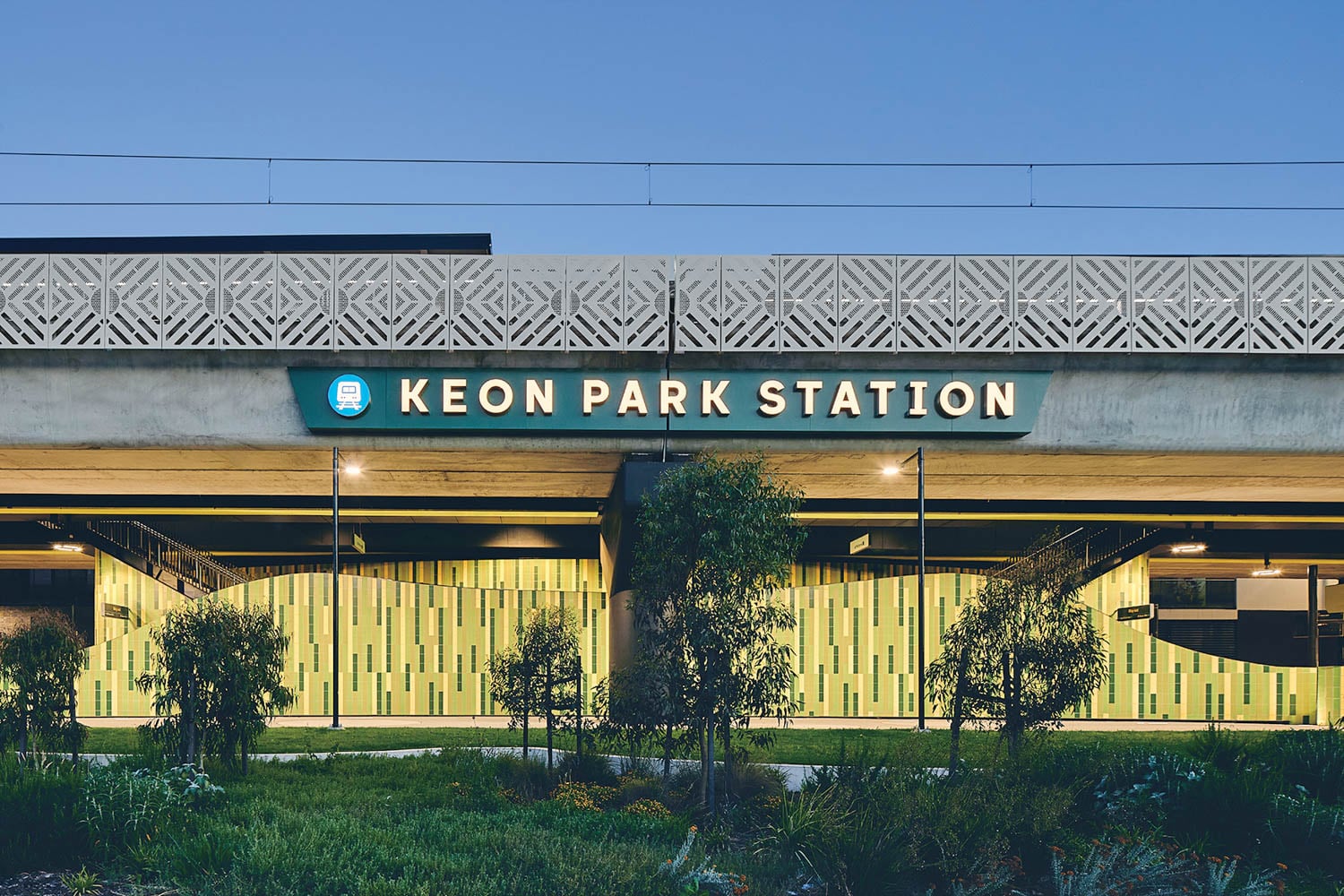
project Keon Park Station, Melbourne, Australia.
Photography by Peter Bennetts. 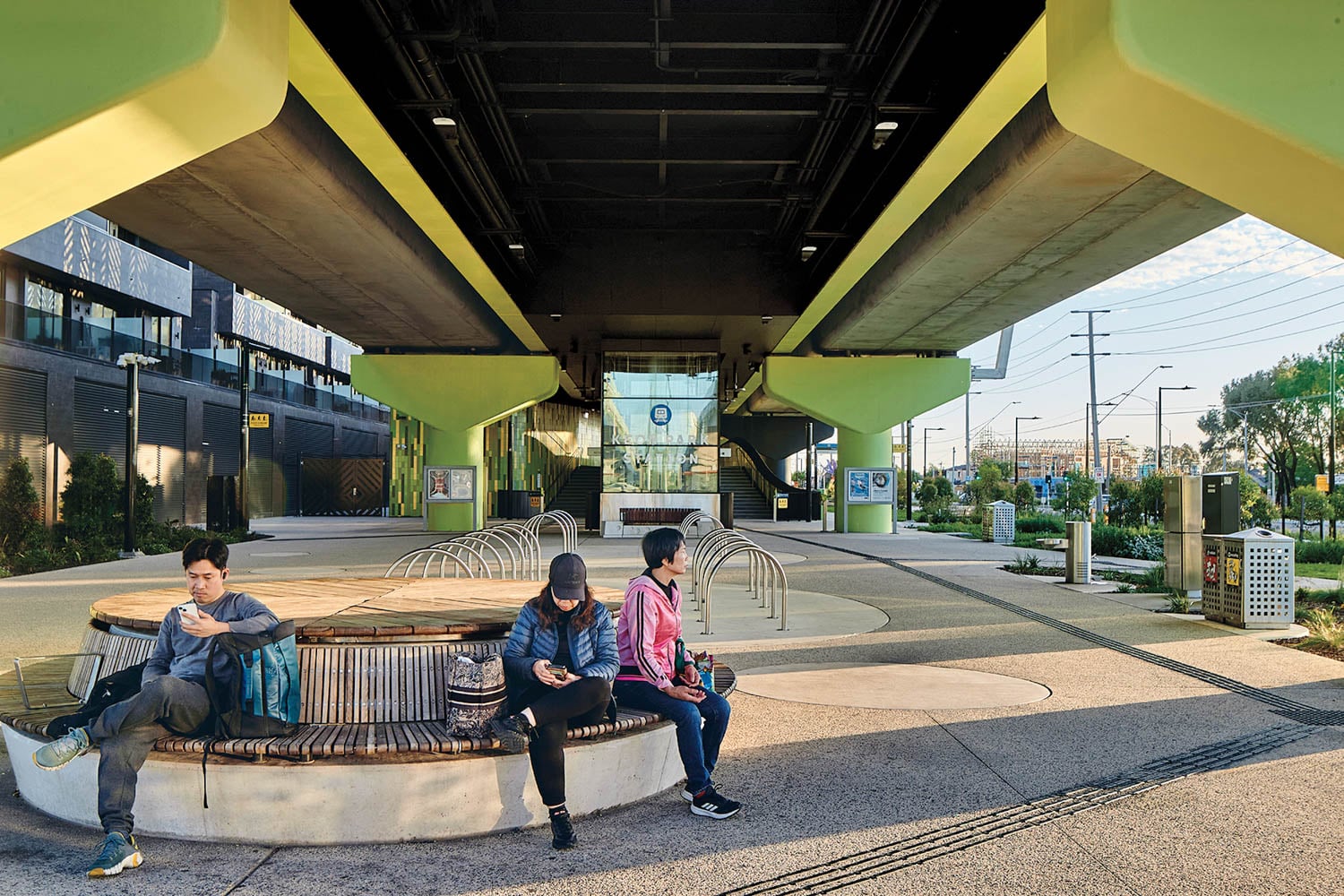
Photography by Peter Bennetts. 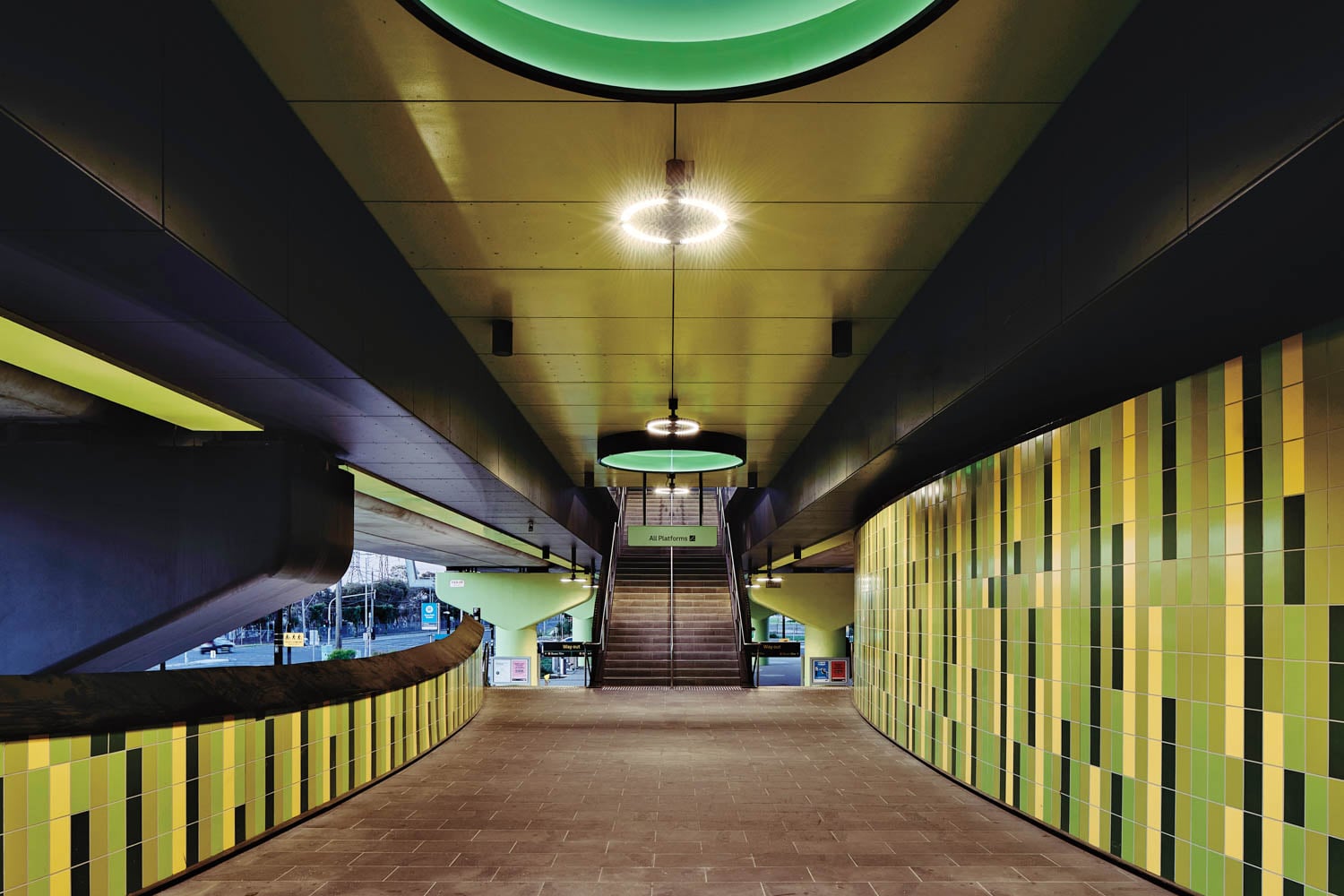
Photography by Peter Bennetts. 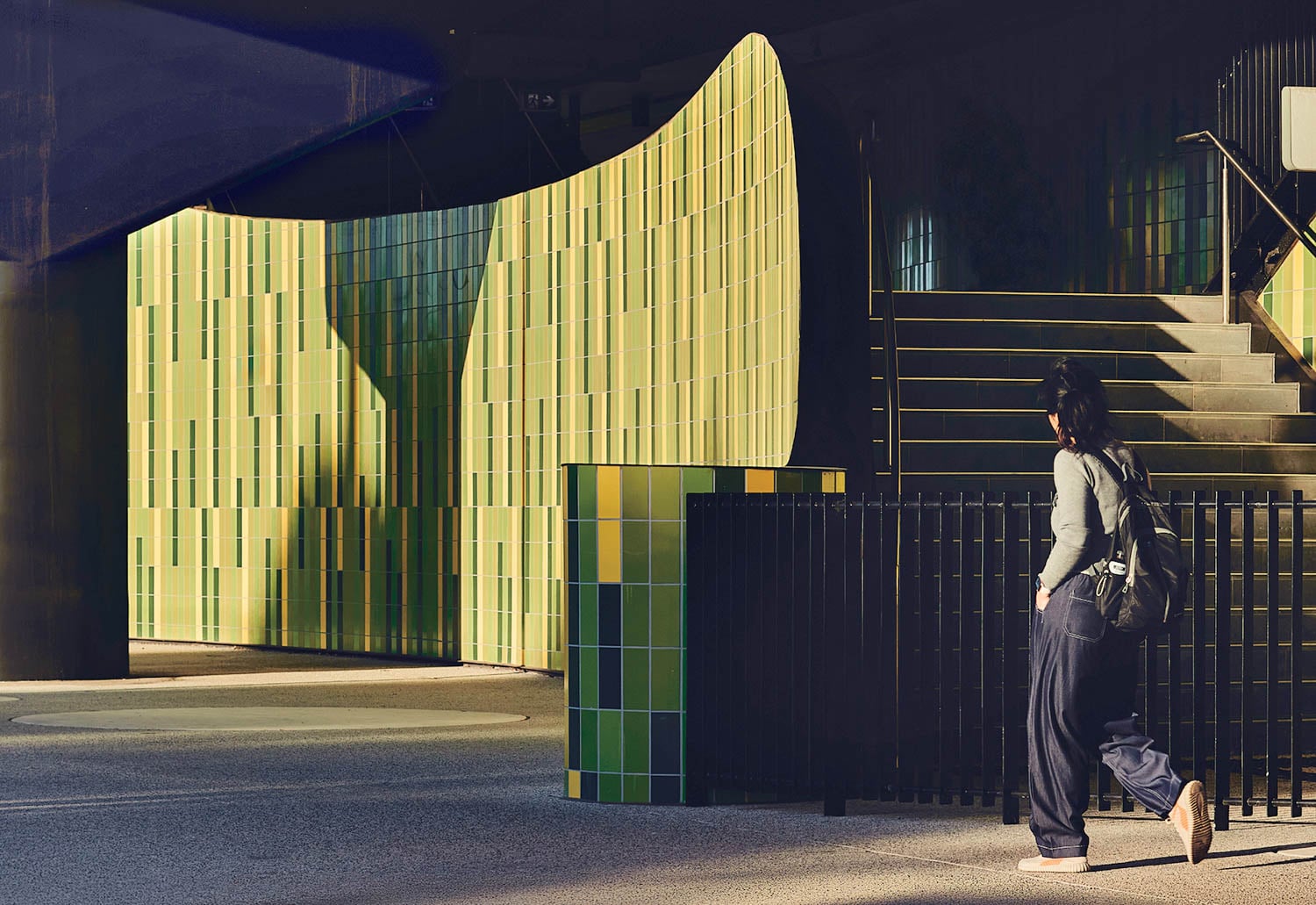
Photography by Peter Bennetts.
standout Part of a grade-crossing removal project on the city’s Mernda commuter rail line, the elevated suburban station replaces a constrained ground-level stop and transforms a previously dangerous road-rail intersection into a legible piece of civic infrastructure. The defining gesture is a “virtual landscape”—ceramic tiling in light and dark green and yellow that wraps key public elements, animating the station and softening the scale of the concrete viaduct while evoking the character of surrounding parklands where the newly planted trees have yet to mature. Perforated-aluminum balustrades and privacy screens along the viaduct continue an Indigenous codesign language established elsewhere on the line, reinforcing a corridor-wide cultural identity.
hopkins architects
project Stephen A. Schwarzman Centre for the Humanities,
Oxford, U.K.
Photography by Hufton + Crow. 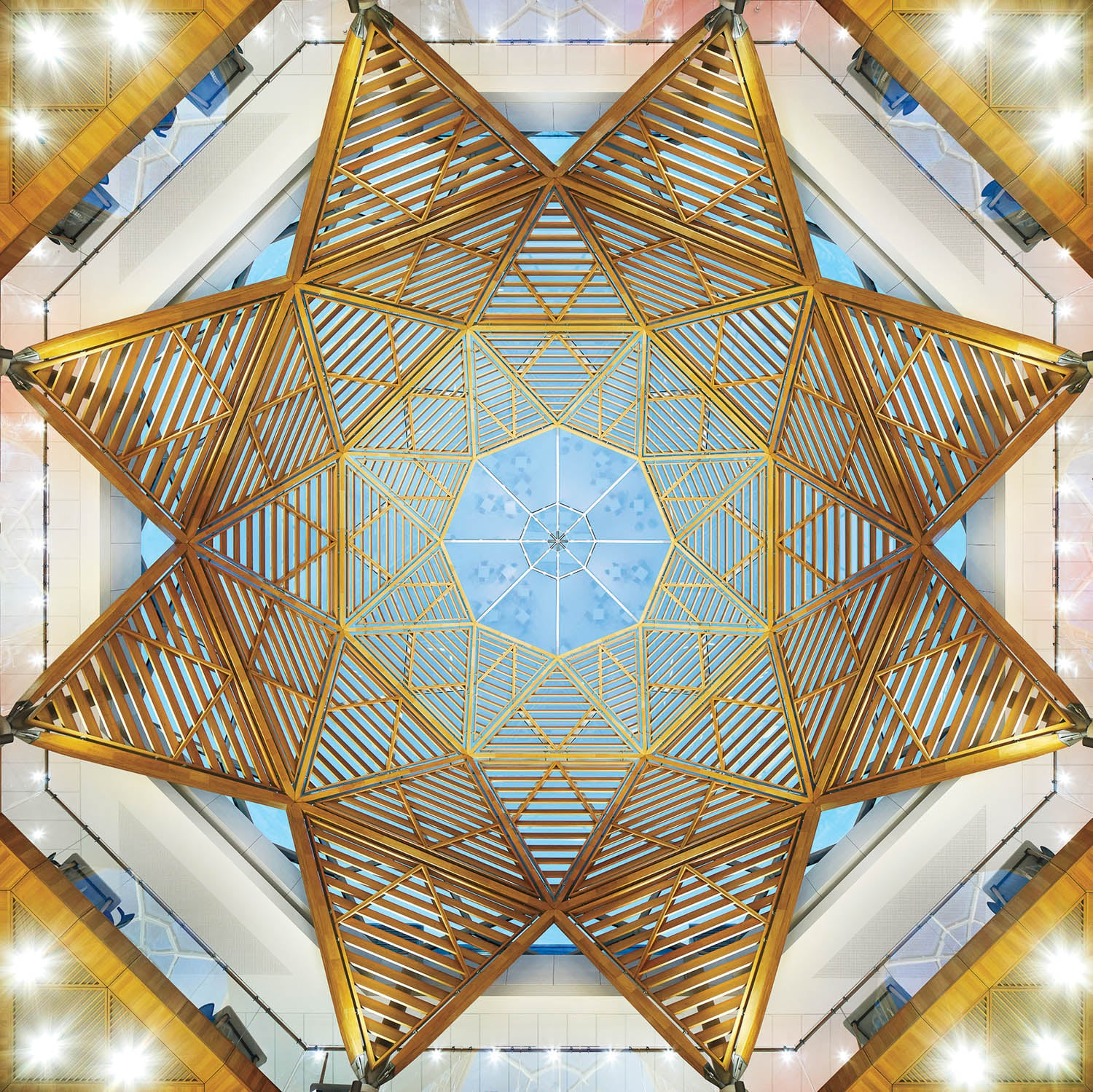
Photography by Hufton + Crow. 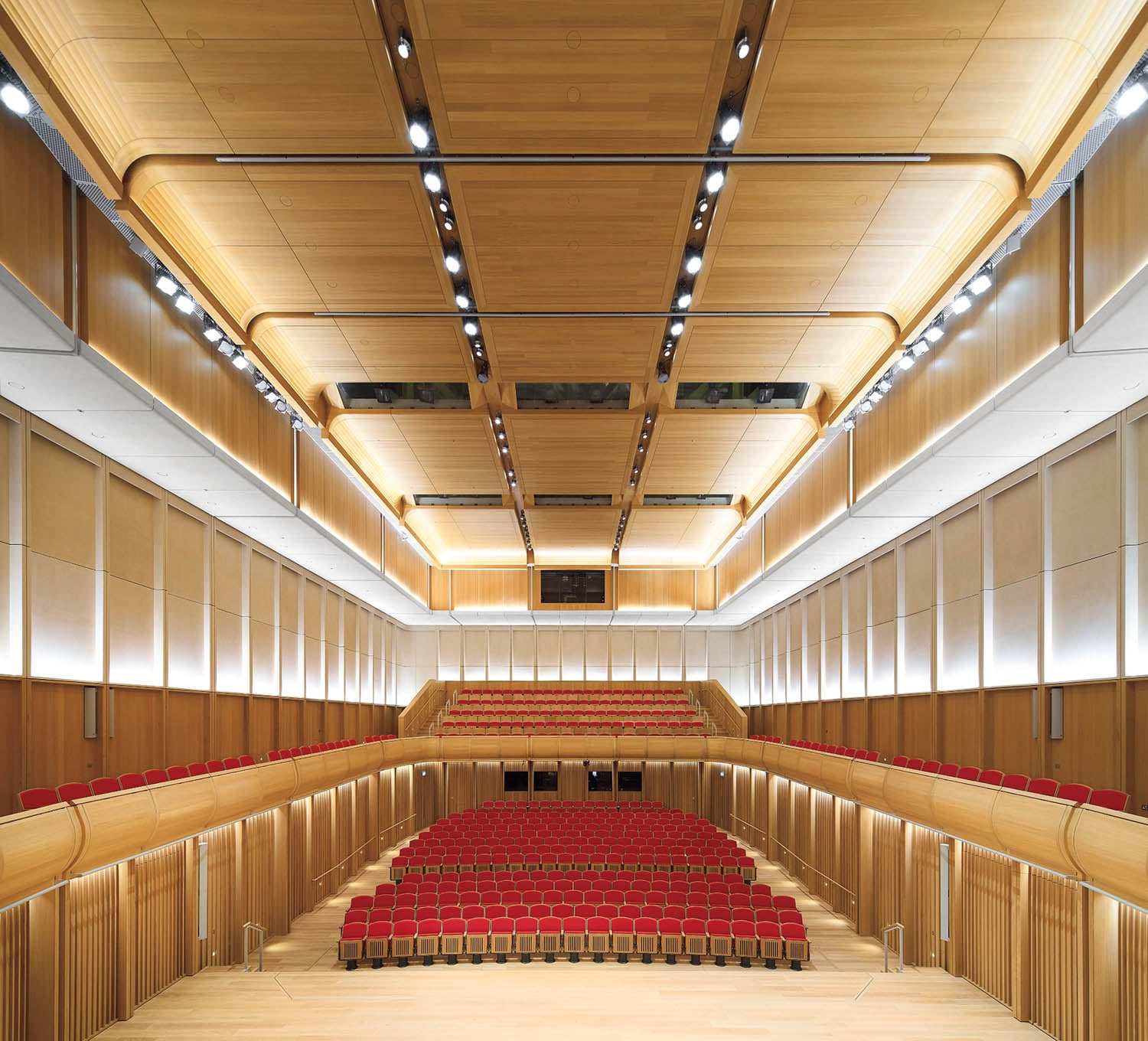
Photography by Hufton + Crow. 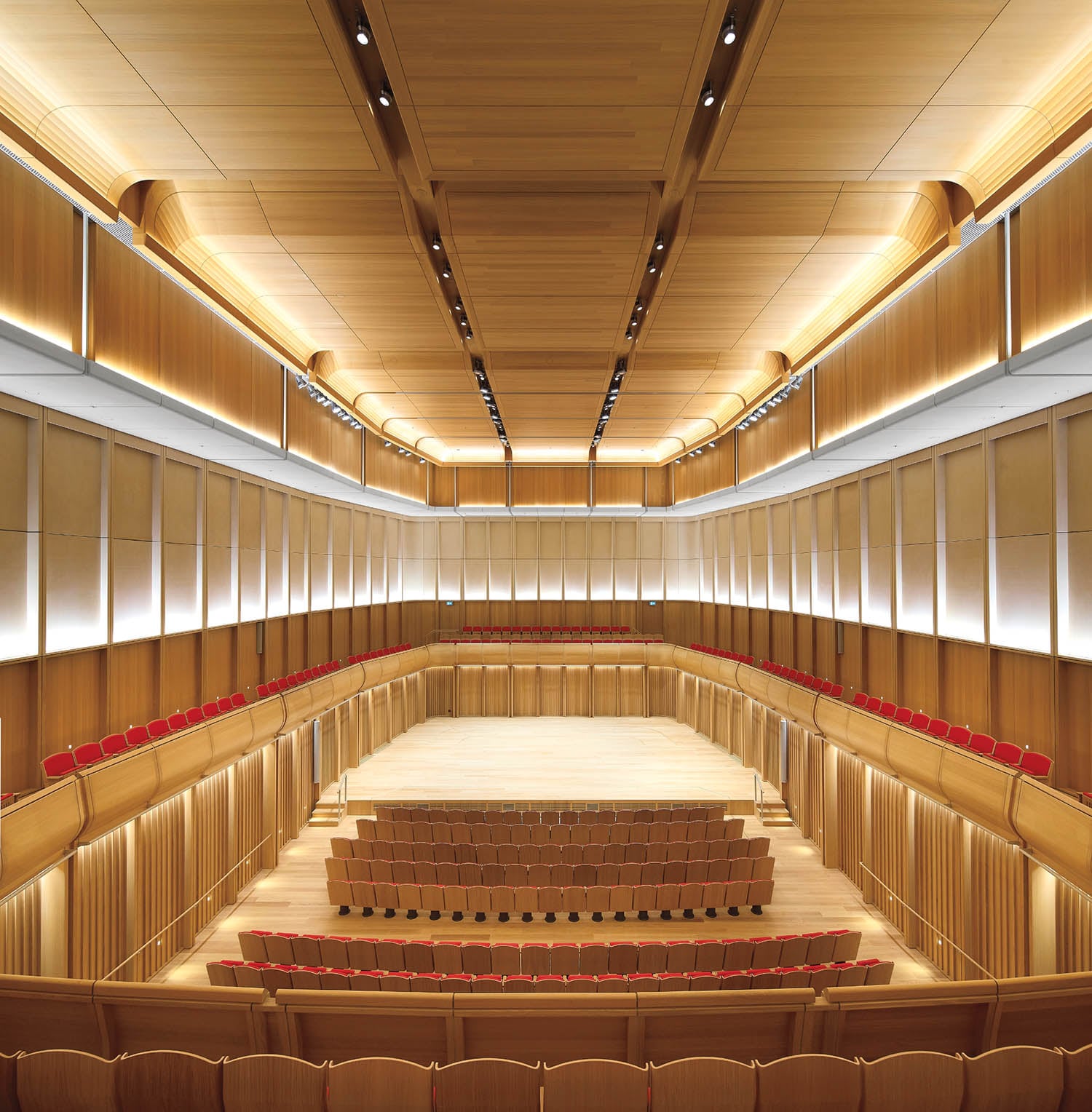
Photography by Hufton + Crow.
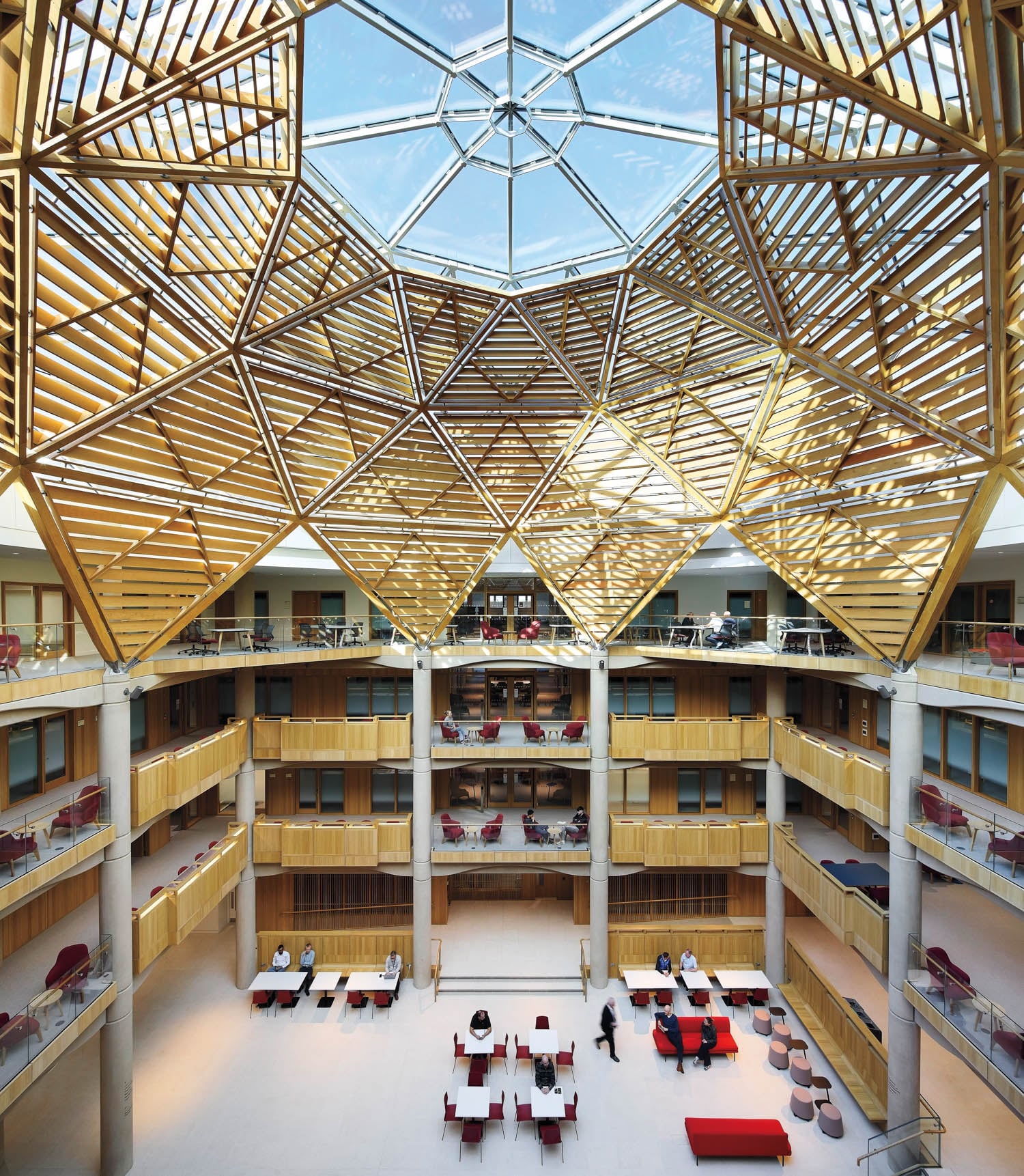
standout The largest project in the history of the University of Oxford, the 272,000-square-foot edifice unites seven humanities faculties previously dispersed across 26 buildings, along with six library collections, a 500-seat concert venue, a 250-seat theater, and a cinema. At its heart, the Great Hall—a four-story atrium crowned by a timber-and-glass dome 62 feet in diameter—evokes 18th-century architect Nicholas Hawksmoor’s unrealized vision of a Forum Universitatis for the city. Clad in Clipsham limestone and cream brick, the facade responds to its distinguished neighbors including the Grade I–listed Radcliffe Observatory. Built to Passiv- haus standards, the center aims to become England’s largest such structure and the world’s first concert hall to achieve that certification.
read more
Projects
Inside A Colorful Health Choice Pharmacy In Coney Island
Sergio Mannino Studio reimagines a Coney Island pharmacy as a flexible, design-forward wellness hub.
Projects
A Victorian Worker’s Cottage In New Light
Anna-Carin has carefully uncovered the character of a century-old Victorian Cottage, layering timeless materials, collected pieces and quiet interventions.