
10 Questions With… Sculptor And Designer Marcus Vinicius De Paula
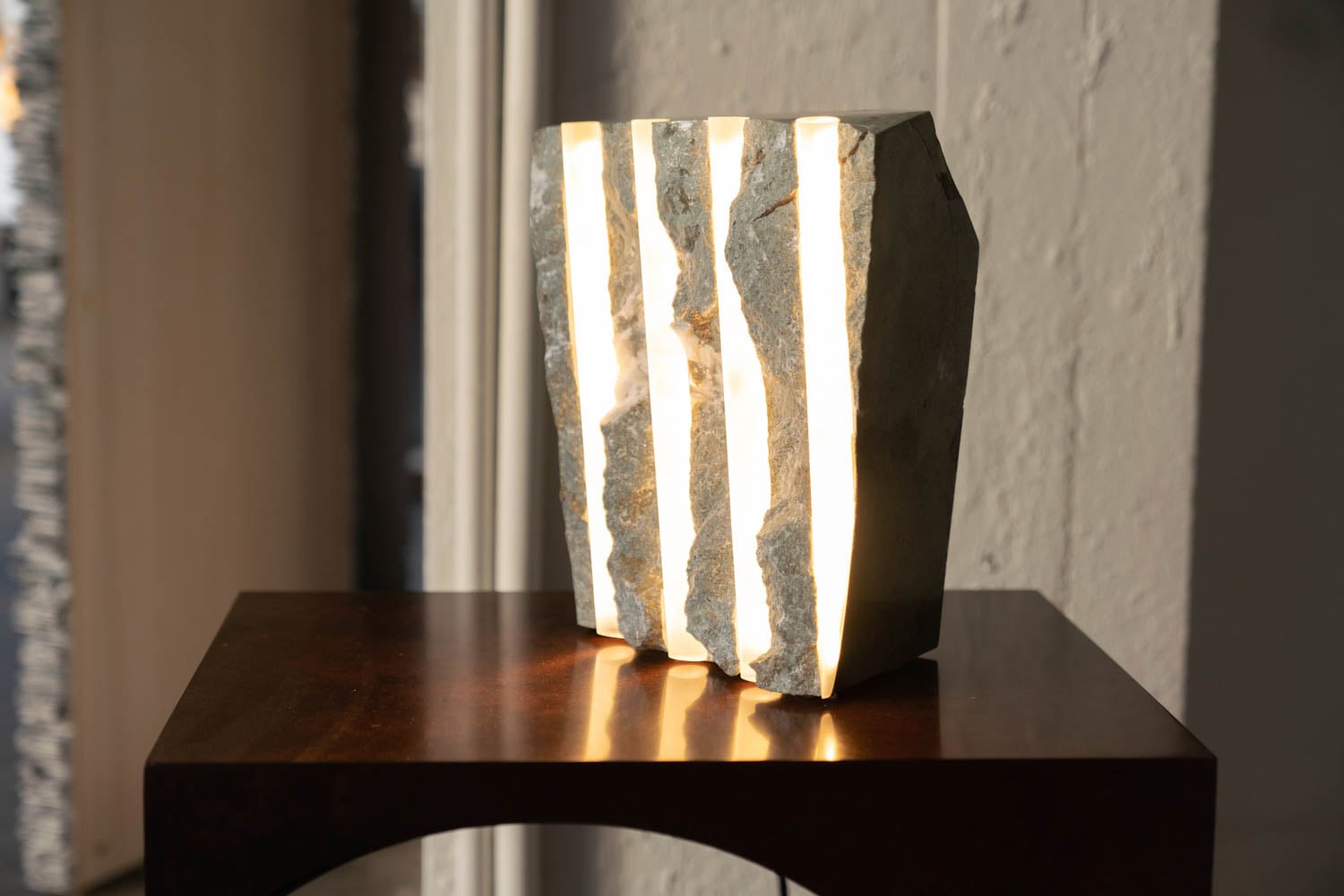
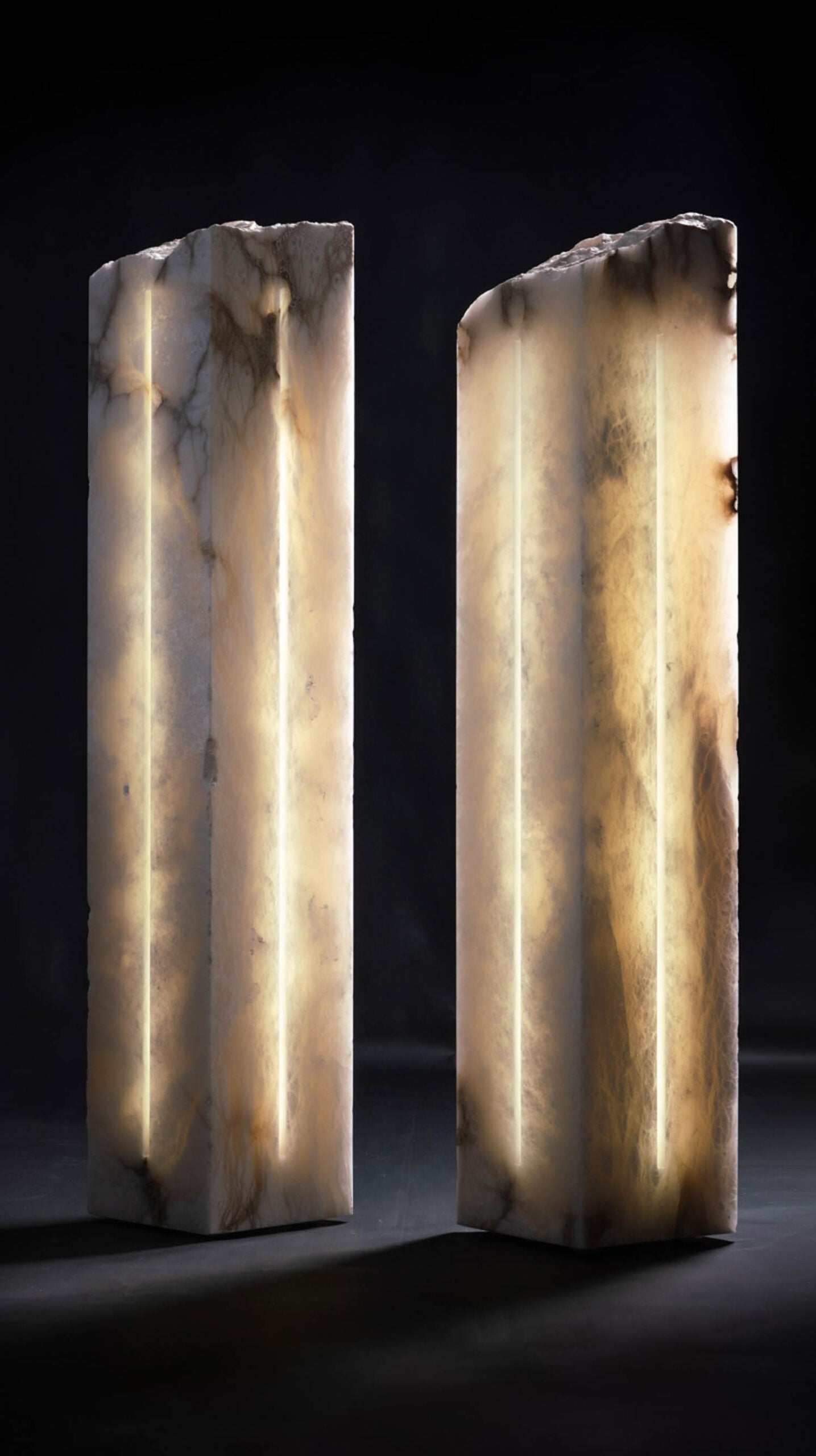
A long gaze into the creative oeuvre of Marcus Vinicius De Paula says he is an artist who is charmed by fine ancient stones, which speaks to his patient devotion to material honesty. The Brazilian-American sculptor is renowned for embedding light within rock: Think, volcanic basalt, granite, alabaster, coaxing illumination from matter that predates us by up to a billion years. For more than 15 years, he has designed with light across theater, film, and live performance and led creative direction for interactive installations at prominent institutions.
Born to Brazilian immigrants—a painter and ceramicist mother and a NASA engineer father who has helped direct Mars missions—De Paula grew up on a split screen of both pragmatism. He recalled having cosmic posters on his walls as a child, including photographs brought from space by his father. And much of that, including weekends spent on fixing wireworks and Sci-Fi films like Tron and Blade Runner, shaped his artistry.
Marcus treats each piece as a maquette, which is shaped by the soaring brutalist and modernist lines of his parents’ Brazil. As a teenager visiting his grandparents, he rode Rio de Janeiro’s buses for hours, studying facades, plazas and public sculpture, layering those impressions onto family stories. That lived archive now threads through his practice, as he translates Brazil’s civic forms and textures into stone-and-light works that probe, and continually recalibrate, his relationship to heritage.
At the moment, two exhibitions of De Paula’s work are currently on view at the Wexler gallery. The first is on view at the New York space and titled IO Prime, which draws inspiration from Jupiter’s volcanic moon, named IO—where over 400 active volcanoes remind us of the tumult and renewal inherent to existence. A bridge between terrestrial and celestial, past and present. The second is at the Philadelphia space as part of a group exhibition titled re-form, which opened on October 4 and features 14 artists and designers.
Interior Design sat with Vinicius De Paula to discuss his creative legacy, love for fine stones, and his evolving practice.
Marcus Vinicius De Paula Bridges The Terrestrial + Celestial
Interior Design: How did your career as a sculptor begin?
Marcus Vinicius De Paula: It started during the pandemic. It felt like a third or fourth career for me. My first career was working in theater and television. Then I went to school, got an MBA, and went into management consulting and tech. But when the pandemic hit and life felt so fleeting and fragile, I had this call to redirect how I was spending my time. We didn’t know if we would die tomorrow, and that sense of vigilance made me really rethink how I was spending every moment of my day.
I wanted to go back to working with my hands, to make something that helps others connect with this sense of fragility and reflect on our lives. Working with stone is very grounding, and I hope it helps others ground themselves as well because stone has a lifespan completely different from our own. I’m working with materials that are hundreds of millions of years old, dating back to the Jurassic period and thinking about that timeline really puts my life in perspective and brings a sense of grounding and humility.
ID: What was it like growing up with a father who worked at NASA?
MVDP: From a young age, there was a sense of normality around access to the cosmos. My father would talk about putting satellites around other planets and landers on Mars. That was a normal workday for him, which expanded my sense of humanity’s existence. He’d bring home photos—some taken by Hubble and others from projects he worked on—and I’d put them up in my bedroom. That gave me perspective and shaped both my artistic attitude and my worldview.
There was also the practical side. My father is an engineer, and I grew up helping him fix the car and repair things around the house. He gave me a very practical, technical skill set and comfortability with learning new things, especially technical tasks and engineering. I brought that into my practice today. If I have a vision for what I want to build and I don’t yet have the skill set, I can figure out where to get it. I’ll ask others, turn to the Internet and YouTube, specialty forums, and research what tools I need to make the vision happen. My father instilled in me: You can do anything; you just have to teach yourself how.
ID: How would you describe your early days?
MVDP: My childhood mixed art and engineering. Even in high school, I worked a lot in theater building sets and designing lighting for shows. I did nightclub lighting design at one point. I went to the University of Maryland, where I studied business and took design classes in the theater department. I straddled business and creative arts and engineering. My mother is very artistic. She’s a painter and ceramist and my father is an engineer. So sculpture makes a lot of sense; it combines both. I did both my undergraduate and graduate education at the University of Maryland. I majored in international business and then got a Master’s in Business Administration. I actually graduated early from my undergrad to go on tour as a lighting designer for an indie rock band, one of my study-abroad-equivalent experiences, you could say. I’ve always tried to balance business and the creative.
ID: Have you ever gone back to Brazil and has a part of that inspired your creation?
MVDP: I was privileged to be able to go back at an early age. Brazil has a deep history in architectural design. There are a number of architects who created iconic works there. As a kid, I didn’t fully understand the context of brutalism and modernism, but I had visceral impressions of those big, foreboding buildings, exposed concrete, clean linear lines, geometric shapes, buildings that almost felt like monuments.
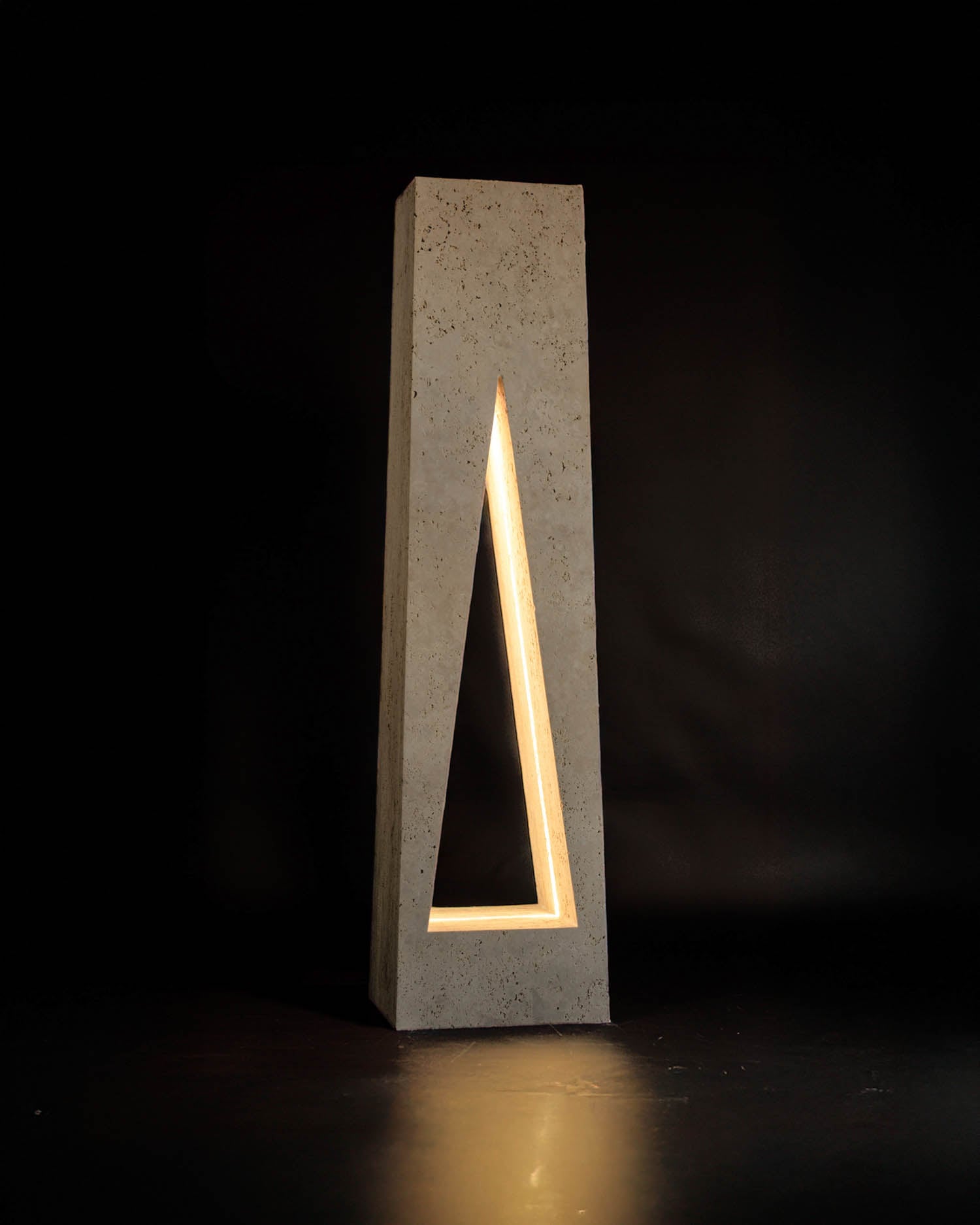
Now, in my practice—going back and understanding those places and modernism’s role in Brazil’s history—I see those buildings differently. They made me feel uncomfortable and maybe that was the purpose of that architectural language. I like carrying that into my sculptural aesthetic. A lot of my sculptural design is influenced by Brazilian architecture, modernism, and brutalism. It’s a way to connect to my heritage, to revisit buildings I remember from childhood and look at why they were built.

ID: What informed your practice of putting light into sculptures? When did you make that decision?
MVDP: There were a couple of influences. One is space photography, the imagery I grew up around as a kid where you have sources of light (the stars) on a black background. It’s a high contrast. Even images with bright linear shapes around spheres and simple geometric forms, space photography often includes the presence of linear light. The second influence is sci-fi cinema. Films like Tron and Blade Runner use neon to convey a futuristic vocabulary. That cyberpunk aesthetic—using neon—definitely seeped in.
ID: How many series have you created since you started?
MVDP: I have about six or seven series so far, and around 30 pieces. They range from stone works to resin. I explored resin during the pandemic when stone wasn’t as available, but I still incorporated light, more in accessible works.
ID: Which has been your favorite series or piece?
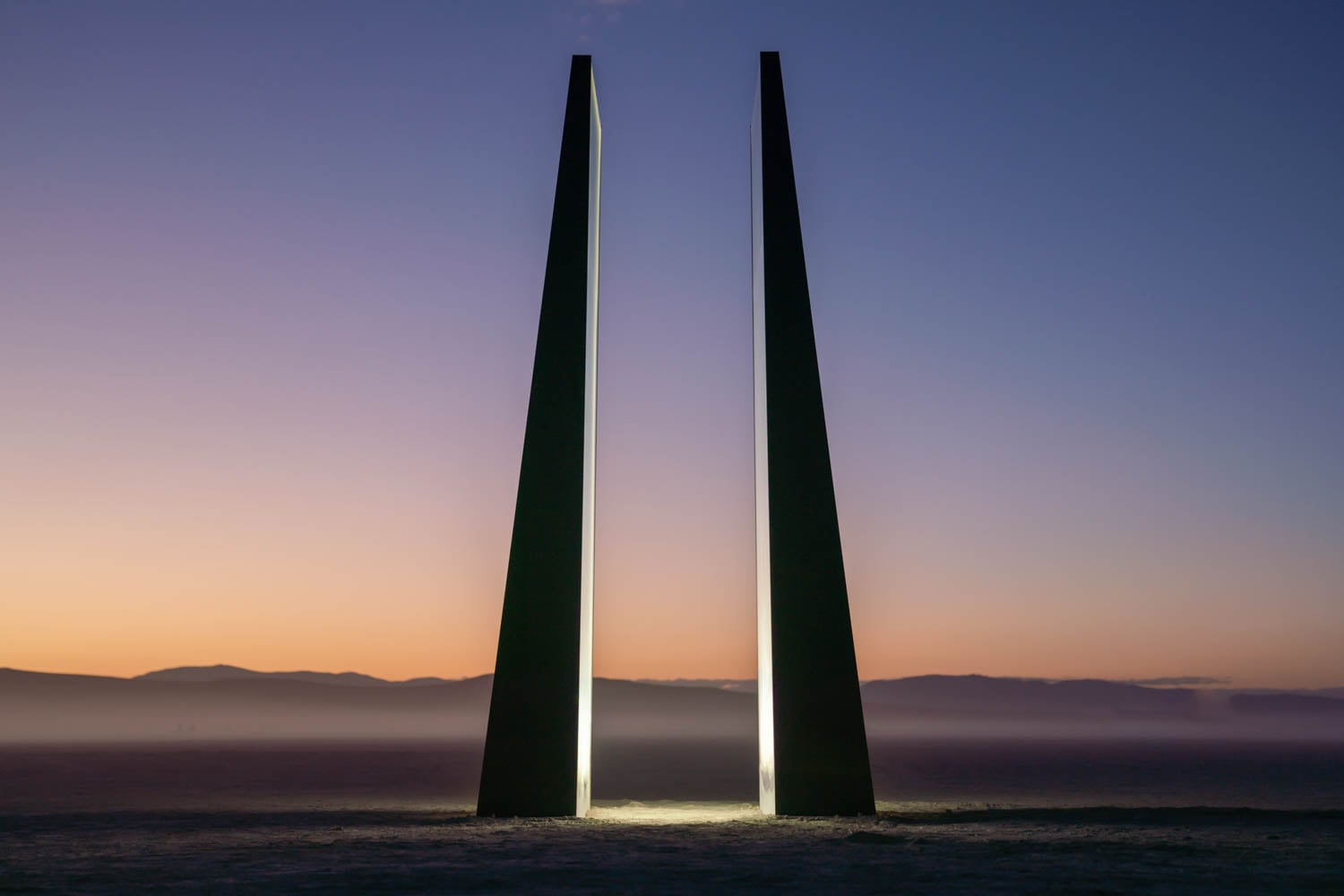
MVDP: My favorite piece is one I made a few years ago called Titan. It’s a 10-foot-tall work made from Zimbabwe black granite. That granite is among the oldest stones on earth over 100 million years old and it’s one of the blackest stones available. Presenting that black stone in the expanse of the desert created a real sense of otherworldliness. It felt like the right place for the sculpture. Making a site-specific piece was a special exercise, and seeing the audience experience it in that environment was powerful.
ID: Would you say it was your passion for precious stones that informed your early practice using and linking them together?
MVDP: Stone is [one of] the only artistic medium where you start with something that already exists. With paint, you start with new paint on a fresh canvas. With stone, you begin with a piece of history that is millions of years old. It already has a long timeline of creation, and then you intersect that timeline and co-craft its future. That’s special and daunting. You’re taking something that took millions of years to form, which brings care and responsibility to the work. There’s no going back either: you can’t paint over it. Once you carve the stone, that’s it. It forces me to go slowly and consider what I’m removing to create something.
I also consider the history of each stone where it’s from. Each stone has its own story. Some formed from the collision of tectonic plates; others like alabaster from southern Spain were once at the bottom of the ocean during the Jurassic period, formed from plants and animals that were compressed over time. Others were shaped by glaciers. Diving into the stone’s story is a way of paying respect and bringing that history into what I’m making.
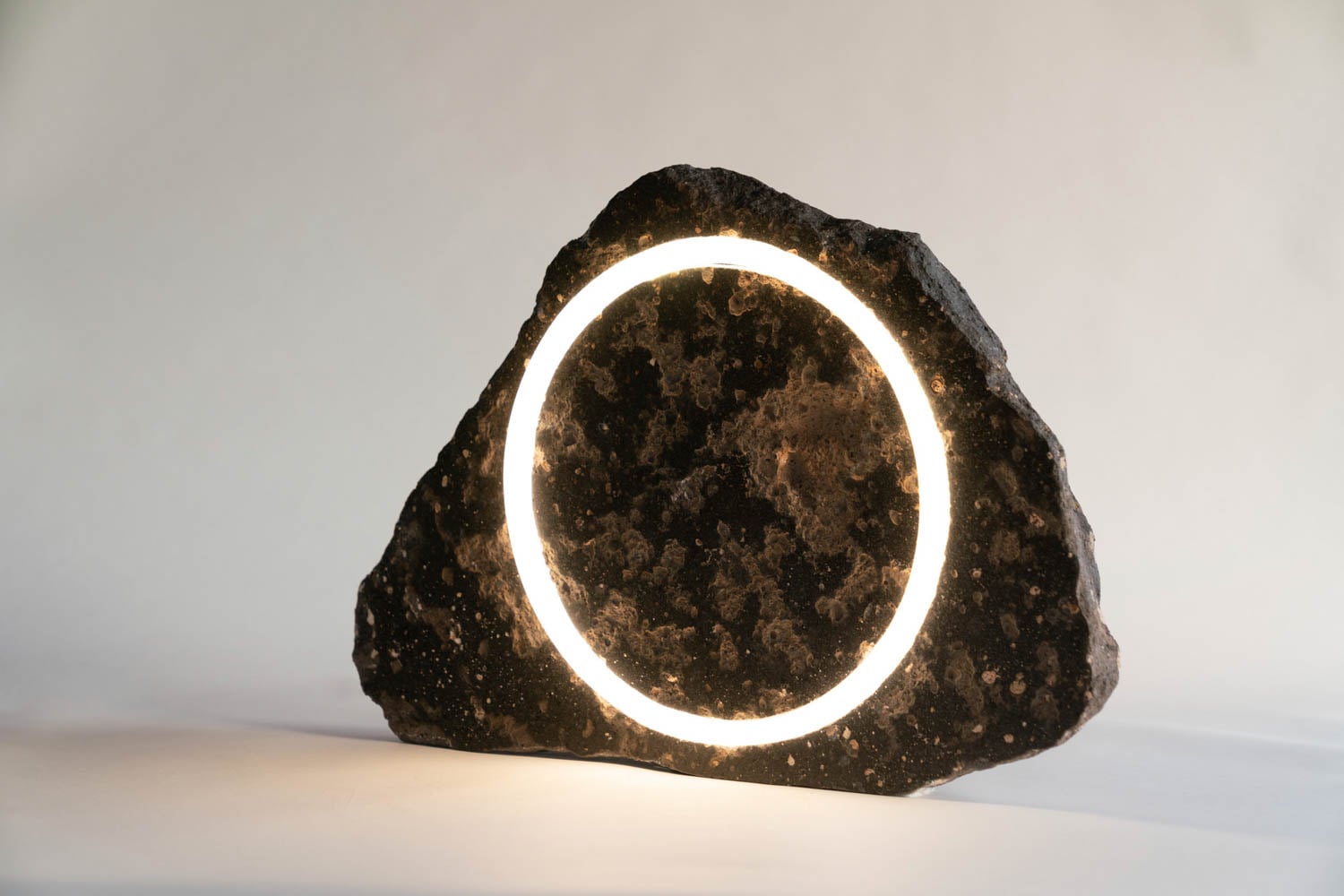
ID: Do you only work with stone, or are you open to experimenting with other materials like wood and glass?
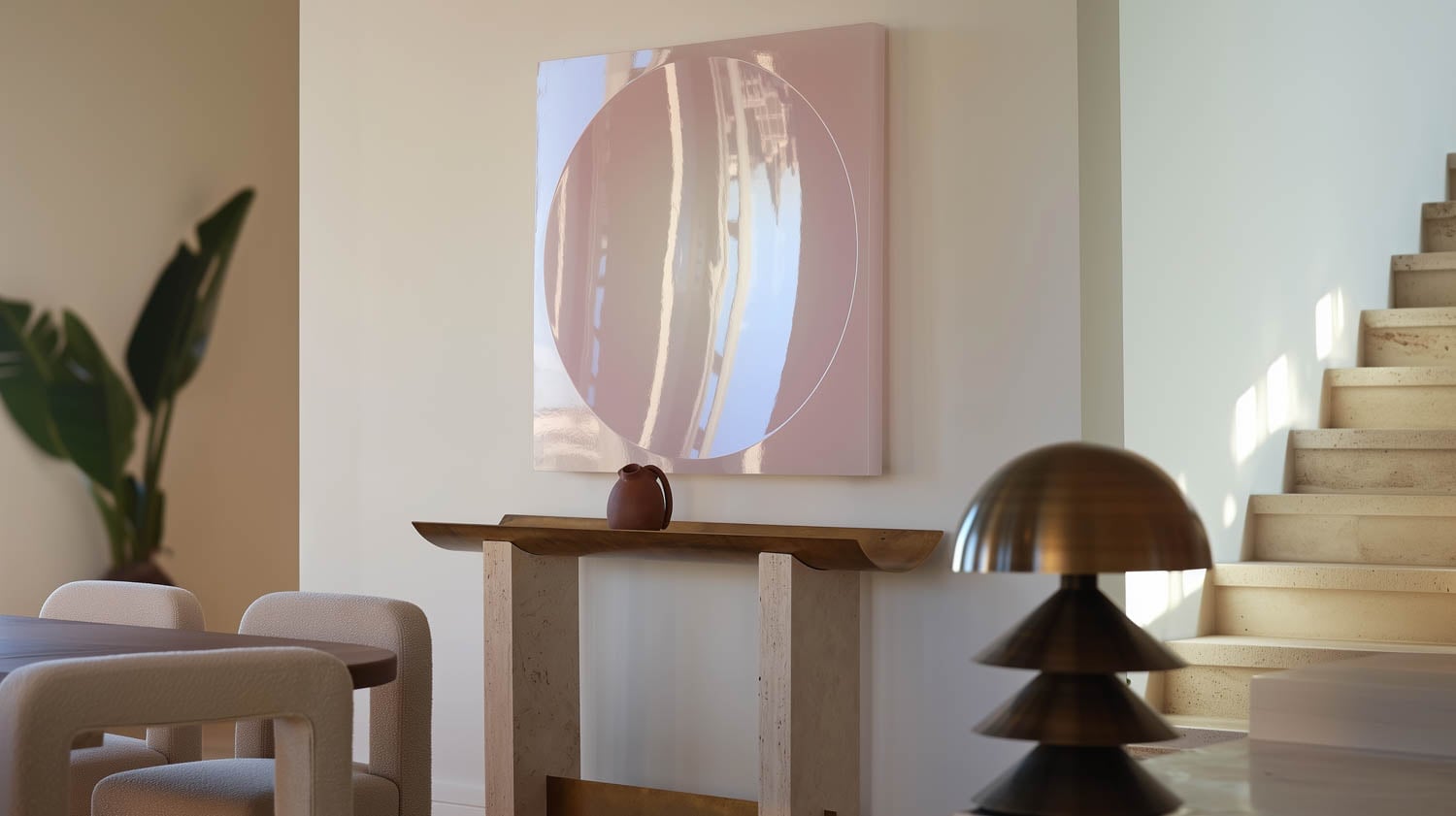
MVDP: I also work with resin, which is, of course, a man-made material. During the pandemic, when importing stone was difficult, I worked with resin. It’s used for boat hulls, and it was popularized in the 1970s by the Light and Space movement artists, like De Wain Valentine and Fred Eversley, who explored it as sculpture and as a light medium because it refracts and reflects light. I’ve made a series of resin works as well.
All my work is fundamentally sculptural. Some pieces fit the vernacular of interiors and lighting, but they’re still considered sculptures that happen to emit light. Light has an effect on us, that’s where an interior designer can bring it into a space. Light creates warmth, defines the environment, and reflects around the room. You don’t only need light to read next to; a designer can use light to shape the feeling of a space.
ID: Out of curiosity, how do you power the lights in your pieces?
MVDP: I work hard to hide all the electronics so the pieces feel a bit magical. The wiring is integrated and subtle, often running from the bottom. They all plug into the wall, but the power supplies and electronics are inside the sculpture, hidden, so there’s just a minimal wire and no distracting hardware. Some works use neon; others use LEDs. For LED pieces, I use bi-color strips both warm and cool, that can be balanced depending on the space or time of day: cooler for certain kinds of energy, warmer for comfort and safety.
read more
DesignWire
10 Questions With… Sculptor Aminata Mboup
Aminata Mboup discusses her practice, inspirations, fluidity between disciplines, as well as her unique approach to materials.
DesignWire
10 Highlights From Amman Design Week
Amman Design Week 2026 gathers a host of regional designers and architects under the theme ‘Accumulations.’