
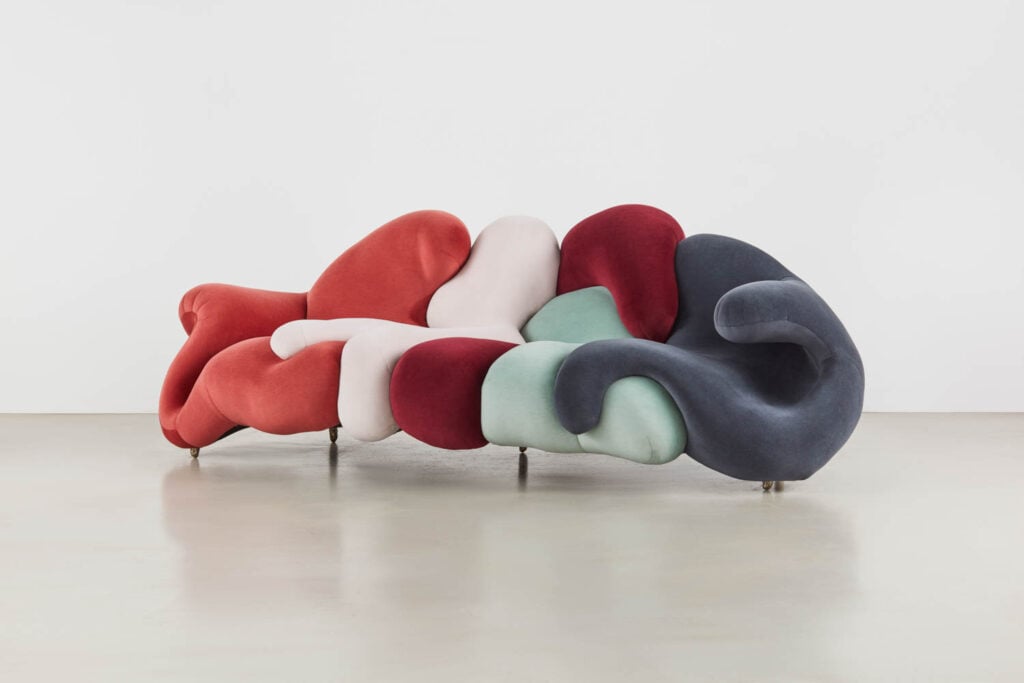
10 Questions With… Misha Kahn
Misha Kahn is driven by a philosophical depth and it’s evident in the way he speaks about the things that not only inspire him but have come to shape his creative tapestry. In his world, colorful and surreal forms come to life; it is perhaps why his complex works appear otherworldly—and why he embraces these contradictions. You can feel the emotional undercurrent to his practice, which is one shaped by vulnerability, discomfort, and an ongoing desire to push beyond what feels familiar.
Born in Duluth, Minnesota, Kahn’s fascination with making started early. As a child, he spent much of his time constructing miniature sets for claymation films. He studied furniture design at the Rhode Island School of Design and graduated in 2011. His early breakthrough came through experimental furniture and sculptural works that quickly gained attention in the New York design world. By 2016, he stepped fully into the spotlight for a solo show with an eye-popping installation at New York’s Friedman Benda.
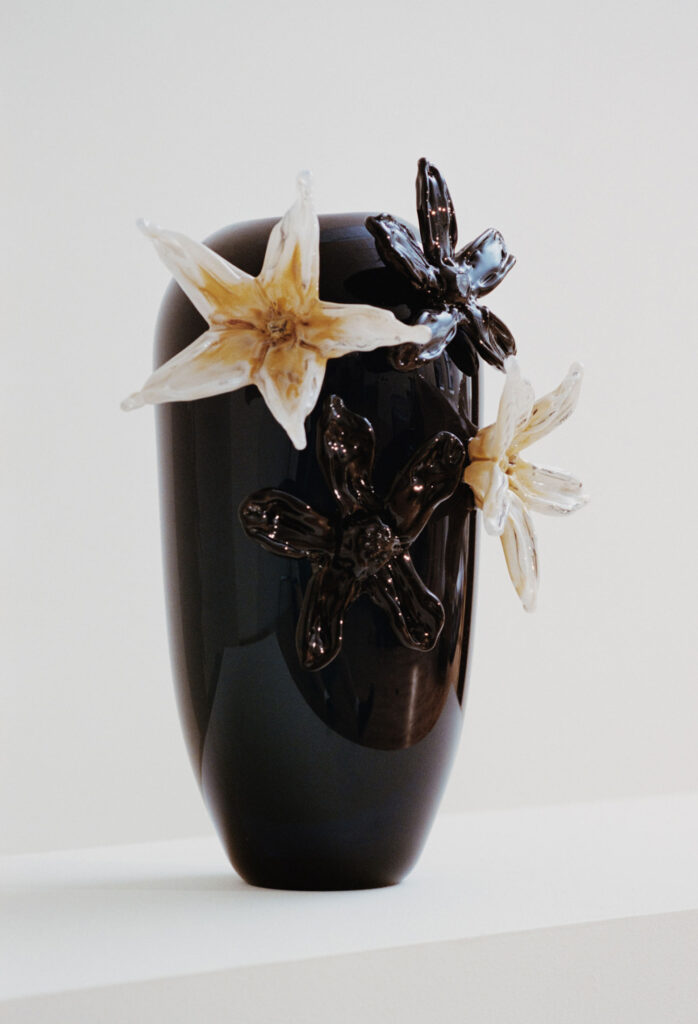
As a designer and artist, Kahn isn’t bound by the comfort of a single material. His diversity lies in the way he moves fluidly across weaving, casting, carving, welding, painting, and digital experimentation to create works that feel both emotionally charged and materially unexpected. Even his approach to shapes and color feels instinctive and deeply imaginative, balancing surreal forms with vivid, unexpected palettes that transform ordinary objects into extraordinary creations.
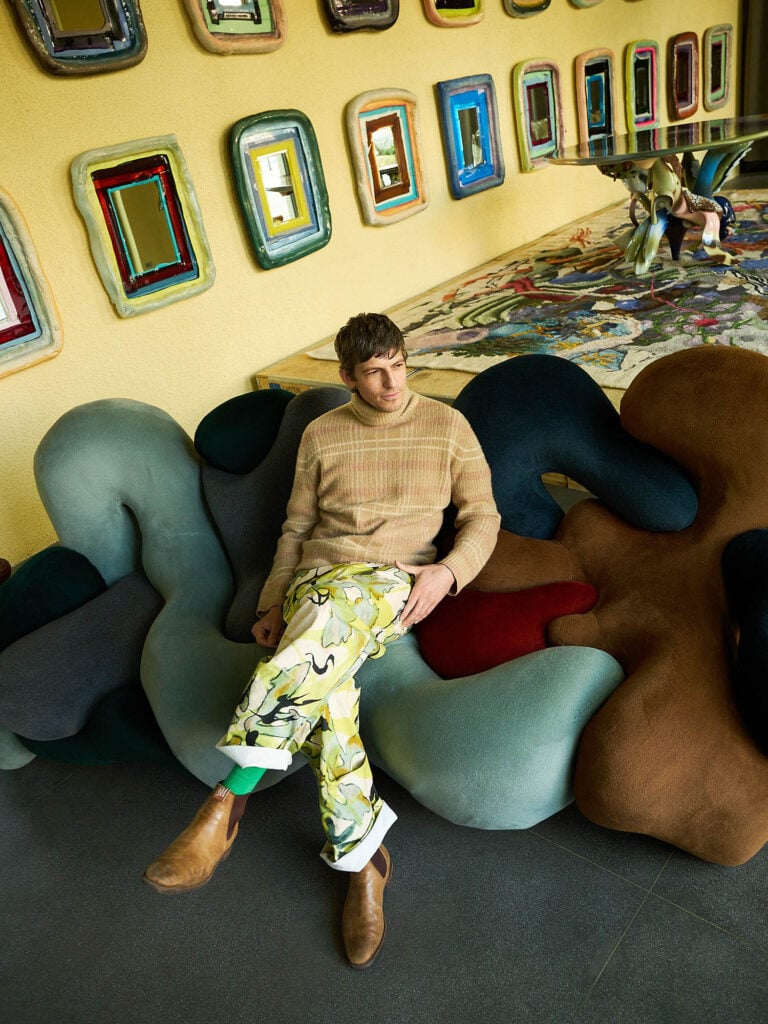
When I ask Kahn if his play on forms and colors might be intentional or spontaneous, he simply says: “I try to give a sort of window to spontaneity for the first half of a project; then, for the back half, I try to view myself more like a fabricator for the project, so there is a way to finish things and to trust in the object.”
Interior Design speaks with Kahn about his design approach and the emotional tension that shapes his ever-evolving creative universe.
Misha Kahn Shares Insights Into His Material Experimentation
Interior Design: How did your journey into furniture and sculptural design begin?
Misha Kahn: I have always been drawn to making. As a kid, I was always making miniature sets for claymation films. I could have easily been pulled into so many different directions that weave materiality and a sense of world-building, like cinema or fashion, but I love the wide array of materials and the very human pace and scale of objects. While in school, I was making work that was very sculpture-forward. I have always been inspired by artists who did both or merged the two. For me, this work is all about making it feel like you have entered a parallel plane where everything looks a bit different, so the functional element is more of a narrative mechanism. I was never interested in conventional furniture and then forcing it to be something more functional. It was a very different motivation.
ID: You grew up in Duluth, Minnesota, what were your early days like and how did that shape the way you see materials and making?
MK: I spent a lot of time in my own little world making things, which might be very similar to how I operate now. It is a small town with a lot of nature around it. Because of this, I always understood material culture in relation to the natural world.
ID: You are more of a multi-media creative—you paint, you sketch, you also work with virtual reality to make furniture. Did you start all of them at once and do they influence each other?
MK: It is really a back and forth, with one informing the other, and round and round again. Sometimes I feel like it makes me feel kind of dizzy or weary or unfocused, but then something happens and it feels like I get to pull something magical out of a soup, something that never should have been in there, like a loose tooth. I wish I had a different creative process, but I have tried to come to terms with this being my way.
ID: The way you approach form and structure is so otherworldly, especially considering the materials you use, which are very playful. Where do these shapes come from; what inspires them?
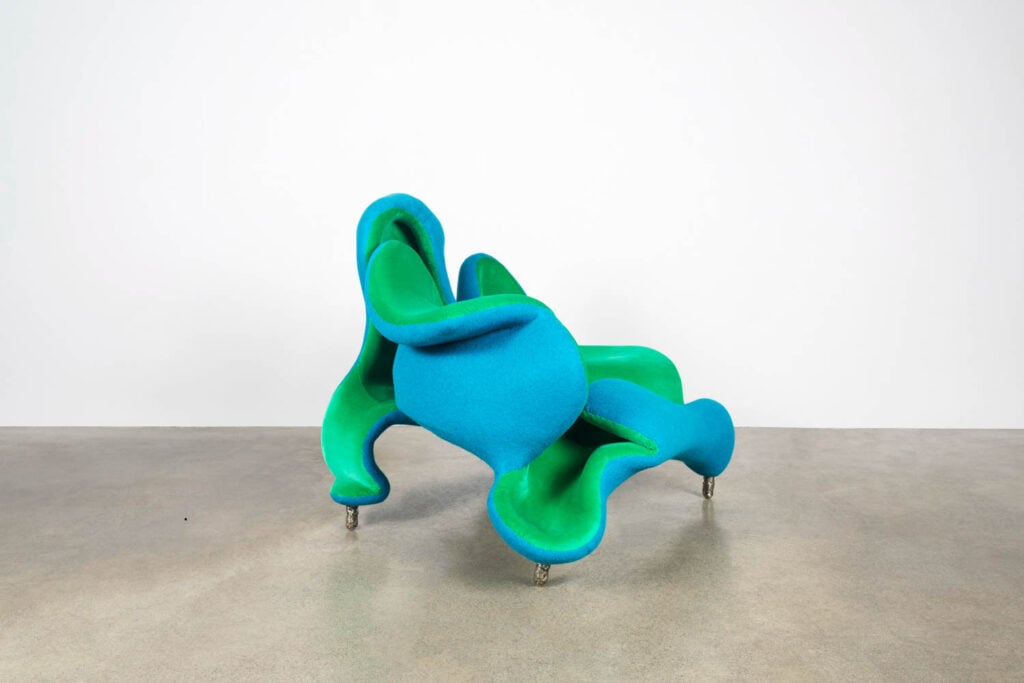
MK: I usually draw the action lines of the piece and have a feeling in mind before I put any forms together. Feeling and direction kind of lead the way and then the materiality becomes something to add tension to this. I often like it if the material pushes back, like something soft looking hard, and vice versa. And choosing the process and material is not always vertical. I often feel like, within the context of a show, I like when there is a nice spectrum of materiality, so this can be a guiding reason. Often there is a new process that suggests some kind of form, and this curiosity kind of pulls things in its direction. For instance, we have been experimenting a lot with electroforming conductive fabrics to arrive at sewn metal objects, but then it starts to put this language that comes from that into another material to bring a surprise. I suppose it is intuitive.
ID: You have worked on both large public commissions and smaller objects like jewelry. What draws you to moving between these scales?
MK: When you are lying in the grass and your eyes can barely focus on some little aphid crawling on a single blade, you have this feeling that this is its own tiny universe, and then you zoom out on a plane and see all the cars and they look like aphids on grass too, in their own way. It seems evident to me that moving across these scales is what gives a sense of the universe. I suppose this is very related to the Powers of Ten (American short documentary written and directed by Charles and Ray Eames). I love architecture when the small details like an outlet cover are attended to with the same intensity as the silhouette of a building.
ID: I love the way you approach color in your work. Has your relationship with it changed over time?
MK: Yes, quite a lot. At first, I would just use all really bright colors, and I do not think there was a lot of sense or nuance other than intensity. In the States, this palette, I think, really added a context of kind of lowbrow, strip mall, pop that had innate friction with the objects, so it kind of worked on accident. Now I am quite intentional. I take a lot of detailed photos in the world when I like a color palette. I am shopping for really unexpected situations, often where man made elements merge with natural ones. While there are still high octane colors there are also a lot of more curious tertiary and neutral colors as well.
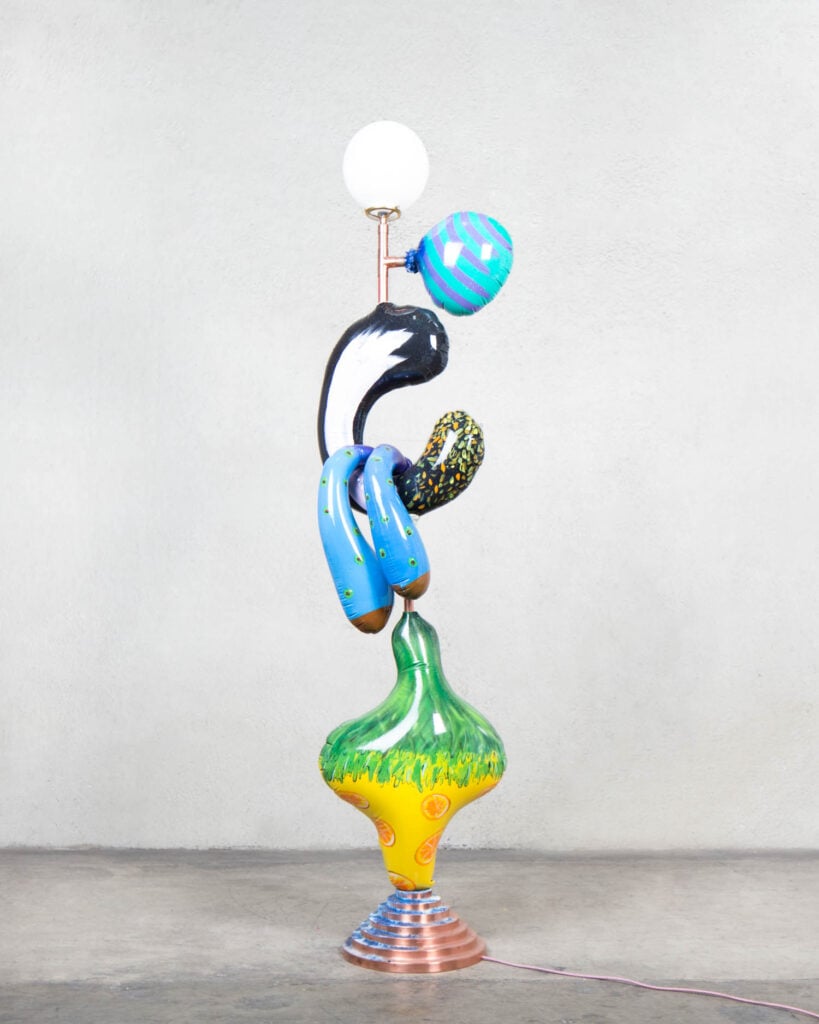
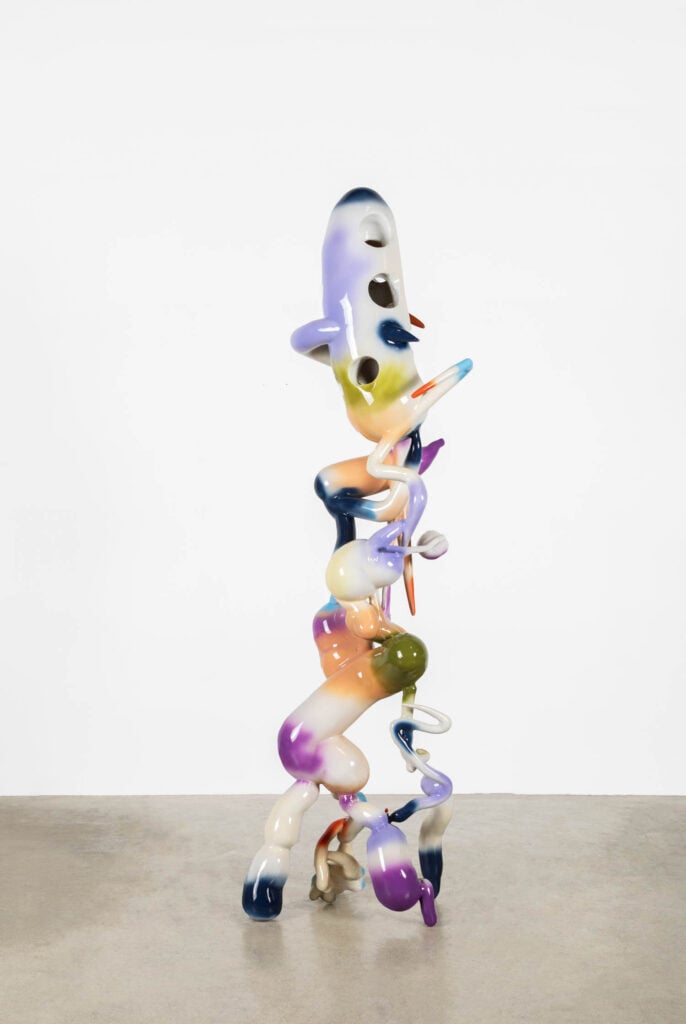
ID: Are you inspired by queer culture and if so, how does that influence your work, and does it come from a personal place or a broader queer cultural perspective?
MK: I think I make work that does not fit into any context, and the queer experience can be quite similar, and this can be an element I draw inspiration from. Queerness is not really the lens I use to think about my own work. Sometimes my objects are antagonistic to normative culture and some of them have major sexual undertones. But I still feel it is more incidental than primary.
ID: What is one collaboration you are most proud of?
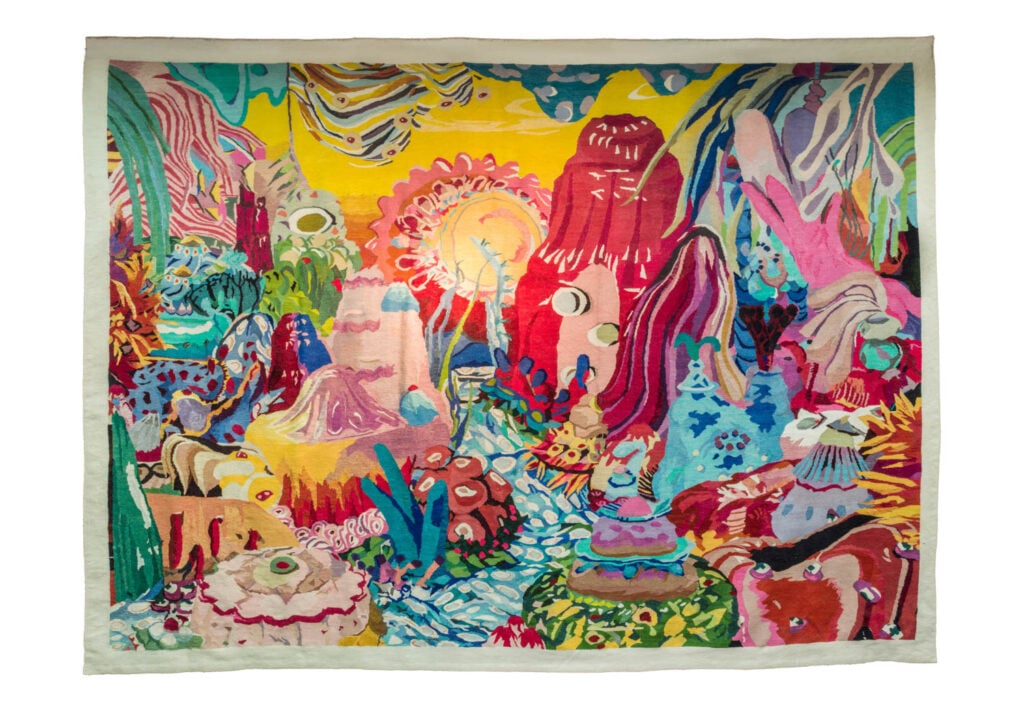
MK: We have produced a lot of woven works in collaboration with Gone Rural in Eswatini. The works will meander through really curious, amorphous forms. A lot of them have been woven with lots of scraps and trash, chunks of cars, etc. I think this combination of energy comes through in the final objects so vibrantly. I can give direction to a lot of elements, but the creative decisions that happen in the moment with all the handwork give the pieces their power.
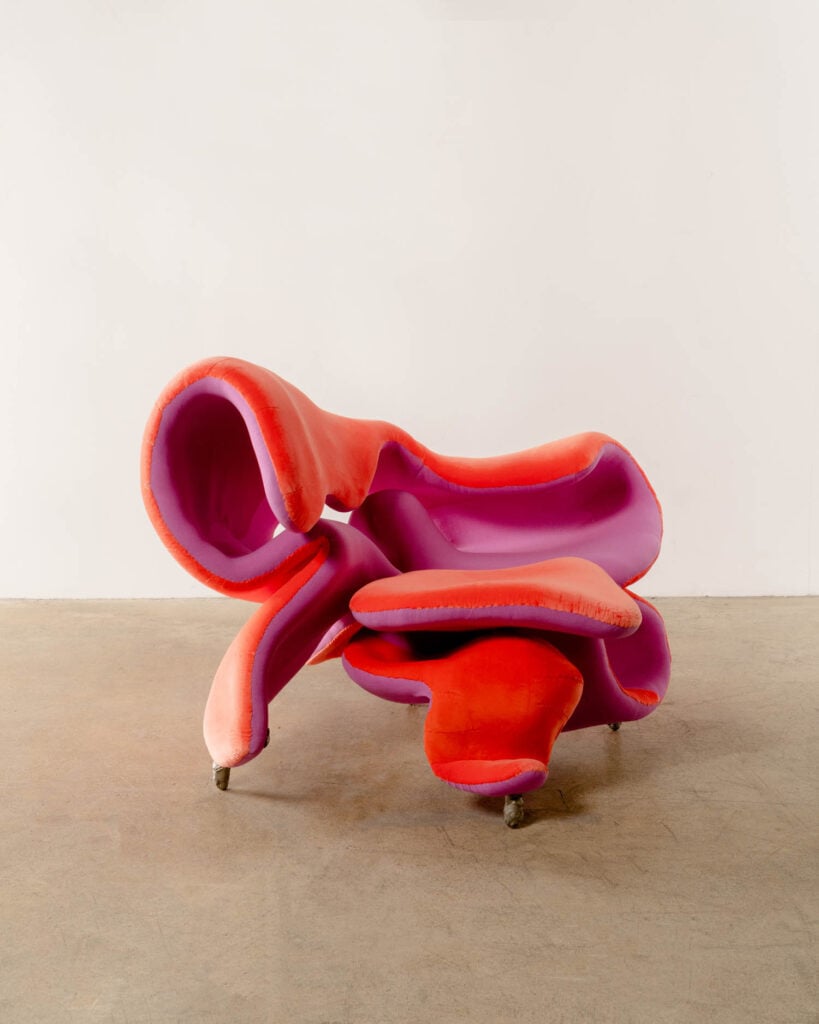
ID: What challenges you most in your work right now?
MK: I have had my studio for around 15 years, and I get used to making things that look a certain way. Right now I am challenging myself to be really uncomfortable and try to make something that really breaks new ground, that I do not recognize. It is nice to be in the studio feeling really vulnerable.
ID: What are you currently exploring?
MK: I am working on an exhibition for Friedman Benda for Fall of ’26 in New York City. Inside the concept of the show, I am trying to make work to appease these outside characters, but they are all versions of myself. It is really the violence of an inner monologue on full display. I do not know if anyone will like it, but I know it is really honest work.
read more
DesignWire
Designers And Manufacturers On The Move: September 2026 Edition
Interior Design‘s latest On the Move includes must-know industry promotions and hires, like Perkins&Will’s strategic move to expand its design capabilities.
DesignWire
10 Questions With… Artist and Designer Conie Vallese
From sculpture and ceramics to glass, textiles, and furniture, Conie Vallese embraces a multidisciplinary practice shaped by curiosity and creativity.