
10 Questions With… Multidisciplinary Artist Marcin Rusak
While studying at the Royal College of Art, Polish artist Marcin Rusak encountered enormous heaps of discarded plant matter at a London flower market and was shocked—if a flower doesn’t sell within the first couple of days, it is simply thrown away. That encounter led him to not only uncover the complex global systems behind flower breeding and trade, but also to begin experimenting directly with wilting and rotting plant matter. Since then, Rusak’s work has revolved around observing decay, preservation, and transformation over time, often through inventing new materials and techniques.
Born and raised in Warsaw to a family of flower growers, Rusak embraced a philosophy of experimentation and lifelong learning from an early age. With the aim of connecting emotionally with the viewer, creating inspiring experiences, and investigating the phenomena that surround people, he founded Marcin Rusak Studio in London in 2016. Using natural materials that are often preserved in resin and through workshops dedicated to wood, resin, and metal, the studio—made up of a team of botanists and 3D engineers—creates objects, furniture, and sculptural installations. Its rich body of work, ranging from research and storytelling to cultural criticism around consumption and future scenarios, has led to collaborations with museums, international brands, and private clients.
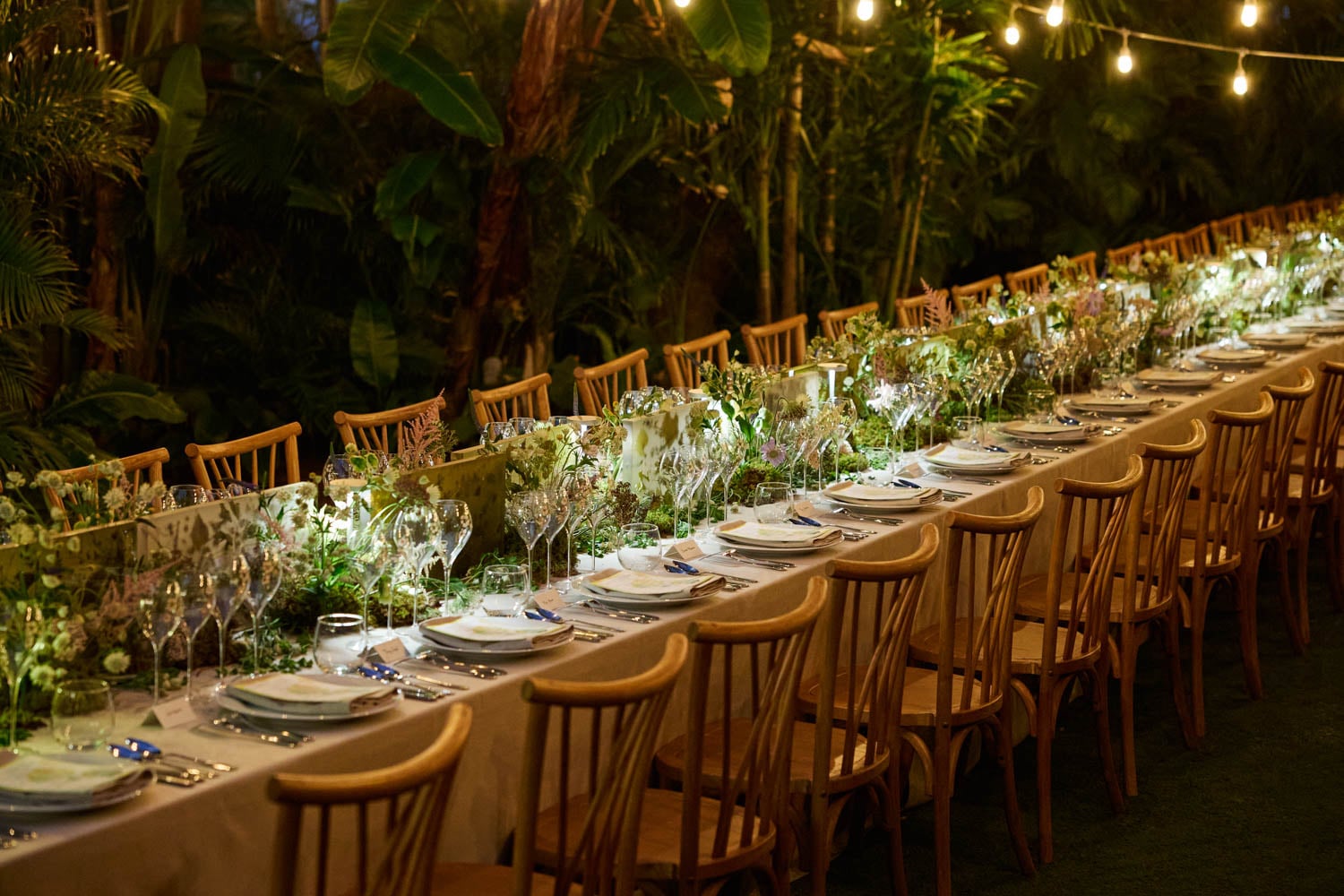
Notable exhibitions include solo presentations at Carpenters Workshop Gallery and Twenty First Gallery. In 2025, the studio presented numerous projects, including Ghost Orchid at Alcova Milano—a tribute to Rusak’s grandfather’s orchid legacy—and Plant Pulses installation at Design Miami, a research initiative developed with AGH University and Maison Perrier-Jouët.
Interior Design connected with the multidisciplinary artist to speak about his career, the intersection between design work and the natural world, and what comes next.
Marcin Rusak Questions Assumptions About The Natural World
Interior Design: How did you begin in the field?
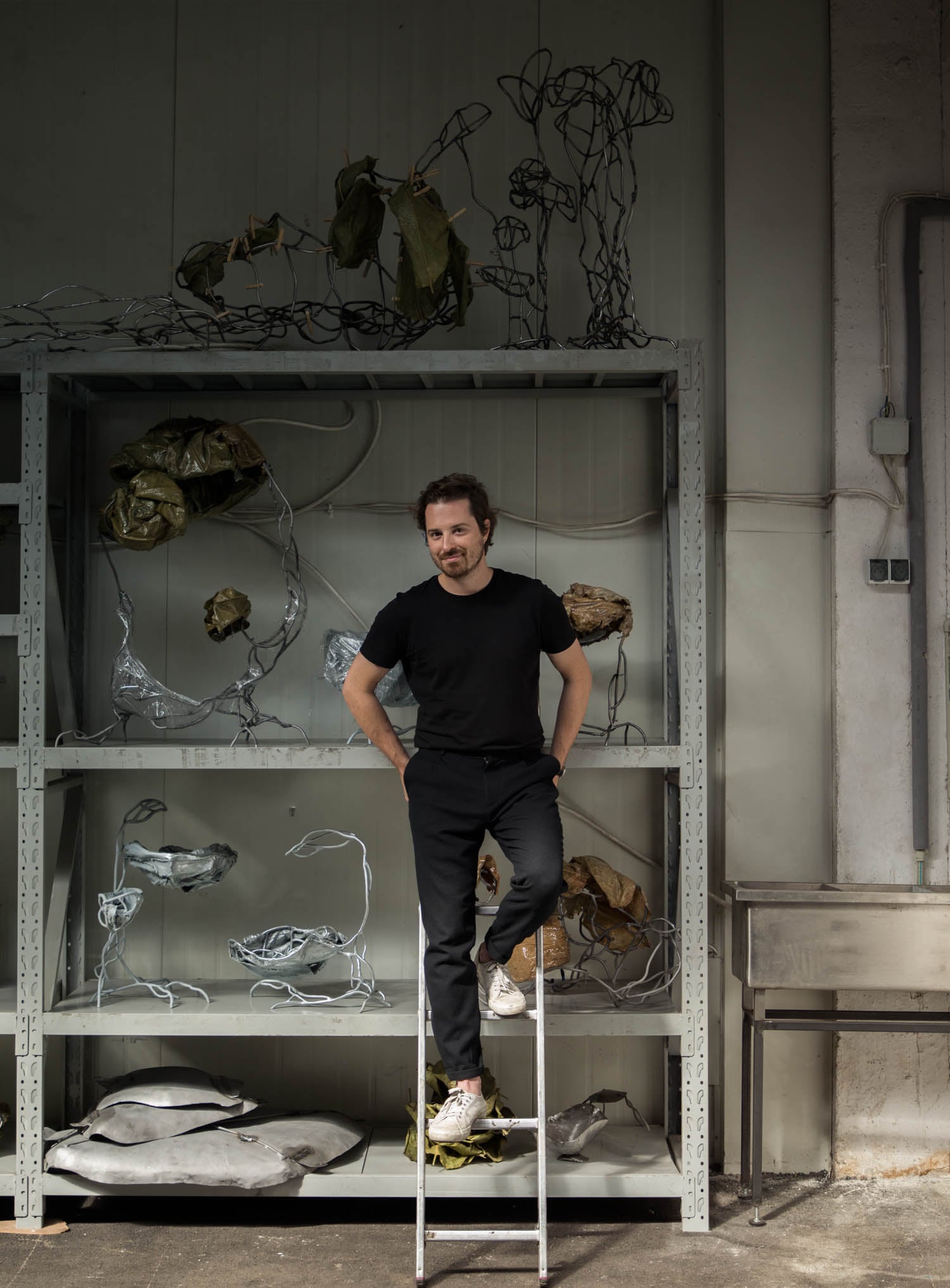
Marcin Rusak: I have always felt a strong pull toward creative exploration. Initially, I wanted to study at the Academy of Fine Arts in Warsaw, but I was not admitted. Instead, I studied humanities, which taught me how to gather, analyze, and process information. At the same time, I was a free listener at the academy and began taking on commissions as an independent interior and graphic designer. Eventually, I learned about the Design Academy Eindhoven, where I pursued conceptual design, and later continued my studies at the Royal College of Art. It was there that I began to reconnect more consciously with my roots and to question my own purpose. During that time, a visit to a flower market became a turning point—I started working with flower waste as a material, transforming it into objects that reflect on ephemerality, memory, and permanence.
ID: Could you give us some insight into your background, particularly your earliest memories of growing up in Poland with your grandfather as a botanist?
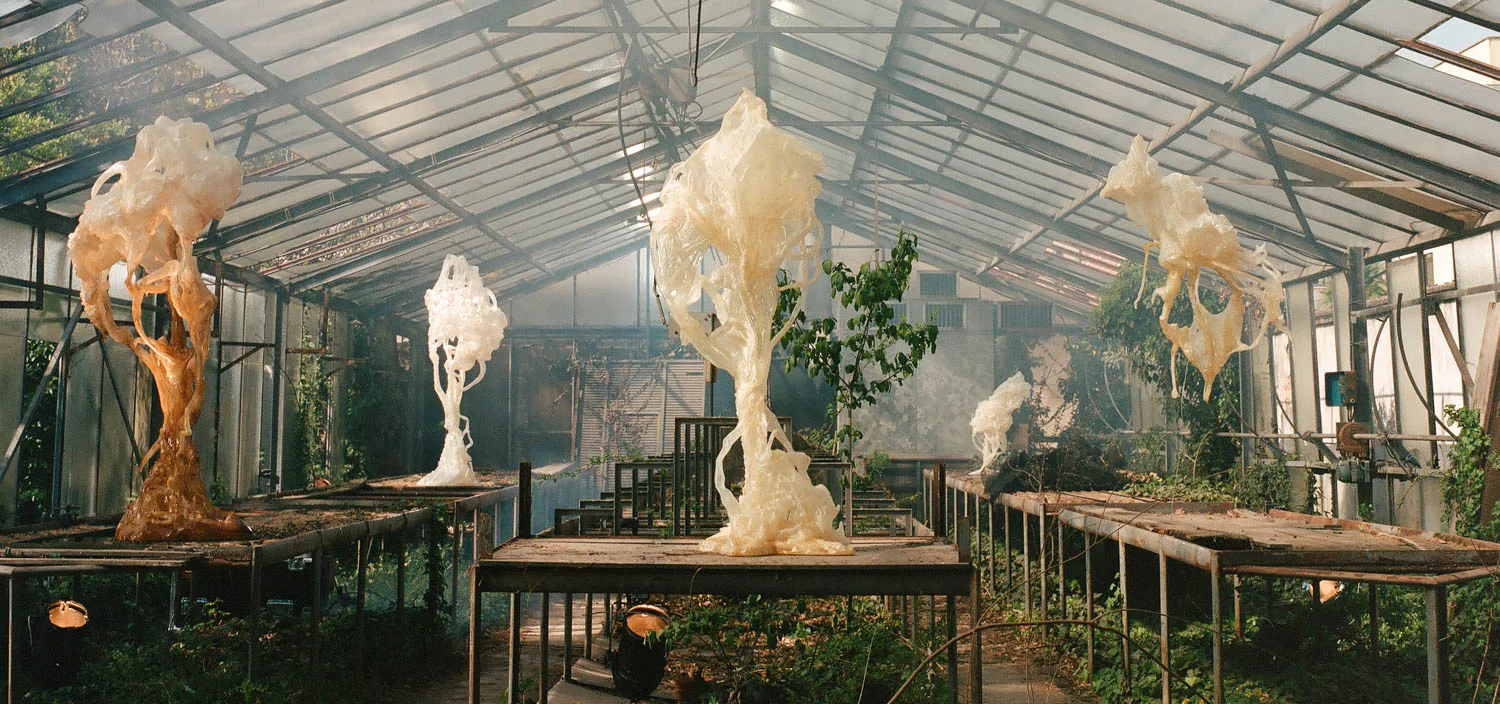
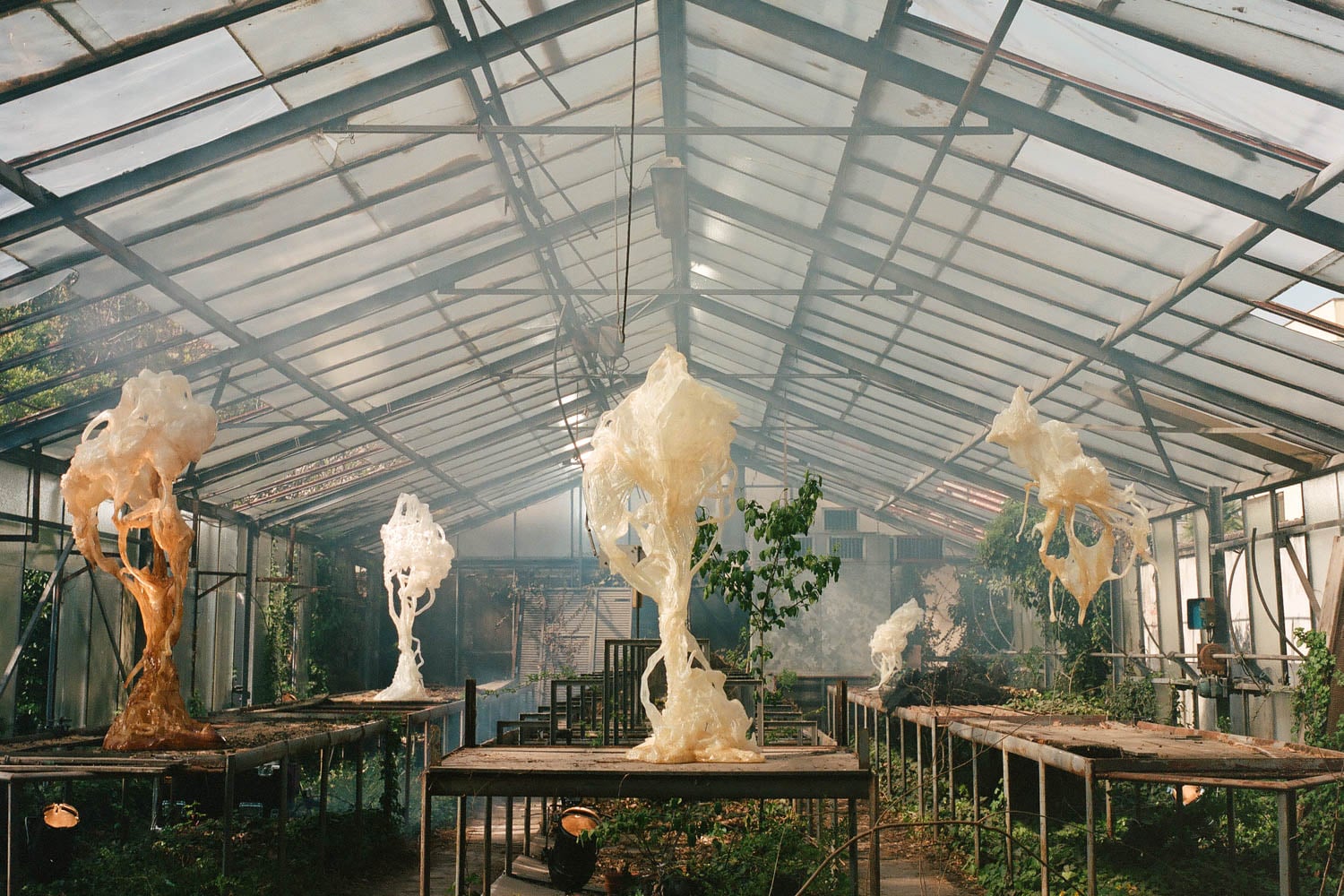
MR: Our family home was surrounded by extensive gardens and glasshouses run by my maternal grandfather, who was both a botanist and an economist. He grew flowers on an industrial scale, constantly experimenting with new varieties and hybrids. His experimental mindset left a deep impression on me and continues to inform my creative practice. In many ways, my earliest “fieldwork” took place in those greenhouses, which, by the time I was born, had already been closed and abandoned. What remained was a landscape shaped by decay and renewal, where plants and weeds continuously reclaimed the space.
ID: Your projects often convey science, technology, and narratives involving memory and emotion. How do you approach the natural world to create objects and installations?
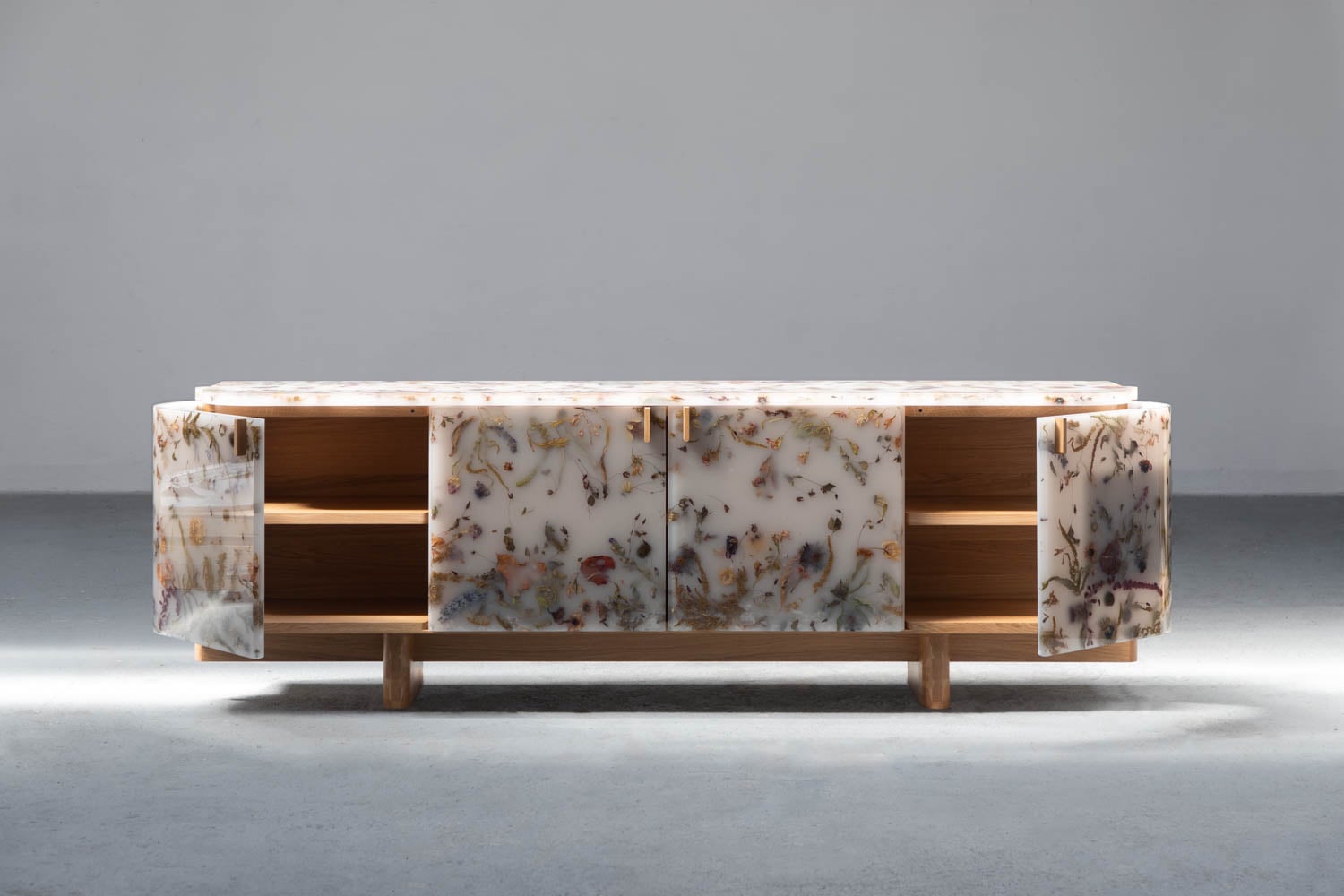
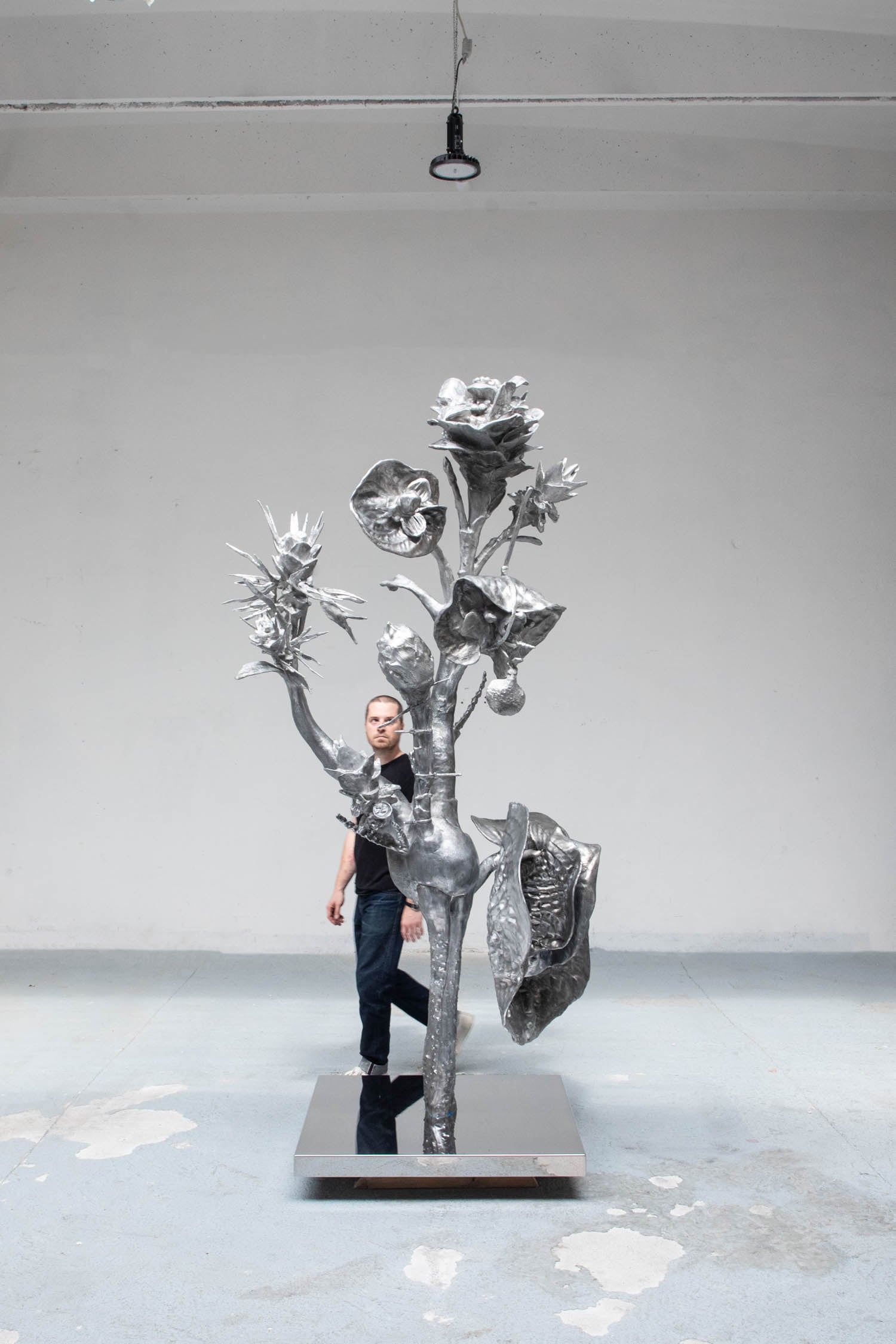
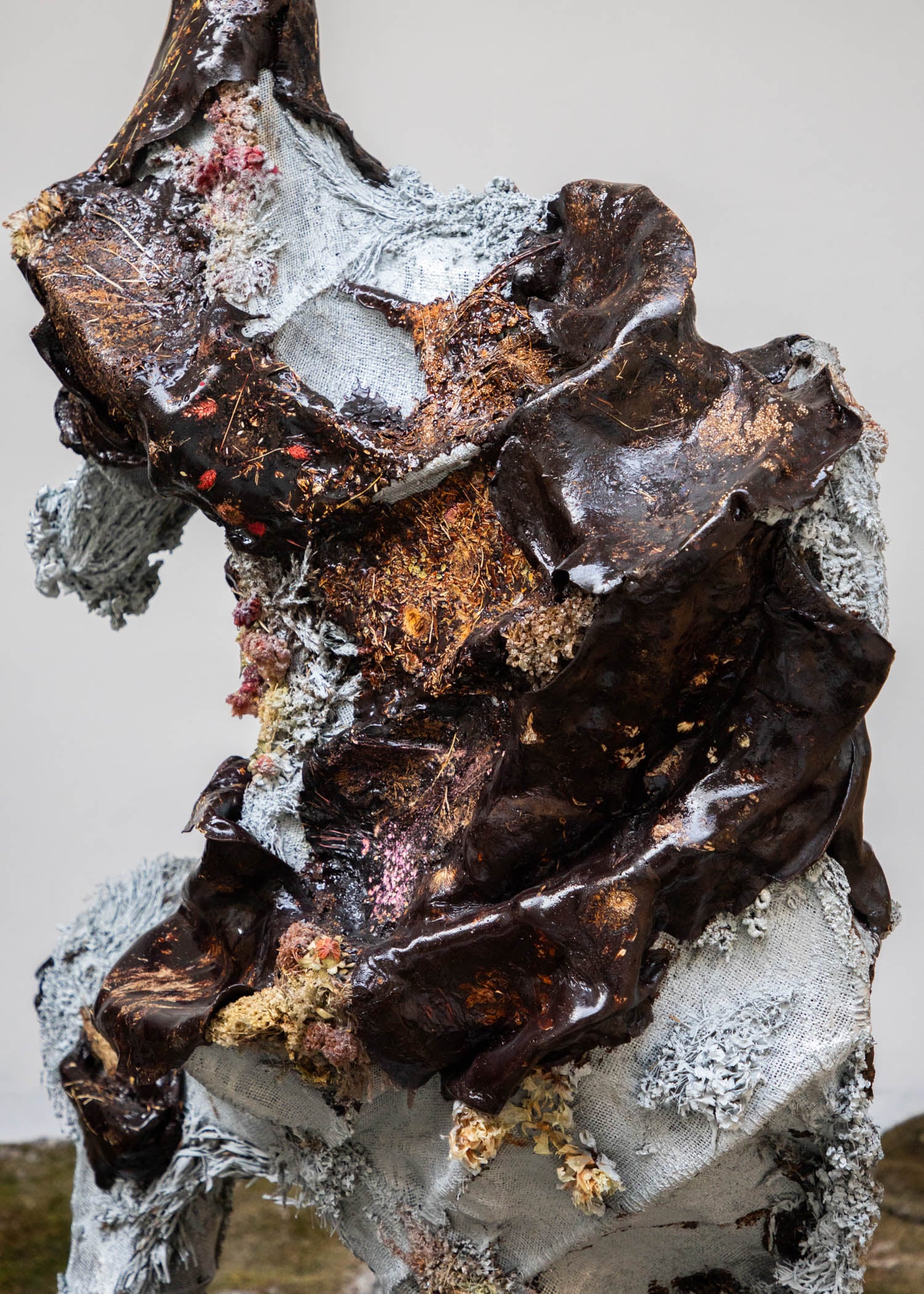
MR: The processes I initiate in the studio are both research-driven and poetic. I see the natural world as a living archive of time and memory rather than a static reference. Through material research and experimentation, I work with nature as a collaborator—embracing its unpredictability and imperfections. For example, stone slabs collected while hiking in the Bieszczady Mountains were later translated into tabletops for the Resina Botanica series, while tropical leaves from the Thaumatococcus daniellii plant became a structural material for a conceptual furniture series. Memory and emotion often surface through preserved flower arrangements, as in the Flora series or the Vas Florum sculptural vessels, which I think of as time capsules that may outlive their original custodians. Across my practice, I frequently translate scientific research into objects, aiming to find a balance between industrial processes and high craftsmanship.
ID: Over the past few years, what have you learned from flowers that has changed how you work with nature?
MR: Each project reshapes my relationship with flowers. One particularly formative experience has been researching wild orchids, which are remarkably adaptive to their environments and pollinators. While developing Ghost Orchid, I reflected deeply on my grandfather’s obsessive dedication to breeding new varieties—spending sleepless nights observing subtle changes in form. The project asked why we engage so intensely with nature, and how we recognize completion. Rendered in a fully compostable, biodegradable material, the sculptures shifted my understanding of time, patience, and intuition when working with living systems.
ID: When do you usually feel most creative?
MR: Often when I’m in transit—when I’m removed from daily routines. Ideas tend to surface unexpectedly, for instance while sitting on a plane. I usually sketch them immediately or call my managing director to talk them through.
ID: You frequently collaborate with museums and art-scientific startups. How do these partnerships contribute to the future of experimentation and innovation?
MR: I believe art and design can give visibility and emotional resonance to scientific research and speculative ideas. Collaborating with scientists, curators, and fellow creatives functions almost like a particle collider, generating unexpected connections and outcomes. I’m especially interested in materiality and in questioning what we choose to preserve, and what we allow to disappear. This has led me to work with institutions such as the Łukasiewicz Institute of Polymers and Dyes in Toruń, which helped create a bioproduct enhancing PLA biodegradability. With the startup Grow Your Own Cloud, we speculated on embedding data within plants and forests as alternatives to conventional data centers. These ideas may seem peripheral, but I believe innovation often emerges at the margins. My role is to help amplify those voices.

ID: You recently created an installation for the 20th anniversary of Design Miami. Could you share more about the process and your experience?
MR: Plant Pulses was deeply collaborative. It originated through my ongoing work with Maison Perrier-Jouët, and particularly with Caroline Bianco, who helped shape the initial idea. The project expanded through collaboration with scientists Bartek Chojnacki and Klara Chojnacka from AGH University, whose research on ultrasounds emitted by plants became central to the installation. Composer Justyna Stasiowska and digital artist Eli Magaziner helped translate this research into a multisensory experience. Alongside this, we presented new sculptural works conceived as contemporary herbariums documenting the biosphere of the Champagne vineyards. Presenting the project during Miami Art Week—within the Faena Hotel’s anniversary programme and in celebration of Design Miami’s 20th anniversary—gave the dialogue between science, nature, and design particular resonance.
ID: What has been your favorite series or piece to date?
MR: It’s always the one I’m currently working on. Once a project enters the world, it takes on a life of its own—much like a wildflower spreading and cross-pollinating within a broader ecosystem.
ID: How has working globally influenced and inspired your work?
MR: Design is an internationally intelligible language, though it is spoken with many local dialects. I founded my studio in London, which is still considered one of the key hubs for collectible design. At the same time, I’m increasingly interested in bridging the global and the local through Świdno—a historic site I’m developing as a cultural platform dedicated to nature, science, and culture.
ID: What are you currently working on, and what can we look forward to this year?
MR: I’m developing a new body of work that will premiere during my solo exhibition in Milan this spring, further expanding the design, sculptural, and architectural dimensions of my practice. I’m also looking forward to announcing upcoming museum acquisitions and launching an artistic residency program at Świdno later in the year. In the meantime, I will be stepping briefly away from the studio to take part in a residency at Villa Lena in Tuscany, while my team continues to develop an international study-visit program aimed at supporting not only our own practice, but the wider Polish creative scene. It’s an exciting moment of transition and growth.
read more
DesignWire
10 Questions With… Sculptor Aminata Mboup
Aminata Mboup discusses her practice, inspirations, fluidity between disciplines, as well as her unique approach to materials.
DesignWire
10 Highlights From Amman Design Week
Amman Design Week 2026 gathers a host of regional designers and architects under the theme ‘Accumulations.’