
10 Questions With… Oleksandra Rudenko Of Ruda Studio
Oleksandra Rudenko, cofounder and chief designer of Ruda Studio, is leading a quiet revival from Odesa, Ukraine’s historic Black Sea port city. Her medium—straw marquetry—dates back centuries, but in her hands it reads unmistakably contemporary.
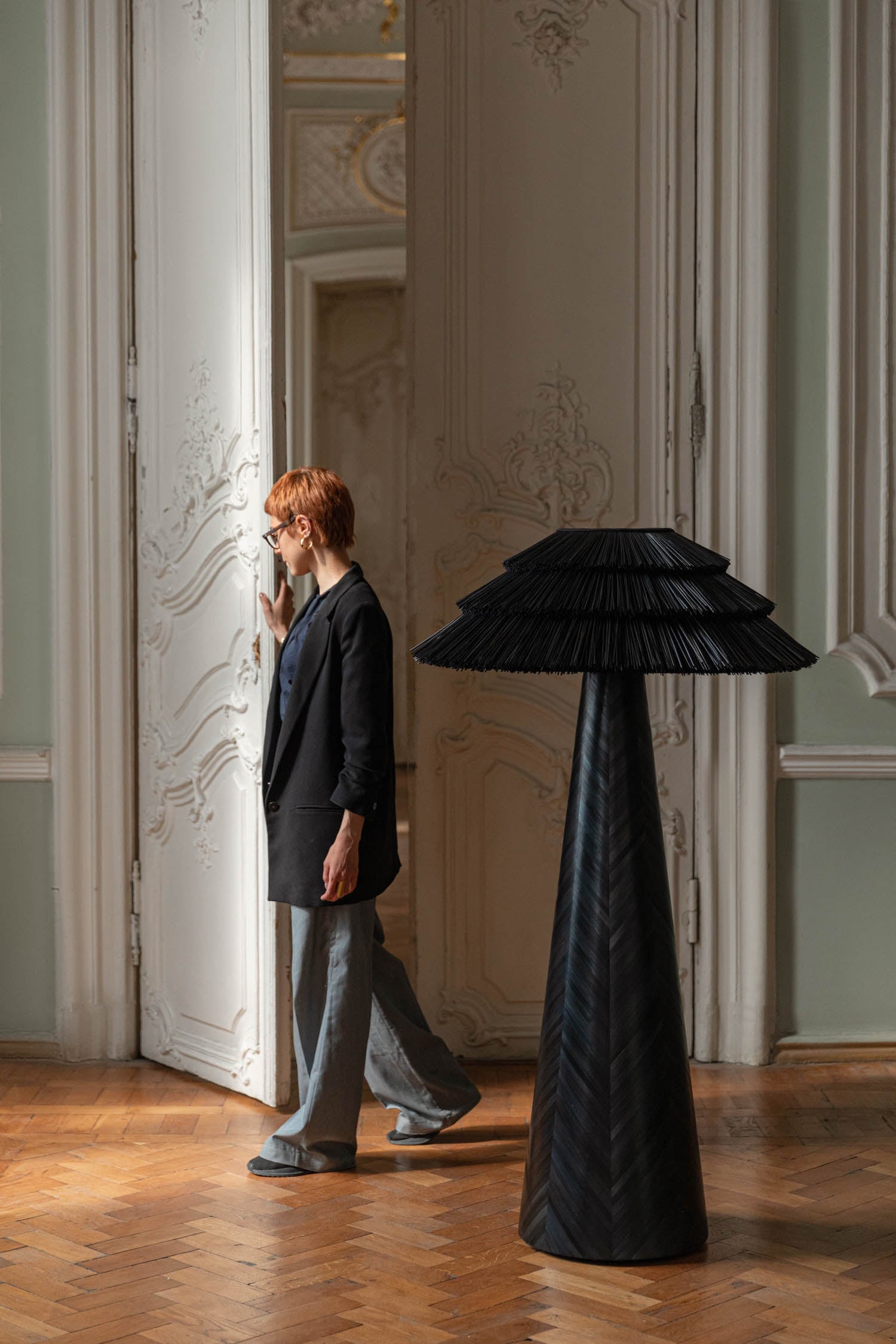
Working with split and flattened rye straw prized for its strength and natural sheen, Rudenko transforms a once-decorative craft into a precise architectural surface. The technique, which surfaced across Europe from the 17th century through the Art Deco era before fading from prominence, becomes under her direction a vehicle for material experimentation and cultural expression.
Today, Ruda Studio produces furniture, lighting, and objects defined by layered color, rhythmic pattern, and exacting handwork—positioning straw marquetry not as nostalgia, but as a forward-looking design language rooted in place.
Oleksandra Rudenko On The Quiet Power Of Traditional Craft
Interior Design: How did your design journey begin, and when did object design come into focus?
Oleksandra Rudenko: I was drawn to making things long before I understood the language of “design.” In my final years of school, I chose to study architecture largely because I loved drawing and working with my hands; thinking about space and form came naturally to me.
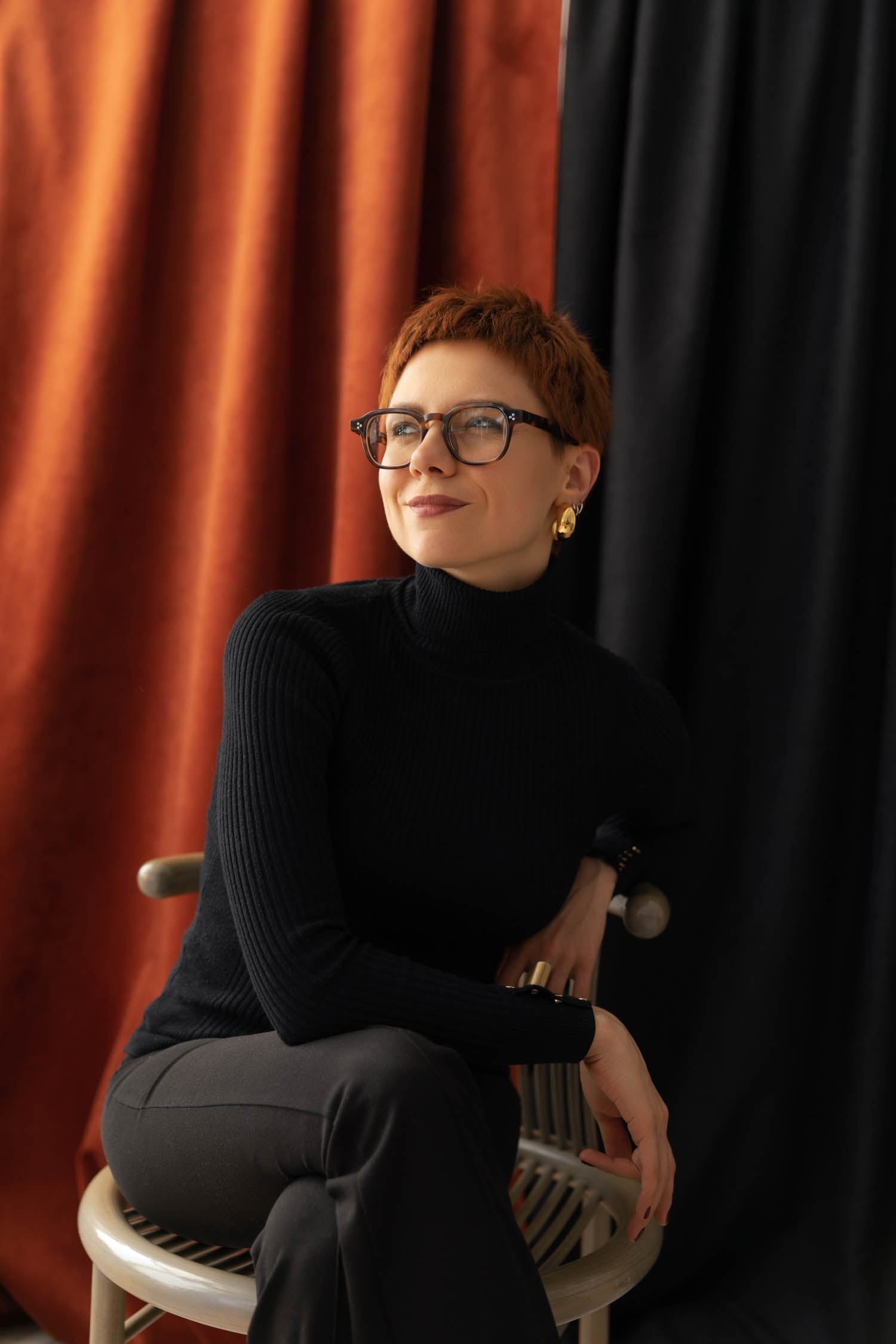
Object design entered my life later, during my first role in the interiors field, where I was frequently involved in developing custom pieces for projects. Over time, I began to notice that these moments—designing a single object, a piece of furniture, a light—held my attention more than shaping the overall space. I was increasingly drawn to the intensity and clarity of working with one concentrated idea rather than an entire environment. That was the moment I understood object design wasn’t simply part of my process, it was my direction.
ID: What helped define your design mindset?
OR: I didn’t have mentors in the traditional sense. Instead, my thinking was shaped by a continual return to my surroundings. When I was searching for direction, I wasn’t drawn to other designers’ work, but to something more fundamental.
Nature became my reference point. Its quiet but powerful laws offer a sense of permanence that grounds my work. Observing this taught me to approach craft through material itself—respecting its origins and allowing meaning to emerge from the source rather than from references. My design mindset formed not by borrowing a language, but by learning to listen to what already exists.
ID: How has your approach to object design evolved, and what values define your work today?
OR: Early in my object-design practice, I was guided almost entirely by utility and function. I believed usefulness was the most honest measure of value, and that objects made purely for beauty were unnecessary. That belief shifted over time. I realized the pieces that moved me most weren’t efficient or problem-solving but they carried presence and depth.
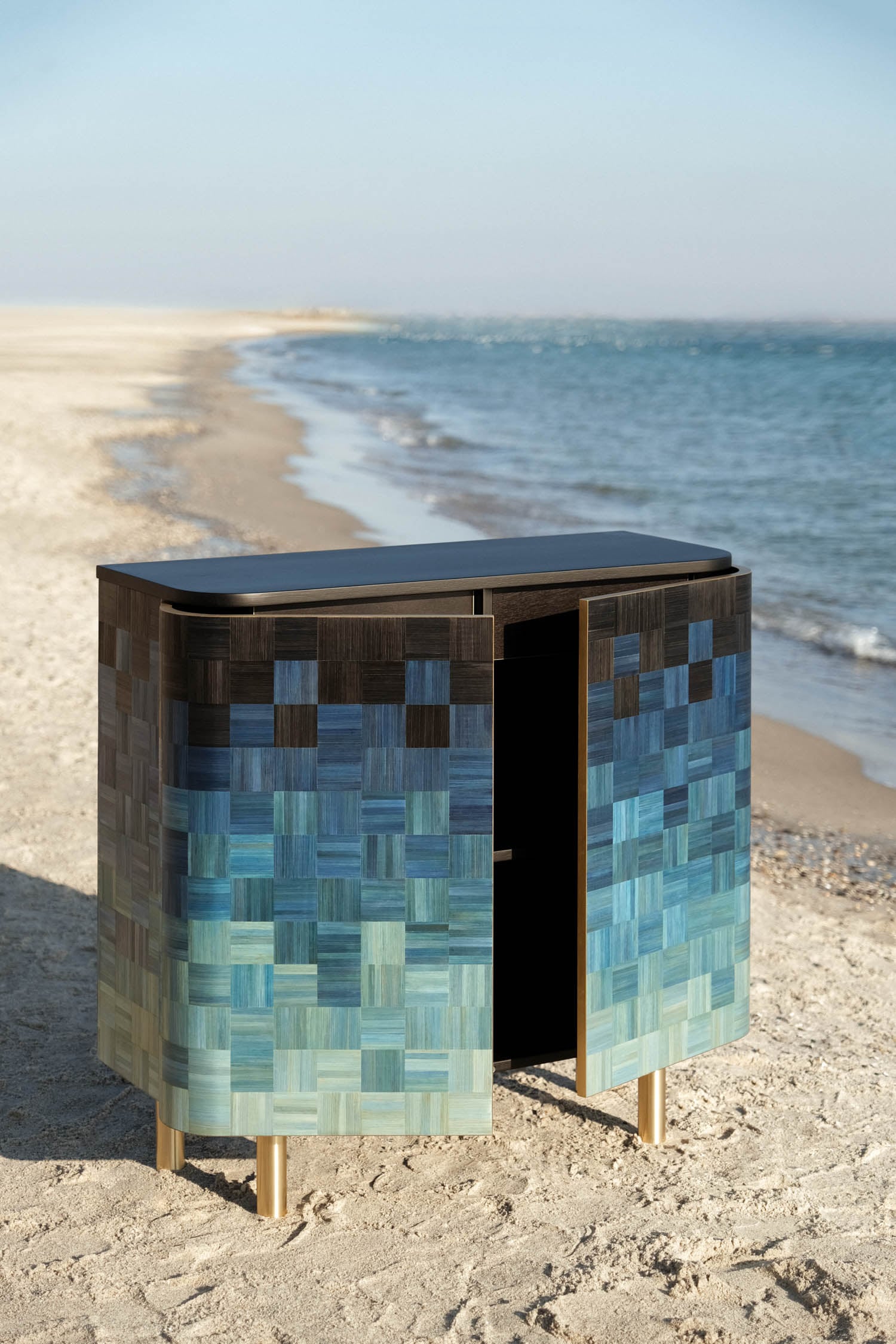
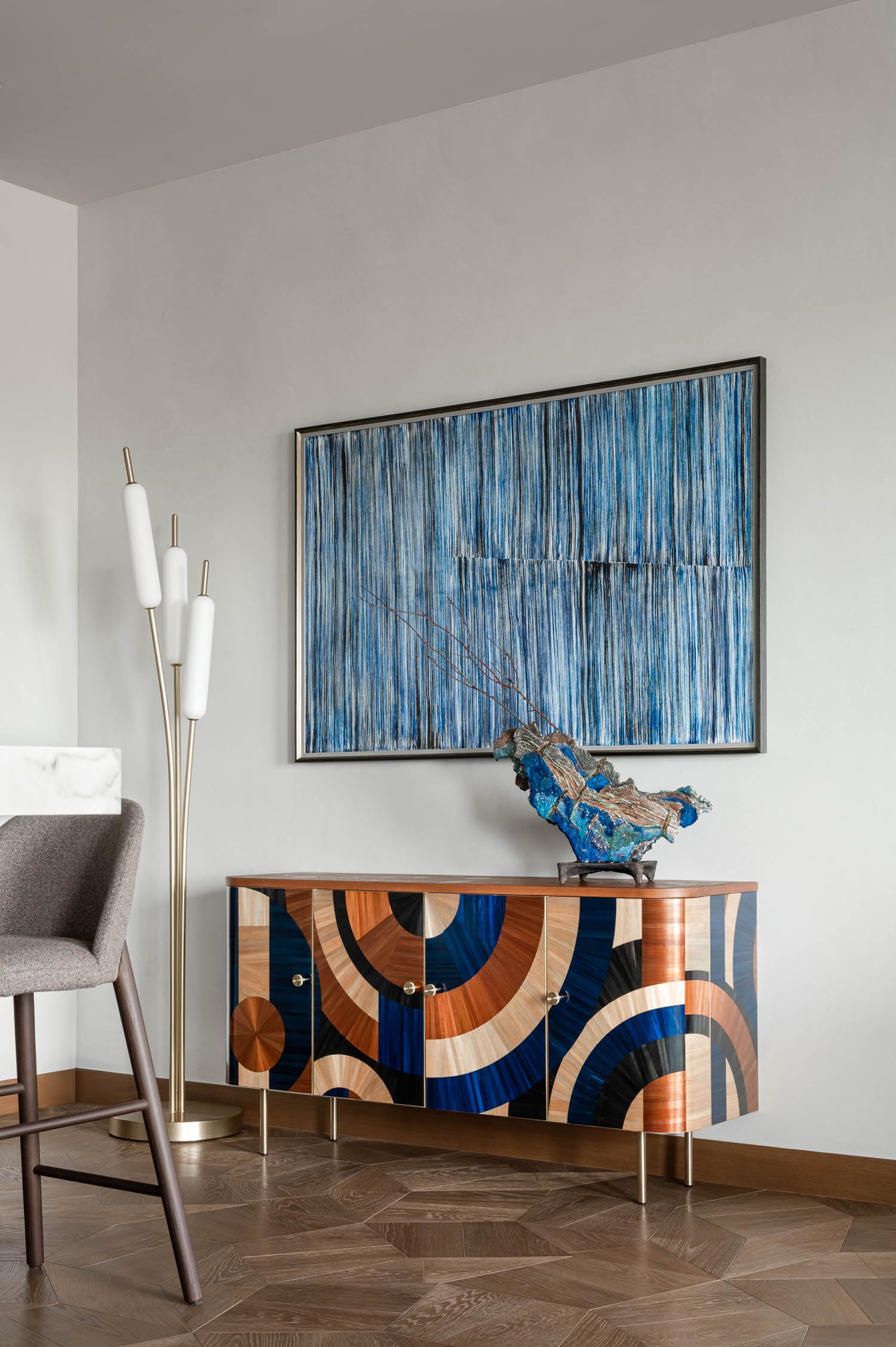
Today, emotional resonance carries equal importance to function. I allow more complexity into my work—layered pattern, deeper color, narrative surfaces. A cabinet or screen may still serve a clear purpose, but it also holds atmosphere. In an age of speed and automation, I’m committed to making objects that invite pause rather than simply perform.
ID: Tell us about the studio’s origins and the thinking behind its name.
OR: Designer Yuriy Vovnyanko and I founded Ruda Studio in 2017, out of a very practical collaboration. At the time, I was working in interior design, and Yuriy was the furniture contractor on one of our projects. Through that process, it became clear that joining forces to make objects together was a natural next step.
Our initial focus was on working with colored metals, particularly brass and copper, which directly informed the studio’s name. In Ukrainian, “руда” (ruda) means “ore”—the raw source of metal—and the word felt right from the beginning. As our work evolved, the name stayed. It reflects material origin and the idea of making from the source—a quiet reminder of how we began: hands-on, material-led, and grounded in making.
ID: In a moment of profound national urgency, what role can design play?
OR: While we fight for our freedom and identity, I feel a responsibility as a designer to speak about local culture. It’s existential; silence carries the risk of disappearance. Through design, we say that we are here. We have a history, crafts, and a landscape, and they live within our objects. Ukraine has long occupied a complex geopolitical position, shaped by overlapping religions, languages, and traditions. Now is the moment to design consciously—to articulate who we are and where we come from in the language of form and material.
ID: Walk us through how an idea becomes a finished object.
OR: My work is often sparked by my surroundings. I’m deeply oriented toward nature and see humans as part of it, able to observe and learn from its laws. At the moment, for example, I’m working on a folding screen that reflects the cycle of life and death. Four panels represent the four seasons, forming a wheel of the year.
The idea carries lessons about timing, acceptance, the joy of renewal, and the discipline of waiting rather than rushing. My role as a designer is not only to shape that narrative, but to translate it into an interior object. That means integrating the story into space and expressing it through material, in this case, straw marquetry. From there, the process becomes slow and precise. The entire composition is carefully inlaid by hand, allowing the material itself to carry the meaning of the work.
ID: Which recent projects pushed your practice into new territory?
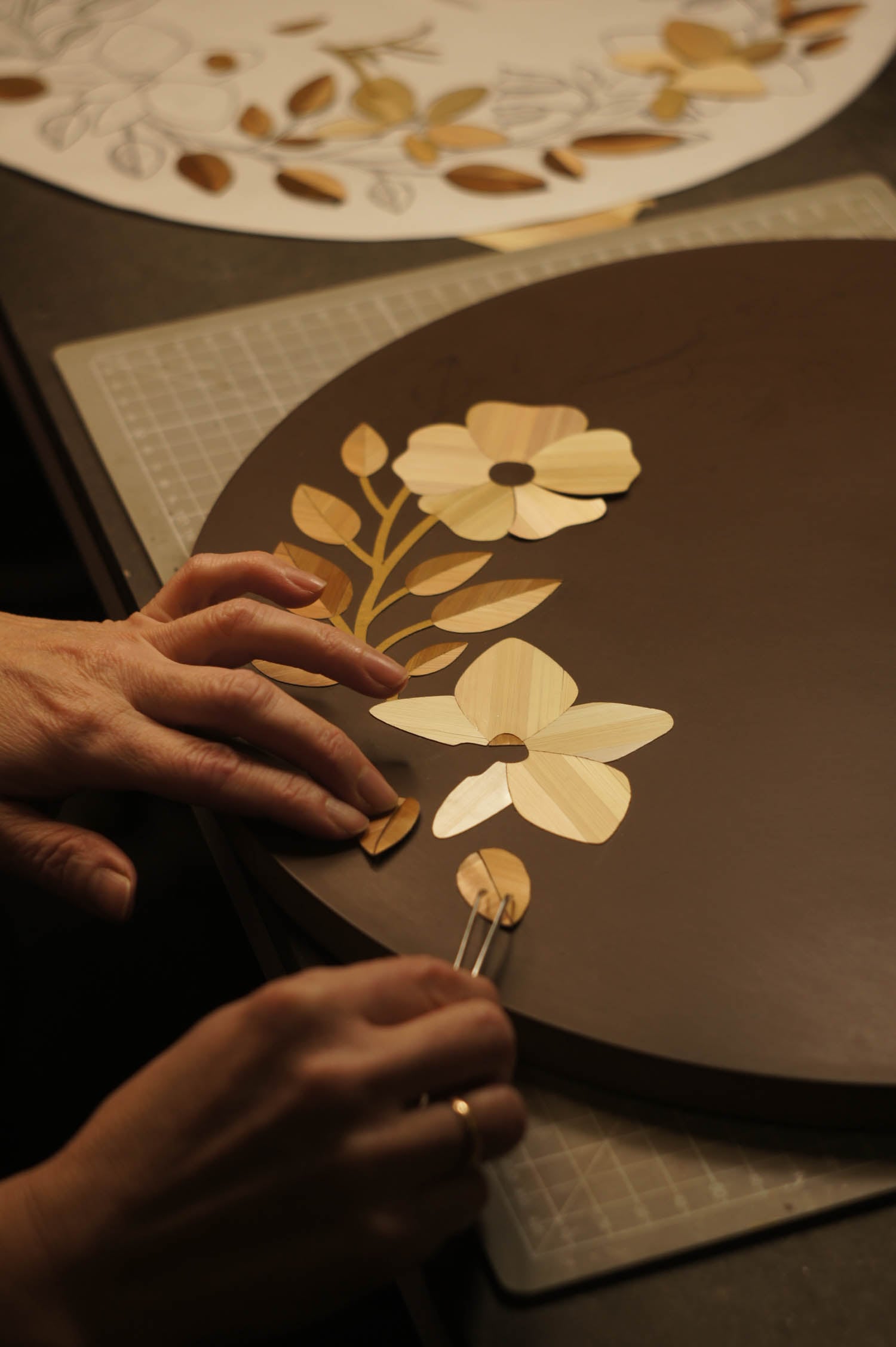
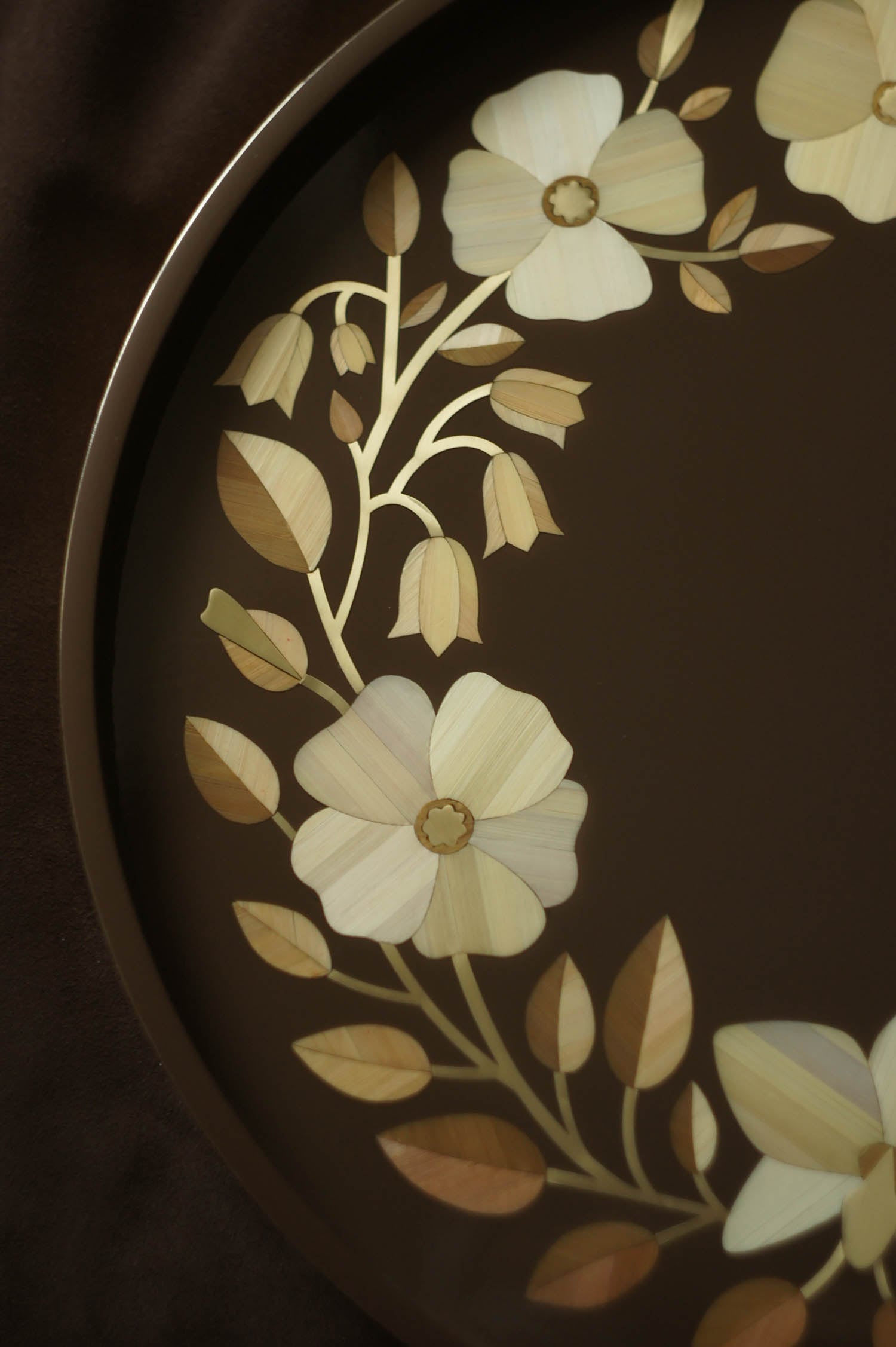
OR: Two recent projects reflect where our practice is today. The first was a straw-inlaid tray for the Guatemalan rum brand Zacapa. It combined Ukrainian botanical motifs—poppies and bellflowers—with Zacapa’s signature orchid, executed in straw, brass, and high-gloss lacquer. The challenge was material control: balancing multiple references and finishes while maintaining precision across a single inlaid surface.
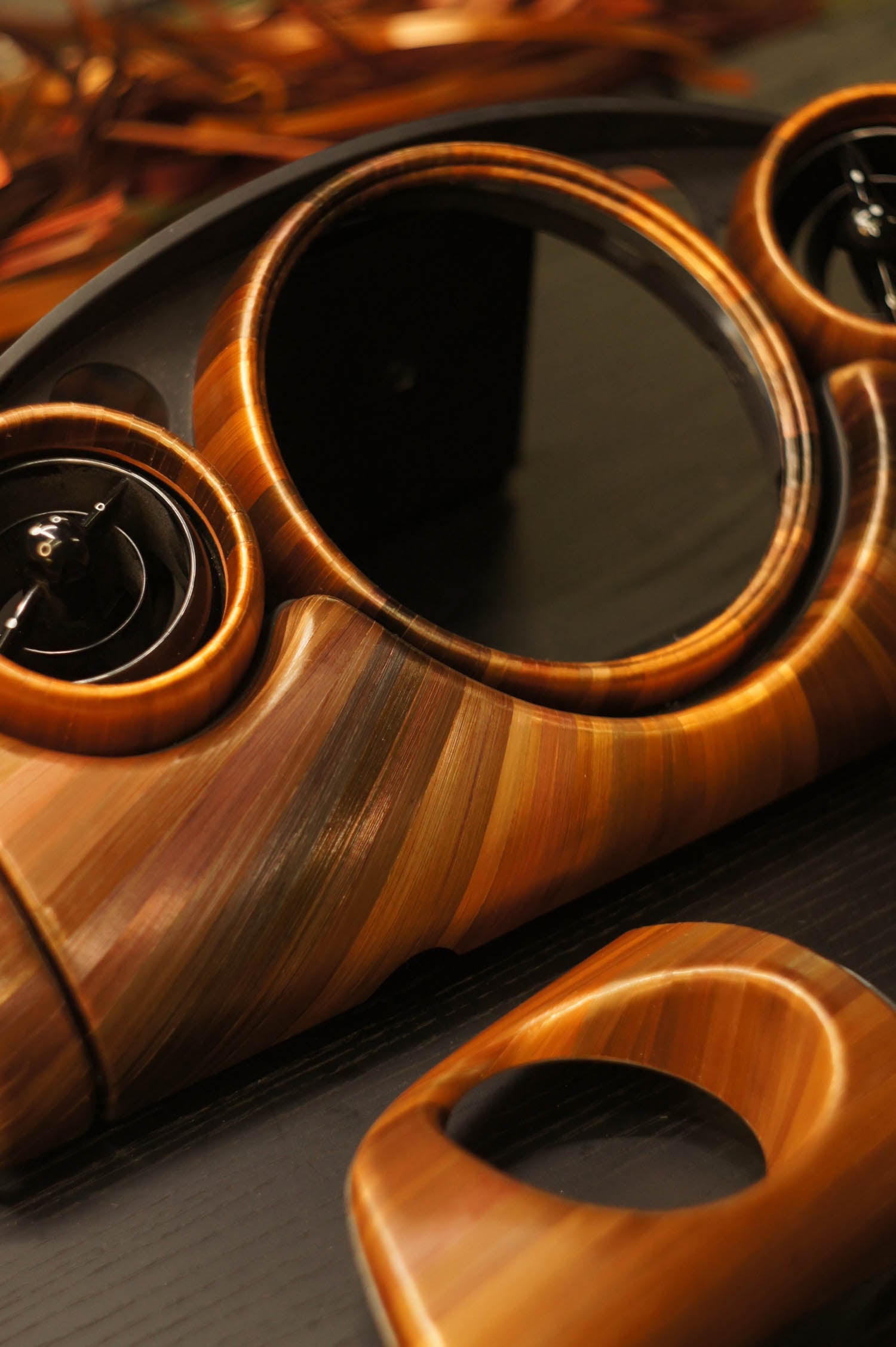
The second project marked our first move beyond furniture. We developed a straw-marquetry component for a car dashboard, adapting the technique to fully curved, fluid forms. This required rethinking our process entirely—splitting individual straws into millimeter-thin fibers and inlaying complex surfaces by hand. It pushed the material, and us, into unfamiliar territory.
ID: Reflect on the conditions that have shaped your practice and perspective.
OR: Over the course of the war, the challenges shifted from existential to intensely practical. There were periods of blackouts and no heating, when our thinking became very basic: How to stay warm; how to secure enough light to continue working. Experiences like that strip everything down to what truly matters. Despite these conditions, our work continued to gain international recognition within the field of straw marquetry. Designers and established masters alike began to take notice—not because of circumstance, but because of the level of precision and innovation we maintained.
From the beginning, we set our own standard, without formal training or a prescribed “right” way. We learned through trial and error, developing our own methods. Defining quality on our own terms allowed us to move beyond precedent rather than measure ourselves against it.
ID: Are there ideas, practices, or ways of working in contemporary design that resonate with you right now?
OR: I’m not particularly interested in chasing trends or defining what’s new. What draws me in is almost the opposite—returning to what already exists. I became aware of this instinct quite early, and it’s one of the reasons I chose straw marquetry as a technique. It comes from the past and carries time within it. Working with something that isn’t new feels natural to me, not limiting.
For the same reason, nature remains my primary source of inspiration. It doesn’t belong to a moment or a movement; it simply exists. I’m more drawn to things that endure quietly than to those trying to stay ahead of their time.
ID: How do you navigate tradition and innovation, and where is Ruda Studio headed?
OR: I often feel like we’re moving against the current. Sometimes we even joke that we’re dinosaurs. While much of the world accelerates toward AI and automation, we deliberately return to handwork. It’s slower and more demanding, but it requires complete accountability—there’s nowhere to hide in a handmade object.
For me, tradition and the present meet in that act of making. Looking ahead, I want Ruda Studio to remain committed to this clarity: to make with care, and to let the work speak through the hand.
read more

DesignWire
Designers And Manufacturers On The Move: September 2026 Edition
Interior Design‘s latest On the Move includes must-know industry promotions and hires, like Perkins&Will’s strategic move to expand its design capabilities.
DesignWire
10 Questions With… Artist and Designer Conie Vallese
From sculpture and ceramics to glass, textiles, and furniture, Conie Vallese embraces a multidisciplinary practice shaped by curiosity and creativity.