
This Exhibit Reimagines The Female Figures That Uphold Our Cities
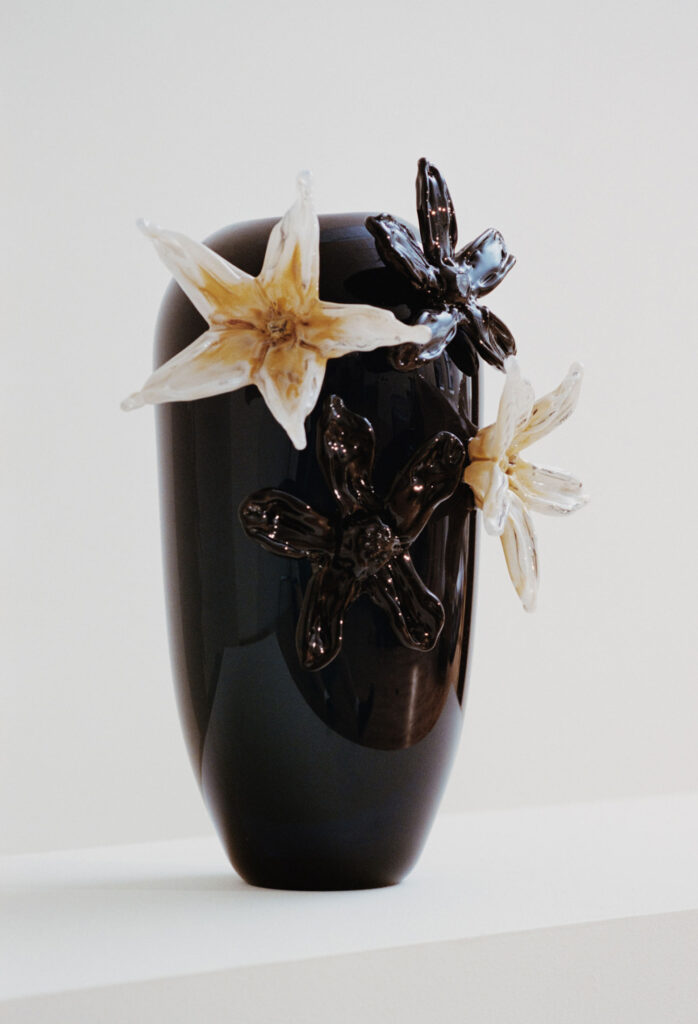
Just steps from the Institut de France, a rare books cabinet becomes a platform for the narration of female archetypes, questioning feminine figures and their ancestral representations in public spaces. “Femmes qui Portent” conveys a dialogue where stories, memories, and collectible objects intersect in an exhibit curated by Charlotte de La Grandière featuring around thirty unique works by Paris-based artist, Émilie Luc-Duc.
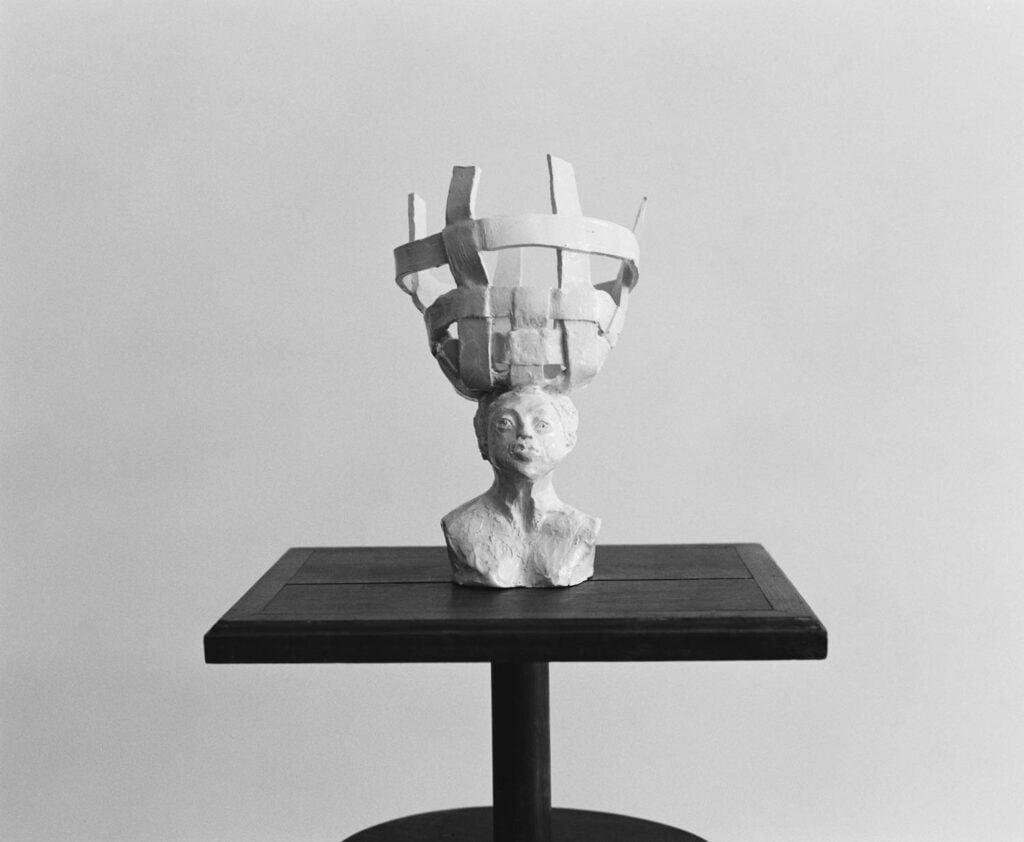
Luc-Duc reimagines the female figures that subtly uphold our cities and often go unnoticed: caryatids, canephorae, and mascarons—the decorative women who carry, support, and endure. By changing the scale, materials, and mediums, “Femme qui Portent” disrupts their serenity. Through being displayed behind glass, the relationship between these statues and their audience becomes horizontal instead of vertical. These petrified muses are now no longer overlooked, but deliberately framed, transforming their meaning from silent supports to real presences. This shift in scale challenges authority, inviting us to reconsider how architecture has shaped our perception of women, and how women, in turn, shape our surrounding spaces.
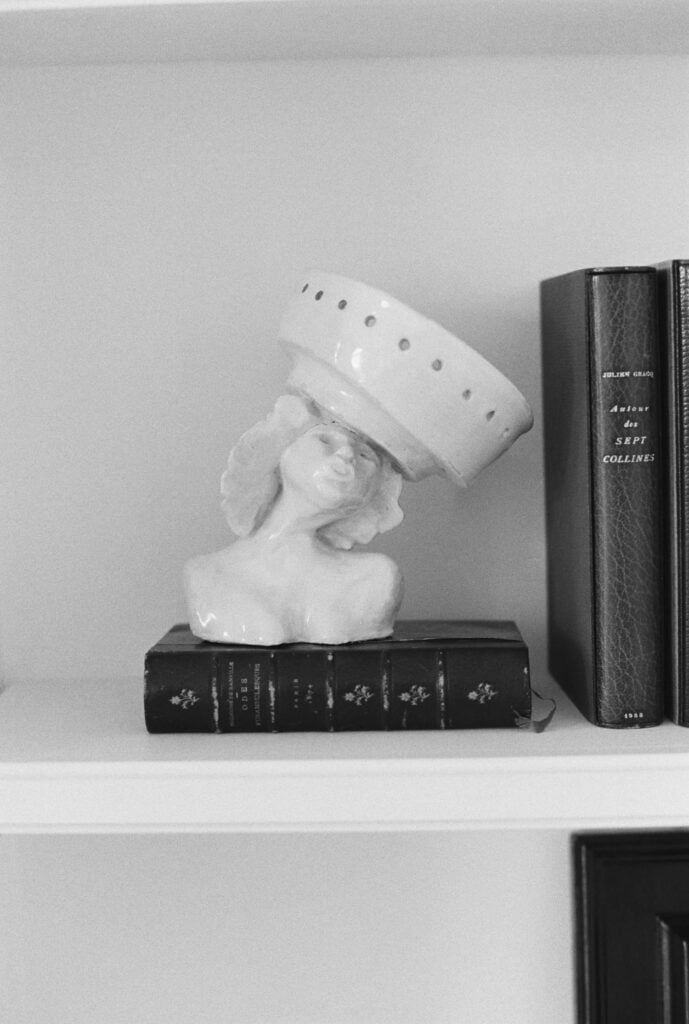
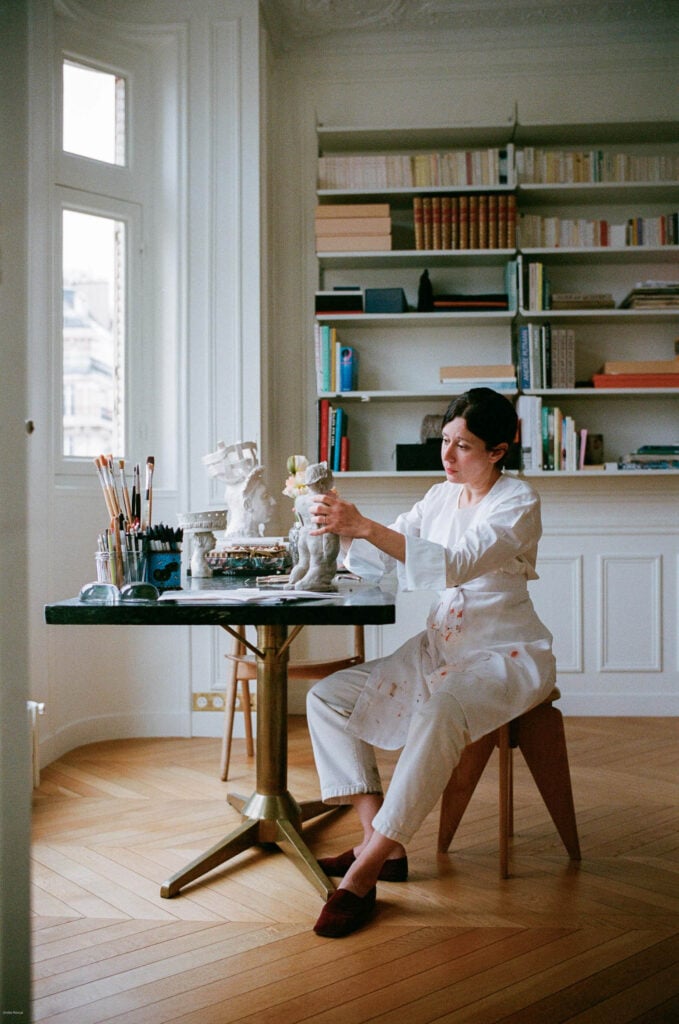
The sculpted women on display are meant to tell a story, one that echoes architectural materiality while still preserving intimacy. Through close collaboration with de La Grandière, Luc-Duc explains the decision behind placing all the sculptures within large display vitrines, influencing the spatial narrative.
“The vitrines evoke preservation. They suggest the gesture of deciding what is worthy of being looked at, protected, and remembered. In that sense, they echo my own exploration of inherited representation.” Luc-Duc continues. “The vitrine becomes fragments recovered from our collective visual memory. It asks the viewers to slow down, to observe differently.”
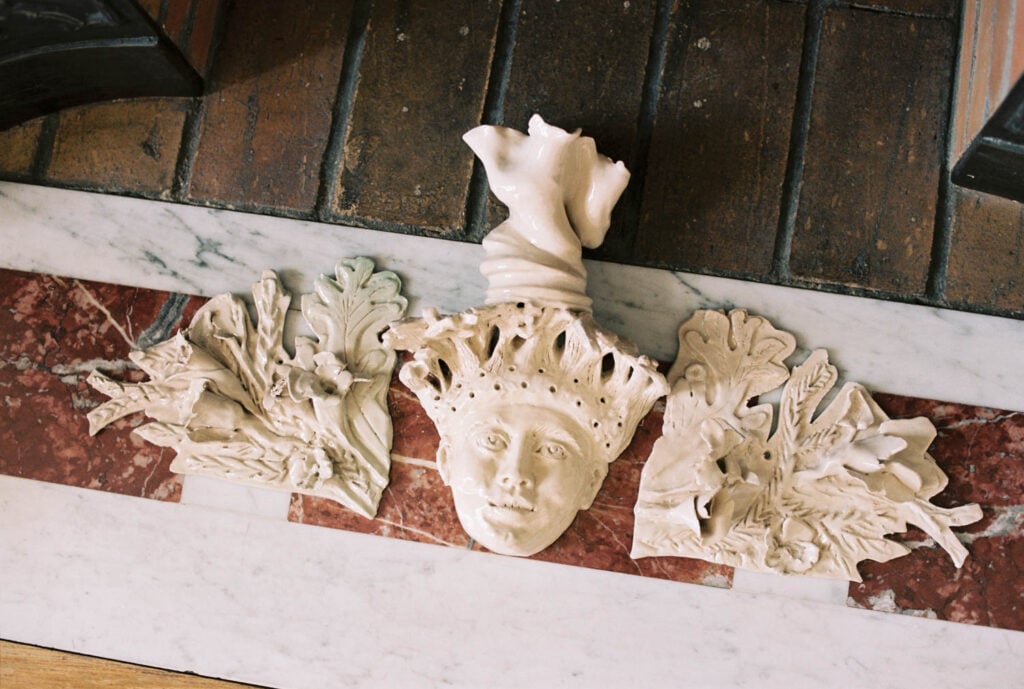
Through this narrative and design of space, the scenography of the exhibit reinforces the core question of Luc-Duc’s ethos: how the representation of women in public spaces changes when we truly choose to see them.
Luc-Duc comments on the importance of this exhibit, deliberately being displayed during Women’s History Month. “The presence of those sculpted women feels even more poignant. The figures we place in our interiors, the gestures and the forms, remind us that history, identity, and memory are embodied. They carry weight and asking us to see them is also asking us to notice what has long been overlooked.”
“Femmes qui Portent” was on display March 10 to 15 in the rare books and art objects cabinet of Èric Grangeon on rue Mazarine in Paris, France.
read more

DesignWire
Designers And Manufacturers On The Move: September 2026 Edition
Interior Design‘s latest On the Move includes must-know industry promotions and hires, like Perkins&Will’s strategic move to expand its design capabilities.
DesignWire
10 Questions With… Artist and Designer Conie Vallese
From sculpture and ceramics to glass, textiles, and furniture, Conie Vallese embraces a multidisciplinary practice shaped by curiosity and creativity.