
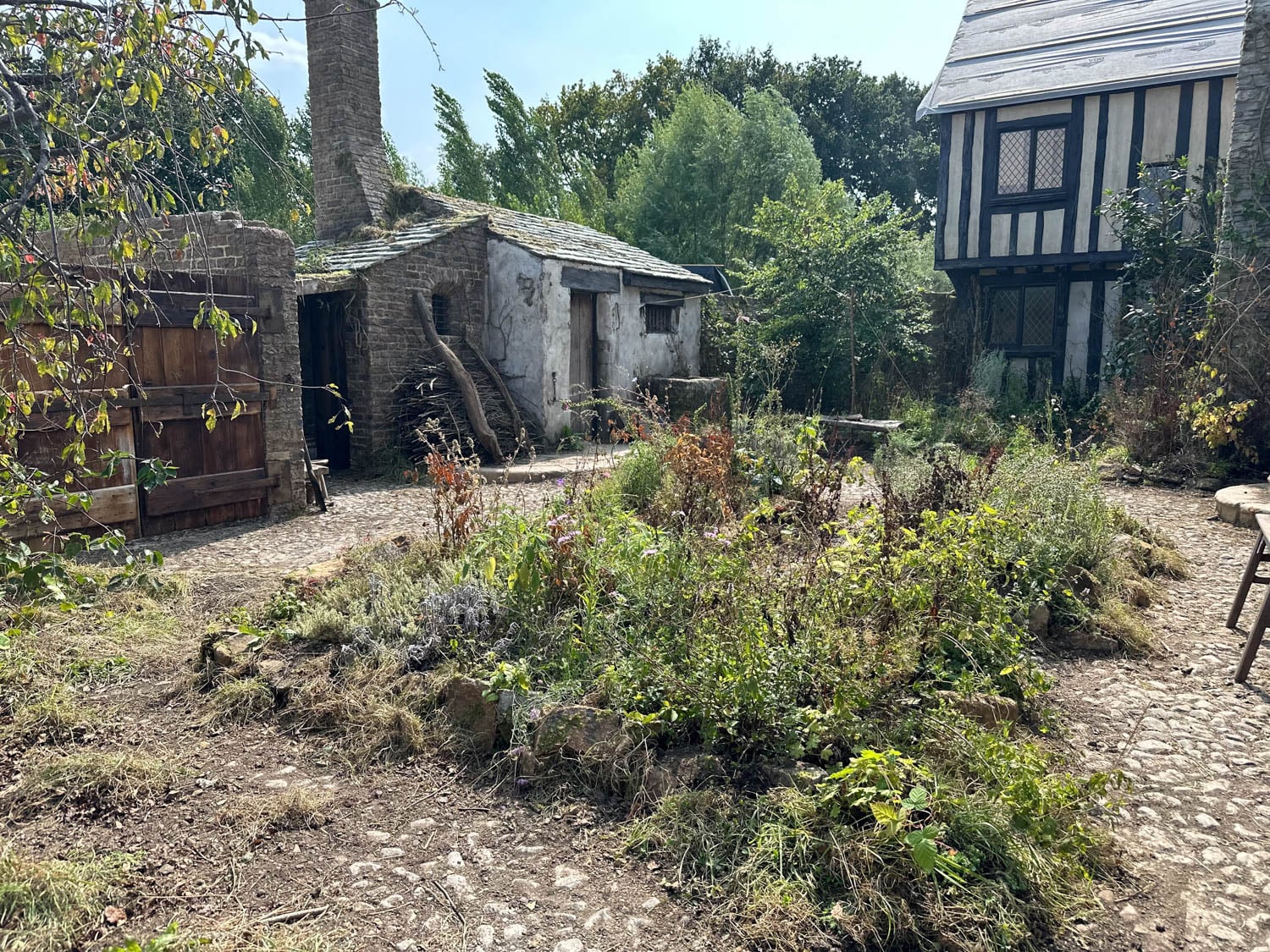
Behind The Oscar-Nominated Production Design Of Hamnet
Hamnet, director Chloe Zhao’s multi-award-nominated Focus Features film based on Maggie O’Farrell’s novel, recounts a fictionalized version of William Shakespeare’s penning of Hamlet. The story positions the famous play as a response to the death of Shakespeare’s 11-year-old son, Hamnet, in 1596. That’s the catalyst for the complex and layered tale as a window to grief, marital relations, the struggles of creativity, and, ultimately, the transformative nature of art as a legacy and memorial. While the world knows Will (Paul Mescal), it is his wife Agnes, (award-winning Jessie Buckley) a healer and herbalist tied to nature, with her nearly all-consuming grief who essentially owns the film. Together, the co-stars propel the story forward.
Yet another protagonist is equally crucial in moviemaking—production design, created here by Aussie native Fiona Crombie, a 15-year veteran in film and television preceded by a decade of costume and set design for theater after graduating from Sydney’s National Institute of Dramatic Art. “Production designers are responsible for decisions as varied as the quality of a landscape and the quality of a spoon,” she explains her role in the film that transports its audience to 16th-century England.
Discover How Fiona Crombie Brought Hamnet To Life
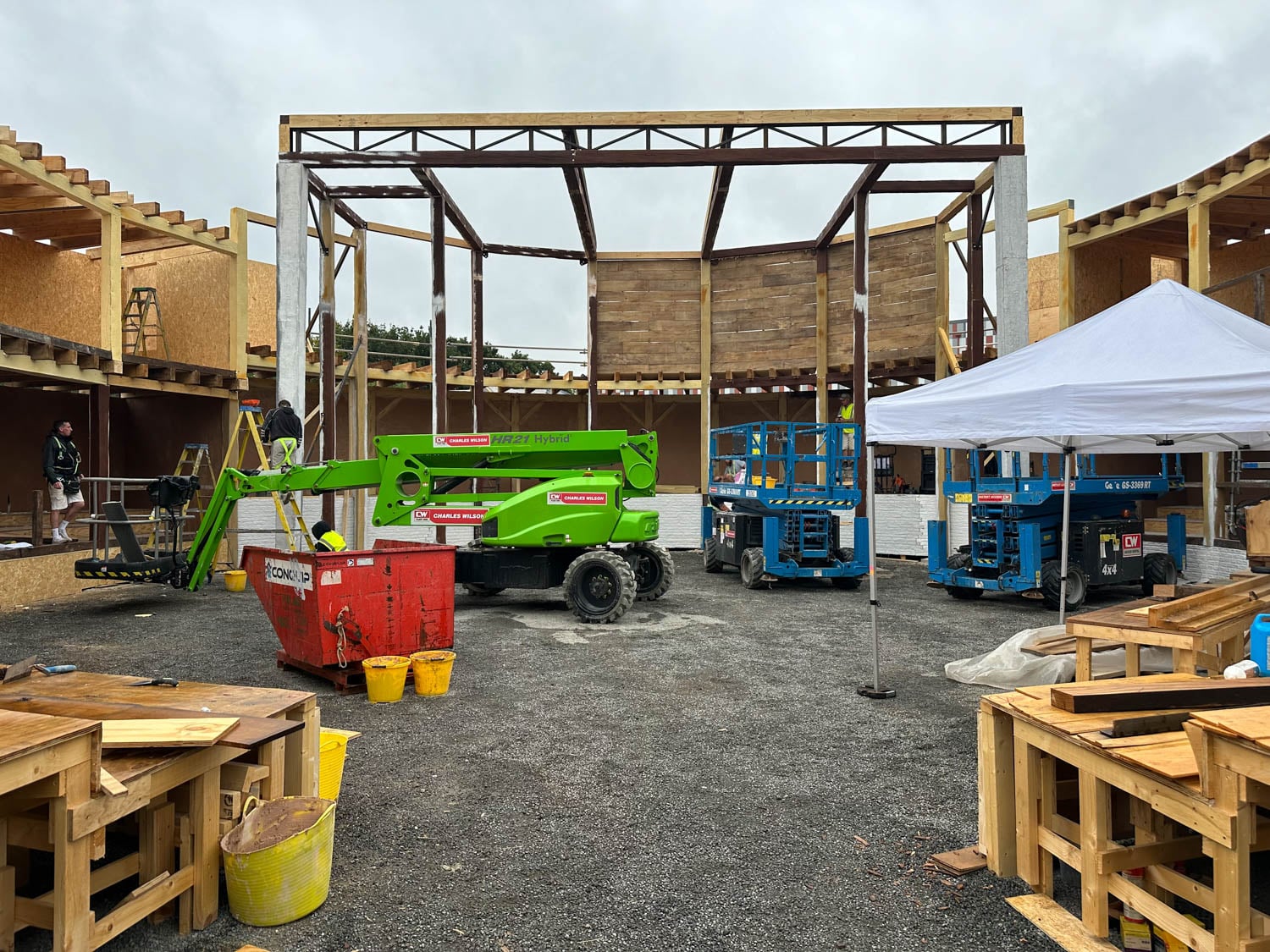
The era unspools through varied sets: indoors and out, city and country that are period correct following copious research combing through historical records, illustrations, paintings, and written descriptions. That was Crombie’s starting point, as was location scouting. Ultimately, she decided to build the primary sets ground up at Elstree Studios outside central London. We go behind the scenes for a preview.
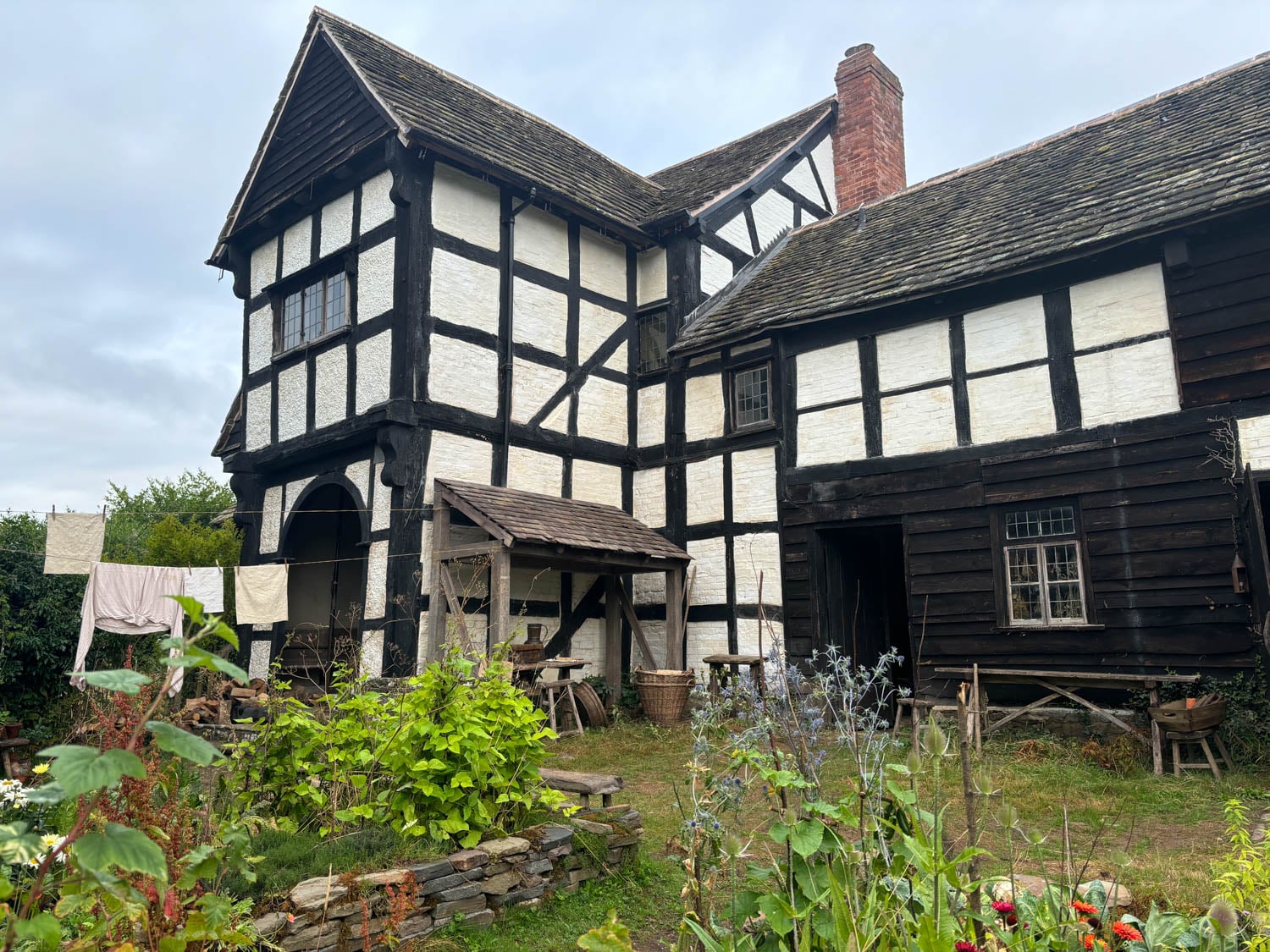
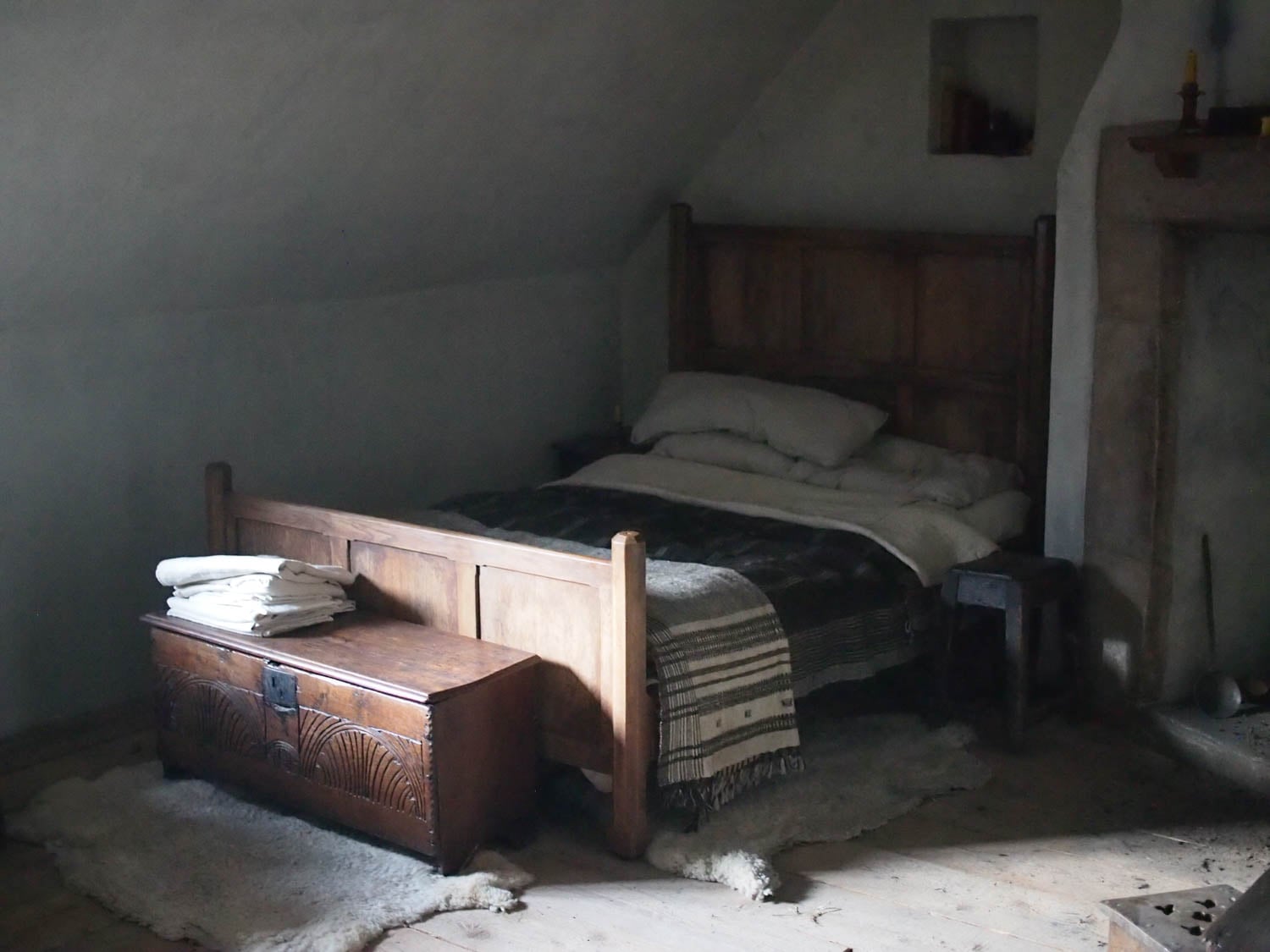
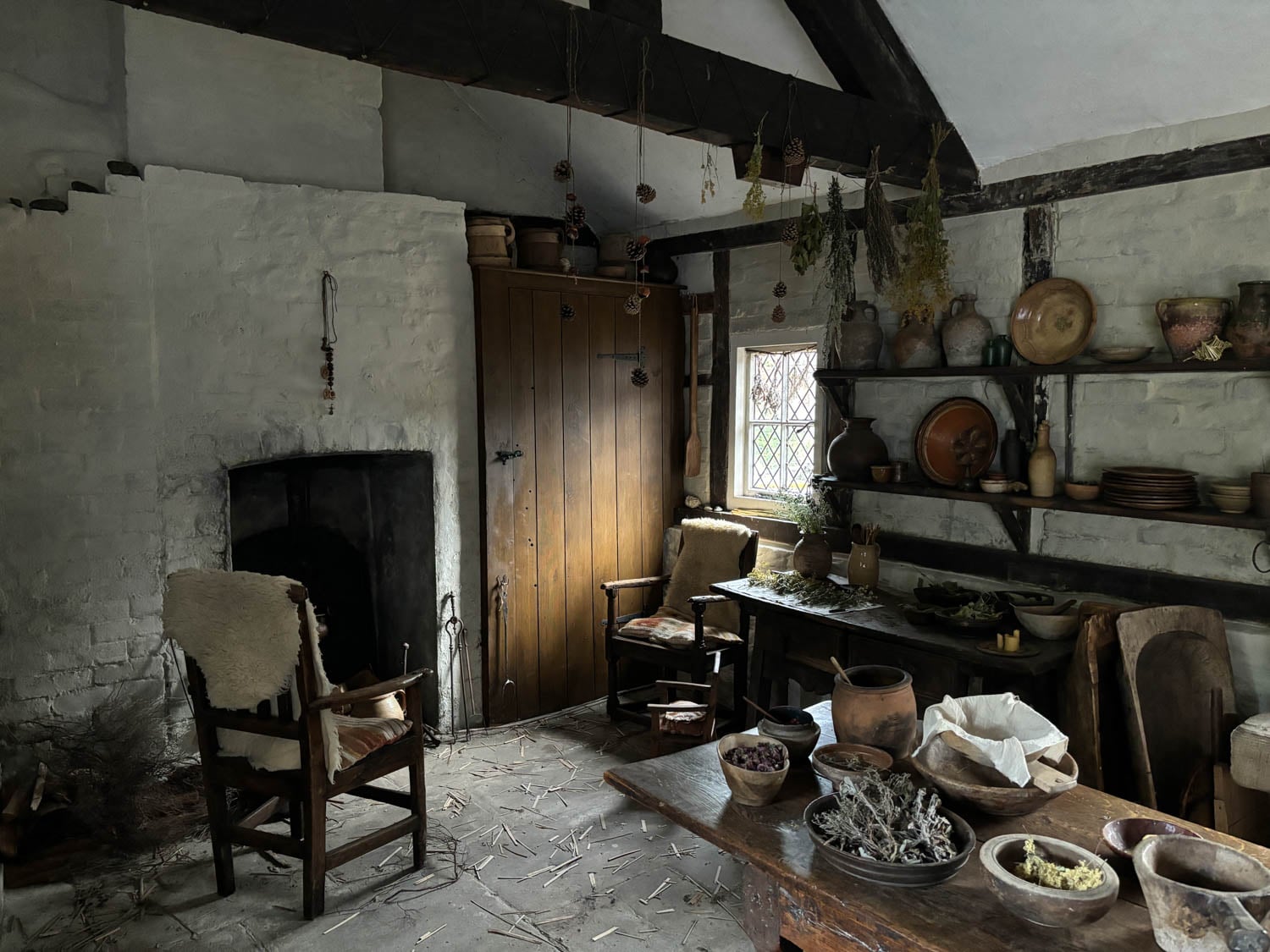
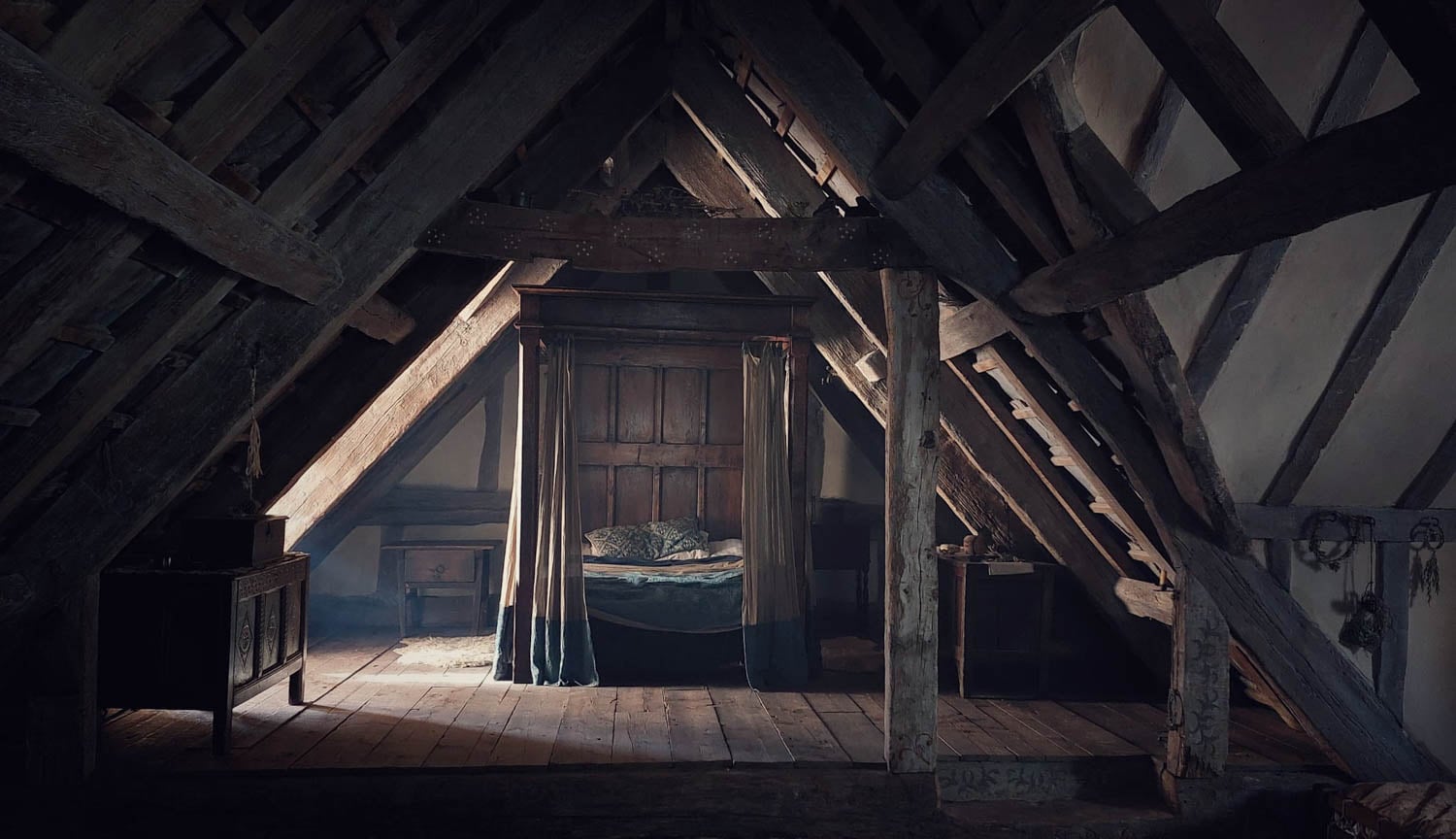
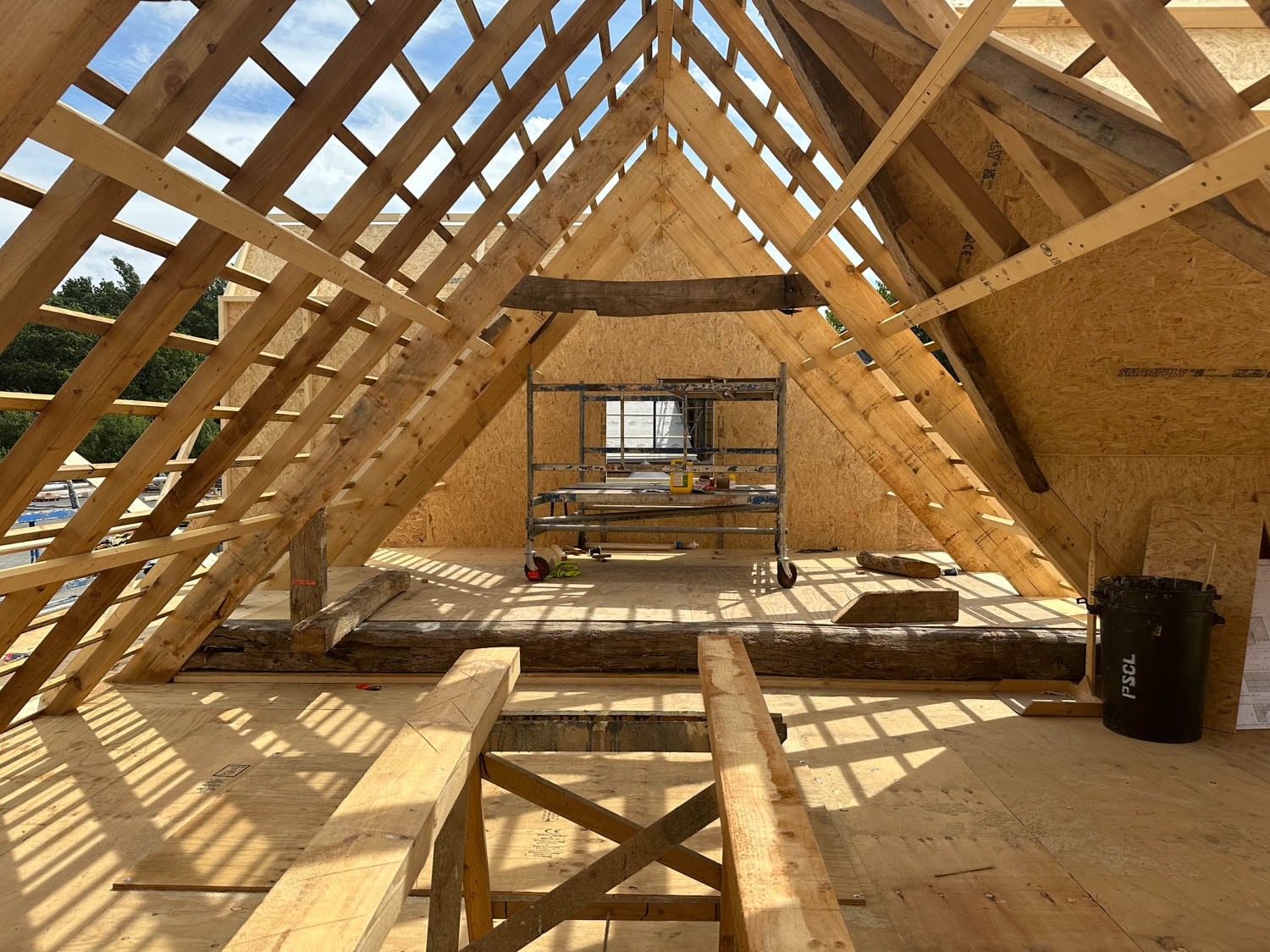
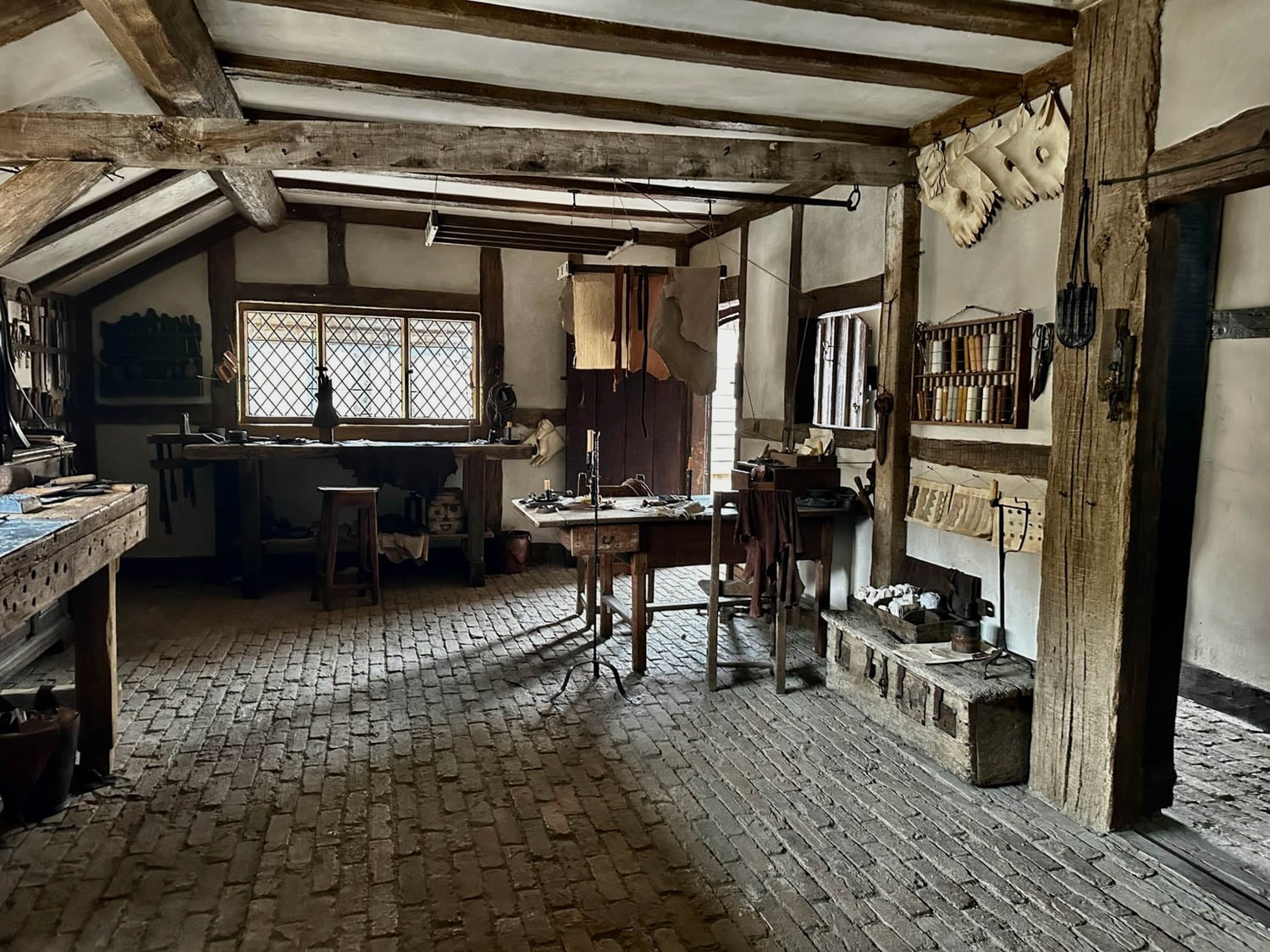
Henley House is the Tudor-style A-frame of the couple’s primary residence. Interiors are layered, figuratively and literally as walls have layers and layers of finishes. Addressing the emotional architecture that production design imparts, Crombie comments: “The house starts as oppressive and opens up with the young family.” The dwelling includes a set for the attic, albeit built separately for access, that multi tasks as space for the couple, Will’s writing, and ultimately the family with children’s beds. The house “contracts and darkens again after Hamnet has died,” Crombie describes the arc. In a “supporting role” a glove workshop setting is off to the side of the dwelling as it is in the real Henley House. “The ceilings are lower, and we used a different wood stain,” Crombie describes the backdrop created to illustrate the craftsmanship of Will’s father, glover John Shakespeare.
Be Transported To 16th-Century England
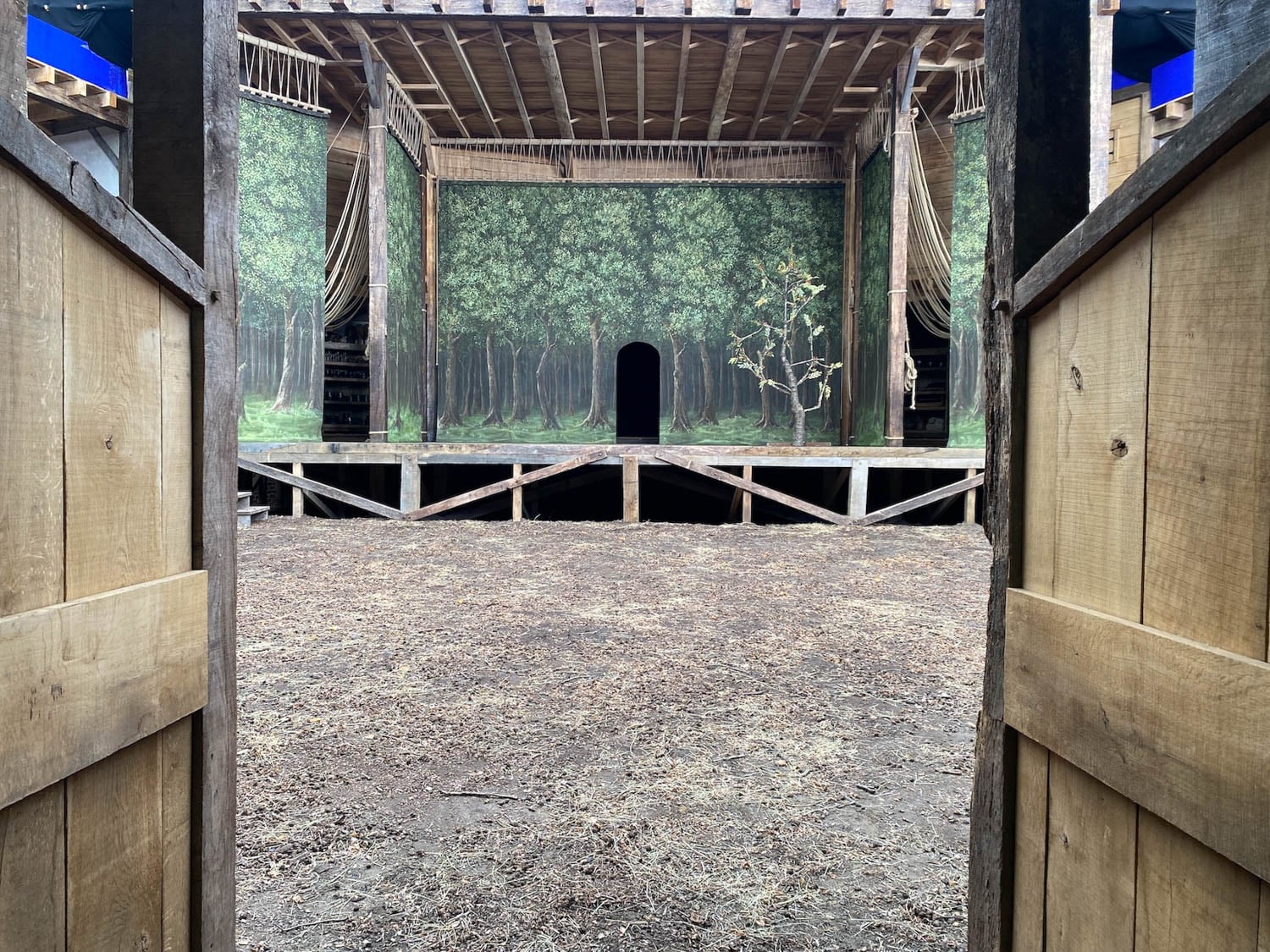
Curtains up at the Globe. Crombie recreated the renowned theater where 70 percent of the footprint echoes that of the real Globe, and exterior aesthetics are entirely accurate. “I wanted to give it an architectural naivety and purity with only a few materials and very simple but beautiful construction.” Deviating from reality, though, is the use of painted scenery. According to the designer, it “came to England later than our period but felt essential to bring the forest and black void to the Globe.”
Built, too, at the studio is Will’s apartment in London. As he is only there for work, the lodging, drawn from an actual London location, is basic suggesting that “his vivid imagination gives him everything he needs.”
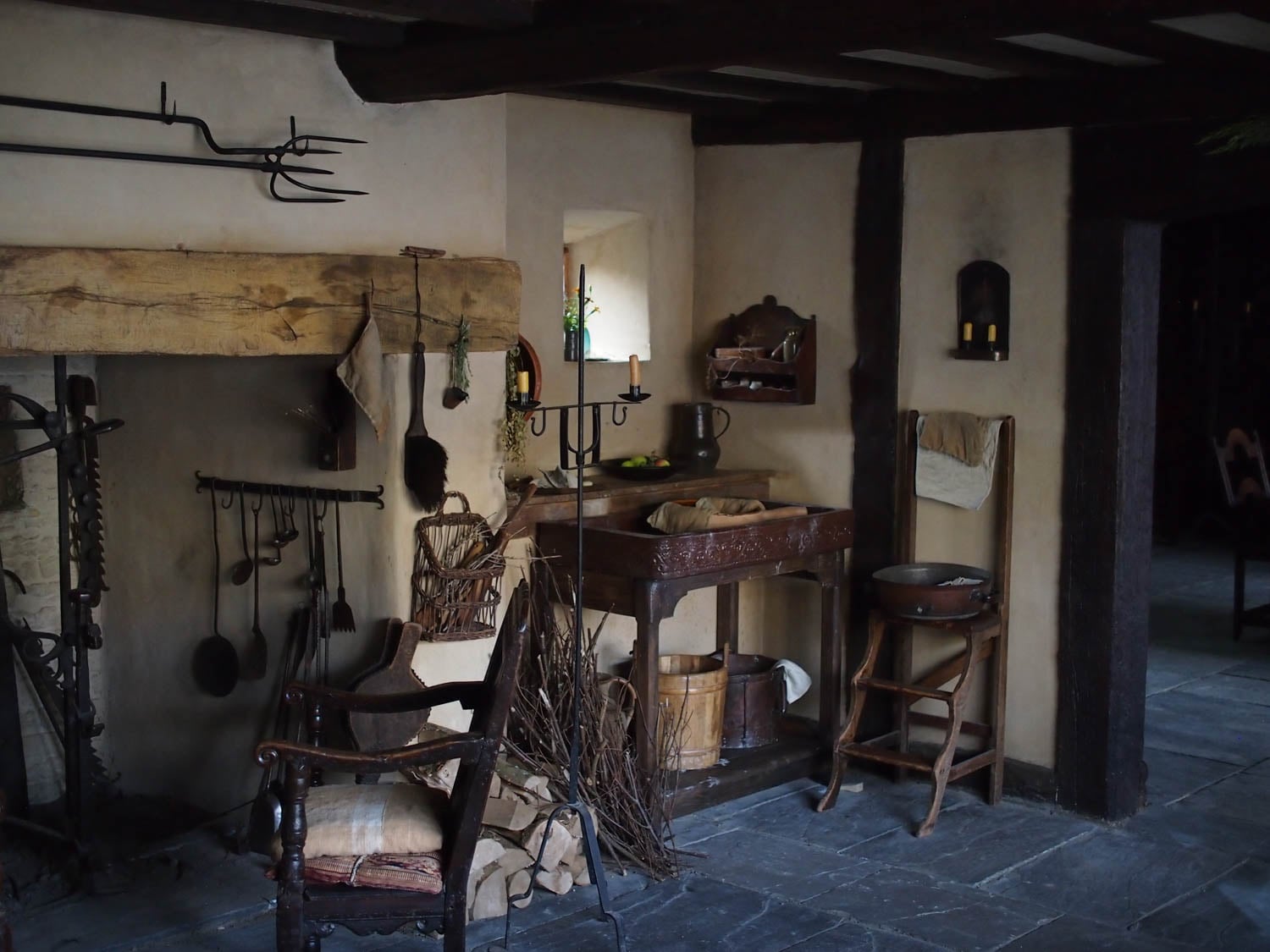
Crombie went all out for authenticity in furnishings. She worked with craftspeople and had key pieces built by hand. Other furniture came from markets in the U.K. and Europe. Attention to detail was absolute. An iron monger made hinges, hooks, door handles, and fireplace accessories. Fabrics are vintage and hand-sewn together. Glass blowers made cloudy green and brown glass. Glove-making tools were specially made.
Rebuilding Shakespeare’s World One Set At A Time
Meanwhile, location lensing came in Herefordshire, about a four-hour drive away, for Agnes’s family farm and home, Hewlands. “We un-renovated the house by hiding all the contemporary changes to the interior,” Crombie comments, “and created the gardens, the orchard, and outbuildings.” With the gardens planted from scratch she made sure they contained plants that could actually feed a family and be used medicinally. Similarly, the forest was built up with plants and ferns. Streetscape work was extensive. “We took a corner of a town called Weobly and built a front section of a house to create the exterior of Henley Street house,” the designer reels off efforts. Also new? “A row of facades on front of existing buildings and all road textures.”
Involved with their characters’ props and dressing, the co-stars had a role as well. Paul, for instance, helped choose his writing desk and chair and learned to use a quill. For her part, Jessie learned to forage and worked to create her foraging kit. To all this we add, stay tuned for the 98th Academy Awards, airing 4 pm PST/7 pm EST and hosted by Conan O’Brien.
Behind The Production Design Of Hamnet With Fiona Crombie
read more

DesignWire
Designers And Manufacturers On The Move: September 2026 Edition
Interior Design‘s latest On the Move includes must-know industry promotions and hires, like Perkins&Will’s strategic move to expand its design capabilities.
DesignWire
10 Questions With… Artist and Designer Conie Vallese
From sculpture and ceramics to glass, textiles, and furniture, Conie Vallese embraces a multidisciplinary practice shaped by curiosity and creativity.