
Marion Weiss and Michael Manfredi: 2025 Interior Design Hall of Fame Inductees
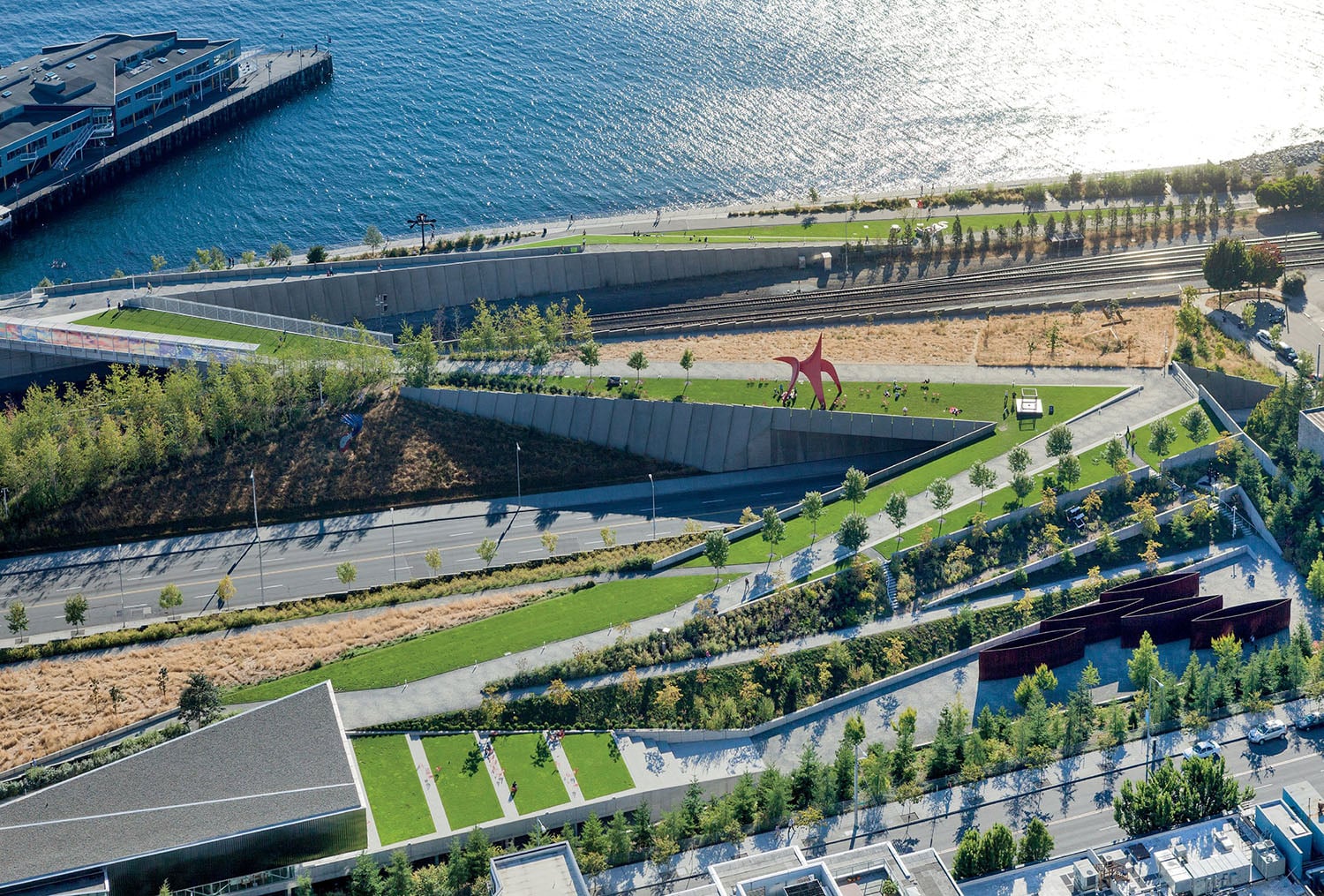
For nearly 20 years, Seattleites have been strolling down the monumental zigzag ramps of the Olympic Sculpture Park, which connect Broad Street to the waterfront on Puget Sound. Wedge-shape fields of grass—populated by works from the Seattle Art Museum’s collection, including a school of swimming Corten ellipses by Richard Serra—bridge the steep level change from street to shore, passing over a four-lane thoroughfare and railroad tracks that once separated the city from the sound. Leaping transportation infrastructure on its way to the water, the park’s architecture mends the tear and makes the city whole. It’s the work of Marion Weiss and Michael Manfredi whose New York–based firm announces a holistic vision in its very name: Weiss/Manfredi Architecture/Landscape/Urbanism.
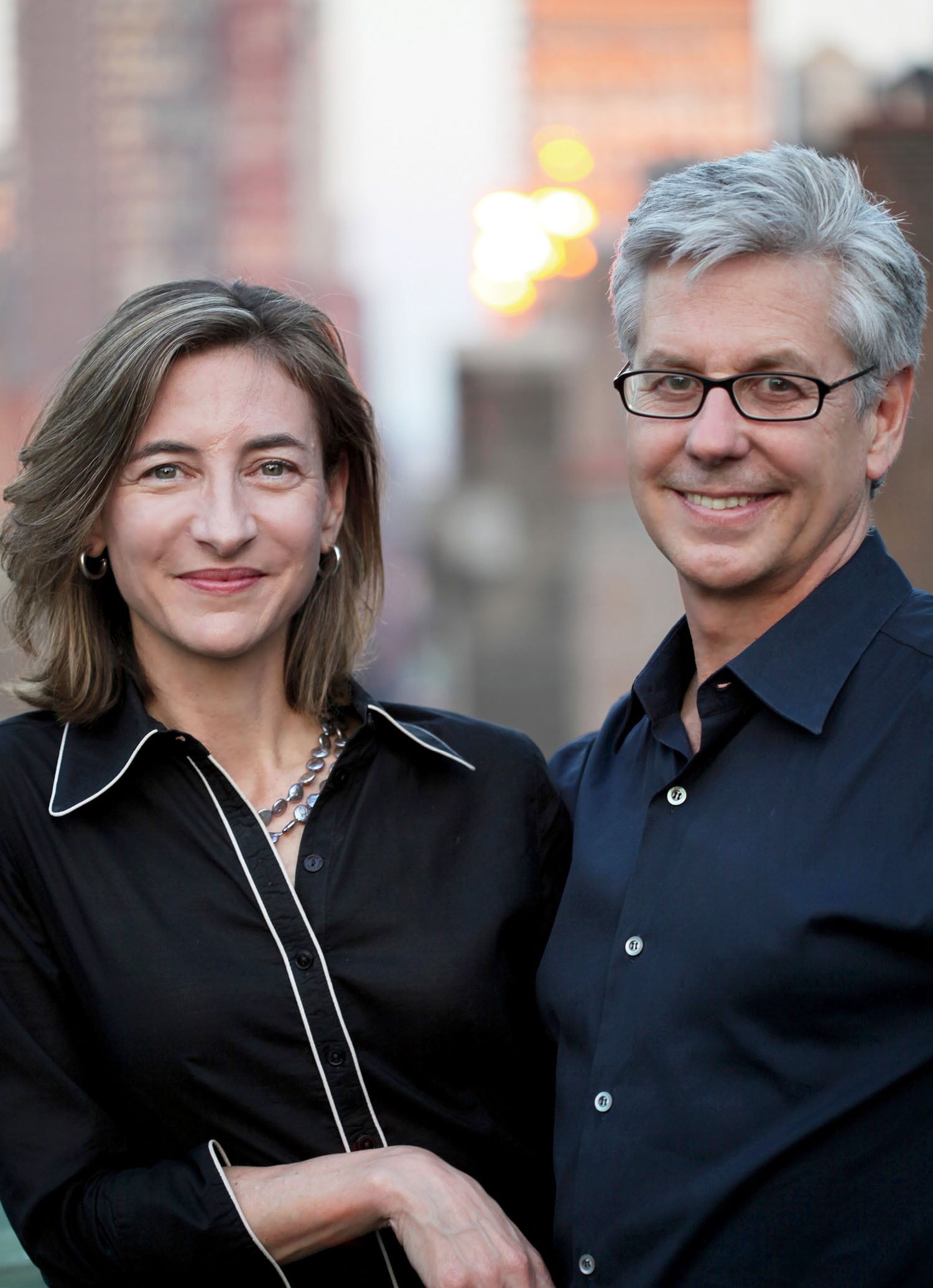
In 1979, art critic Rosalind Krauss wrote “Sculpture in the Expanded Field,” a seminal essay about artworks that come off the pedestal and into the landscape. Since 1989, Weiss and Manfredi—partners in work and in life, with master’s degrees from the Yale School of Architecture and Cornell University’s Department of Architecture, respectively—have practiced architecture in the expanded field, breaking down the building as a self-contained object and opening it to the environment, urban or rural, beyond its walls. Each morning, weather permitting, the architects themselves live outside as they walk across the Brooklyn Bridge from their home to their office in Lower Manhattan. This daily commute unfolds like an experiential opera—river, sky, light, highway, cityscape, traffic, people. Once in their studio, which employs 45, the couple tries to design in microcosm the macrocosm they have just taken in. They think panoramically. “No building is an island,” Manfredi says.
Weiss/Manfredi Focuses On The Whole Of The Built Environment
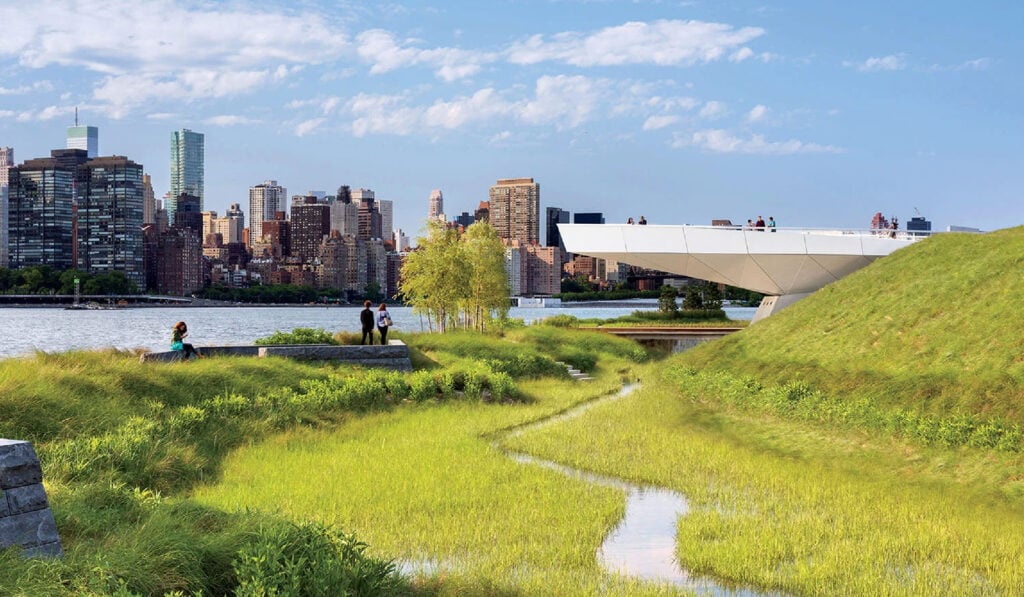
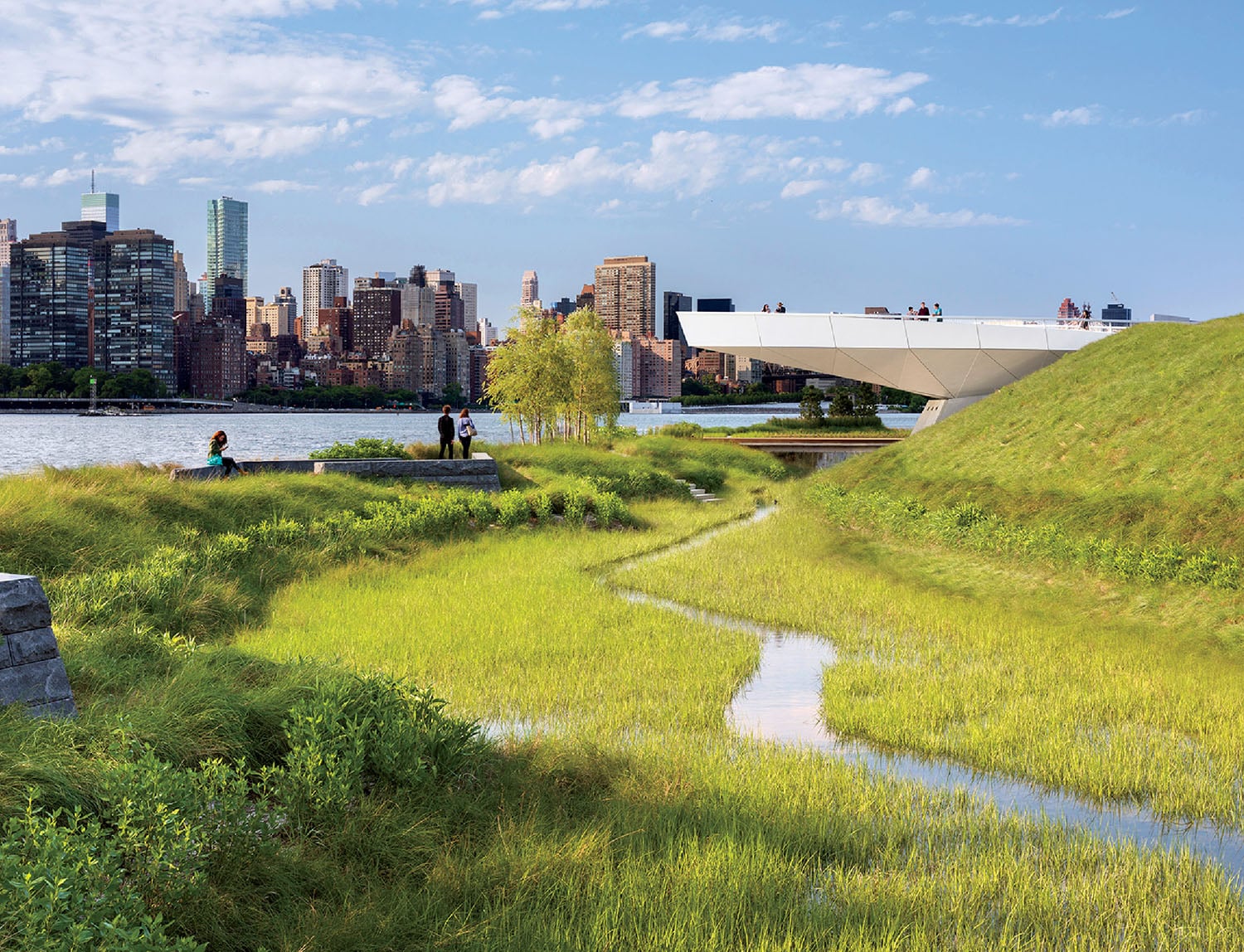
A couple of miles north of the bridge lies one of Weiss and Manfredi’s recent projects, Hunter’s Point South Waterfront Park, a half-mile stretch along the East River where they “constructed the ground,” as Weiss puts it, in a linear echo of the Olympic Sculpture Park. Completed in two phases—2013 and 2018—the project reshaped 11 acres of Queens shoreline into a landscape that welcomes and absorbs nature-thirsty crowds while also defending the land from rising sea levels, destructive tides, and storms like Hurricane Sandy. Visitors wander along curving paths that traverse marshes, ridges, greenswards, and scalloped beaches without realizing they’re treading on ground engineered to accommodate floods through complex easements between the city and private developers. Wordsworth would feel at home in this romantic setting, but it took technical acumen worthy of mid-century planning masters Bernard Baruch and Robert Moses to construct a habitat that performs like a village green.
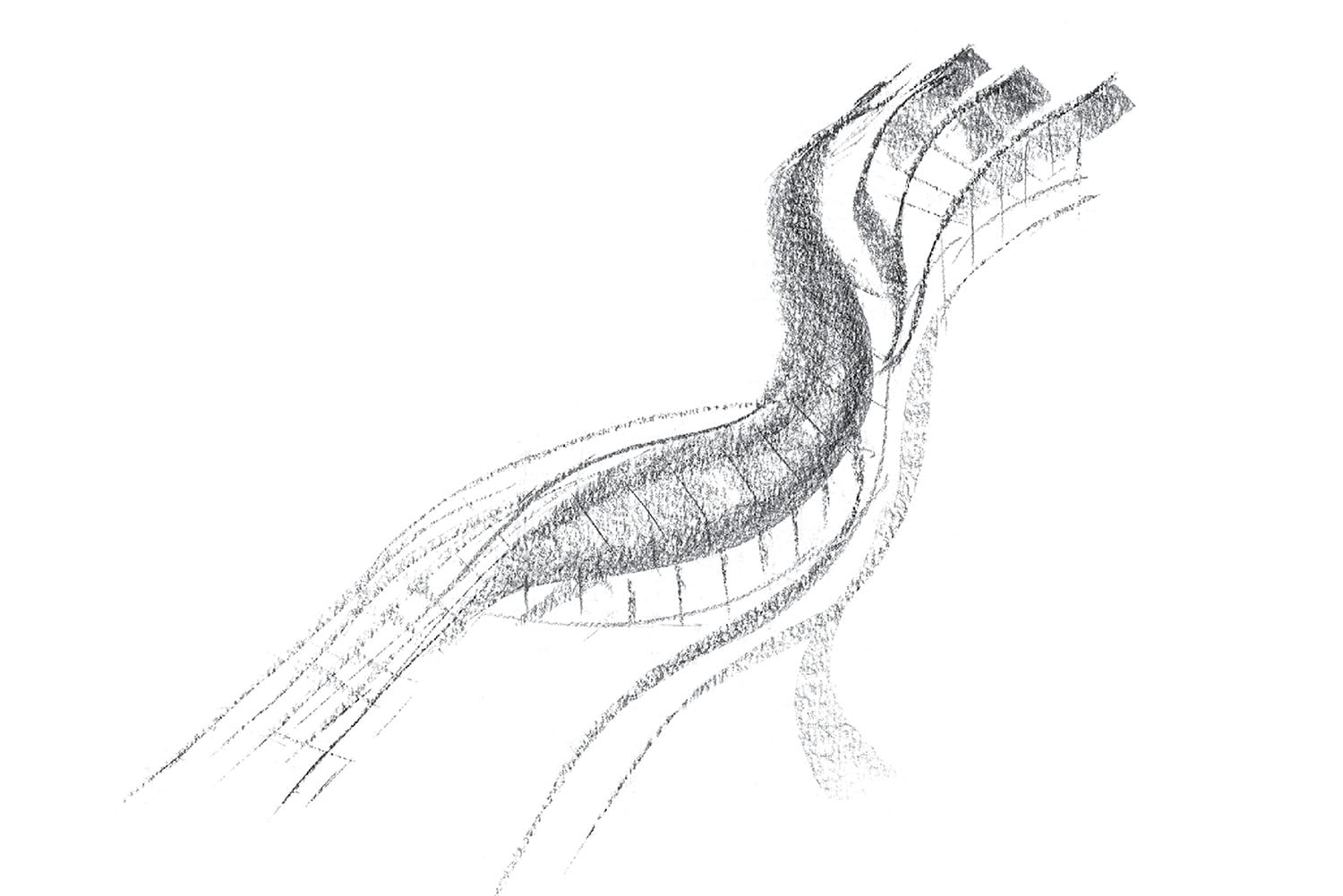
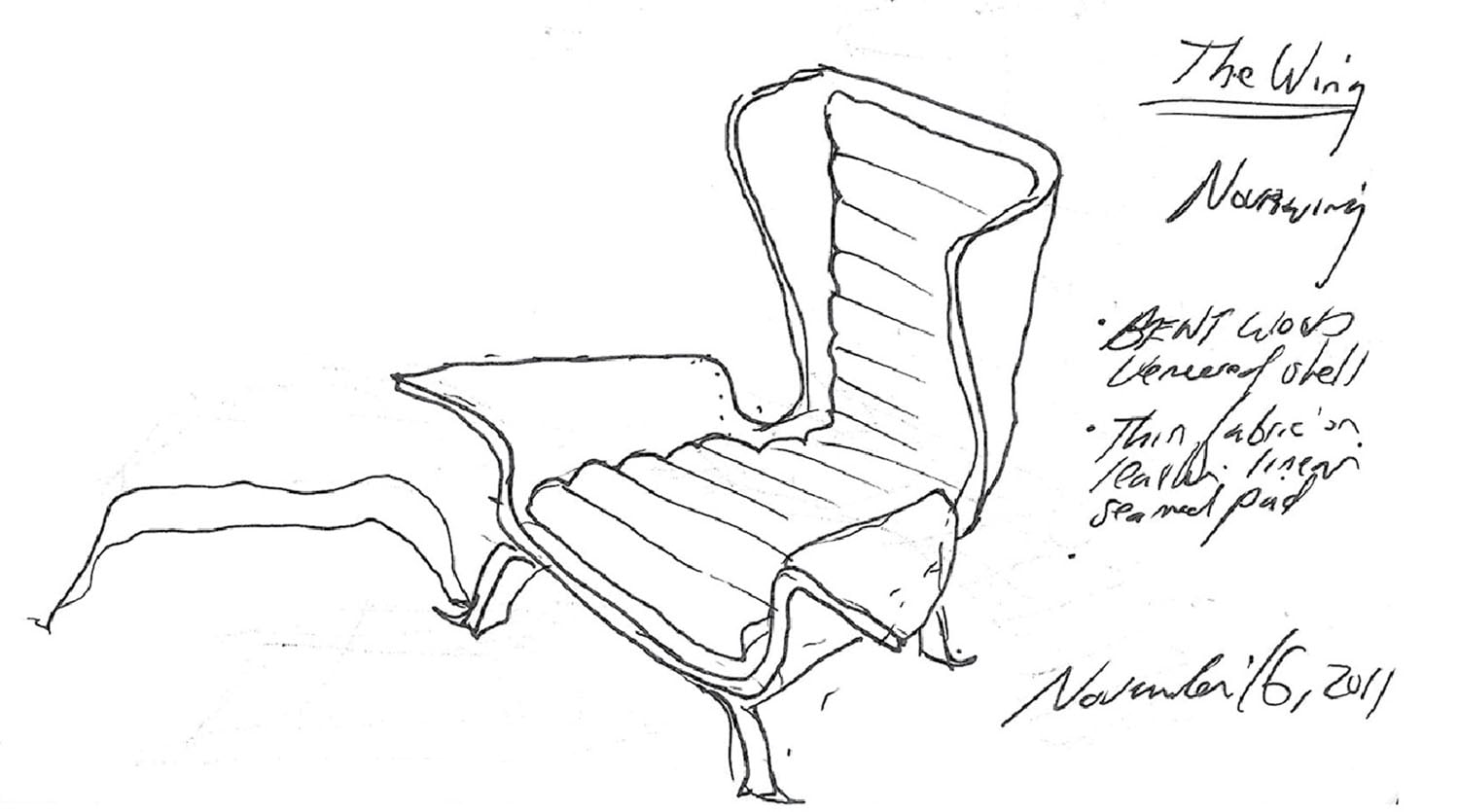
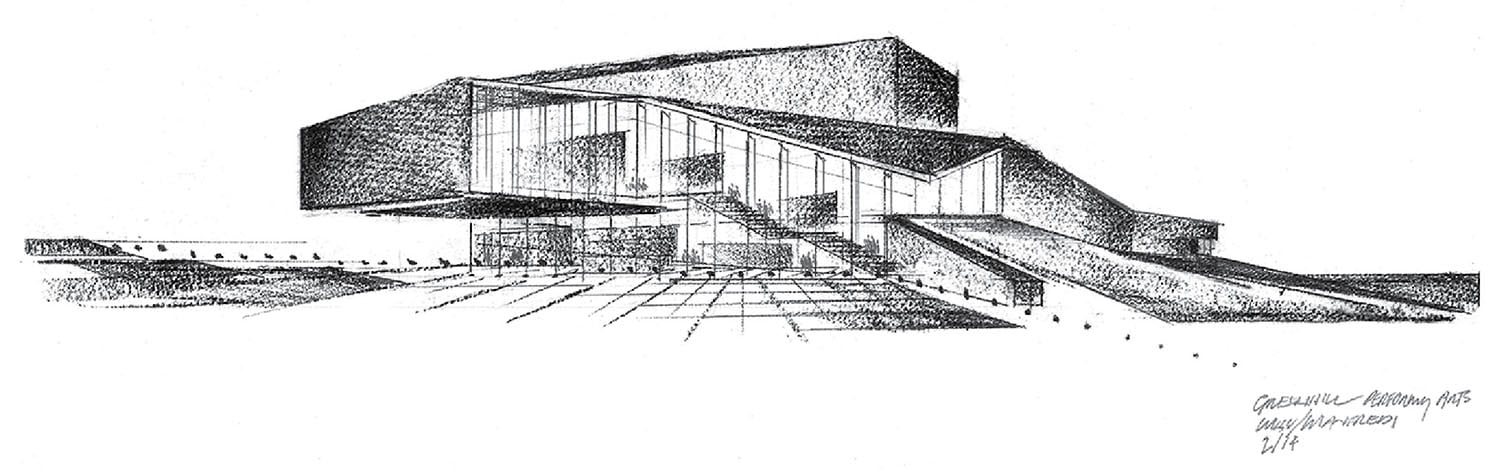
As a designed environment, the park exceeds what is normally considered architecture: Weiss and Manfredi used every tool at their disposal—from hand sketching with charcoal to digital modeling—to urbanize the landscape, creating a living ecosystem that is at once park, public theater, promenade, escarpment, and barrier reef. Hunter’s Point reveals and cultivates both nature and city in a continuum that merges each into the other seamlessly. “For us, the territory of architecture should concern itself with the whole of the built environment,” Weiss underscores.
Go behind the scenes with Hall of Famers Marion Weiss and Michael Manfredi as they share insights into their partnership and work ethos in their Hall of Fame documentary on DESIGNTV by SANDOW.
Weiss/Manfredi’s Spaces Are Entrenched In Nature
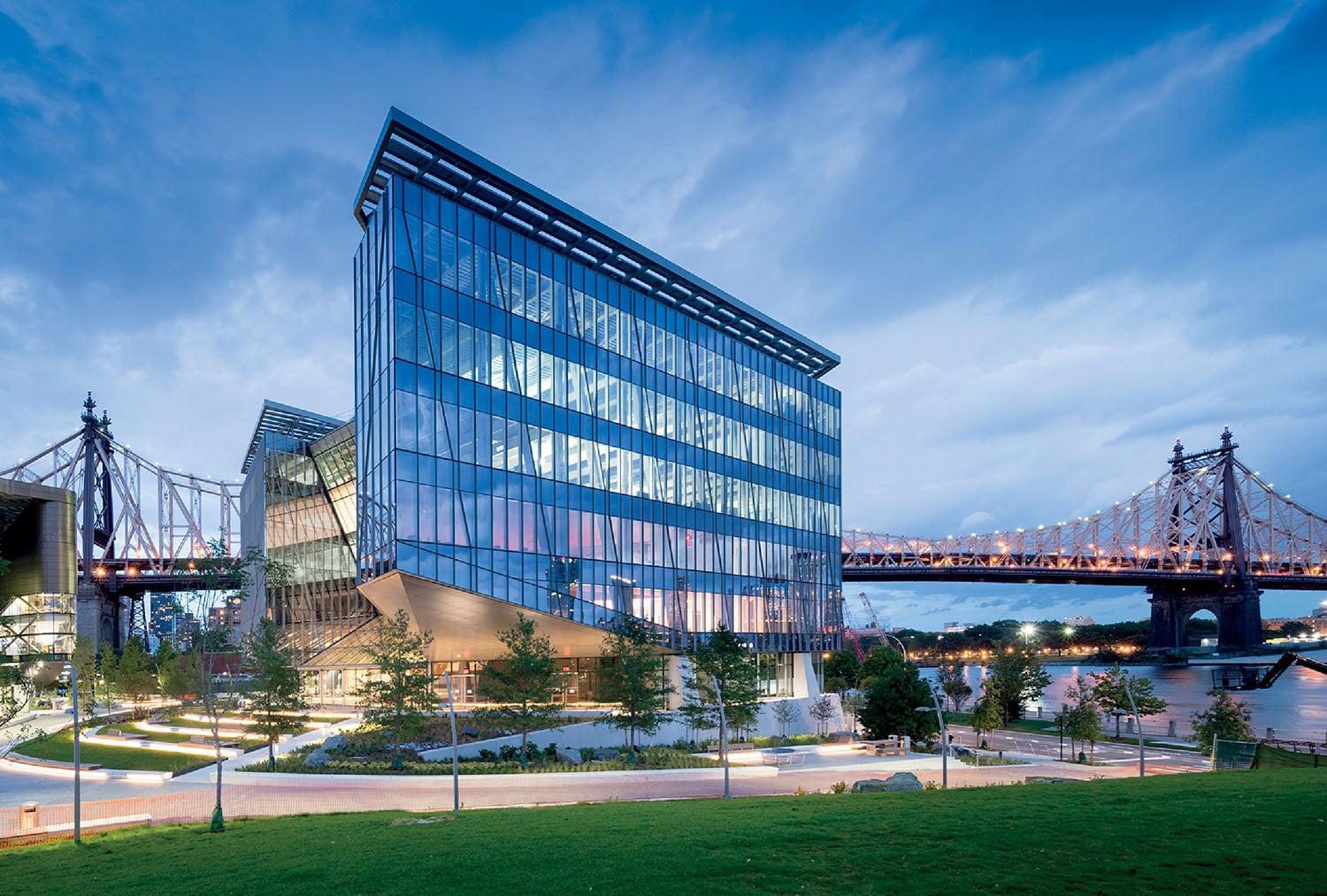
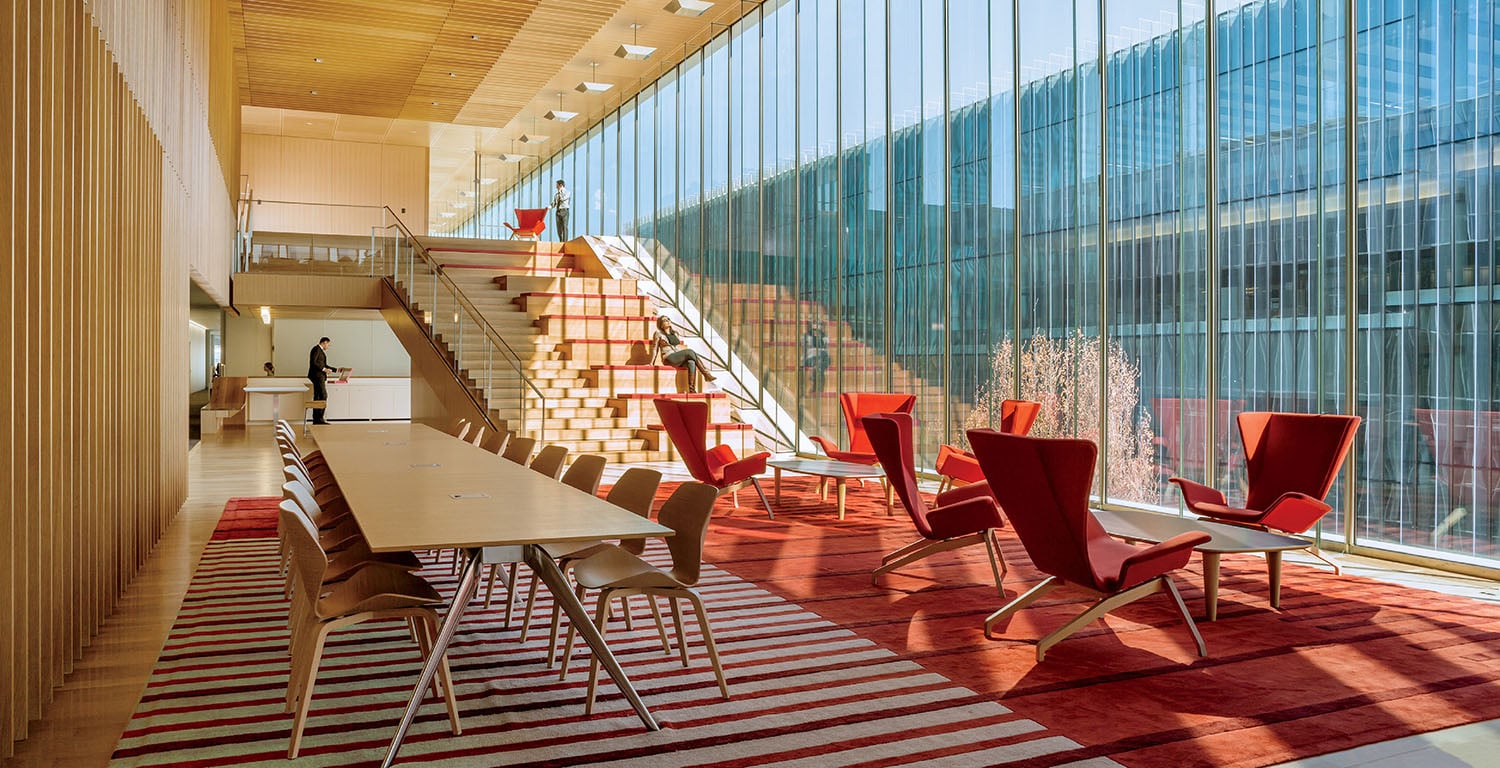
Farther up the river, at the Cornell Tech campus on Roosevelt Island, Weiss and Manfredi bring their expanded field indoors for the seven-story, 235,000-square-foot Tata Innovation Center, an incubator for tech start-ups. Lifted on a plinth for resilience on an environmentally vulnerable site, the building’s angular, glass-sheathed volumes have the cool, fractal beauty of icebergs floating weightlessly above the floodplain. “Inside,” Manfredi notes, “the architecture contends with a different powerful force: the ubiquitous computer screen”—an agent of social isolation that works against the project’s goal of mixing occupants into interactive communities exchanging ideas over a latte.
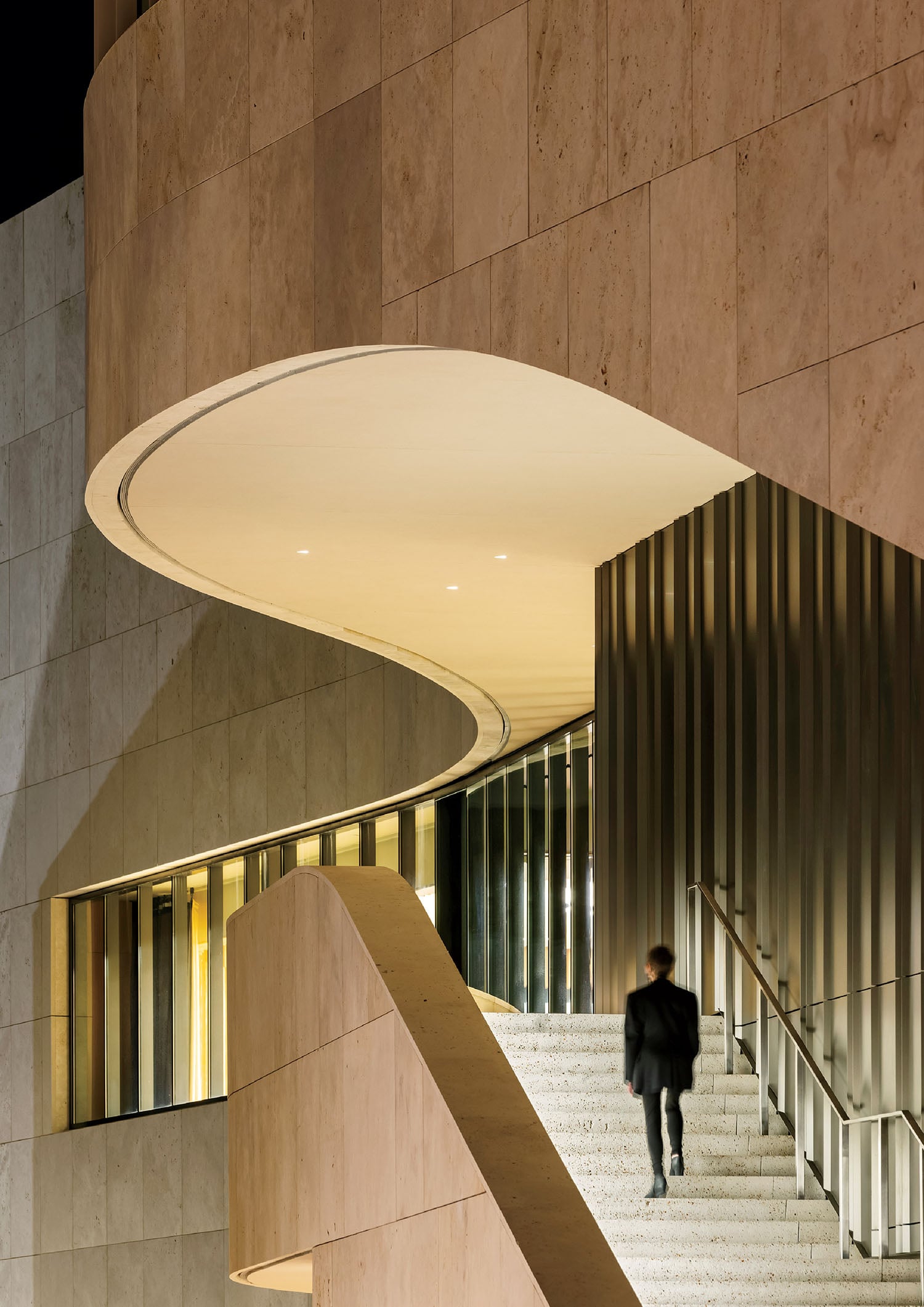
As in Seattle and Hunter’s Point, the architects use circulation to socialize the environment, foregrounding what Weiss calls “irresistible stairways” to draw users upward and together. Like Rome’s Spanish Steps, the broad stairs and adjoining terraces—which rise to sprawling, open lofts that act as petri dishes hosting start-up culture—are natural gathering spots. The buzz of people on the stairways and the sight of them through plate-glass walls help break the hypnotic hold of screens, catalyzing eye contact, greetings, and perhaps a chat.
Reimagining Complex Building Sites
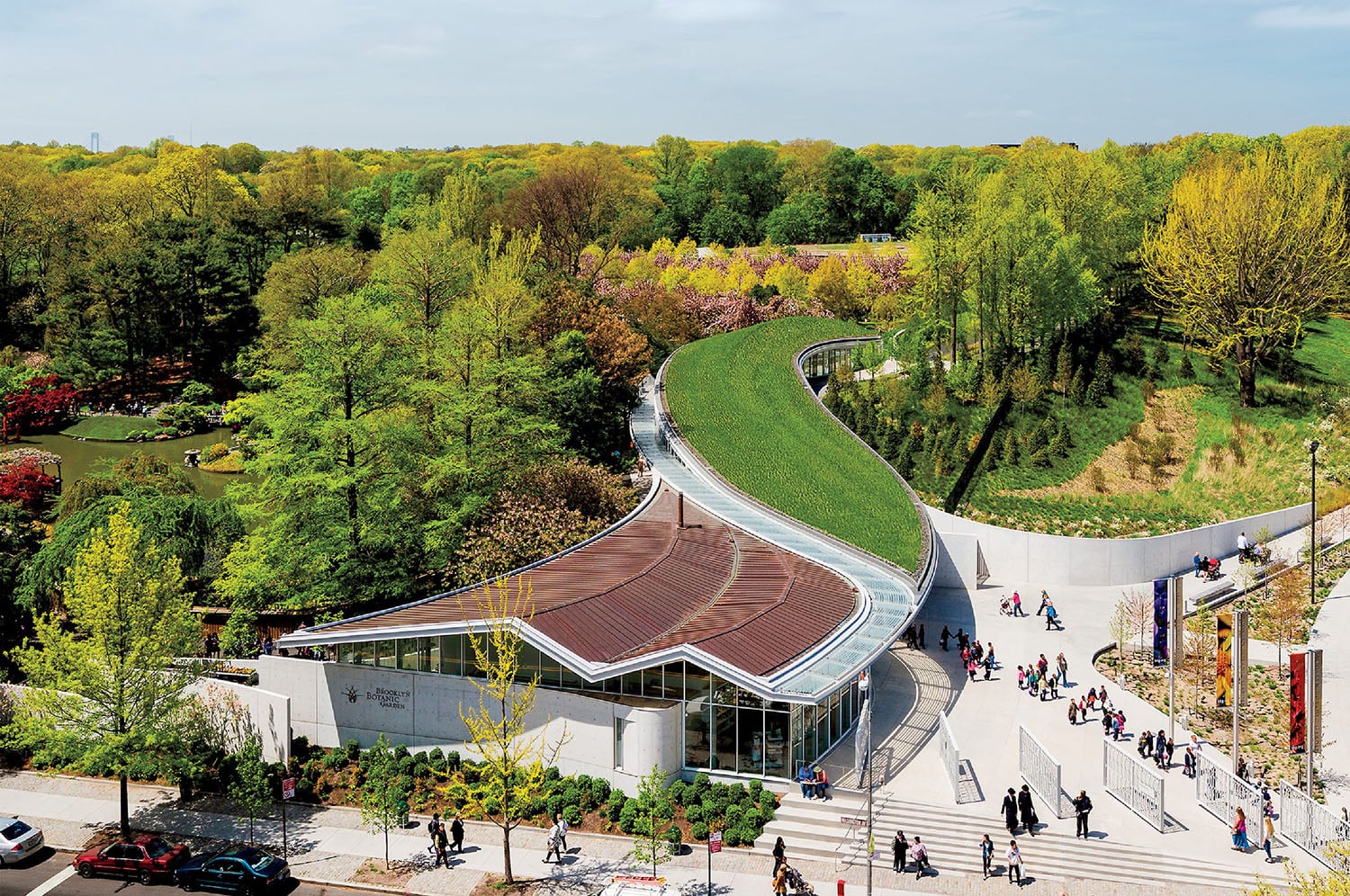
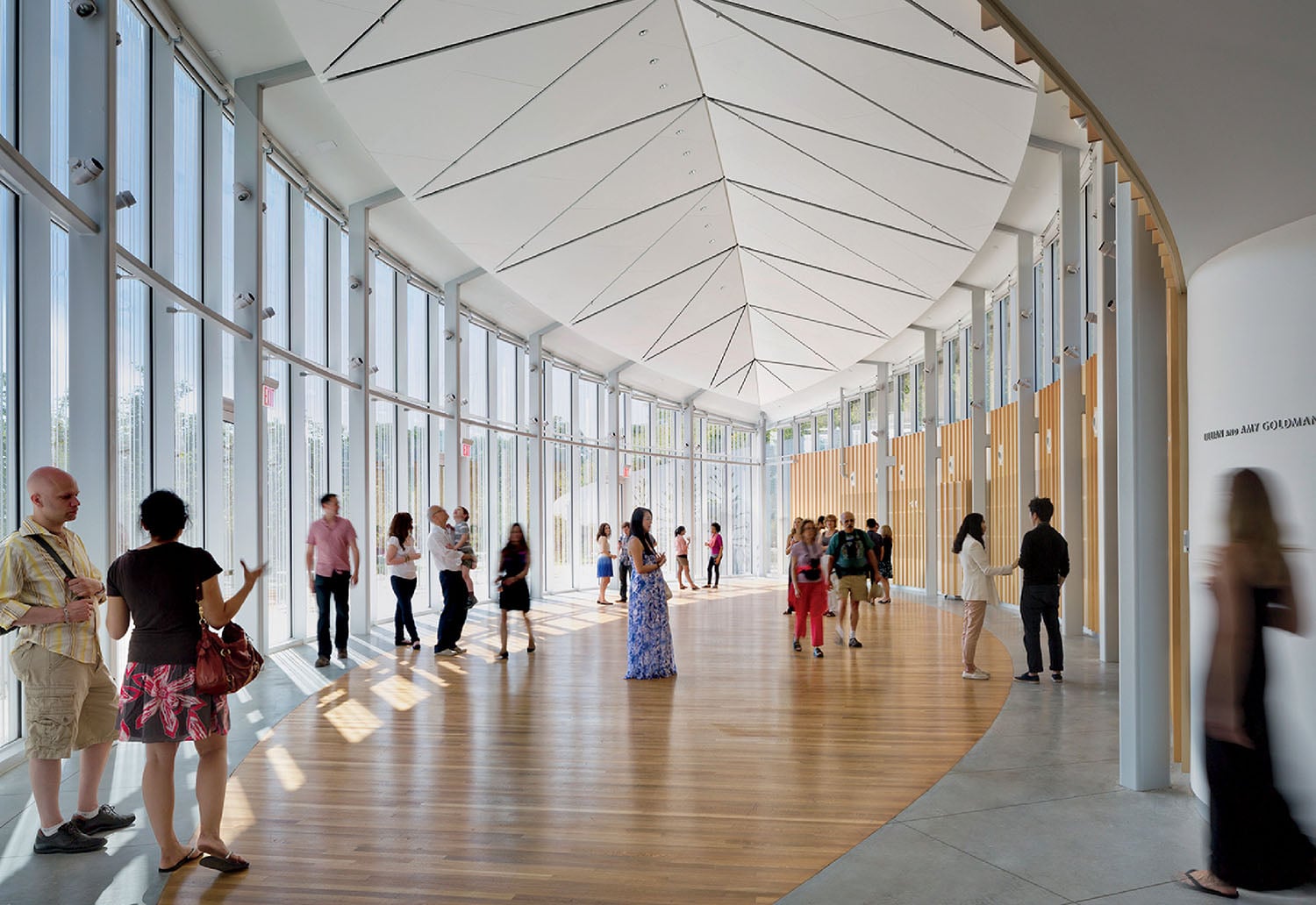
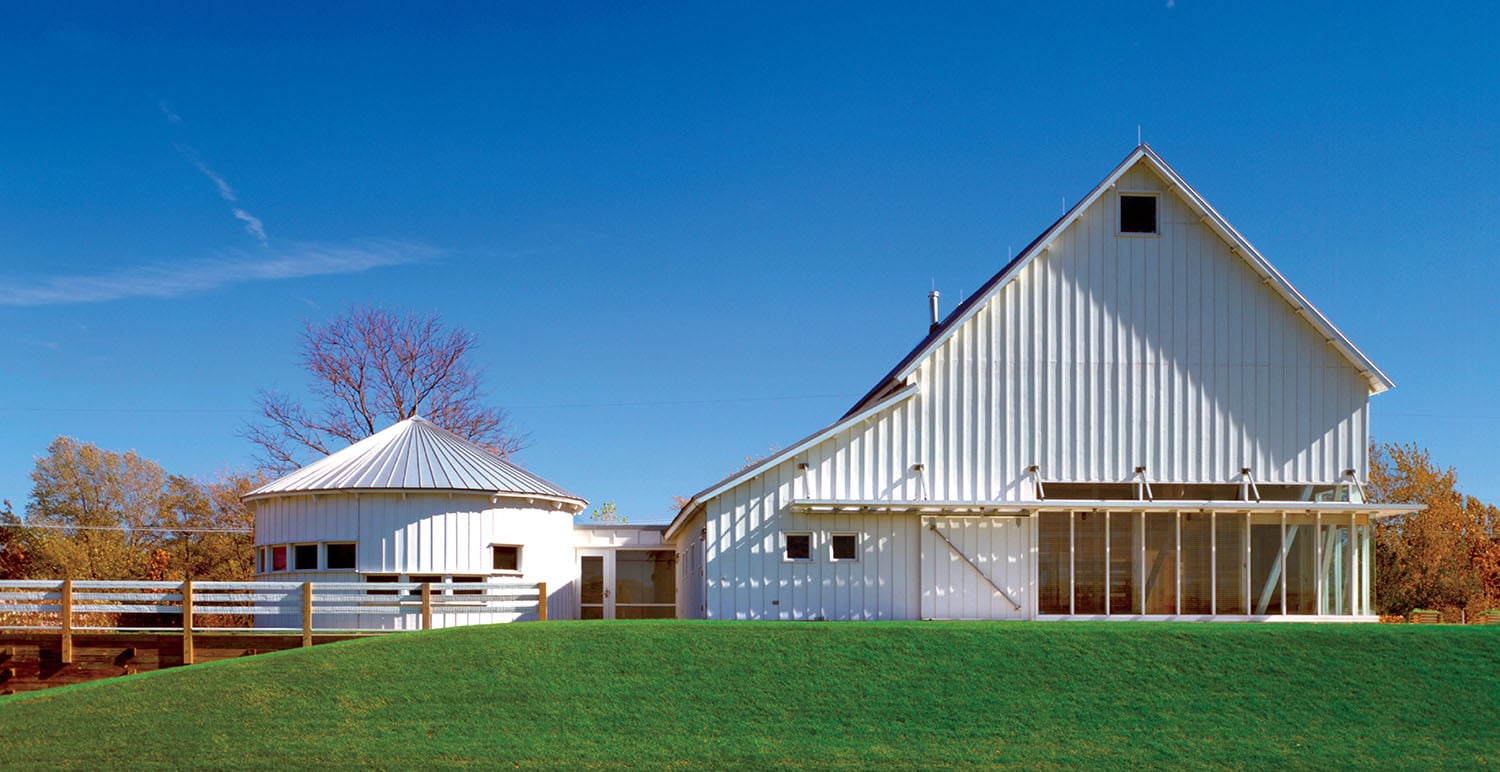
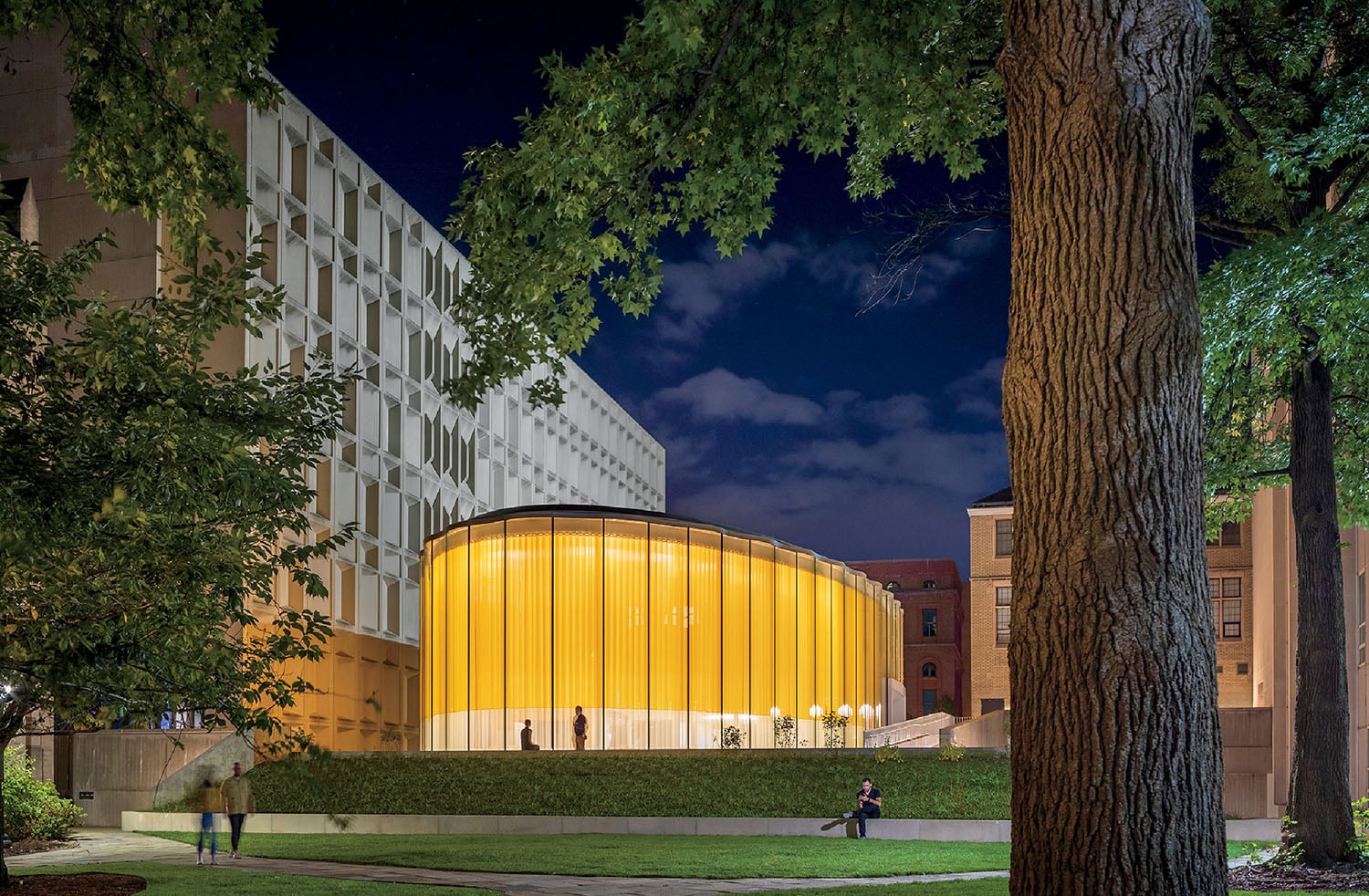
About 10 miles away at the Brooklyn Botanic Garden’s Diane H. and Joseph S. Steinberg Visitor Center, Weiss and Manfredi extend architecture to a yin-yang point of complete complementarity with the landscape. Housing reception, service, and exhibition areas, the 22,000-square-foot, single-story, glass-walled building presents a narrow end facade to the street before curling in a long, languid S into the densely planted, sloping terrain, yoking structure and site in conjugal curves—a union further reinforced when, about midpoint, the roof’s copper-clad ridges give way to a 10,000-square-foot meadow of native grasses and wildflowers. The integration continues with a subsequent intervention—the Robert W. Wilson Overlook—which extends the center’s program via an immediately adjoining network of switchback ramps, retaining walls, and vantage points that transform the hillside into inhabitable topography.
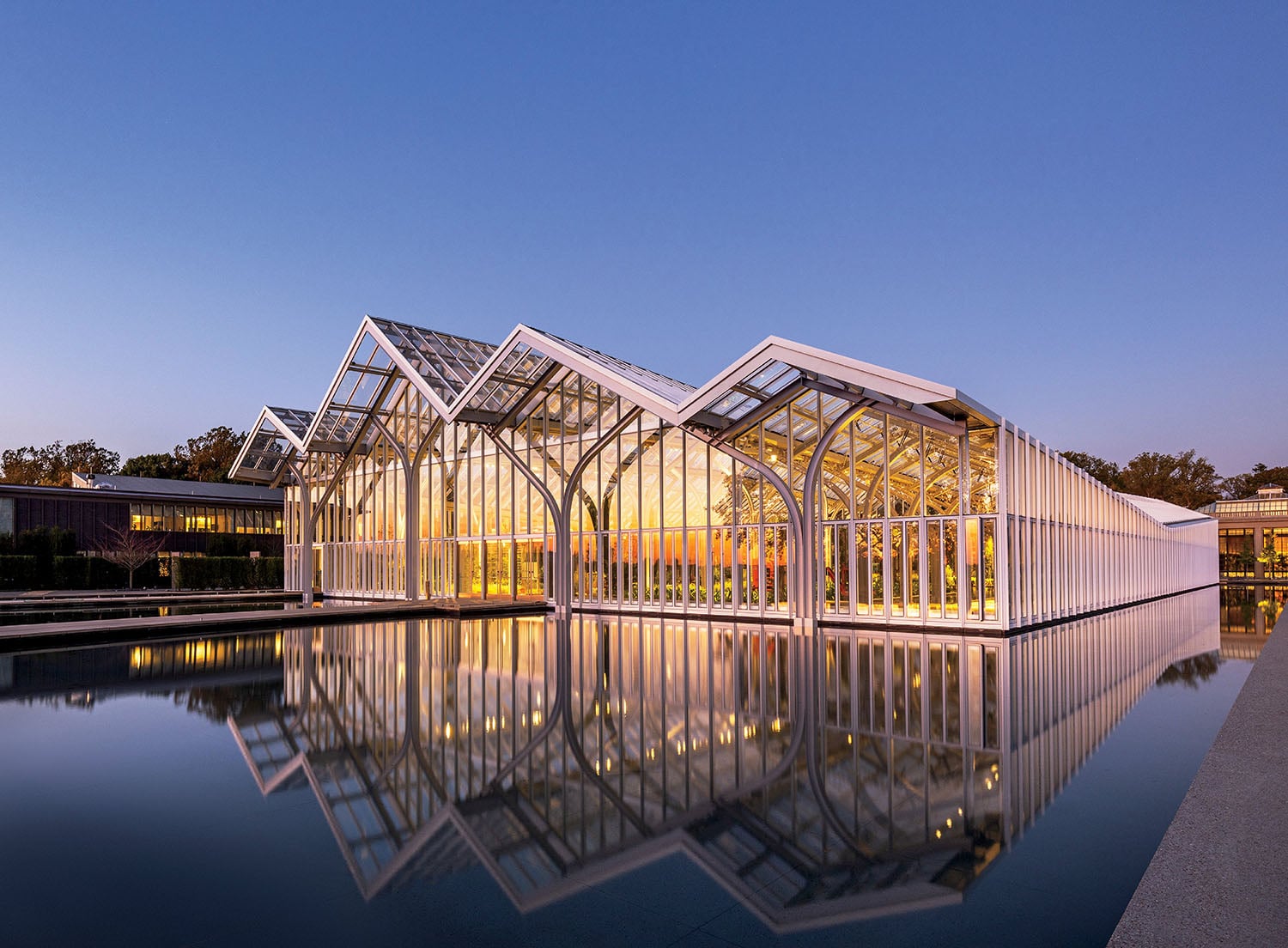
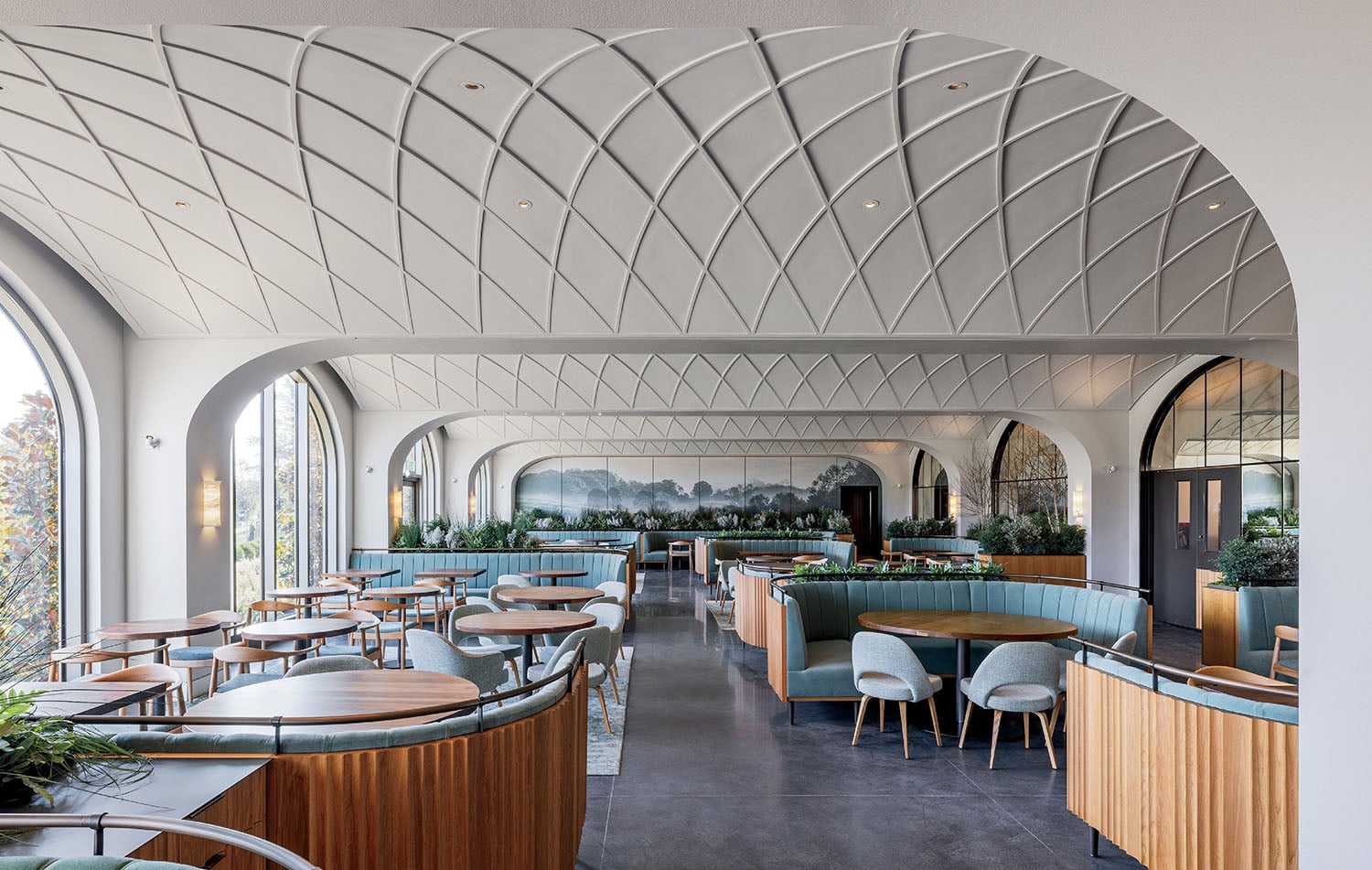
Many of Weiss/Manfredi’s projects reimagine well-loved properties. “We regard the existing site as an architectural condition already rich in possibilities,” Manfredi observes. A notable example is the multiphase transformation of 17 acres within Longwood Gardens, the 1,100-acre horticultural campus in Kennett Square, Pennsylvania. Initiated by a 2010 master plan, the endeavor has encompassed construction of the new West Conservatory; the relocation of the tropical Cascade Garden—Brazilian landscape architect Roberto Burle Marx’s only North American commission; the creation of a 250-seat restaurant; and an expansion of the education and administration building, all surrounded by Reed Hilderbrand’s landscaping. “The project has been a joy, an honor, and a responsibility—one that combines art and architecture, engineering and ecology, horticulture and infrastructure,” Weiss says. “That’s cinematic and symbiotic.”
The firm’s award-winning portfolio spans a wide range of typologies, from museums and cultural institutions to academic facilities and office buildings, in both the U.S. and abroad. Major current international projects include the redesign of the 28-acre U.S. Embassy compound in New Delhi, where several new structures will join Edward Durell Stone’s freshly restored chancery in a transformed tree-lined campus. Back home, the firm has just been named lead architect on the redesign of the New York Botanical Garden’s landmarked Museum Complex and adjacent Mosholu Entrance & Welcome Center. And Weiss and Manfredi’s fifth and most recent monograph, Drifting Symmetries: Projects, Provocations, and Other Enduring Models, was published earlier this year.
Regardless of place or program, the architects treat buildings and landscape as equals, providing object lessons teaching that architecture and nature are not either/or but both/and—an ecosystem richer and more capacious than rote square footage covered by a flat roof. Marion Weiss and Michael Manfredi design expansively.
Behind the Design Process of Weiss/Manfredi


A Look At Weiss/Manfredi’s Architectural Projects


read more
DesignWire
10 Questions With… Sculptor Aminata Mboup
Aminata Mboup discusses her practice, inspirations, fluidity between disciplines, as well as her unique approach to materials.
DesignWire
10 Highlights From Amman Design Week
Amman Design Week 2026 gathers a host of regional designers and architects under the theme ‘Accumulations.’