
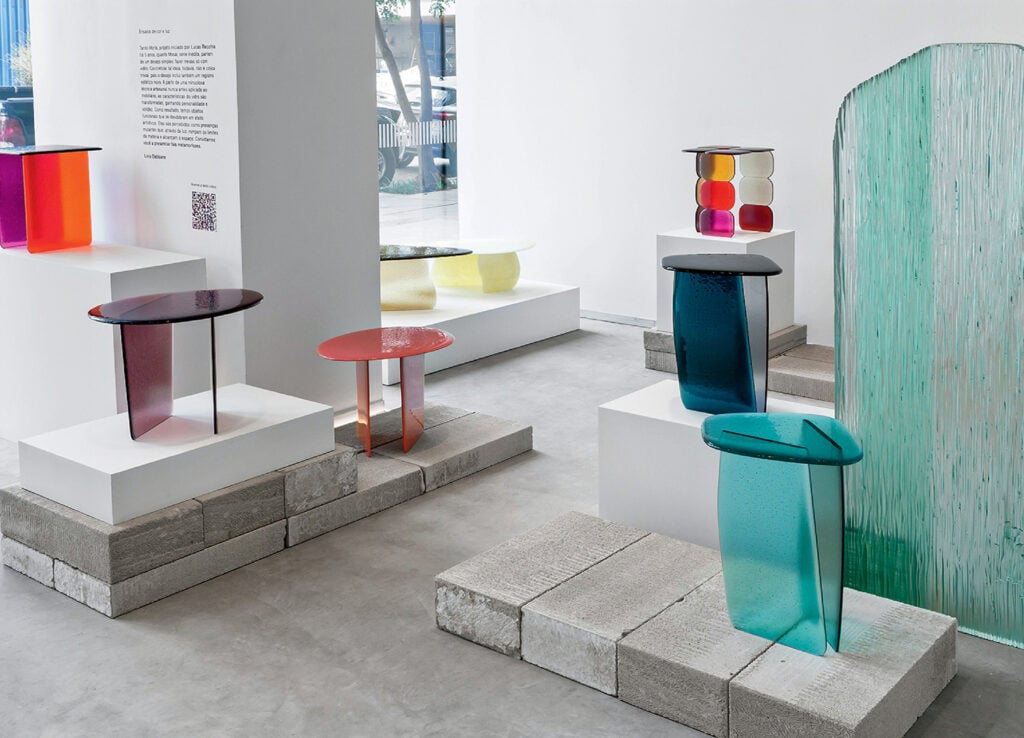
How Lucas Recchia Is Redefining Design With Brazil’s Natural Resources
Lucas Recchia is one of Brazil’s most exciting emerging voices in collectible furniture design. In 2021, he became the first contemporary Brazilian to be represented by fabled dealer Rossana Orlandi’s taste-making gallery in Milan. The following year, he earned a spot on Forbes magazine’s “30 Under 30” list in architecture and design. He has created exclusive cast-aluminum tables for Off-White stores around the globe, as well as other pieces that have been incorporated into new Dior, Saint Laurent, and Louis Vuitton boutiques. His clientele also includes renowned interior designers, such as Kelly Wearstler and Interior Design Hall of Fame member Arthur Casas.
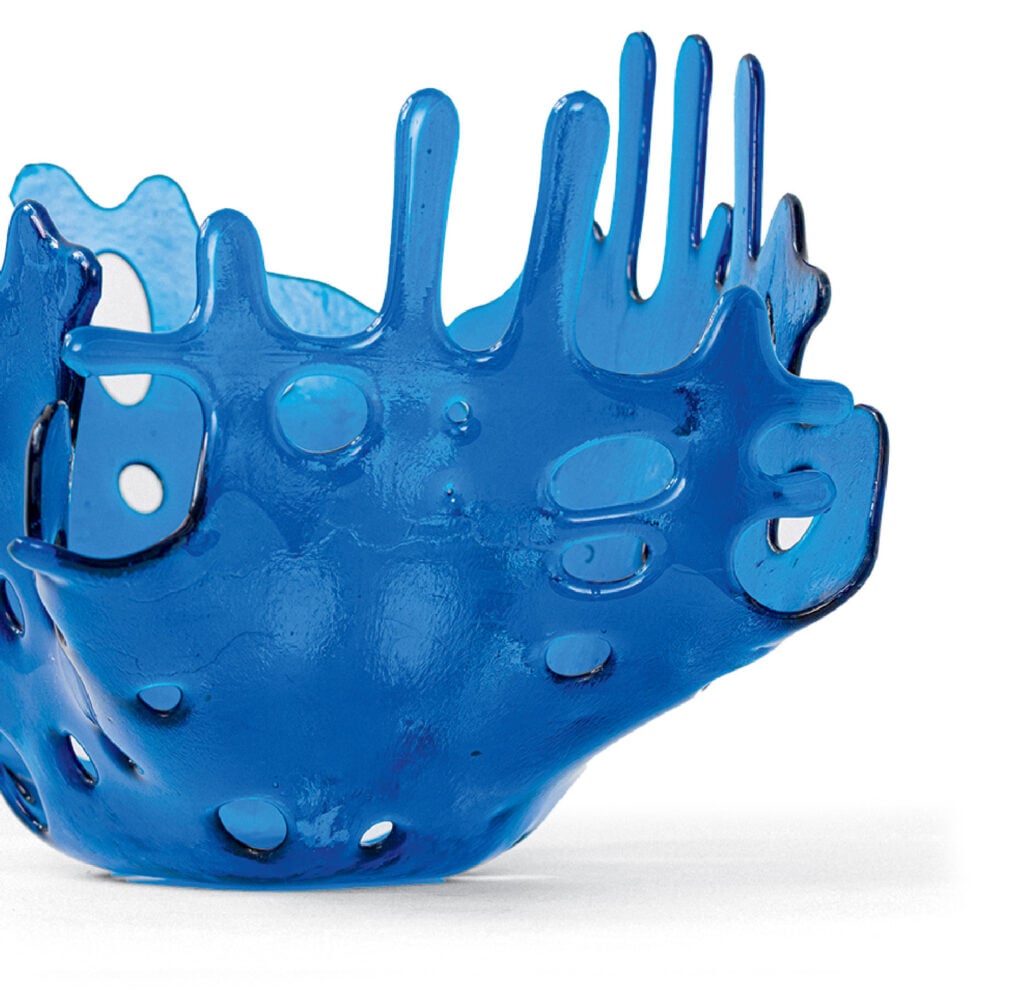
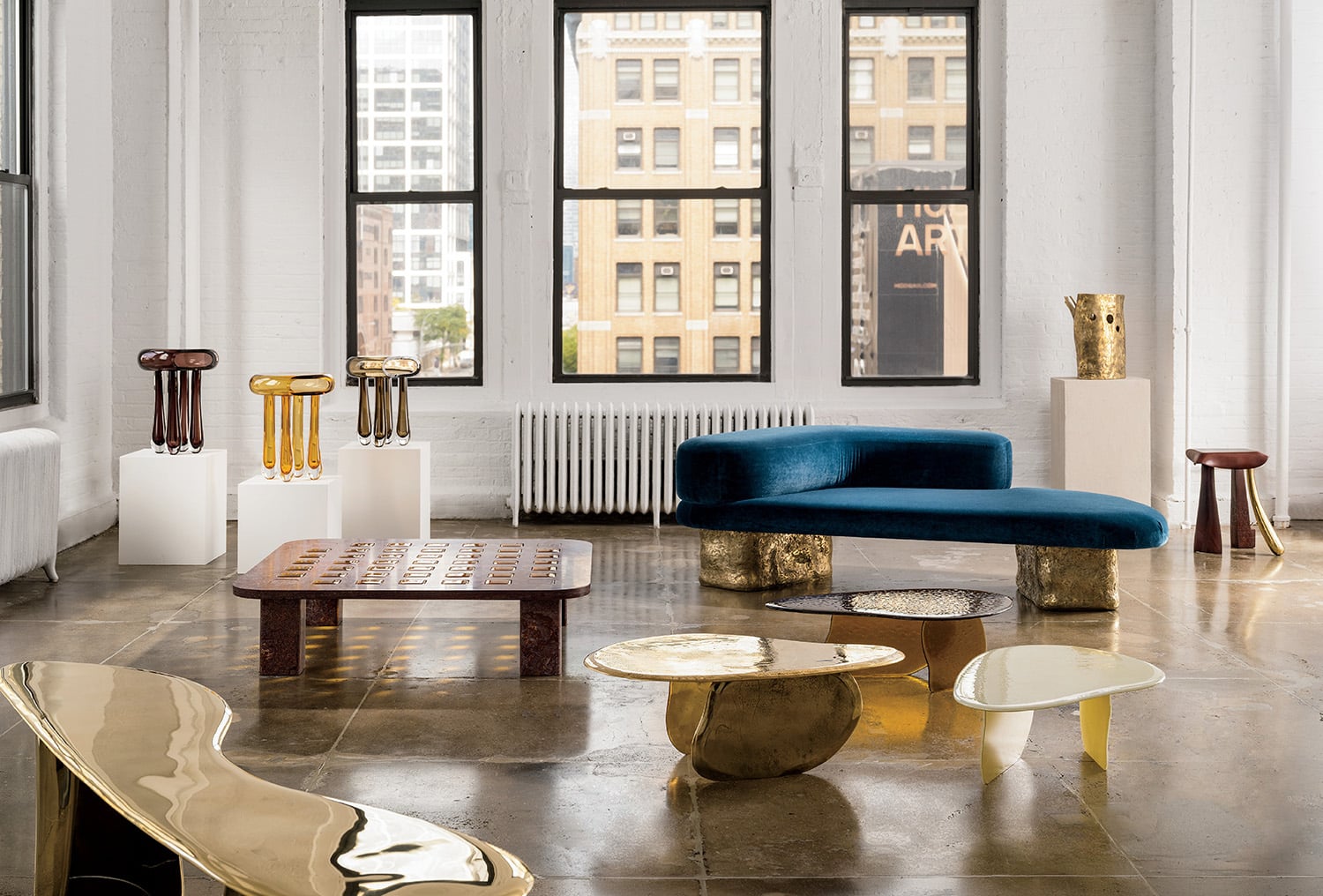
Born in the southern island city of Florianópolis, Recchia began designing furniture while earning an architecture degree at Universidade Presbiteriana Mackenzie in São Paulo. In 2019, he secured a solo exhibition at the city’s influential Firma Casa showroom, launching his career. Now 33 years old, Recchia’s sculptural work is largely guided by an exploration of materials. He is perhaps best-known for his innovative designs in glass, which highlight its particular qualities of color and transparency. The notion of experimentation and originality is central to his practice. “While Brazil has a tradition of producing crystal objects, no one had previously examined fusion and blown-glass techniques in the context of furniture design,” he says.
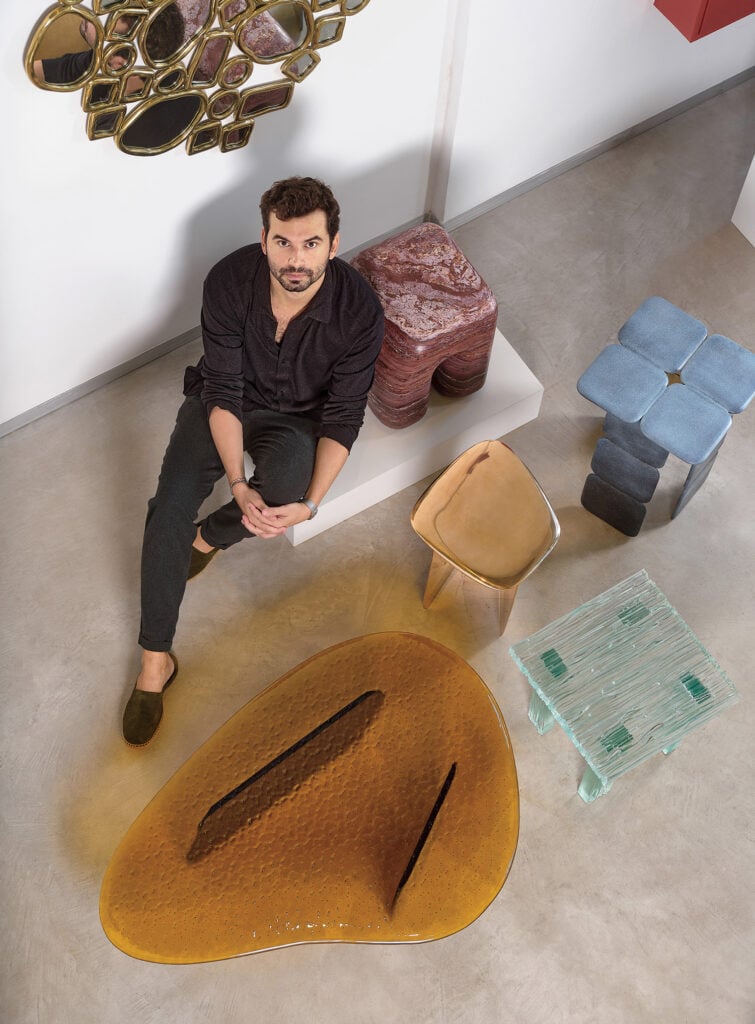
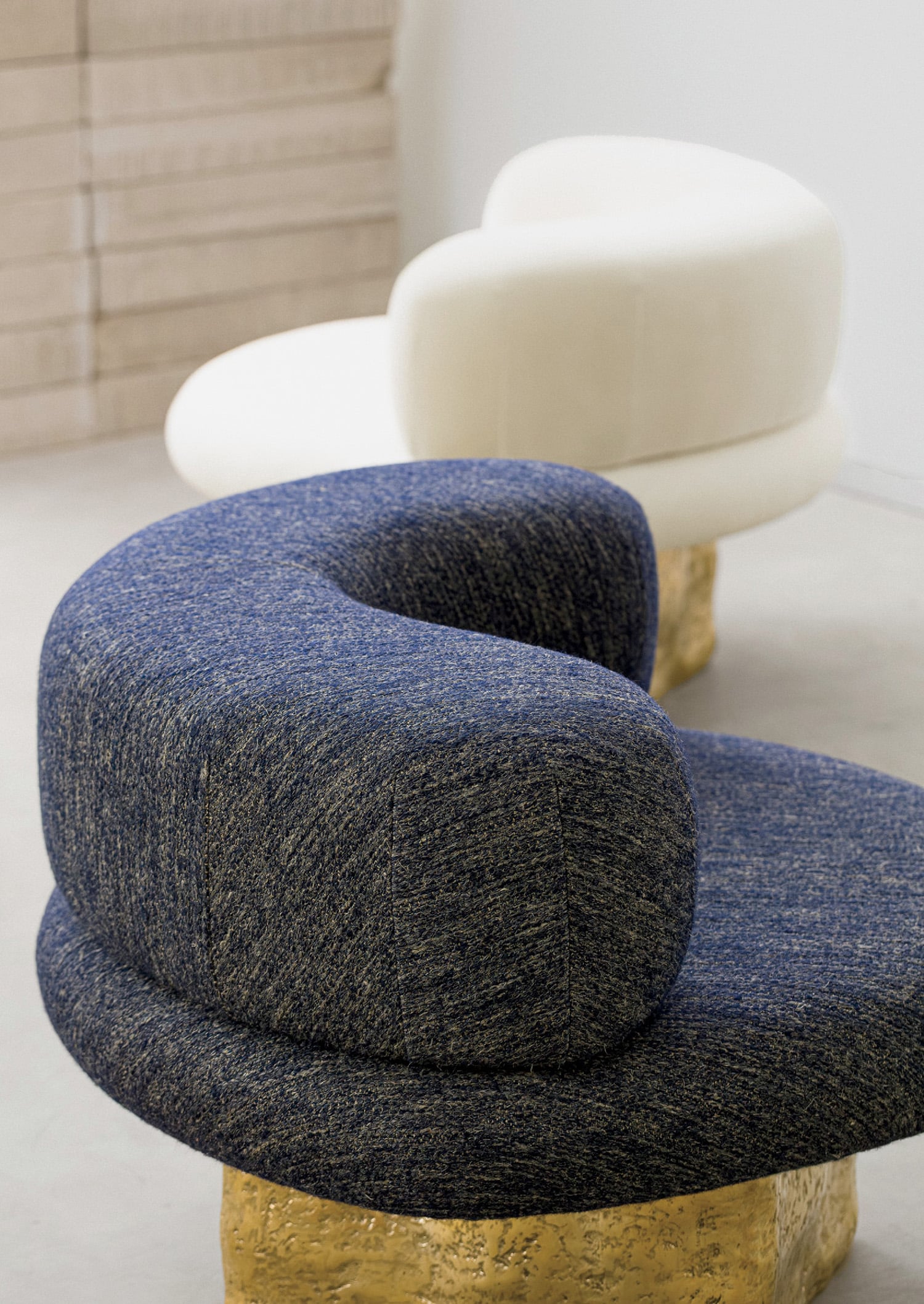
More recently, Recchia has started to work with both bronze and stone. His Eche collection comprises upholstered seating with highly textured bronze bases. His metal Trípede tables feature five different patinas and his Janelas console combines Brazilian marble, granite, and quartzite with inserts of fused glass. “Lucas’s work has this incredible balance between raw and refined,” Wearstler enthuses. “What makes him stand out is how authentic his vision is. He’s not chasing trends. His pieces have their own language.” We spoke to Recchia recently about his meteoric career and future plans.
Lucas Recchia Shares Insights Into His Creative Process
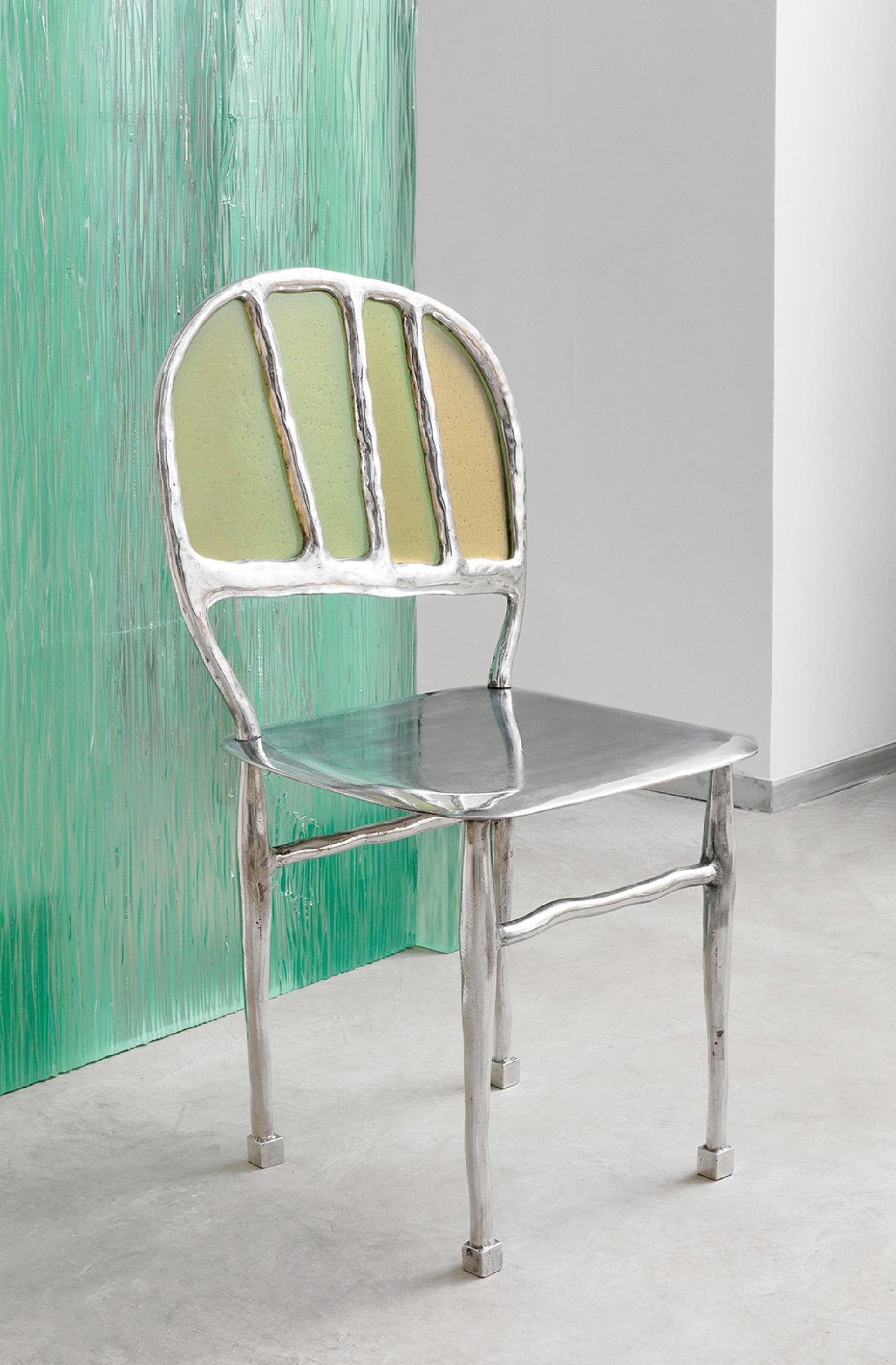
Interior Design: How present were architecture and design in your childhood?
Lucas Recchia: There was no influence whatsoever. My parents work in the legal profession, and there’s nothing much of significance architecturally where I grew up, in Florianópolis. The main tourist attraction is an iron bridge that’s 100 years old. My grandparents did, however, live in Brasília, and I recall being struck by the scale of the buildings there. Everything is so big and monumental.
ID: You started your first collection, Morfa, while still an architecture student. How did that come about?
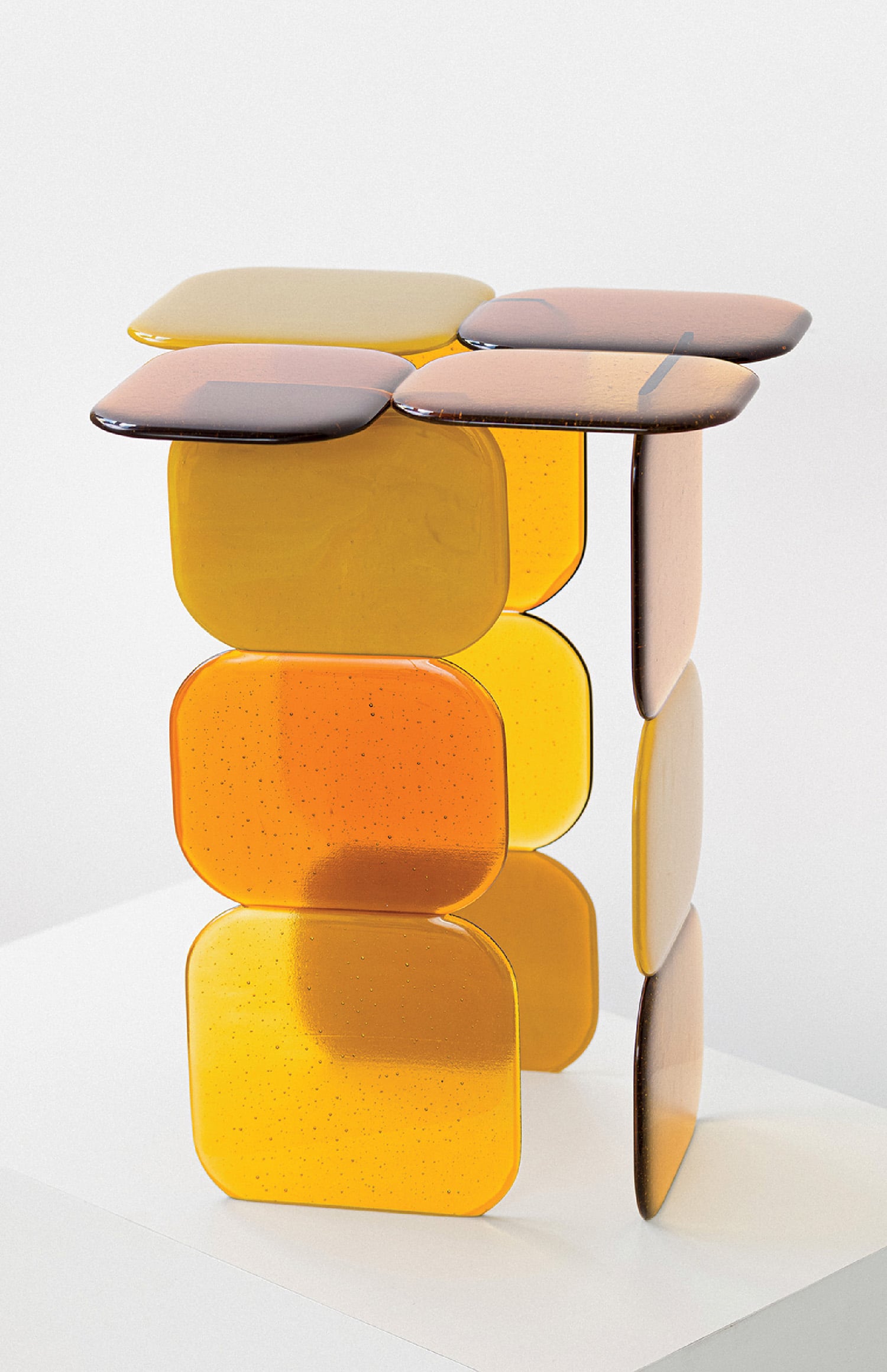
LR: The name relates to metamorphosis and the transformation of sand into glass. I’ve always been fascinated by the way glass interacts with light. The initial idea was not to have rounded edges, but I realized I had no money to develop molds. So I started working with a process whereby I simply cut the glass and put it in the kiln. The free forms resulted from the production process, rather than being an aesthetic choice.
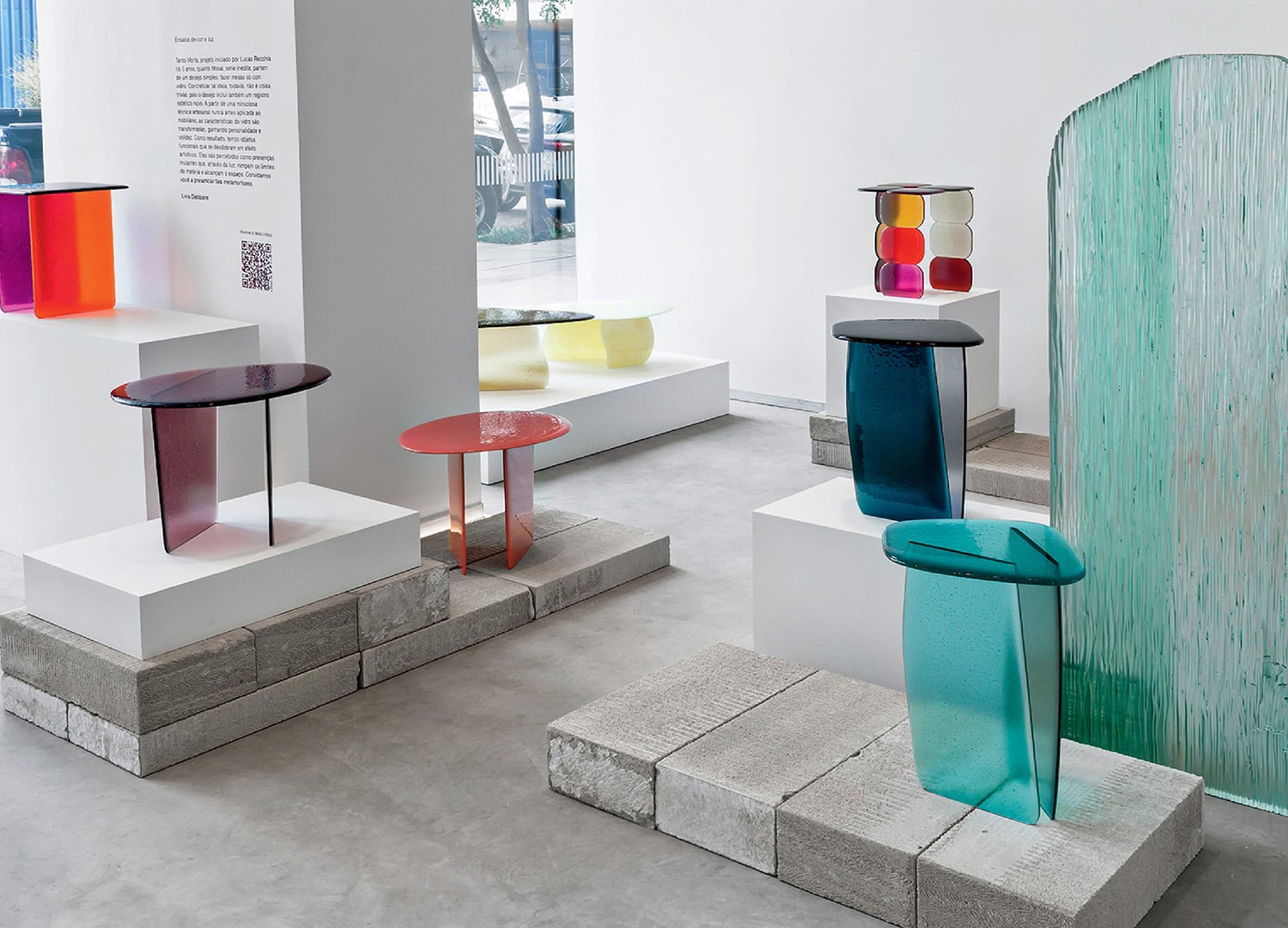
ID: Curves have become a signature of your work ever since.
LR: The idea behind a number of my collections is to create pieces from heavy materials, but to give them a visual lightness. Rounded forms help them become more fluid. Take the Janelas bench, which was exhibited at Design Miami Paris last year. It’s made from green quartzite and weighs over 650 pounds. But I endowed it with a paradoxical lightness by inserting glass into one of the stone feet.
ID: Your career took off quickly. How did you connect with Rossana Orlandi?
LR: I had my first exhibition in Brazil in 2019 and, during the pandemic the following year, I started looking at galleries internationally. I realized Rossana was instrumental in launching young designers and simply sent her an email via her website. She replied two months later, just when I’d given up hope. She first included my work in an exhibition at her 2021 summer gallery in Porto Cervo and subsequently presented some pieces during the Salone in Milan.
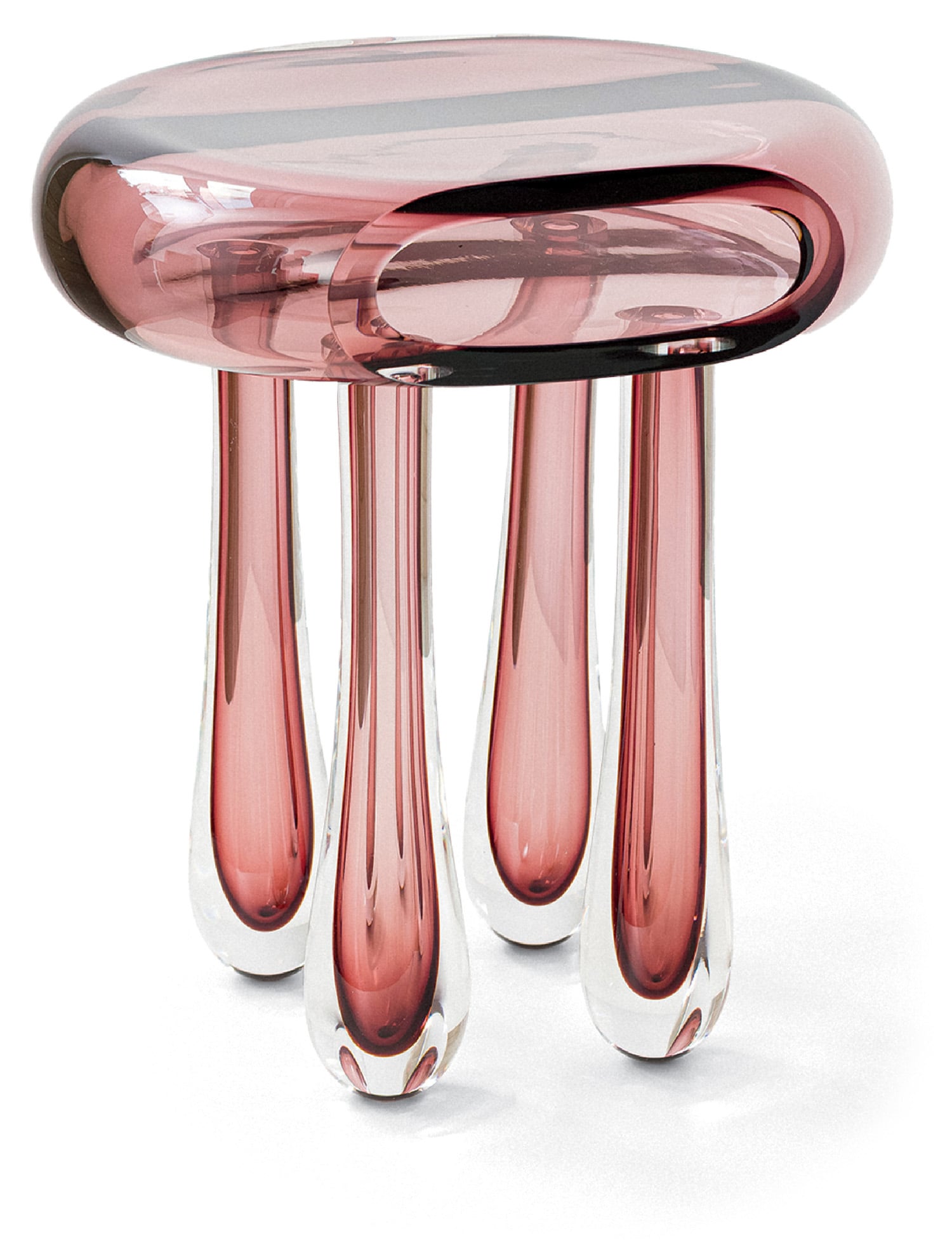
ID: In 2025, you exhibited once again with Rossana in Milan, had a solo show at Bossa Furniture in New York, and were also represented at PAD London and Design Miami Paris. What have you taken away from those experiences?
LR: I realized how people in different locations have different tastes. My bestseller in Brazil is the Morfa No.01 side table in amber glass, whereas in the States, people are really into my patinated bronze pieces. In Dubai, meanwhile, they love Brazilian stones in super-exotic colors. I’m conscious of the need to find a balance between my own aesthetic and what clients want. Right now, I’m getting lots of requests for highly polished bronze pieces but am keen to keep things more textural.
ID: You’ve said you don’t feel you’re a typical Brazilian designer. Why not?
LR: When you think of Brazilian design, you may think of mid-century pieces made from wood. While I admire that legacy, I don’t understand why a country so rich in natural resources should limit itself to producing furniture that explores only wood. My focus has been to highlight the potential of other materials that are just as Brazilian. The culture itself is a mixture of influences from all over the world. Many of the artisans I work with are of European origin. The glassworkers, for instance, emigrated from Venice during WWII. My work has grown out of that melting pot.
ID: What’s next?
LR: I’ve been busy developing a lighting collection, which has been challenging. It launched during the SP–Arte fair in São Paulo last month. It combines glass with bronze and other materials that create a dialogue between transparency and matter. I’d also like to organize a more institutional exhibition in Brasília in a building by either Oscar Niemeyer or another Brazilian modernist architect, Lelé. My dream would be to hold it in Niemeyer’s Itamaraty Palace, which is home to our foreign ministry. For me, it’s the most beautiful structure in the city. Let’s hope it happens.
read more

DesignWire
Designers And Manufacturers On The Move: September 2026 Edition
Interior Design‘s latest On the Move includes must-know industry promotions and hires, like Perkins&Will’s strategic move to expand its design capabilities.
DesignWire
10 Questions With… Artist and Designer Conie Vallese
From sculpture and ceramics to glass, textiles, and furniture, Conie Vallese embraces a multidisciplinary practice shaped by curiosity and creativity.