
RISD’s Black Biennial Honors The Diaspora Community
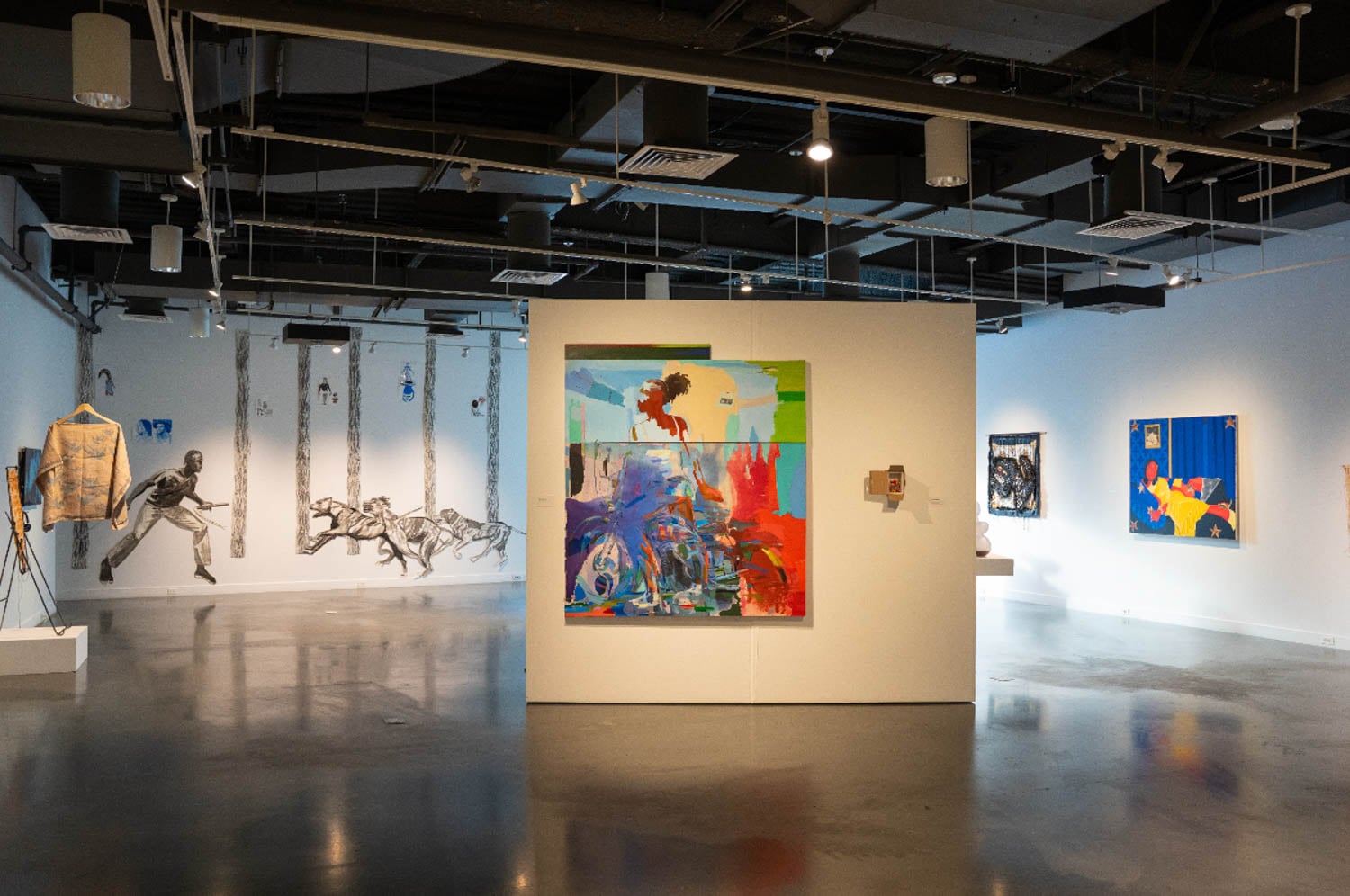
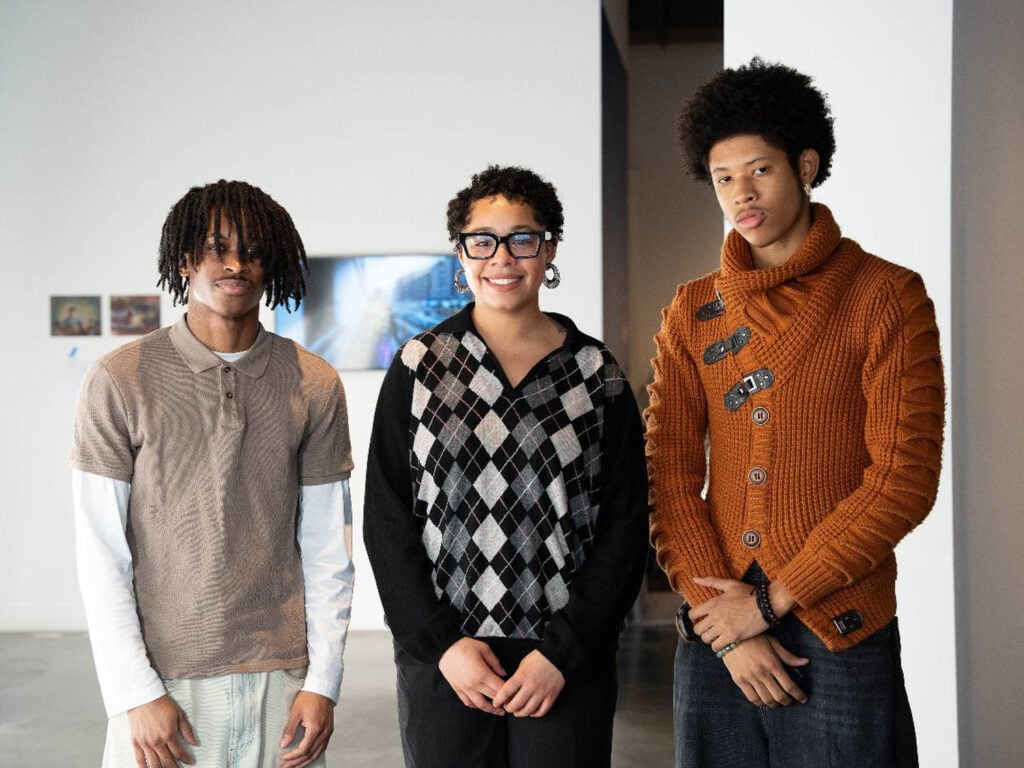
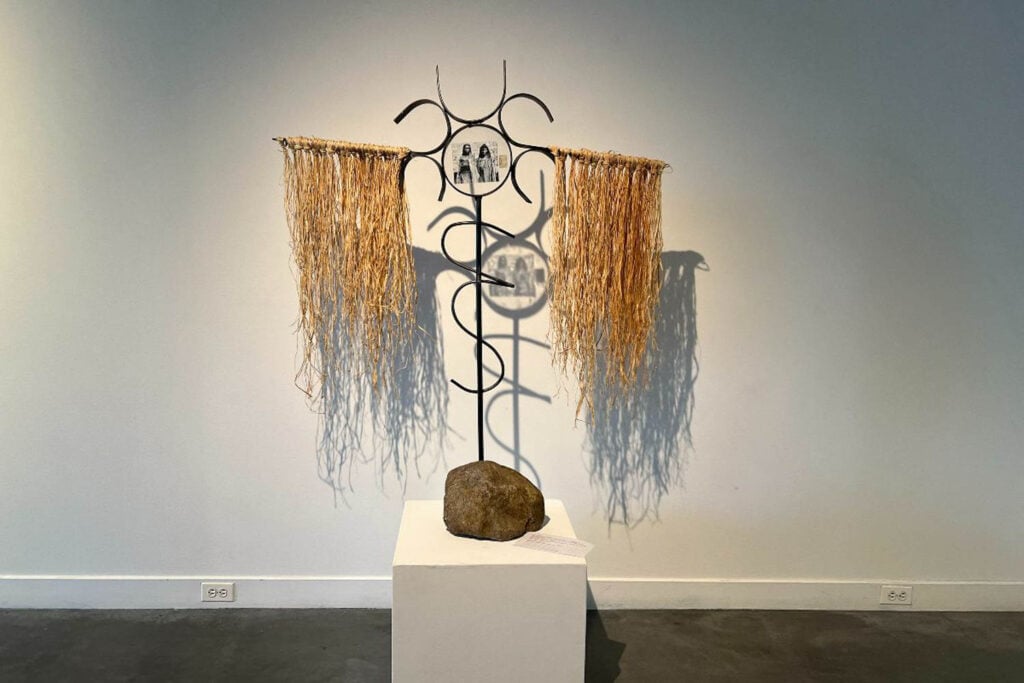
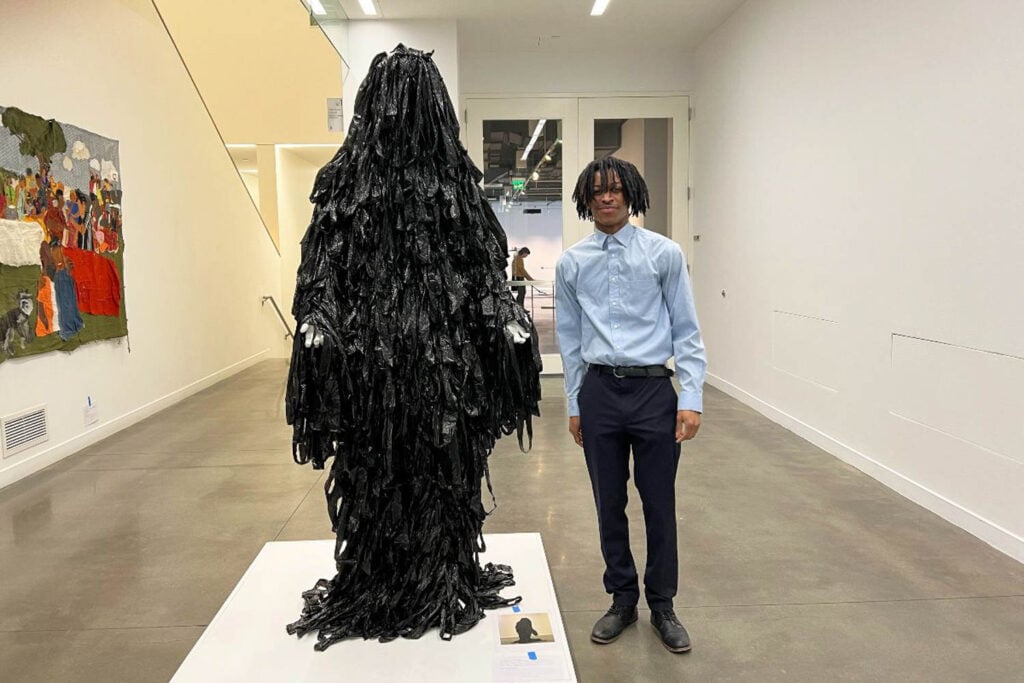
For its third Black Biennial exhibition, Rhode Island School of Design (RISD) showcases materials, textures, and imagery that celebrate Black communities around the world. The show, titled “Please Catch Me When I Fall” and on view through March 15, 2026, is co-curated by three RISD students—Karma Johnson, Khalil McKnight, and King Meulens—who sought to create a space that welcomes vulnerability while acknowledging similarities as well as differences among diaspora communities.
“When I got to RISD in 2022, I heard about the first Black Biennial and knew I wanted to curate the show one day,” says Johnson. After becoming friends with McKnight and Meulens when they arrived on campus a year later, the trio began developing an idea—and when the call for 2026 proposals went out, they got to work shaping the concept for this year’s biennial.
“Karma came up with the title,” says McKnight. “As a Black person living in post-colonial society, you’re bound to experience life’s negatives and to fall. You learn to rely on your community to lift you up. You can’t always do it by yourself.”
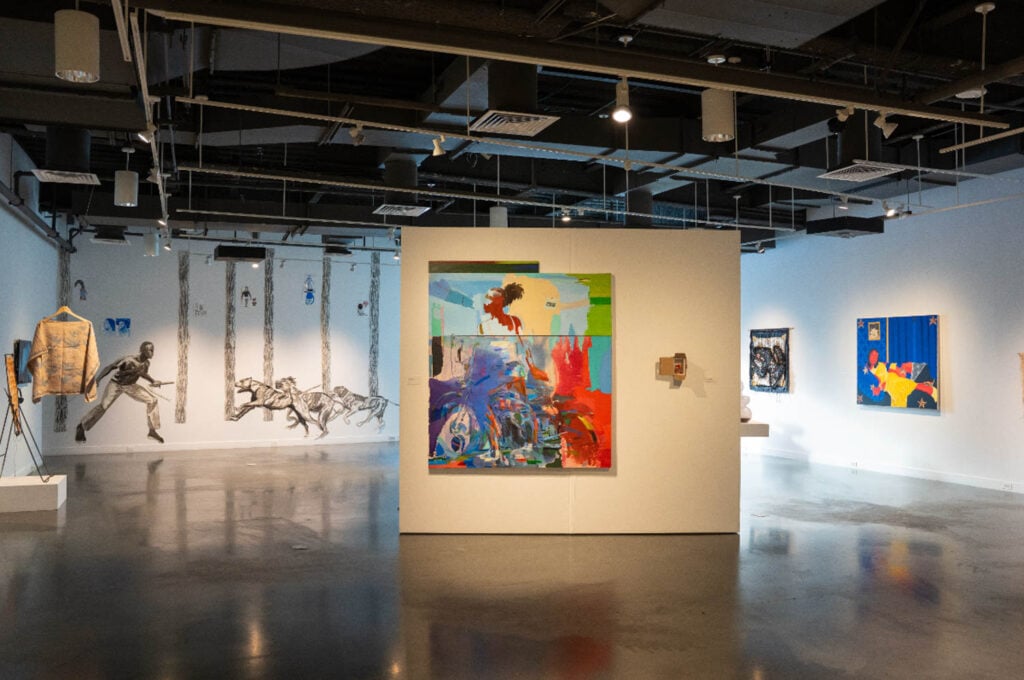
When it came to selecting the works, the co-curators evaluated submissions from Black artists in and beyond RISD. Roughly 50 pieces were chosen, from large-scale paintings to textiles to sculptures, audio works, and poems, and arranged in the gallery’s Dryfoos Media Room. For the biennial, the space takes on an inviting lounge-like vibe, encouraging conversation and connection while offering a subtle nod to All About Love, an installation by multidisciplinary artist Mickalene Thomas.
“Gallery and museum spaces can be so daunting with their blank white walls,” says McKnight. “That’s why creating rooms like this is so important. We want other Black students to understand that this is all possible.”
Director of campus exhibitions Mark Moscone and his team, as well as faculty advisors, assistant professor Jameka Hartley, and associate professor Derrick Woods-Morrow (whose piece I Believe in the Primer in Two Voices or a Threshold for technological Advancement is included in the exhibition) mentored the students on their show curation. “I’m currently taking a Black feminism course with Jameka,” Meulens notes, “and its themes—motherhood, home, activism, imperialism, colonialism—are intersecting with the work we’re doing for the Black Biennial.”
A community reception took place on February 19, which included live readings, music, and foods of the Black Diaspora. “There is a lot of tragedy in Black history across the diaspora,” Johnson adds, “but there’s also a lot of joy and beauty. We’re a people who can make leftover scraps of food into a feast! We can find joy in community, and we’re using this show as an opportunity to teach each other how to do that.”
read more

DesignWire
Designers And Manufacturers On The Move: September 2026 Edition
Interior Design‘s latest On the Move includes must-know industry promotions and hires, like Perkins&Will’s strategic move to expand its design capabilities.
DesignWire
10 Questions With… Artist and Designer Conie Vallese
From sculpture and ceramics to glass, textiles, and furniture, Conie Vallese embraces a multidisciplinary practice shaped by curiosity and creativity.