
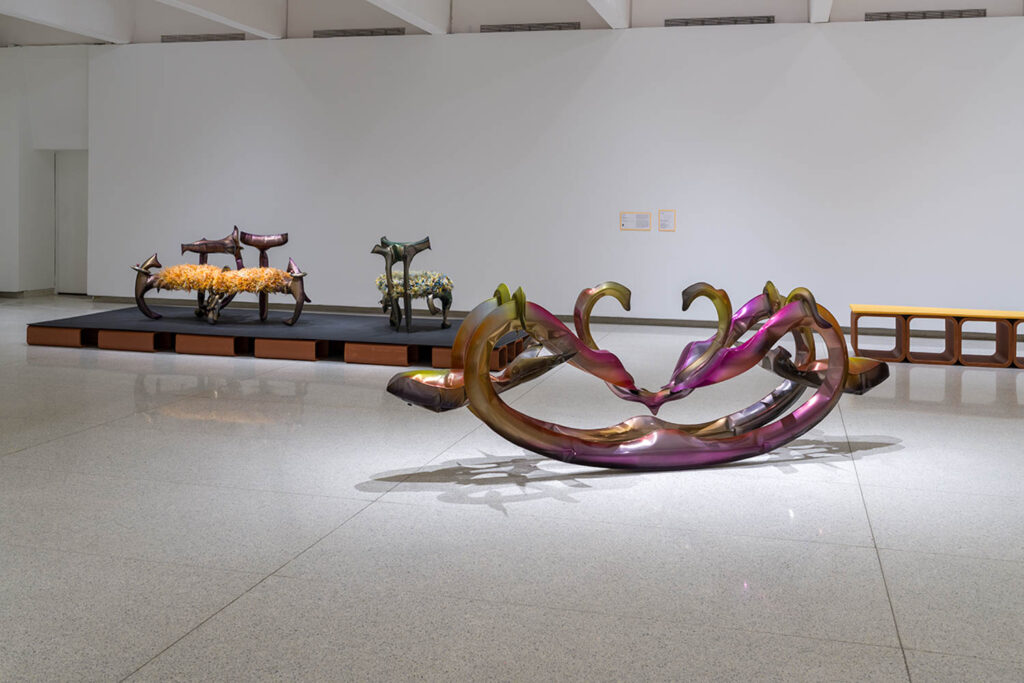
9 Highlights From The First Walker Design Triennial
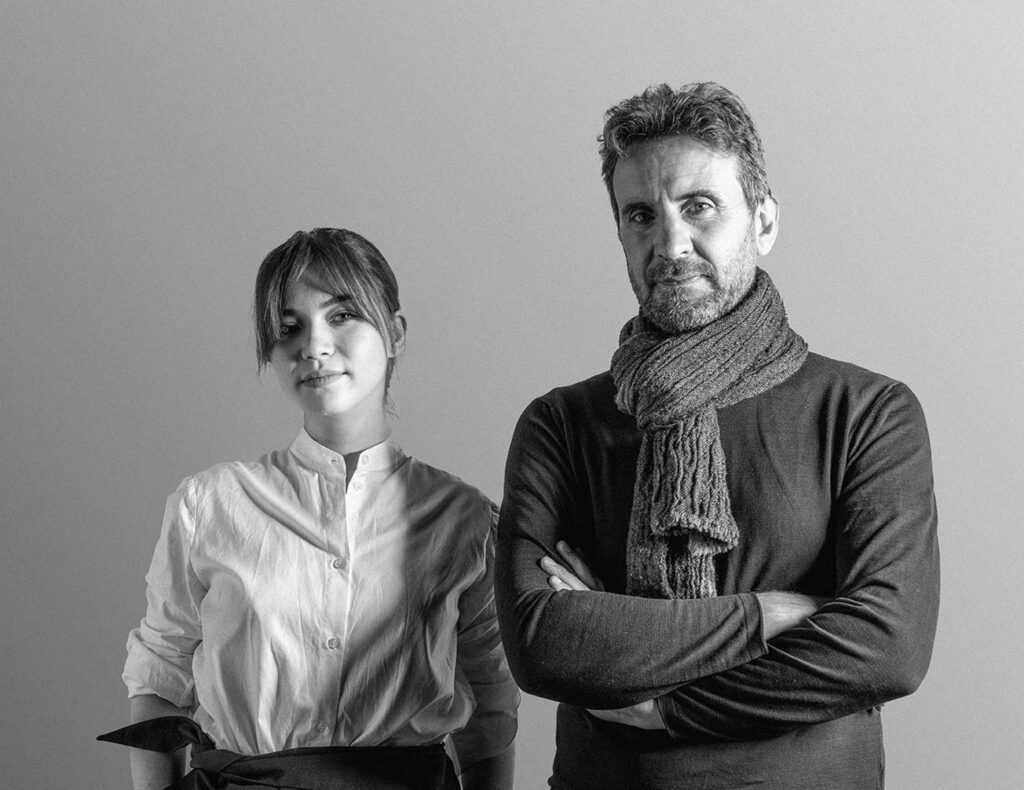
In dark times marked by systemic crises, what’s the true role of design? At the Walker Art Center in Minneapolis, the inaugural Design Triennial: Beyond Materialism (on view through February 2027) tackles this existential question head-on. Mounted by Space Caviar founder Joseph Grima (also the co-director of traveling fair Alcova) and the Walker’s head of design, communication and content Asli Altay, the tightly curated yet all-encompassing presentation surveys work by 26 contemporary talents and a few seminal historical heavyweights positioned to contextualize today’s inquiry-based design zeitgeist. Expanding on the museum’s storied legacy of commissioning speculative work—tracing back to Daniel Defenbacher’s 1941 Idea Houses, Hilde Reiss’s 1946 Everyday Art Gallery, and the influential publication Design Quarterly—the survey pinpoints a discipline in flux, actively redefining itself. “What does it mean to design now? Not design as a noun—not the object on the pedestal—but design as a verb, an act, and a way of intervening in the world,” noted Altay during an opening address.
““This exhibition talks about this idea, Beyond Materialism, which is a little bit of a paradoxical title,” Grima stated. “Because the exhibition is fundamentally about material… not materialist consumerism as we’ve known it but a different form of prosperity… an interior prosperity built on immaterial concerns.” He identified three core takeaways: individual empowerment, community building, and spiritual transcendence. Historical icons like Buckminster Fuller, Ettore Sottsass Jr., and Nathalie Du Pasquier join contemporary talents such as Theaster Gates, hype-worthy Brussels collective Espace Aygo, Christoph Wimmer-Ruelland—whose ad-hoc assemblages epitomize Europe’s anti-design resurgence—Germane Barnes, and Michael Bennett’s Studio Ker. Many of the exhibitors trained at the formative Design Academy Eindhoven, a school that has long fostered more conceptual and even intellectual exploration. Grima served as its director from 2017 to 2025.
The triennial is sequenced according to four themes: After Materials: Historical Notes, A New Poetics: The Techno-Craftspeople, Reclaiming Design: Technology, Environment, Politics, and Ritual and Symbolism: New Ideas of Community and Agency. “I think hope in a very difficult moment is something that we really desperately need,” Grima added, reiterating Buckminster Fuller’s famous maxim that “the best way to predict the future is to design it.” Through these multi-generational, provocative gestures, Beyond Materialism powerfully asserts that the discipline can chart a richer, more imaginative path forward for humanity when we need it most; not merely answer fleetingly flat commercial demands.
Top Picks From Beyond Materialism
Lassù Chair (Up There) by Alessandro Mendini (1974)
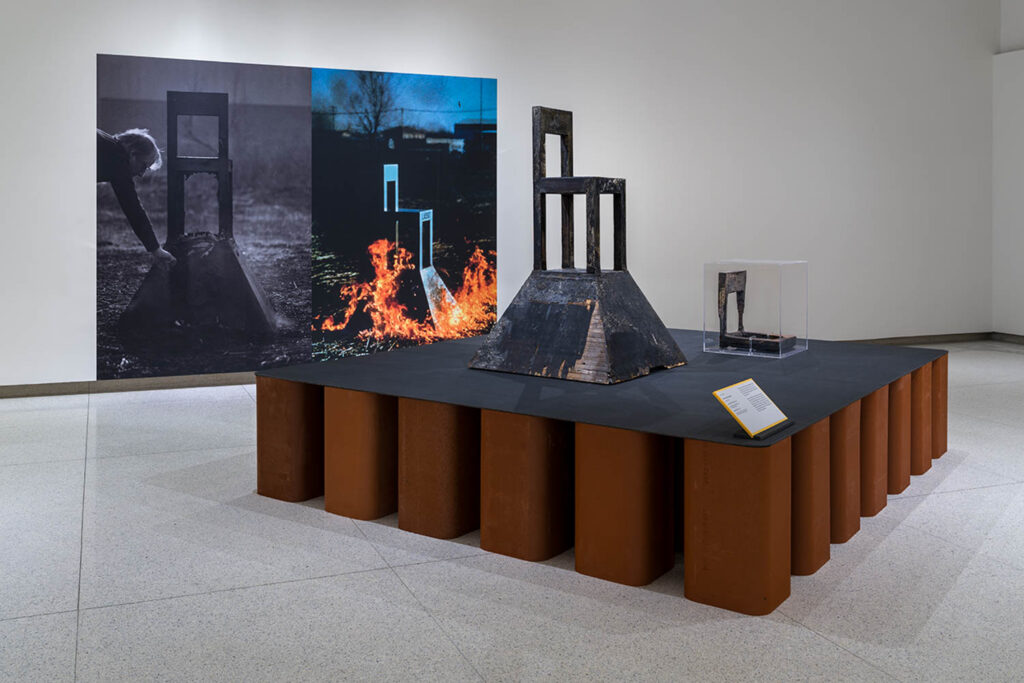
In 1974, Italian radical designer Alessandro Mendini performed Lassù (Up There), setting fire to two identical chairs positioned atop pyramidal pedestals. Photographed by contemporary witness Franco Raggi, this deliberate act of destruction became an enduring icon challenging the ideology of “good design” and mass production. By reducing functional seating to ash and residual artifacts, Mendini leveraged the act to unlock the spiritual, symbolic, and conceptual dimensions of objecthood. The project blurred boundaries between art and utility, demonstrating that design could serve as a vehicle for existential reflection, doubt, and critique rather than merely serving commercial consumer markets.
Casabella cover no. 391 (1974) offset print

Gracing the cover of Casabella magazine in 1974, Franco Raggi’s photograph of Alessandro Mendini’s burning chair signaled an epochal shift in architectural and object discourse. Under the designer’s direction with Raggi on the editorial team, the seminal periodical shifted from a trade journal into a provocative platform for the radical counter-design movement emerging in Italy at the time. This printed artifact captured the era’s ideological crisis, visually dismantling the modernist promise that endless product manufacturing guarantees human happiness. Displayed in the triennial, the cover connects historical avant-garde publishing to today’s emerging designers, proving that media can serve as a catalyst for subverting commercial norms and promoting alternative futures.
Geodesic Dome (1952) / Operating Manual for Spaceship Earth (1969) by R. Buckminster Fuller
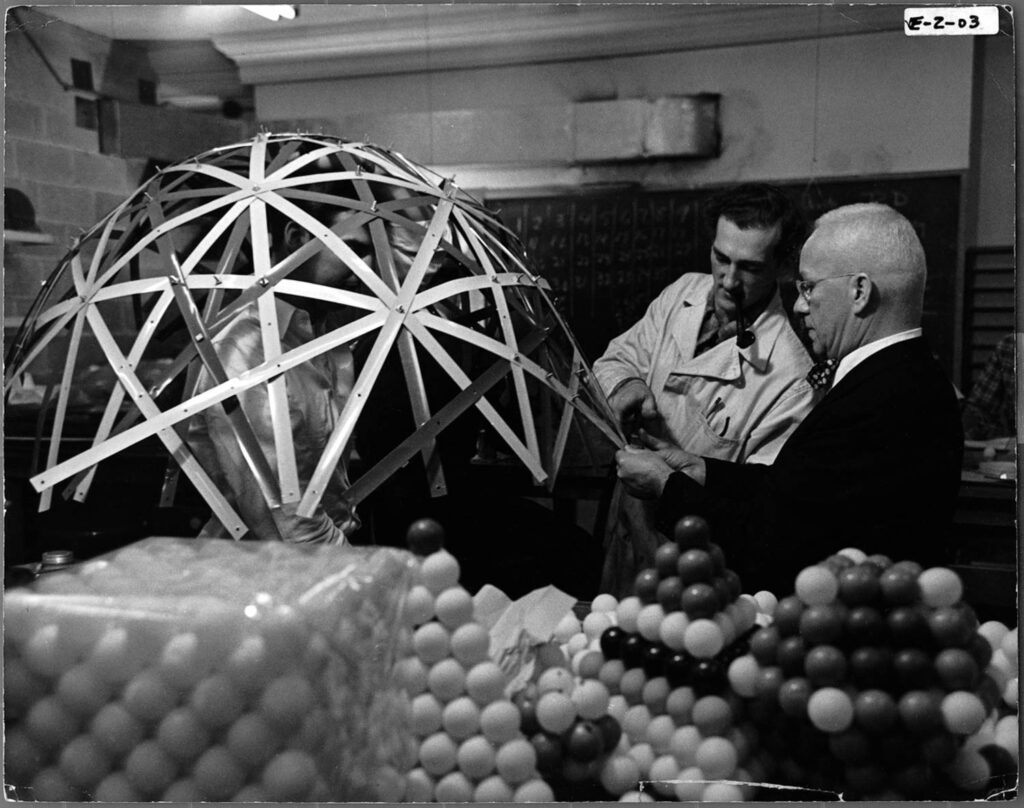
Buckminster Fuller pioneered systemic design, advocating for comprehensive, resource-conscious solutions to global challenges. His geodesic dome structure and seminal 1969 text, Operating Manual for Spaceship Earth, urged humanity to view the planet as a finite, shared vessel requiring stewardship rather than exploitation. Fuller’s radical philosophy serves as a bridge across generations in the exhibition, reinforcing Altay and Grima’s curatorial ethos that speculative thinking must address ecological survival. By harnessing design as a holistic tool for collective problem-solving, Fuller’s historical presence in eye-shoot of the contemporary works on view gives credence to the idea of moving beyond commercial object-making and embracing ethical responsibility for our shared planetary future.
Dioscuri – Castor & Pollux (2026) by Astronauts
Developed for the triennial by Athens-based duo Astronauts, Dioscuri – Castor & Pollux is an interactive seesaw installation that transforms passive viewing into a somatically engaging experience. Grounded in play, balance, and physical reciprocity, the installation requires two participants to coordinate their weight and movements. In doing so, the studio demonstrates how design can activate the body, foster joy, and spark immediate social connection. Rather than remaining a purely intellectual concept, the piece exemplifies the triennial’s emphasis on turning the viewer into a user, facilitating their sense of agency—reminding audiences that nurturing the mind and spirit requires active physical participation.
Migration Column by Germane Barnes (2024)
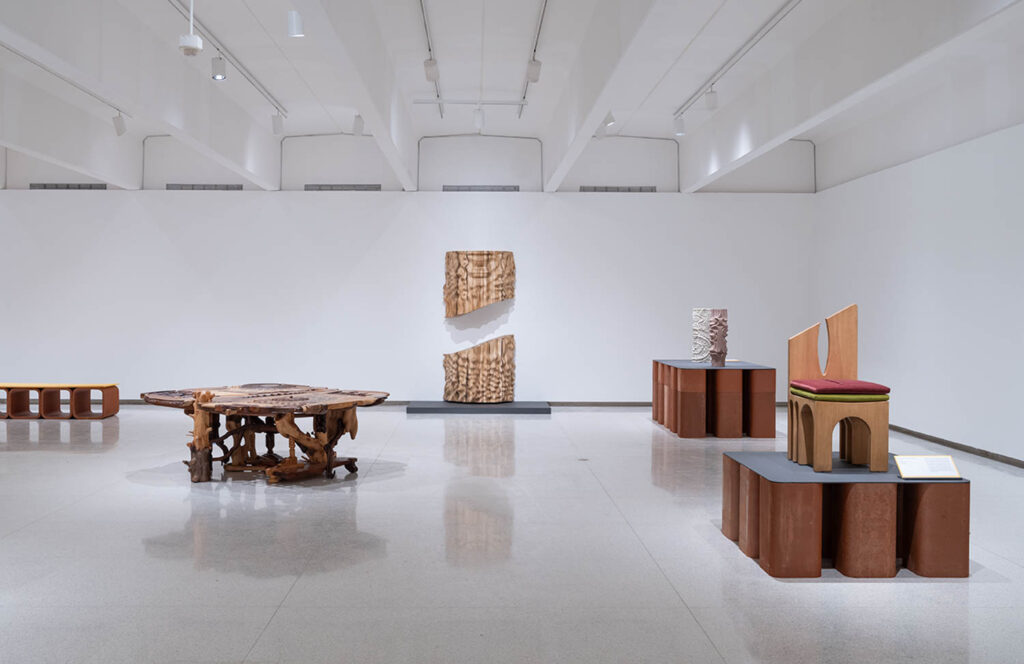
Architect Germane Barnes’s Migration Column explores the profound intersections of material, memory, and the Black experience. The carved wooden column reflects on the tragic transatlantic passage of enslaved Africans, utilizing intricate wave patterns to commemorate lives lost at sea while physical segmentations convey ruptured ancestral lineages. By imbuing raw timber with poignant historical narrative, Barnes transforms structural form into a monument of remembrance and cultural resonance. The work highlights how contemporary designers can move beyond utility, using materiality to confront historical trauma, articulate identity, and embody stories of resilience that speak directly to ongoing struggles for social justice.
Tact 1 (Purple) by Objects of Common Interest (2024)
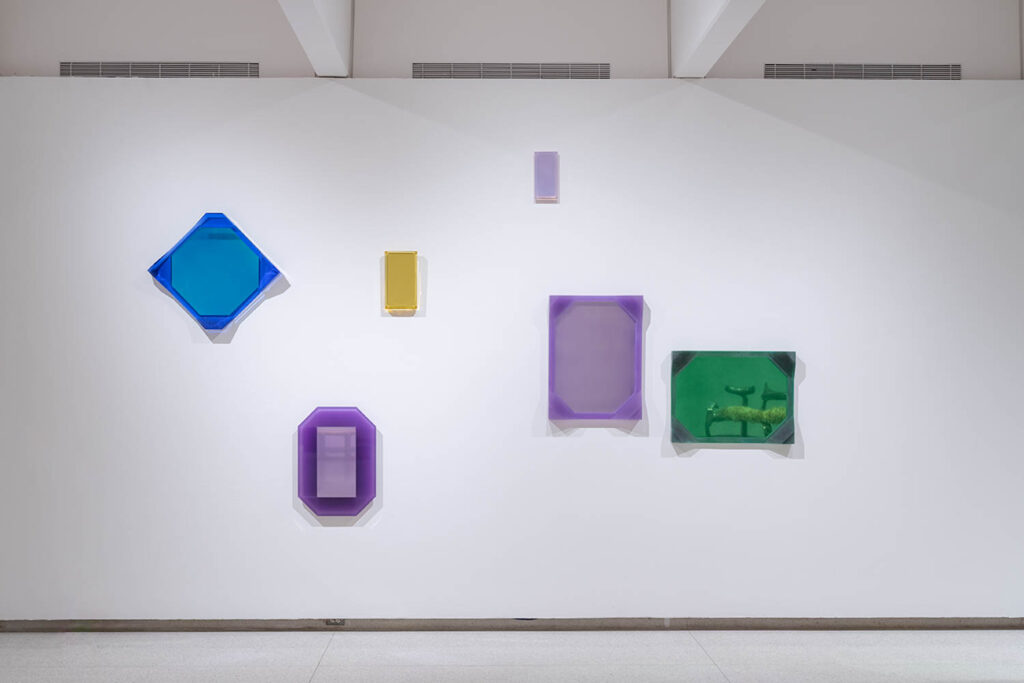
Created by Eleni Petaloti and Leonidas Trampoukis of Objects of Common Interest, the Tact 1 (Purple) draws inspiration from a childhood memory of a grandmother’s 1970s multifaceted glass ashtray. Crafted from cast resin, the faceted reflective surface deliberately distorts images rather than offering clear reproduction. As viewers move around the work, their reflections fragment, disappear, and reemerge. Petaloti describes this playful distortion as a provocation that invites the on-looker to explore emotional perception and fluidity of memory. The mirror demonstrates how contemporary objects can serve as catalysts for literal and metaphysical self-reflection, “interior prosperity,” and intimate spatial dialogue.
Passage to the Lake by Moon Seop Seo (2022)
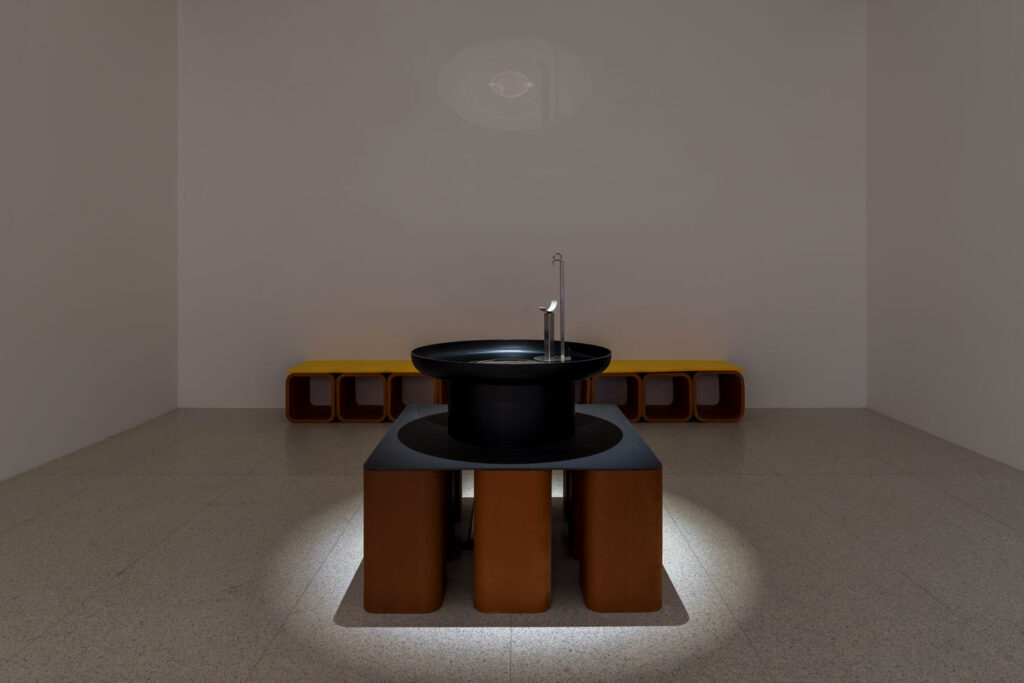
Korean designer Moon Seop Seo’s installation Passage to the Lake explores the soothing, contemplative qualities of natural phenomena amid urban chaos. By harnessing the rhythmic movement and ambient sound of water, the work creates a meditative environment within the gallery. Seo invites visitors to slow down, listen, and restore inner equilibrium. In the context of the triennial, the installation aligns with the curators emphasis on designing for the soul and spirit rather than trend-driven material accumulation. It illustrates how contemporary spatial interventions can provide sanctuary, emotional healing, and quiet moments of transcendence amidst the turbulence of contemporary life.
Harvest Seat by Superflux (2026)
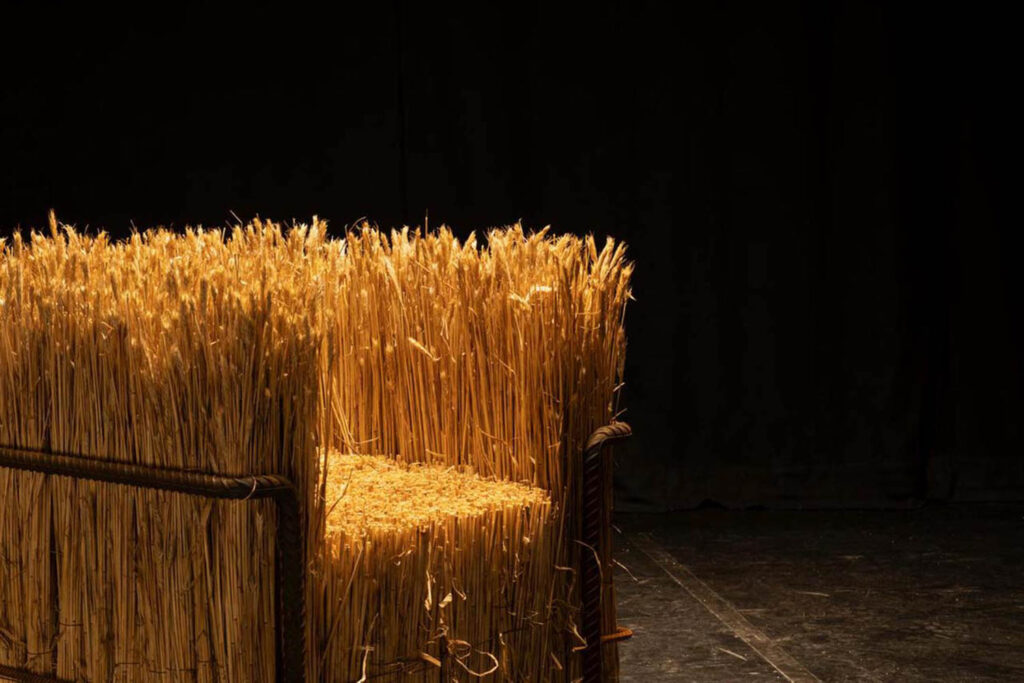
Designed by London-based research-led design studio Superflux, Harvest Seat addresses environmental degradation and climate collapse by reimagining seating through ecological co-existence. Crafted from organic, bio-based, and circular materials, the chair—a formal riff on the LC2 and LC3 armchairs—incorporates agricultural byproducts that highlight natural life cycles and material circularity. Superflux rejects traditional industrial manufacturing in favor of gestures that repair our relationship with the planet. The seat encourages sitters to reflect on this inherent interdependence, offering a quiet space for contemplation. Within Beyond Materialism, the work exemplifies how speculative design can move beyond human-centric utility to foster environmental stewardship and holistic ecological awareness.
ALL EARS by Lucas Muñoz Muñoz (2026)
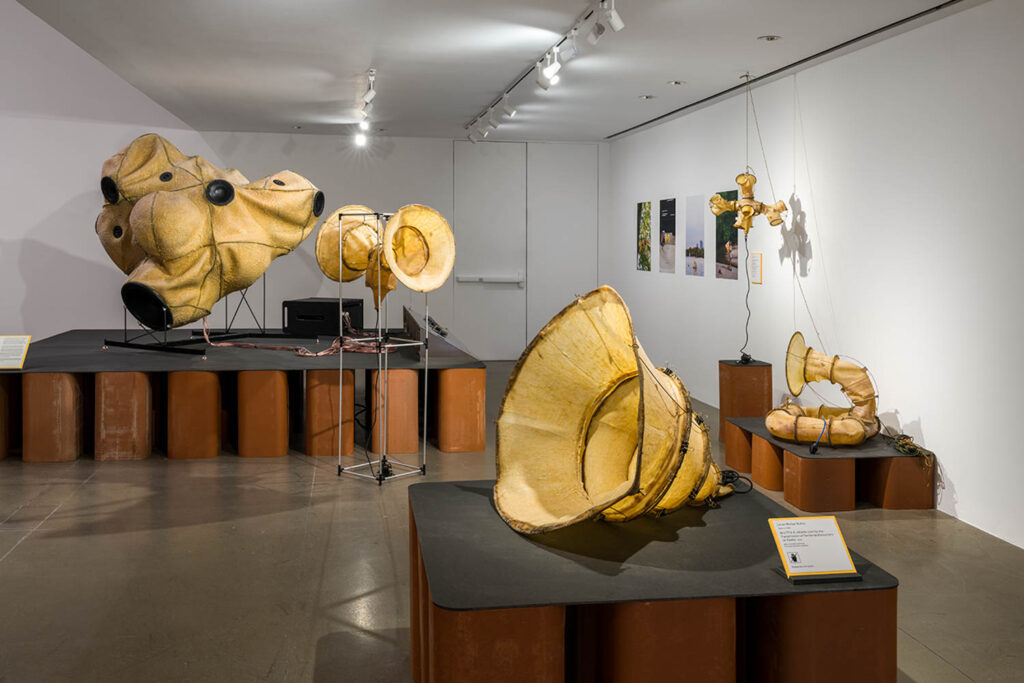
Spanish designer Lucas Muñoz Muñoz spent a year conducting non-intrusive or extractive ethnographic research across Minneapolis; recording natural, mechanical, and human sounds while acknowledging the city’s complex post-COVID economic struggles, federal ICE raids, and political tensions. For his site-specific commission ALL EARS, Muñoz constructed skin-like speakers using reinterpreted taxidermy techniques, realizing organic forms best diffuse acoustic sound waves. Featuring haptic tuning knobs, the installation invites visitors to layer ambient audio, translating what can often be dismissed as lofty conceptual theories into tactile interactions. ALL EARS makes abstract social critique decipherable, positioning sound and design as restorative tools for communal healing achieved through the disarming and leveling act of listening.
read more
DesignWire
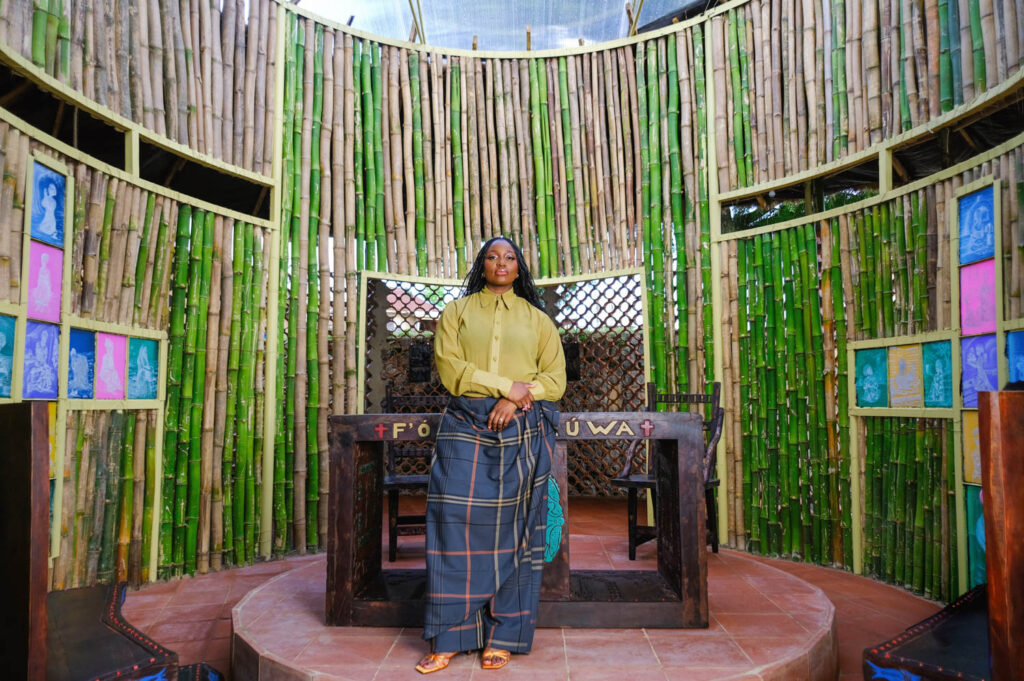
Orry Shenjobi Explores Nigerian Heritage And Craft In New Exhibition
Artist Orry Shenjobi celebrates her cultural roots through an exhibition at New Culture Studios in Ibadan, exploring Yoruba and Benin craftsmanship.
DesignWire
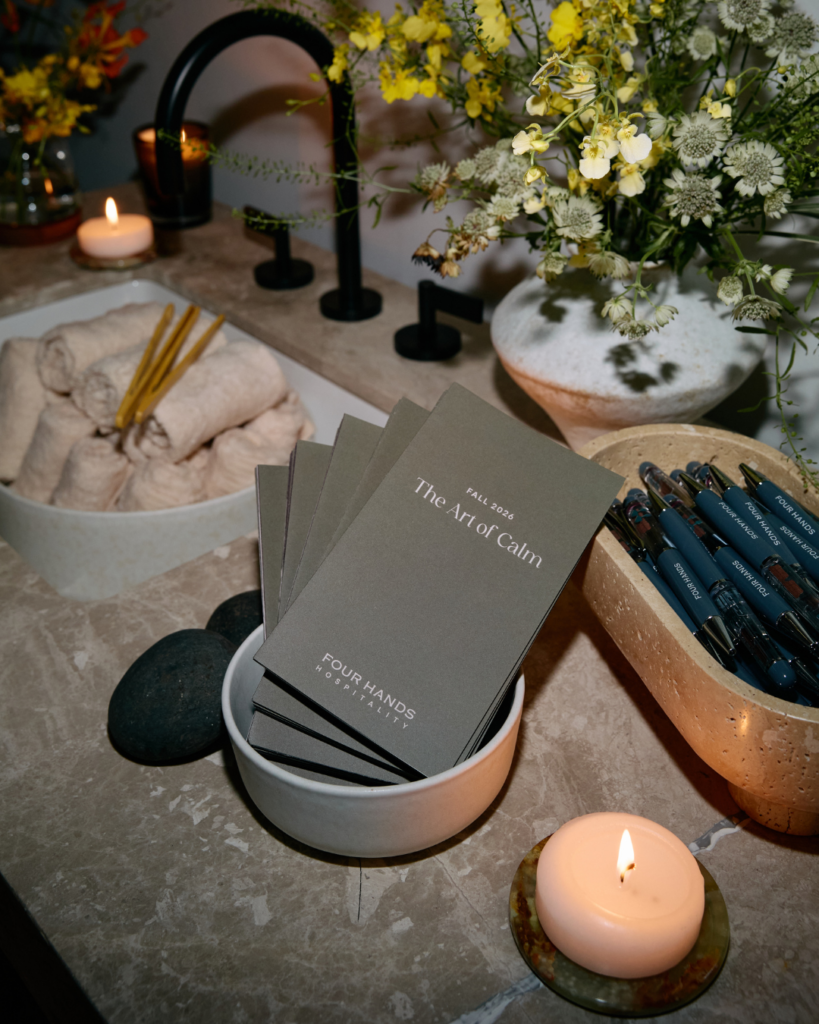
Four Hands Sets The Tone For A Calmer Kind Of Hospitality
Ahead of BDNY, Four Hands and Interior Design brought designers together for an immersive evening of wellness and sensory experiences.