
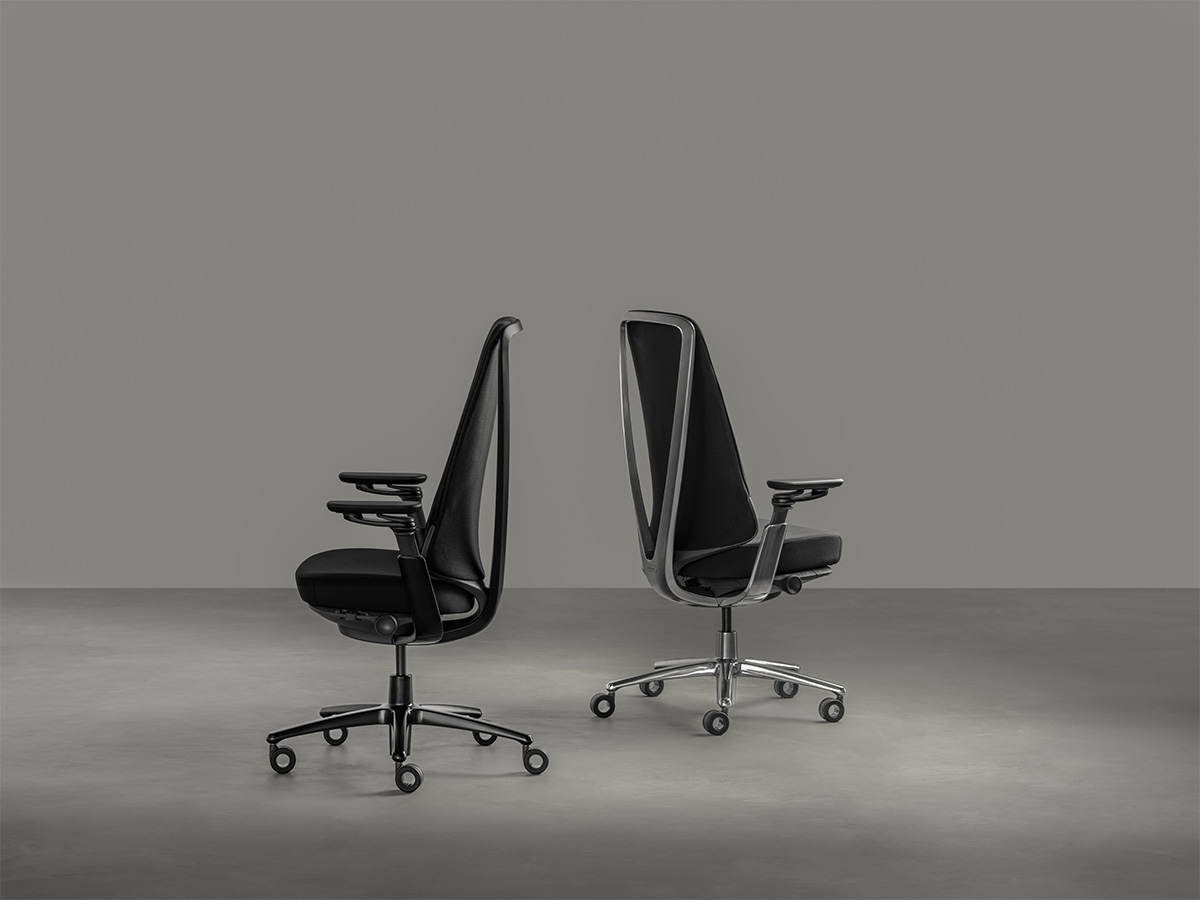
Allsteel and ITO Design Develop Levra for a New Era of Work
Before the first line was put to paper for Levra™, the new performance seating collection from Allsteel and ITO Design, the two companies defined a framework for their collaboration. A Designer Playbook aligned vision, established guardrails, and set clear expectations ahead of any sketching, distilling the ambition into a single directive: “Design a better way to sit at work.”
The mandate rested on a premise about how work has changed. While task seating was long built around a single posture and routine, today's workday is defined by constant movement—leaning, shifting, and changing position throughout the day. Furniture designed for that reality must support a body in motion. Introduced in June during Fulton Market Design Days at the Allsteel Experience Center in Chicago, Levra reflects the intersection of Allsteel's product strategy and ITO's systems mindset. A patent-pending structural knit back and advanced weight-activated mechanism integrate engineering into the chair's form, allowing the experience, and not the technology, to take precedence.
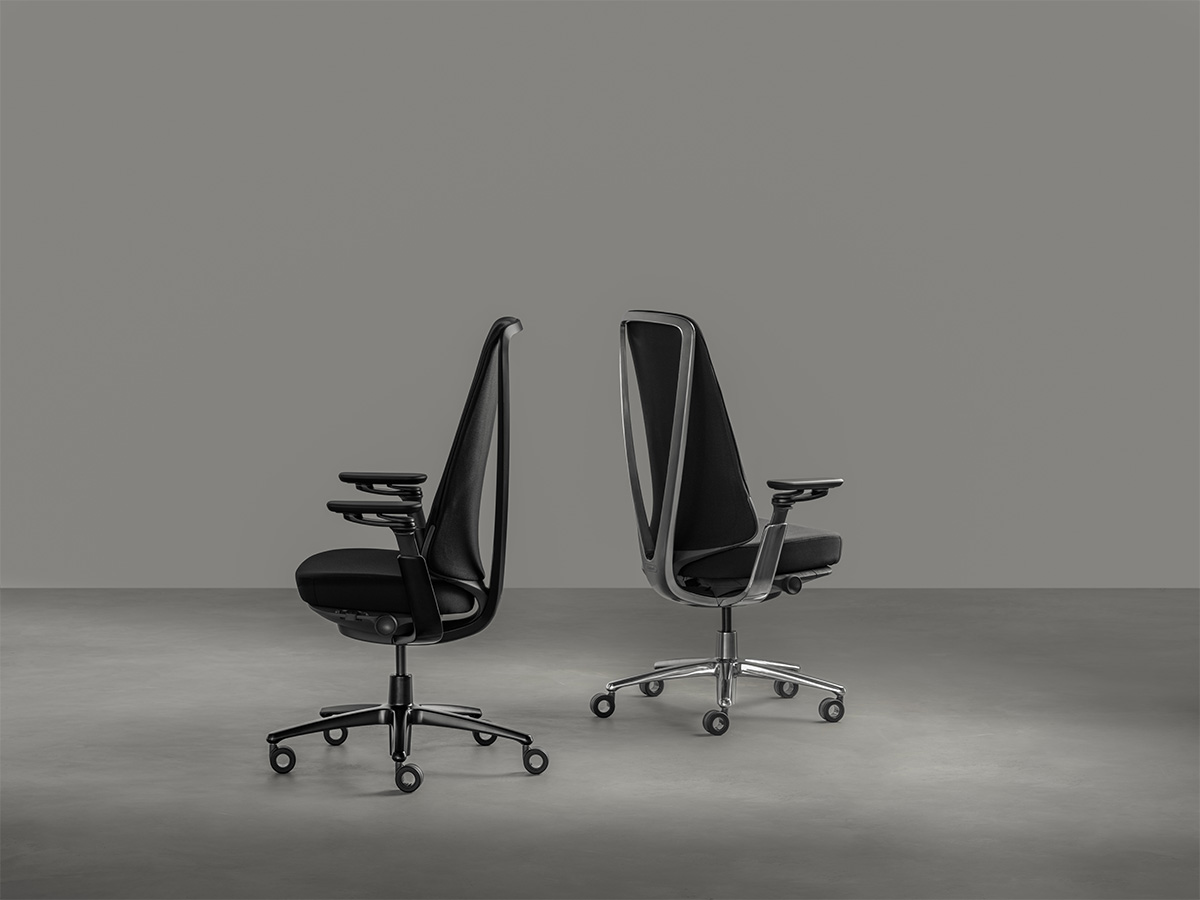
Designing for Movement
The design work turned first to Levra's defining element, the back. One requirement preceded its form: eliminate friction between sitter and surface when the body moves into asymmetrical posture. “We kept coming back to the idea of a hammock, something that supports you by adapting to you,” says Brian Kaule, Director of Product Design at Allsteel. Sustaining the sensation proved exacting. Early prototypes ranged from neoprene substructures to conventional mesh and upholstery, each chasing the same balance of softness and support, and user feedback settled the direction: people consistently gravitated toward experiences that felt “like sitting in the chair, not on it.”

Three-dimensional knitting delivered the answer. The material behaves as structure and textile at once, removing friction between body and surface as posture turns asymmetrical while holding the silhouette expected of a task chair. The construction also gave Allsteel's visual language its truest form, the technology cloaking itself so that something more human comes forward. “The engineering disappears, and what's left is just the experience,” says Kaule.
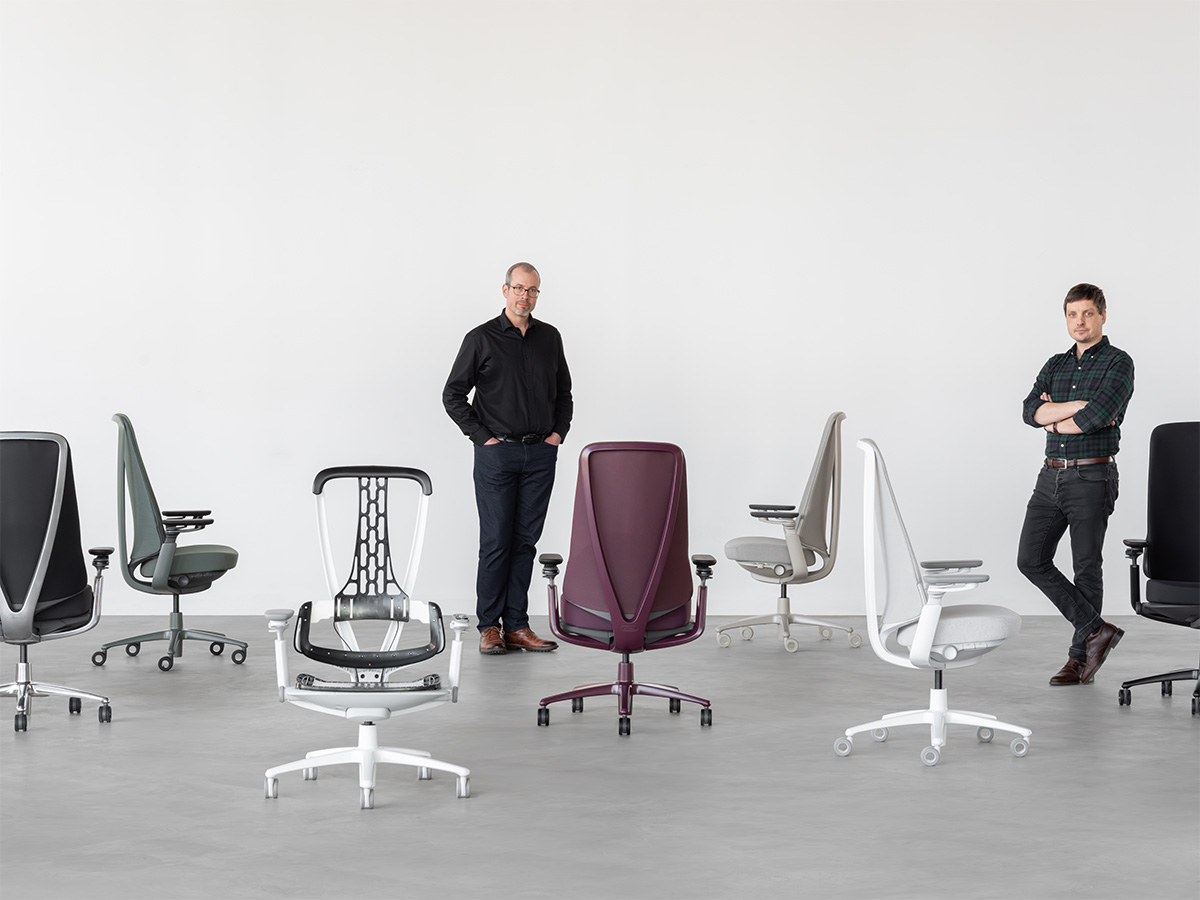
For all its presence, the back belongs to a broader system Allsteel calls LevTech™, in which weight-activated response, integrated lumbar support, and patent-pending 4D⁺ arms with 180-degree rotation were developed in concert. Each element was calibrated around observations of how people lean, shift, and sit through the day, and then refined through live sit-testing, where every increment was put to the same litmus test: “Does this feel natural, or does it feel mechanical?” Controls are positioned to be intuitive and accessible from a seated position, keeping adjustment simple without sacrificing performance. By the team's own measure, “You don't think about adjusting the chair; you just work, and it keeps up.”
Material Expression
The chair's appearance received the same attention as its behavior. Levra's palette follows what Kaule describes as “a more monotone sensibility that feels naturally human,” a deliberate alternative to a sprawling options program. “Working with color experts in our industry, the team built a spectrum that moves from grounded neutrals to expressive accents, what we'd call quiet confidence with moments of personality,” Kaule explains. The finishes are what the team calls “color characters, not colorways or color choices,” language meant to underline that each was selected with purpose.
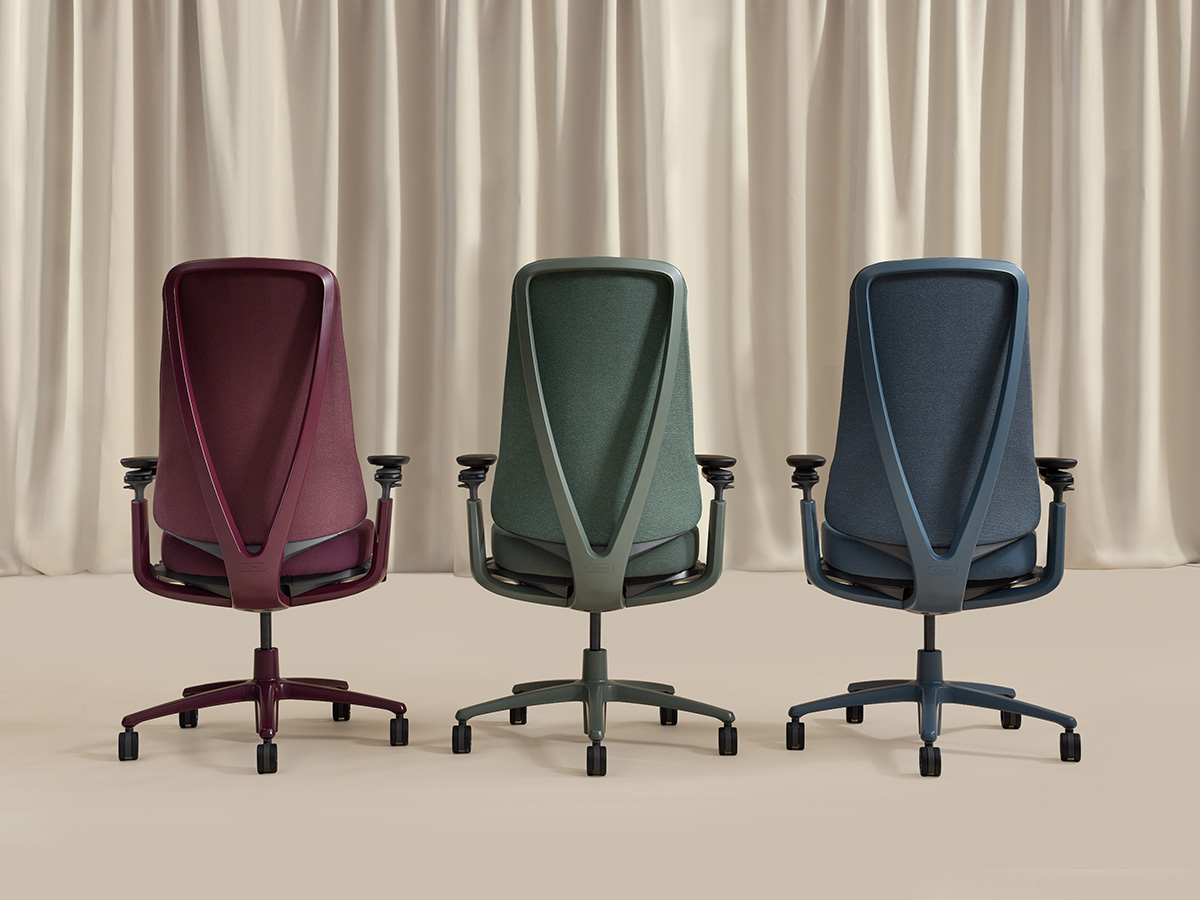
And the same construction that resolves the chair's performance leads its visual expression. “The knit became the hero material, complemented by aluminum and nylon components that are tonally coordinated to feel intentional, not assembled,” Kaule says. Sustainability ran through these decisions as well, with selections weighed for durability, supply chain, and environmental impact alongside performance, and the commitments carry into production: a zero-waste knitting process, carbon transparency with offset-backed neutrality, and a Red List Approved Declare Label.
Each decision on Levra was weighed against the whole, and beneath all of them sat the same mission: “support real human movement, not idealized posture.” The position held from first prototype to launch. “In the end, Levra reflects a clear point of view,” says Kaule. “Performance and beauty aren't trade-offs. They're outcomes of solving the right problem, the right way.”