
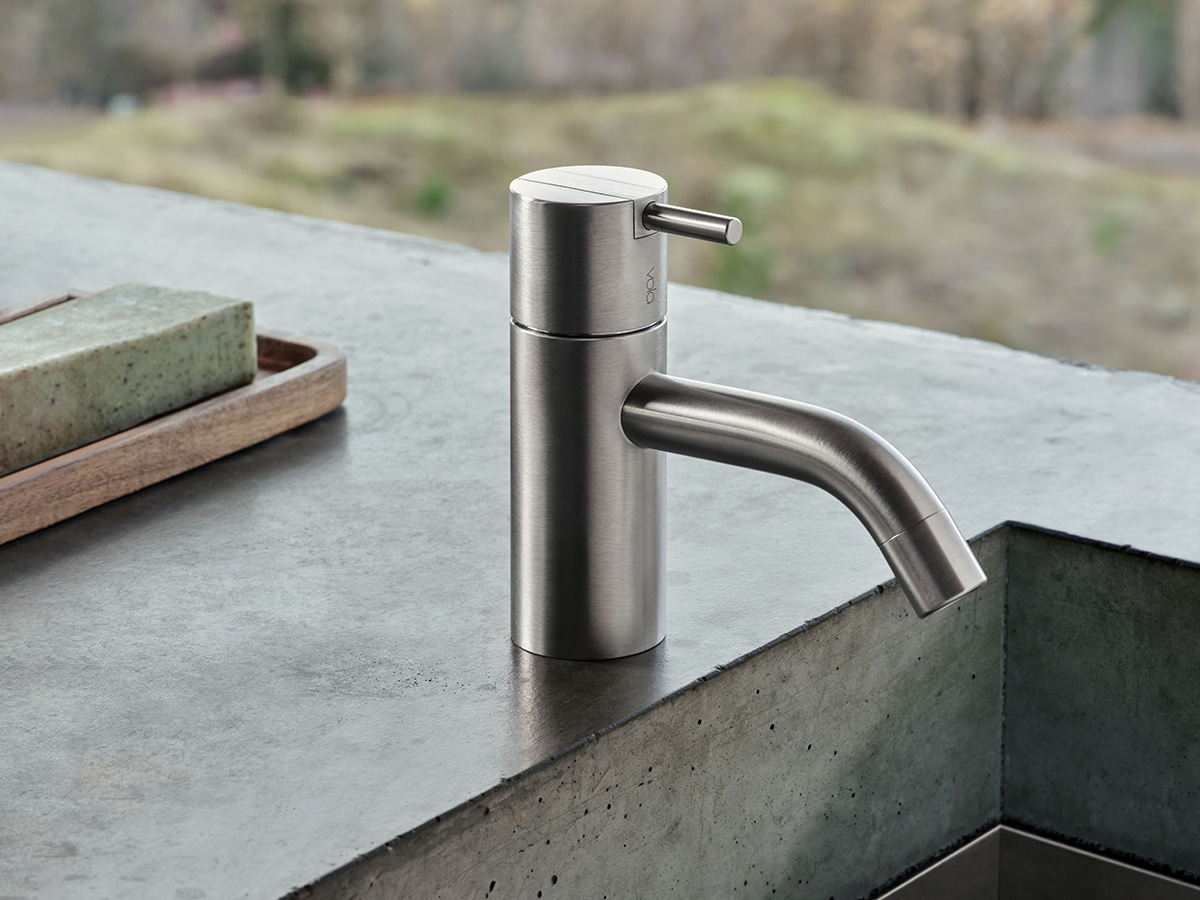
Arne Jacobsen’s Iconic Tap Lives On Through VOLA and Hastings
In the 1960s, fresh from winning the competition to design the National Bank of Denmark, architect Arne Jacobsen was approached with a proposal for a wall-mounted mixer tap that would conceal all its working parts, with only a spout and lever left visible. The idea came from Verner Overgaard, founder of Danish design brand VOLA. Jacobsen, whose approach to architecture extended well beyond the building itself, saw in it an expression of his own thinking about form.
The resulting tap was introduced to the world in 1968 and made its commercial debut at the completed bank in 1970, its pared-back form a gesture of restraint so resolved it has only rarely been revised since. VOLA still manufactures replacement parts for every fixture it has ever produced, and Hastings Bath Collection, the brand's exclusive North American representative since 2000, has spent more than two decades representing that continuity to the market.
Built for Life
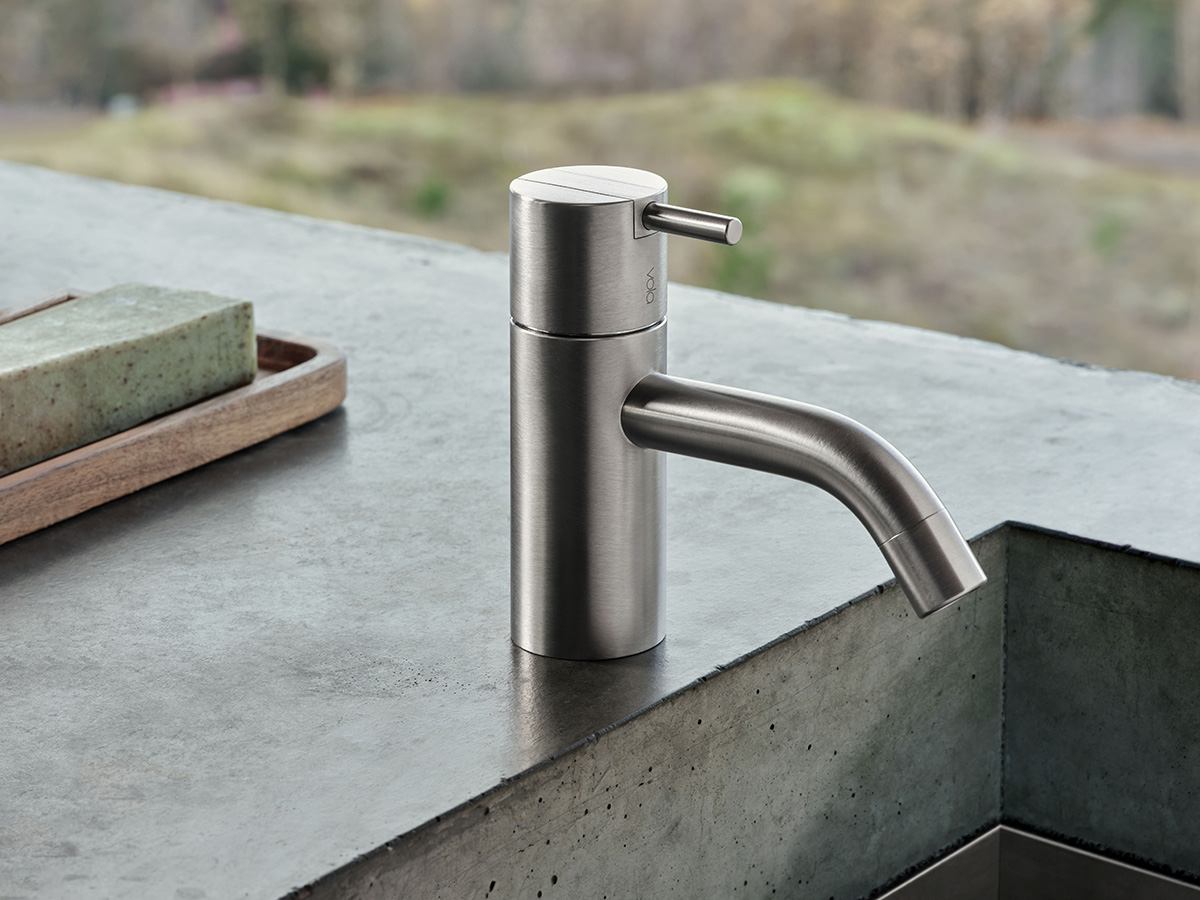
VOLA's approach to longevity begins in the factory. At its facility in Horsens, Denmark, all brass and steel shavings from fabrication are recovered and recycled back into new bars for new products, and the oils and water used in manufacturing are reconditioned and reused on site. Replacement parts remain available for every fixture the company has produced, meaning a tap installed in 1968 can still be serviced today. "Nobody wants to specify something beautiful today that's going to look tired or need replacing in ten years," says Bob Gifford, Director of Business Development at Hastings Bath Collection. "With VOLA, you're making a decision once."

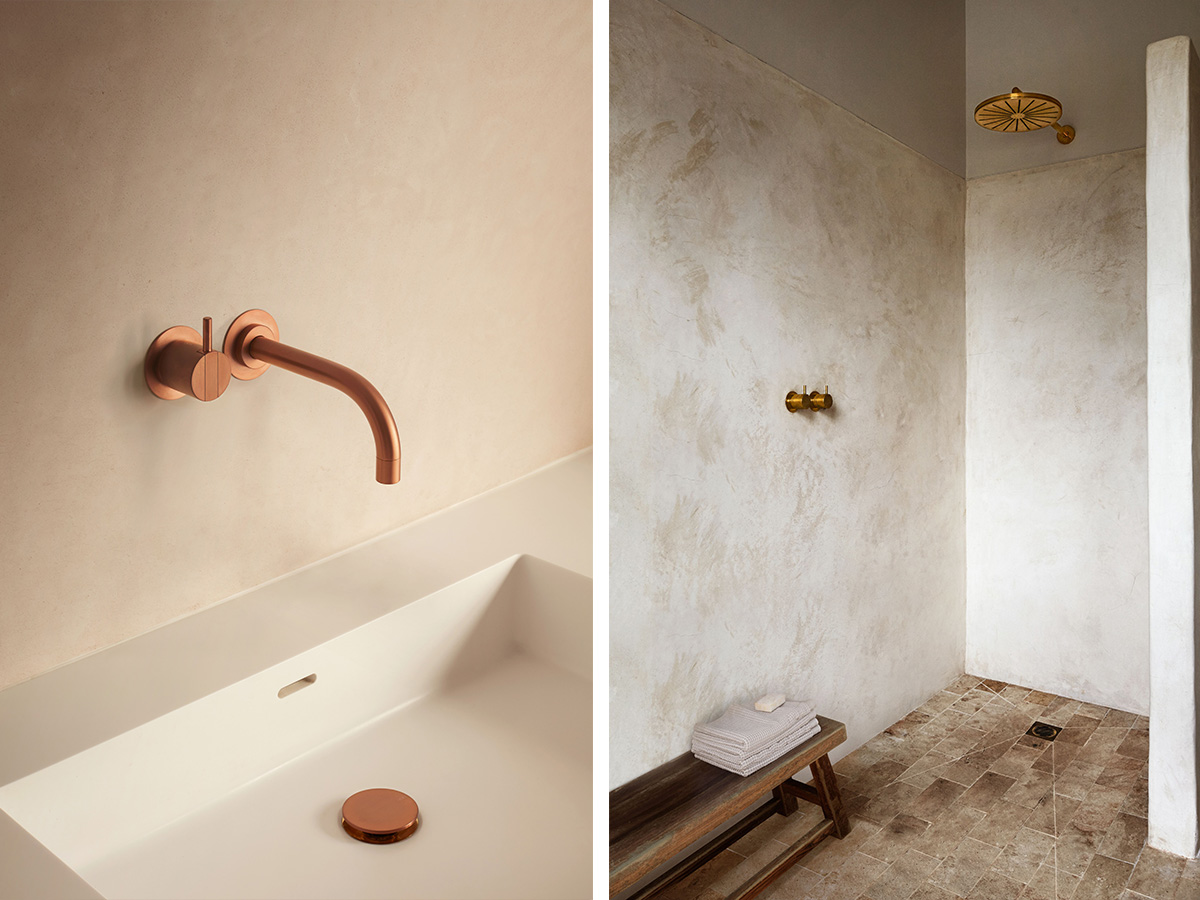
Central to that philosophy is the modular system, in place since 1968 and built on Jacobsen's original proportions. Each component—levers, handles, spouts, backplates—is interchangeable across the full line, allowing a fixture to be updated, reconfigured, or repaired without replacing the whole. A tap from 1968 accepts current components, and current fixtures can be outfitted with finishes from across the full palette of twenty-seven options, from the six colors Jacobsen introduced in the 1970s to contemporary additions.
Stewards of the Line
Hastings has anchored VOLA stateside for more than two decades, handling service, warehousing, and specification support, and the relationship runs deeper than distribution. "Twenty-five-plus years with a line like this changes how you think about what you're actually selling," says Gifford. Knowing the line inside and out shapes every conversation—with architects, designers, anyone specifying it. "That kind of confidence only comes with time," he says.
In Practice
More than fifty years after making its first public appearance in Copenhagen, the design Jacobsen created for VOLA has only deepened in relevance. The modern tap was acquired for MoMA's permanent collection in 1974 and has since been specified in some of the most significant buildings of the last half century, including the German Reichstag, the Scottish Parliament, and the Concertgebouw in Amsterdam.
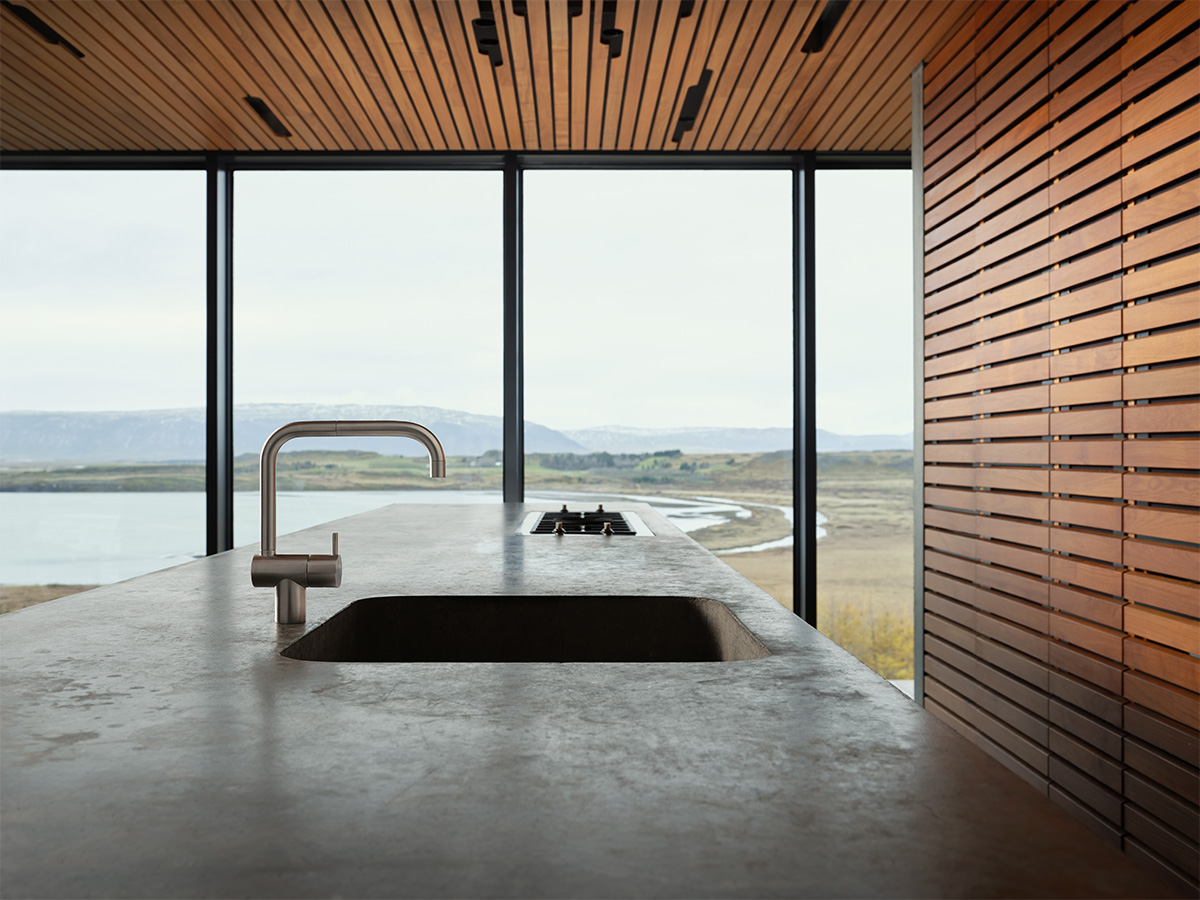
Contemporary projects continue to bear that out. At the Yates Street Penthouse in Victoria, British Columbia, designer Pamela Billinghurst specified VOLA throughout a full renovation conceived around a pared-down material palette and an emphasis on purpose and function, with matte black VOLA tapware anchoring the kitchen and bathrooms. When Kengo Kuma & Associates transformed H.C. Andersen's House in Odense, Denmark into a sequence of pavilions, sunken courtyards, and maze-like gardens, VOLA was incorporated throughout for its formal clarity. In Iceland, Palmar Kristmundsson of PK Arkitektar designed Árborg House as an extension of its landscape, using local stone, moss, and rock from the surrounding area, with VOLA stainless steel tapware specified to complement the firm's ethos of crafting spaces of harmony and cohesion.
What Jacobsen set in motion in the 1960s—a design distilled to its essentials, built to last, made to be repaired rather than replaced—still holds. It remains the foundation of VOLA's approach, and the principle behind how Hastings has represented the line for more than two decades.