
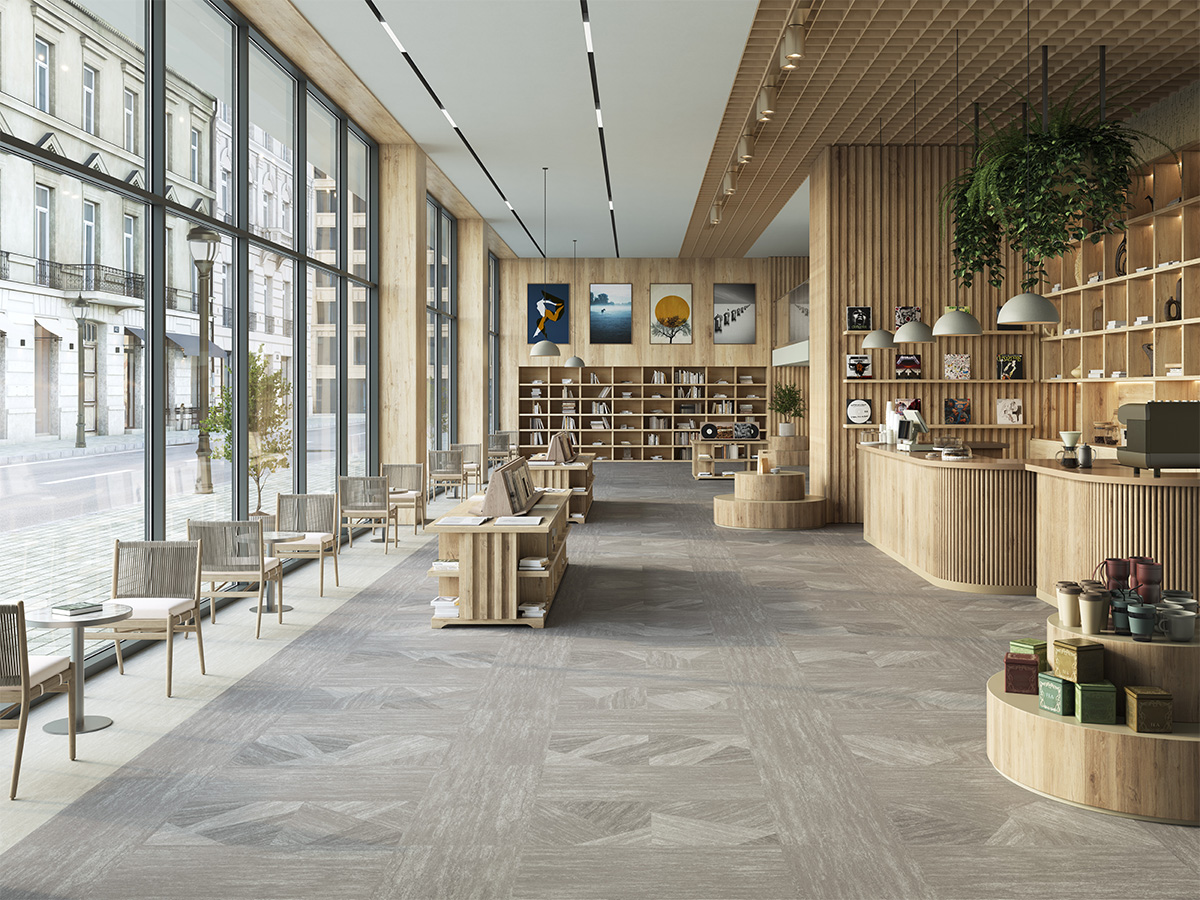
Assembled Collections by Mohawk Group Draw From the Art of Making
Hand-cut wood flitches and chiseled travertine, fitted at angles into faceted parquet, set the visual language of Mohawk Group's Assembled Collections, and tufted yarn carries the same geometry into soft surface. Three coordinating lines run the concept across the floor: Assembled Woods and Assembled Travertine in luxury vinyl tile, and Assembled Threads in carpet tile and plank. A shared palette and a common five-millimeter thickness let hard and soft surfaces meet without a transition strip.
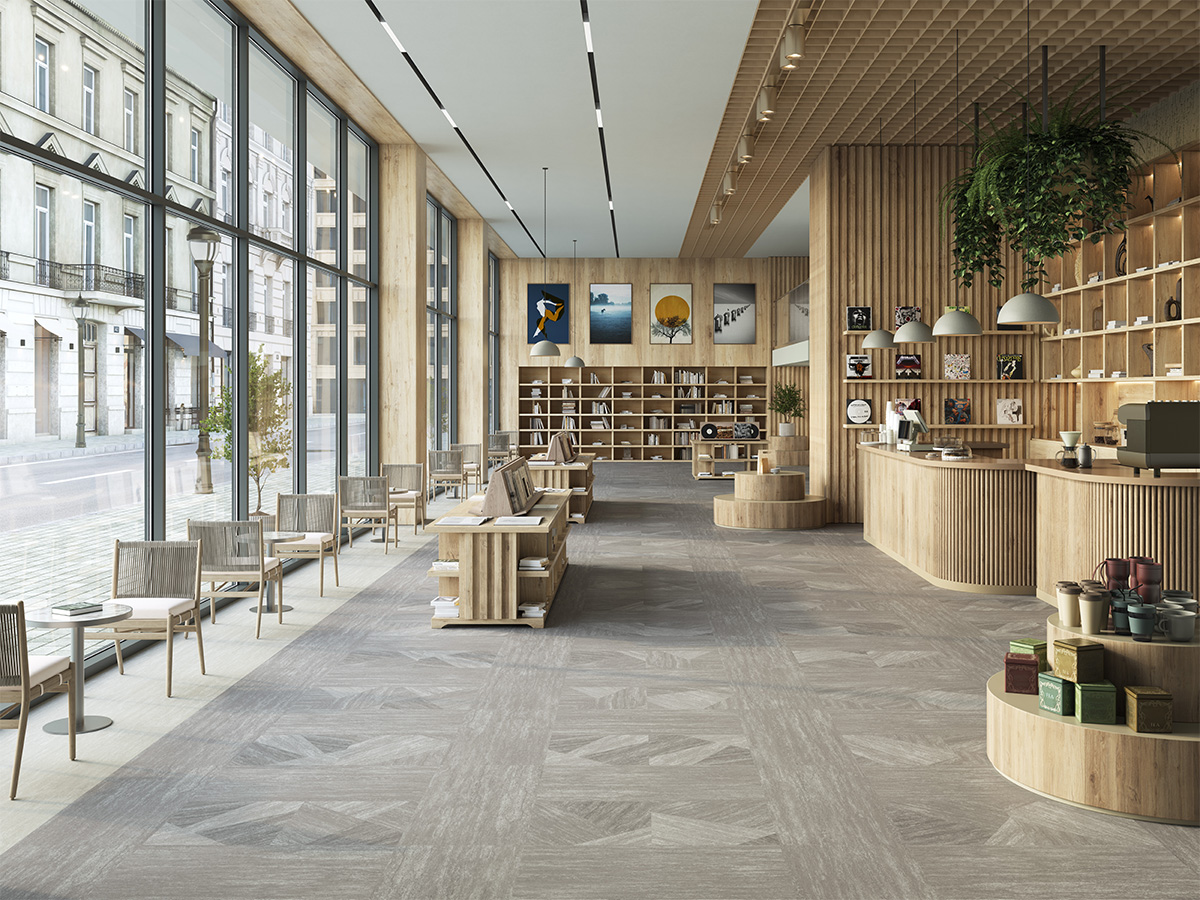
At the heart of all three is composition, the way individual elements join to form something greater. Wood joinery lends its tactile precision and hand-set stone its natural variation, and each collection makes the beauty of making visible underfoot. Mohawk Group developed them under Craft Core, a strand of TECHNE, its 2026 Color + Design Vision, which explores co-creation between humans and machines. Custom floors cut by a woodworker can be difficult to coordinate with the rest of a room, yet the Assembled lines carry the look of bespoke work while belonging to a single system. Royce Epstein, Mohawk Group’s Senior Director, Design Insights, calls the trio “a choreography of materials.”
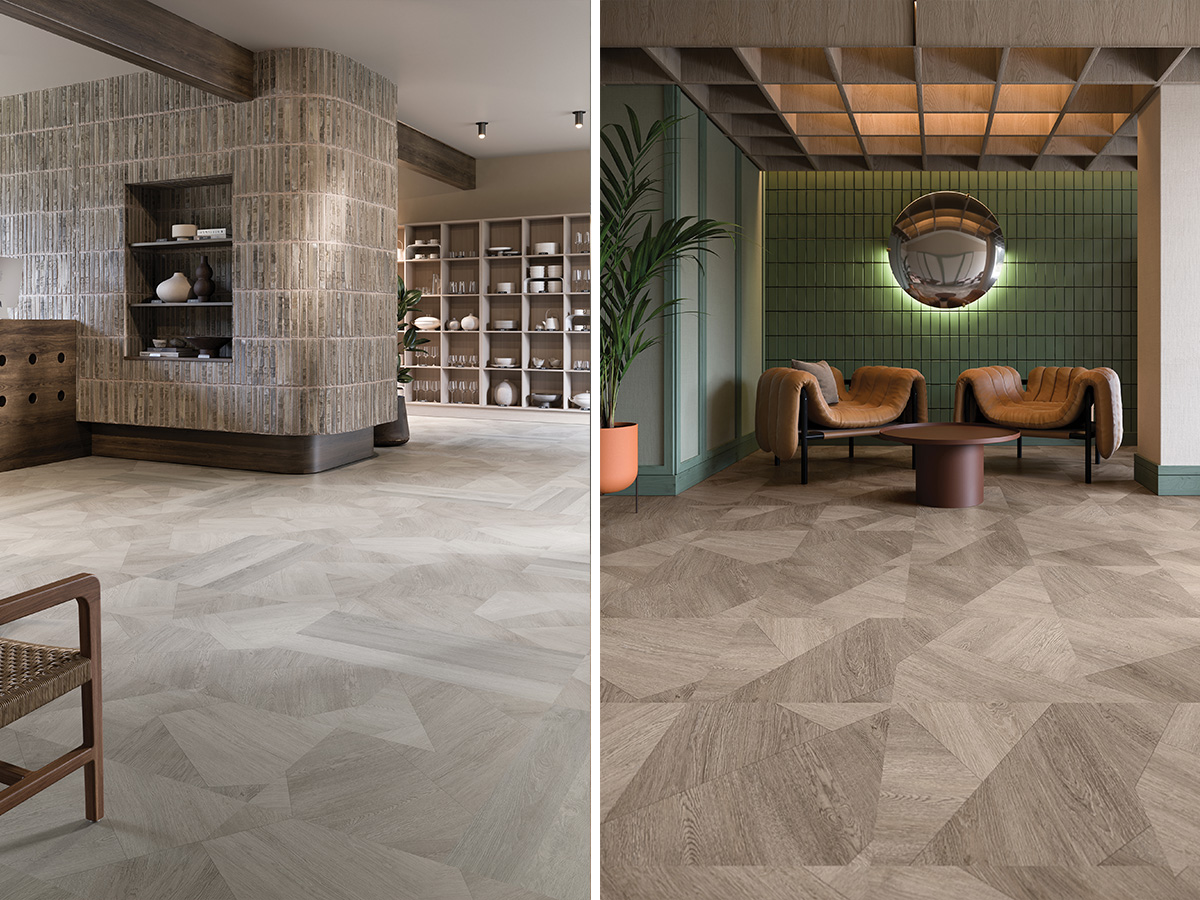
Classic parquet provides the starting point for Assembled Woods, which recasts hardwood in dynamic geometric form. Where traditional versions hold straight inset pieces, Angular Grain, an 18-by-18-inch style, breaks the rectilinear surface with abstract inlays whose angled cuts converge at distinct points. Planked, a six-by-36-inch oak visual with subtle grain movement, pairs each Angular Grain colorway with two matching wood tones, allowing complete flexibility in pattern and arrangement. Squares can run at random and planks in herringbone, or the two can mix to activate some zones and keep corridors linear. Installed, the low-sheen floor looks as though a craftsman had fitted every facet on site.
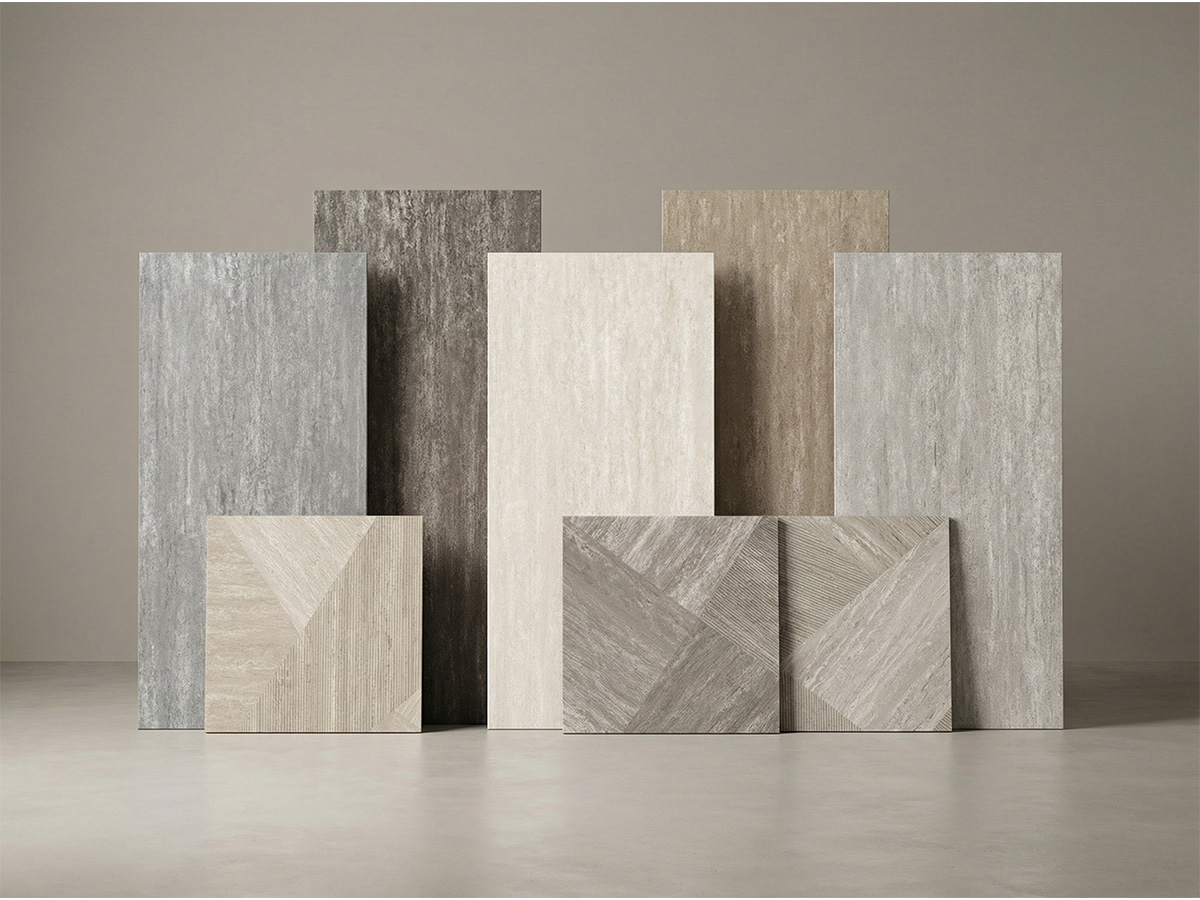
A similar reinterpretation guides Assembled Travertine, which regards the material as shaped by time and as an expression of the artisan’s hand. Formed over millions of years as water moved through it, travertine carries a pitted texture seen in classical buildings and midcentury modern architecture. Angular Layer arranges abstracted cuts into a rhythmic 18-by-18-inch format, blending two colorways within each tile and adding parallel striations that suggest carving. Slabbed embraces scale and simplicity at 18 by 36 inches, its subtle veining and tonal variation evoking the grandeur of a quarried block. Both styles come in five colorways faithful to the natural material, each with a 20-mil wear layer and a square edge profile.
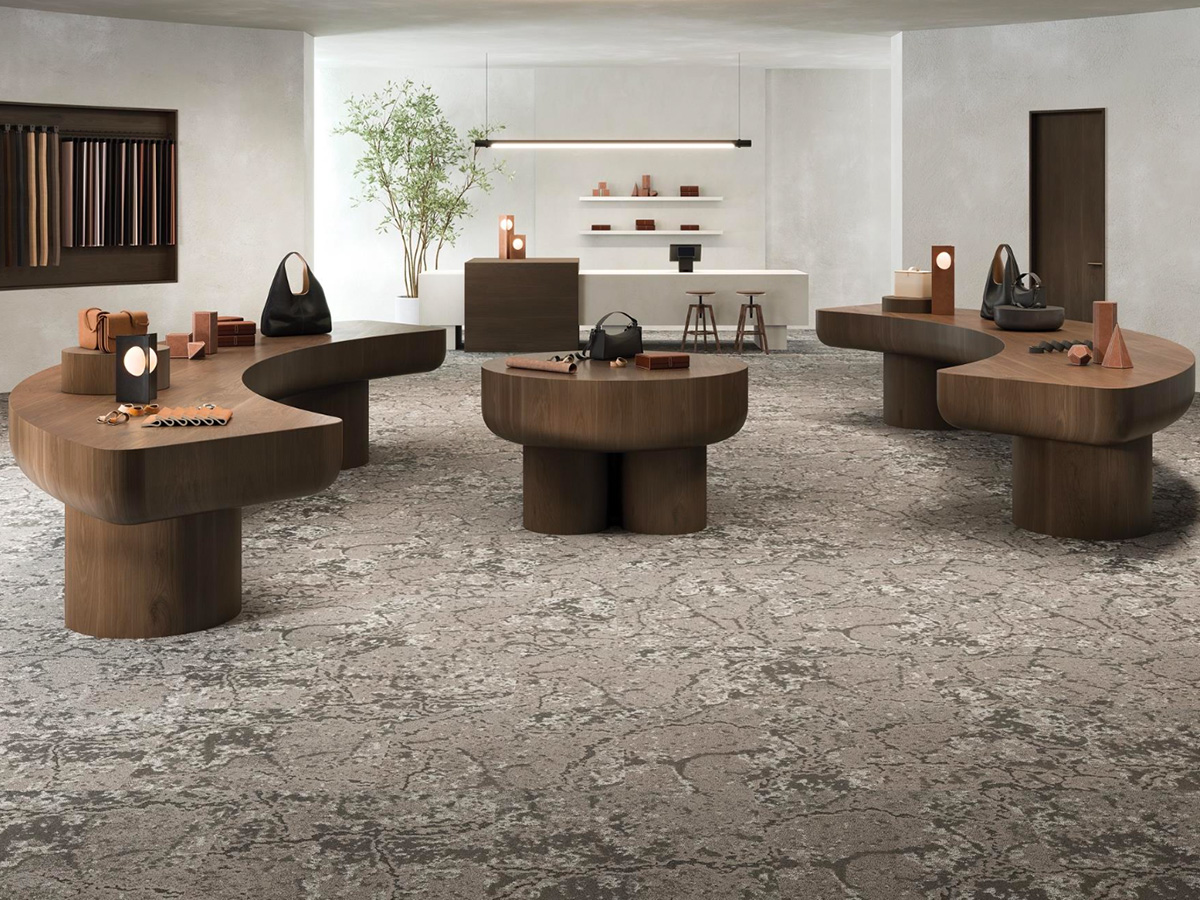
Where the vinyl collections interpret wood and travertine individually, Assembled Threads gathers both into a single textile, capturing the rhythm of construction and reconstruction through layered pile and tonal nuance. Its patterns take cues from how each raw material is worked, with wood sawn on an angle to expose its grain and stone quarried and cut to reveal its veining. Threadline abstracts those markings into soft, varied lines joined at freeform angles, while Contour Drift interprets timeworn surfaces in an organic, open motif; the two share a 24-by-24-inch format and a palette of eight neutrals.
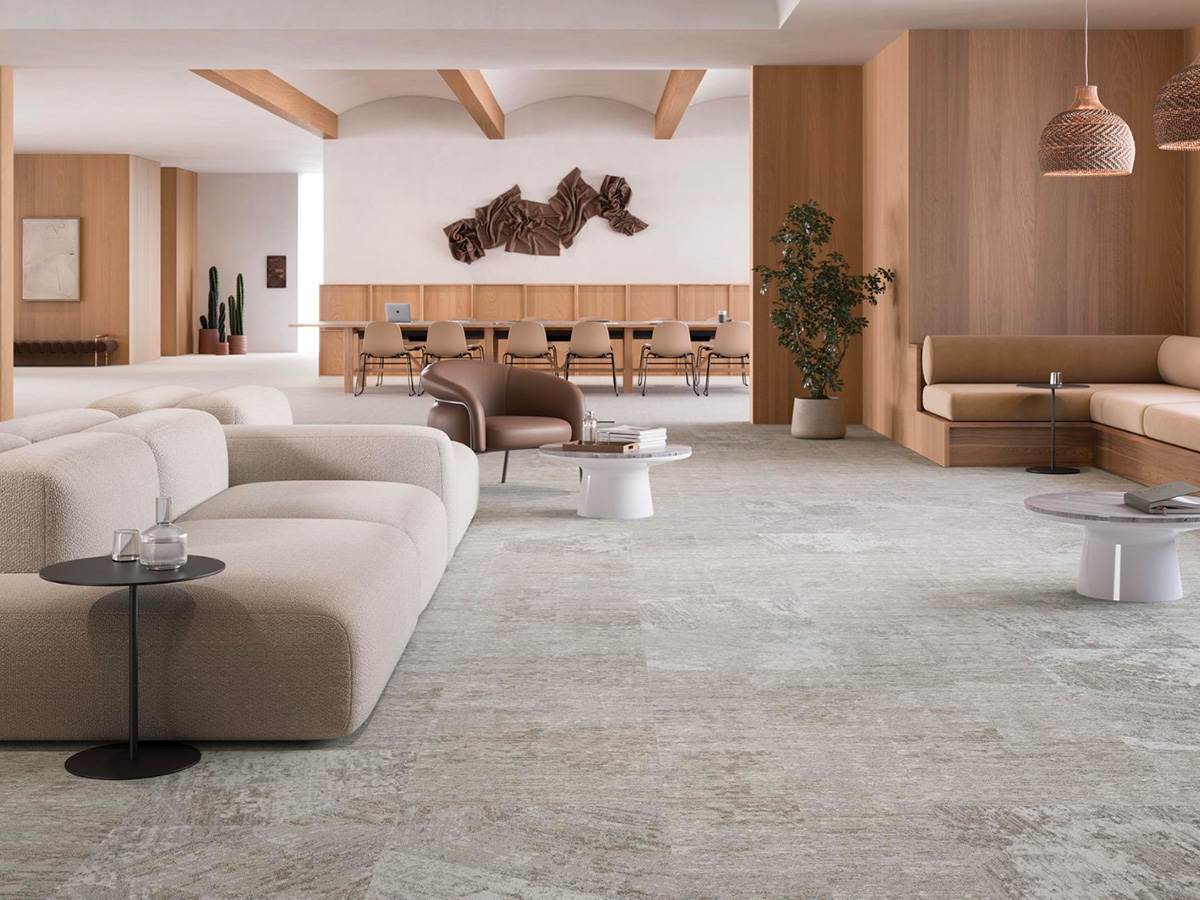
Composite Ground, a 12-by-36-inch plank, bridges them with 16 colorways, pairing a lighter and a darker shade with each tile. Pattern Perfect construction lends the surface sculpted depth. “A touch of tip shear gives it a velvety quality alongside the high-luster loops,” Epstein says. “It’s very visceral and textural, and that’s why it’s so beautiful.” Duracolor Tricor, Mohawk Group’s most premium fiber, resists stains well enough to make pale cream yarns practical, and EcoFlex ONE backing adds a cushioned base.
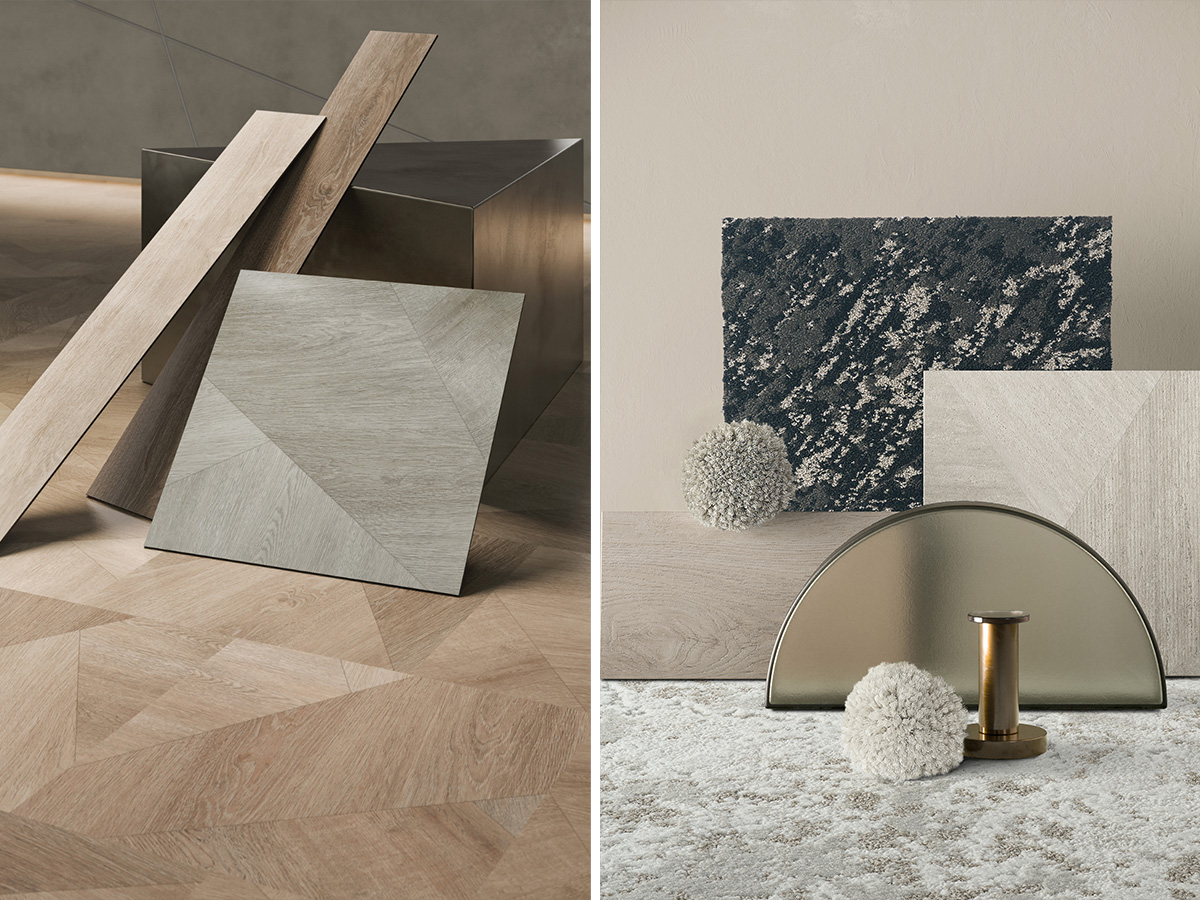
Squares and planks in both vinyl and carpet, drawn from one coordinated palette, can be combined across a space or specified individually, in layouts that range from restrained to intricate. “The colors all work together, and it’s like a giant kit of parts,” Epstein notes. The idea holds from the smallest facet to the finished room: every vinyl tile reads as a mosaic of fragments, and designers carry that approach outward, piecing the three collections into a floor entirely their own.