
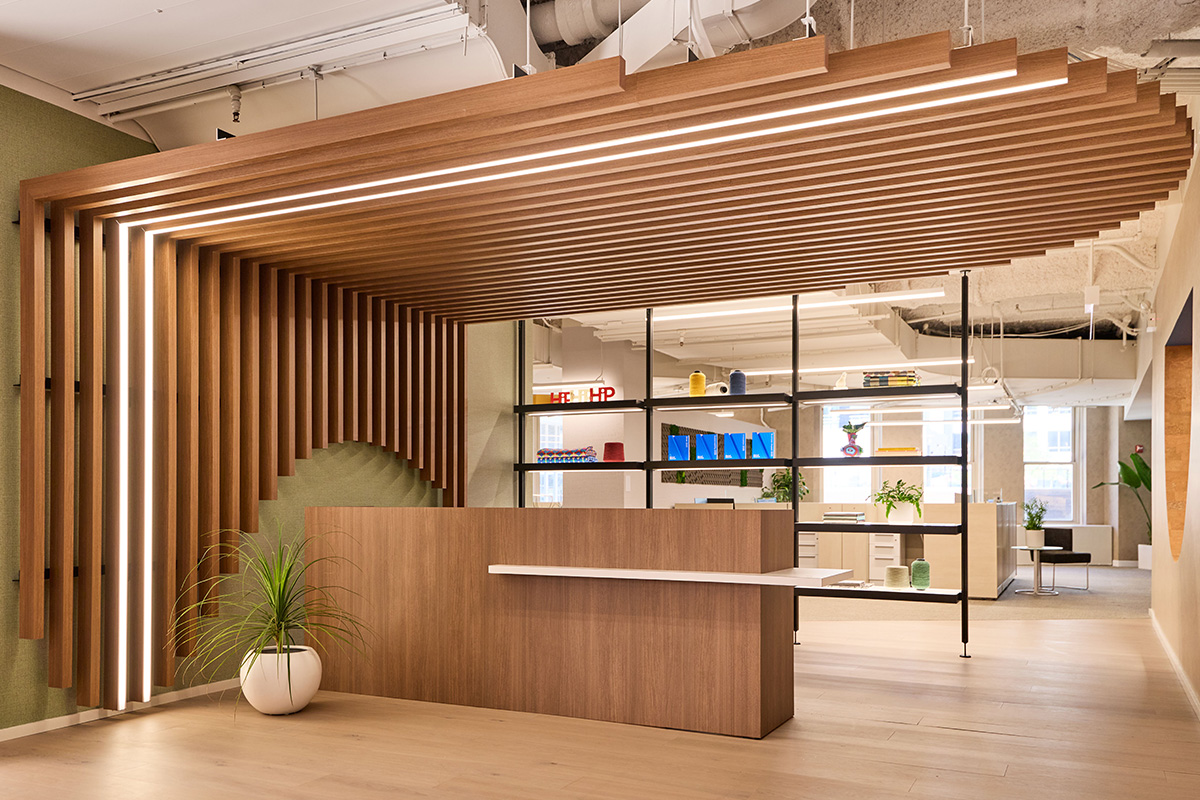
B+N’s Fortina Configurator Turns Specs Into Real-Time Design
Specifying a space has grown into close, exacting work. The decisions that once unspooled over weeks now land in a rush at the outset, pressed by leaner budgets, foreshortened timelines, and a widening circle of voices to reconcile before the plans are locked. All of it has quickened the tempo of design and sharpened the search for tools that can keep up.
B+N Industries designed the Fortina Configurator with that pressure in mind. It is an online environment for composing a design in the company’s batten system, where someone builds inside a three-dimensional space governed by the actual rules of what it can and cannot do. Design Director Kevin Shultis sees it as a way for smaller teams, shouldering more with every project, to hold their footing. Buildable solutions surface as choices are made, letting clients “move at a speed of their own choosing,” Shultis says.
Learning by Building
For more than eight years, B+N has developed tools like this one, long enough to see what happens when a client takes the controls. Freed from second-guessing feasibility, they learn how the batten system behaves just by working through a layout. The online configurators are built around what Shultis calls "the real-world rules of what can and can't be done," which lifts uncertainty out of the early creative design process.
Fortina put that thinking to the hardest test, its parts coming together differently on every project. “More than any other of our systems, the Fortina sales process frequently started with ‘can I do this?’” Shultis says. The rule-based configurator was built so the answer could always land on yes, lifting hesitation out of the earliest decisions and freeing a client to commit to an idea before every technical particular is settled.
One Wall at a Time
Clients often build on more than one surface at a time, and with Fortina these planes meet in ways particular to each project. Distilling that into clear, sequential steps was the first task in developing the tool. B+N’s answer was a set of tabs for global and individual surfaces, letting someone isolate a face and settle it on its own. A person can resolve the question of “what do I want on this wall” without holding the entire three-dimensional space in mind.
Beneath the steps runs a long list of logical rules, written with the company’s programming team, that the software follows as a build comes together. A customer chooses batten size, direction, spacing, and wall type, and the configurator works out the attachment points, anchors, connection splines, and crossbars. “We don’t expect our clients to be system experts,” Shultis says. The tool is there to steer them clear of missteps before they happen.
Seeing It Take Shape
The plain experience of watching a design appear as you make it sits at the heart of how the Configurator works. “The ability to see what you are building as you build it is the fundamental concept of the tool,” Shultis says. Because every move threads through the software’s logic gates, construction constraints recede into the background and attention stays on the creative work, each solution arriving on screen already sound.

What a client builds on screen travels well beyond it, in two- and three-dimensional visuals, texture-rich models they can download into a larger environment, and an augmented reality feature for seeing what they’ve built in the actual space it will occupy. Together these open “very real conversations about how we are addressing their specific project needs,” Shultis says, reaching sales teams, installers, and end users alike.
Time spent inside the configurators leaves customers with a fuller grasp of what Fortina can do, and B+N treats that understanding as the foundation of “a much stronger and more meaningful connection to our clients and what they need to be successful.”