

CSI Creative Builds Lighting Into Acoustic Greenery With the MAGIC™ Collection
Developed to unite three scopes usually handled by separate manufacturers, the Modular Acoustic Greenery + Illumination Collection, or MAGIC™, from CSI Creative integrates acoustics, biophilic elements, and lighting at the manufacturing stage. The system pairs Soundcore® PET felt, made with 60% recycled content and reaching NRC ratings of up to 0.95, with 90+ CRI LEDs and inherently fire-retardant ThermaLeaf® replica greenery. Here, Ruben Perez, the company's Director of Studio Design, discusses how the collection comes together.

Interior Design: Acoustics, biophilia, and lighting typically arrive on a project as separate line items. How does MAGIC™ bring them together into one system, and what does that consolidation change for coordination between Division 9 and the lighting trades?
Ruben Perez: MAGIC™ integrates acoustics, biophilia, and lighting into a single turnkey architectural system, eliminating the fragmentation of traditionally separate construction scopes.
As a turnkey provider, CSI Creative coordinates multiple construction divisions through unified specifications, technical documentation, shop drawings, built-in mock-ups, and installation planning. By bridging Division 9 architectural finishes with the lighting and electrical trades, MAGIC™ minimizes coordination gaps, reduces field conflicts, and streamlines execution. The result is one integrated system, one accountable partner, and a seamless transition from Design-intent to final installation.
ID: Can acoustic panels integrate lighting? Walk us through how MAGIC™ combines the two during manufacturing.
RP: Absolutely. MAGIC™ integrates lighting directly into acoustic panels through a coordinated Engineering and Manufacturing process. From the initial design stage, our Engineering and Production teams work together to define lighting component placement, electrical hardware, wiring pathways, mounting details, and suspension systems.
This coordination allows acoustic materials and lighting components to be fabricated as one integrated architectural assembly, with provisions for electrical connections, accessibility, and installation. The result is a fully coordinated system that simplifies field installation, preserves acoustic performance, and delivers a seamless integration of lighting and architectural design.
ID: What NRC can PET felt achieve, and how does Soundcore® reach up to 0.95 with 60% recycled content?
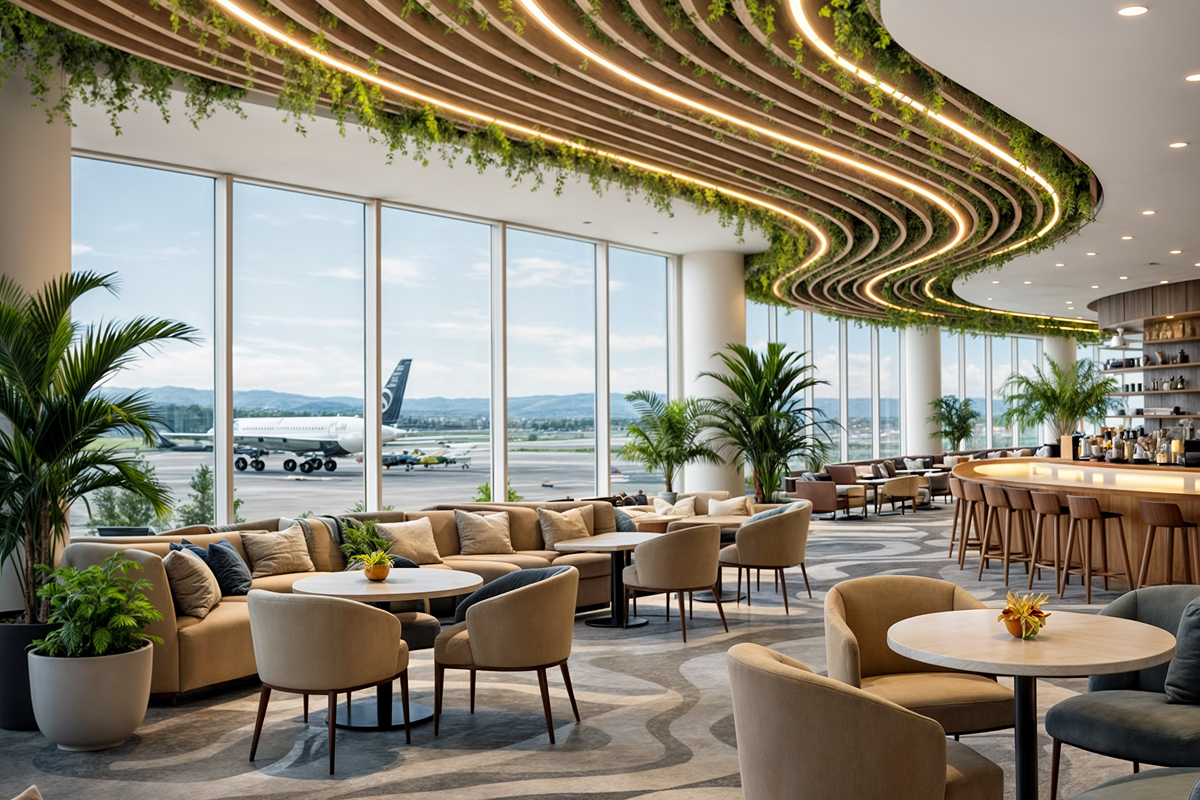
RP: PET felt acoustic performance depends not only on material thickness but also on product geometry and installation configuration. Our 12mm Soundcore® materials, incorporating 60% recycled content, are engineered with strategic spacing, air gaps, and voids to optimize sound absorption.
Across our baffles, clouds, ACT grids, and wall solutions, form and geometry become both acoustic and architectural design assets, creating visual depth, rhythm, and dimensional expression while enhancing acoustic performance. These integrated design strategies allow properly tested Soundcore® assemblies to achieve NRC ratings of up to 0.95.
ID: Where does replica greenery fit within a biophilic design strategy, and what makes ThermaLeaf® inherently fire-retardant?
RP: Replica greenery supports the fundamental intent of biophilic design: strengthening the human connection with nature through visual, organic, and immersive architectural experiences, without the maintenance requirements of living plants.
ThermaLeaf® complements this approach by incorporating fire-retardant properties and compliance directly into the material during manufacturing, rather than relying on post-production surface treatments. This provides an inherently fire-retardant greenery solution designed for commercial architectural environments.
ID: How does 90+ CRI lighting shape the way the felt and foliage read within an interior?
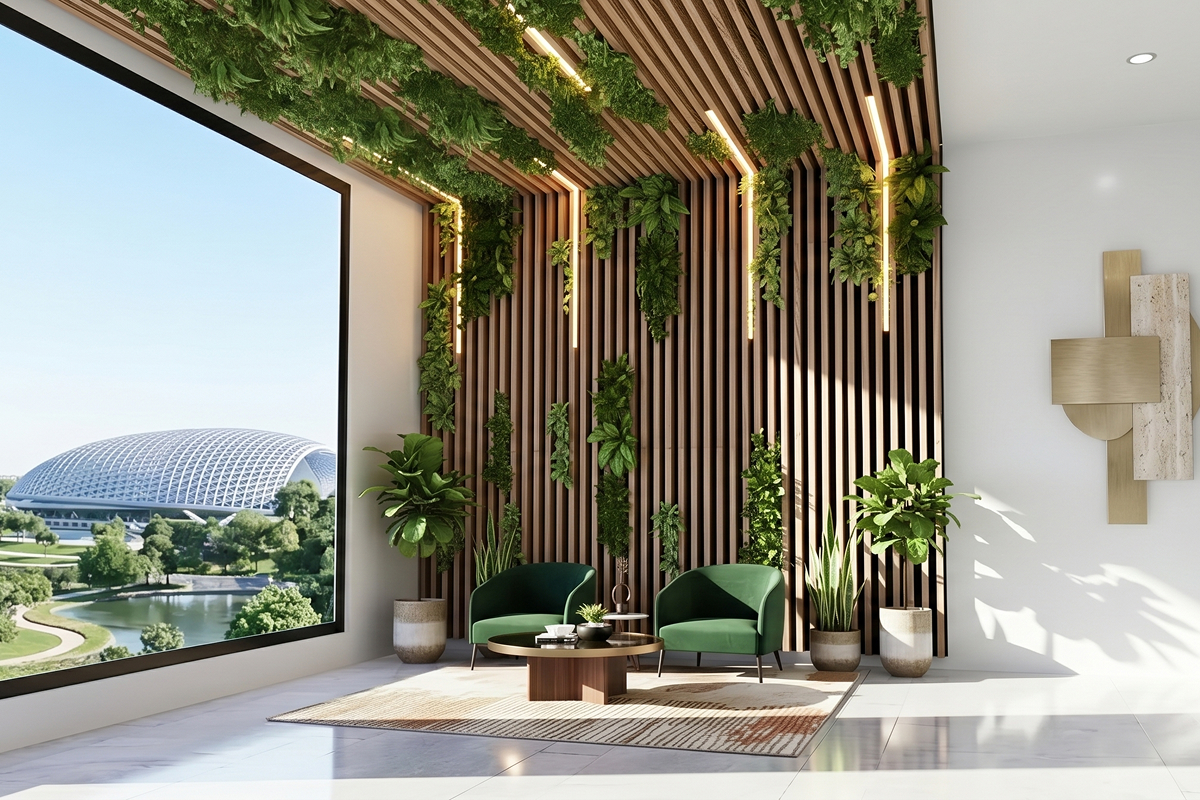
RP: Lighting with a CRI of 90+ enhances the human experience by revealing the true richness of color, texture, and depth in acoustic felt and foliage. It brings out subtle material variations, natural tones, and dimensional qualities, creating a warmer, more authentic connection to the space.
Beyond visual comfort and atmosphere, high color-rendering performance reinforces design intent while supporting the technical quality and lighting specifications required in commercial environments.
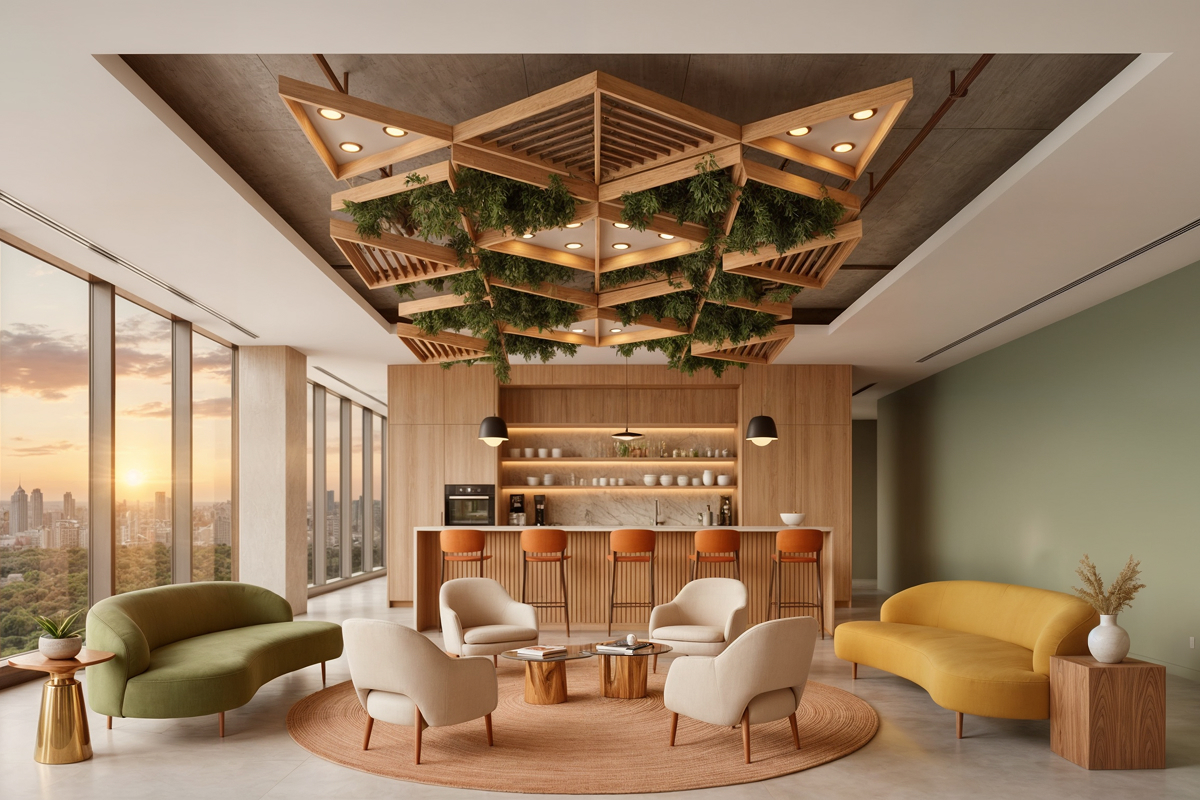
ID: Spanning more than 17 forms, from leaf and vine silhouettes to faceted clouds and folded baffles, the collection can also extend from ceiling to wall. How does the modular system adapt across settings as different as an airport lounge and a restaurant dining room?
RP: We don't simply sell products; we deliver integrated architectural solutions. MAGIC™ adapts to each environment through a collaborative design process that considers spatial character, acoustic needs, site conditions, and MEP coordination.
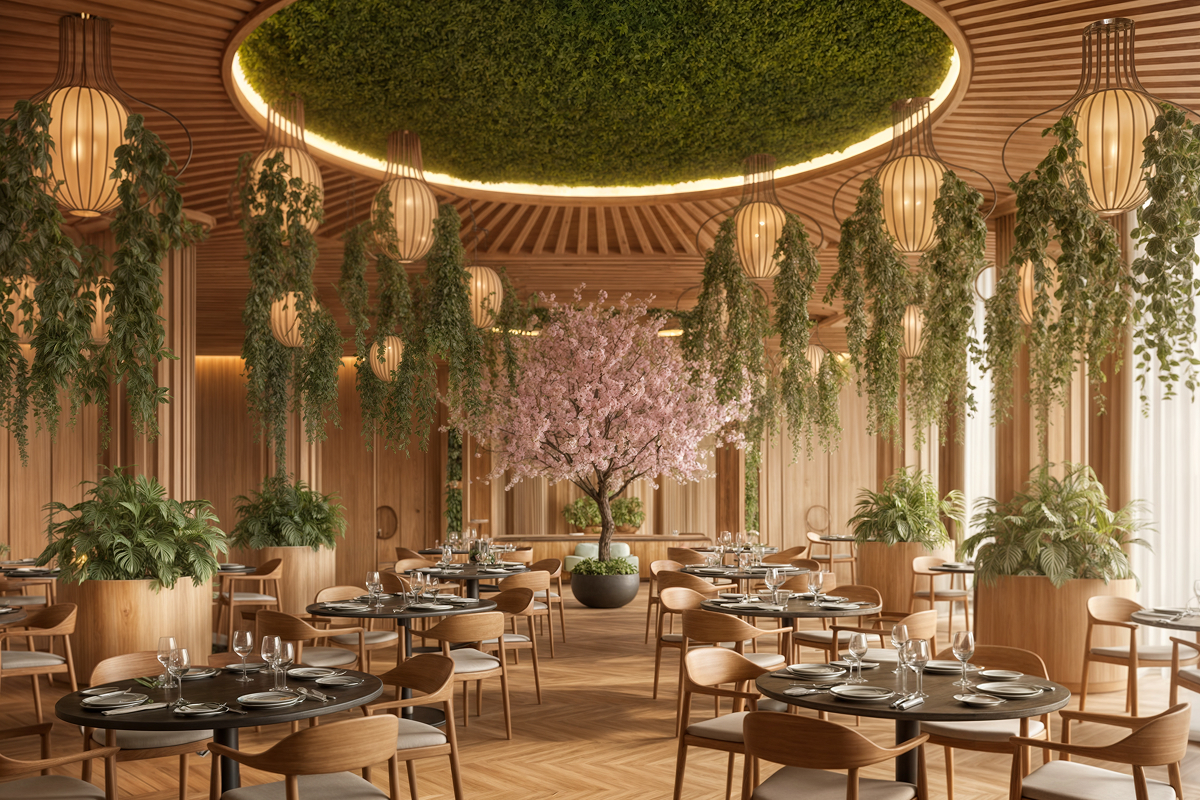
From initial design development to shop drawings, engineering, and installation, our modular systems transition seamlessly between ceilings and walls, adapting to the scale and experience of an airport lounge or the intimacy of a restaurant. The goal is a continuous, cohesive architectural experience that feels natural and intentional, never fragmented or patched together.
ID: CSI Creative has earned Architizer A+Product Award recognition three years running, for Clay Pot, Lanai, and now MAGIC™. How has the studio's approach to acoustic greenery developed across those collections?
RP: Our evolution from Clay Pot to Lanai and now MAGIC™ reflects 50 years of expertise in replica greenery, progressively transforming biophilic elements into fully integrated architectural solutions. Guided by the evolving sustainability principles of LEED v5, our approach combines material responsibility, acoustic performance, lighting integration, and human well-being.
Each collection builds on the previous one, moving beyond decorative greenery toward engineered, multifunctional systems that strengthen the human connection with nature while responding to the technical, environmental, and design expectations of contemporary architecture.