
Farrow & Ball Celebrates 80 Years With the Heritage Papers Wallpaper Collection
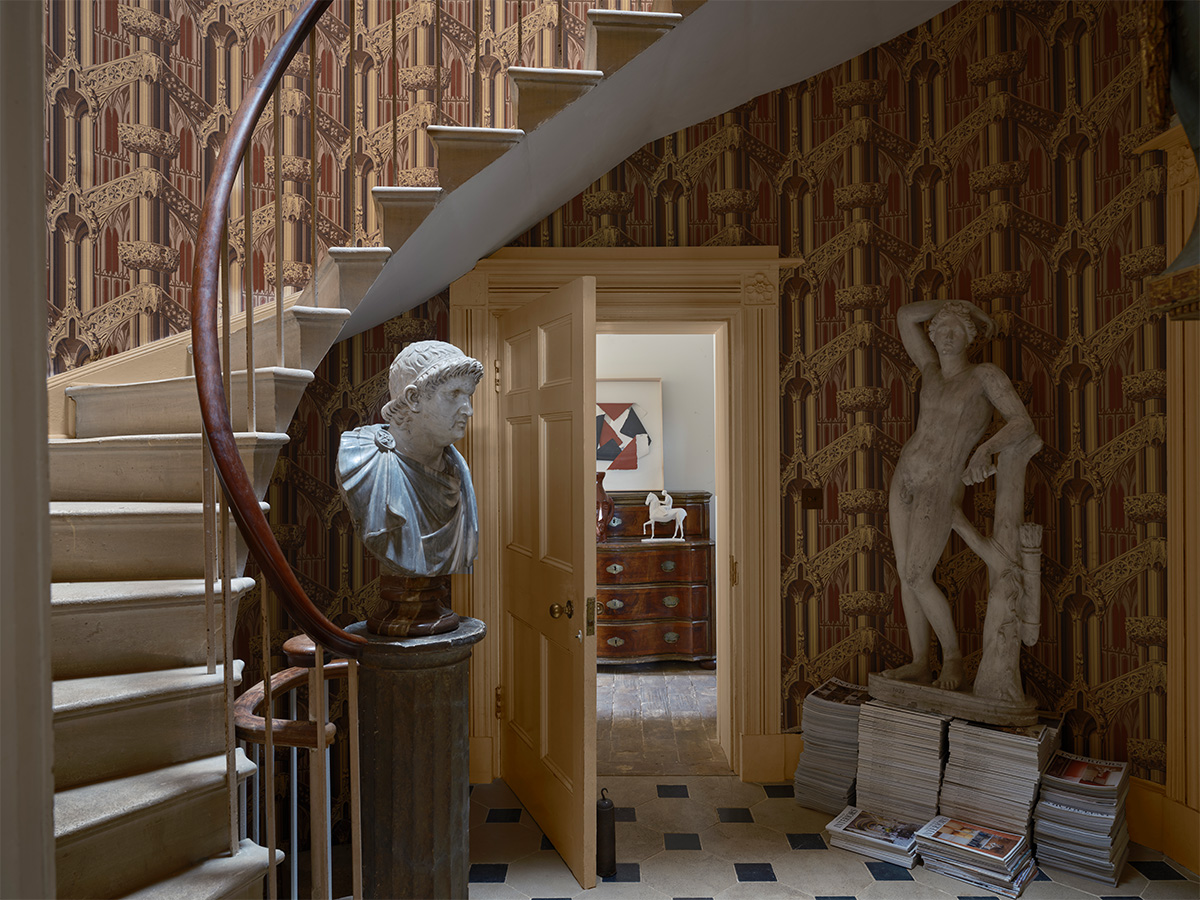
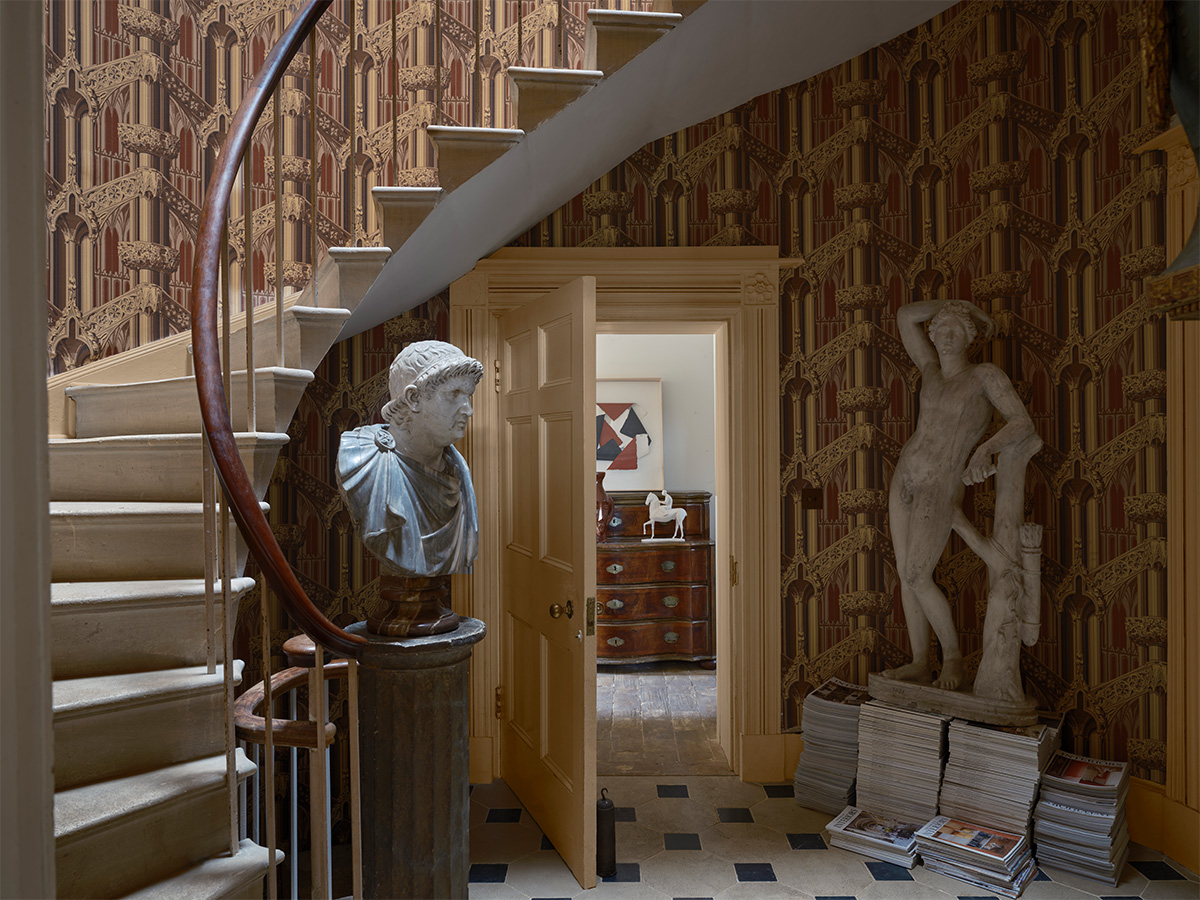
Pointed arches, clustered columns, and carved tracery rise in tiers across a wallpaper that once lined the staircase hall of a historic building in Worcestershire, England. First patented in the 1750s and produced again for a home in the 1990s, the design had never been available to the public until this year, when it returned as Gothic, one of three patterns Farrow & Ball has drawn from its archive for the limited-edition Heritage Papers collection.
Based in Dorset, England, since 1946, the company assembled the set to mark its 80th anniversary. The other two are Sweet Pea, an Edwardian floral that originated in a house near Oban on Scotland’s west coast, and Vine Leaf, a hand-drawn botanical study that had never before been printed as wallpaper. Charlotte Cosby, creative director at Farrow & Ball, sees a common thread among them. “Rather than reflecting the trends of their time, these designs have quietly endured,” she says.
The Heritage Papers are printed in ink on non-woven stock, a departure from the paint-on-paper process behind much of the Farrow & Ball wallpaper range. The company adopted the method to offer paste-the-wall installation, a long-requested option, while retaining its signature tactility. Production relies on traditional surface and rotary screen methods, each of which takes months to master. Each pattern is offered in a set of contemporary colorways developed to sit alongside the brand’s paint shades, with a complementary white and a suggested two-color scheme specified for every one.
Archive Patterns
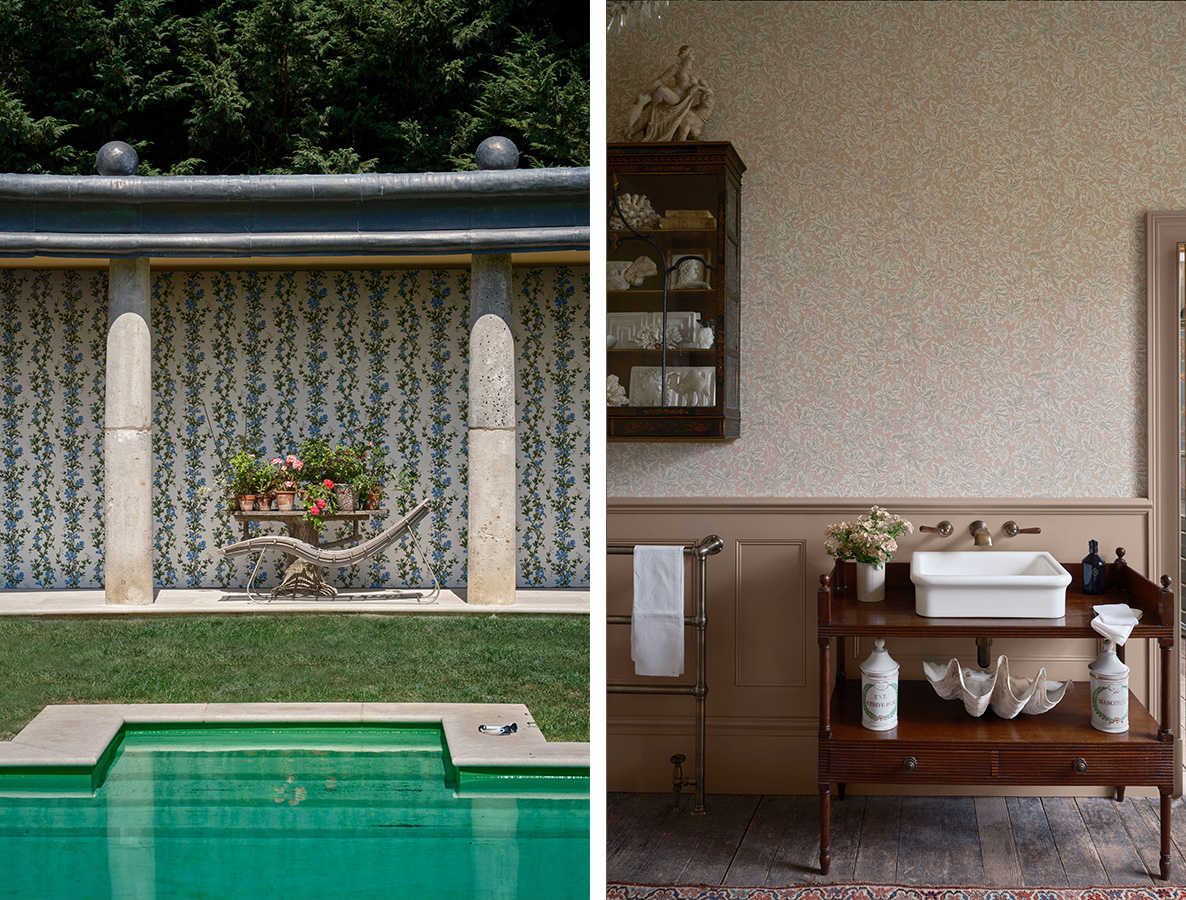
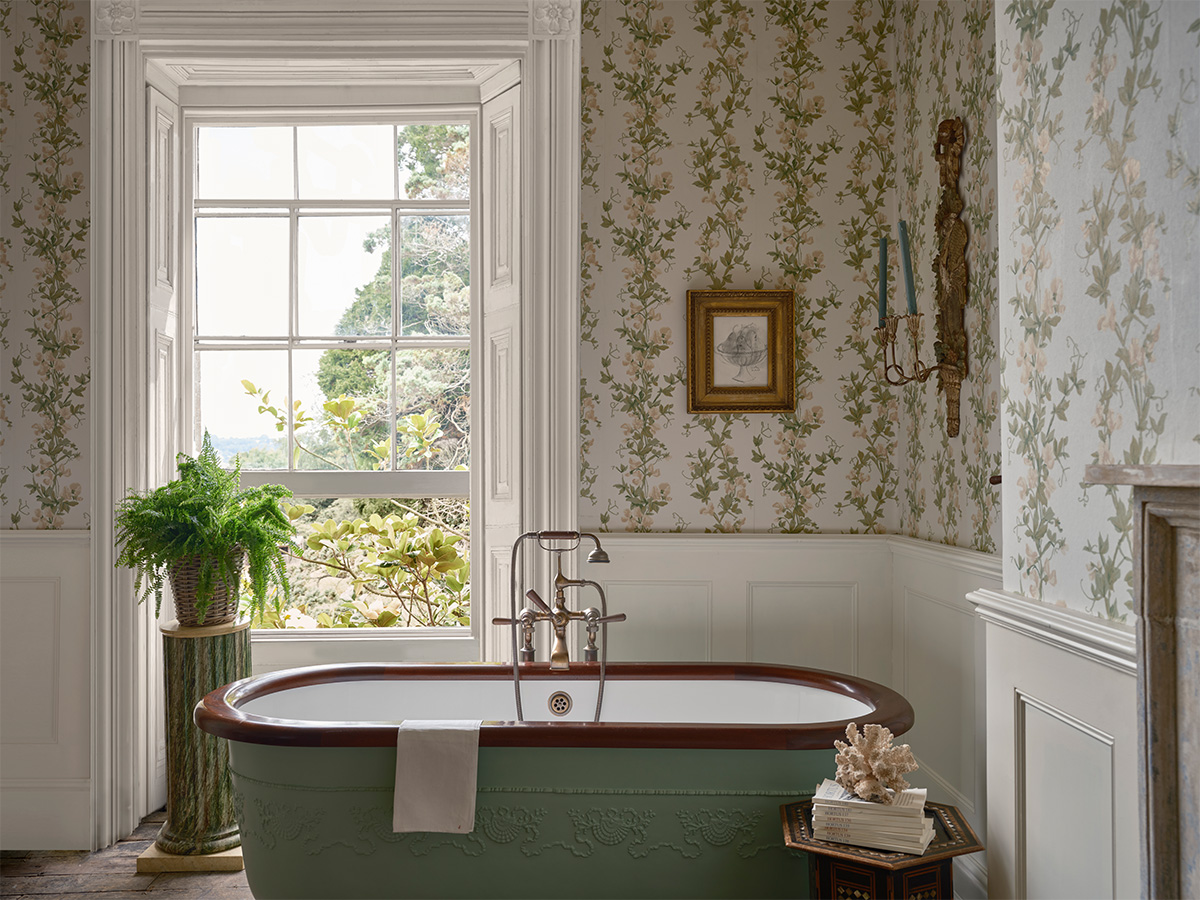
Cosby describes each of the three patterns by the mood it brings to a room. “Sweet Pea evokes the romance of the English garden, light, delicate and effortlessly expressive,” she says. Loose vertical trails of blossoms, tendrils, and leaves climb the wall in the Edwardian floral, its layered flowers carrying the look of a hand-painted surface. Farrow & Ball produces the pattern with surface printing, a traditional method chosen here to recall the richness of hand block printing. Five colorways range from butter yellow on cream to soft pink against deep green.
Two printing methods, used in combination, lend Gothic its layered, dimensional effect. Surface printing gives the columns and arches a hand-painted softness, while flexographic printing, in which specialized equipment presses ink onto the paper with a precise, even touch, keeps the finest lines of the carved ornament crisp. Its four colorways move from pale stone and gray tones to a richer version in ochre and oxblood.
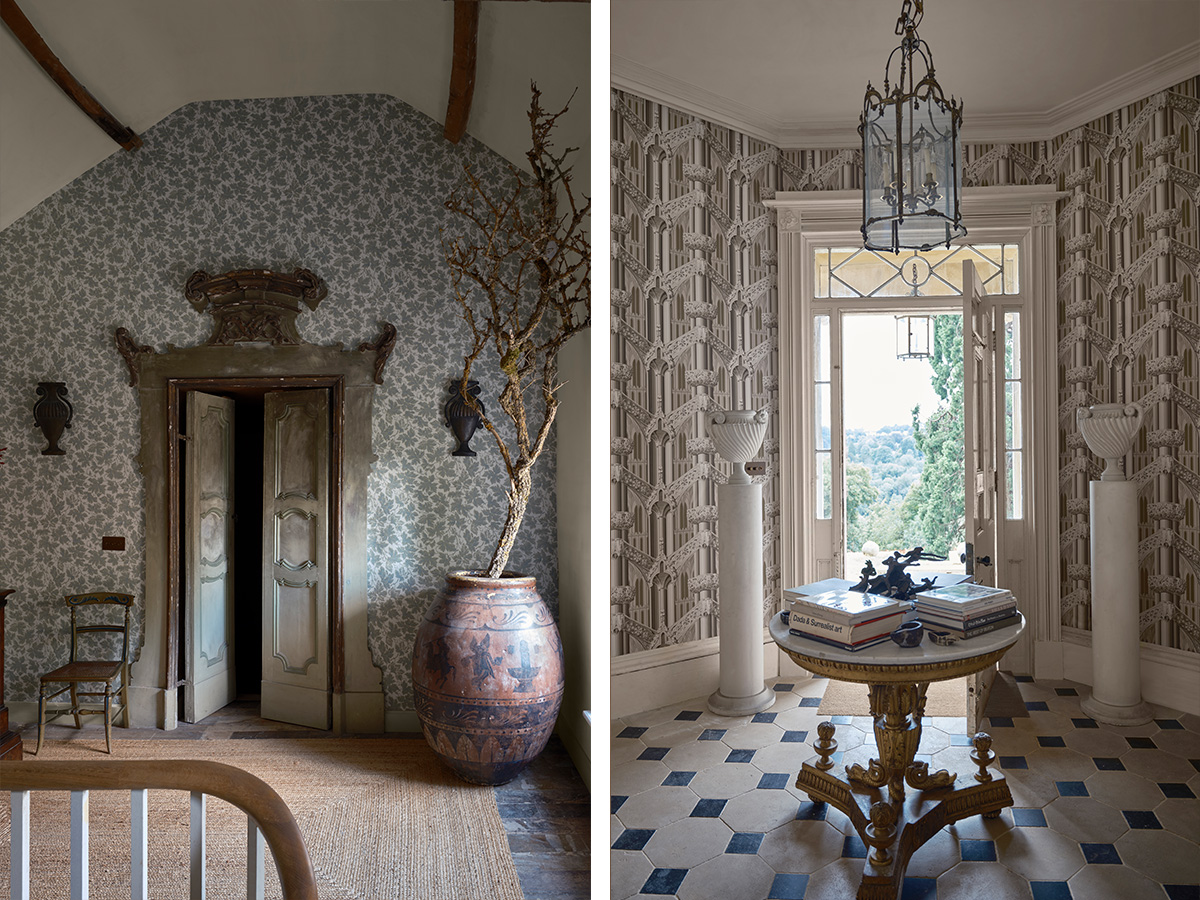
Vine Leaf scatters broad, overlapping foliage and slender stems across the wall in an allover repeat that keeps the freehand character of the original drawing, and it comes in five tonal colorways, from blush pink to deep russet. Paired with the arches and columns of its counterpart, the botanical takes on a distinct role within the set. “Gothic provides contrast through its architectural form and confident structure, while Vine Leaf softens the collection with an organic, understated rhythm that brings depth and movement to a space,” says Cosby.
As a limited edition, the Heritage Papers carry the depth and fine detail of the company’s wider wallpaper offering into a new process. “These designs possess remarkable versatility,” she adds. “Their character is shaped not by trends, but by the homes they inhabit, equally suited to making a bold statement or serving as a quiet, considered backdrop. Eight decades on, they continue to demonstrate that timeless design remains open to interpretation.”