
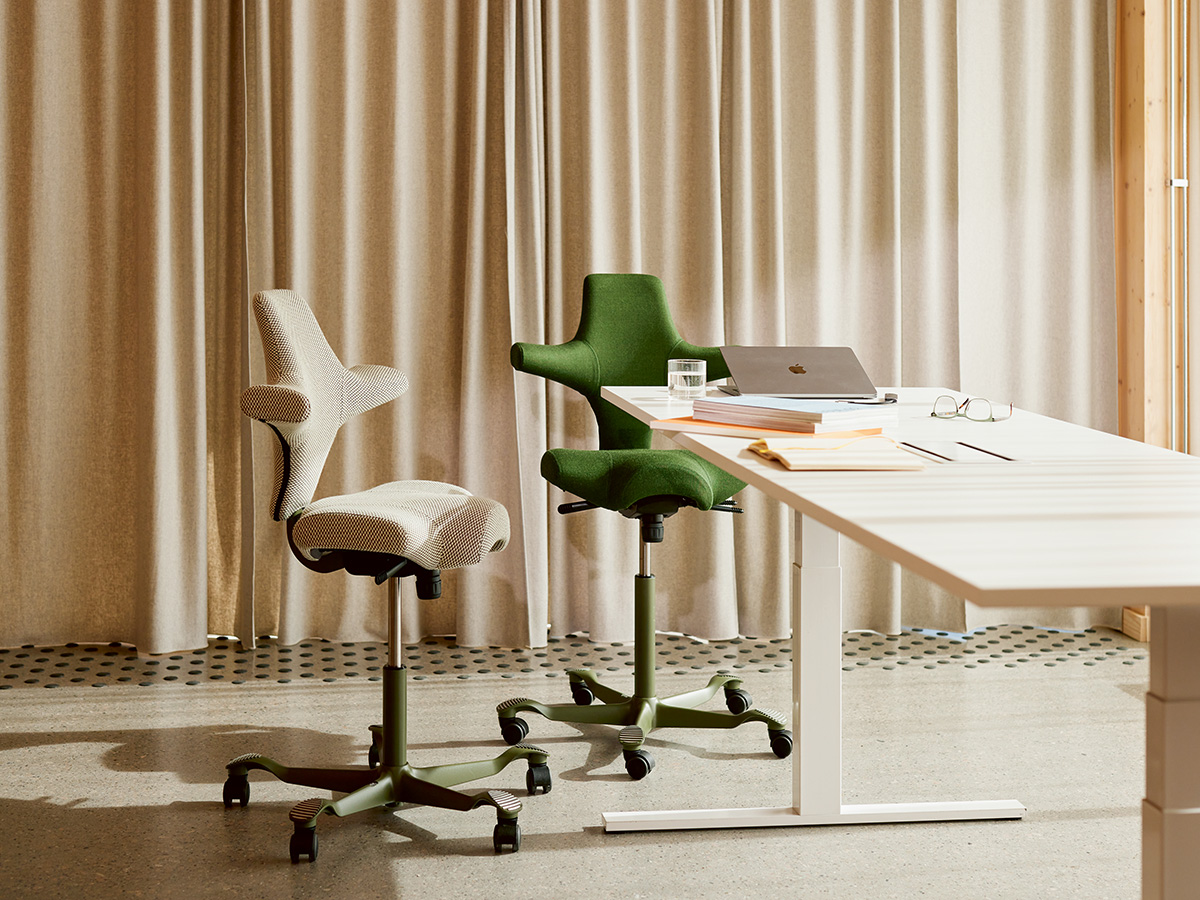
Flokk Carries Forward the Enduring Legacy of HÅG Capisco
Through the sweep of its saddle seat and the winged rise of its back, the HÅG Capisco has become a silhouette synonymous with Scandinavian ingenuity and active sitting. Introduced in 1984 by Norwegian industrial designer Peter Opsvik, the chair gave form to a radical idea: that posture should be fluid. It was developed for HÅG, a brand founded in the mountain town of Røros, Norway, and recognized for more than sixty years of ergonomic innovation. Today, under the stewardship of Flokk—a European leader in sustainable workplace seating—HÅG Capisco continues to embody a legacy of movement and design stewardship.
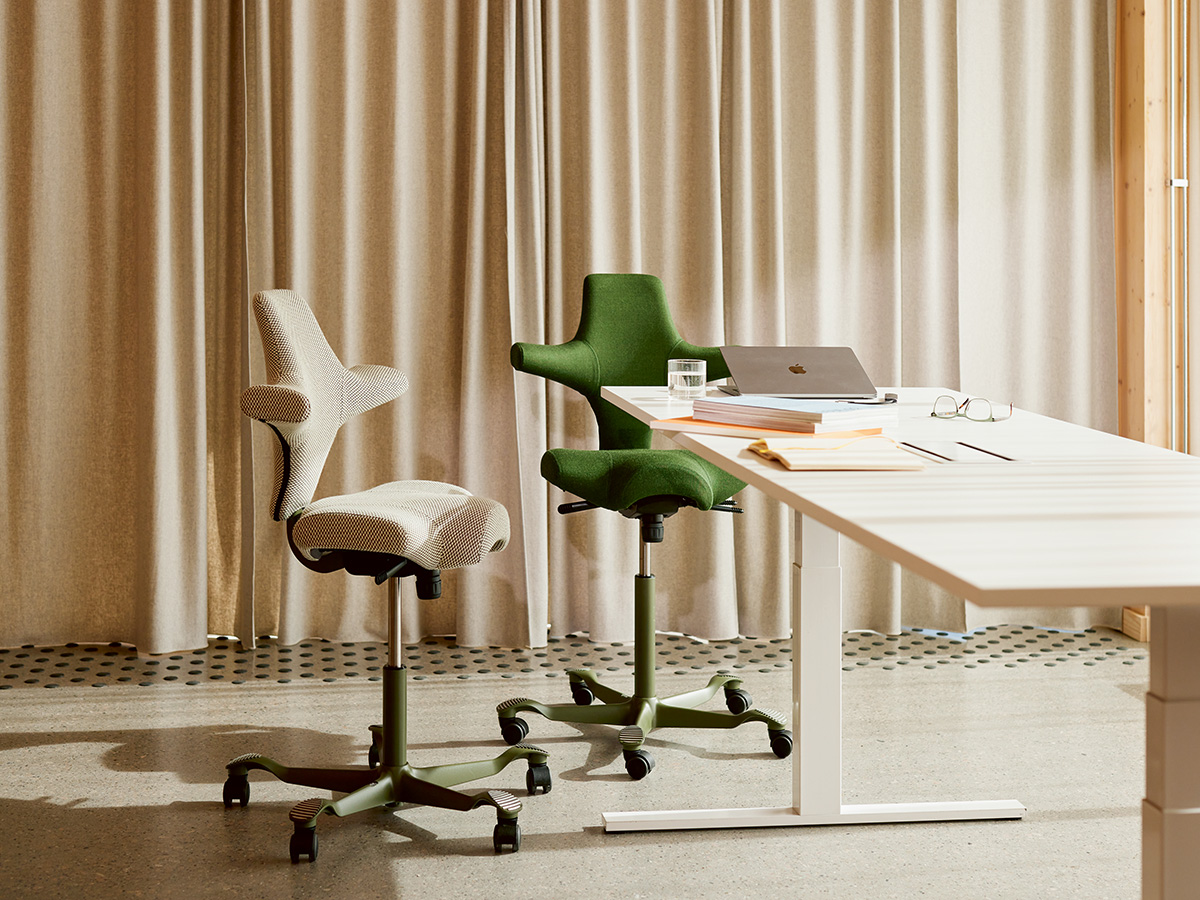
When Capisco appeared, the workplace was dominated by static, upright task chairs. Opsvik’s design challenged those conventions. Inspired by horseback riders, the saddle-shaped seat and open hip angle encouraged users to sit forward, sideways, or backward across its winged back. The approach was almost subversive: posture as choreography, ergonomics as freedom. “Peter Opsvik’s vision for the HÅG Capisco was revolutionary: instead of promoting stillness, it celebrated movement,” says Tina Brennan, Vice President of Marketing and Sustainability, Flokk U.S.
Broadening Reach
HÅG Capisco’s reach extended quickly, finding its place among architects, educators, and healthcare professionals alike. Brennan notes that “Capisco’s distinctive form has resonated across diverse communities because it blends bold aesthetics with real functional benefits.” Designers embraced its sculptural presence, educators valued the way it encouraged posture shifts in the classroom, and clinicians relied on its adaptability for long hours of precise work.
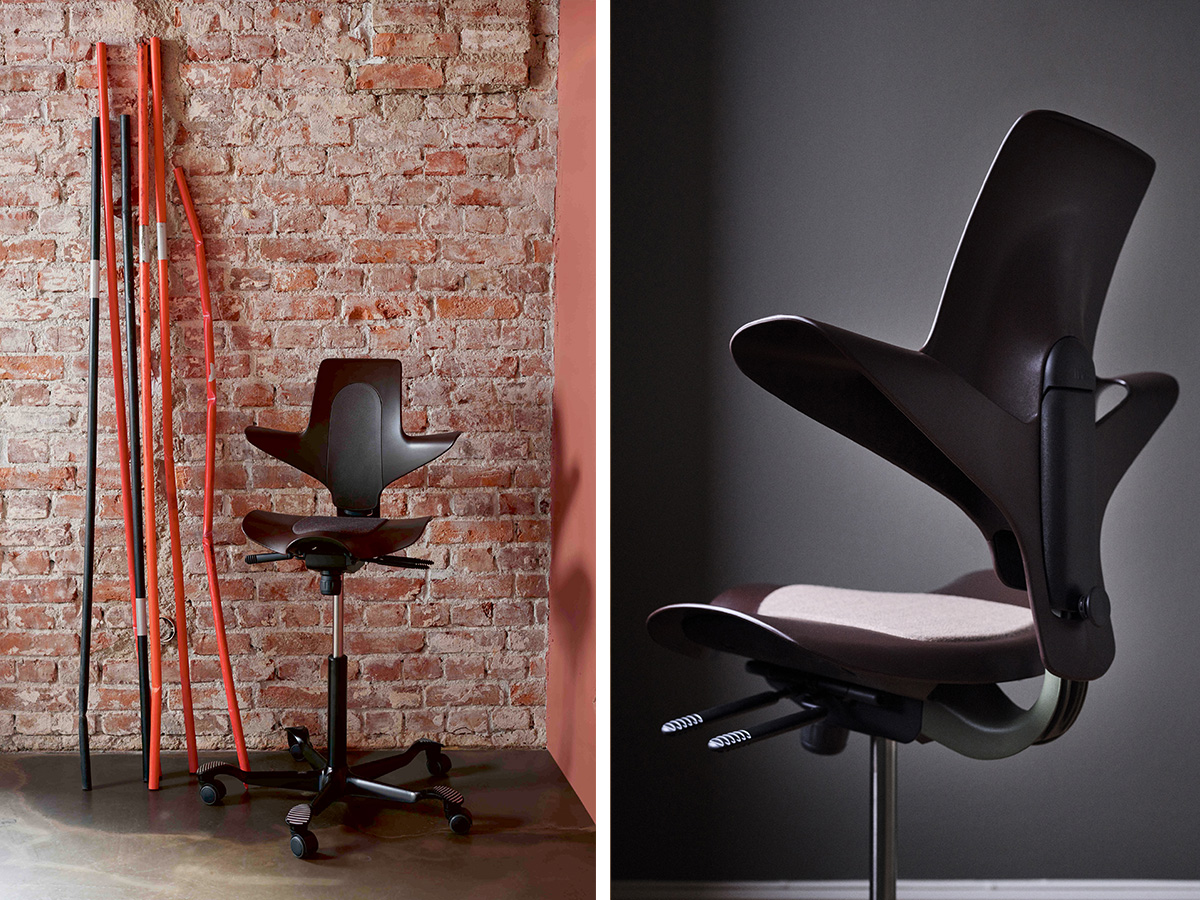
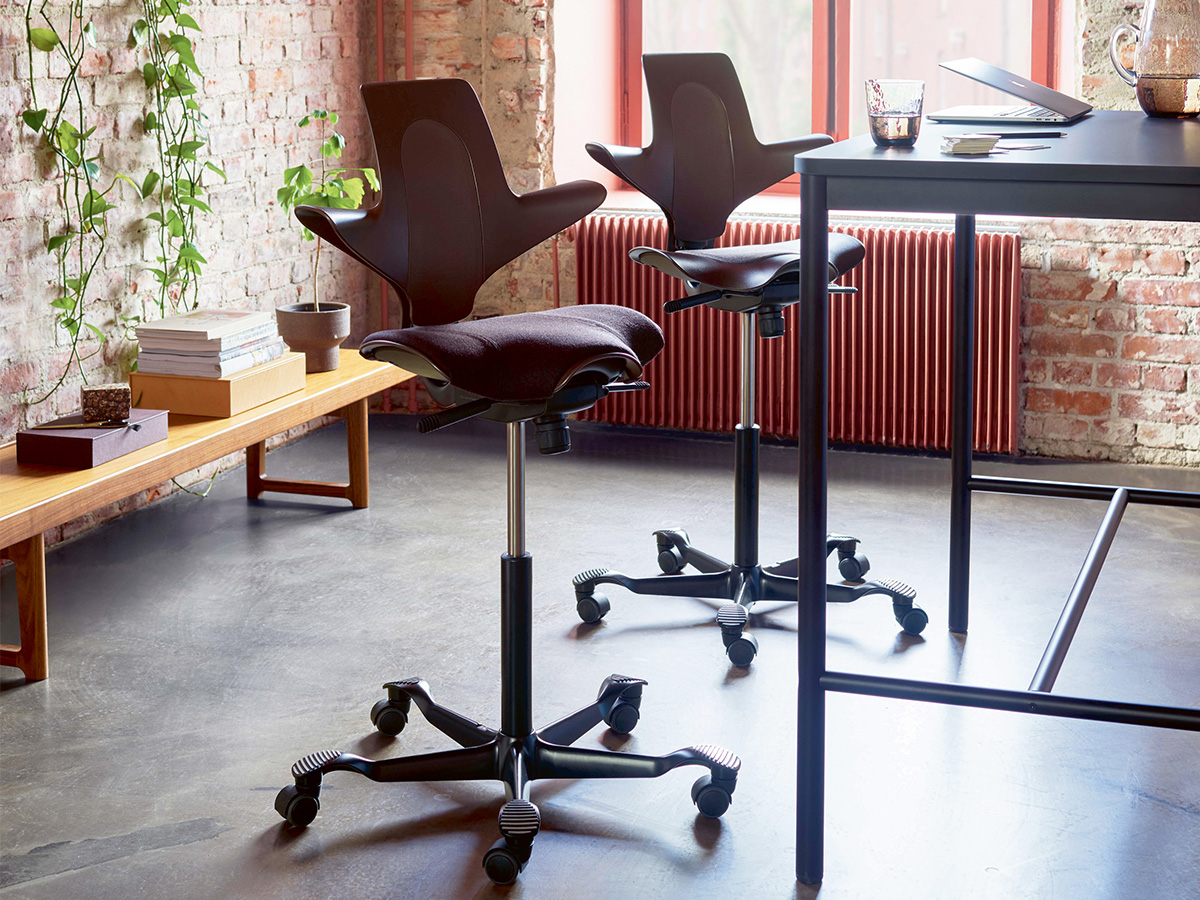
As the chair gained traction across industries, the demand grew for a version that could extend its philosophy into even more environments. That led to the 2010 launch of HÅG Capisco Puls, which carried Opsvik’s principles into a lighter, more versatile form. Molded plastic seats and backs reduced weight and cost, making the design accessible without losing its essence. “The Capisco Puls was developed as a lighter, more versatile interpretation of the original Capisco—bringing Opsvik’s active sitting philosophy to an even wider audience,” Brennan explains. Its adoption in labs and classrooms proved that ergonomic innovation could scale.
Sustaining an Icon
For Flokk, sustaining Capisco has meant honoring its origins within HÅG while ensuring the design continues to evolve with new demands. HÅG’s identity, rooted in Scandinavian heritage and a deep belief in movement, remains central to how the chair is understood. Flokk, as the parent company, has expanded that foundation through its broader sustainability strategy and international reach. Together, the two brands position Capisco as both a product and a philosophy—an emblem of how design heritage can be carried forward while embedding environmental responsibility at the core of strategy.
Over the years, the company has embedded circular design principles into development: products made with high percentages of recycled materials, components designed for disassembly, and certifications like GREENGUARD and ANSI-BIFMA compliance. One initiative that reflects this approach is the Capisco Puls Snow Plough Marker Edition, produced entirely from discarded roadside markers collected in Norway, a project that demonstrates how industrial waste can be reimagined as a resource.
Today, Capisco remains a symbol of Scandinavian innovation and one of Flokk’s most recognizable exports. Its story now expands in the U.S. market, where dedicated channels and new availability are bringing the chair to a broader audience of designers, specifiers, and end users. “Capisco’s next chapter will build on the same principles that made it iconic—freedom of movement, adaptability, and human-centered design—while responding to new cultural and environmental demands,” says Brennan. “Just as Opsvik anticipated the need for active sitting decades ago, Capisco is positioned to keep leading the conversation around healthier, more flexible ways of working and living.” Four decades on, the chair continues to move with its users, and with the times.