
Four Decades of Rethinking Large-Format Tile at Crossville
Exactly how big is big? When it comes to large-format porcelain tile (LFT), the answer has been unclear for years. Crossville has been making oversized tile in its Tennessee manufacturing plant since it launched in 1986, when the definition of “large format” was pretty loose. Was it 8 square inches, 12-by-24-inch tiles, or something else?
“Prior to January 2025, there was not a formal definition in industry standards for ‘large-format’ tile. There was a perception, due to the requirements for a flatter substrate and change in off-set pattern, that 15 inches was in fact ‘large format,’” explains Noah Chitty, AHF’s VP Sustainability and Technical Services.
Eventually, 15-inch tiles became the recognized size. Then in 2024, the American National Standards Institute (ANSI) officially defined large-format tile as having a facial dimension of 23 inches or larger. However, Chitty notes, “While over 23 inches is ‘officially’ considered ‘large format tile,’ you will [still] see different companies using the term in different ways (maybe the new definition will help that) and, for a while, there will be some that are pretty sure the definition is anything over 15 inches.”
Back when smaller tiles (8 by 8 inches max) were all the rage in the U.S. and larger formats could only be imported from Europe, Crossville was an industry pioneer, making everything from tiny mosaics to 12-inch tiles. As technology evolved, so did the brand’s capabilities. But why did Crossville believe bigger was better and continue to up the ante?
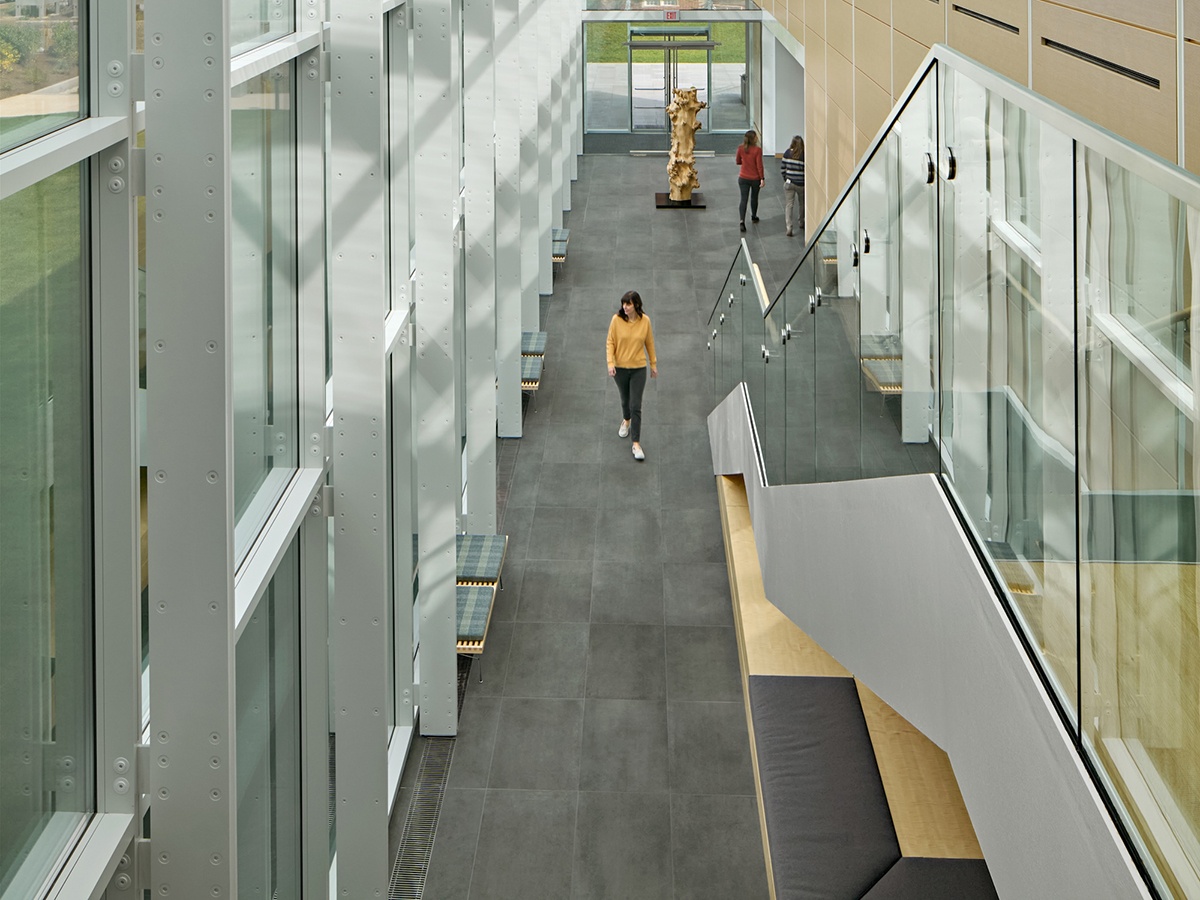
LFTs make areas feel more spacious, creating a seamless aesthetic with long continuous panels and fewer grout lines, while mimicking the appearance of natural stone and being easier to clean. With less interruption to the visual flow, the room reads as larger and more minimalist, with a sleek, sophisticated look that works in both residential and commercial settings.
“Technology has allowed us to go bigger, thicker and thinner,” explains Crossville’s Noah Chitty, AHF VP Sustainability and Technical Services. “We’re creating larger size formats and leaner profile thicknesses than many of us would’ve ever imagined years ago.”
Crossville offers standard LFT options from 12 by 24 to 24 by 48 inches, with plenty of sizes in between. But for architects and designers who want to go even bigger, the company’s custom large-format cutting program allows Crossville Porcelain Stone products to be cut in custom sizes and precise lengths. The specialized fabrication service has no minimum requirements and a quick turnaround of two to four weeks.
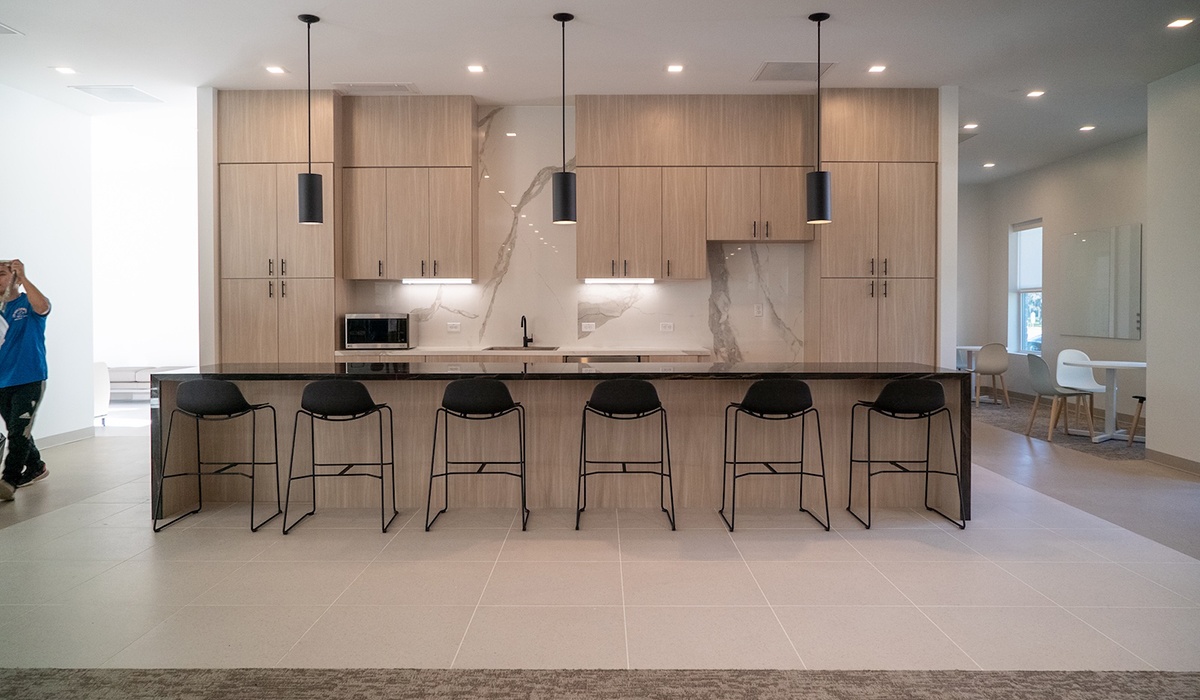
That range of sizes gives designers a host of options for floor and wall field tiles. For example, an architect at Bexhill, which designed the Songwon International Americas, Inc., headquarters in Texas, selected the brand’s 24-by-24-inch Alaska porcelain stone, saying, “Crossville products gave us the clean, contemporary look we were after, with quality materials that stayed within budget.”
Another example of Crossville’s LFTs being put to good use is the American Twine Building in Cambridge, Massachusetts, where Phase Zero Design partnered with New England Development to renovate common areas using Owen Stone porcelain tiles. Inspired by natural Italian sandstone, Crossville’s version in 12-by-24-inch and 24-by-48-inch formats worked well in the building’s lobby.
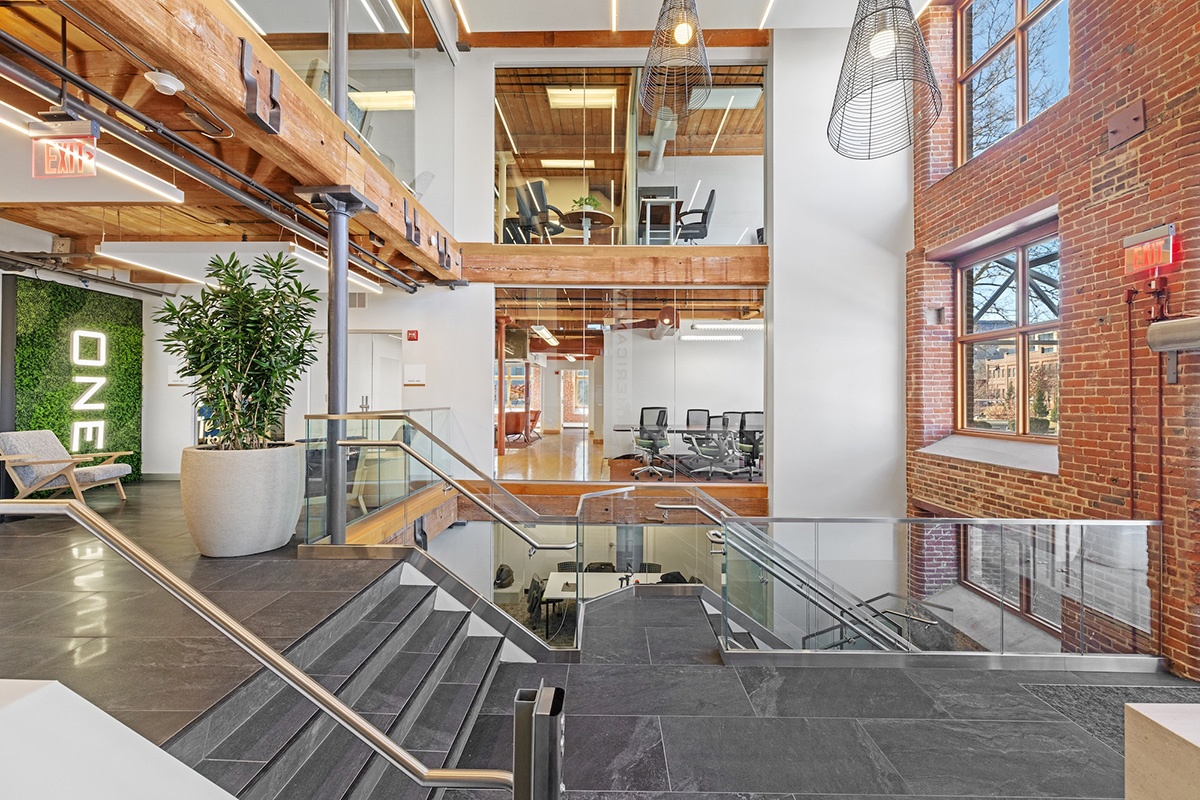
In the end, the appeal of LFT isn’t simply about size. It’s about what that size makes possible, including fewer grout lines, greater visual continuity, and more flexibility in how a space comes together. And with Crossville continuing to expand its range and customize it, the possibilities keep getting bigger, as well.