
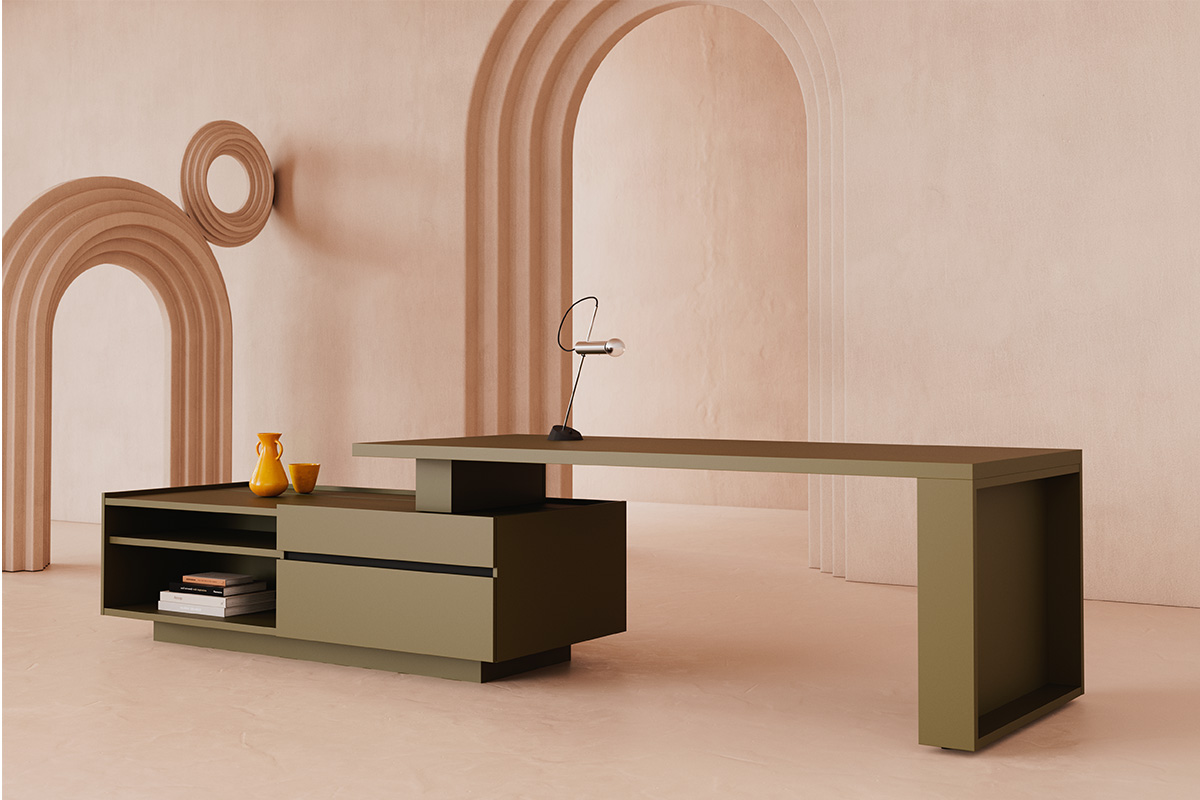
Hudson by Three H Balances Architecture and Place
Surfaces stretch clean and uninterrupted, finishes shift between softness and saturation, and components adapt fluidly to match the rhythm and scale of the space—Hudson renders function with intention. Developed by Lee Fletcher, VP Product Design at Canadian furniture manufacturer Three H, together with the company’s in-house team, the new private office collection responds to the practical realities of today’s workspace—where scale, adaptability, and material intent shape both function and feel. Hudson takes cues from the contours of Temiskaming Shores in Northern Ontario, pairing architectural clarity with a grounded connection to place—reflecting Three H’s roots in people, purpose, and regional craft.
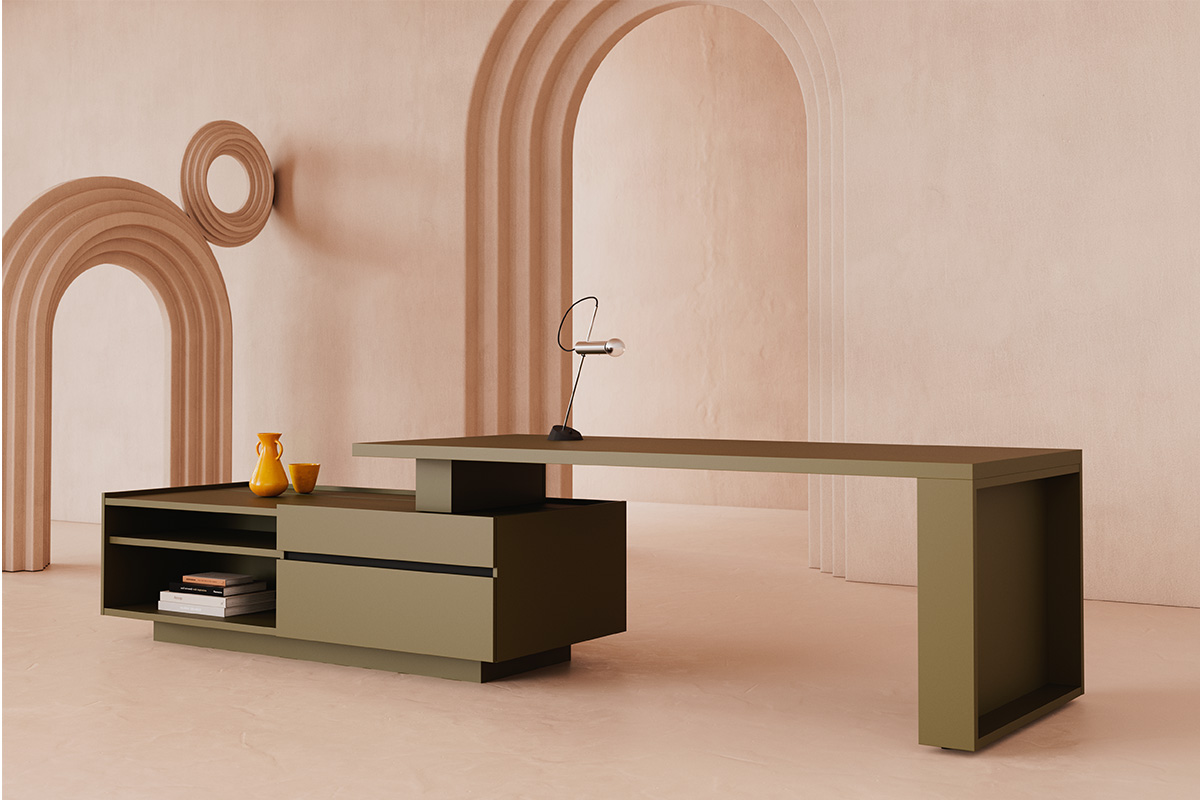
The design brief for Hudson focused on a familiar challenge: making smaller office footprints more flexible. Fletcher saw it as a creative constraint with potential. The outcome is a system of desks, seating, and storage components that support a range of work modes without overwhelming a space. The collection is composed with an emphasis on spatial clarity and material discipline. Surfaces are clean-lined and grounded, with details like recessed pulls, integrated banquette seating, felt-lined drawers, and modular components included as part of the overall system. Each element supports a workspace that’s tactile, efficient, and shaped with precision.
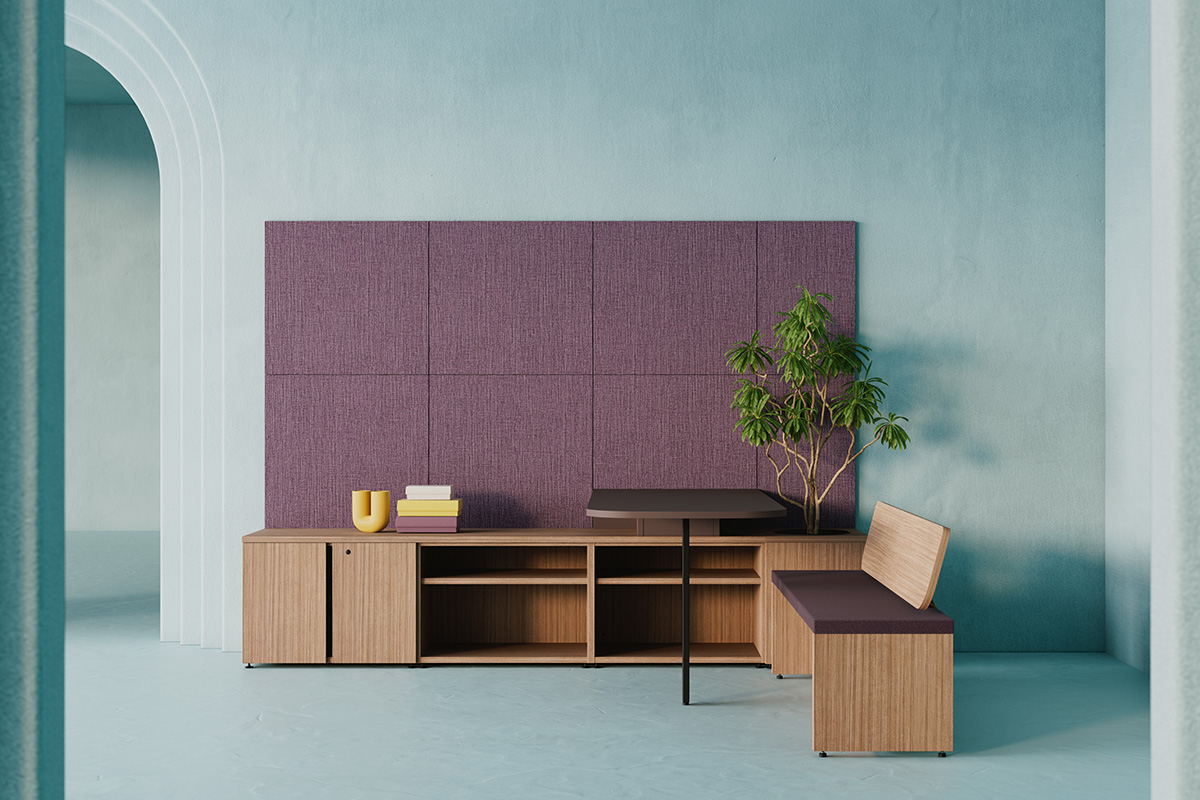
The palette is broad—matte laminates, PET felt, subtle wood grains—and offers a range of expressions, from soft and understated to bold and graphic. Across configurations, scale plays a key role. The system can expand from a compact private office to a team hub or meeting space, always with a sense of clarity in the layout. Architectural lines and minimalist detailing allow designers to layer in bold gestures or keep things spare—building from stacked, layered, or cleanly organized forms.
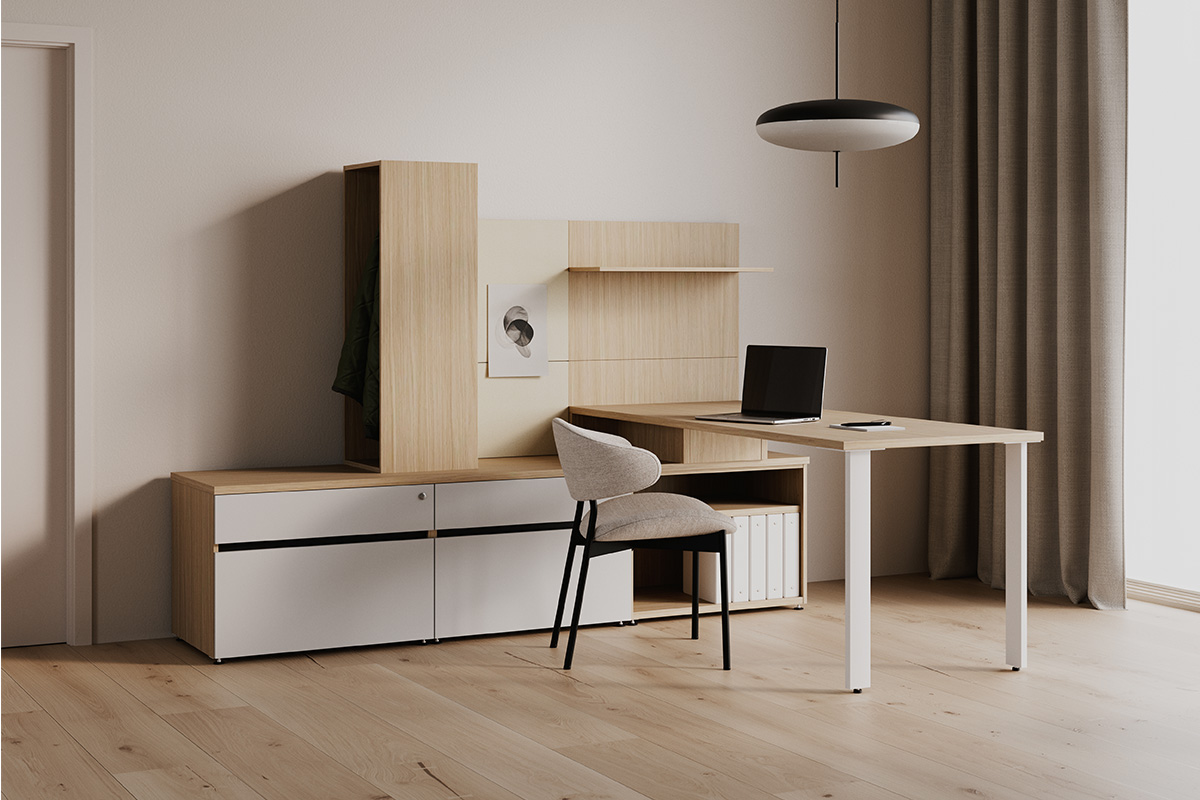
Hudson is built to adapt across a range of environments, with careful attention to how people move through space and interact with their surroundings. Integrated planter boxes, mobile pedestals with upholstered tops, and height-adjustable desks respond to the physical and sensory needs of today’s users. The team at Three H also considered vertical surfaces—often underused in workspace planning. Hudson’s wall-mounted components include panels wrapped in Ridgeline PET felt, a cable management system concealed behind a removable shroud, and height-adjustable desk options for settings where space and ergonomics must coexist.
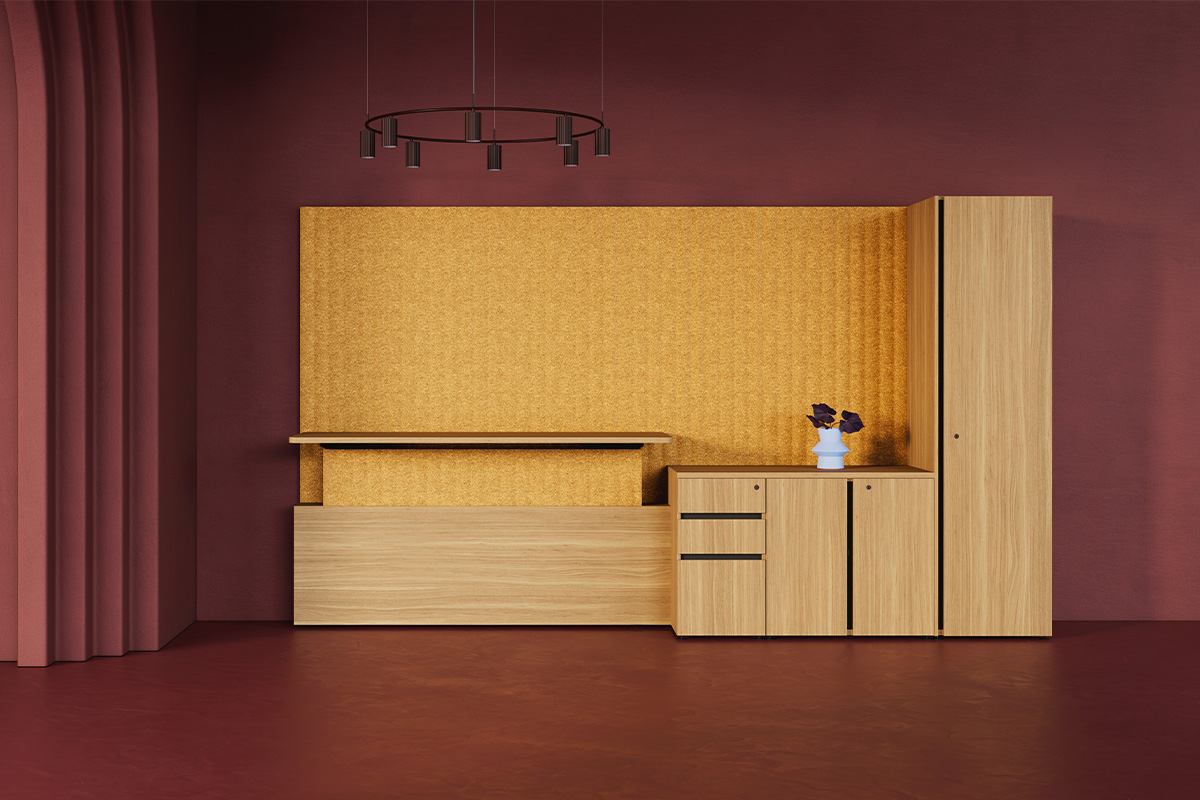
The goal was to develop something precise and responsive. Across the collection, that intent shows up in practical ways: seating that stores, desks that adjust, walls that organize. Every element is resolved without excess. The collection encourages clients and designers to build with a sense of authorship—selecting configurations and finishes that meet specific needs without compromising consistency.
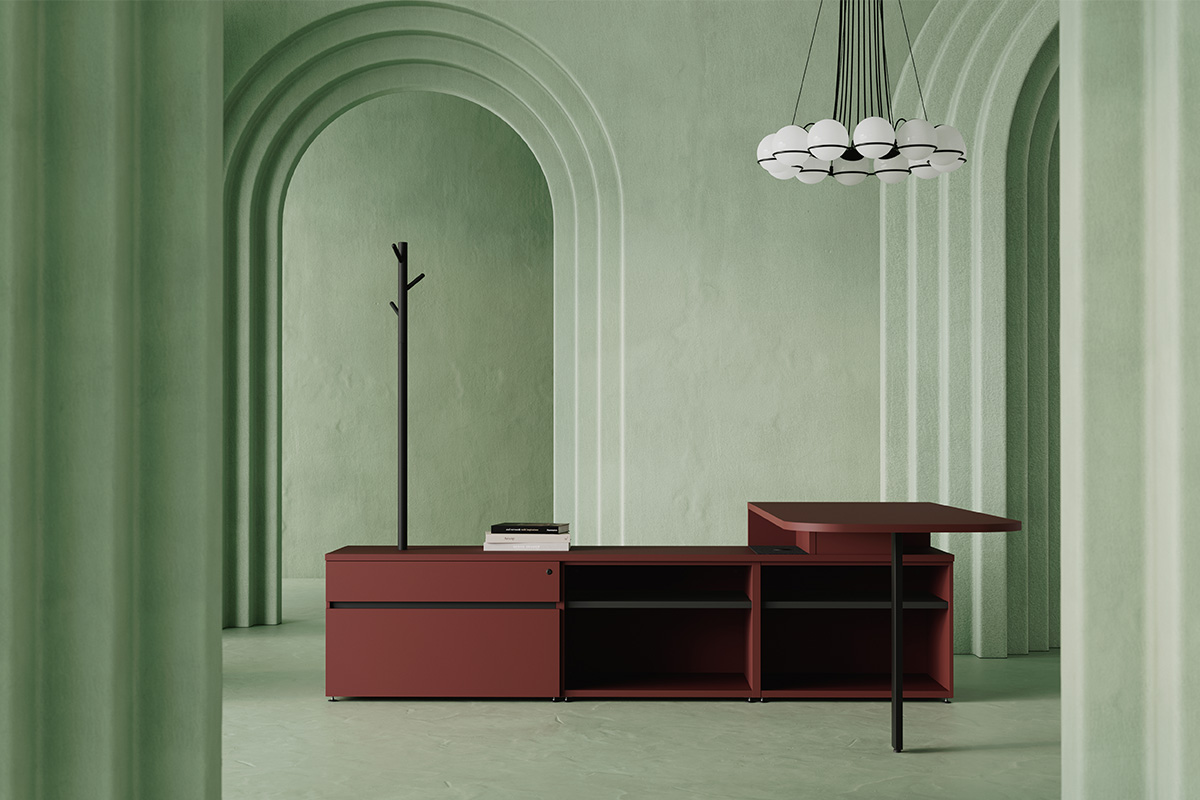
Hudson’s layered references to landscape, material logic, and modularity position it as a system attuned to both spatial and cultural shifts. With Hudson, Three H adds another chapter to its legacy of Canadian manufacturing and workspace design. The collection reflects an evolving standard: one that values adaptability, material integrity, and a thoughtful approach to the spaces where work takes shape.