
Inside Tuuci’s Approach to Shade From Ocean Master Parasols to Pergolas
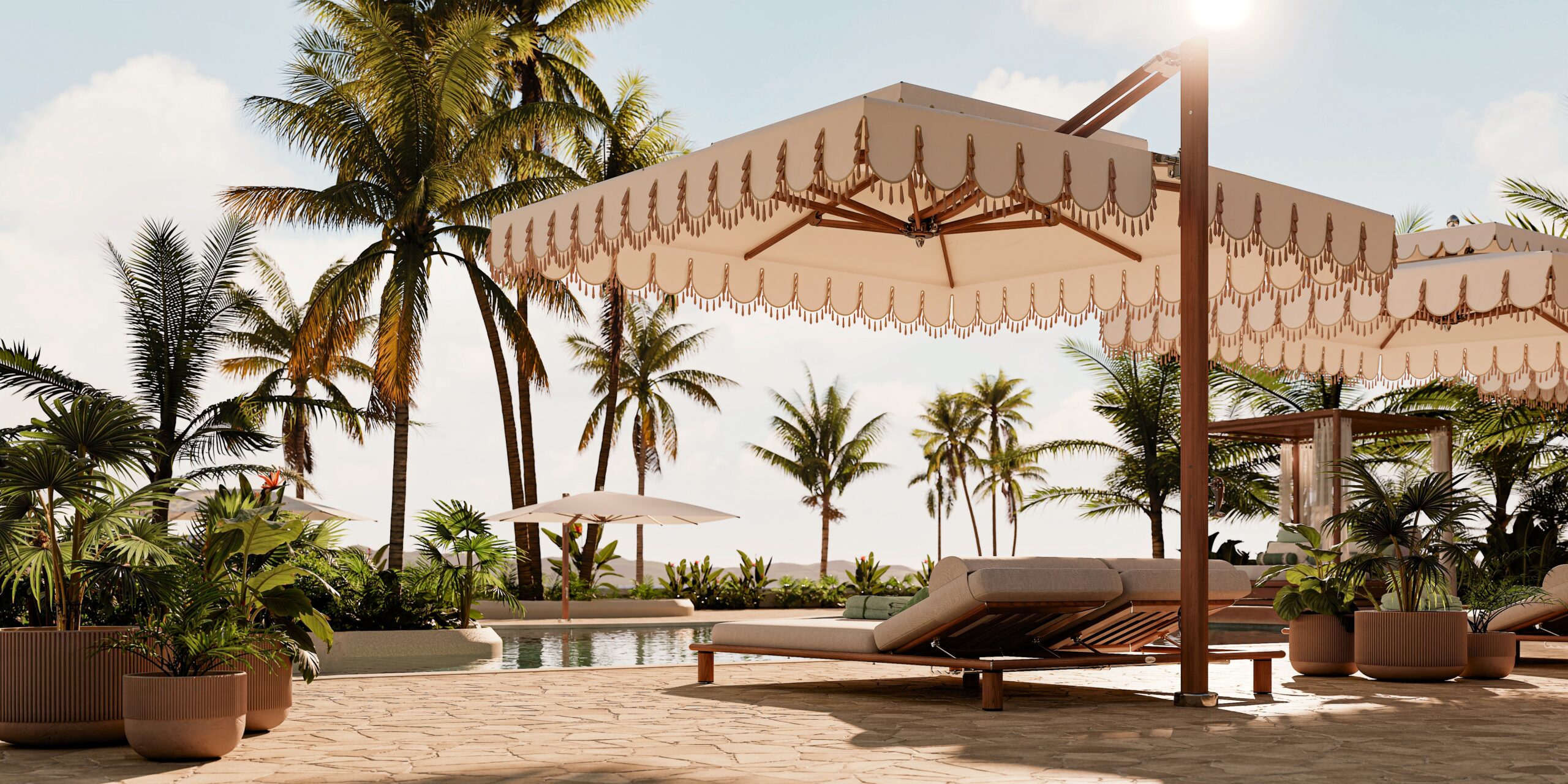
Teardrop tassels of hand-strung wooden beads hang from the scalloped valance of the Ocean Master MAX Cupola Cantilever, a two-tier parasol by Tuuci. Across its shade structures and furnishings, the company approaches each design as a foundation for customization, with finishes, textiles, and decorative details that allow a single form to take on many characters. The Lulu Day Lounge, a daybed with its own canopy and curtains, and the Ocean Master MAX Solanox Pergola, a modular structure that can be linked into distinct areas, carry the idea from a personal retreat to a larger outdoor setting. In this interview, the Tuuci team shares the thinking behind these pieces.

Interior Design: Tuuci got its start in high-performance marine shade, and that heritage still informs the materials and engineering behind its products. Could you tell us a little about how it shapes the company’s approach today, both in how pieces are built and in how they help define an outdoor space?
Tuuci: Our marine heritage is foundational to how we approach design. Founder Dougan Clarke’s experience in marine rigging established a philosophy that continues to guide us today: exceptional design should perform as beautifully as it looks, even in the most demanding environments. That commitment is reflected in our material choices, precision engineering, and thoughtful construction. Marine-grade aluminum, corrosion-resistant hardware, and components designed to remain serviceable for life are essential to creating products that endure.
Our connection to the sea goes beyond engineering. The movement of water, the shapes found in nature, and the feeling of freedom that comes with being outdoors continue to influence our designs. We see parasols, pergolas, and furnishings as more than individual products. They are elements that shape how people experience a space. A parasol creates an inviting place to gather, a pergola brings definition and purpose to an open environment, and furnishings make those spaces comfortable and personal.
Ultimately, we want to create outdoor environments that feel as thoughtfully designed as any interior, with the added pleasure of being connected to nature. And we believe those experiences should be enjoyed for generations.
ID: The Ocean Master MAX Cupola Cantilever has a striking silhouette, with its two-tier canopy, scalloped valance, and teardrop tassels. Can you shed some light on the inspiration behind it?
Tuuci: The Cupola silhouette has a sense of nostalgia, recalling the playful elegance of classic resort settings. We were drawn to its distinctive shape and the opportunity to reinterpret something familiar in a way that feels fresh, expressive, and unmistakably Tuuci.
What makes the Cupola particularly interesting is its versatility. Its tiered silhouette provides a recognizable foundation, but the details can transform its personality entirely. The Sea Scallop Valance and optional hand-strung wooden-bead teardrop tassels give the Cupola Cantilever a sense of movement and whimsy, while contrasting fabrics and decorative bindings can take it in a more tailored or dramatic direction. Our Cupola Bodhi offers another interpretation altogether, introducing macramé, fringe, and rich texture for a softer, more artisanal expression.
It’s a wonderful example of how a single silhouette can inspire very different design experiences. The underlying form remains familiar, but the possibilities for personal expression make each interpretation feel entirely its own. The intention is to make shade a defining element of the space, not simply something that sits within it.

ID: With its canopy, curtains, and lounge platform, the Lulu Day Lounge brings shade and seating into a single piece, offered in signature styles such as Capri and Monaco. What can you share about how that idea came about?
Tuuci: Lulu grew out of a simple idea: what if we could take the architectural presence and versatility of a pergola and translate it into something far more intimate? Our pergolas offer an incredible range of possibilities through customizable roofs, walls, curtains, lighting, and finishes. We saw an opportunity to bring that same flexibility to a personal retreat that combines shade and lounging in one beautifully integrated design.
Rather than simply creating a daybed with a canopy, we approached Lulu as a complete outdoor environment on a more personal scale. Its architectural framework creates a sense of place, while the generously proportioned lounge platform, curtains, and optional reclining backrests invite people to settle in and stay awhile.
Perhaps most interesting is how dramatically Lulu can change through customization. Capri’s playful, resort-inspired personality and Monaco’s bold sophistication demonstrate just how expressive the design can be. A flat or open roof paired with a softer, more neutral palette creates an entirely different experience, one that feels romantic, airy, and dreamlike. From the architectural silhouette to the smallest decorative detail, each choice brings its own character to the space.

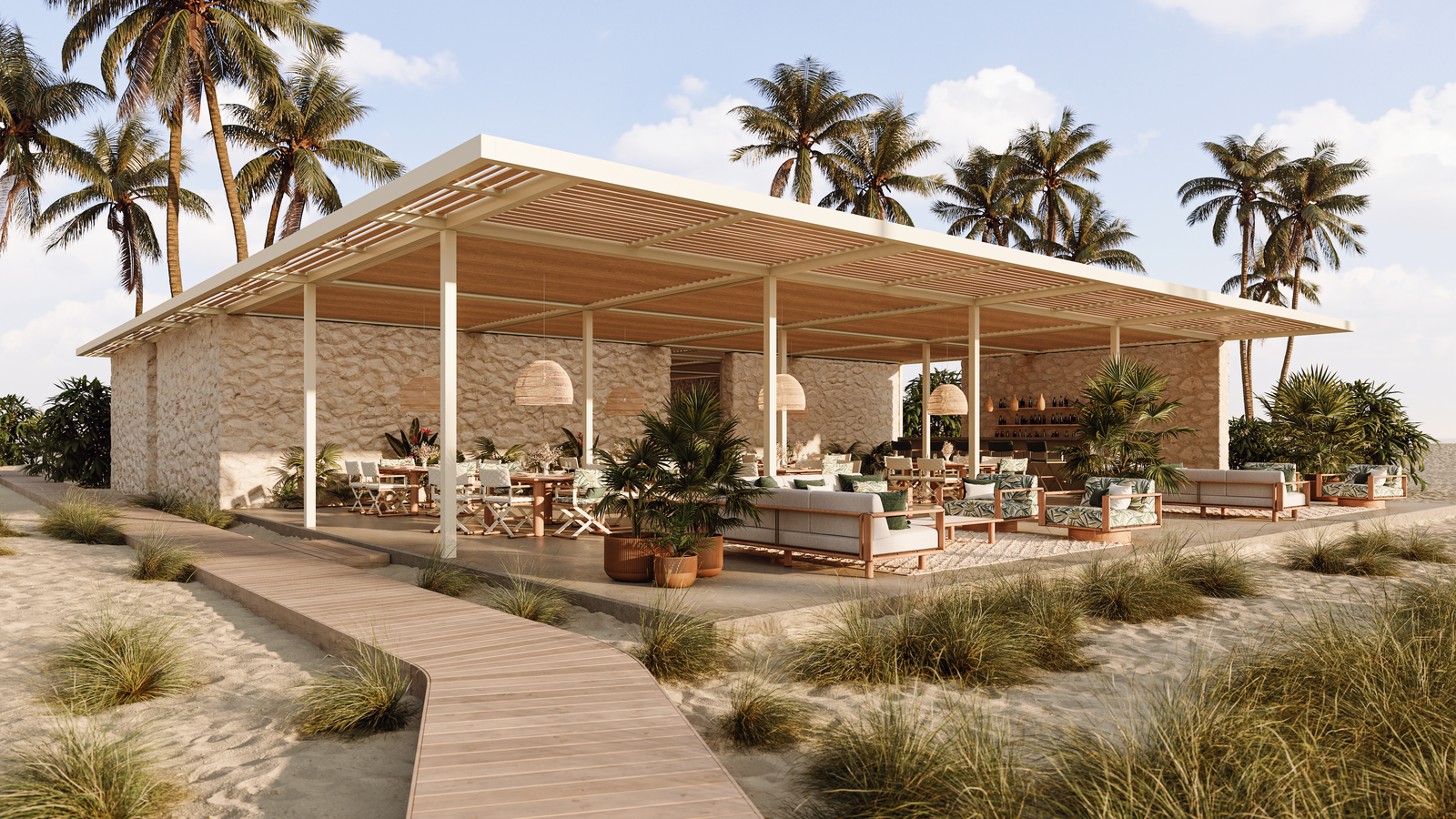
ID: Linked together, Ocean Master MAX Solanox Pergolas can create separate areas for lounging, dining, and entertaining. Would you walk us through the thinking behind that modular design?
Tuuci: We approached Solanox with the understanding that outdoor environments should offer the same flexibility and intentionality as interior spaces. Just as a home might have distinct areas for dining, entertaining, and relaxing, an outdoor setting benefits from spaces designed around how people actually live and gather.
The modular design allows those environments to take shape organically. A single pergola can establish an intimate outdoor room, while linked structures create a larger, connected setting with distinct functions. A dining area can flow naturally into a lounge, or an outdoor kitchen can become part of a complete entertaining environment. The shared framework creates visual continuity while allowing each space to have its own purpose and personality.
Flexibility also extends to the experience within each space. Roof configurations, walls, curtains, lighting, and coordinated finishes give designers control over light, privacy, comfort, and atmosphere. The result is an adaptable outdoor environment that feels cohesive without being rigid, designed to support the way people use their spaces today and how those needs may evolve over time.

ID: Many of the same finishes appear across Tuuci’s parasols and day lounges. How might that shared palette help an outdoor setting come together as a whole?
Tuuci: One of the most effective ways to create a cohesive environment is through a consistent design language. A shared palette allows designers to establish visual connections between different elements of an outdoor space without making everything look the same.
For example, the warmth of Aluma-TEAK™ can carry through parasols, day lounges, and furnishings, creating a natural sense of continuity. Alternatively, coordinated powder coat finishes can establish a more contemporary, tailored aesthetic. Those shared elements provide a foundation that allows the individual pieces to complement one another, even when their forms and functions are very different.
What makes this especially exciting is the freedom to introduce contrast and personality. A consistent structural finish might be paired with different fabrics, canopy treatments, or decorative details to distinguish a dining area from a lounge or a more private retreat. With our expansive selection of textiles, finishes, and Softscapes prints, designers can create distinct experiences within a unified setting.
The goal isn’t to make everything match. It’s to give designers the freedom to create spaces that feel connected, intentional, and uniquely their own.