
Introducing the Vivano Chair from Davis Furniture and jehs+laub
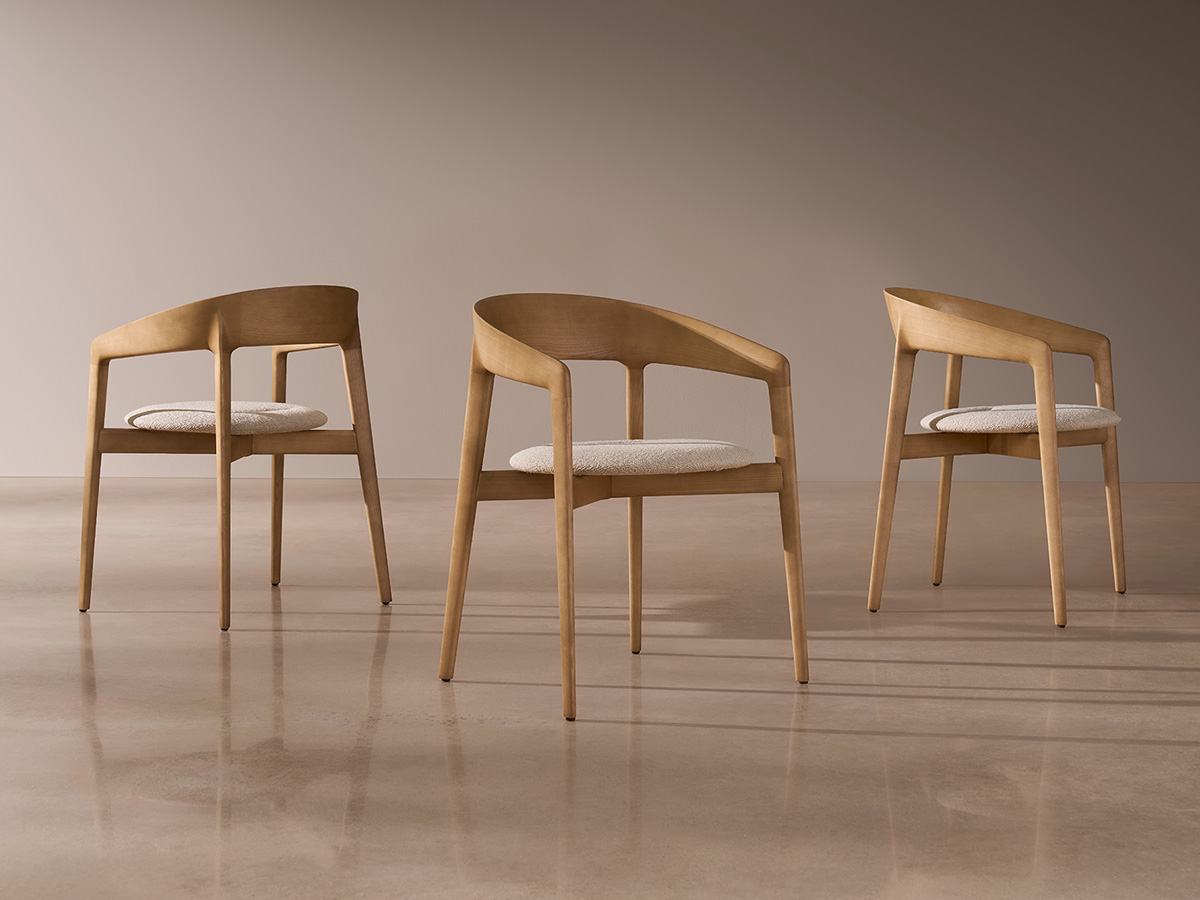
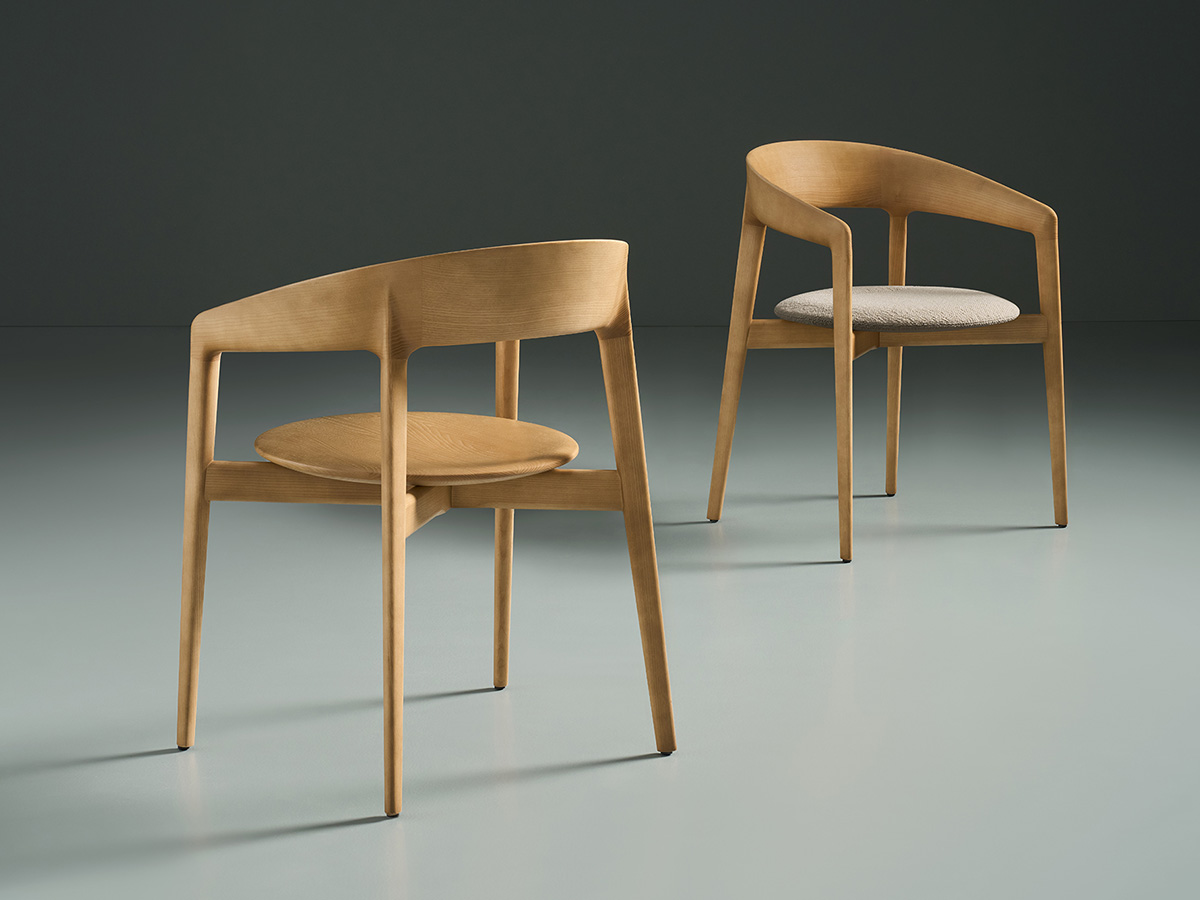
With a backrest that flows seamlessly into its arms, the Vivano Chair is a study in sculptural solid-wood craftsmanship. The newest introduction from Davis Furniture’s long-standing collaboration with German design studio jehs+laub, Vivano pairs five-axis CNC machining with traditional steam bending to shape an ash, oak, or walnut frame into a singular, unified form. Conceived as a standalone piece apart from any broader collection, the chair places a heightened emphasis on proportion and transition. In this interview, jehs+laub reflects on Vivano's development and sheds light on the details that define it.
Interior Design: Vivano continues a collaboration between jehs+laub and Davis Furniture that began in 2009 and has produced multiple award-winning collections. Where did the idea for Vivano begin, and what were you hoping to achieve with the chair? How did that initial vision shape its proportions, transitions, and details?
jehs+laub: Since founding jehs+laub decades ago, we had never launched a solid-wood chair. Vivano is our first. But the idea actually goes back much further, to the early 1980s, when Jürgen was working as a cabinetmaker. Over the years, we explored the idea several times, but the results were never quite good enough for us. They always seemed to look like a collection of individual wooden parts that had simply been joined and glued together.
With Vivano, we wanted to move beyond that and create a solid-wood chair that feels like one continuous, resolved form. The proportions, transitions, and details all developed from this idea. Rather than emphasizing how the individual components come together, we wanted the structure to appear natural and fluid, with each element flowing into the next.
ID: The backrest flows continuously into the arms, while the legs taper to the floor and fuse into the back structure. How did you develop and refine these transitions to create such a continuous, sculptural form?
jehs+laub: Our design approach was clear from the beginning: the chair had to combine ergonomics and comfort with lightness and minimalism, all within a single, cohesive form. This meant that every transition became important. The backrest, arms, and legs needed to work together structurally and ergonomically, but also visually, without any one element feeling separate from the whole.
The challenge was to reduce the chair to what was essential while still giving the solid wood a sense of movement and softness. The resulting transitions help Vivano feel sculptural and expressive without becoming visually heavy.
ID: Vivano combines five-axis CNC machining with traditional steam bending to shape its solid-wood components. From a design perspective, how did these manufacturing capabilities help you achieve the sculptural quality you envisioned for the chair?
jehs+laub: That was precisely one of the motivations behind designing this new solid-wood chair. Today, new technologies allow us to think about wood in entirely new ways and to achieve forms that would have been much more difficult to realize in the past.
Five-axis CNC machining and traditional woodworking techniques gave us greater freedom to refine the curves, transitions, and connections between components. The challenge then becomes managing the material thicknesses and resolving the connections between individual parts so that the chair feels continuous rather than assembled. Technology gives us new possibilities, but the goal is that the finished chair feels simple and natural.
ID: A rounded seat sits within the solid-wood structure and appears almost to float. What went into achieving that sense of lightness in a material as substantial as solid wood?
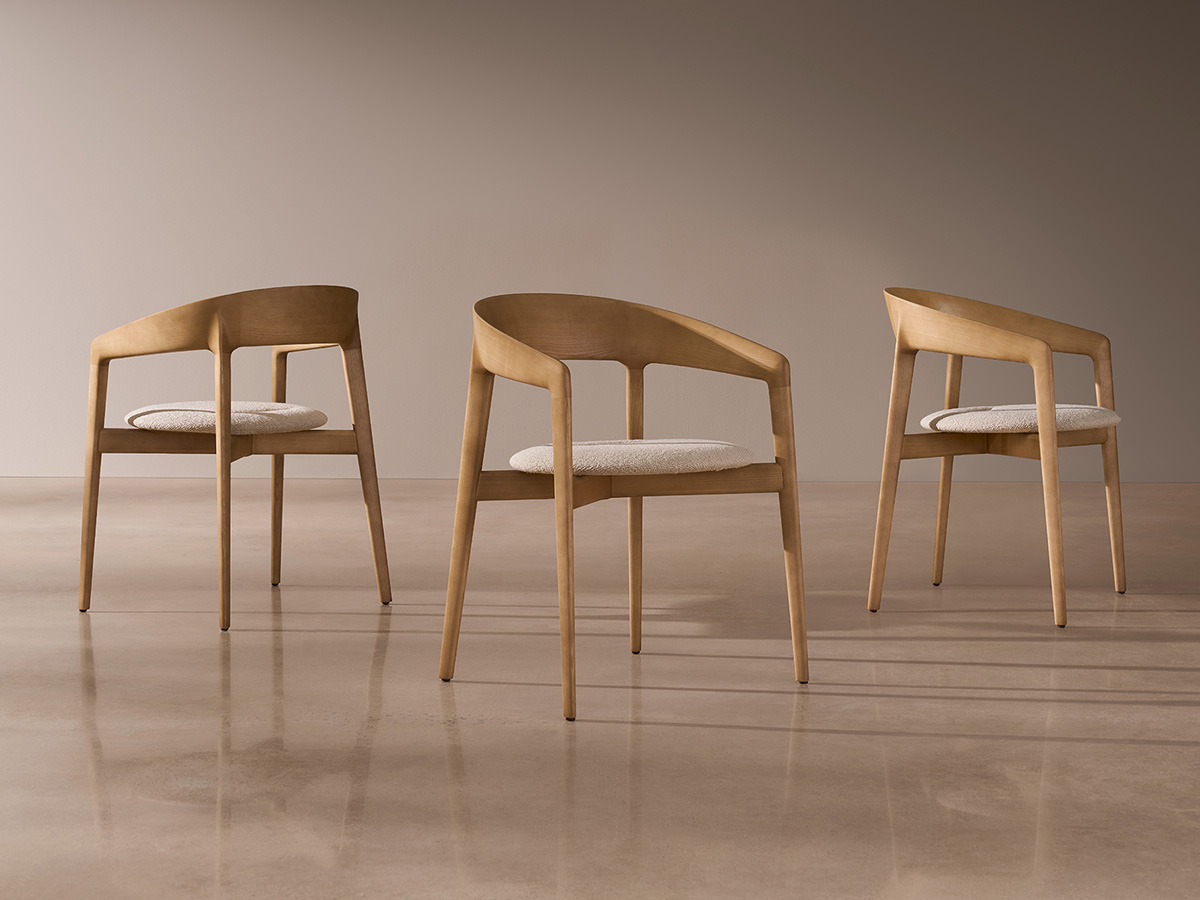
jehs+laub: We discovered during the design process that the overall form became clearer and more expressive when the seat was visually distinct from the surrounding wooden structure. Creating this separation gives the seat a lighter, almost floating quality and allows the continuous form of the frame to remain visible.
It also gave us the opportunity to explore different seating options without changing the essential character of the chair. Whether the seat is solid wood or upholstered, the surrounding structure remains the defining element.
ID: Vivano can be specified with either an exposed solid-wood seat or an upholstered seat. What led to offering both options, and how does each change the character and expression of the chair?
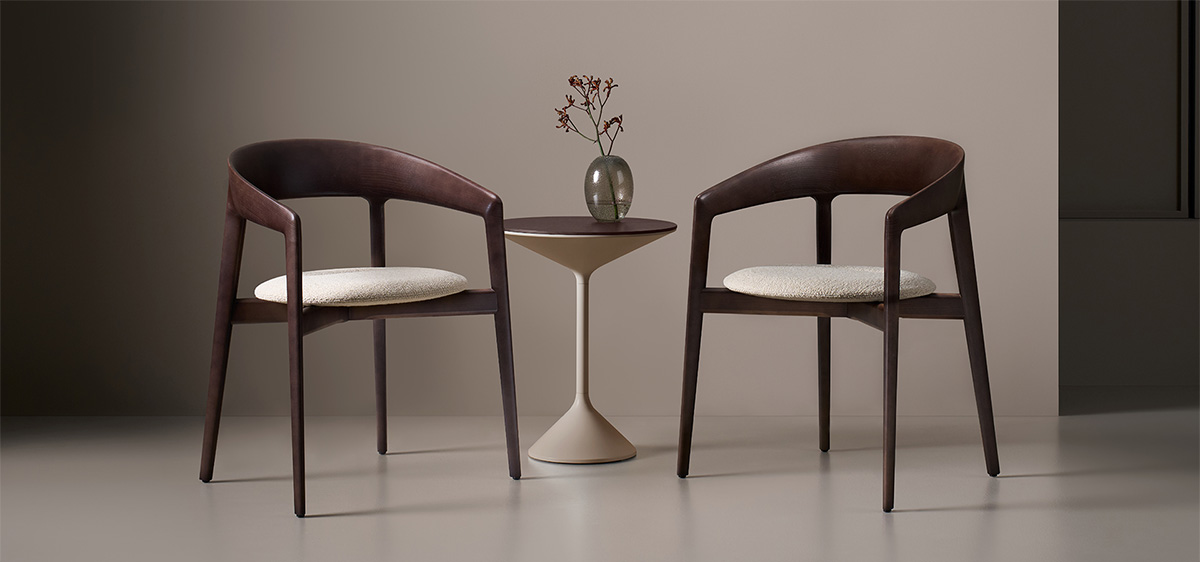
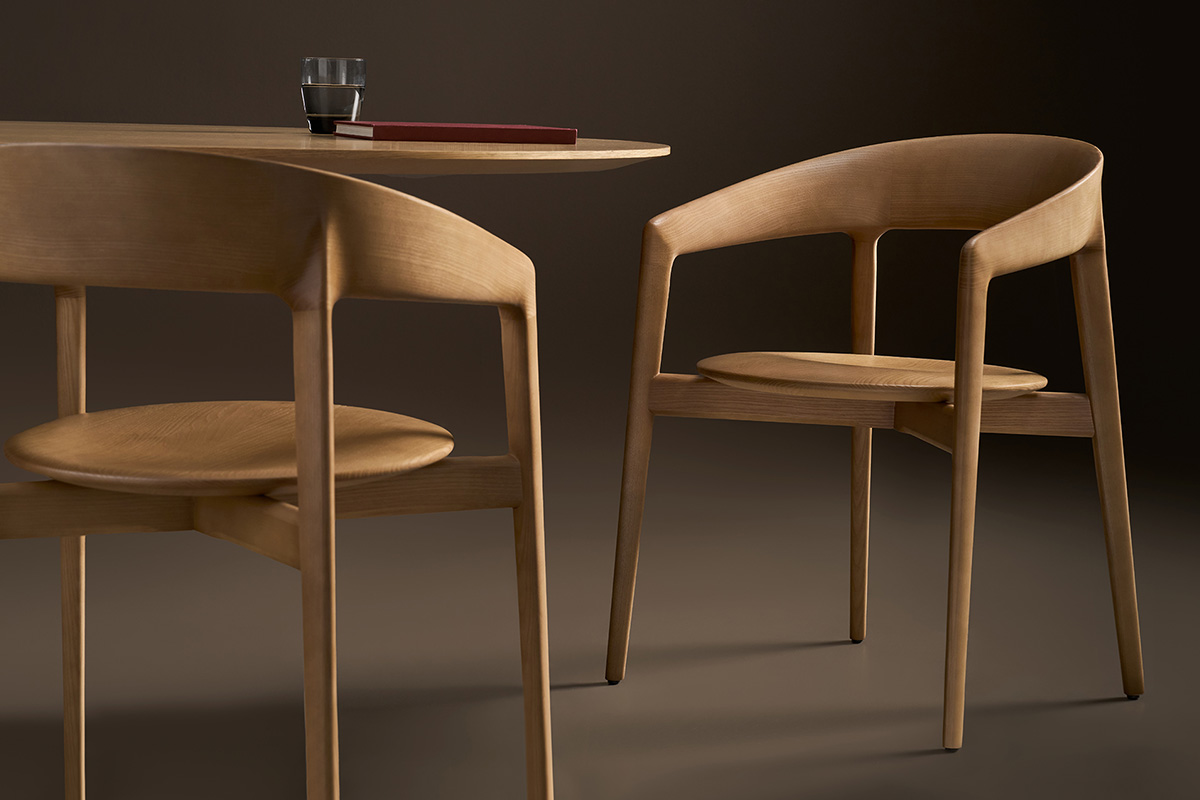
jehs+laub: We like both versions for different reasons. The all-solid-wood version has a very pure and essential character, allowing the material and construction of the chair to become its expression. The upholstered version creates a different visual balance. By separating the seat from the frame, it gives the chair a certain lightness – almost as though it has “long legs” – while also providing added comfort for sitting over longer periods.
The two options allow Vivano to take on slightly different personalities while preserving the same underlying form and design language.
ID: The chair is available in ash, oak, or walnut, with the grain, tone, and natural variation of each species becoming part of its expression. How did the material inform the design, and how did you approach preserving the natural character of the wood?
jehs+laub: The material was fundamental to the design from the beginning. In particular, the shape of the armrests naturally invites touch, so the tactile quality of the solid wood becomes just as important as its visual character.
For this reason, the surface finish plays a crucial role. Davis’ wood finishes allow the material to retain a warm, natural feel in the hand rather than appearing overly finished or artificial. The grain and natural variation of ash, oak, and walnut then become part of the chair’s character, allowing the material itself to contribute to its expression.
ID: Looking back at the development of Vivano, from the first sketches through the final chair, what stands out most to you? Now that the design is complete, where do you most imagine seeing Vivano used?
jehs+laub: What stands out most is that the finished chair feels completely natural and effortless. Of course, reaching that point requires a great deal of development and refinement, but in the final design, the details, materials, proportions, and comfort come together as a harmonious whole. There is nothing to add and nothing to take away – which is exactly what we strive for in all our designs.
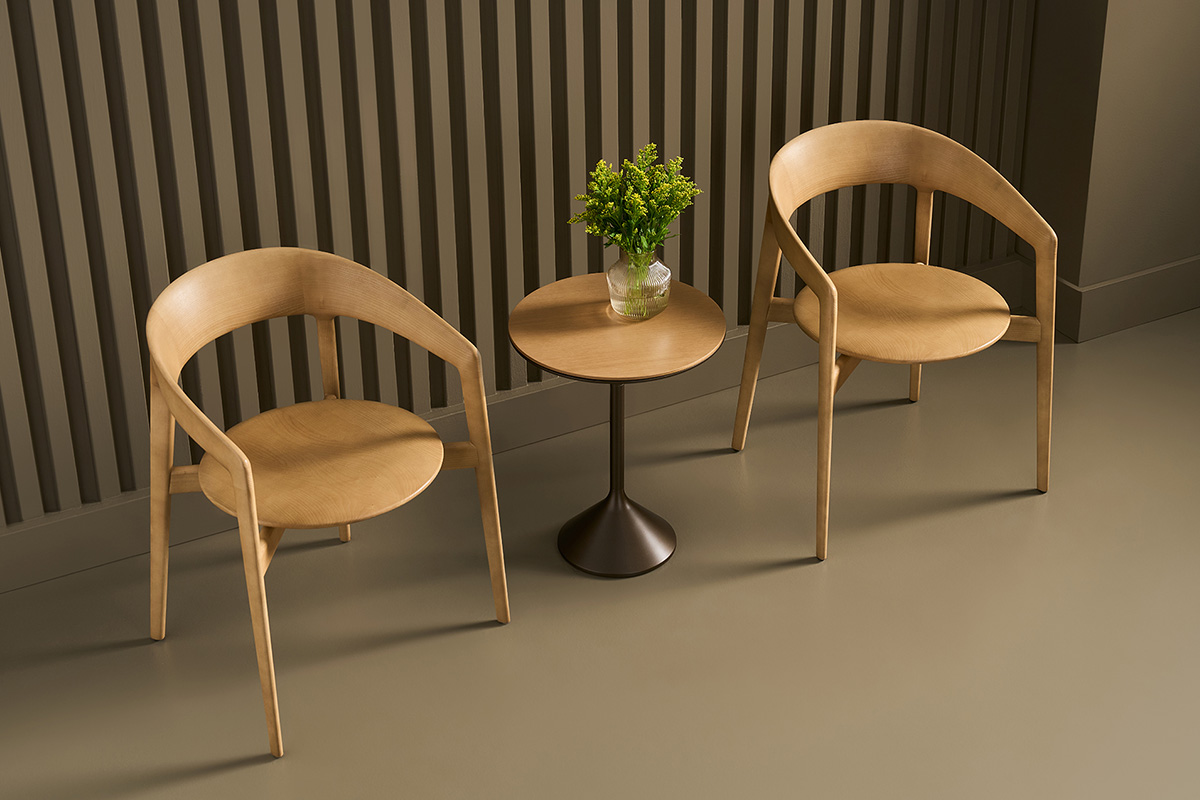
We can imagine Vivano in many different environments. It can function as a conference chair, dining chair, or guest chair, and its character allows it to move naturally between different types of interiors. That versatility was important to us: it is a chair with a clear identity, but one that does not dictate the space around it.
ID: After more than 15 years of collaborating with Davis Furniture, how has your working relationship evolved, and how did that shared history influence the development of Vivano?
jehs+laub: Over the past 30 years, we have collaborated with many companies, yet relatively few share our philosophy so closely when it comes to design, quality, and environmental awareness. We consider our collaboration with Davis to be one of our finest partnerships.
After more than 15 years of working together, there is a level of trust and mutual understanding that allows us to concentrate on refining the design rather than continually establishing common ground. We understand one another’s expectations for quality and detail, and that shared history was especially valuable with a chair like Vivano, where seemingly simple forms depend on very precise decisions. Partnerships like this challenge all of us to continue improving and ultimately lead to better products.