
Keilhauer Rethinks Flexibility in Workplace Seating With Pact Flex and By The Foot
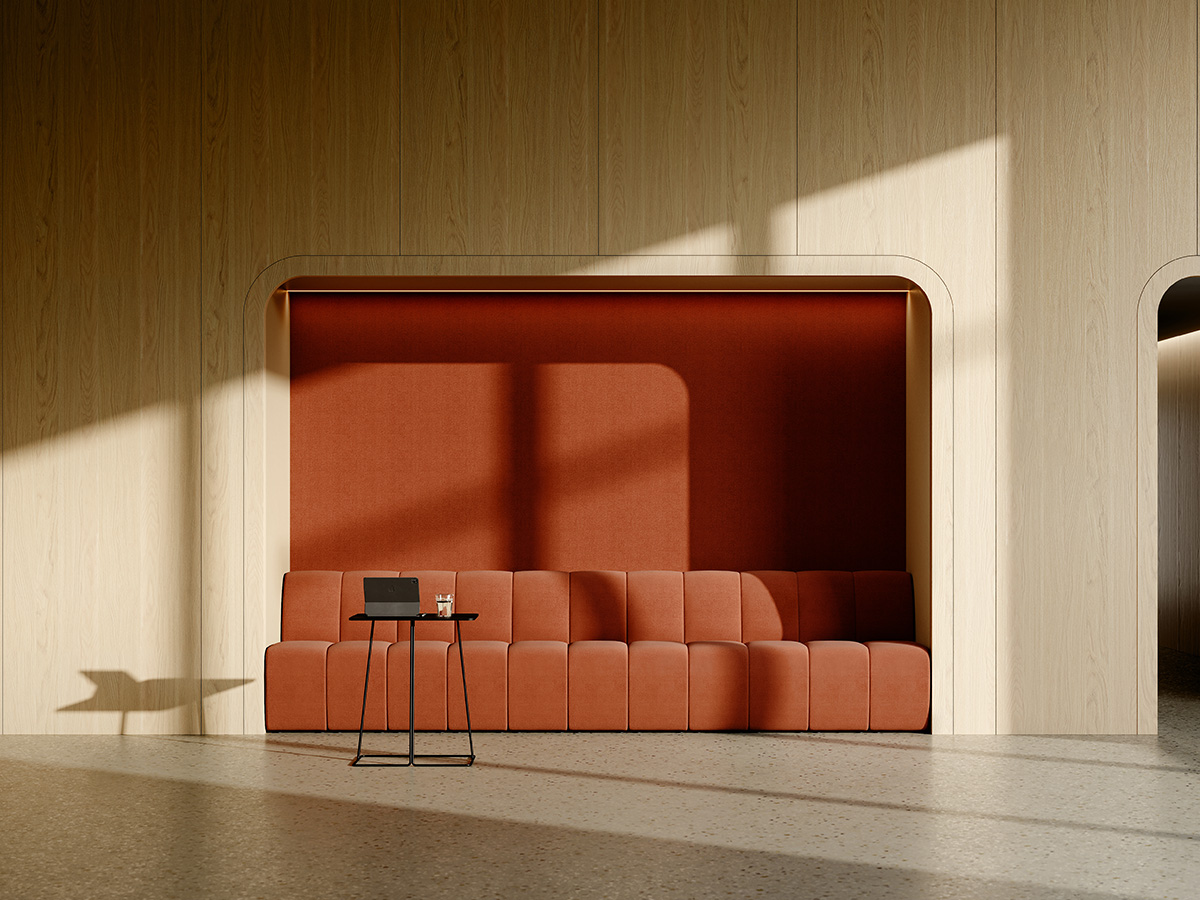
Scaled to the space at hand, whether measured to the inch or built a foot at a time, Keilhauer’s two newest product families bring the corners and corridors of the workplace into active use. Designed by EOOS, the pair includes Pact Flex, an extension of the Pact collection offered in made-to-measure sizes, and By The Foot, continuous benching assembled from modular units. In this interview, Maggie Keilhauer, the company’s Associate Creative Director, sheds light on the development of both.
Interior Design: Compact and irregularly dimensioned spaces can present particular challenges for workplace design. How did conversations around these spaces inform the development of Pact Flex and By The Foot?
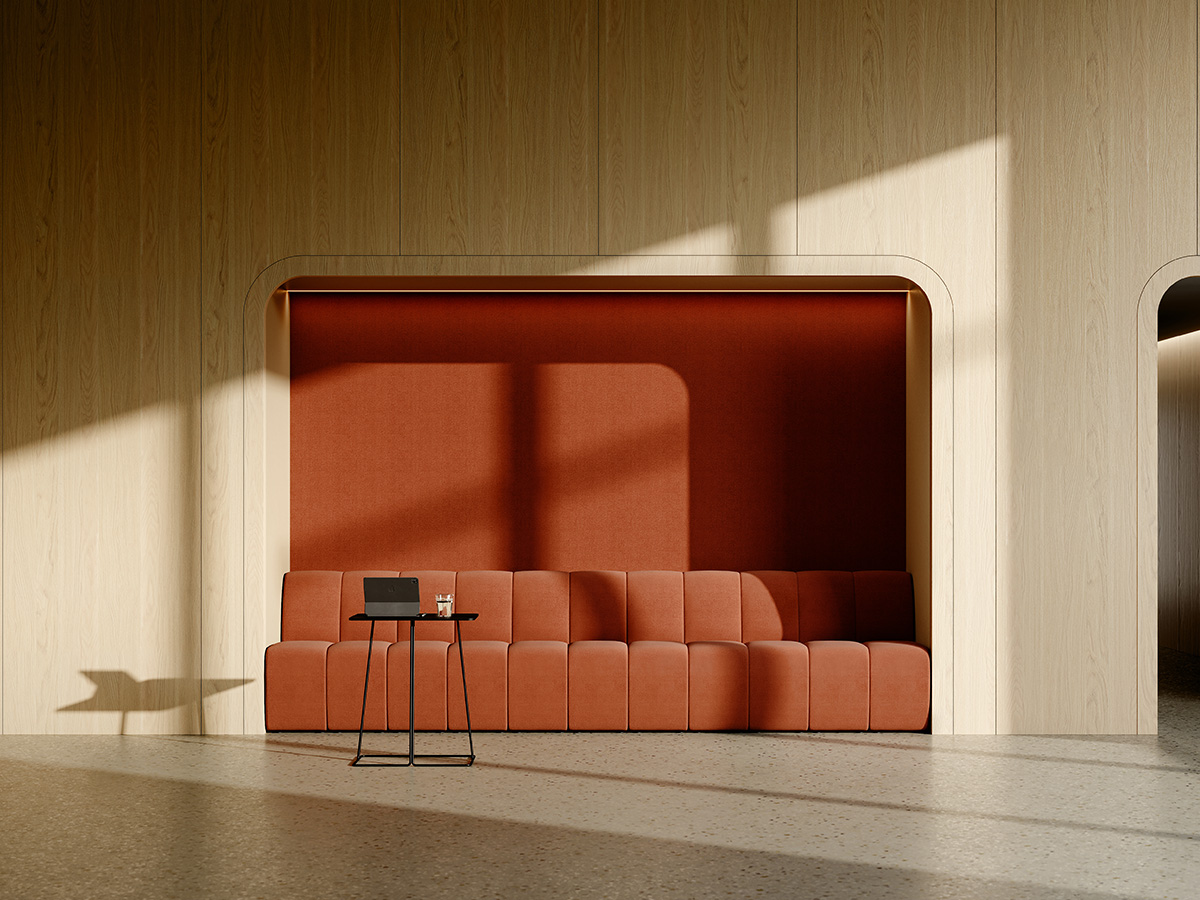
Maggie Keilhauer: We were hearing from designers that standard furniture dimensions don’t always respond well to the realities of a space. Columns, wall conditions, circulation paths and smaller footprints can all create situations where a standard 48- or 60-inch piece leaves an awkward gap or forces the designer to compromise their original intent.
That really informed the thinking behind both Pact Flex and By The Foot. We were exploring two different ways of solving a similar spatial problem: how could we develop seating that responds more precisely to the architecture? Pact Flex does that through made-to-measure sizing by the inch, while By The Foot takes a different approach, using standardized 12-inch modules that can be added or removed depending on the length required. Both give designers greater control over how the furniture fits the space, but through two very different systems.
ID: Both Pact Flex and By The Foot were designed in collaboration with EOOS. What did you want to explore through this partnership, and how did the collaboration shape the two collections?
MK: We have a long-standing relationship with EOOS, and our conversations often begin with a problem rather than a predetermined product. For Pact Flex and By The Foot, we were looking at how seating could respond more precisely to the dimensions and conditions of a space without making the specification process more complicated.
That led us in two different directions. With Pact Flex, we explored how made-to-measure sizing could become part of a standard product offering. With By The Foot, we looked at how a simple, repeatable 12-inch module could provide dimensional flexibility without custom manufacturing. EOOS helped us translate that shared challenge into two distinct systems, each with its own approach to fitting seating to the architecture.
ID: Pact Flex introduces made-to-measure seating that can be customized by the inch from 25 to 60 inches while maintaining standard lead times. What was the thinking behind bringing this level of dimensional flexibility to a contract seating collection?
MK: Typically, when a designer needs a very specific dimension, it becomes a custom request. That can mean additional coordination, cost and lead time. With Pact Flex, we wanted to remove that trade-off.
The idea was to make custom convenient. Every piece can be specified by the inch from 25 to 60 inches, but it remains part of our standard offering and standard lead times. So if a designer needs 43 inches because that is what works within the architecture, they can specify 43 inches. They aren’t forced to choose the closest standard size or go through a custom process. For us, that was really about giving designers more freedom while making the specification process simpler, not more complicated.
ID: With its range of configurations and base options, Pact Flex can move between sofa, booth, and benching applications. How did you approach creating a system that can accommodate such different spatial and architectural conditions?
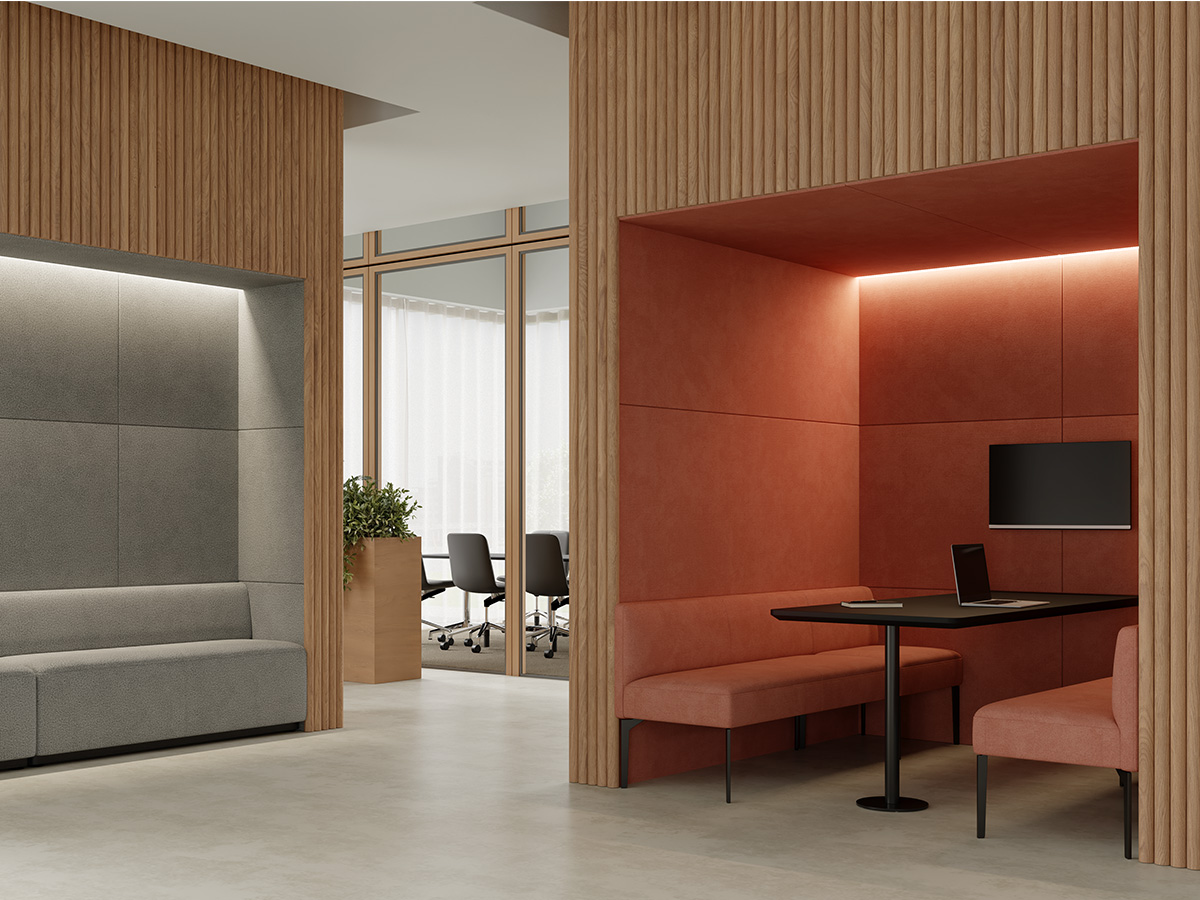
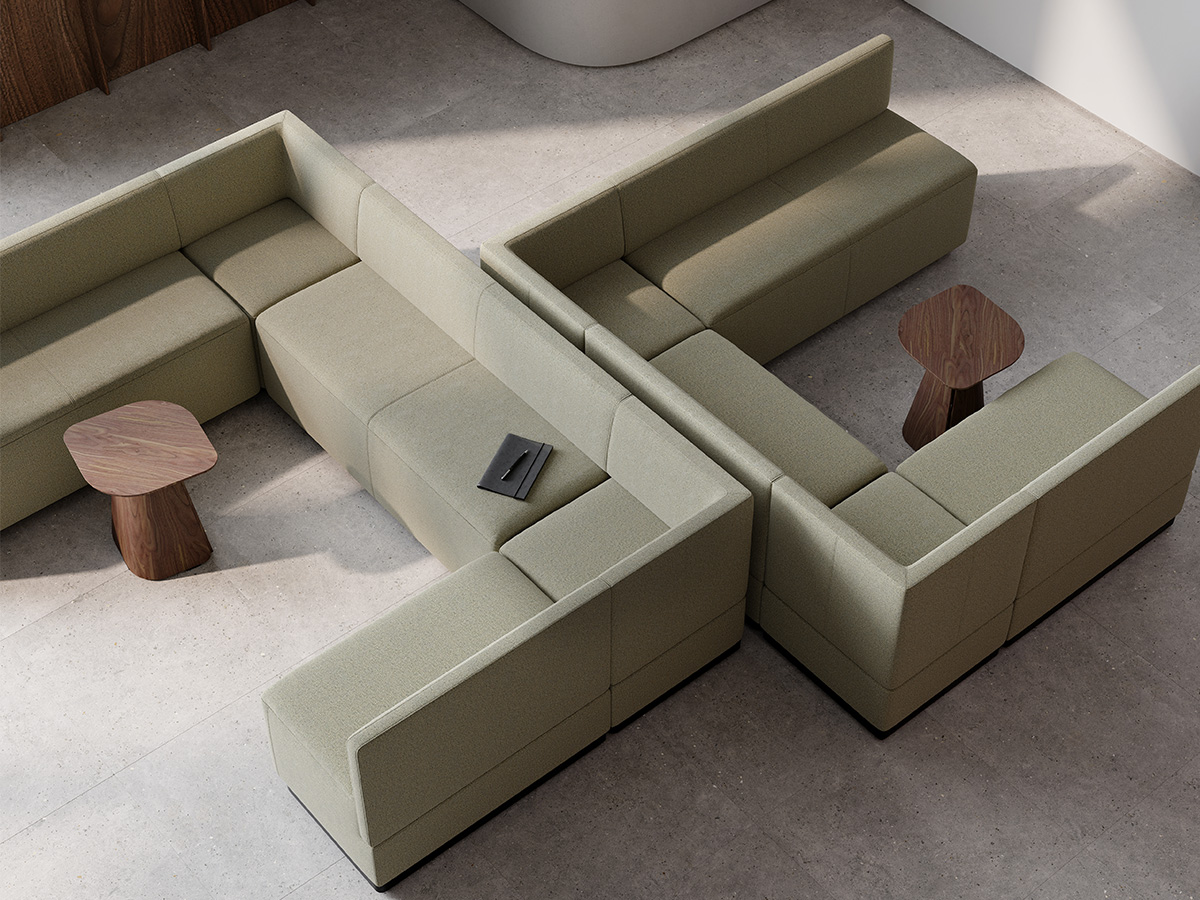
MK: We approached Pact Flex as a system of building blocks rather than a single sofa. The individual pieces can create straight, L-shaped or U-shaped configurations, and the three base options allow the product to interact with the architecture in very different ways.
It can sit on slim legs and read more like freestanding furniture, extend to the floor for a more integrated architectural expression, or be specified as cushions only and incorporated into a designer’s own millwork or structure.
That range was important because the same fundamental seating system can respond very differently depending on the project. The designer has control over the dimension, configuration and how the product meets the architecture without having to move outside the collection.
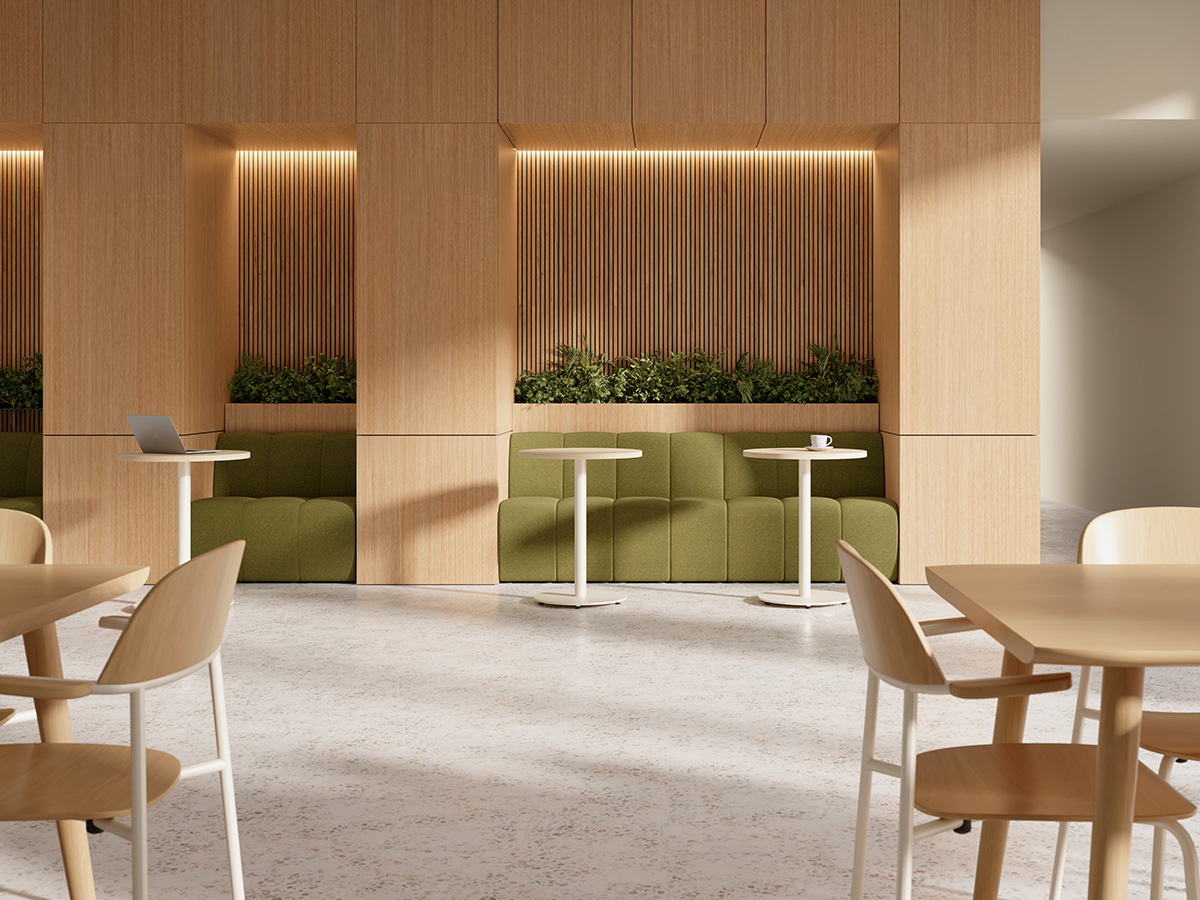
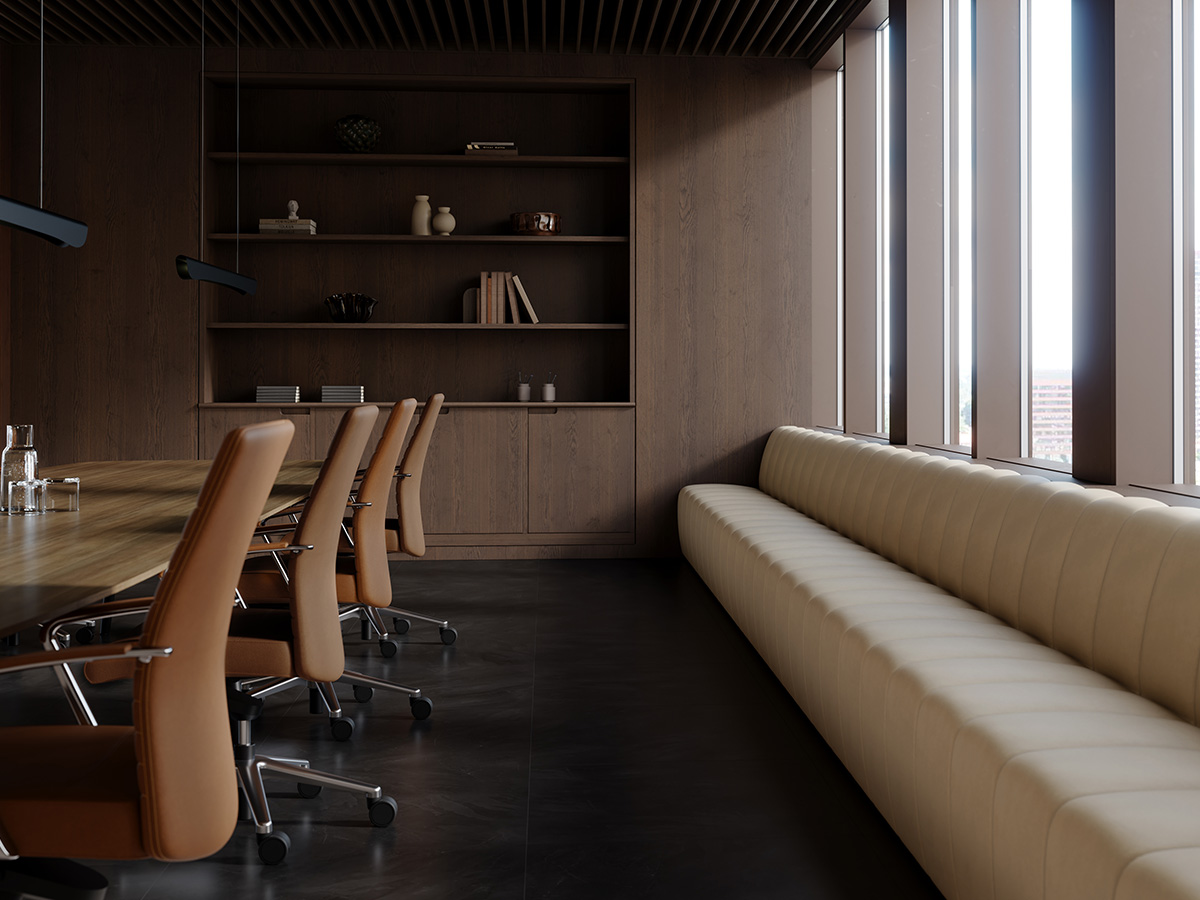
ID: By The Foot takes a modular approach to continuous benching, with 12-inch units that can align with architectural elements and circulation patterns. What does this approach make possible for designers working with spaces that fall outside standard furniture dimensions?
MK: The simplicity of By The Foot is really what makes it useful. Rather than asking a designer to specify a custom-length piece, we created a standardized 12-inch unit. You don’t really specify a custom length. You specify how many feet you need. Because the flexibility comes from repeating a standard component rather than creating a new custom product each time, the system remains straightforward to specify, manufacture and install.
ID: Pact Flex and By The Foot respond to different applications, yet both are rooted in flexibility and a close reading of the space. What do these launches say about the way Keilhauer approaches product development?
MK: We try to start product development by identifying a real problem rather than deciding that we need another chair, sofa or bench. We spend a lot of time listening to designers and looking at how products are actually being specified and used. Often, the most interesting opportunities come from understanding where designers are being forced to compromise.
Pact Flex and By The Foot are good examples because they address a similar problem in two completely different ways. One provides precision through made-to-measure sizing, while the other provides flexibility through a standardized modular system.
For us, good product development is about finding that balance. We want to give designers more freedom, but the solution still has to be intuitive to specify, efficient to manufacture and practical to install.
ID: As workplaces continue to evolve, how do you see the role of adaptable furniture changing alongside them?
MK: I think adaptability is increasingly becoming an expectation rather than a feature. Workplaces are being asked to do more, often within smaller or more complex footprints, and designers need products that can respond to those conditions.
What is changing is how we think about adaptability. It doesn’t always need to mean furniture that moves or gets reconfigured every day. Adaptability can also be about giving the designer more control from the beginning: the ability to specify exactly the dimension they need, respond to the architecture, or build a system around the particular requirements of a space.
For us, the goal is to build that flexibility into the product in a way that feels simple. Pact Flex and By The Foot are different expressions of that idea: furniture designed around the realities of the space rather than asking the space to conform to the furniture.