

Kimball International Advances Comfort and Connection at Work
Design often begins with the observation of materials in motion—the way structure responds to use, how texture meets movement, how form absorbs the rhythm of daily work. At Kimball International, such observations evolve into design intent, shaped by both craft and research, informing products and spaces that support comfort, focus, and belonging across today’s evolving workplace landscape.
Curiosity about how people and products interact has guided Kimball International since its earliest years. “Our company was founded on craftsmanship, care, and connection, values that have always centered around people,” explains Jessica Gubbins, Vice President, Brand, Digital, & Insights Marketing. “That foundation has evolved over time, but the heart of it remains the same. We’ve always believed that the environments we create should enhance how people work, learn, and heal.” Carrying that ethos forward, Kimball International continues to explore how design supports connection and well-being in the workplace.
Designing for Human Needs
Rooted in those original principles, Kimball International has continued to evolve its understanding of what makes people feel connected to their workplace environment. To deepen that perspective, the company partnered with Ipsos, a global leader in market research, and Arigami, an interdisciplinary research team specializing in behavioral science and neuroaesthetics, to develop the Creating Places to Belong research report. Experts from Harvard, Stanford, Oxford, and Cambridge contributed to the study, which examines how sensory design and human behavior influence belonging across workplace settings.

The research identifies four universal needs—connection, community, comfort, and choice—and translates them into spatial typologies and design strategies for the modern workplace. “Each of those four human needs shows up in both the design of our products and the experiences they create,” says Gubbins. Connection and community take shape through modular lounge systems like Fringe and Collette, which encourage collaboration and inclusion among teams. Comfort is reflected in the ergonomics and sensory qualities that bring warmth and ease to interiors, helping employees feel grounded and supported throughout the workday. And choice emerges through environments that support flexibility—whether a quiet Pod for focus or a vibrant Café for connection. “We see these needs as universal, but how they manifest can be deeply personal, and our solutions aim to support that spectrum,” Gubbins adds.
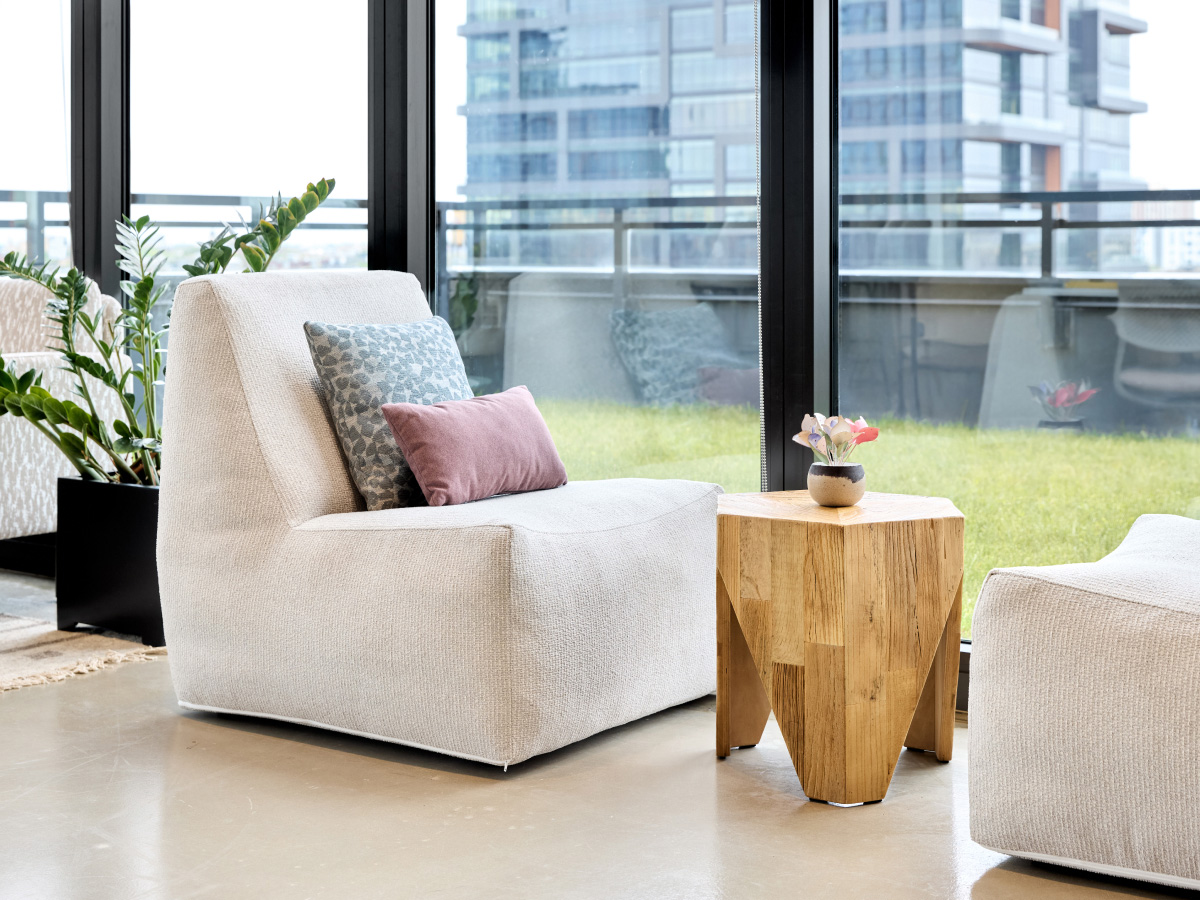
According to Angie Schuch, Vice President, Product Marketing, the company’s design process continues to expand through observation and foresight. “We’ve really listened to and observed how people interact with our products in real environments, ensuring that we build this feedback into our designs,” she notes. “Our Creating Places to Belong research has enabled us to think beyond function and aesthetics to how our products support emotional well-being.”

This perspective is deepened through Kimball International’s collaboration with Arigami on sensory design. “We’ve learned that design isn’t just visual, it’s something people feel, hear, and even smell,” says Gubbins. “The acoustics of a space, the tactility of materials, the presence of natural light or biophilic elements—all of these impact how people experience belonging.” These findings inform product development across Kimball International’s family of brands, shaping environments that respond to both individual and collective well-being.
A Research-Driven Product Evolution
Kimball International’s study of belonging takes physical form in Havei by Interwoven—a recliner designed with care and adaptability at its core. Developed in partnership with Qdesign, Havei reimagines the healthcare recliner through empathy and insight. “We began with research, not sketches, observing how nurses move, how patients sit, and how families gather,” explains Schuch. “Every feature and option was purposeful, from the heated back for added comfort to intuitive mobility and ergonomic adjustments that make care easier and more natural.”
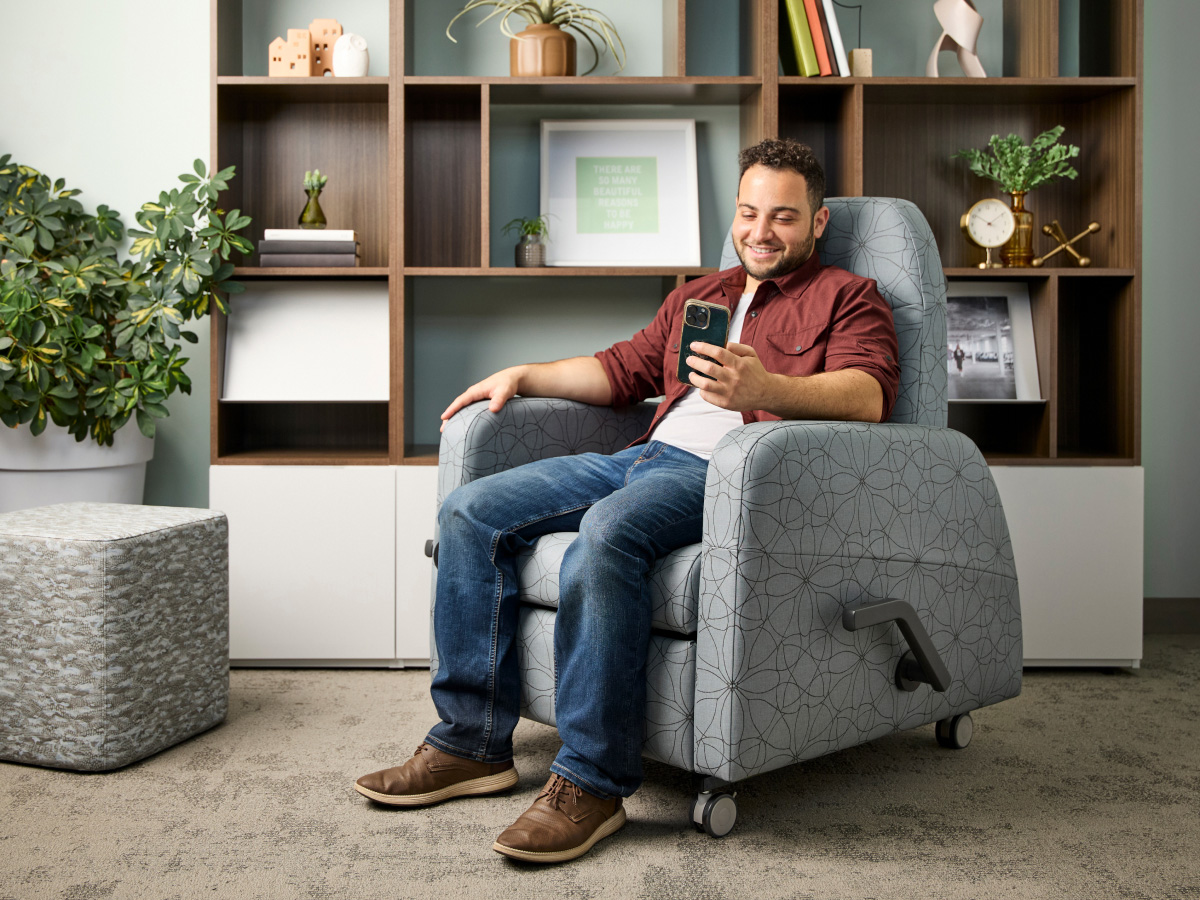
Soft-touch arm caps, a quiet recline, and a wide, contoured seat bring warmth and support to settings designed for rest or reflection. Optional heat, retractable power, and an integrated tech arm provide comfort and convenience for users across environments. While created for healthcare, Havei extends naturally into workplace wellness spaces, offering a restorative experience for moments of pause or recovery.
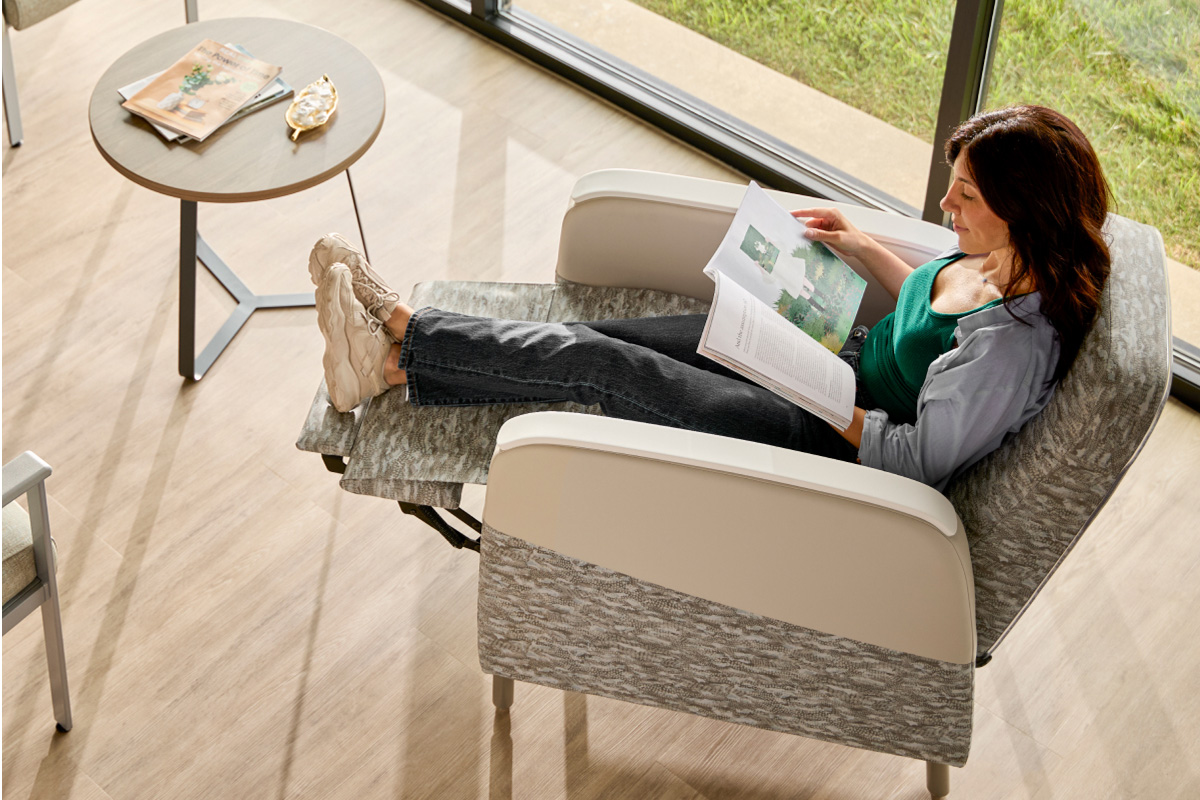
As the definition of the workplace continues to expand toward well-being and adaptability, Kimball International’s research provides a framework for designing spaces where people feel connected and supported. “We’re continuing to explore how belonging and well-being can be designed into every experience, from the furniture itself to the broader ecosystems where people live, work, learn, and heal,” says Gubbins. “We’re also investing in tools and insights that help organizations understand what belonging means for their people, because ultimately, design has the power to help everyone feel seen, supported, and well.”