
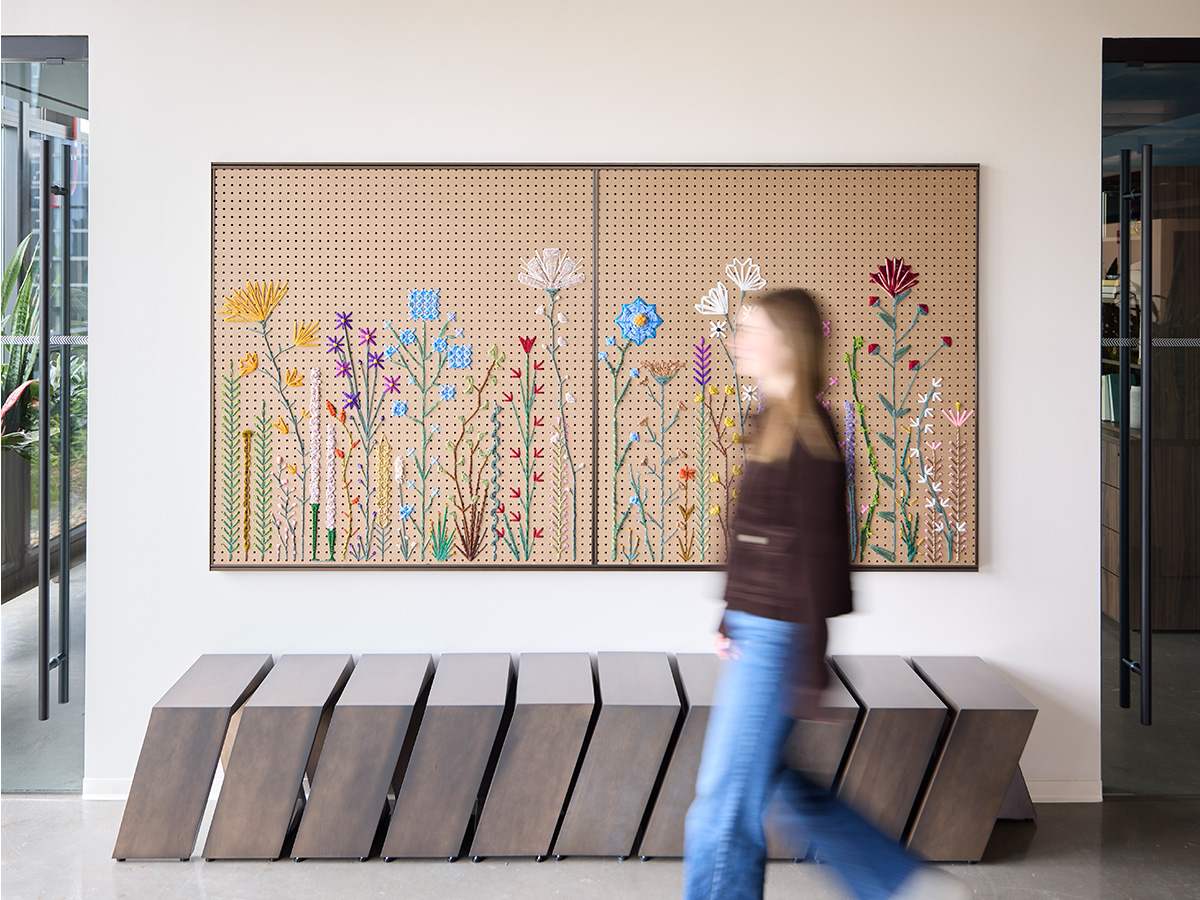
Kimball International Traces What Work Has Outgrown
The office was once designed for a workday that could be tallied, with fixed desks, fixed hours, and presence standing in as proof of output. Furnishing the Future, a new trend report from Kimball International, argues that the conditions supporting that arrangement have come apart, and that a building is no longer a neutral party to what unfolds inside it. “The shift is almost total,” says Kaelynn Reid, certified design futurist and editor of the report. “Work now moves across time, tools, places, roles, and even collaborators that are not always human.”
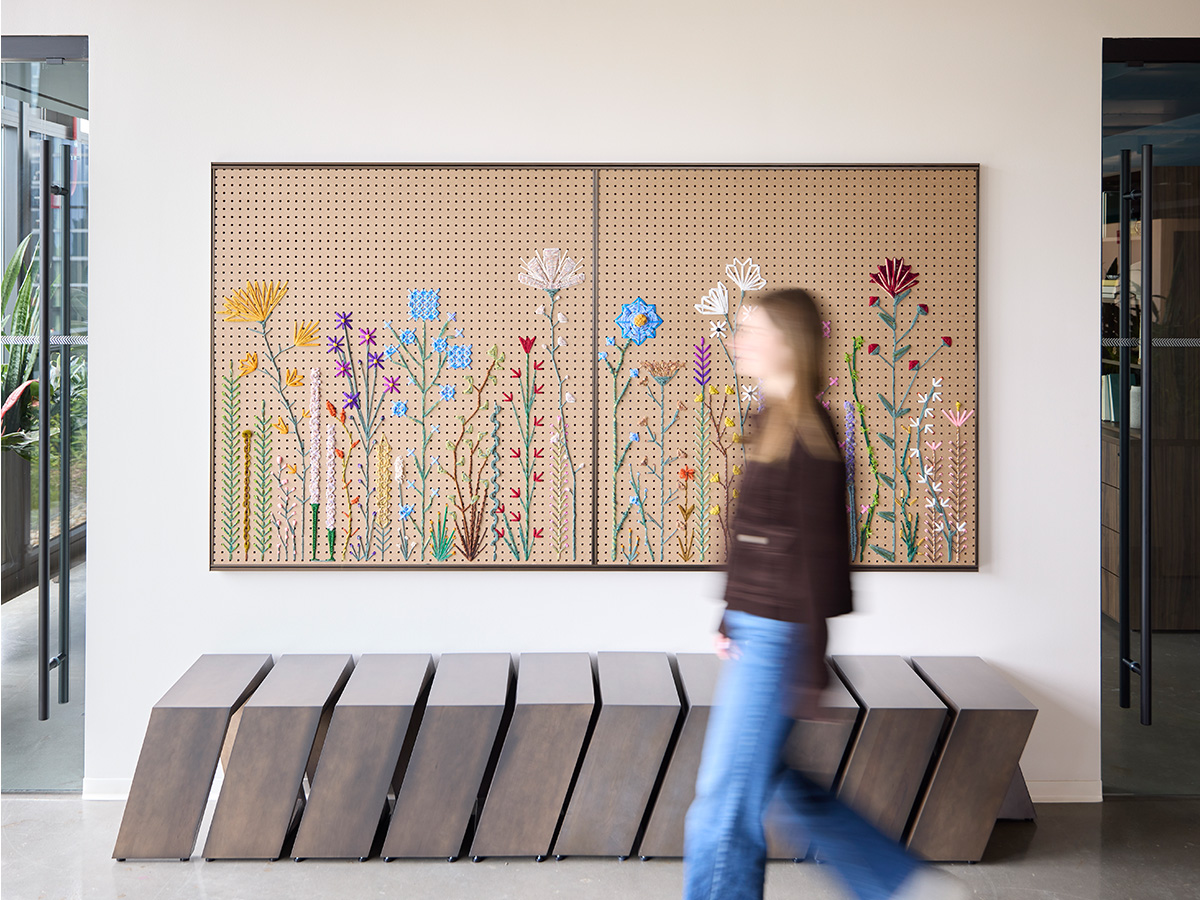
Five Design Forces surfaced from the research, drawn from more than two hundred signals across culture, technology, environment, economy, and design, each arriving with opportunities to act on now and others to hold for later. What runs underneath all of them is AI. “Hybrid work was the first visible rupture, but AI is the deeper one,” Reid says. “It is changing not just where work happens, but what the human contribution is for.”
Well-Being Distributed
Human Sustainability, the first of the five Design Forces, follows well-being as it moves out of the amenity rooms that have contained it for years. The demands on people are continuous now, and the work of meeting them falls to light, air quality, acoustics, the feel of a material, and the enclosure a high back, a screen, or a deeper seat can supply where people already are. “Recovery cannot wait for a dedicated room that most floors do not have,” Reid says. The more advanced version of the idea is responsive space, where environments tune shading or ambient conditions in real time using data people choose to share. “The important distinction is agency.”
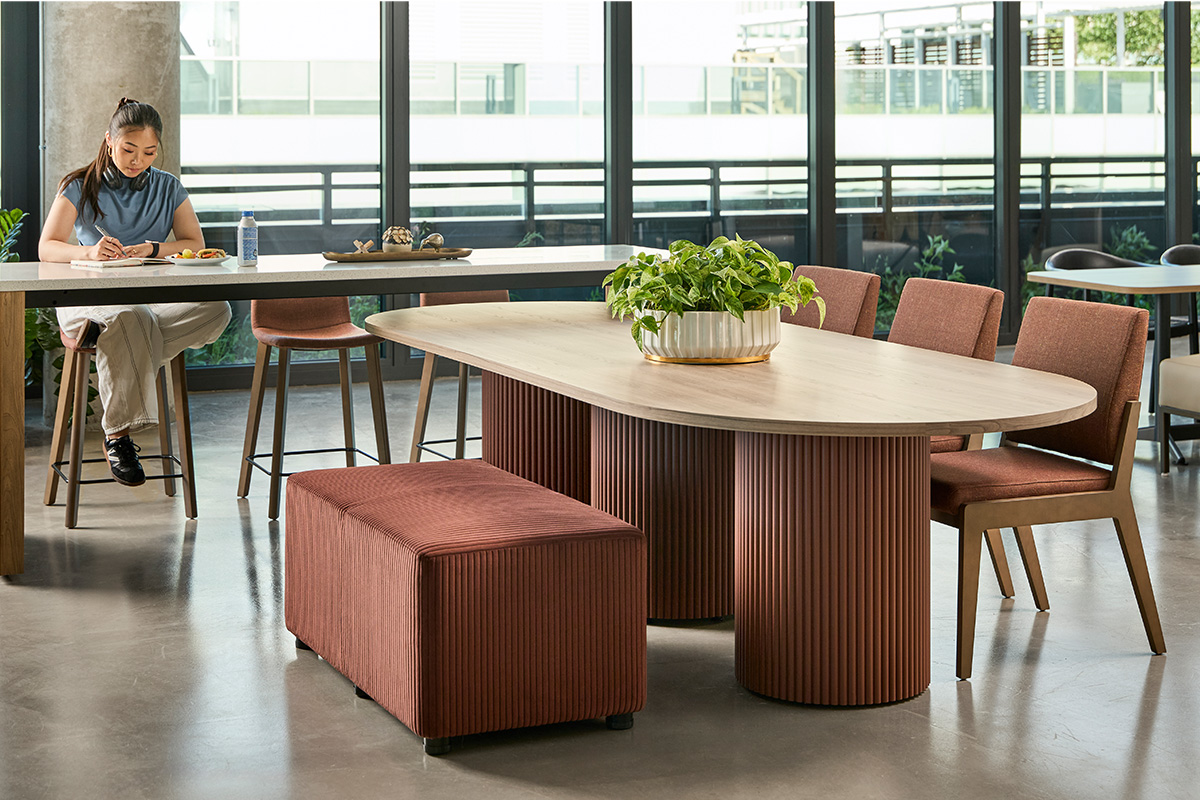
Its counterpart, Slow Connection, makes a parallel case for social health, casting the workplace as one of the few remaining places where unplanned interaction still happens consistently. “Proximity alone does not create belonging,” Reid says, pointing to corridors, stair landings, and shared tables, the places where familiarity builds through repetition. The signals underneath the force are ones of exhaustion and isolation, with people reaching for company more than stimulation. “They are looking for lower-pressure solidarity.”
The Office as One Stop
Work Unbundled describes attendance turning episodic, pieced together out of microshifts, asynchronous collaboration, and fractional roles that no longer resolve into a common schedule. Output is becoming the metric of success, and the report holds that a space now has to prove what it is for. “The office is increasingly one stop in a workday that people assemble for themselves,” Reid says. “The office has to earn the trip.”
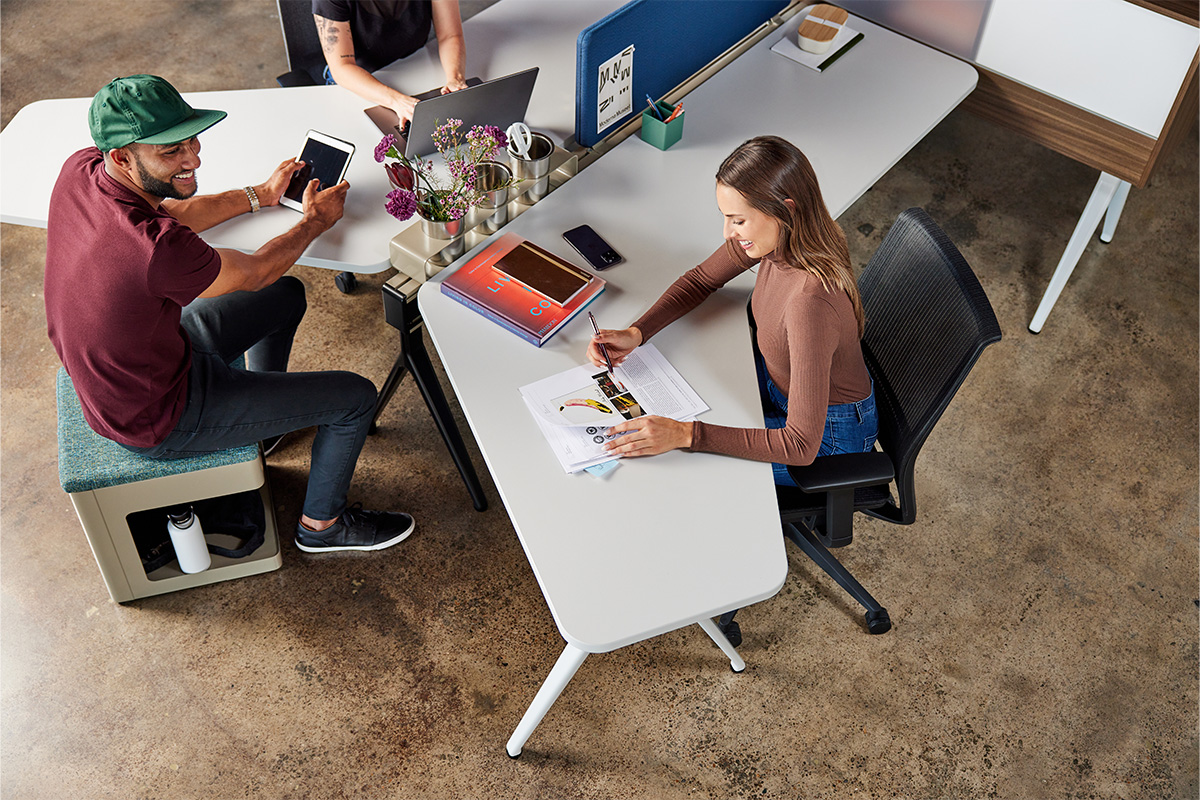
Earning it means meeting people who arrive with an agent in tow. The New Colleague follows AI as it moves from a tool people operate toward one they direct. “The room itself starts to behave like an interface,” Reid says. Acoustics, sightlines, microphone placement, and device density all become part of the technology stack. The report also has HR and IT arriving in the same conversation with priorities that do not always agree, one holding data and security, the other skills and inclusion, and leaves the reconciling to whoever is designing the space.
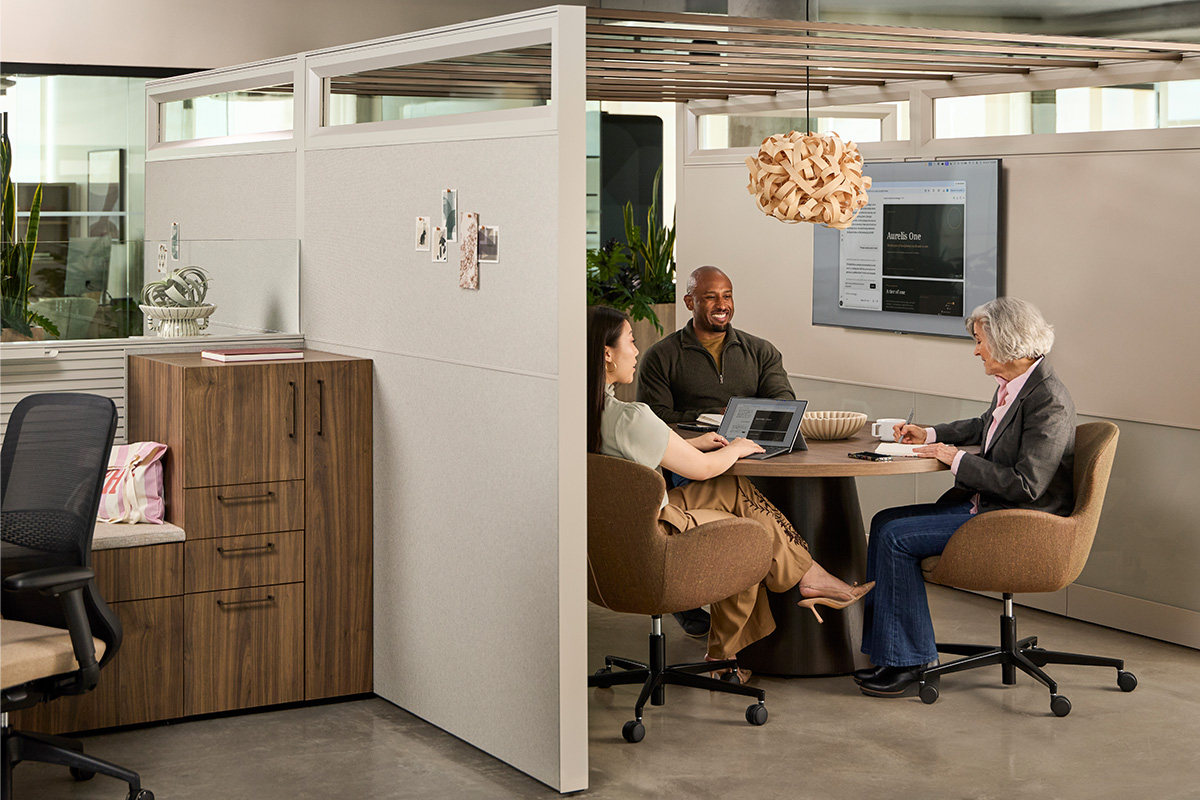
Underneath both sits Systemic Flexibility, which asks that products upgrade in place instead of being replaced, and locates long-term value in the system and its connectors as much as in the pieces they join. Assigned seating is thinning, and so are the space types beneath it, with the single-purpose room giving way to the neighborhood and the neighborhood to settings tuned closer to the person and the moment. The report pairs that with a plainer point about teaching people to use what they have been given, since a kit of parts only works when someone knows how to recombine it. “Products need to move, store, shift, and support more than one mode,” Reid says.
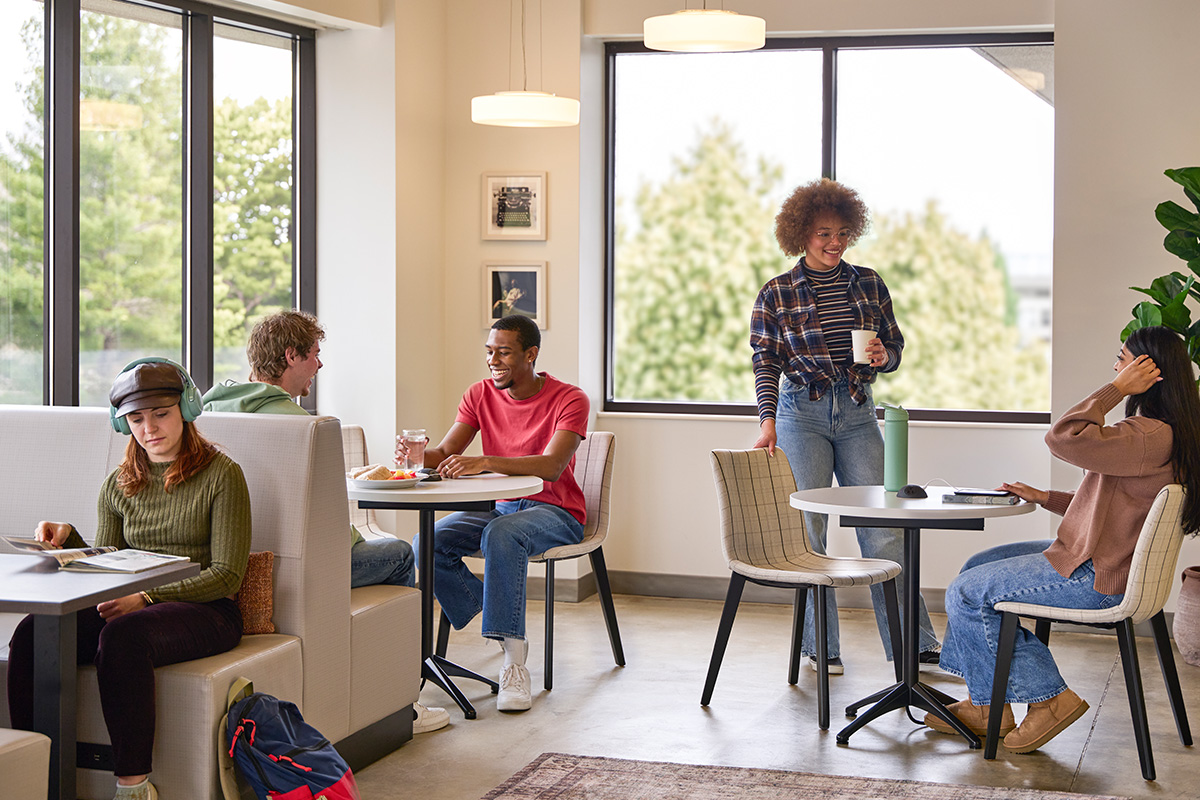
Furnishing the Future closes on a division Reid expects AI to draw through the profession. “It is between work that AI can make acceptable and work that still requires a deeply human point of view,” she says. “The second speed is the work above that line. It is where design is not just output, but stewardship. It asks harder questions about behavior, belonging, recovery, trust, meaning, and how people will actually live inside the systems we are building around them.”